Parshat Yitro5 min read

Israel Hears Sinai and Absorbs Each Word

A king tells his wife to put on every jewel she owns so he will want her. Here the stones are commandments, and the camp still tasted honey in the air.

Curated by Arthur · Told by Maggid ·
Table of Contents
  1. No Gap Between Sound and Sense
  2. Praise Running Down and Up
  3. Honey on a Bride's Mouth
  4. Jewels the King Demands
  5. After the Echo Fades
Israel Hears Sinai and Absorbs Each Word Click for full size

No Gap Between Sound and Sense

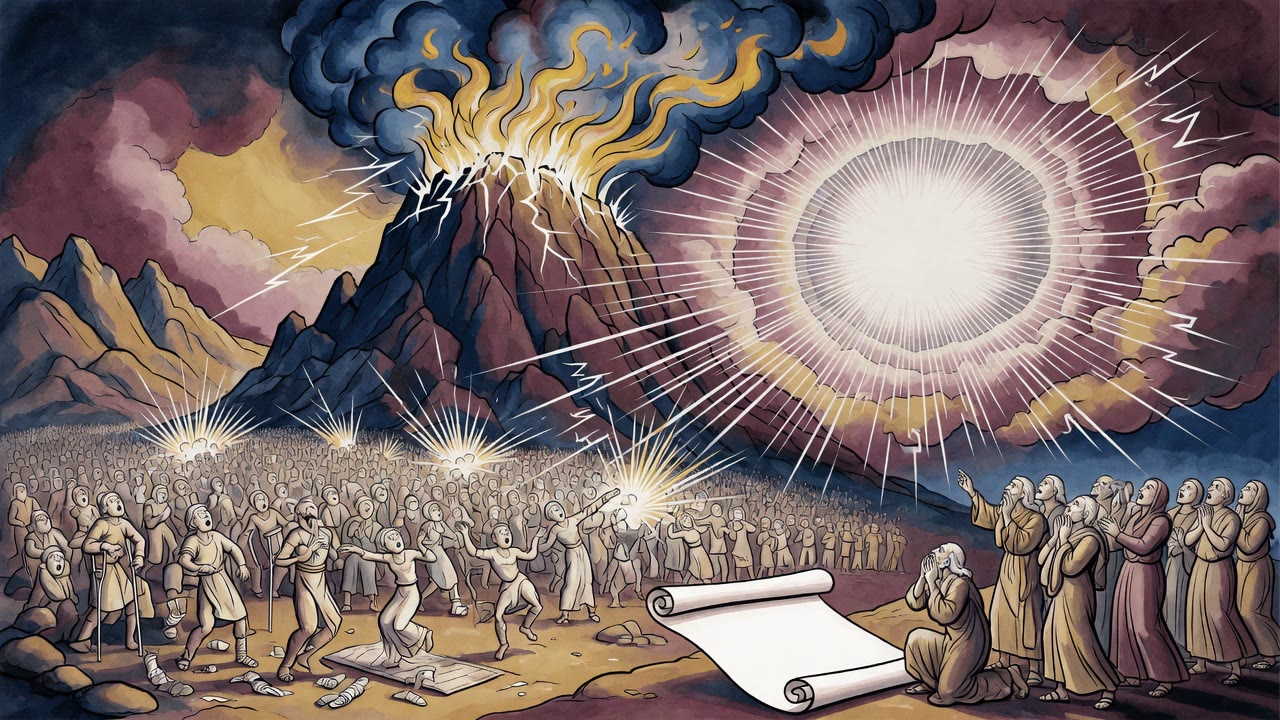
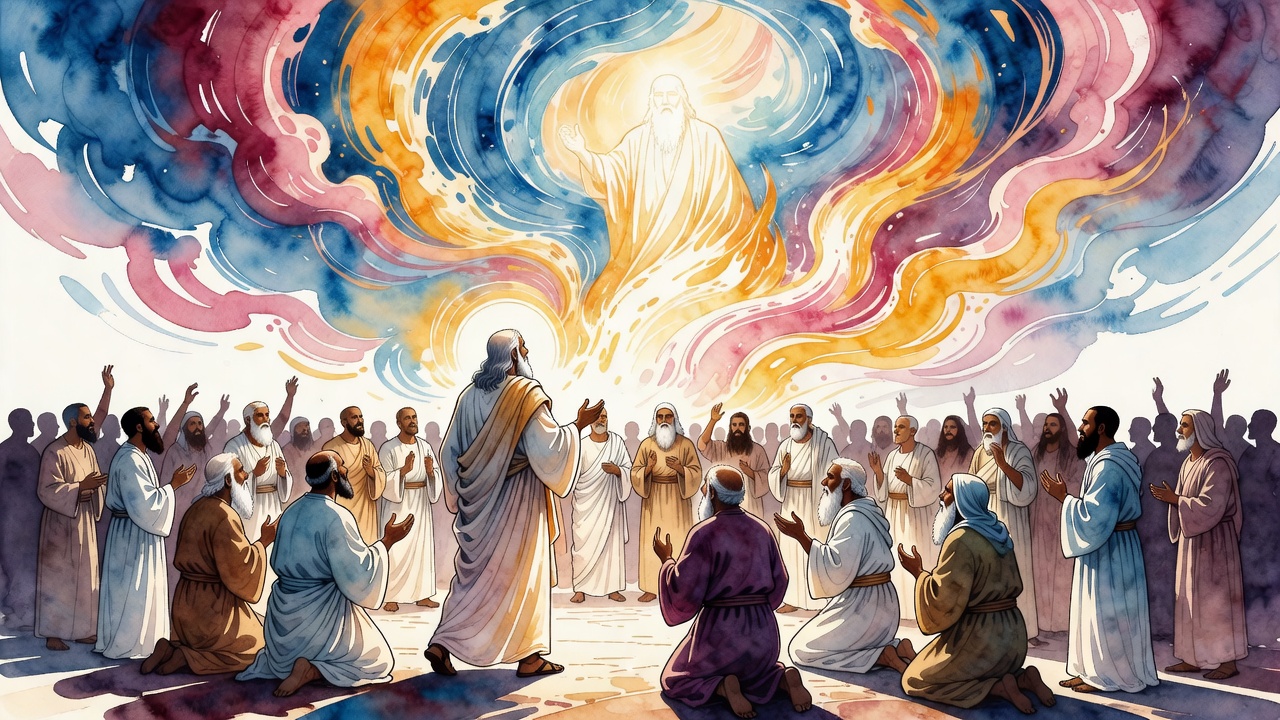
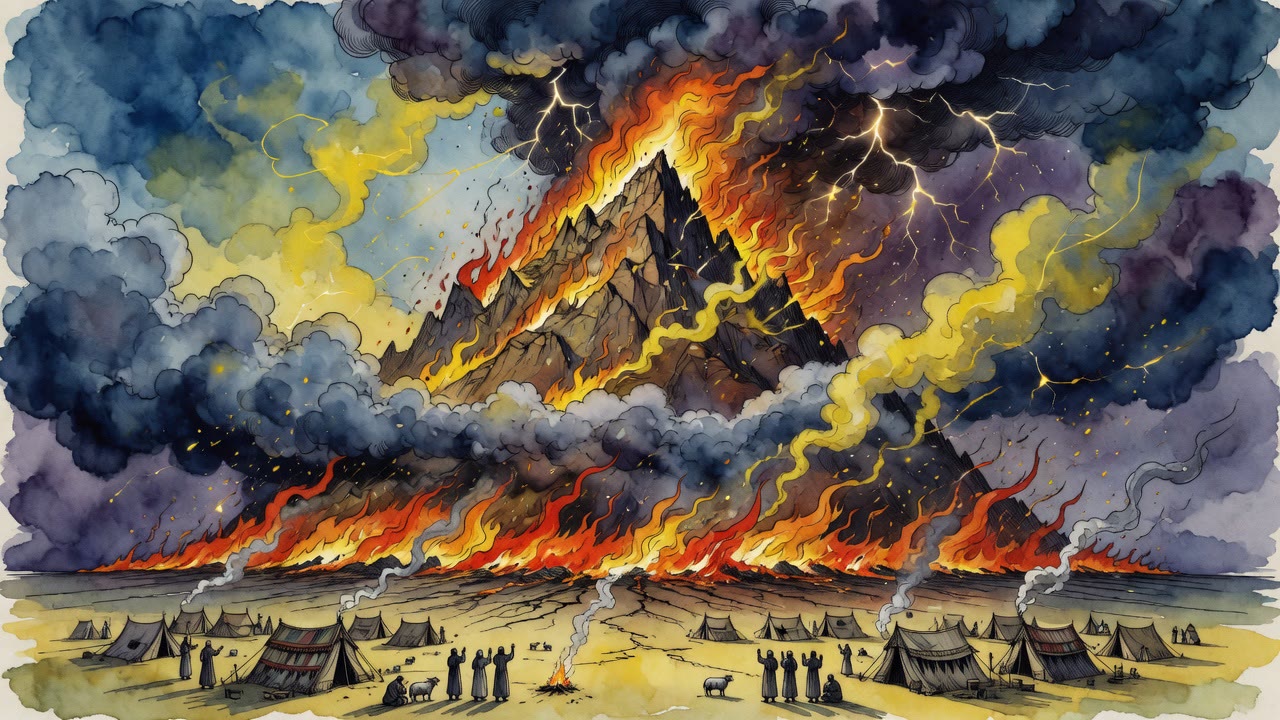
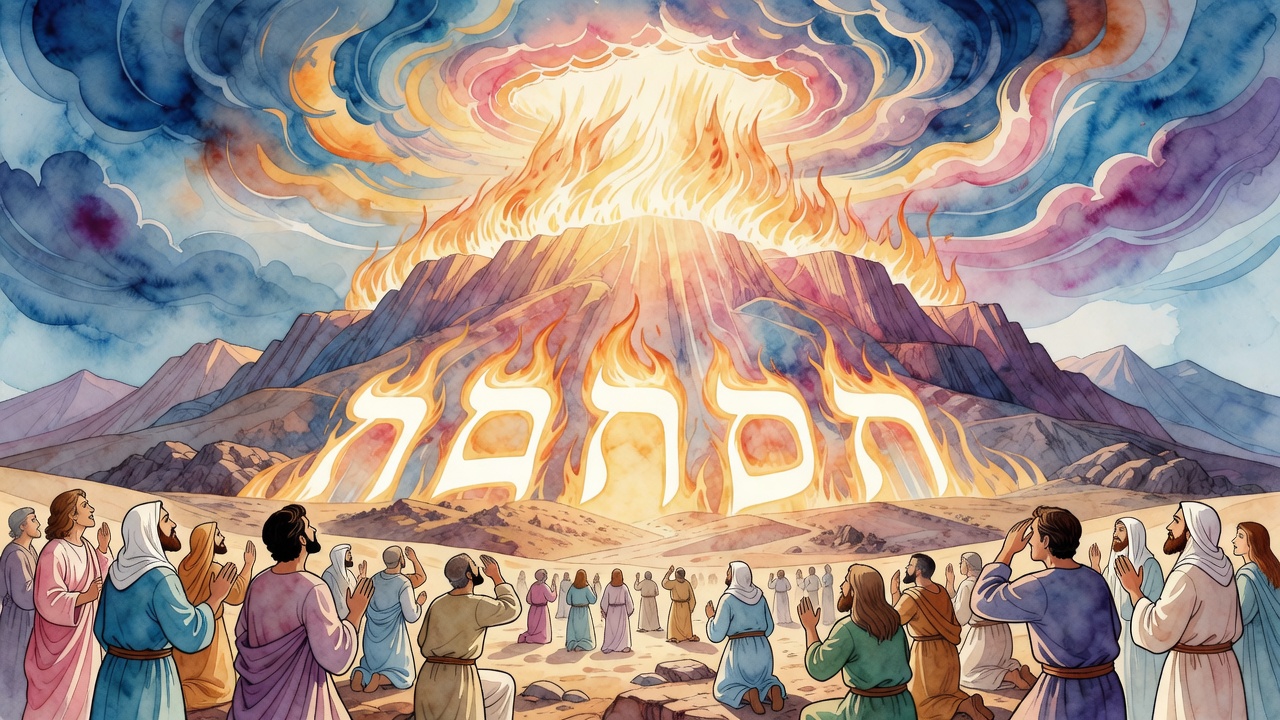
The mountain smoked. The people stood close enough to fear and far enough to live. When all of Israel heard each divine pronouncement at Sinai, something stranger than thunder happened. The word entered and was understood in the same instant. No lag. No committee of the mind meeting later to decode.

He encircled him; He invested him with understanding (Deuteronomy 32:10). Invested, as in clothed. Comprehension wrapped them the way a garment wraps a body that has been cold too long. As soon as they heard the pronouncement, they assimilated it.

Ordinary learning is stairs. Sinai was a door kicked open into a lit room. The people did not become angels. They became students whose first lesson arrived already complete inside the skull.

Praise Running Down and Up

Israel praised the Holy One from on high to below. She sang Him from head to foot the way a lover inventories beauty: gold head, locks, eyes, cheeks, lips, hands, the whole descent of Song of Songs until the mouth is most sweet and the Beloved is claimed (Song 5:11-16).

The Holy One answered from below to on high. How beautiful are the feet. How the lower parts of a walking people become precious when those feet have left Egypt and now stand at a mountain that still shakes. He would set them on high (Deuteronomy 28:1). Praise that climbs.

Israel pulled Him down by asking for a Sanctuary among them (Exodus 25:8). He lifted them by promising height they had not earned by architecture alone. Two directions. One covenant conversation.

Honey on a Bride's Mouth

Thy lips, O my bride, drop honey (Song 4:11). The tablets in Moses' hands were not only law. They were a wedding gift with edges sharp enough to cut a calf-worshipping future. For this hour the camp still tasted honey in the air where the Voice had been.

Who is this that cometh out of the wilderness? A people still dusty from manna and argument, dressed suddenly in understanding that fit better than any cloth Egypt had sold them. The wilderness had been a corridor. Sinai was the chamber where speech became belonging.

Jewels the King Demands

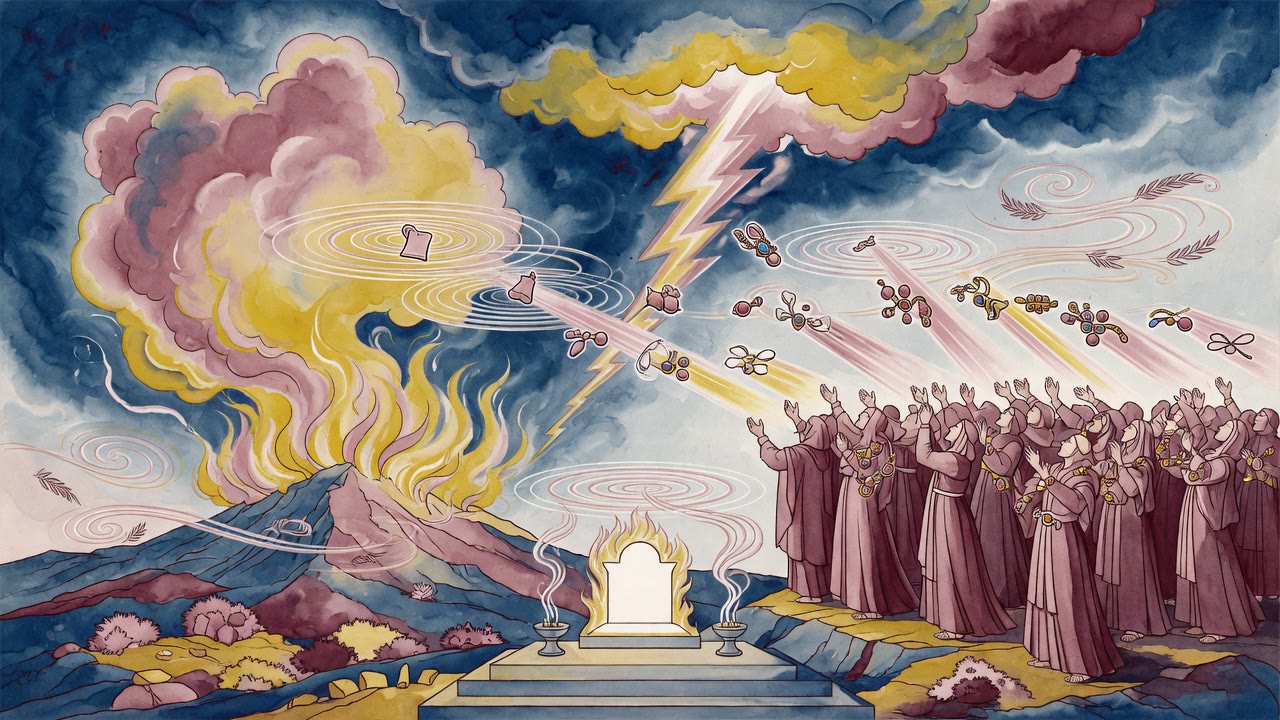
A king tells his wife to adorn herself with all her jewels so she may be desirable to him. The Holy One tells Israel to be distinctive in mitzvot (commandments) so she may be desirable to Him. Not vanity. Radiance that is also obedience.

Beautiful are you, My beloved, as Tirtzah (Song 6:4). The place-name leans toward retzuya, desirable. Beauty here is not a face. Beauty is a people wearing commandments the way a queen wears stones that catch lamp-light in a throne room.

Each mitzvah is a stone set after Sinai's first investiture of understanding. The garment of comprehension does not replace the jewels. It makes the hands steady enough to fasten them.

After the Echo Fades

The mountain eventually stopped smoking. The people eventually built a calf and broke what had been given whole. That later failure does not erase the first hour when hearing and knowing were one motion.

Somewhere in the camp a child repeated a commandment without stumbling and did not know why the words felt already familiar. Somewhere a woman fastened a practice onto the day like an earring and felt the king's glance without seeing a face.

Sinai remains the moment the loft of heaven and the dust of a nation traded praise until both were dressed for a marriage that would outlast every empire that tried to gather them like abandoned eggs.

Before the first word, the people had known commands as rumors filtered through overseers and then through Moses' hard conversations with a bush and a throne. At the mountain the filter dropped. Each pronouncement arrived as if the Listener had written it on the inside of the skull in wet ink that dried into bone. Mothers held children who would later claim they remembered honey in the air. Fathers wiped ash from beards and discovered they could repeat statutes without rehearsal.

The mutual praise did not stay abstract. When Israel pulled the Holy One down toward a Sanctuary of acacia and gold, carpenters felt the descent as work orders. When He promised to set them on high, shepherds felt the lift as a future that might outlast Pharaoh's brand. Song of Songs supplied the body-map of love because covenant without desire language turns into ledger alone, and Sinai was never only ledger.

The jewels of mitzvot began as soon as understanding finished dressing them. A boundary about fire. A boundary about the neighbor's house. A boundary about the Name. Each stone set into the week's fabric made the bride visible to the King who had asked her to adorn herself. Tirtzah, desirable, is a city-name that becomes a verdict on conduct.

Later the calf would smash the mood. That future does not cancel the first absorption. It only proves how costly it is to take off a garment heaven fastened in one thunderous hour. The Mekhilta's insistence remains: they heard and knew together. The rest of Jewish learning is the long attempt to recover that speed without the mountain's pressure.


← All myths
From the tradition

Sources

3 sources

The texts behind this telling. Some cards carry a translation of the source; others are our own retelling of it, and each card says which. Every card links out to the original.

Mekhilta Tractate Bachodesh 9:3Mekhilta DeRabbi Yishmael

Retold in our words. Read the original at the link below.Mechilta, translated by Rabbi Shraga Silverstein · CC-BY

The Mekhilta offers yet another interpretation of "And all the people saw", this one focused not on the nature of the experience but on the spiritual state of the Israelites who received it.

When all of Israel stood at Mount Sinai to receive the Torah, something extraordinary happened. As soon as they heard each divine pronouncement, they assimilated it completely and instantly. There was no gap between hearing and understanding, no delay between reception and comprehension. The word of God entered their minds and was immediately absorbed.

The proof text is (Deuteronomy 32:10): "He encircled him; He invested him with understanding." The word "invested" implies a thorough, encompassing comprehension, understanding that wraps around the student like a garment. The Mekhilta repeats the point for emphasis: "As soon as they heard the pronouncement, they assimilated it."

This teaching elevates the Israelites at Sinai to a spiritual level far beyond ordinary human learning. In normal life, understanding takes time. You hear a teaching, you ponder it, you struggle with it, and gradually it becomes part of you. At Sinai, that entire process was compressed into a single instant. The Torah entered the people the way light fills a room when a door is opened, completely and all at once. The Mekhilta uses this image to explain the "exalted state of Israel" at that moment, a state of perfect receptivity that has never been replicated since.

Full source
Midrash Tanchuma, Ki Tisa 18Midrash Tanchuma

Retold in our words. Read the original at the link below.Townsend 1989 translation of Midrash Tanhuma, S. Buber Recension · CC-BY

And he gave unto Moses, etc. (Exod. 31:18). Scripture states elsewhere in allusion to this verse: Thy lips, O my bride, drop honey (Song 4:11). R. Abba the son of Judah said: The community of Israel praised the Holy One, blessed be He, from on high to below, while the Holy One, blessed be He, praised Israel from below to on high. Israel praised Him from on high to below when she caused Him to descend from the upper spheres to the lower sphere, as it is said: That they make me a Sanctuary (Exod. 25:8). He praised them from below to on high when He said: The Lord Thy God will set them on high (Deut. 28:1). Who is this that cometh out of the wilderness? (Song 3:16). Israel praised him from above to below, that is, from His head to His foot: His head is as the most fine gold … His eyes … His locks … His eyes … His cheeks … His lips … His hands … His loins … His legs … His mouth is most sweet … this is my Beloved (Song 5:11–16), while He praised them from below to above: How beautiful are thy steps … the roundings of thy thighs … thy navel is like a round goblet … thy belly is like a heap … thy two breasts … thy neck is as a tower … thine eyes … thy nose … thy head upon thee is like Carmel (ibid. 7:2–6). Thy lips drip honey (ibid. 4:11).

What is meant by nofet (“drip”)? R. Johanan declared: It is a Greek word for a beautiful bride. Just as a beautiful bride is prized above everything else, you are prized above all nations. Honey and milk under thy tongue (ibid. 4:11). When you devote yourself to the Torah you are consuming milk and honey, for you declared at Sinai: We will do and we will hear. Hence, Thy lips, O my bride, drop honey. Just as I called you My bride, so the Torah adorns and bedecks Israel like a bride. He gave Moses all of Israel’s adornments, the Scripture, the Mishnah, the Talmud, the laws and legends, as one gives gifts to a bride, as it is said: He gave unto Moses as though she was His bride (kekhalto). Tablets. Why is it called luhot (“tablets”)? Because they tire one’s lehi (“jaw”). Written with the finger of God (Exod. 31:18). If Israel had received the first tablets (which were shattered), no people would have been able to rule over them.

Full source
Sifrei Devarim 37:1Sifrei Devarim

Retold in our words. Read the original at the link below.Sifrei by Rabbi Shraga Silverstein · CC-BY

There's this beautiful analogy in Sifrei Devarim that paints a picture of a king and his wife. The king tells his wife, "Adorn yourself with all your jewels, so you may be desirable to me." It’s a simple, human image. And it speaks volumes about our relationship with the Holy One, Blessed be He.

The text goes on: The Holy One says to Israel, "Be distinctive in mitzvot (commandments)", that's, commandments, good deeds, "so that you may be desirable to Me." It's not about vanity, of course. It's about shining from within, through our actions and our intentions.

The analogy doesn't stop there! The verse from Song of Songs (6:4) comes into play: "Beautiful are you, My beloved, as Tirtzah." Now, Tirtzah wasn't just a place; the Sifrei makes a connection to the Hebrew word retzuya, meaning "desirable." The message? You are beautiful when you make yourself desirable to Me through mitzvot. It's as if our good deeds are the jewels we wear, making us radiant in the eyes of the Divine. Every act of kindness, every moment of prayer, every effort to live ethically. it's all adding to our inner beauty, making us more appealing, more connected to the Divine. It's a powerful idea.

The text doesn't stop with inner beauty. It also touches upon the land, the Promised Land. Devarim (7:12) says, "And it shall be if you hearken to these judgments." This section, we're told, was spoken to Israel right after the exodus from Egypt. Maybe they thought, "Perhaps we will not enter a land as beautiful as this.."

And what does the Holy One, Blessed be He, say to them? "The land that you are coming to inherit is superior to it."

Why is this important? It’s about trust, about faith in the future. The Israelites were being asked to leave behind the familiar, even with its hardships, for something unknown and potentially better. It's a powerful reassurance that what lies ahead, though unseen, holds even greater promise.

So, where does that leave us? Are we adorning ourselves with the jewels of mitzvot? Are we trusting in the promise of a better future, even when we can't see it clearly? These ancient words offer us a timeless invitation: to strive for inner beauty and to have faith in the journey ahead.

Full source