How Israel Stole the Higher Mind at Sinai
At the mountain Israel rushed to say we will do and we will hear, and the midrash names that rush a theft of the Higher Mind Heaven had not finished offering.
Table of Contents
 Click for full size
The Rush at the Foot of the Mountain
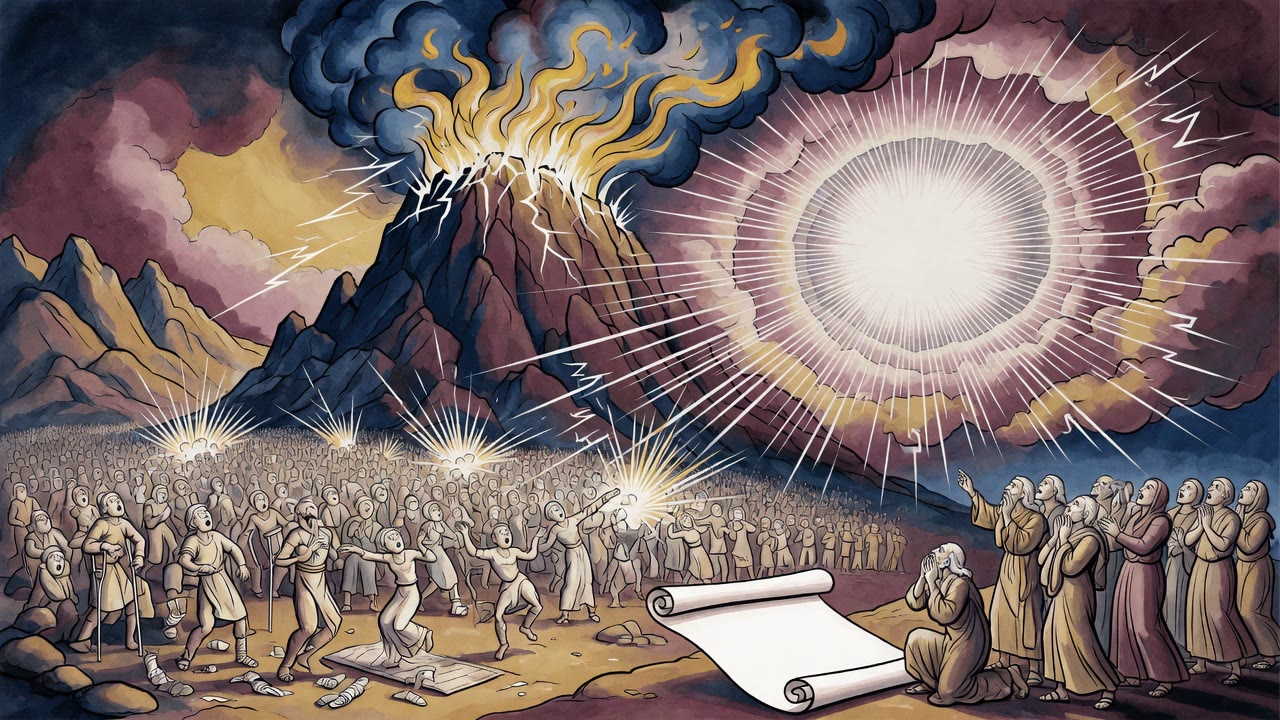
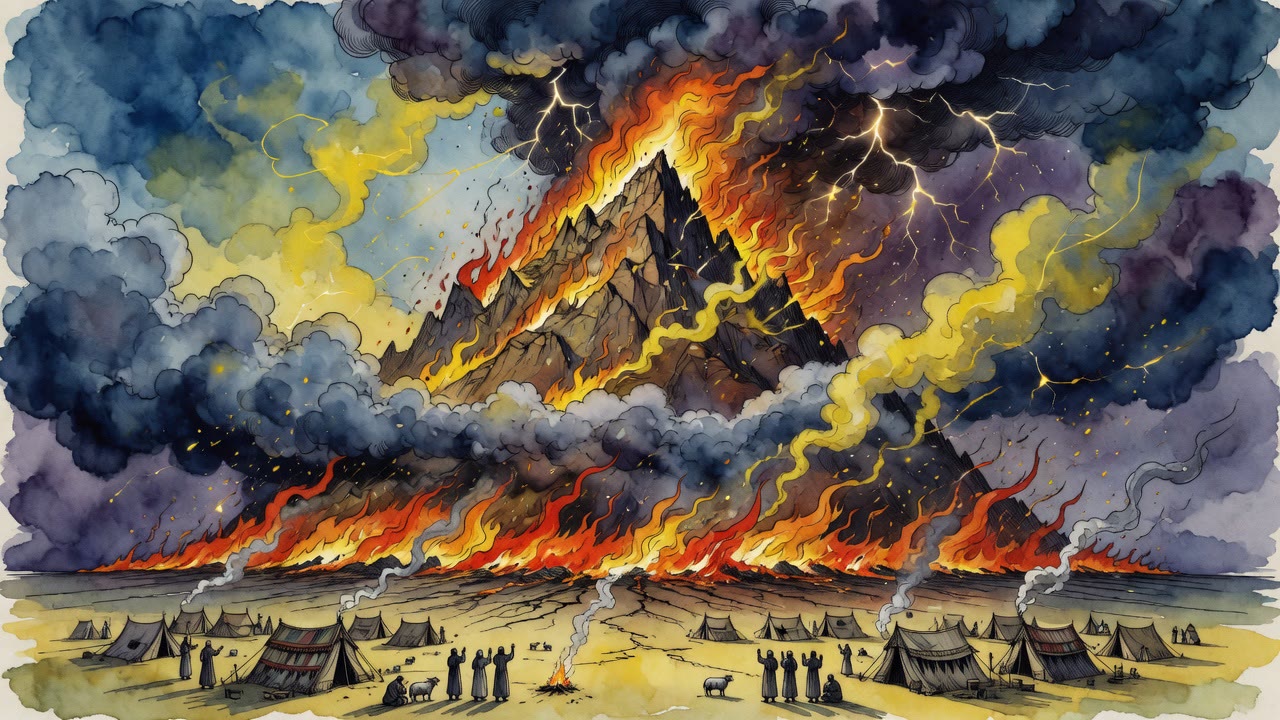
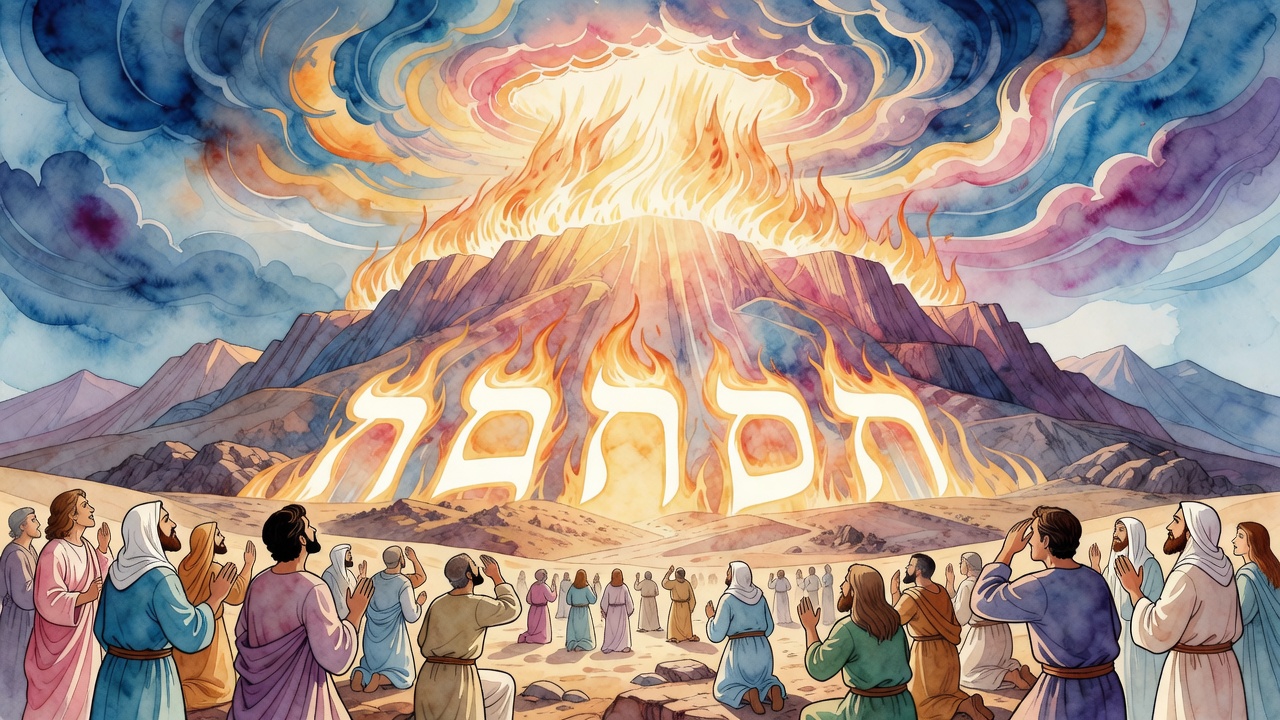
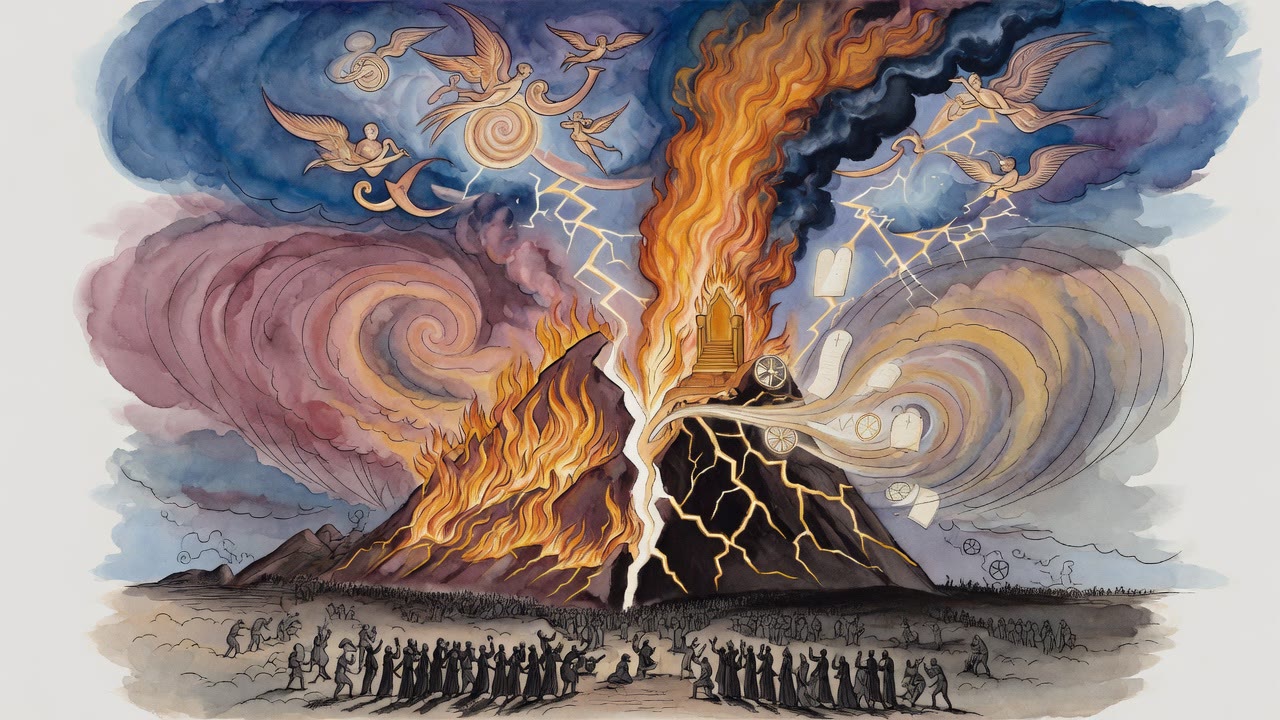
The mountain smoked. The people stood below it with their hearts already climbing the slopes their feet were forbidden to touch. Before the full hearing had settled into their bones, their mouths ran ahead of their ears. "Everything that the LORD has spoken, we will do and we will hear" (Exodus 24:7).
The midrash names the moment with a startling word. They sought to steal the Higher Mind. As if the gift of understanding could be taken the way a thief takes what is not yet handed over across a table. They seized the order of the world, doing before hearing, and Heaven let the theft stand as if the haste itself were a kind of love.
Would that this heart of theirs remain in them to fear Me and keep My commandments all the days, Scripture later sighs in (Deuteronomy 5:26). The Holy One knew the heart would not always hold what the mouth had grabbed. Psalms records the later beguiling of lips over an unconstant heart, and still mercy did not destroy. Proverbs pictures silver dross over earthenware, fine speech over a faulty core. The theft at Sinai is remembered with love and with clear eyes that do not pretend every later day matched that first rush.
A Kingdom Named, Word by Word
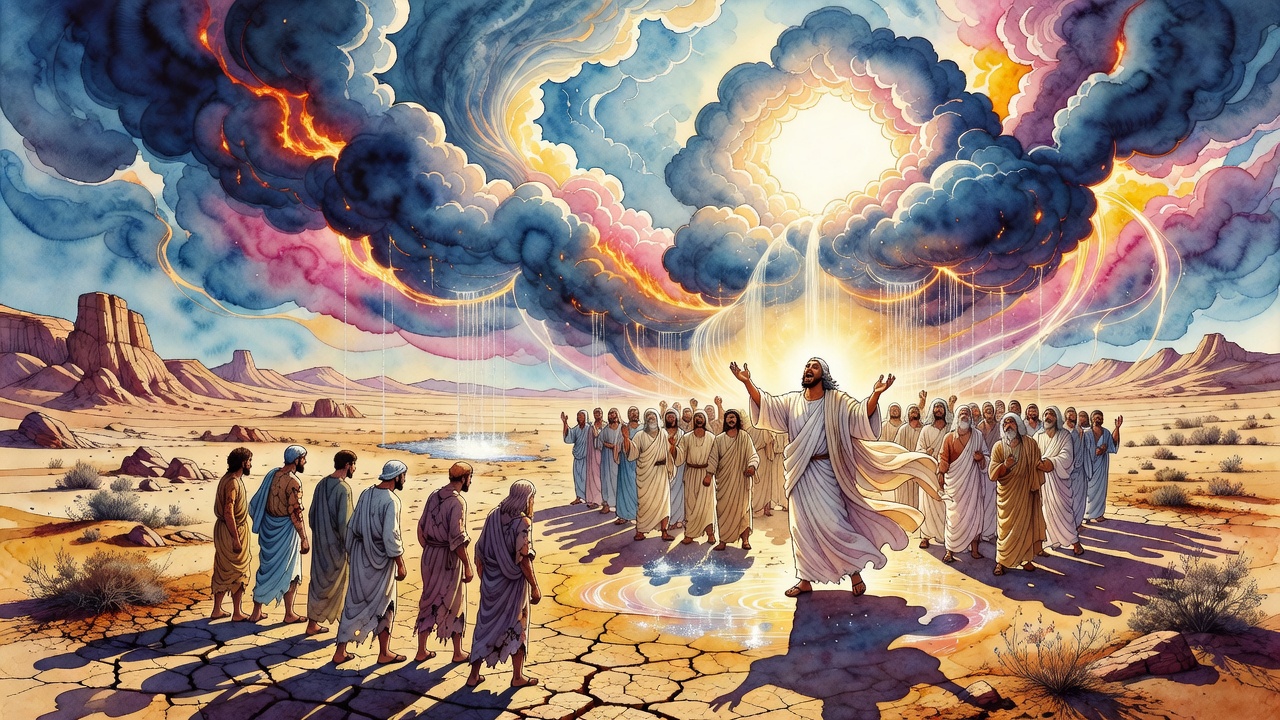
God names Israel His treasure, a kingdom of priests and a holy nation, set apart to be busy with Torah and busy with commandments. The sages refuse to let the title stay soft and ornamental. Princes? Then perhaps only the poor are excluded from the dignity. No, princes in all the land. Kings? Then perhaps merchants and warriors alone. No, a kingdom of priests, dignity without conquest, rank without idleness, a people whose honor is service rather than the spoils of other nations.
Rabbi Eliezer promised that in the days to come every Jew would father children as worthy as the generation that walked out of Egypt and stood under the smoke. Sinai was not a one-time costume rented for a holiday. It was a seed planted in the people forever, meant to flower in ordinary houses.
Israel is one body, one nephesh. When Achan stole from Jericho's spoils, one man's sin drew anger on the whole camp. When a ewe is wounded in one limb, every part of her trembles. Hurt one, and all feel it. The nations gloat at each other's ruin. This people is built otherwise, for better and for costlier, and the midrash will not let them forget the price of that unity.
Three Crowns and One More
The chapter sets three crowns on the people who stole the Higher Mind: the crown of Torah, the crown of priesthood, and the crown of kingship. Then Rabbi Natan lifts one higher still. Above all three rests the crown of a good name, the only one a person earns rather than inherits from tribe or office.
Holiness is not static like a monument. Every fresh commandment God lays upon Israel adds another measure of sanctity. The people who grabbed understanding in a rush of acceptance keep receiving weight upon weight, as if Heaven answers theft with more gift, and more demand, and more glory that must be carried carefully.
The Wish That Becomes a Hand
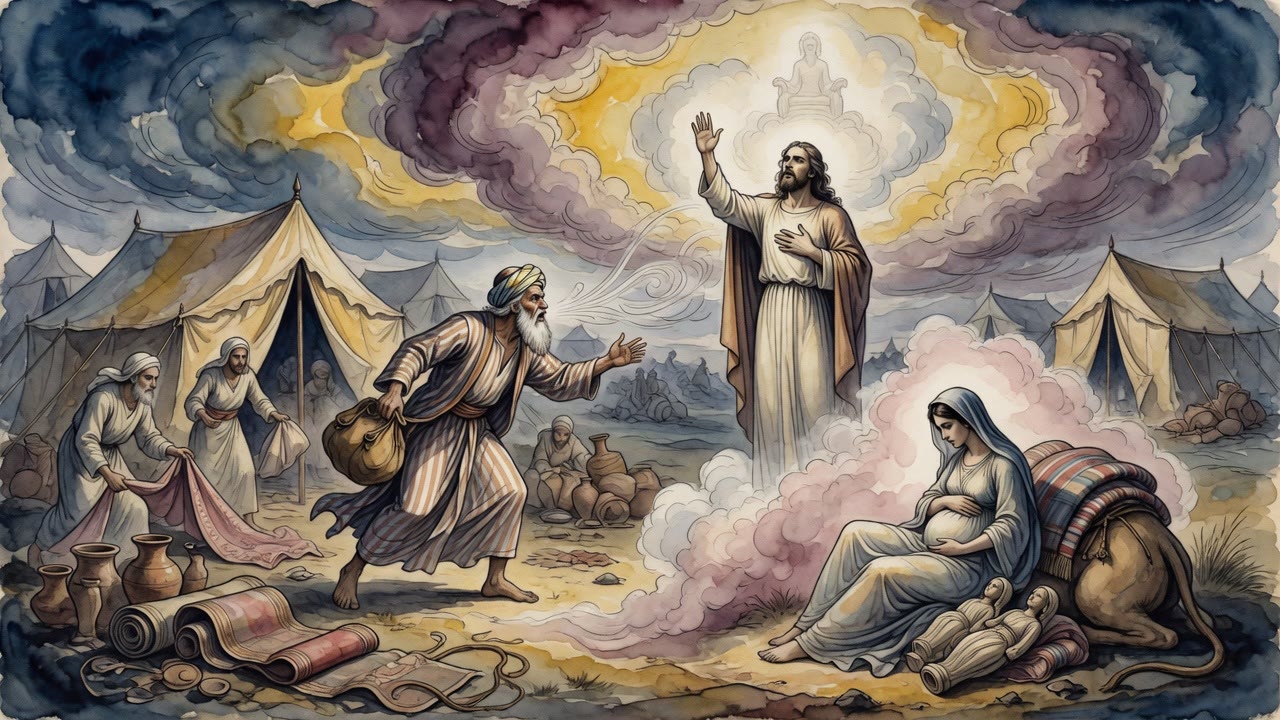
The Decalogue does not stop at theft of objects from a neighbor's house. It reaches the wish itself, the quiet motion before the hand moves. Desire lives in the heart. Coveting lives in the deed. A person is answerable for each. The slope between them is short and steep. Desire ripens into coveting. Coveting hardens into seizure. Micah's world proves it in the prophets' day: they coveted fields and then simply took them, as if the wish had already done the legal work.
The ban stretches to a neighbor's staff, sandal, money-belt, all that belongs to him, so that no small item becomes a loophole. You may admire a quality without sin, wishing your own eyes or hair were finer, because no one is made poorer by that wish. The prohibition bites only where one person's gain leaves another person poorer in fact.
Five words face five on the two tablets. Murder answers "I am," for killing chips the divine image stamped on every face. Adultery answers the ban on other gods, both forms of faithlessness. Theft answers misuse of the Name, for a thief ends up swearing falsely to cover his tracks. False witness answers the Sabbath, for a lying witness denies that God made the world and rested. Coveting answers honoring parents, for a child born of a stolen marriage will honor a man who is not his father. Break one, the sages warn, and the road to the rest is already open under your feet.
What Was Taken and What Was Given
At Sinai they grabbed the Higher Mind with their mouths before their ears had finished receiving. Heaven did not strike them for the haste. Heaven crowned them and warned them and bound their wishes as tightly as their hands. The theft became a covenant. The covenant became a body that trembles as one when any limb is wounded.
A good name still sits above the inherited crowns, waiting to be earned in the ordinary day after the mountain's smoke has cleared and the people have gone back to tents, markets, and the long work of keeping what they seized in love.
← All myths