Aquila Bought What Lay Lowest on the Ground
Hadrian told his nephew to invest in whatever lay lowest, for it rises. Aquila took the advice as prophecy and chose the people of Israel.
Table of Contents
 Click for full size
A Question Dressed as Trade
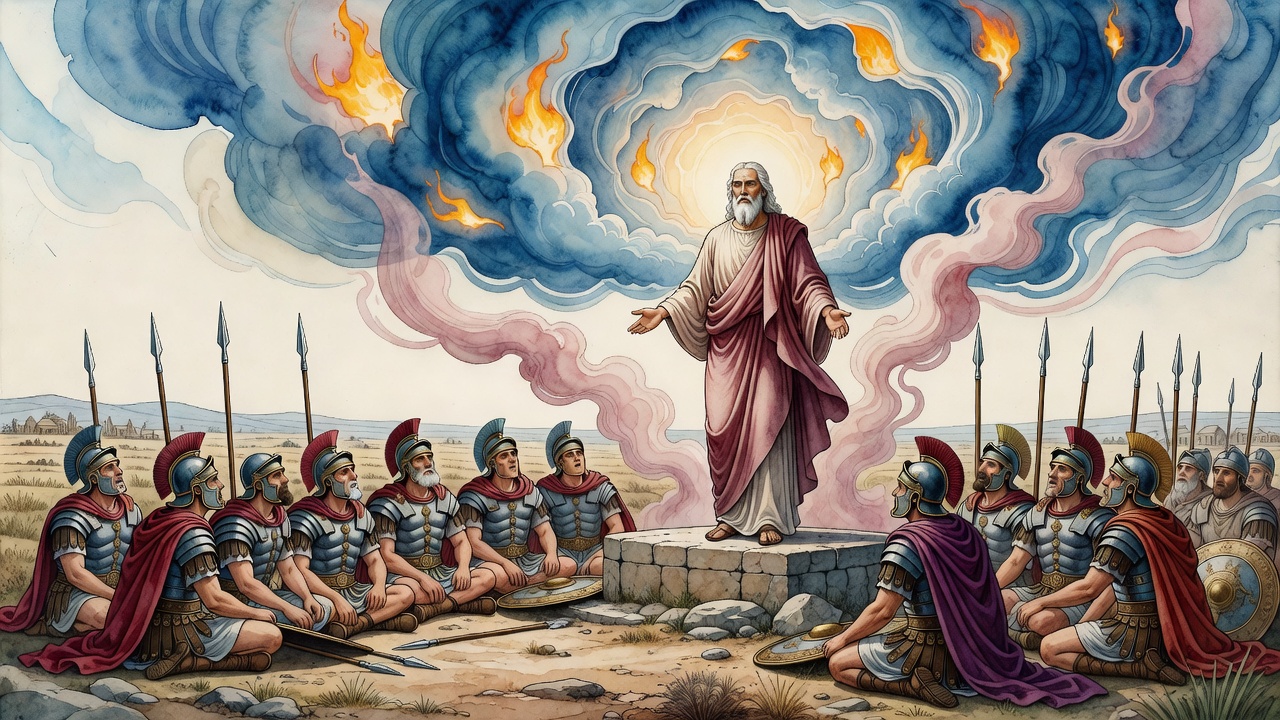
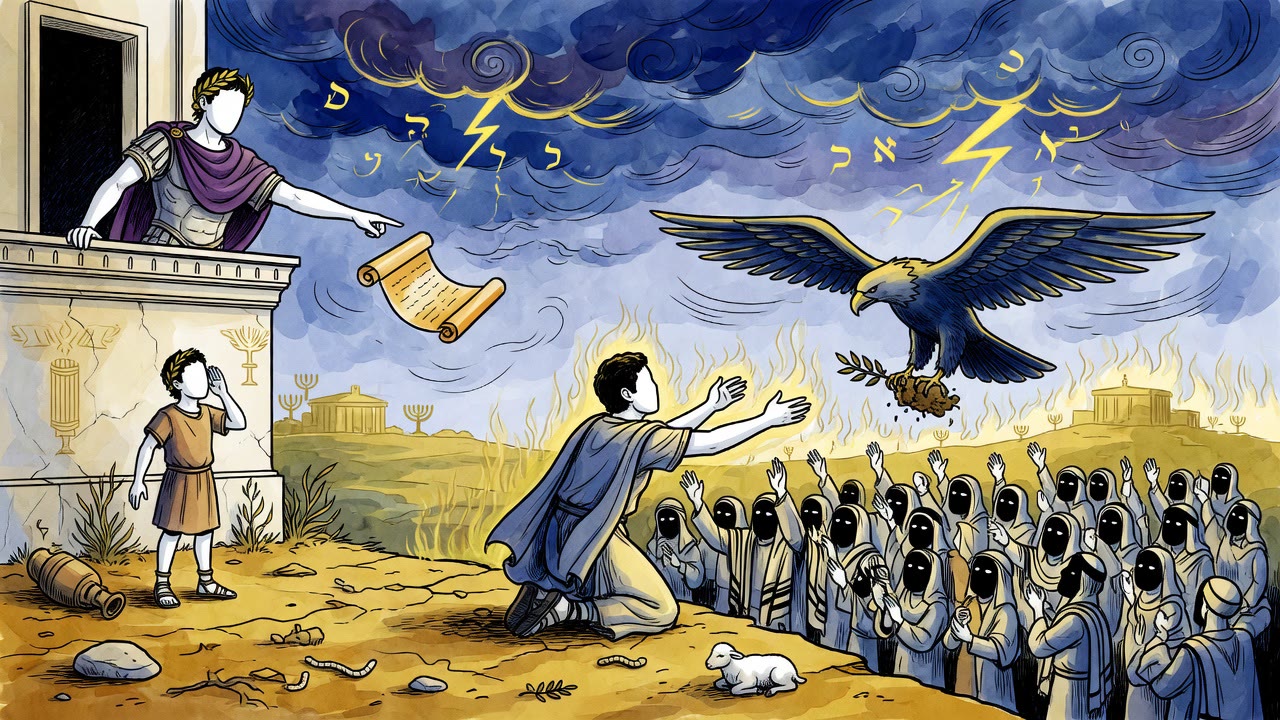
Aquila stood before his uncle Hadrian with a merchant's question on his tongue and a convert's secret in his chest. He wanted Torah. He feared the emperor. So he asked, in the language of commerce, in what merchandise a wise trader should invest.
"Whatever lies lowest on the ground," Hadrian answered. "For in the end it rises."
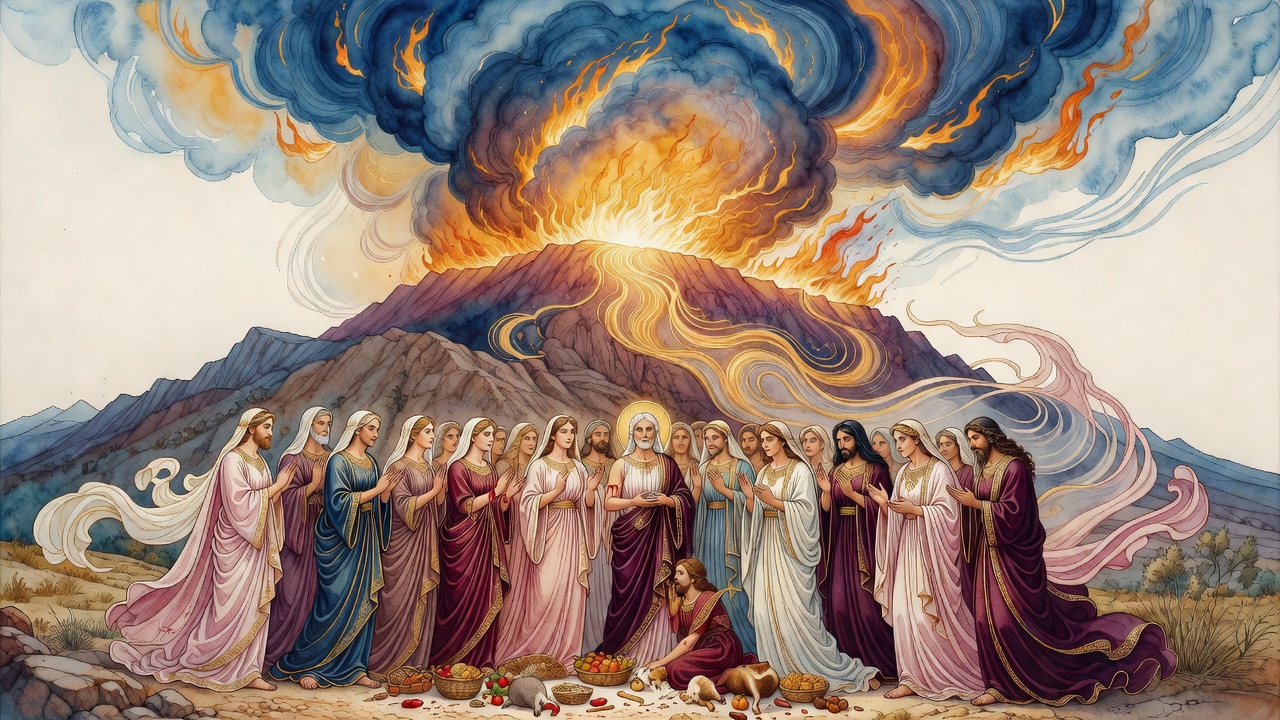
Aquila took the sentence home and turned it into a map. He left Rome for the Land of Israel. He sat in the houses of study until the shape of his face changed. Rabbi Eliezer and Rabbi Joshua knew at a glance what he had become. The lowest people on the empire's ledger had become the place where his soul rose. He slept on thin mats, learned letters until his eyes burned, and felt the covenant cut into his body as a door, not a wound.
The Face That Told on Him
When Aquila returned to court, Hadrian saw the difference before he heard a word. Aquila confessed. He had searched the nations. None were so trodden down as Israel. None were destined to be lifted so high. Isaiah had already promised that kings would one day rise before her. The nephew who had asked about merchandise had bought a people the market called worthless.
Hadrian struck him. A scornful assessor at the emperor's side mocked the prophecy, then fell from a roof to his death while a cry went up, "So may all Your enemies perish, O LORD." When Hadrian demanded why Aquila had circumcised himself, Aquila answered without apology. Without the covenant a man cannot truly learn. The Holy One gave Israel both Torah and ordinances, and warned that no world endures without justice. The generation of the Flood perished because it trampled justice. Therefore the Torah opens its civil code with "And these are the ordinances."
The blow from Hadrian's hand still stung. Aquila did not take it back. He had already paid a higher price on a different kind of flesh.
How a People Is Sorted from the Heap
Elsewhere the sages asked why Scripture says the LORD separated Israel from the peoples rather than the peoples from Israel. They pictured a farmer sorting a crop. When he reaches in to pull out what is good from a mixed pile, he keeps reaching, because something worth saving may still be hidden. When he throws out what is spoiled, he does it once and finishes. Heaven chose the first motion. God reaches again and again for what is precious.
Rabbi Levi walked through an ordinary farming year to show how that separation lives in soil and time. Israel plows differently, refusing to yoke ox and donkey together. They sow without mixing seeds in the vineyard. At harvest they leave gleanings and a forgotten sheaf for the poor. The ox treading grain eats unmuzzled. The freed servant goes out with a full hand. The nations measure days by the sun. Israel measures by the moon. From the first cut of the plow to the marking of a new month, a life is shaped to belong to God. Aquila had not joined a slogan. He had joined a calendar and a field.
That is what "lowest on the ground" looked like up close. Not dust for its own sake. Dust that still grows a holy crop when the sorting hand is patient.
Against the Boast of Older Books
In another court of argument Flavius Josephus faced Greek pride about antiquity. The Greeks admitted they learned their alphabet late, from Phoenicians or from Cadmus, yet could not produce inscriptions to pin the claim. Homer's poems, Josephus noted, were sung in parts before they were written as wholes, which is why variants swarm. Early historians and philosophers lived near the Persian wars and often confessed debts to Egypt and Chaldea. Josephus was not denying Greek genius. He was stripping the swagger from it. Jewish memory, he insisted, rests on a continuous chain of records and priests, not on songs that drifted until someone finally inked them.
Aquila's choice and Josephus's polemic meet at the same nerve. A people trampled in the marketplace of empires still claims an older, tighter memory of law and origin than the powers that mock them. The lowest merchandise rises when history is counted honestly. Scrolls kept by priests outlast ballads kept by fashion.
The Rise That Hadrian Named Without Knowing
Hadrian had meant a trading tip. His nephew heard a destiny. The face that changed in the study house, the circumcision that sealed learning, the ordinances that keep a world from flood, the farmer's hand that keeps sorting good from the heap, the historian who demands proof instead of rumor, all of them answer the same question. Where should a wise man put his life when the market prices Israel as dust?
Aquila's answer is still sharp. Buy what lies lowest. Watch it rise. The emperor who taught him the rule never meant to lose a nephew to it. The rule did not care what he meant.
← All myths