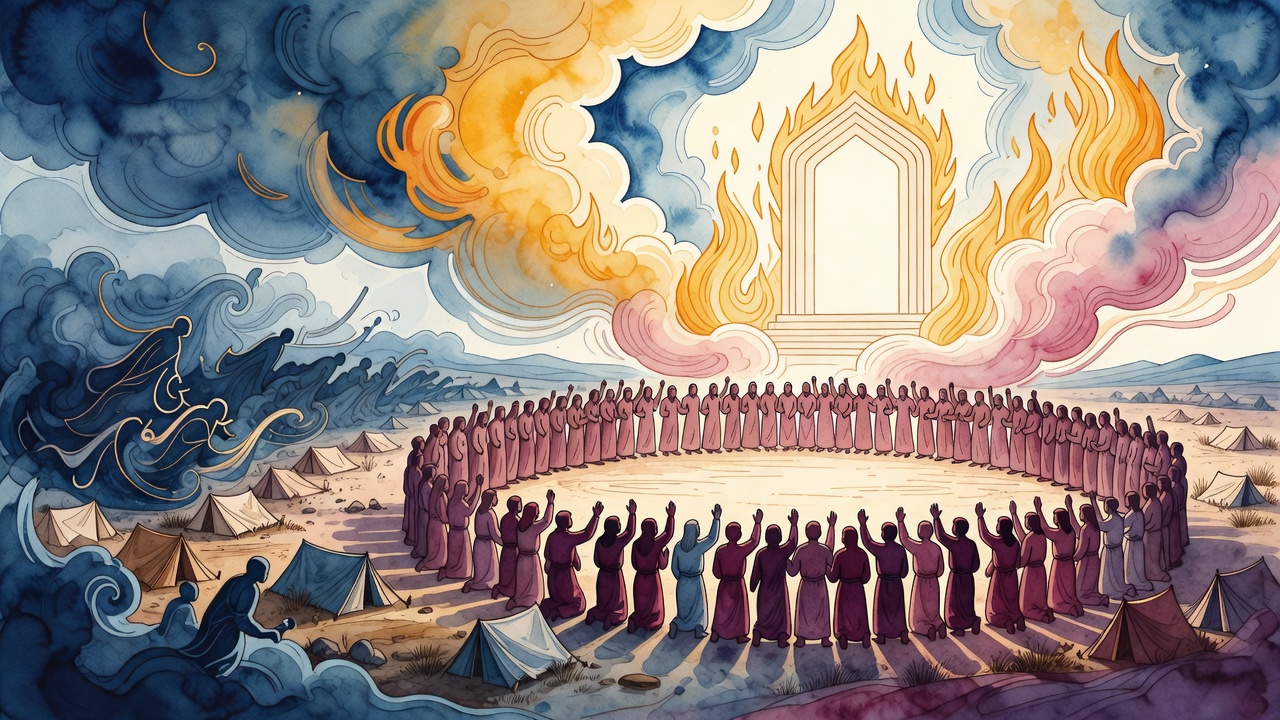
Israel Stood at Sinai Like a Bride in Gold
For two days the camp washed and beat its clothes clean. Some of the gold they wore came from Egypt, the rest from the sea after Pharaoh's army drowned.
Table of Contents
The mountain did not wait for an unprepared people.
 Click for full size
Israel had walked out of Egypt with dough on their shoulders, gold in their packs, fear still clinging to their backs. They had crossed the sea. They had watched horse and rider sink. But freedom alone did not make them ready for Sinai. A nation could leave bondage in a night. Covenant required a body to be remade.
So the camp began to prepare like a household before a wedding.
The Nation Entered Like a Convert
The sages looked at the laws of conversion and found Sinai already living inside them. A convert enters by circumcision, immersion, and offering. Israel, before receiving Torah, passed through those same gates as a people.
Circumcision had already marked them in Egypt, where blood stood at the doorway of redemption. Immersion came in the days before revelation, when Moses ordered the people to sanctify themselves and wash their garments. Offering came at the foot of the mountain, when young men brought sacrifices and Moses took blood for the covenant.
Nothing about this was ornamental. The body had to remember what the mouth was about to accept. Skin, water, blood, smoke. Israel did not merely agree to Torah. Israel crossed a threshold into it.
The Camp Washed Its Clothes
For two days, every tent became a place of waiting.
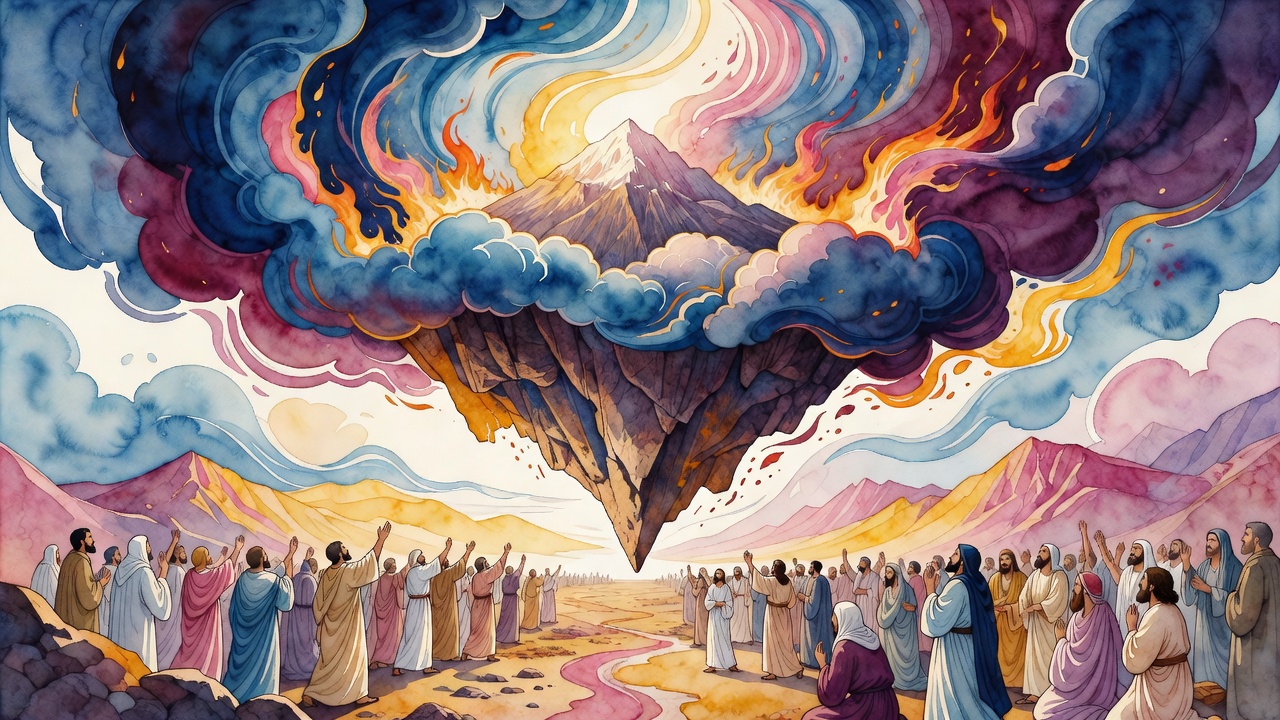
Garments were beaten clean. Dust came out of hems. Children watched their parents move with the grave care people reserve for birth, death, and marriage. The mountain stood ahead of them, fenced by warning. No hand could touch it. No animal could wander near it. The nearer God came, the more carefully Israel had to stand in its own place.
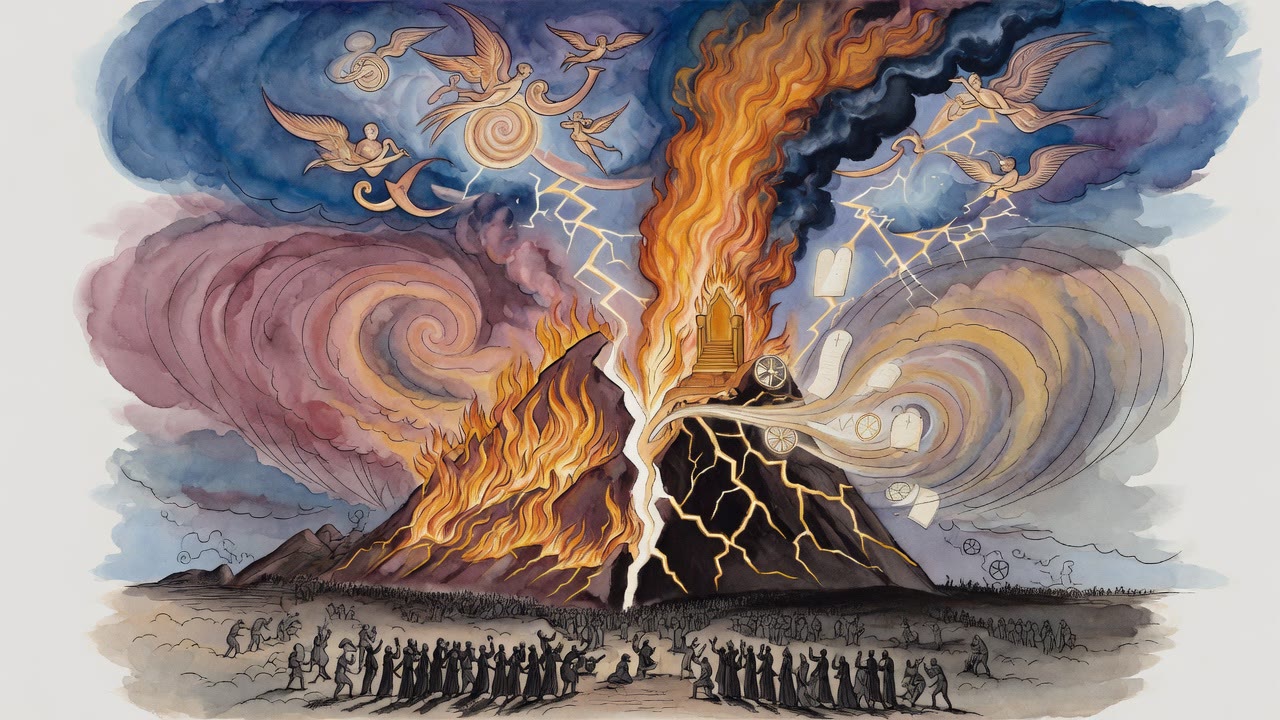
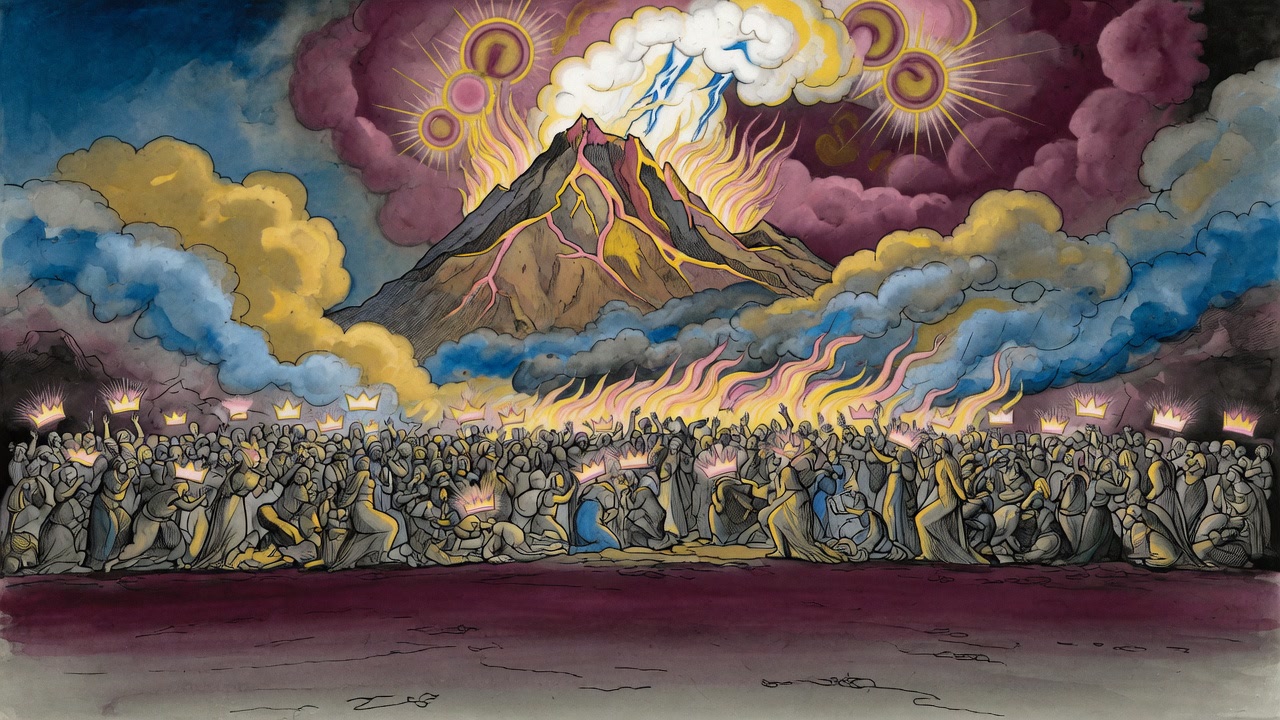
At dawn, thunder broke open the sky. The shofar (ram's-horn trumpet) voice grew louder and louder. The people trembled at the edge of the camp, dressed in clean cloth, bodies washed, desire and terror knotted together.
A slave people had learned to hurry in Egypt. Sinai made them wait.
The Gold Became Bridal Jewelry
The gold had a strange history.
Some of it came from Egypt, pressed into Israel's hands before they fled. More came from the sea, richer spoil cast up after Pharaoh's army drowned. Shir HaShirim Rabbah hears the language of ornaments in those treasures. Egypt had stripped Israel of dignity, but at the shore and at Sinai, the stripped people were adorned again.
The rabbis imagined Israel standing like a bride, covered in gifts. Gold did not mean vanity there. It meant reversal. The hands that had molded clay now carried treasure. The necks bent under taskmasters now shone with ornaments. The people Pharaoh had treated as a labor gang stood before God as beloved.
A wedding needs witnesses. Sinai had fire, cloud, thunder, angels, and the whole trembling earth.
The Torah Entered Every Generation
The stranger who joins Israel later does not arrive too late.
Sifrei Bamidbar hears that promise in the Torah's law about the sojourner who brings an offering. The covenant is not sealed so tightly around the generation at Sinai that every later soul remains outside. The convert of another century enters the same pattern. The old life is cut away. The body enters water. The altar receives the offering.
That matters because Sinai was not a private memory guarded by those who heard the first shofar (a ram's horn). It became a door in time. Every generation stands near it. Every convert who comes under the wings of the Shekhinah (God's presence dwelling on earth) steps into the same covenantal architecture that formed Israel at the mountain.
The bride was one nation, but the wedding canopy was large enough for descendants and strangers not yet born.
The Mountain Became a Wedding Canopy
Then came the voice.
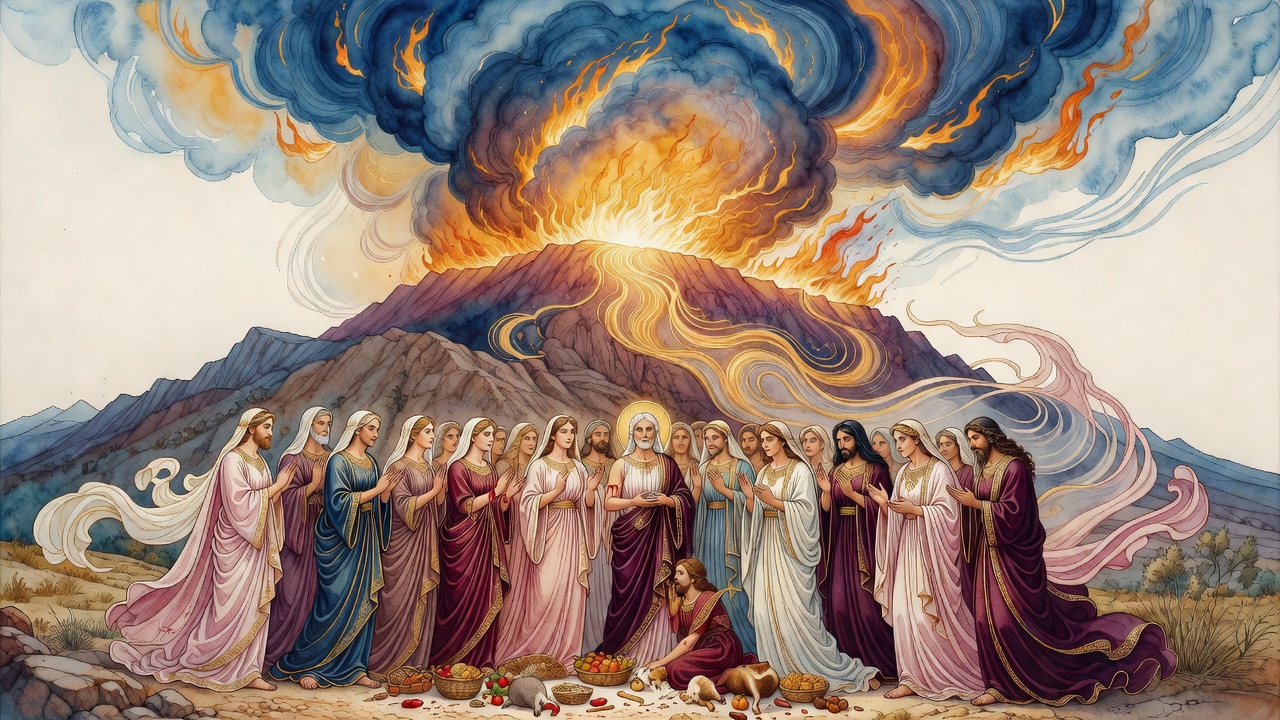
Israel stood below, adorned and afraid. Above them, the mountain smoked. Around them, the camp held its breath. The gold from Egypt and the sea flashed against bodies that had passed through blood and water and sacrifice. Nothing in Pharaoh's house had prepared them for this. No command from an earthly king sounded like the speech that now broke from heaven.
The bride did not know how heavy the marriage would be. Torah would demand memory, obedience, argument, fasting, feasting, law, mercy, judgment, and return. It would follow them into land, exile, study house, and graveyard.
But at Sinai, before all the failures and recoveries, Israel stood dressed for covenant. The people who had carried bricks now carried a kingdom of commandments. The ornaments were not decoration. They were proof that a slave body could become a covenant body and that gold torn from empire could gleam under God's mountain.
← All myths