The Throne Sang First and Ishmael Could Not Finish the Hymn
Rabbi Ishmael carried a seal past seven gates and found the Throne of Glory already singing a hymn with no last verse and no exit.
Table of Contents
 Click for full size
The Seal Nehunya Put in His Hand
Rabbi Ishmael stood in the doorway of the schoolhouse and refused to sit. Three men from that bench had gone down to the chariot since Nisan. One came back and never taught again. Another came back with his eyes wandering across the wall behind whoever spoke to him.
"Tell me what a man is given down there," Ishmael said.
Nehunya ben Hakkanah went on rolling the scroll he was rolling. "Not silver," he said. "Not gold either."
"Then what?"
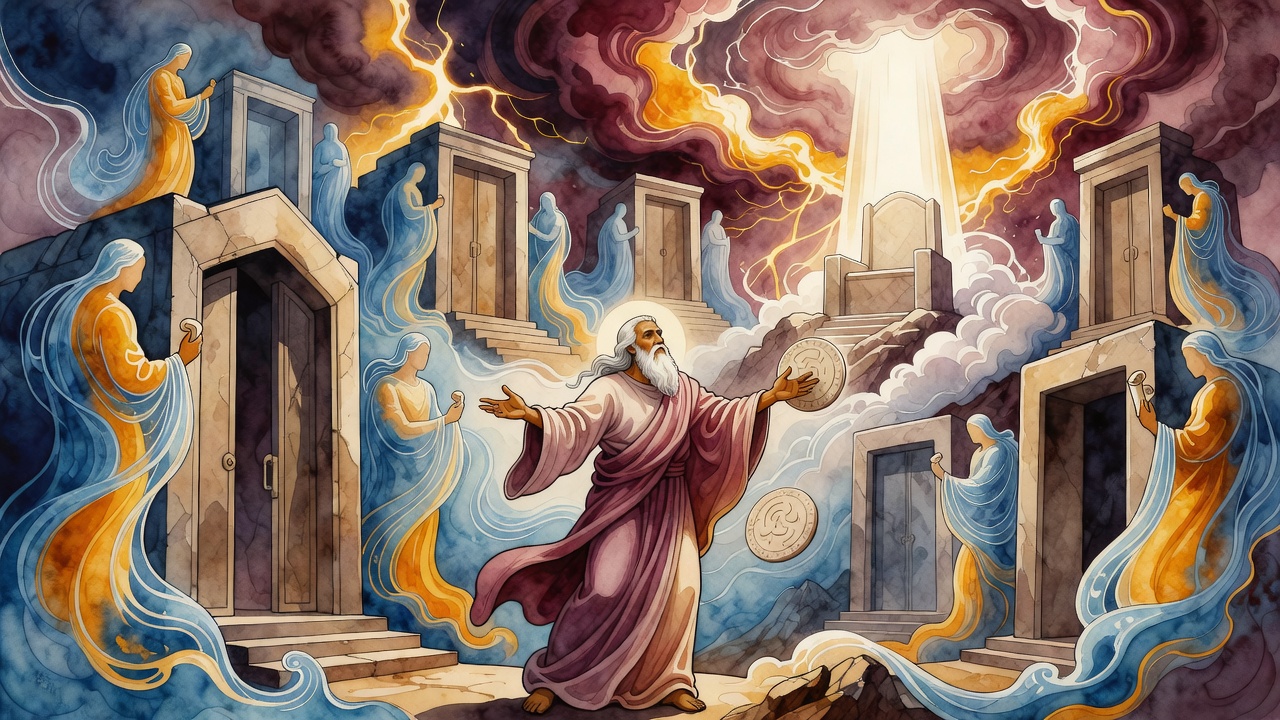
"Quiet. At the first palace they ask him nothing. At the second, nothing. At the third, the fourth, the fifth, the sixth, the seventh, nothing. He holds up his seal and the gatekeepers open and he walks through like a man who was expected."
Ishmael asked what the seal was made of. Nehunya told him it was made out of every hour a man had kept clean while nobody was counting. Then he sent Ishmael home to sleep. Ishmael did not sleep.
Six Gates Opened Without a Question
The men who do it call it going down, though everything about it climbs.
Ishmael sat on the floor before dawn, put his head between his knees, and said the names he had been taught. The room let go of him.
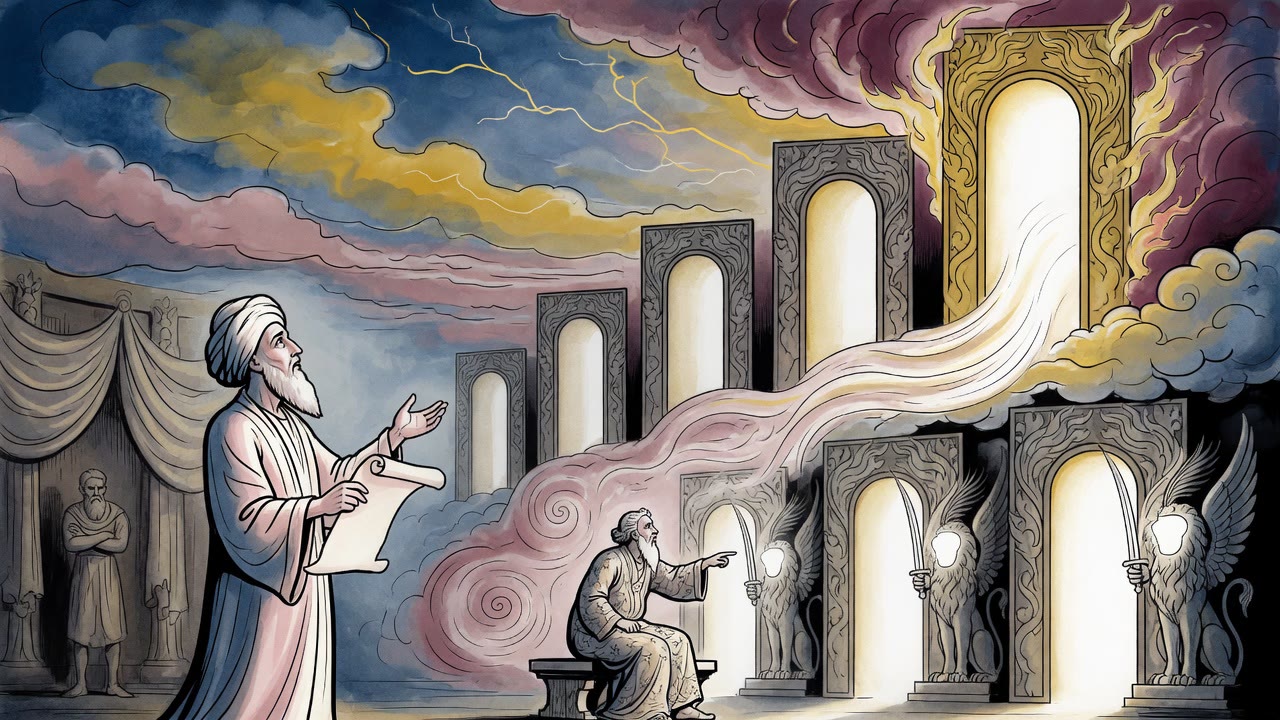
At the first gate the keeper turned with a question already shaped in his mouth. Ishmael raised the seal. The keeper stepped back and the fire across the doorway parted like a curtain pulled off its rod. At the second gate the same. At the third and the fourth the keepers watched him pass and said nothing, which was worse, because a challenge would have meant he still belonged to the ordinary order of examinations. By the sixth he understood that whatever waited at the end of the corridor would reach him at full strength, nothing worn off it by argument.
The seventh gate stood open before he arrived.
The Throne of Glory Had Its Arms Around the King
He had braced for a court. He walked into a hymn.
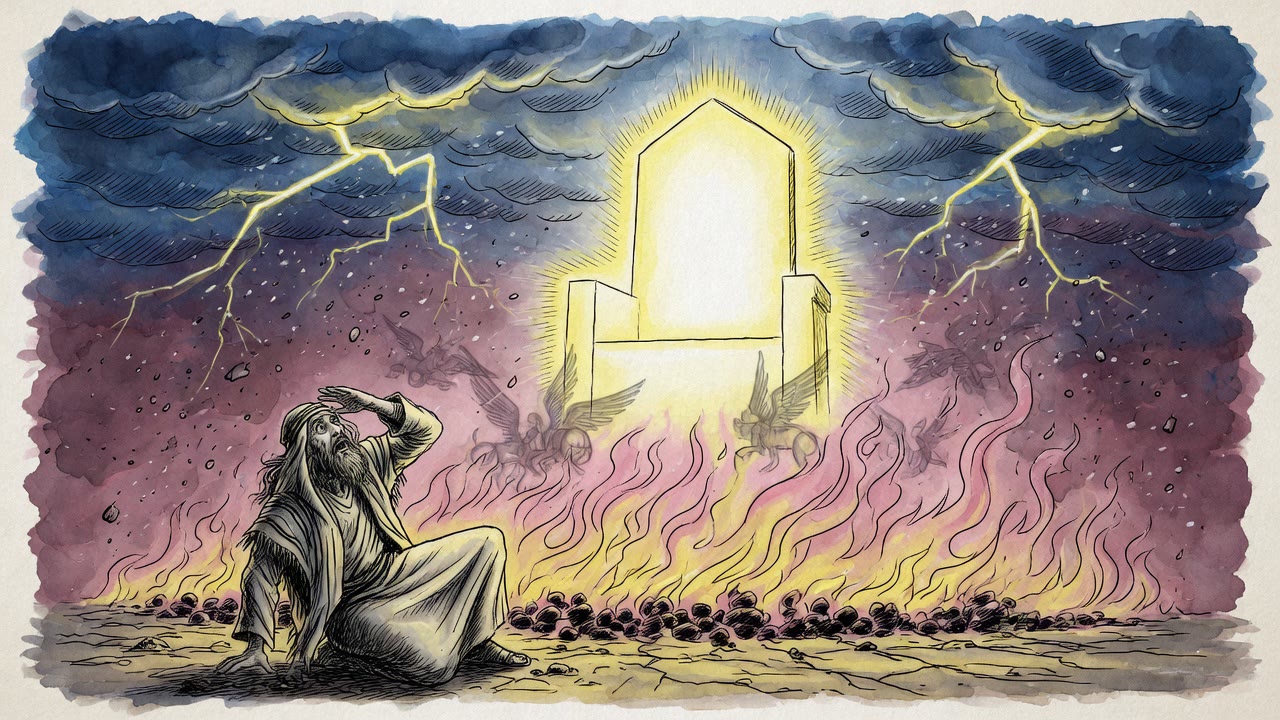
The Throne of Glory was not waiting under its King in silence. It sang. It had folded itself around Him the way a bride folds herself around a bridegroom in the bridechamber, and it begged out loud, in front of the whole seventh palace, for the King to sit down and stay.
"Thou art the great Lord the mighty and fearful," the throne sang, "the righteous and pious, the holy and the faithful, slow to anger and plenteous in mercy and truth."
Ishmael waited for the end of it. There was no end. The praise turned back on itself and came in again through a different door. "It is Thou who art Great, Thee do all the great magnify. It is Thou who art Mighty, Thee do all the mighty declare strong. It is Thou who art Holy, Thee do all the holy hallow." Each attribute handed itself to the next, and the last handed itself back to the first, and the spiral wheeled above the seat of glory with no beginning he could locate and no seam where a man might climb out.
The Words Were Sealed and They Burned
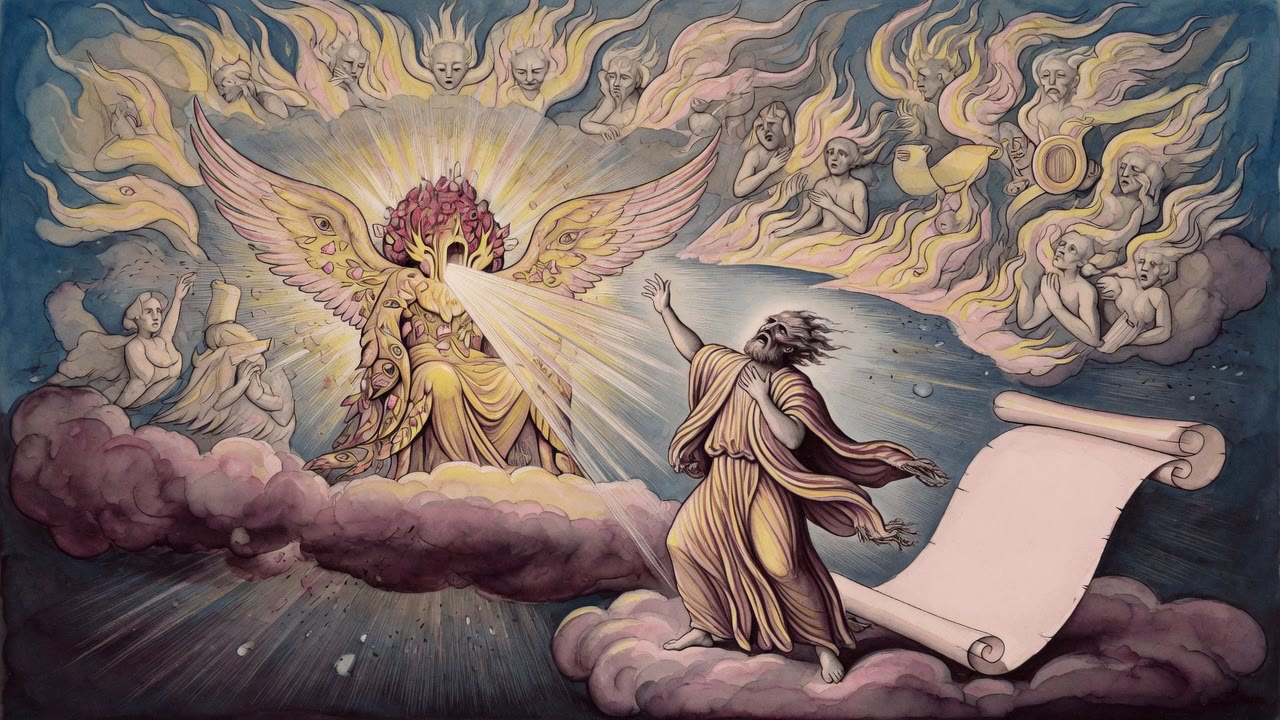
The angels of that hall were already inside the wheel of it, mouths open, taking the verses as they came around. There were two things a mouth could do in the seventh palace. Sing, or burn.
Ishmael sang.
The words came down from somewhere above the throne, sealed the way a letter is sealed, hot enough that his tongue went numb around their shapes. He got a handful of them out. They passed through him like a coal carried in a fold of cloth, and what stayed with him was the burn and not the coal.
Then he lifted his eyes toward the seat, which he had warned his own students never to do. The face above it was lovely and majestic, a face of beauty, a face of flame, and it outshone every power standing in that hall.
Whoever looks at Him is torn apart on the spot. Whoever catches His beauty pours himself out like a jar tipped over. Those who serve Him today do not serve Him tomorrow. Ishmael had recited all of that in a classroom as though it were a rule about somebody else. It was a description of what was happening to him.
He got his eyes back down. The song went on over his head without any sign of noticing that a man had been in the room.
He Came Back With the Tune Alone
When the room took him back, the schoolhouse was still dark. A cup of water sat on the step where a student had left it for him. Ishmael took it, held it, and set it down without drinking, because the thirst was the one thing he had carried out of the seventh palace.
He had the tune. The words had been sealed when they were handed to him, and they scorched his mouth on the way down. That night the men in the schoolhouse heard him through the wall. He was singing three words over and over, holy, holy, holy, then a breath, then holy again, hunting through the spiral for the place where the hymn was supposed to let a man stop.
The seal had opened seven gates. It had not taught him how to leave a song that had no last verse.
← All myths