6 min read

Nehunya Opened the Secret of the World Against Rome's Decree

Rome votes to destroy the sages, so Nehunya reads a chain of divine names by their final letters, goes up, and hears God confess the ruin.

Curated by Arthur · Told by Maggid ·
Table of Contents
  1. The Word From Rome Reached the Study House
  2. The Names Ordered by Their Last Letters
  3. Rivers of Lava Went Round the Throne
  4. Surya Stood in the Glare
  5. The Voice Took Its Own Share of the Ruin
  6. He Came Down and the Decree Still Stood
Nehunya Opened the Secret of the World Against Rome's Decree Click for full size

The Word From Rome Reached the Study House

The messenger came in with the road still on him and would not sit down. Rome had taken counsel against the mighty ones of Israel, and the counsel was to destroy them. Not a levy. Not a governor in a bad season. A decision reached in a chamber none of them would ever stand in, about men whose names were already written down there.

Rabbi Ishmael looked to the front of the room. The old man there had not moved when the messenger spoke, and he did not move now, and his stillness pulled the air out of the place faster than shouting would have.

Then Rabbi Nehunya ben Hakkanah laid both hands flat on the table.

"Bring me the names," he said.

The Names Ordered by Their Last Letters

What came was not a prayer. It was a list, and the list was one power wearing many spellings. Totrosyah. Totrosy'a. Totrosih. Totrosiel. Totrosi'ai. Totrosith. Standing in among them were Zurtag and Zoharariel and 'Ashrawwili'ai, and every one of those names pointed at the same seat of judgment, because no mouth can carry the whole designation in one breath and go on breathing afterward.

The order was the hard part. A man does not run the chain from Totrosi'ai down to Totrosith the way a boy runs a genealogy. He takes the letters that finish the names, yod, he, aleph, heth, lamed, gimel, kaph, pe, zade, and sets them in the sequence of the alphabet. The tails of the names carry the weight. The heads open nothing.

Ishmael had learned the chain years earlier as a curiosity of the school. He heard it now as a bar being worked under a sealed door.

Nehunya spoke it once, quietly, in the correct order. He told the room he was opening the secret of the world. His chin came down toward his chest, and after that he was no longer with them.

Rivers of Lava Went Round the Throne

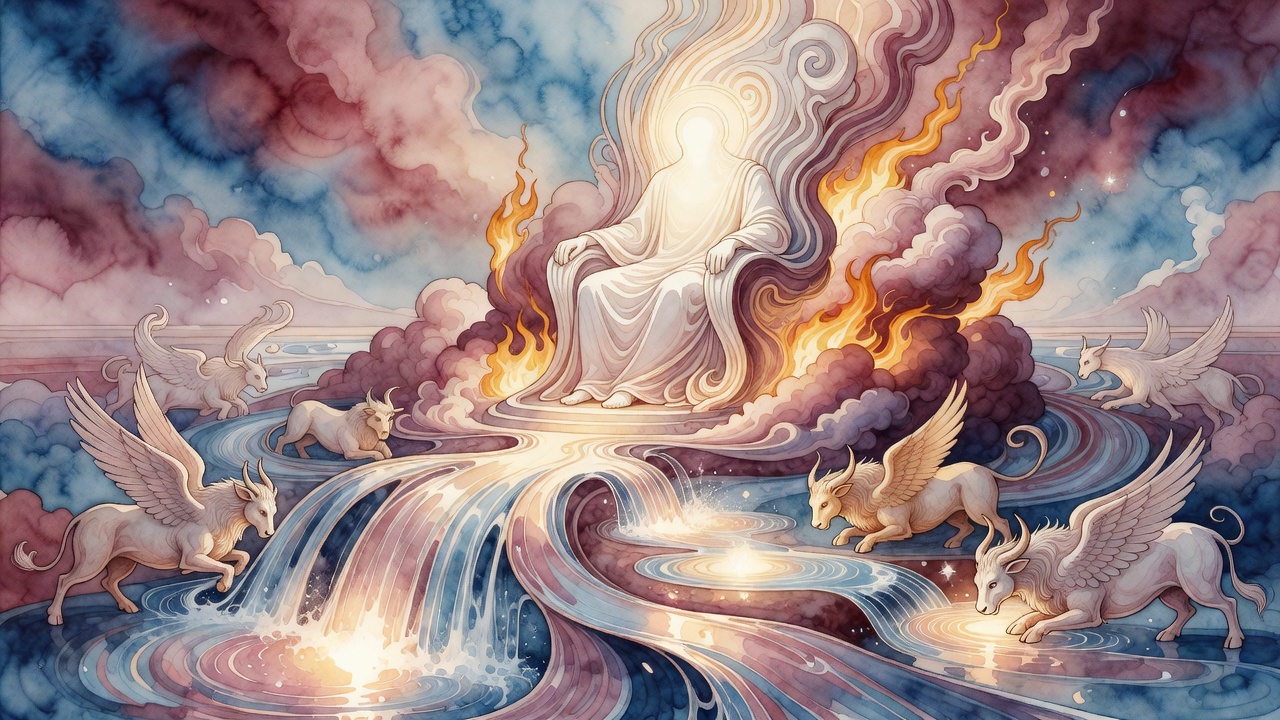
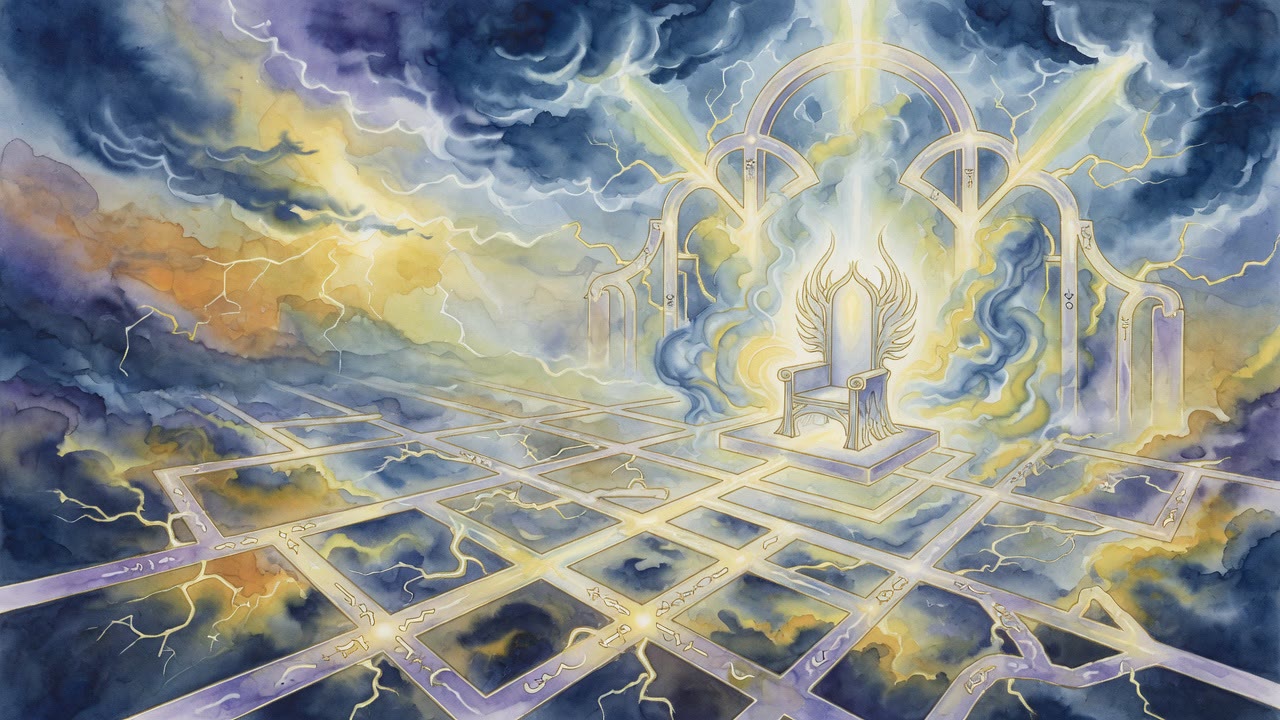
Nothing above had been arranged for a visitor's comfort. Lightning crossed and recrossed the upper air, and beneath the lightning ran rivers of lava, ringing the throne one circle inside another. Bridges had been flung over the burning the way a road is flung across a gorge, and the fire under them was not one degree cooler for having a road above it.

Dust rose off the conflagrations, and smoke came up behind the dust and swallowed the chambers of the seventh heaven, so that the palaces stood inside their own weather. Through all of it the holy beasts held their places. The cherubim held theirs. The ophanim turned, the wheels of the Shekhinah (the Divine Presence), and the King sat upon the throne of His glory in the middle of that burning arrangement, which had not been softened by so much as a spark because a man in a lower study house had said nine letters in the right sequence.

Surya Stood in the Glare

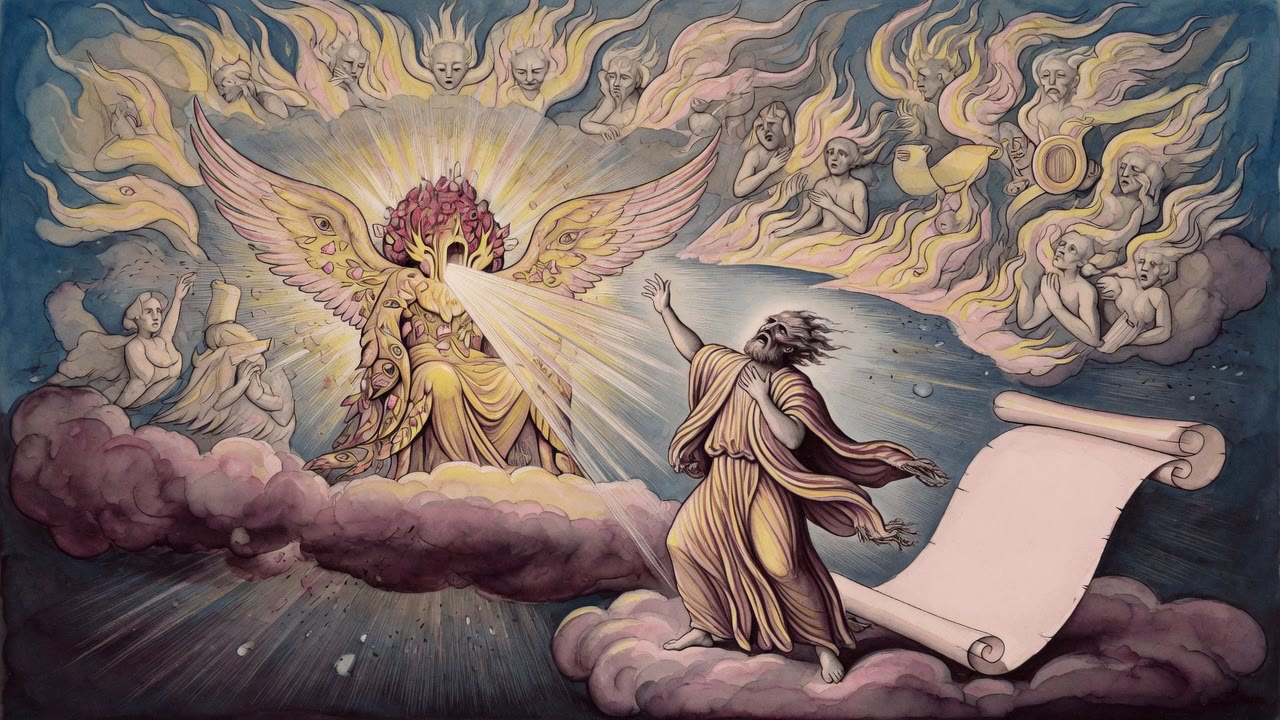
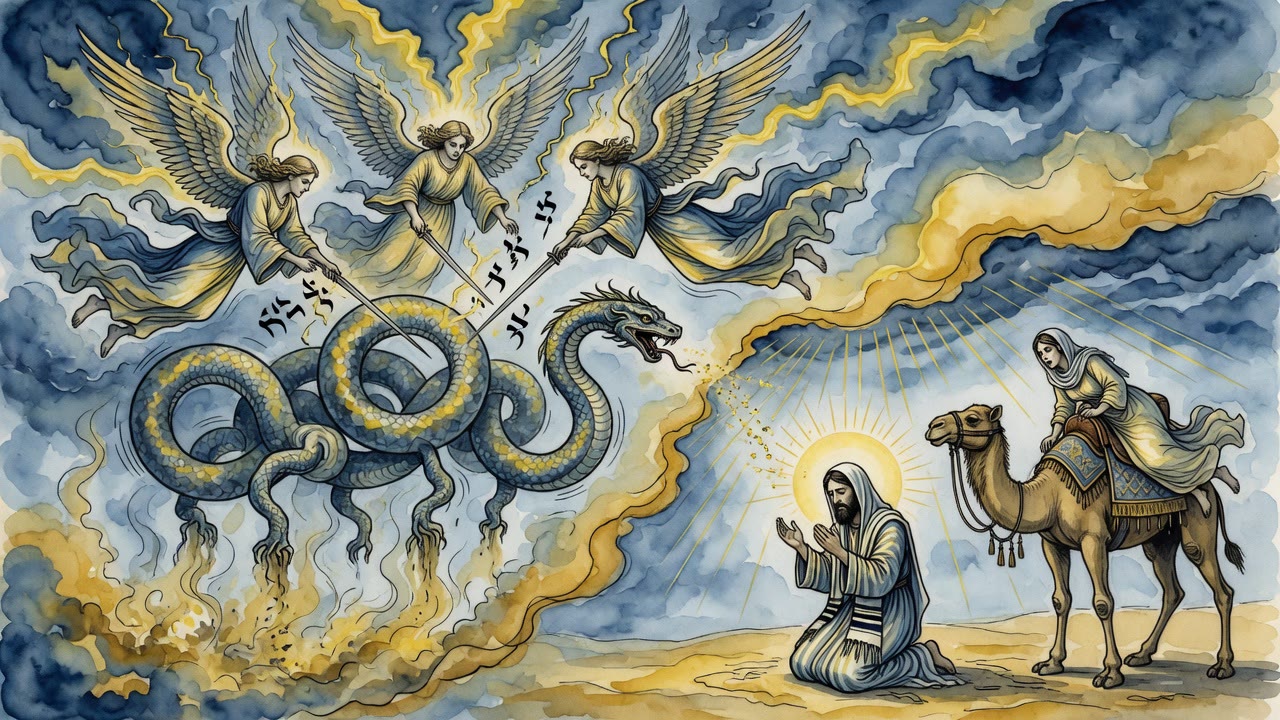
Surya, Prince of the Presence, servant of Totrakhiel who is called the Lord, stood where the light was worst and did not shade his face.

Nehunya had come up with a sentence ready in his mouth. The wicked city has voted. Lift the decree. He had climbed to the one place in creation where a request that size has an address, and he stood there with the lava turning slowly at his back.

The throne room spoke first. It was not speaking about Rome.

The Voice Took Its Own Share of the Ruin

"You had rest between your captivities," the voice said. "A long rest. I was waiting to hear the words of My Law come out of your mouths again."

Nehunya braced for the second half of the verdict.

It turned around and went the other way.

"You have not done well," the voice said, "and I have not done well. I was angry against you, and I arose, and I brought utter destruction on My city and My house and My children."

The lava kept its circles. The bridges kept standing over the fire. God had put His own name on the ruin of Jerusalem, out loud, in the seventh palace, in front of one visiting mortal and every burning creature that serves there.

"Shall that which endures forever and ever, world without end," the voice went on, "contend with that which has no endurance but for a year, or two, or ten, or thirty, and at the most a hundred years, and then passes away?"

That was the arithmetic of the distance between them, spoken by the side that never dies about the side that dies at seventy and argues the whole way down. After the arithmetic came the sentence Ishmael would repeat afterward without softening a syllable of it.

"But in that you have rebuked Me, you did well. Already have I accepted your rebuke."

He Came Down and the Decree Still Stood

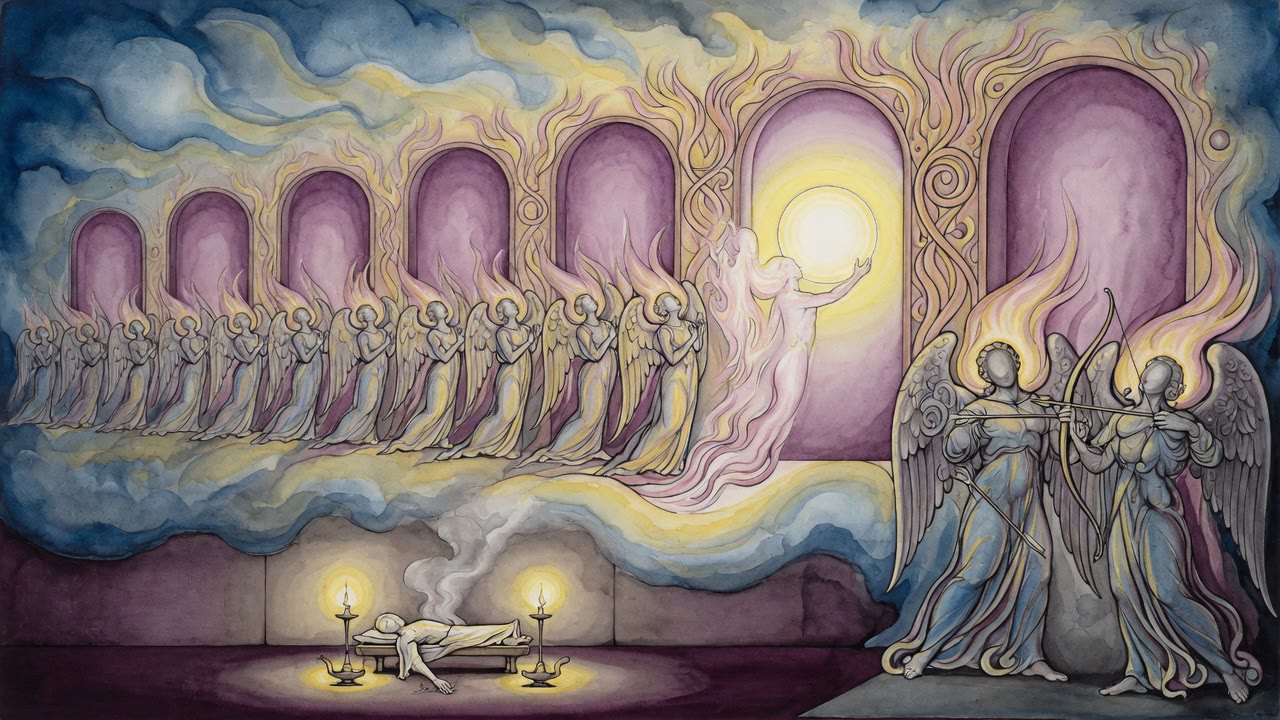
Nehunya opened his eyes in a room that smelled of lamp oil and old parchment. Rome had not been struck. The counsel taken against the mighty ones of Israel sat exactly where it had been taken, and someone had lit the lamps without being asked.

He did not tell them the decree was cancelled.

He told them what the throne had said about itself.

Ishmael wrote the chain out that night, Totrosyah through Totrosith, the tails of the names laid in the order of the alphabet, and set beside it what the King had granted a people who shouted at Him from under the rubble of His own house. They had rebuked God. God had taken the rebuke and called it good work.

Out past the wall, in the direction of the sea, the empire that had voted went on with its evening.


← All myths
From the tradition

Sources

2 sources

The texts behind this telling. Some cards carry a translation of the source; others are our own retelling of it, and each card says which. Every card links out to the original.

Heikhalot Rabbati 15:1Heikhalot Rabbati

Retold in our words. Read the original at the link below.Sefaria-hosted English translation · CC-BY

What would you do?

The ancient mystics grappled with this too, and their answers often led them to the deepest secrets of the cosmos. one of those secrets from the Heikhalot (the heavenly palaces) Rabbati, a text filled with visions of heavenly palaces and powerful angels.

Our focus? A rather…unusual name. Actually, a whole string of them. Or maybe it’s Totrosyah? Or Totrosy’a, Totrosih, Totrosiel… you get the idea. The text lists a veritable alphabet soup of variations, all referring to the same powerful entity. It even throws in Zurtag, Zoharariel, and ‘Ashrawwili’ai for good measure!

So, what’s with all the names? Well, the Heikhalot Rabbati tells us that to properly engage with this section, to unlock its power, you have to read these names in a specific order. And here’s where it gets really interesting: the order isn't straightforward. It instructs us to read "Totrosi’ai to Totrosith according to this order, Yod, He, Aleph, Heth, Lamed, Gimel, Kaph, Pe, Zade, etc." In other words, you take the final letters of each name, and arrange them according to the Hebrew alphabet.

Think of it as a divine code, a key hidden within the sounds themselves. By reciting these names in this precise sequence, you're potentially tapping into something immense. But what?

The text then shifts to a story about Rabbi Ishmael, who recounts a powerful vision of Rabbi Nehunya ben Hakkanah. This wasn't just any vision. Rabbi Nehunya witnessed it when he saw that "the wicked city Rome had taken counsel against the mighty ones of Israel to destroy them." Talk about pressure!

Faced with impending doom, Rabbi Nehunya reveals "the secret of the world." He gazes upon the King (that is, God) and His throne in all its glory. He sees the holy beasts, the cherubim – those powerful angelic beings – and the ophanim, the wheels of the Shekhinah, God's divine presence.

Imagine the scene: lightning flashing, lava streams encircling the throne, bridges spanning conflagrations, dust and smoke swirling, obscuring the very chambers of the seventh heaven! It’s a vision of immense power and terrifying beauty.

And amidst all this cosmic chaos, we find Surya, the Prince of the Presence, a servant of Totrakhiel, who is described as "the Lord" – a title often associated with the divine.

What does it all mean?

Perhaps the multiple names of Totrosi’ai represent the many-sided nature of divine power, the different aspects of God's presence that can be invoked in times of need. Maybe Rabbi Nehunya's vision shows us the raw, untamed energy that exists beyond our everyday reality, a force that can be accessed through the right spiritual keys – in this case, the coded recitation of divine names. And perhaps Surya's role is to mediate between that awesome power and our world.

The Heikhalot literature often deals with these kinds of ascensions, journeys to the divine throne room. It’s about finding strength in the face of overwhelming odds, about connecting to something larger than ourselves when everything seems lost.

So, the next time you’re feeling overwhelmed, remember the story of Rabbi Nehunya ben Hakkanah and the many names of Totrosi’ai. Remember that even in the darkest of times, there are hidden keys, powerful forces, and the potential for divine intervention. Maybe, just maybe, the secret to unlocking that power lies within the very words we speak.

Full source
Heikhalot Rabbati 29:2Heikhalot Rabbati

Retold in our words. Read the original at the link below.Sefaria-hosted English translation · CC-BY

These mystical texts describe journeys through the heavenly realms, encounters with angels, and glimpses into the divine throne room itself. And in this particular section, we find a truly audacious dialogue – a back-and-forth between God and… well, us.

The scene: a conversation between God and the Jewish people following periods of exile. It's raw, it's honest, and it's unbelievably human. God essentially says, "Look, you messed up. You had a good thing going, a long rest between captivities, and I was eager to hear the words of my Law from your mouths again."

Then comes the twist. God doesn't just blame us. “Ye have not done well, and I have not done well.” God admits fault! "I was angry against you and arose and brought utter destruction on My city and My house and My children." Jerusalem and the Temple were destroyed. A devastating exile began. God acknowledges his role in that tragedy.

The text continues with God questioning the very nature of eternity versus the fleeting nature of human life. "Indeed, shall that which endureth forever and ever, world without end, contend with that which hath no endurance but for a year, or two, or ten, or thirty, and if at most for an hundred years, and then passeth away?" It’s a rhetorical question, of course, highlighting the vast difference in perspective between the divine and the mortal.

But here's where it gets really interesting. God then says, "But in that ye have rebuked Me, ye did well." We rebuked God! And God accepted it. "Already have I accepted your rebuke." The audacity of humanity to question the divine, to hold God accountable. And even more astounding, the willingness of God to listen, to acknowledge the validity of our pain and our anger.

This passage challenges our assumptions about the relationship between God and humanity. It's not a one-way street of obedience and unquestioning faith. It's a dialogue, a negotiation, even an argument. We can call out injustice and suffering, even when it seems to come from the highest source.

Perhaps it's a reminder that faith isn't about blind acceptance, but about wrestling with the big questions, about holding ourselves and the world around us to a higher standard. It tells us that questioning, even rebuking, can be a form of devotion.

The conversation in Heikhalot (the heavenly palaces) Rabbati isn't comfortable. It's challenging. But it's also deeply hopeful. It suggests that even in the midst of suffering and exile, there's room for dialogue, for growth, and for a deeper understanding of the complex relationship between humanity and the divine. And maybe, just maybe, that’s the most sacred journey of all.

Full source