5 min read

Fathers Fell When the Throne Stood Between Altar and Cella

Builders shaped foundation stones for a house still incomplete. Then the throne of glory hung between altar and inner room. Faces hit the floor.

Curated by Arthur · Told by Maggid ·
Table of Contents
  1. Stones Under Ordinary Hands
  2. Throne Between Altar and Cella
  3. Majesty That Had Been Withheld
  4. Wheels Around a Glory Already Here
  5. After the Face Leaves the Dust
Fathers Fell When the Throne Stood Between Altar and Cella Click for full size

Stones Under Ordinary Hands

The fathers shaped foundation stones where rooks had nested and where a house for God was trying to become more than a wish. Dust whitened their beards. Mallets taught the wrists the same lesson over and over. Cella, temple, altar, the whole structure, waited in the mind as lines that had not yet convinced the air. They worked because prophets had spoken and because exile without a house is a throat without a voice.

No one expected the sky to answer mid-swing. Expectation was for wages, for water, for a wall that would stand through winter. Holiness, they thought, would arrive later, after plaster, after the menorah 's (the lampstand) branches were set, after priests learned the new routes between knife and basin.

The mallet rose. The mallet did not fall.

Throne Between Altar and Cella

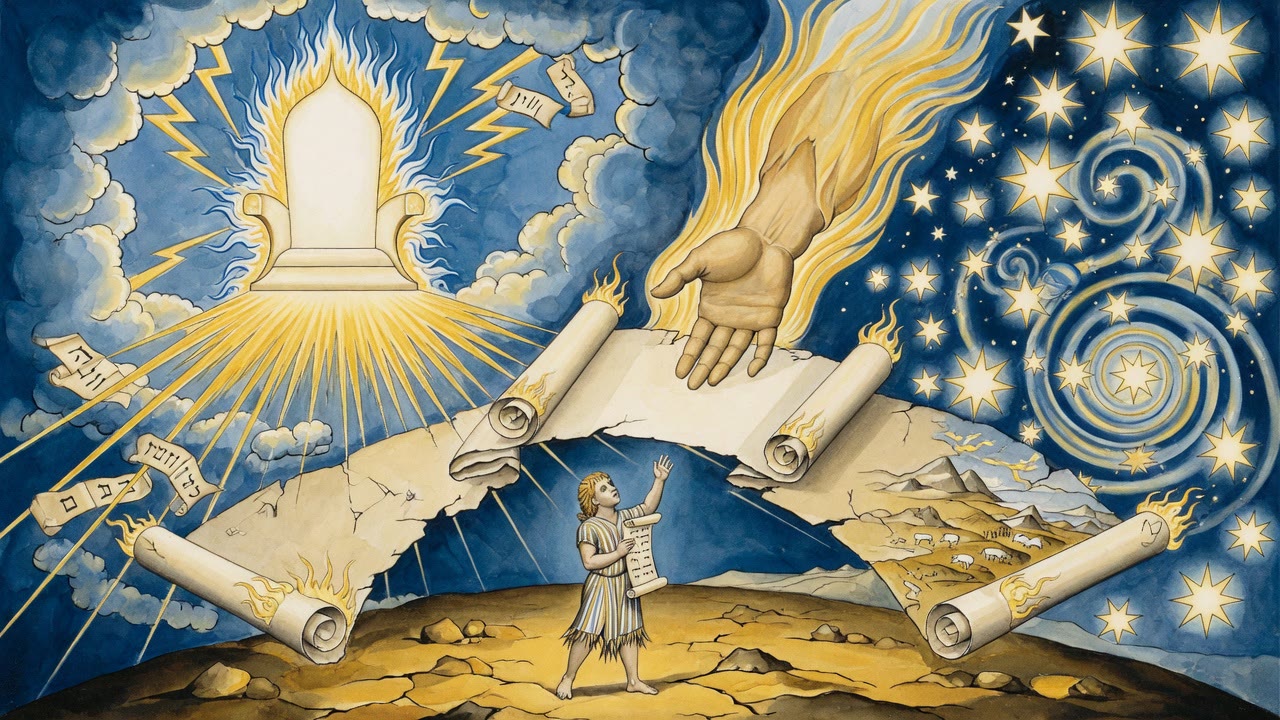
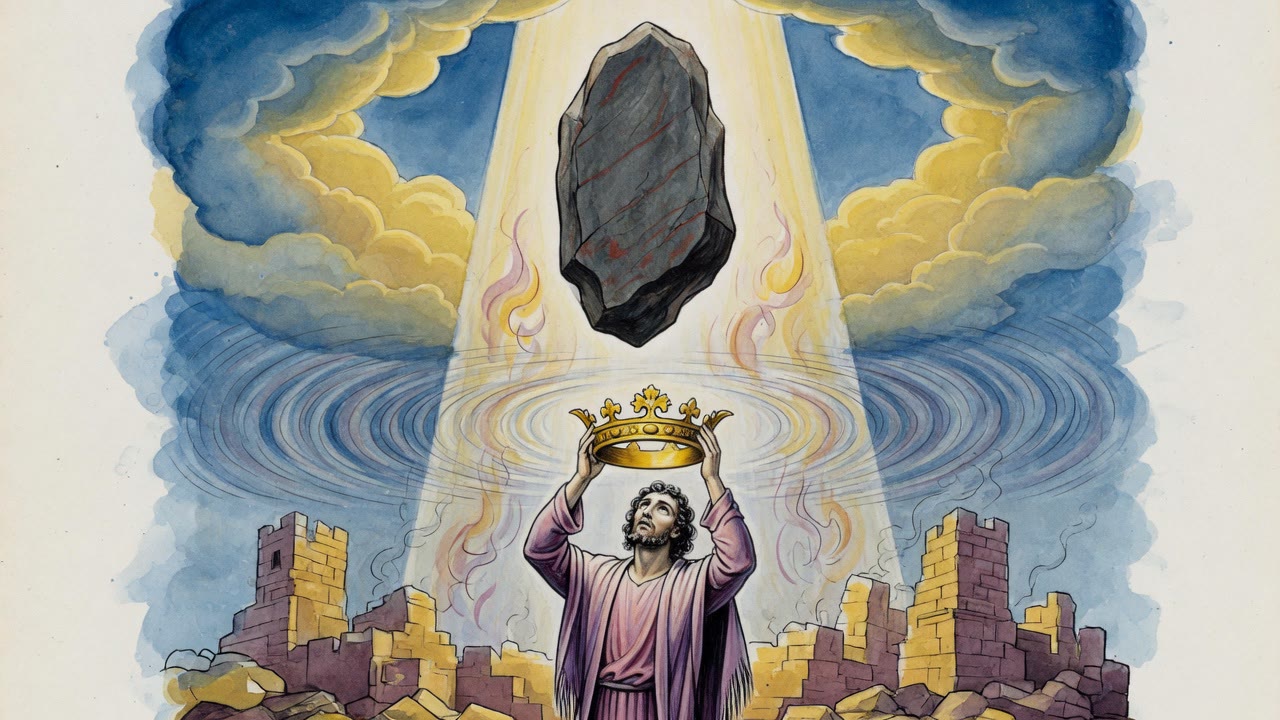
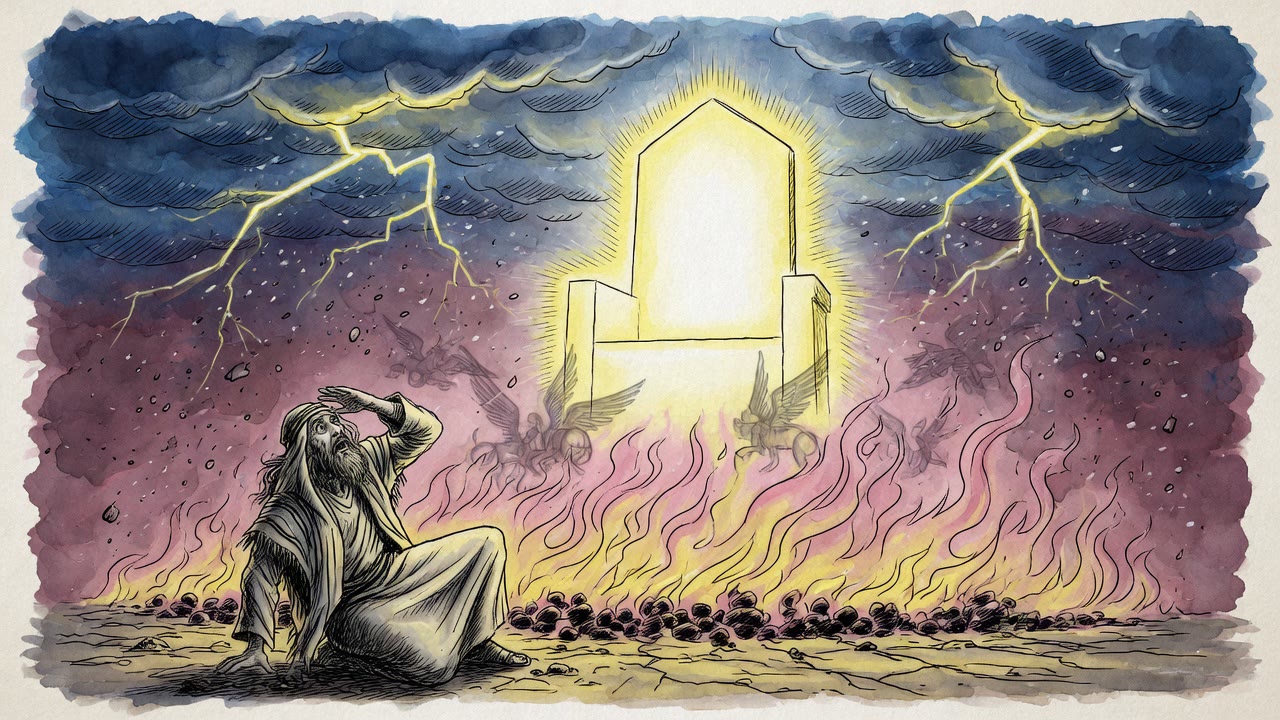
Over the place of the shaped stones the throne of glory stood on high between the altar and the cella, and the King of the World was upon it. Sight arrived faster than theology. Knees discovered the ground. Faces found dust that a moment earlier had been only construction dirt. The latter glory of this house shall be greater than the former, Haggai had said. The verse became heat on the skin.

Between sacrifice and inner room, between blood's future and silence's future, the throne made a third term that ruined every small plan. Men who had been arguing about beam lengths forgot numbers. Someone tried to speak a blessing and produced only a sound like cloth tearing.

The King did not give a speech. Presence was the speech. The fathers stayed down until staying down became the only accurate architecture.

Majesty That Had Been Withheld

From the day the Law was given until the last Temple rose, the Law was given but its majesty was not given. So ran the chain from Rabbi Eliezer the Great through Rabbi Akiba to Rabbi Ishmael in the Heikhalot hearing. Majesty, preciousness, glory, greatness, beauty, terror, reverence, fear, richness, loftiness, exaltation, trembling, splendor, strength, rule, and might: a whole orchestra missing while the score sat in the people's hands.

On the building site that missing orchestra arrived without warning. Torah without majesty is instructions. Torah with majesty is a weather system that can drop a man on his face beside a half-cut stone. The fathers understood, without a lecture, why generations had felt both gifted and starved. They had held the score. They had lacked the sound.

One elder whispered that he had kept mitzvot (commandments) all his life and never known they could weigh this much. No one contradicted him. Contradiction requires a mouth that still trusts itself.

Wheels Around a Glory Already Here

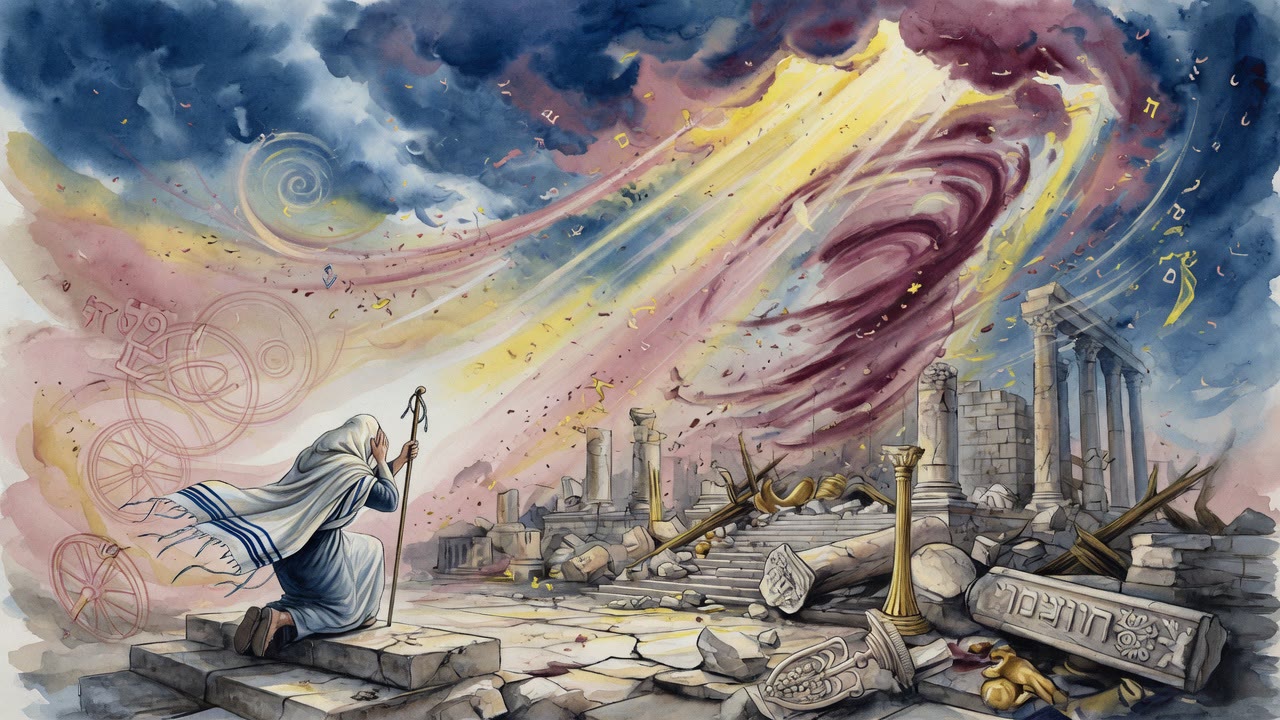
What the builders saw in horizontal space, the merkavah travelers (those who ascend to the divine chariot-throne) meet in vertical climb: servitors beloved and swift around the stone of the throne, exchanging sides as the wheel snatches them, faces so alike that identity becomes a chorus. The same government that spins above can, for reasons of its own, thin the air above a construction yard and let the throne be glimpsed where altar and cella will one day argue in ritual sequence.

The fathers were not trained descenders. They were laborers caught in a vision that did not ask for certificates. That is another kind of mercy and another kind of danger. Unprepared eyes still have to live afterward with what they cannot unsee.

When the intensity eased, some could not stand for a long time. Others stood too fast and vomited behind a pile of lumber. Holiness is not always tidy in the body.

After the Face Leaves the Dust

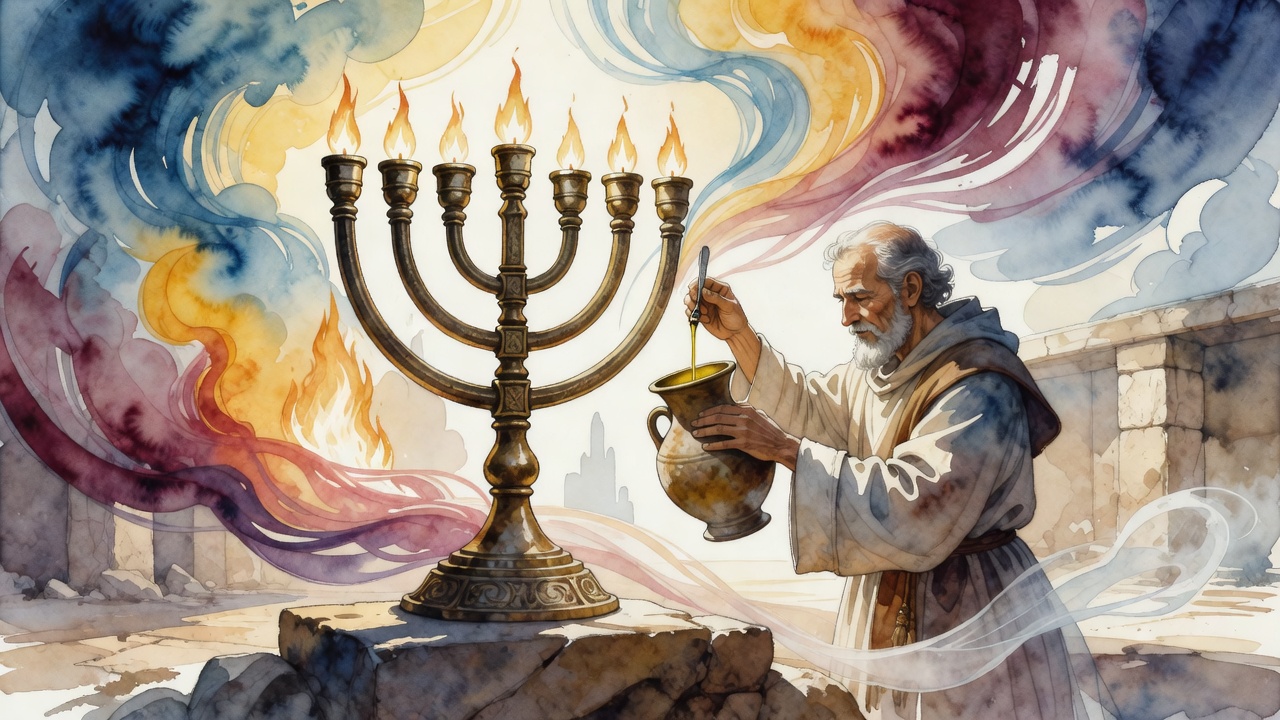
Work resumed because houses do not build themselves. The mallets sounded different. Each strike now knew it might be overheard. The menorah, when it was finally set, would burn under a memory of a throne that had not needed bronze to exist. Priests would walk between altar and cella along a path that had once held a King without walls.

Children asked what had happened that afternoon. Fathers answered with fewer words than children wanted. We fell down. He was there. Build carefully. The story entered family speech the way a scar enters skin, pale and permanent.

Years later, when majesty again seemed withheld and law felt like only law, someone would remember the dust in his grandfather's beard and the way the old man refused to walk between certain stones without a pause that looked like prayer and also like fear. The pause was accurate. Once a throne has stood between altar and inner room, ordinary space never fully returns to innocence. It keeps a heat that can wake a tired people when grass-life threatens to become their only theology.


← All myths
From the tradition

Sources

3 sources

The texts behind this telling. Some cards carry a translation of the source; others are our own retelling of it, and each card says which. Every card links out to the original.

Heikhalot Rabbati 32:1Heikhalot Rabbati

Retold in our words. Read the original at the link below.Sefaria-hosted English translation · CC-BY

Heikhalot (the heavenly palaces) Rabbati, a mystical text describing heavenly ascents and visions, gives us a glimpse into that pivotal moment. It wasn't just about laying stones and raising walls. It was about something far, far grander.

The passage speaks of this specific spot, "over the place of the rooks which they were shaping to found upon them the cella and the temple and the altar and all the structure generally.."

A cella is the inner chamber of a temple, the most sacred space.

Here’s where it gets truly breathtaking. According to Heikhalot Rabbati, "...when our fathers saw that the throne of glory was set on high between the altar and the cella, and the King of the World upon it, they at once fell upon their faces.."

The very throne of glory, the seat of GOD, manifest right there, between the altar where sacrifices would be offered and the innermost sanctum of the Temple. It's a moment of overwhelming revelation, a palpable sense of the Divine Presence. No wonder they fell on their faces!

The text then quotes (Haggai 2:9): “The latter glory of this house shall be greater than the former.” This verse, already powerful in its own right, takes on an entirely new dimension when understood through the lens of the Heikhalot vision. It's not just about the physical grandeur of the Second Temple surpassing the First. It's about something much deeper, a spiritual glory, an unveiling of GOD's presence that was even more profound.

What does this tell us? Perhaps that true glory isn't just about physical structures, but about the spiritual reality they represent. Maybe, like our ancestors, we too can catch a glimpse of that "throne of glory" in the spaces we create for connection with the Divine, in our synagogues, in our homes, and within our own hearts. Maybe we too can experience a glory greater than before.

Full source
Heikhalot Rabbati 28:3Heikhalot Rabbati

Retold in our words. Read the original at the link below.Sefaria-hosted English translation · CC-BY

Rabbi Ishmael, a central figure in mystical Jewish thought, shares a fascinating teaching from Rabbi Akiba, quoting Rabbi Eliezer the Great, in the Heikhalot (the heavenly palaces) Rabbati, a key text of the Heikhalot literature, which explores heavenly palaces and mystical ascents. What did Rabbi Akiba say? "From the day when the Law was given to Israel until the last Temple was built, the Law was given, [but] its majesty was not given.” for a second. The Law, the Torah, was given. The instructions were there. But something vital, something essential, was withheld.

What was missing? According to Rabbi Akiba, as recounted in Heikhalot Rabbati, it was a whole host of qualities: majesty, preciousness, glory, greatness, beauty, terror, reverence, fear, richness, loftiness, exaltation, trembling, splendor, strength, rule, and might. Quite a list. It paints a picture of something far beyond mere rules and regulations.

It's like having a beautiful musical score, but no orchestra to bring it to life. You have the notes, but not the feeling, the power, the sheer awe of the music.

Here's the real kicker: all these missing qualities, this lack of complete divine presence, persisted “until the last Temple was built and the Shekhinah (the Divine Presence) did not dwell in it.” The Shekhinah, often translated as the divine presence, is the immanent aspect of God that dwells among us. The Temple, the holiest place in Judaism, was meant to be its earthly home.

But, according to this teaching, even when the Temple stood in all its glory, the Shekhinah, in its fullness, was absent.

Why? The text doesn’t explicitly say. But we can infer. Perhaps these qualities, majesty, awe, and so on, aren't just given. Maybe they need to be earned. Perhaps they arise from the way we engage with the Law, from our devotion, our understanding, and our willingness to be transformed by it. Maybe the presence of the divine is not just a gift, but an active relationship.

This idea challenges us. It means that simply having the words of the Torah isn't enough. We have to strive to bring its full potential into being. We need to seek out the missing majesty, the hidden glory, the terrifying reverence. We have to work to make the Shekhinah truly dwell among us, even without a physical Temple.

So, how do we do that? How do we access those missing elements? It's a question that has driven Jewish mystical exploration for centuries. And perhaps, in the asking, we begin to find the answer. Perhaps, the very act of seeking is what unlocks the door.

Full source
Heikhalot Rabbati 10:2Heikhalot Rabbati

Retold in our words. Read the original at the link below.Sefaria-hosted English translation · CC-BY

Heikhalot Rabbati turns to Angels Surrounding the Merkabah Divine Chariot.

Heikhalot Rabbati, meaning "The Greater Palaces," is a key work in the Heikhalot literature, a collection of Jewish mystical texts describing ascents through heavenly realms. This particular passage paints a vivid picture of the angels surrounding God's throne.

Around this Merkabah, around the very stone upon which the throne of glory rests, are these incredible beings.

The passage describes them as “servitors beloved, servitors lovely, servitors who hasten, servitors swift.” They’re not static figures; they're dynamic, constantly moving, their positions shifting. “As the stone of the throne of the glory returneth upon them, as the wheel of the Merkabah snatches them, they who stand to the right return and stand to the left and they who stand to the left return and stand to the right…” It's a mesmerizing dance, a constant exchange.

But here’s the really mind-bending part: their faces are identical. "He who beholdeth the other saith, 'This is he,' for the feature of the face of the one is like the feature of the face of the other, and the feature of the face of the other is like the feature of the face of the one.” Imagine seeing a multitude of beings, each a perfect reflection of the others, moving in perfect synchronicity around the throne of God! What does it mean?

Perhaps it speaks to the ultimate unity of divine service. These angels, though many, are essentially one in purpose, one in devotion. Their individual identities are subsumed into a collective expression of praise and adoration. Their actions reflect the perfect order and harmony of the divine realm.

The passage ends with a powerful exclamation: "Happy the King of whom those be the servants! And happy the servants of whom this be the King! Happy the eye which feedeth itself... and which gazeth upon this wonderful light, a vision wonderful and exceeding strange!" It's a moment of pure awe and reverence. It's an invitation to consider the sheer magnificence of the divine, even if we can only glimpse it through the veil of mystical language.

The final words echo the familiar declaration of holiness: "Holy, holy, holy." This phrase, originating from (Isaiah 6:3), is a powerful reminder of God's transcendence and otherness. It’s a fitting conclusion to a vision that challenges our understanding of reality and invites us to contemplate the mysteries beyond our grasp.

So, what do we take away from this glimpse into the Heikhalot Rabbati? Perhaps it's a reminder that even in the midst of chaos and confusion, there is a divine order, a perfect harmony at the heart of existence.

Full source