6 min read

The Descender Who Heard God Mourn His Ruined Temple

Coming down from the palaces, a mystic hears a voice in Aramaic mourn Jerusalem, then God confess He aches to rebuild His burned Temple.

Curated by Arthur · Told by Maggid ·
Table of Contents
  1. The Descent From the Throne
  2. A Voice Mourning in Aramaic
  3. The One Breath He Loved More Than the World
  4. The King of Many Names Who Waits
  5. The Descender Carries the Answer Down
The Descender Who Heard God Mourn His Ruined Temple Click for full size

The Descent From the Throne

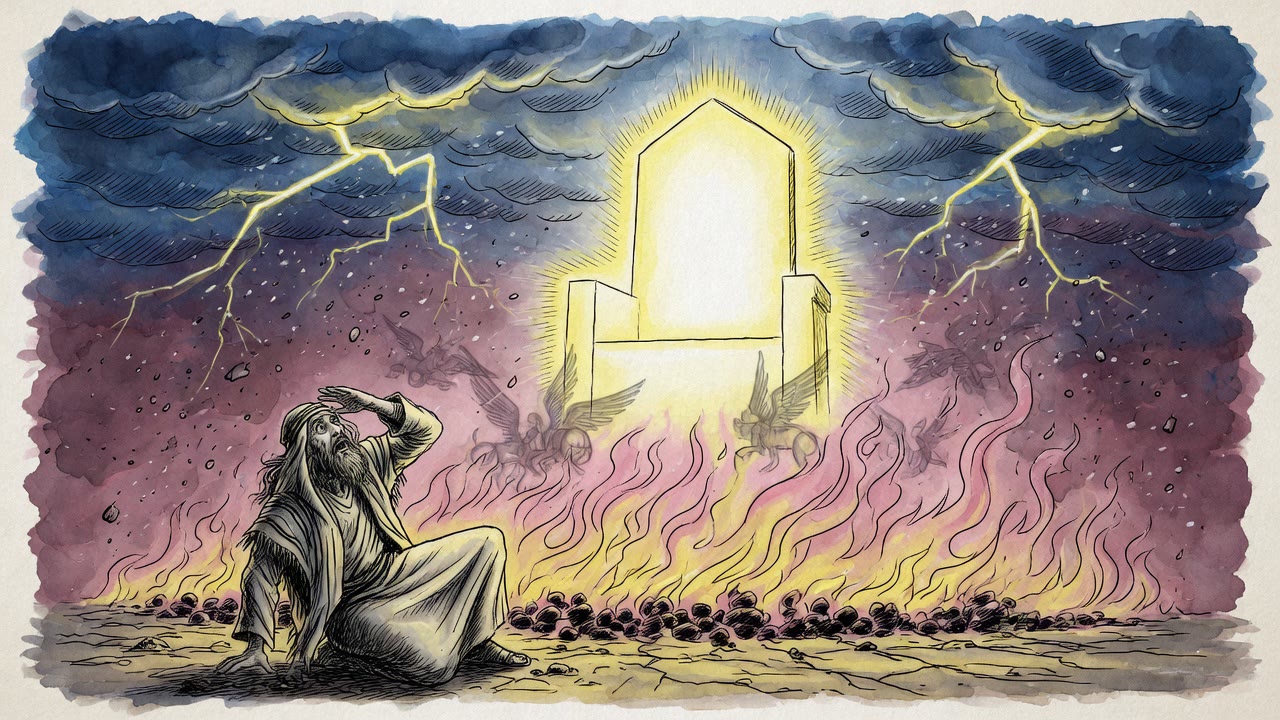
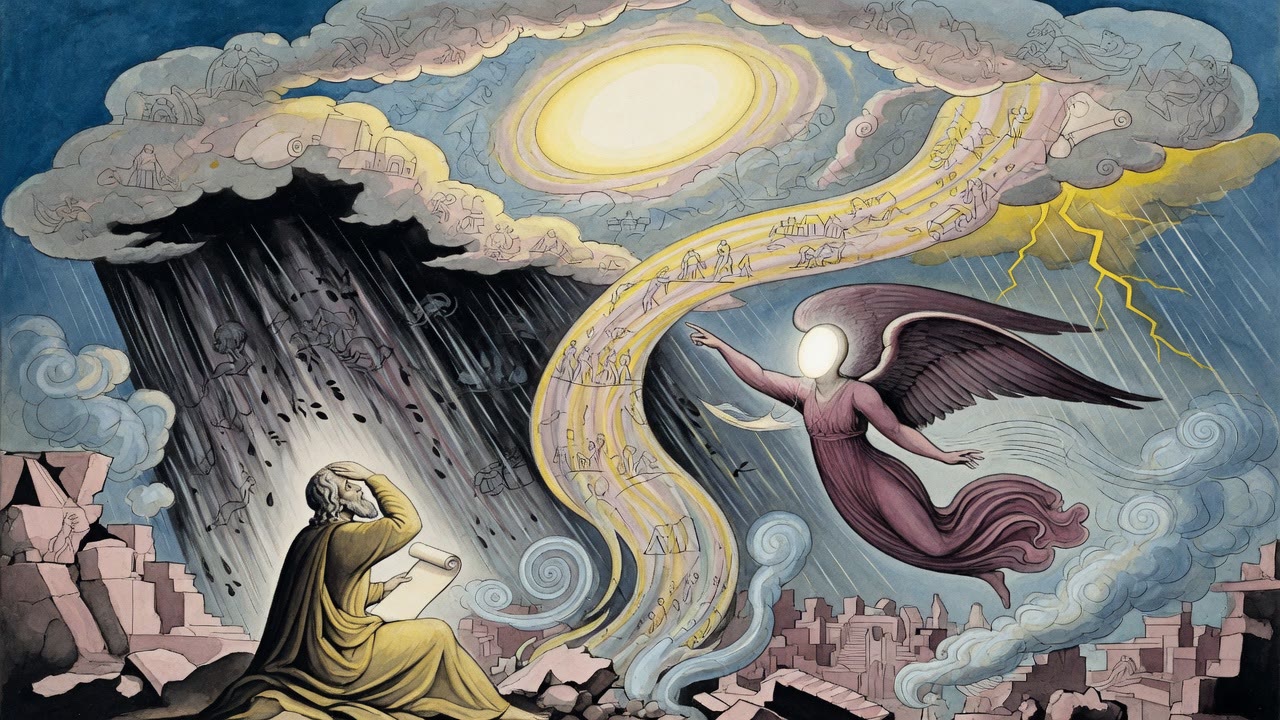
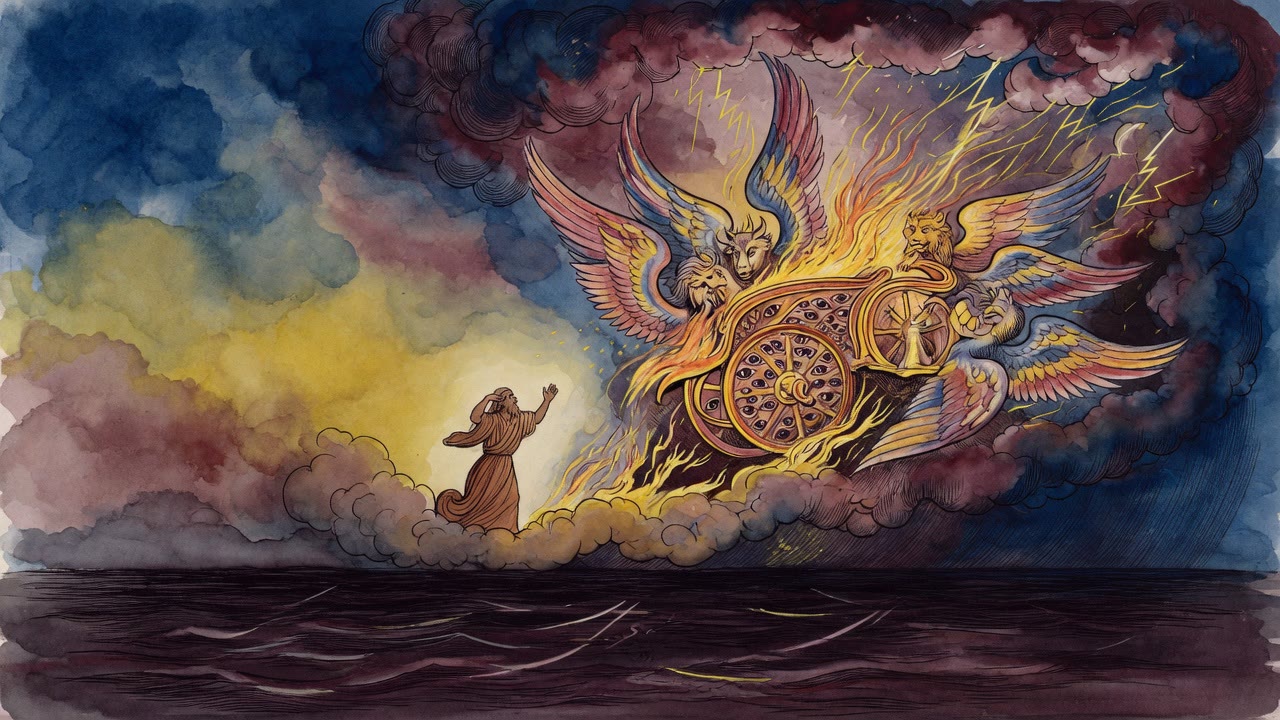
Rabbi Ishmael came down from the highest palace with the hymn still burning in his mouth. He had stood where the descenders to the chariot are set among the singing ones, close enough to the Throne that the light had weight. Now the gate behind him sealed. The brightness thinned to something a man could carry. His feet found the lower halls, and the praise cooled on his tongue, and before he had crossed a single chamber a voice reached him from the heights above his head.

It was not singing. It spoke in Aramaic, the plain tongue of the streets of Jerusalem, the words a mother used with her child and a seller used at his stall. Nothing in the palaces spoke that way. The angels praised in a speech of fire. This voice used the language of home, and it used it to grieve.

A Voice Mourning in Aramaic

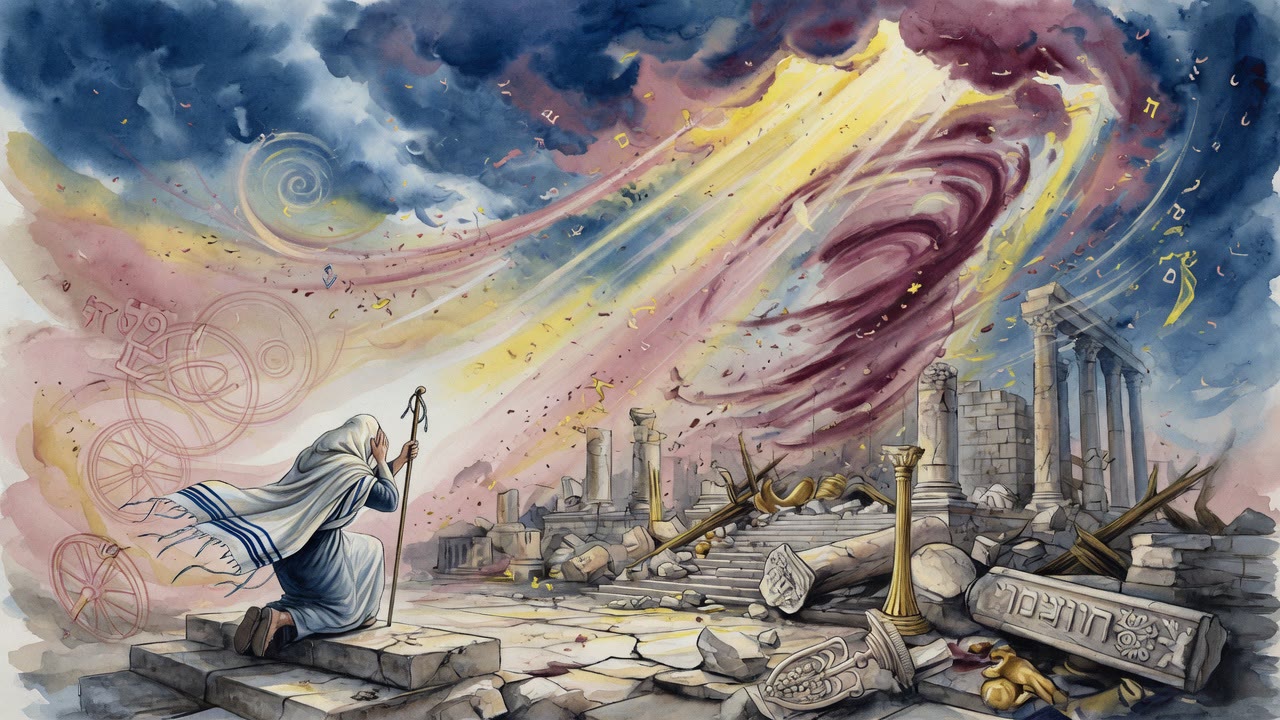
"The holy shrine shall be a ruin," the voice said, "and the Temple, a fire burning."

Ishmael stopped on the stair. He had just come from the courts of heaven, and here was a sentence about a house of stone below, spoken as if the ruin were already smoking.

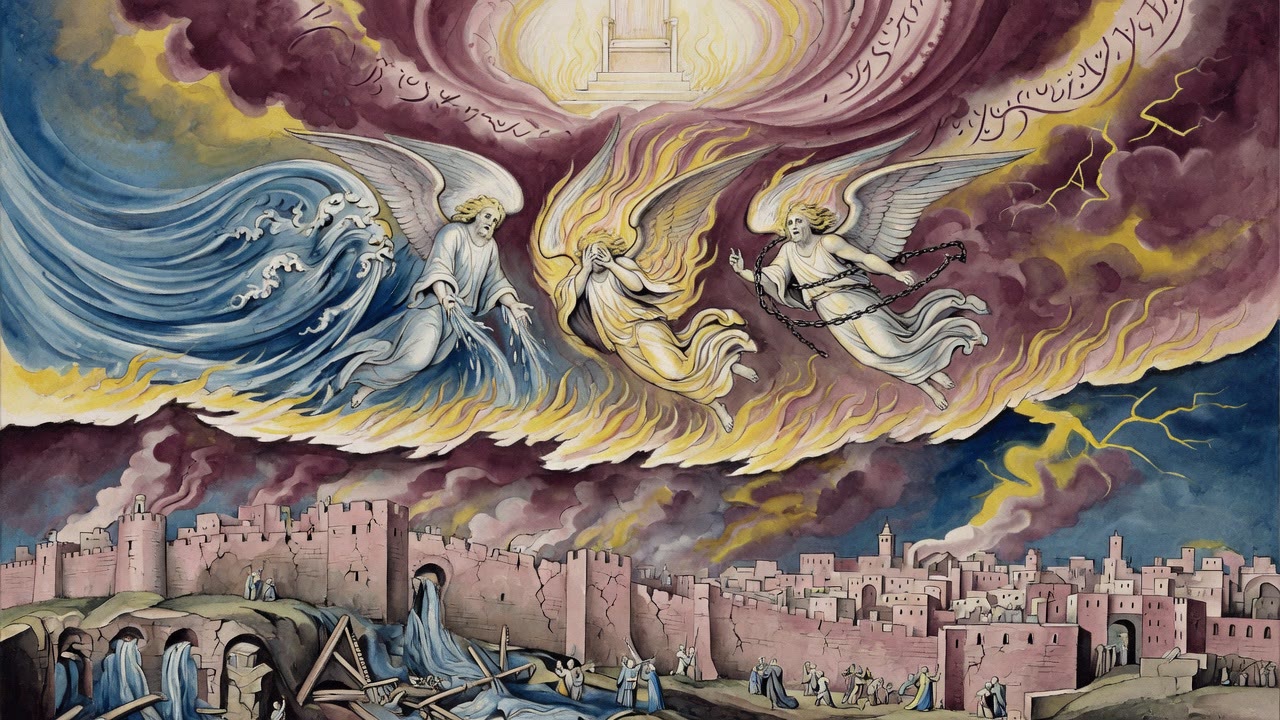
"And the dwelling of the king, desolation," the voice went on, "and she in whom the king rejoiced shall mourn as a widow. And the virgins and the youths shall be carried off, and the servants of the king killed. And the pure altar polluted, and the table that was set before the Lord taken as spoil by the enemy."

He knew that table. He knew the altar and the loaves laid out in their rows. The voice was naming them one by one the way a man counts his dead. Then it reached the end.

"And Jerusalem shall be desolation, and the land of Israel trembling."

The cold went through him. He put a hand to the wall of the palace and found it warm, humming, alive with song, while the words in his ears buried a city.

The One Breath He Loved More Than the World

He waited for the heights to answer the grief with anger. What came instead was quieter, and it was the King's own voice, and it was not speaking about vengeance. It was speaking about love.

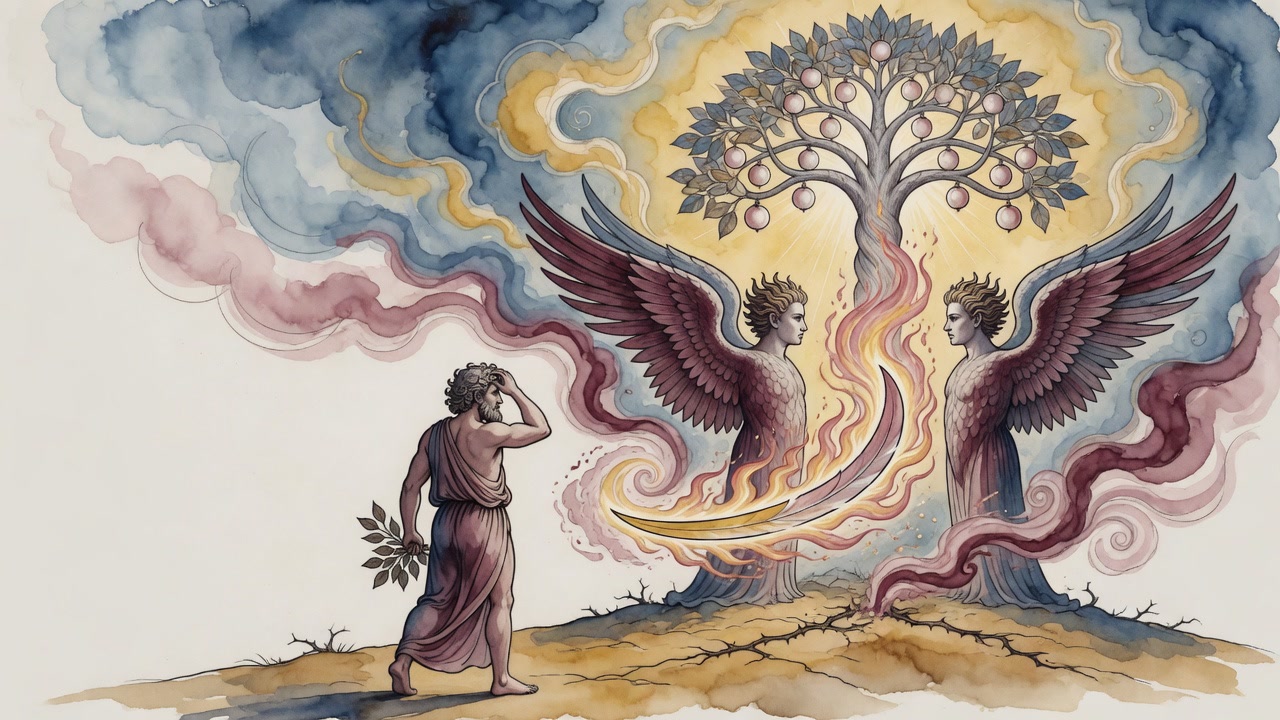
"I have no pleasure in all the world that I have made," the voice said, "like the hour when your eyes are lifted up to Mine and My eyes are lifted up to yours, when you stand before Me and say, 'Holy.' For the breath that goes out of your mouths in that hour rises up before Me as a pleasant savor."

Ishmael held still. Above him lay every wheel and river and flame of creation, the whole furniture of the heavens, and the One who owned all of it had just set a single human breath above the rest. Not the sacrifices. Not the smoke of the altar the enemy had defiled. The breath of a person on the earth, lifting his face and saying the one word, holy. That, the King loved more than the world.

And that was the house the Aramaic voice had watched burn. The place where Israel had lifted its eyes and said the word. The two things would not fit together in his chest. The breath God treasured, and the room where it had risen, thrown down into ash.

The King of Many Names Who Waits

Then the titles came, one climbing onto the next, until the whole palace stood built out of them. King just, King faithful, King beloved, King lovely, King lowly, King humble, King righteous, King holy, King pure, King mighty, King gracious, King merciful, King of Kings of Kings and Lord of the Crowns. Ishmael had sung many of these names on the way up. He had not heard what the last of them wanted.

For the voice named itself Totrosi'ai, the Lord God of Israel, and it said that it desired and it waited. It waited for the redemption and the season of salvation laid up for Israel, waited for the day of reckoning after the destruction of the last Temple, and it waited in the same measure that a man waits for the one thing he cannot live without.

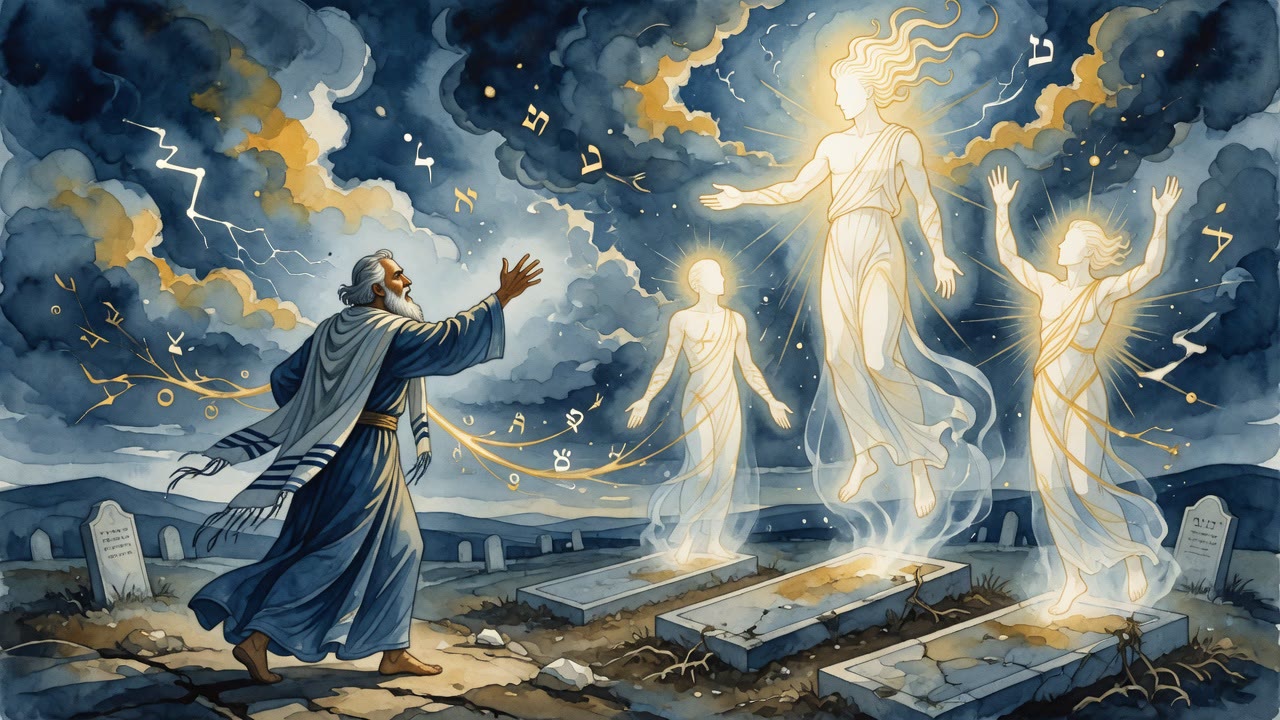
And it asked. "When shall he that goes down to the chariot go down? When shall he see the loftiness of the height? When shall he see the end that brings salvation? When shall he go up and tell it to the seed of Abraham who loved Me?"

The Descender Carries the Answer Down

The questions were about him. He was the descender the King had been waiting for, the one who could climb to the loftiness of the height, look on the end, and come back to the children of Abraham with what he had seen. The One who had made the wheels and the fire leaned toward the earth like a man at a window, and He asked when.

Ishmael went down the last stairs and out through the lowest gate. Behind him the palaces went on singing. Above them, higher than the song, the God of Israel kept His two griefs side by side, the widow in the burned city and the breath He could not stop loving. He held the power of every crown, and He was aching for someone to come up, see the day of rebuilding, and carry the word back down to the sons of the one who had loved Him.

So Ishmael carried it. The Temple was ash. The King wanted it back more than a mourner wants the dead returned, and He had said so in the plain words of home.


← All myths
From the tradition

Sources

3 sources

The texts behind this telling. Some cards carry a translation of the source; others are our own retelling of it, and each card says which. Every card links out to the original.

Heikhalot Rabbati 6:4Heikhalot Rabbati

Retold in our words. Read the original at the link below.Sefaria-hosted English translation · CC-BY

Heikhalot Rabbati turns to A Voice in Aramaic Speaks of Destruction and Exile.

"When I went down from before him," the text begins, suggesting a descent from a divine encounter, "I heard a voice speaking in the Aramaic language..." Aramaic, the language of everyday life for Jews during the Second Temple period, lends an immediacy to the prophecy, a sense that this isn't some distant, abstract threat, but something looming close.

What a prophecy it is! “The holy shrine shall be a ruin; and the temple, a fire burning.." The Heikhalot texts are full of coded language, but here, the imagery is brutally clear. The Temple in Jerusalem, the very heart of Jewish worship and national identity, reduced to ashes. A fire burning.

The devastation doesn’t stop there. "And the dwelling of the king, desolation; and she in whom the king rejoiced shall mourn as a widow…” It speaks of the king's dwelling becoming desolate, and the one who brought the king joy will mourn as a widow. The destruction is not just physical; it's emotional, ripping apart the fabric of society.

“And the virgins and the youths shall be spoiled; and the servants of the king, be killed…” The innocence of youth violated. The faithful servants of the king, slaughtered. There's a sense of utter chaos, a complete breakdown of order.

“And the pure altar, polluted; and the table which was set before the Lord, taken as spoil by the enemy…” The altar, the place of sacrifice and atonement, defiled. The table, where offerings were placed before God, plundered. These are sacred objects, symbols of the covenant between God and Israel, desecrated by the enemy.

And finally, the crushing blow: “And Jerusalem shall be desolation; and the land of Israel trembling.” Jerusalem, the holy city, reduced to rubble. The very land of Israel, the Promised Land, trembling in fear. The weight of this prophecy is almost unbearable.

What are we to make of such a dark vision? Is it simply a prediction of future destruction? Or is it something more?

Perhaps, it's a warning. A stark reminder of the consequences of straying from the path. Maybe, it's an acknowledgement of the fragility of even the most sacred institutions.

Or, perhaps, it’s a call to action. A challenge to rebuild, to restore, to never give up hope, even in the face of utter devastation. Because even in the darkest of times, the human spirit can endure. The Jewish spirit certainly has. And perhaps, within this terrifying prophecy, lies the seeds of resilience and renewal.

Full source
Heikhalot Rabbati 11:1Heikhalot Rabbati

Retold in our words. Read the original at the link below.Sefaria-hosted English translation · CC-BY

It's a powerful, intimate glimpse into the relationship between us and the Divine.

The text imagines God saying, "For I have no pleasure in all My world which I have created like in that time when your eyes are lifted up to Mine and Mine eyes are lifted up to yours, at the time you say before Me, ‘Holy.’ For the breath which goeth forth from your mouths at that time moveth and riseth up before Me as a pleasant savor."

Just let that sink in for a moment.

It's saying that of all the wonders of creation, of everything God has brought into being, what brings the greatest joy is that moment of connection with us. Specifically, it's about when we lift our eyes (and our hearts) to the Divine and declare "Kadosh". Holy.

Why that moment? What’s so special about it?

Well, think about the act of saying "Holy." It's not just a word. It's an acknowledgement. A recognition of something beyond ourselves. It's a conscious act of turning our attention to the Divine presence. And in that act, according to this passage, there's a reciprocal lifting of gazes. Our eyes to God, and God's eyes to us.

It's a mutual recognition, a moment of profound intimacy.

And then it gets even more beautiful. The text describes the breath that leaves our mouths as we utter that word, "Holy," as rising up like a "pleasant savor." It's not just the word itself, but the very essence of our being, our breath, the symbol of life itself, that ascends as an offering.

The imagery is so evocative, isn’t it? It transforms prayer from a rote recitation into a deeply personal exchange. It suggests that our expressions of holiness, our moments of sincere devotion, are not just heard, but experienced by the Divine as something precious and pleasing.

It reminds us that we're not just speaking to God, but entering into a relationship with God. A relationship built on mutual recognition, on the shared breath of holiness.

So, the next time you find yourself saying "Kadosh," remember this passage. Remember the image of lifted eyes and rising breath. Remember that in that moment, you're not just reciting words, you're creating a connection, a moment of profound joy for the Divine. And maybe, just maybe, for yourself as well.

Full source
Heikhalot Rabbati 18:5Heikhalot Rabbati

Retold in our words. Read the original at the link below.Sefaria-hosted English translation · CC-BY

It knows that God feels it too.

In the Heikhalot (the heavenly palaces) Rabbati, a text from the Heikhalot literature, these are the ancient mystical texts describing ascents to the divine realms, we find a powerful expression of this longing. It’s a description of God, but not in the way we might expect. It's not just about power and glory. It's about yearning.

The passage starts with a cascade of titles, each one building upon the last: "King just, King faithful, King beloved, King lovely, King supporting King lowly, King humble, King righteous, King pious, King holy, King pure, King blessed, King lofty, King mighty, King gracious, King merciful, King of Kings of Kings and Lord of the Crowns."

This isn’t just a list; it's a portrait of a God who embodies all the highest virtues, a God who is both powerful and compassionate, both exalted and intimately involved with the lowly. And that last title, "Lord of the Crowns", it speaks to the immense authority and sovereignty of the Divine.

But then, the tone shifts. We’re introduced to Totrosi’ai, the Lord God of Israel. And here’s where it gets really interesting. The text says that Totrosi’ai "desireth and awaiteth – in such measure as He awaiteth for the redemption and for the season of salvation which is laid up for Israel for a day of vengeance after the destruction of the last temple." God is waiting. Waiting as intensely as He waits for the final redemption, for the time when Israel will be saved and the wrongs of the world will be righted after the destruction of the Second Temple in Jerusalem. This isn't a detached, indifferent deity. This is a God who is actively engaged in the world, who feels its pain and longs for its healing.

But what exactly is God waiting for? The text continues with a series of questions: "When shall he that descendeth to the Merkabha descend? When shall he see the loftiness of the height? When shall he see the end which bringeth salvation? When shall he hear the end which is wrought by wonders? When shall he see that which eye hath not seen? When shall he ascend and tell to the seed of Abraham who loved Him?"

The Merkabha, meaning "chariot," refers to God’s celestial chariot, as described in the Book of Ezekiel. In the mystical tradition, it represents the divine realm, and "he that descendeth to the Merkabha" is someone who undertakes a spiritual journey, ascending to the highest levels of mystical experience.

So, God is waiting for someone to pierce through the veil, to experience the divine reality, and then to return and share that vision with the world. He's waiting for someone to bring a message of hope and salvation to the descendants of Abraham. He is waiting for the tzaddik (a righteous person) or ascended master.

This idea that God isn’t just a passive observer, but an active participant in our spiritual journeys, longing for us to connect with Him and to share that connection with others. It suggests that our own spiritual seeking is not just a personal endeavor, but a cosmic one, something that is deeply meaningful to the Divine itself.

And isn't that a comforting thought? That our yearning for something more, our own waiting for a better world, is mirrored in the heart of God Himself. Maybe, just maybe, that shared longing is the very thing that will bring us closer to the redemption we all await.

Full source