5 min read

Ishmael Was Named by Heaven Before His Birth

Before Ishmael was born, an angel found Hagar in the wilderness and gave him a name that meant God had heard his cry and future.

Curated by Arthur · Told by Maggid ·
Table of Contents
  1. The Name Came From Heaven
  2. Sarah's Plan Became Hagar's Burden
  3. The Wilderness Did Not Erase the Blessing
  4. Abraham Loved the Firstborn
  5. God Heard the Boy Again

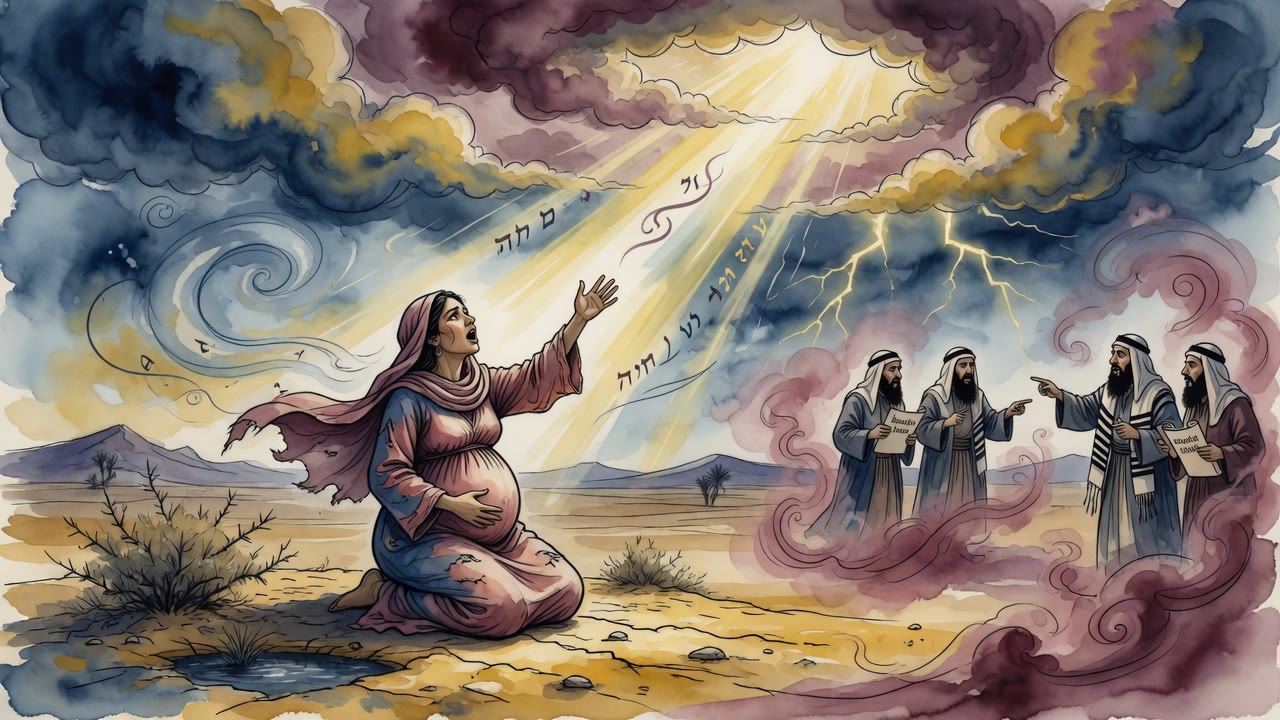
Hagar heard the name before the child could cry.
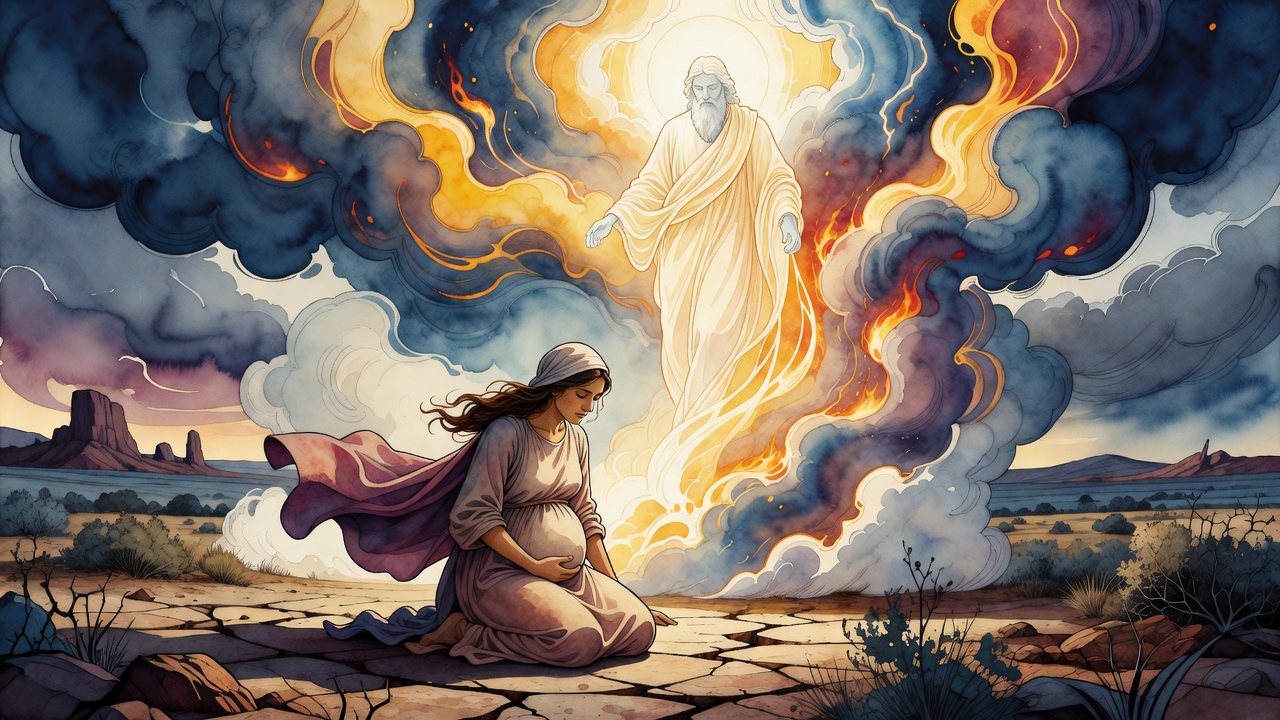
She had fled into the wilderness pregnant, alone, and wounded by a household that had tried to solve barrenness by placing the burden inside her body. The spring found her before the future did. There, an angel spoke to her and named the son she carried.

Ishmael. God has heard. The first sound over his life was not rejection. It was attention.

The Name Came From Heaven

Bereshit Rabbah counts the matter carefully.

Only a few people receive names from God before birth. Isaac. Solomon. Ishmael. The list is not casual. Isaac will carry the covenant line. Solomon will build the Temple. Ishmael, born to Hagar and Abraham, is placed among them because his destiny too has been spoken before he arrives.

The name does not make his road easy. It makes his road heard. Before the family can argue about inheritance, heaven has already declared that the boy's cry will reach God.

Sarah's Plan Became Hagar's Burden

Sarah had waited ten years in the land.

No child came. She gave Hagar to Abraham, hoping the household might be built through the Egyptian woman she had raised inside her tents. Abraham agreed. Hagar conceived, and the balance of the house shifted at once. The one who had been low now carried what the mistress lacked. Her walk changed. Her words changed. Guests could see the new tension without being told.

Sarah felt the insult. Abraham stepped back. Hagar bore the pressure until she ran.

The Wilderness Did Not Erase the Blessing

The angel did not tell Hagar that the road would be soft.

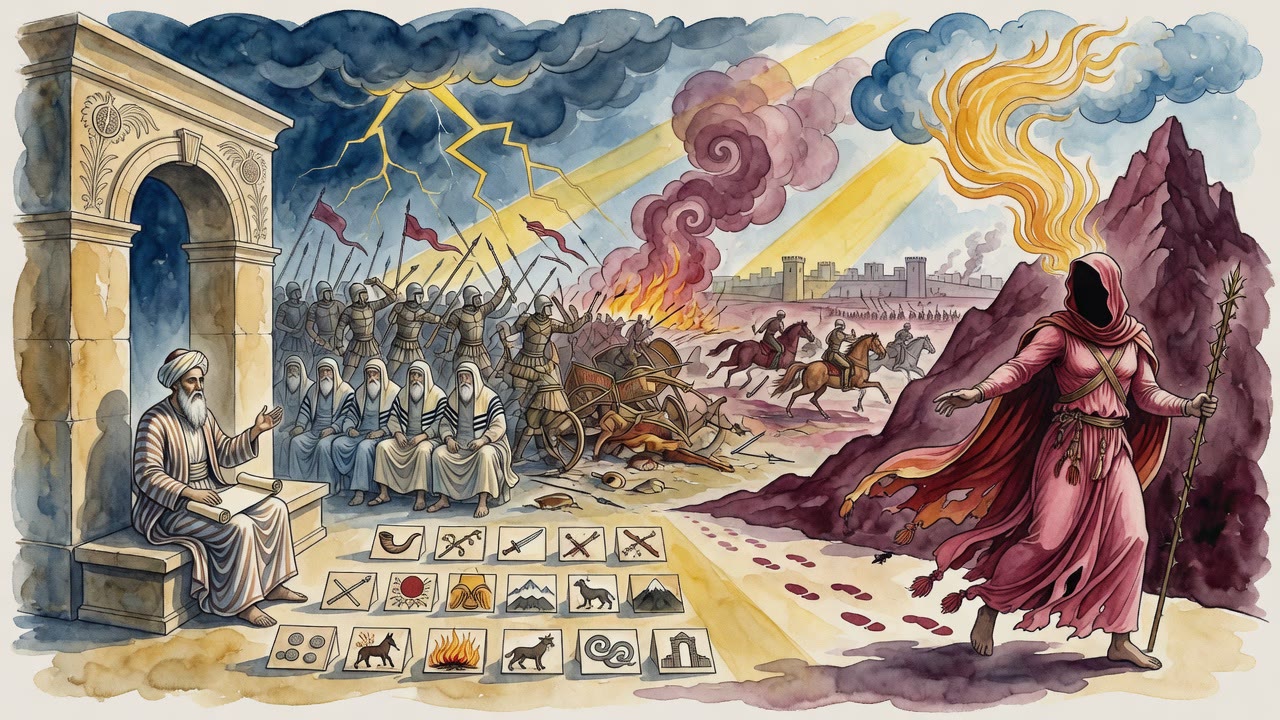
Her son would be a wild donkey of a man, free, hard to harness, his hand against others and their hands against him. The words sound like warning, but they are also a form of blessing. Ishmael would not vanish into someone else's house. He would live, multiply, resist confinement, and become a nation large enough to trouble simple family stories.

Hagar returned carrying both command and promise. The child inside her had been named where no human authority could take the name back.

Abraham Loved the Firstborn

Years later, the house split again.

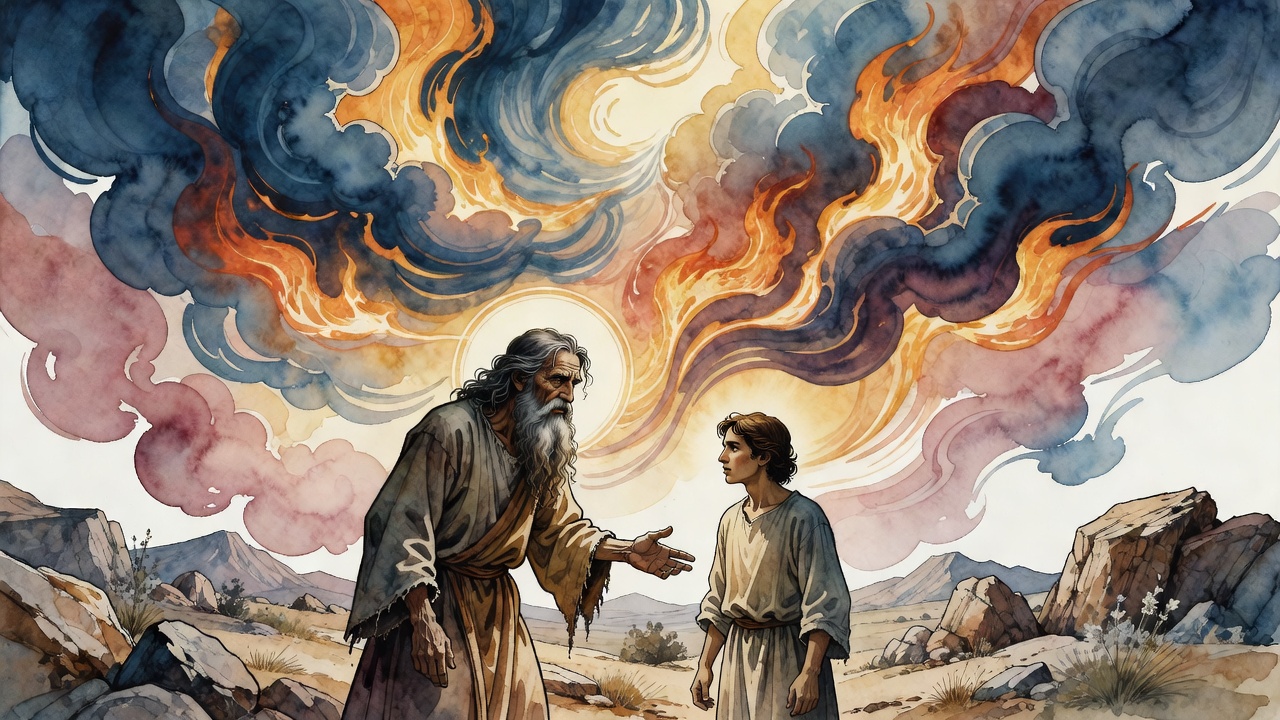
Isaac was born. Laughter entered Sarah's tent. Then rivalry sharpened into expulsion, and Hagar went into the wilderness a second time with the boy who had once been named there. Abraham suffered in the parting. Ishmael was not a disposable mistake to him. He was his firstborn, circumcised in his house, blessed by God, and loved by his father.

The covenant narrowed through Isaac, but the blessing did not pretend Ishmael had never mattered.

God Heard the Boy Again

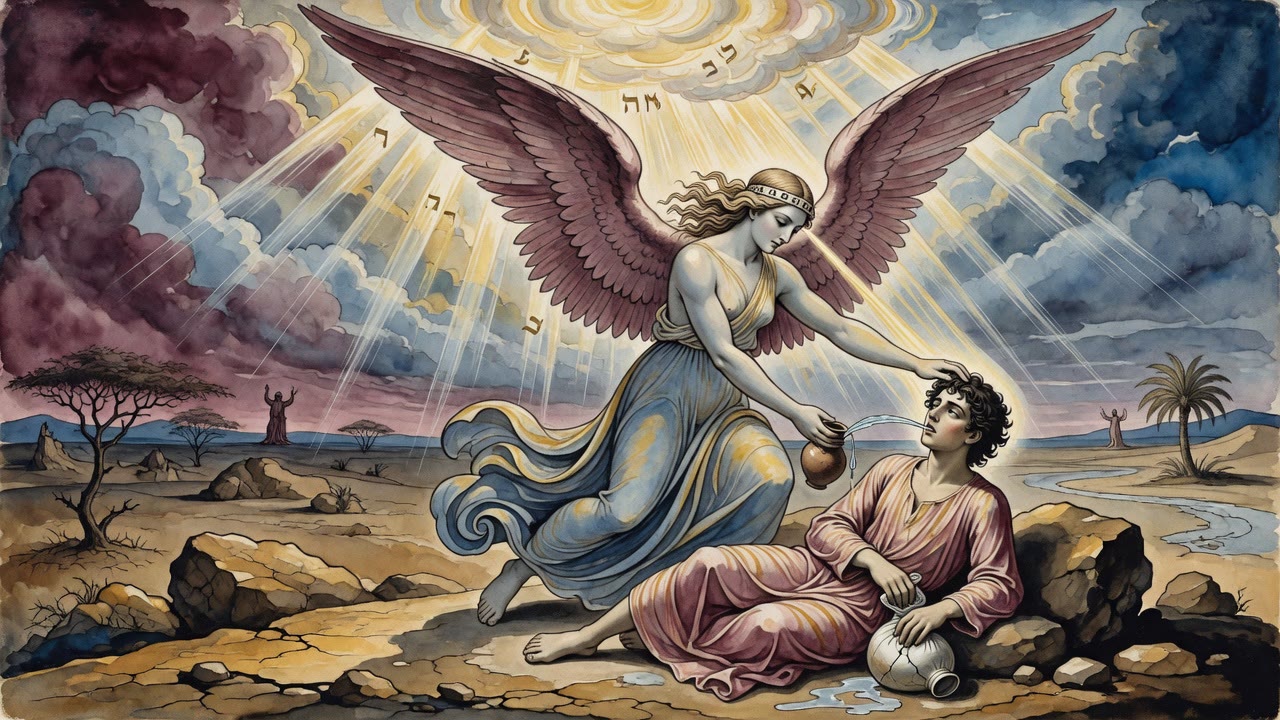
In the wilderness, water ran out.

Hagar placed the boy away from her because she could not watch him die. Then God heard the voice of the lad. The name spoken before birth became true in the hour of danger. Ishmael cried, and heaven answered. A well opened. The future did not end beneath a desert shrub.

The tradition holds the two truths together without smoothing them. Ishmael is outside the covenant line of Isaac. Ishmael is still named, heard, blessed, and guarded by the God of Abraham.

The spring is the first mercy in the story. Hagar does not meet the angel in a palace, a tent of status, or a court where Abraham can speak for her. She is found beside water in the open, with no guarantee that anyone from the household will come after her. Heaven reaches her where human arrangements have failed.

That location follows Ishmael afterward. His life keeps returning to wilderness, wells, bows, distance, and survival outside the main tent. The blessing does not bring him indoors. It gives him a way to live beyond the door. The angel's words are hard because his future is hard, but a hard blessing is still a blessing when God stands behind it.

Hagar's own seeing matters too. She does not leave the encounter as only a vessel for Abraham's son. She becomes the woman who met divine attention in the wilderness and lived. The child is named because God hears, but the mother also learns that she has been seen where no one else saw her clearly.

The well, the name, and the bow all belong to that same hard mercy.

His future would be contested, but his first identity had already been spoken by heaven.


← All myths

From the tradition

Sources

4 sources

The texts this telling draws on, in full. Open a card to read inline, or expand it for a wider, quieter read.

Bereshit Rabbah 45:8Bereshit Rabbah

In Jewish tradition, it's more than just a label. It can be a destiny, a prophecy, a divine decree. names echo through generations, carrying stories and meanings. But what about those rare instances when a name is given before birth, chosen not by earthly parents, but by the Divine itself? Bereshit Rabbah, a classical collection of Rabbinic interpretations of the Book of Genesis, explores this very idea.

The verse in (Genesis 16:11) tells us, “The angel of the Lord said to her: Behold, you will conceive and bear a son; you will call his name Ishmael, as the Lord has heard your suffering.” This verse sparked a fascinating discussion among the Rabbis.

Rabbi Yitzchak pointed out that there are three figures in our history who were named by God before they even entered the world. Three individuals whose destinies were, in a way, etched in the heavens.

First, there's Isaac. Remember the moment of joyous, almost unbelievable, prophecy? (Genesis 17:19) states, “But Sarah your wife will bear you a son, and you will call his name Isaac.” A name filled with laughter, reflecting Sarah's initial disbelief.

Then, there's Solomon. As we read in I (Chronicles 22:9), “Behold, a son will be born to you, he will be a man of rest, and I will give him rest from all his enemies…Solomon will be his name.” Shlomo, his name in Hebrew, literally means "peaceful," foreshadowing his reign of prosperity and tranquility.

And lastly, Yoshiyahu, or Josiah. The story in I (Kings 13:2) is particularly striking: “He called against the altar by the word of the Lord, and said: Altar, altar! So said the Lord: Behold, a son will be born to the house of David, Yoshiyahu is his name.” Centuries before his birth, his name was proclaimed, tied to a specific act of religious reform.

But here's where it gets even more interesting. The text goes on to say that some add Ishmael to this list. "Behold, you will conceive and bear a son; you will call his name Ishmael.”

Why is this significant? Because Isaac, Solomon, and Yoshiyahu are central figures in the Israelite narrative. Ishmael, on the other hand, is the ancestor of the Arab peoples. Including him in this select group suggests a recognition of his importance, a divinely ordained role for him and his descendants as well. The name Yishma'el literally means "God will hear," a poignant reminder that even in Hagar's suffering, God was listening.

What does this all mean? Perhaps it's a lesson in divine providence. Maybe it’s about the immense power inherent in language, in names, and in the stories we tell. Or perhaps it’s a glimpse into the interplay of fate and free will, where even the unborn can be touched by the hand of God. It certainly makes you think about the significance of the names we carry, and the stories they tell about us.

Full source
Legends of the Jews, V. Abraham, The Birth Of IshmaelLegends of the Jews

Abraham's journey is often remembered as beginning with the covenant God made with him, the "covenant of the pieces," promising him descendants as numerous as the stars. But as Legends of the Jews (Ginzberg) reminds us, this happened when Abraham and Sarah were still childless. They believed their inability to conceive was a punishment for not living in the Holy Land. Yet, even after ten years in Palestine, Sarah remained barren.

It's fascinating how the tradition portrays Sarah here. She doesn't wallow in jealousy. Instead, she takes initiative. Recognizing the issue might lie with her, she offers her slave, Hagar, to Abraham as a wife. But there's a crucial detail: Sarah first frees Hagar. Hagar was Sarah's property, a gift from Pharaoh, her father. This wasn't just a casual decision; Sarah had raised Hagar in righteousness, making her a suitable partner for Abraham. Abraham, guided by the Ruach (spirit) Hakodesh (holy spirit), agreed to Sarah's proposal.

Things quickly become complicated. No sooner does Hagar conceive than she begins to look down on Sarah, despite Sarah's kindness. When other noblewomen visited, Sarah would encourage them to check on "poor Hagar." But Hagar would use these visits to subtly undermine Sarah. "My lady Sarah," she'd say, "isn't what she seems. If she were truly righteous, wouldn't she have conceived by now? I became pregnant immediately!"

Sarah, refusing to engage in petty arguments, directs her frustration at Abraham: "It is thou who art doing me wrong." She reminds him of her sacrifices – leaving her homeland, pretending to be his sister in Egypt to protect him. Now, she feels betrayed. "O that God might look upon the injustice which hath been done unto me..and grant us offspring, that we have no need of children from Hagar."

Abraham, ever the modest and unassuming figure, gives Sarah full authority over Hagar. He only cautions her, "Having once made her a mistress, we cannot again reduce her to the state of a bondwoman." But Sarah, perhaps blinded by hurt and resentment, disregards this warning. She forces Hagar back into servitude and, according to the legend, even casts an "evil eye" upon her, causing a miscarriage. Hagar flees into the wilderness.

It's there, in the midst of her despair, that angels appear to Hagar. They instruct her to return and tell her that she will bear a son, and that his name will be Ishmael. He is one of six individuals, tradition tells us, whose names were given by God before their birth. (The others being Isaac, Moses, Solomon, Josiah, and the Messiah.)

Thirteen years pass after Ishmael’s birth. Then comes the command for Abraham to circumcise himself and all the males in his household, marking them with the sign of the covenant. Abraham hesitates, fearing it would isolate him from others. But God reassures him, "Let it suffice thee that I am thy God and thy Lord, as it sufficeth the world that I am its God and its Lord."

Abraham seeks counsel from his friends, Aner, Eshcol, and Mamre. Aner and Eshcol advise against it, citing Abraham's age and the potential for recognition by enemies. Only Mamre encourages obedience. "God succored thee from the fiery furnace," he reminds Abraham, "He helped thee in the combat with the kings…and thou dost hesitate to execute His behest concerning the circumcision?"

Abraham obeys, performing the circumcision openly, on the tenth of Tishrei, Yom Kippur (the Day of Atonement), and on the very spot where the Temple altar would later stand. The act, according to tradition, serves as a never-ceasing atonement for Israel.

What are we to make of this complex story? It's a tale of faith, doubt, jealousy, and ultimately, obedience. It highlights the humanity of our ancestors – their struggles, their flaws, and their unwavering commitment to God despite it all. It reminds us that even in moments of uncertainty and conflict, the covenant endures.

Full source
Legends of the Jews, V. Abraham, Ishmael Cast OffLegends of the Jews

As Isaac grew, tensions flared between the two half-brothers over inheritance rights. Ishmael, the elder, believed he deserved a double portion, while Isaac should receive only one. According to Ginzberg's retelling in Legends of the Jews, Ishmael, skilled with a bow and arrow, would aim his missiles at Isaac, claiming it was just a jest. But Sarah saw through the "jesting."

Sarah, deeply concerned about the future, insisted that Abraham give everything to Isaac, ensuring no disputes would arise after his death. "Ishmael," she declared, "is not worthy of being heir with my son." And, as if that weren't enough, she demanded Abraham send Hagar and Ishmael away, severing all ties between them and Isaac, both in this world and the world to come.

Of all the trials Abraham faced, this was the most agonizing. The thought of separating from his son tore at his heart. But that very night, God appeared to him. "Abraham," He said, "knowest thou not that Sarah was appointed to be thy wife from her mother's womb? She is thy companion and the wife of thy youth… What Sarah spoke unto thee was naught but truth." (Legends of the Jews)

The next morning, Abraham rose early, gave Hagar a get, a bill of divorcement, and sent her and Ishmael away. To publicly mark her status, he bound a rope around her waist, signifying she was a bondwoman.

As they journeyed, Sarah's "evil eye," as the text puts it, made Ishmael sick with a fever. Hagar, carrying him, depleted the water Abraham had provided. Desperate, not wanting to witness her son's death, she cast him under a willow bush. The Legends of the Jews specifies this was the very same spot where angels had once appeared to Hagar, promising her a son.

In her anguish, she cried out to God, "Yesterday Thou didst say to me, I will greatly multiply thy seed… and to-day my son dies of thirst!" But Ishmael, too, cried out to God. And it was his prayer, coupled with the merits of Abraham, that brought them salvation.

However, even as Ishmael prayed, the angels argued against him before God. "Wilt Thou cause a well of water to spring up for him whose descendants will let Thy children of Israel perish with thirst?" they asked. God, in his infinite wisdom, responded, "What is Ishmael at this moment, righteous or wicked?" When the angels conceded that he was righteous, God declared, "I treat man according to his deserts at each moment." (Legends of the Jews)

According to the Legends of the Jews, Ishmael prayed, "O Lord of the world! If it be Thy will that I shall perish, then let me die in some other way, not by thirst, for the tortures of thirst are great beyond all others." (Legends of the Jews)

But Hagar, perhaps lacking the same faith, turned to the idols of her youth. It was Ishmael's prayer that was answered. God commanded Miriam's well, a miraculous well created in the twilight of the sixth day of creation, to spring forth and provide water.

Yet, even after this miracle, Hagar's faith remained weak. She refilled the bottle, fearing the water would run out again. This reminds me of the saying, "Throw the stick into the air as thou wilt, it will always land on its point." Hagar, having come from Egypt, returned there with her son, seeking a wife for him.

It’s a poignant tale of faith, doubt, and the enduring bond between a mother and her son. It makes you wonder, doesn't it? How much does our past shape our future, and what role does faith play in overcoming life's most challenging trials?

Full source
Bereshit Rabbah 47:5Bereshit Rabbah

Bereshit Rabbah turns to Covenant of Ishmael.

So, who gets what blessing? That's where the rabbinic interpretations come in, offering multiple readings.

Rabbi Yoḥanan, quoting Rabbi Yehoshua ben Ḥanina, suggests a surprising idea: the blessings for Ishmael in verse 20 are actually derived from the blessings intended for Isaac! In other words, "The son of the maidservant may be derived from the son of the mistress." It’s as if God is saying, "I've already planned these blessings for Isaac, and now I'm extending a version of them to Ishmael."

Wait, there's more! Rabbi Abba bar Kahana, citing Rabbi Beiri, flips the script. He suggests the opposite: the blessings in verse 20 primarily refer to Ishmael, but – and this is key – they apply even more so to Isaac! "Here, the son of the mistress may be derived from the son of the maidservant." Isaac, as the son of Sarah, Abraham's wife, receives an even greater blessing. The passage emphasizes, "But My covenant I will keep with Isaac."

What are we to make of these contrasting interpretations? Are the blessings for Ishmael and Isaac connected? Are they independent?

Rabbi Yitzḥak adds another layer. He contrasts Ishmael's descendants, who will produce twelve nesi’im (princes), with the tribes of Israel, the matot. He draws a parallel: "All these are the tribes of Israel, twelve" (Genesis 49:28) – these are the descendants of the mistress. Ishmael would produce only those twelve nesi’im, just as it says: “Clouds [nesi’im], wind, but no rain" (Proverbs 25:14). The implication? Ishmael's leadership will be fleeting, like clouds that promise rain but deliver nothing. In contrast, the tribes of Israel are matot, enduring, "just as it says: 'The oaths to the tribes [matot], an enduring word'" (Habakkuk 3:9).

Finally, Rabbi Huna, in the name of Rabbi Idi, explores the timing of Isaac's birth. The verse states that Sarah will bear Isaac "at this designated time [lamo’ed] next year." Rabbi Huna points out that the year in question must have been a leap year. Why? Because the phrase "designated time" (mo’ed) alludes to a festival. To allow for a full-term pregnancy between festivals, they reason, that year needed an extra month, a leap year! This kind of intricate textual interpretation is common in rabbinic literature.

What does it all mean? This passage from Bereshit Rabbah isn't just a simple explanation of a biblical verse. It's a window into the complex and nuanced way that the rabbis grappled with questions of lineage, promise, and divine favor. It invites us to consider the relationship between Ishmael and Isaac, and the enduring nature of God's covenant. It highlights the importance of careful reading and interpretation in understanding sacred texts. And it reminds us that even seemingly contradictory interpretations can offer valuable insights.

Full source