Parshat Bereshit7 min read

The Prince of Darkness Who Refused the First Word of Creation

Before the first day, God faces a creature black as a burnt log, hangs seven planets with secret tempers, and hides a light too strong to keep.

Curated by Arthur · Told by Maggid ·
Table of Contents
  1. The First Refusal at the Edge of Creation
  2. Seven Lamps Hung With Tempers
  3. The Light That Was Too Strong to Keep
  4. The Quarrel Sealed Into the Sky

Before the first day had a name, before there was an evening or a morning to mark it, God turned to face the one creature already there. He was black as a burnt log, black as a bull in a lightless field, and he had no other shape than that blackness. The Prince of Darkness waited, certain of his place, because until that moment there had been nothing but him.
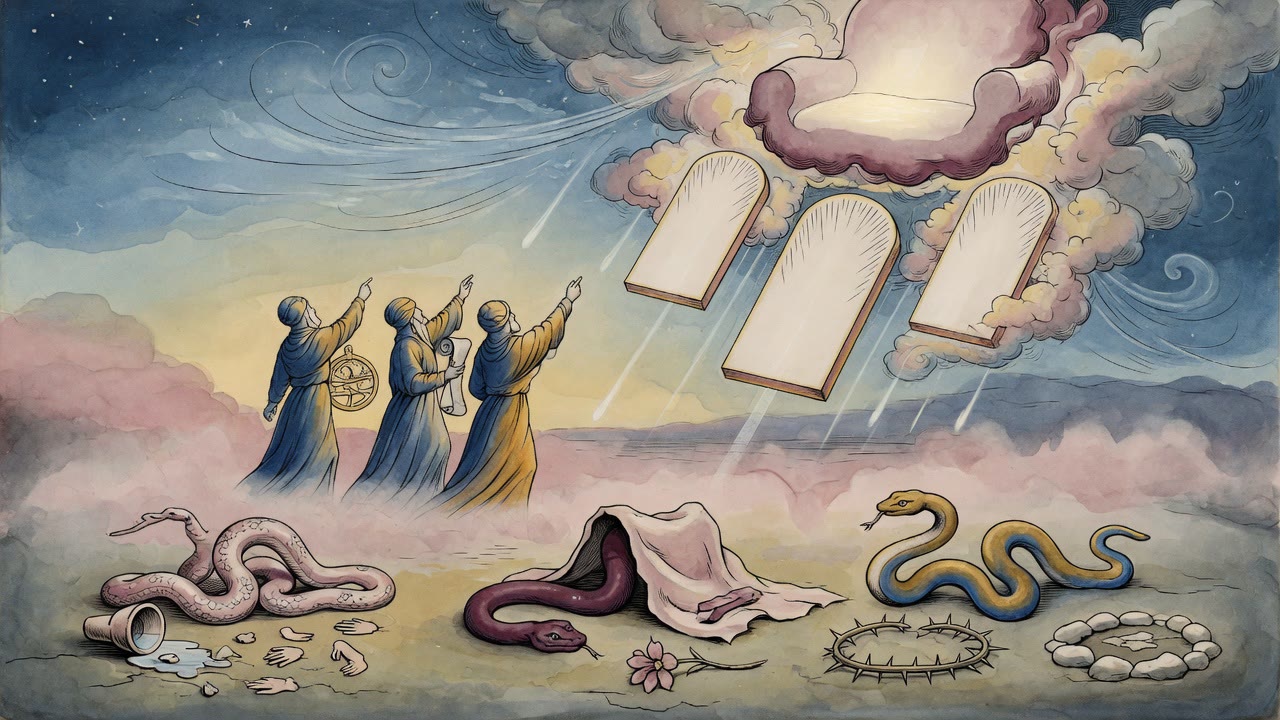
"Get you hence," God told him. "It is My intention to begin Creation with light."

The Prince did not move. He turned his head as though the words had not reached him, as though deafness were a wall he could hide behind. If light came, he would be a servant in a house that had been his alone. So he answered with a question, and the question was an insolence.

"Why not create the world from darkness?"

The First Refusal at the Edge of Creation

God did not bargain.

"Get you hence at once," He said, "before you perish from the world."

Still the Prince pressed, hungry to know how much ground he would lose. "And after light, what will You create?" he asked. The answer came back like a door closing on him. "Darkness." So light would have its hour, and the Prince would have his, and his hour would no longer be everything. That was the whole of his demotion, spoken in a single word.

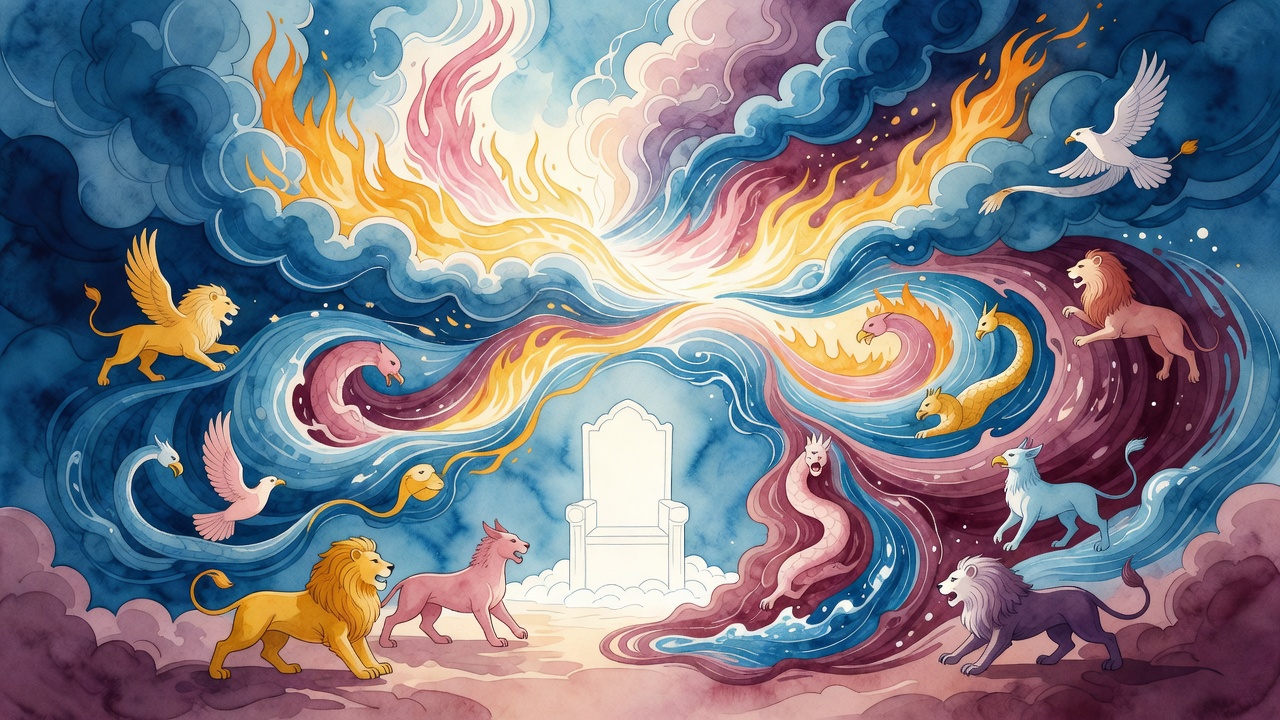
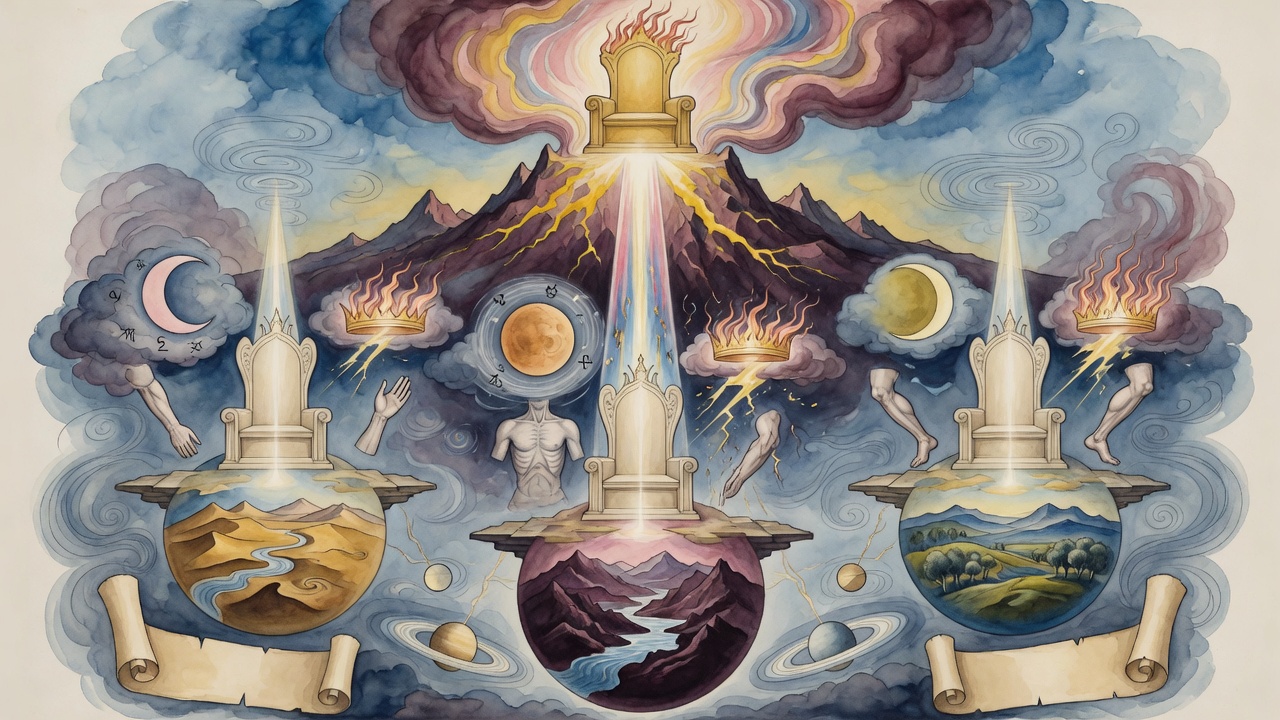
He did not surrender. Other princes had gathered in the unmade heaven, and they came to him and proclaimed him their king. He took the homage and paid it back in kind, spreading canopies of shadow over each of them, pavilions of darkness for a court that had crowned itself in defiance of the One about to speak. For a moment a rival kingdom stood there, throne and vassals and all, raised against the light before the light existed.

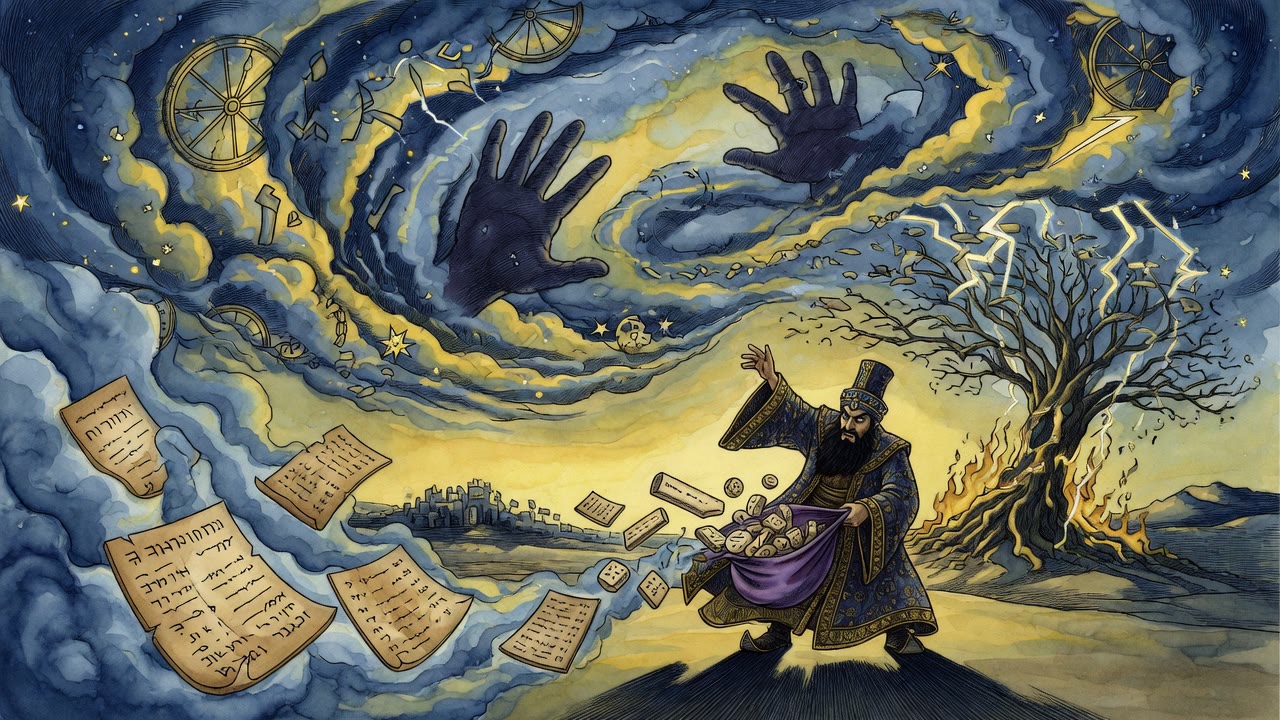
God rebuked them. He scattered the princes the way wind scatters seed, flinging their rebellion apart so that no two grains of it landed together. The court dissolved. The Prince remained, a single black shape, no longer a sovereign, waiting for the word that would push him into his appointed corner.

Seven Lamps Hung With Tempers

Then God set the firmament in seven standing layers and hung seven wandering lamps inside it, and into each He poured a temper and a fate, so that the sky would govern as well as shine.

Highest of all He placed Saturn, slow and grim, three years to finish his circuit, an old man stooped beneath a sickle. Where his cold eye fell, poverty came, and sickness, and the grave. Beneath him God hung Jupiter, ram-headed and noble, a valiant lord who carried life in his hands, and peace, and prosperity, and the right to rule. Lower still came Mars in his coat of mail, terrible to look on, a sword gripped in his right hand and a spear in his left. Wherever Mars turned his armored face, war followed, and blood, and hatred, and the breaking of things.

At the center God set the sun, and around it the gentler powers. Venus took her place as a young woman holding a green branch, and into her keeping went love and longing, the marriage bed, and the fertility of every living thing. Mercury God made strangest of all, an old man with thin lips and wings, his lower body coiling away into a dragon, and He gave him wisdom and hidden knowledge and the unraveling of mysteries in every tongue. The moon He hung lowest, nearest the dark earth that did not yet exist.

Each lamp had a face and a quarrel and a gift. Together they were a heaven that could weigh a human life before that life was born.

The Light That Was Too Strong to Keep

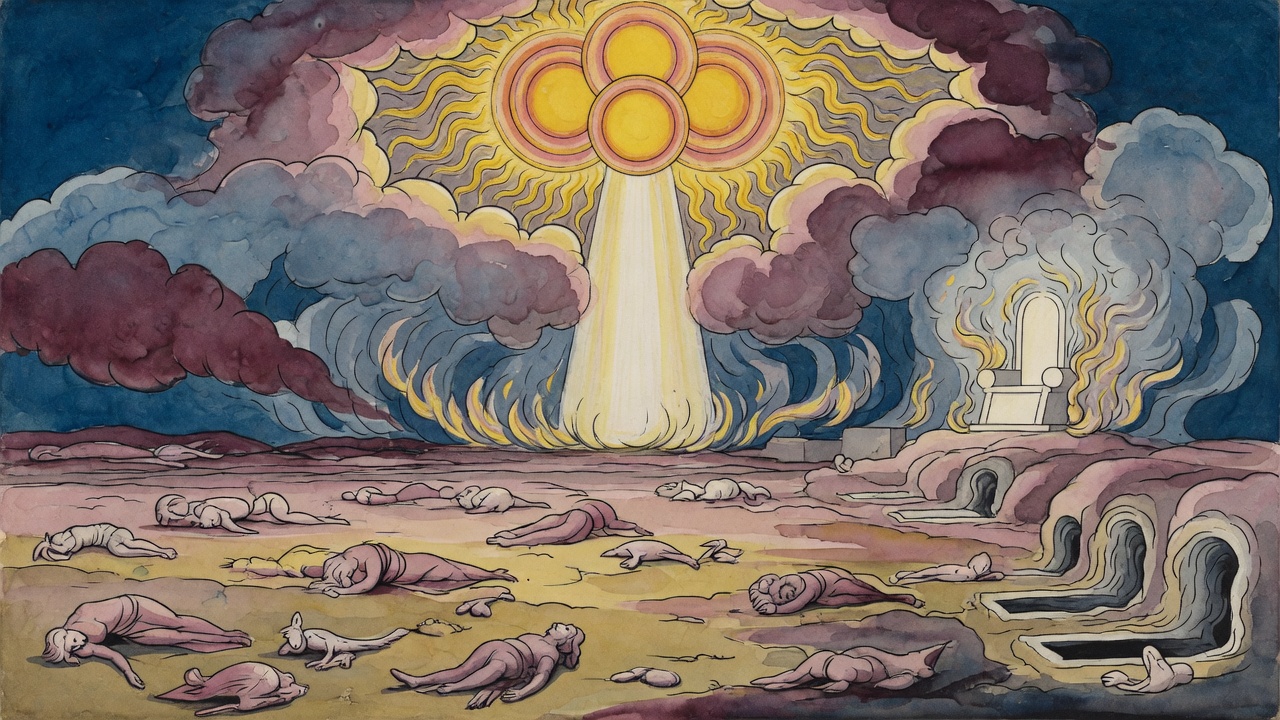
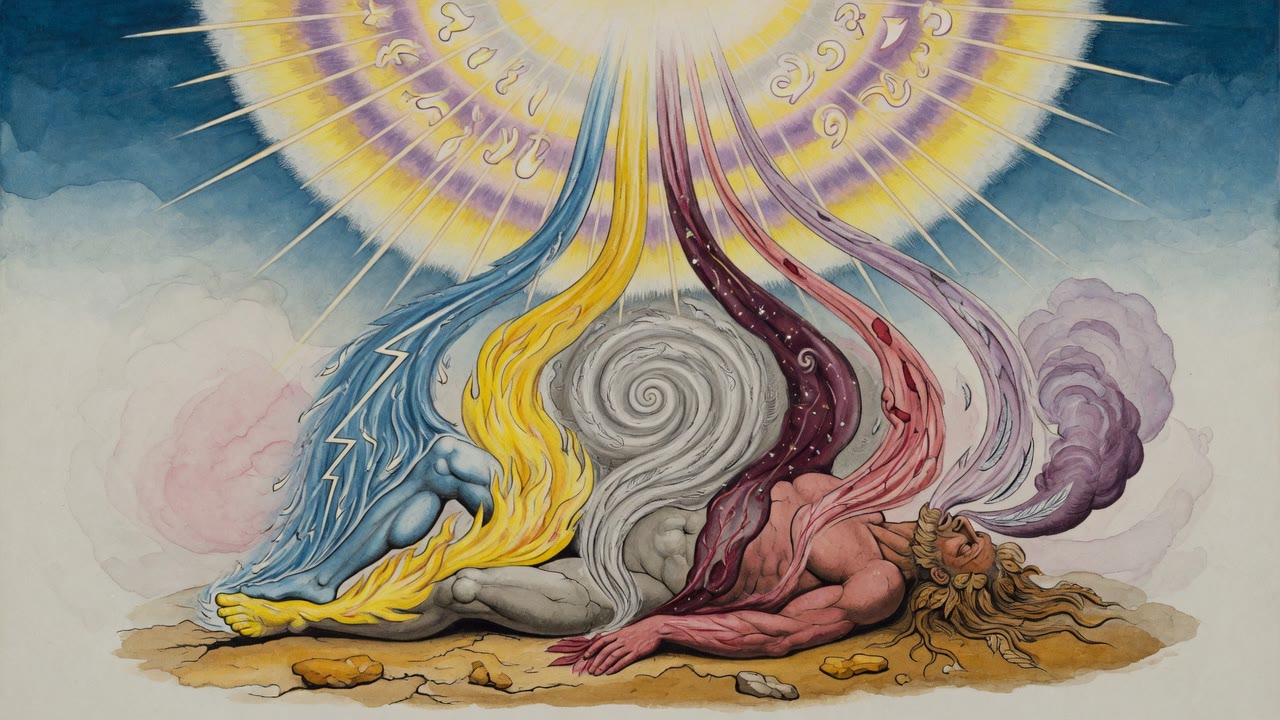
Now God said, "Let there be light," and there was light, and it was not the light anyone living has ever seen. Beside it the sun He would later make on the fourth day would have looked like a guttering wick. It did not separate day from night. It was too pure for that, too strong for a world meant to hold ordinary mornings, and it would have burned through every shadow the Prince of Darkness had just been promised.

So God looked at the light and saw that it was good, and then He did something unexpected with a good thing. He hid it. He set it apart and folded it away, the way a king saves the finest portion at the feast and keeps it back for his own son. He stored the first light where no creature of that first week would find it, reserving it for the righteous in a world that had not been imagined yet.

And He set the boundary. He called the light Day. He named the night, but He did not bend His own name down to it. Light got the name and the blessing. Darkness got only its hour and a pronoun. Isaiah would later catch the shape of what had been hidden, promising a day when the light of the sun would burn sevenfold, bright as the light of the seven days, the stored light let loose at last on those who deserved it.

The Quarrel Sealed Into the Sky

Two commanders had wanted the same throne. God did what a king does with two strong officers who will not yield to each other. He gave one the day and one the night, drew the border between them, and made them keep it. He commanded the morning and told the darkness its place, and between the light and the darkness He made a peace, not by reconciling them but by fixing each in its own country.

The Prince of Darkness took his appointed hour. The seven lamps swung into their slow rounds, dealing out war and love and wealth and death to a world still hours from its first sunrise. The great light lay folded away in the keeping of God.

One prophecy stayed behind, sharp as a splinter. At the End of Days, the Prince of Darkness would stand up again and call himself God's equal. He would claim a hand in Creation itself. "Though He made heaven and light," he would boast, "it was I who made darkness and the pit." His old vassal-angels would rise to swear it was true. And the fire of that very pit, the one he bragged of making, would open its mouth and swallow the boast and the boasters together.


← All myths
From the tradition

Sources

3 sources

The texts this telling draws on, in full. Open a card to read inline, or expand it for a wider, quieter read.

Pesikta Rabbati 20:2Pesikta Rabbati

One story, found scattered in sources like Pesikta Rabbati and Yalkut Re'uveni, centers around a figure known as the Prince of Darkness.

God, about to begin Creation, turns to the Prince of Darkness – described as being as black as a bull – and says, "Get you hence. It is My intention to begin Creation with light." Sounds But the Prince of Darkness, he wasn't having it. He feared that if light took over, he’d be reduced to some divine servant.

So, what did he do? He feigned deafness! Ignored God's instruction and dared to ask, "Why not create the world from darkness?" Can you imagine the audacity? God, understandably, wasn't thrilled. "Get you hence at once," God replied, "before you perish from the world!" The Prince of Darkness, undeterred, pressed on, "And after light what will You create?" God's answer: "Darkness." And so it was.

The story doesn't end there. There's a chilling prophecy tucked away in this tale. It's said that in the End of Days, the Prince of Darkness will declare himself equal to God! He'll claim to have taken part in Creation, boasting, "Although God made heaven and light, it was I who made darkness and the pit of hell!" According to Midrash (rabbinic interpretive commentary) Alphabetot, his angels will even back him up, but, ultimately, the fires of hell will quench their arrogance.

Now, who exactly is this Prince of Darkness? That's where things get a little… blurry. The rabbinic texts, as Lawrence Kushner points out in "Tree of Souls," don't offer a crystal-clear picture. In some ways, he's a personification of darkness itself. But his rebellion echoes the stories of other Watchers, like Satan (sometimes called Samael (the angel of death)) and Satanael. In Jewish tradition, the lines between these figures often become indistinct. You can see similar themes explored in the narratives around "The Fall of Satanael.": the refusal to accept God's plan, the desire for power, the ultimate downfall – these are all threads that connect these rebellious figures. It's like different facets of the same struggle against divine authority.

After God's initial rebuke, the story goes on, other princes in heaven actually proclaimed the Prince of Darkness to be their king. He, in turn, rewarded them by bestowing "pavilions" upon them. This imagery, as seen in (2 (Samuel 22:1)2), ("He made pavilions of darkness about him") paints a picture of a dark kingdom forming in opposition to God's light. But, of course, God doesn't let this stand. He rebukes them for their rebelliousness and disperses them, scattering the seeds of dissent.

And the narrative continues, seamlessly weaving rabbinic lore with… astrology! Following the creation of light and darkness, the myth describes the creation of the signs of the zodiac. Talk about a cosmic story!

So, what are we left with? A reminder that even in the grandest, most divine plan, there's always the potential for resistance, for darkness to challenge the light. The story of the Prince of Darkness isn't just a tale about the origins of darkness; it's a reflection on the eternal struggle between order and chaos, obedience and rebellion, a struggle that perhaps plays out within ourselves as well.

Full source
Chronicles of Jerahmeel IVChronicles of Jerahmeel (Gaster, 1899)

God placed seven planets in the firmament and gave each one a distinct personality. According to the Chronicles of Jerahmeel, a 12th-century Hebrew chronicle compiled by Jerahmeel ben Solomon, these celestial bodies are not just astronomical objects. They are cosmic appointees, each governing a different domain of human experience.

Saturn presides over poverty, sickness, and death. He appears as an old man carrying a sickle. Mars governs war, bloodshed, hatred, and destruction. His appearance is terrifying: an armored warrior gripping a sword in his right hand and a spear in his left, dressed in a coat of mail. Wherever he turns, wickedness follows. Jupiter rules over life, peace, prosperity, and sovereignty. He looks like a noble, valiant man with the head of a ram.

Venus governs love, desire, marriage, and the fertility of all living things. She takes the form of a young woman holding a tree branch. Mercury controls wisdom, knowledge, and the ability to unravel mysteries in any language. He appears as an old man with thin lips and wings, his lower body resembling a dragon.

The firmament divides into seven vertical layers. The moon occupies the lowest. Then Mercury, Venus, and the sun at the center. Mars sits above the sun, then Jupiter, and Saturn at the very top, completing its circuit in three years.

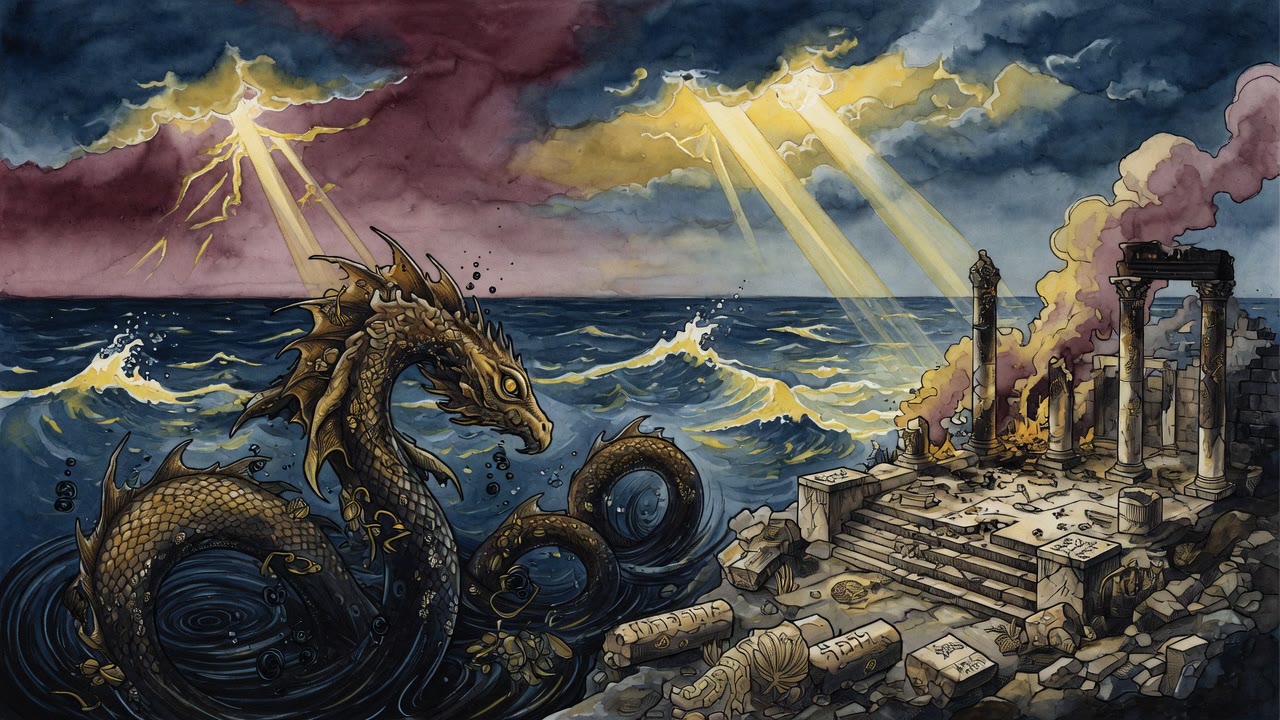
On the fifth day, God brought the Leviathan (לִוְיָתָן) forth from the waters. This great serpent holds the creatures of the deep between its two fins. Every day it opens its mouth, and a massive serpent flies into its jaws to feed it. The center of the earth rests upon these colossal serpents, and God Himself plays with the Leviathan, as it says: "You created this Leviathan to sport with it" (Psalms 104:26).

Full source
Bereshit Rabbah 3:6Bereshit Rabbah

Genesis tells us, "God said, 'Let there be light,' and there was light" (Genesis 1:3). Simple enough. But the rabbis of the Midrash (rabbinic interpretive commentary), in Bereshit Rabbah, dive into some fascinating questions.

Like, what exactly is this light? The verse says, "God called the light, Day," (Genesis 1:5) but isn’t light just… day?

The Midrash presents a mind-bending idea: this initial light, the light created during those first six days, wasn't like anything we experience now. It was too powerful to exist alongside the sun, which would appear dim in comparison. And it wasn't meant to illuminate the night. So where did it go?

It was stored away! According to this tradition, that original light is reserved for the righteous in the future. (Isaiah 30:26) hints at this, prophesying a time when "the light of the moon will be like the light of the sun and the light of the sun will be sevenfold, like the light of the seven days." Imagine that – a world bathed in the pure, unadulterated light of Creation!

Now, there's a slight wrinkle here. The Midrash asks: "Seven [days]? Are they not three? Is it not so, that the lights were created only on the fourth day?" After all, the sun and moon weren't created until the fourth day. The answer? It's like someone preparing for a wedding feast. Even if the preparations are focused on one or two days, they still refer to the entire seven-day celebration.

Rabbi Nechemya offers another perspective. He suggests that this light shone during the seven days of mourning for Methuselah, a righteous figure from the Bible. During this time, God bestowed extra light upon the world.

The verse also says, "God saw the light, that it was good, and God distinguished between the light and the darkness" (Genesis 1:4). This leads to more exploration. Rabbi Ze'eira son of Rabbi Abahu, preaching in Caesarea, uses this verse to explain why we don't recite a blessing over a candle during Havdalah (the ceremony marking the end of Shabbat (the Sabbath)) until we’ve actually benefited from its light. We need to see and distinguish the light, just as God did.

Rabbi Yehuda bar Rabbi Simon offers a beautiful interpretation of vayavdel, "He distinguished." He says it also means "He set it aside," implying that God set the light aside for Himself. As it says in (Daniel 2:22), "Light dwells with Him." The Rabbis take this a step further, saying God set it aside for the righteous in the World to Come, like a king saving the best portion of food for his son.

Rabbi Berekhya shares an explanation attributed to Rabbi Yochanan and Rabbi Shimon ben Lakish, two giants of the Talmud. They say that "distinguished" means exactly that – to separate and define. They use the analogy of a king with two commanders, one for day and one for night. When they argued over who would rule the day, the king assigned each their distinct realm. Similarly, God assigned day to the light and night to the darkness.

Rabbi Yochanan connects this to (Job 38:12), where God asks Job, "In all your days, have you commanded the morning and apprised darkness of its place?" Have you, Job, defined the boundaries and roles of light and darkness?

Rabbi Tanhuma points to (Isaiah 45:7): "He forms light and creates darkness, He makes peace." After creating them, God established peace between light and darkness, ensuring they each have their place.

Finally, Rabbi Elazar makes a subtle but important point: "God called the light, Day," but the verse doesn't say "to the darkness God called night." Instead, it says "to the darkness He called night." According to Rabbi Elazar, God only associates His name with the good, with the light. With darkness, the verse uses a pronoun, "He," instead of God's name.

So, what does this all mean? Maybe it's about the hidden potential within creation, the idea that the most incredible things are often unseen, waiting for the right moment to be revealed. Or perhaps it's a lesson in appreciating the light we do have, recognizing its goodness and striving to bring more of it into the world. It's a reminder that even in the darkest night, there's a spark of divine light waiting to be ignited. What do you think?

Full source