The Prophet Who Gathered the Severed Fingers of the Exiles
Nebuzaradan had orders to keep the prophet safe. He kept finding him in the road with his own hand pushed into a prisoner's iron collar.
Table of Contents
 Click for full size
Two Ways to Be Left Behind
Jerusalem was burning and God put a choice in front of Jeremiah with only two doors in it.
"Go down to Babylon with them, and I stay here. Or stay here, and I go down with them."
Jeremiah did not take any time over it. "Master of the worlds. If I go down, what use am I to them? Let their Creator go down with them. He is the one who can actually do them good."
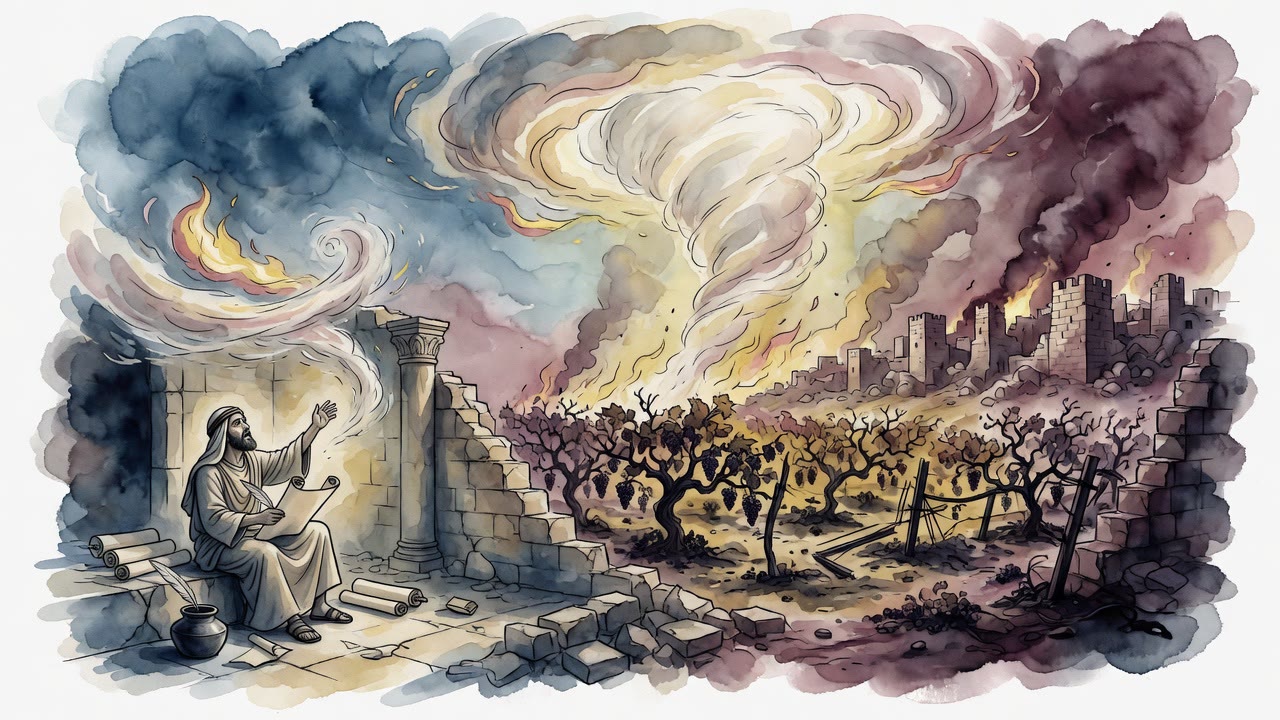
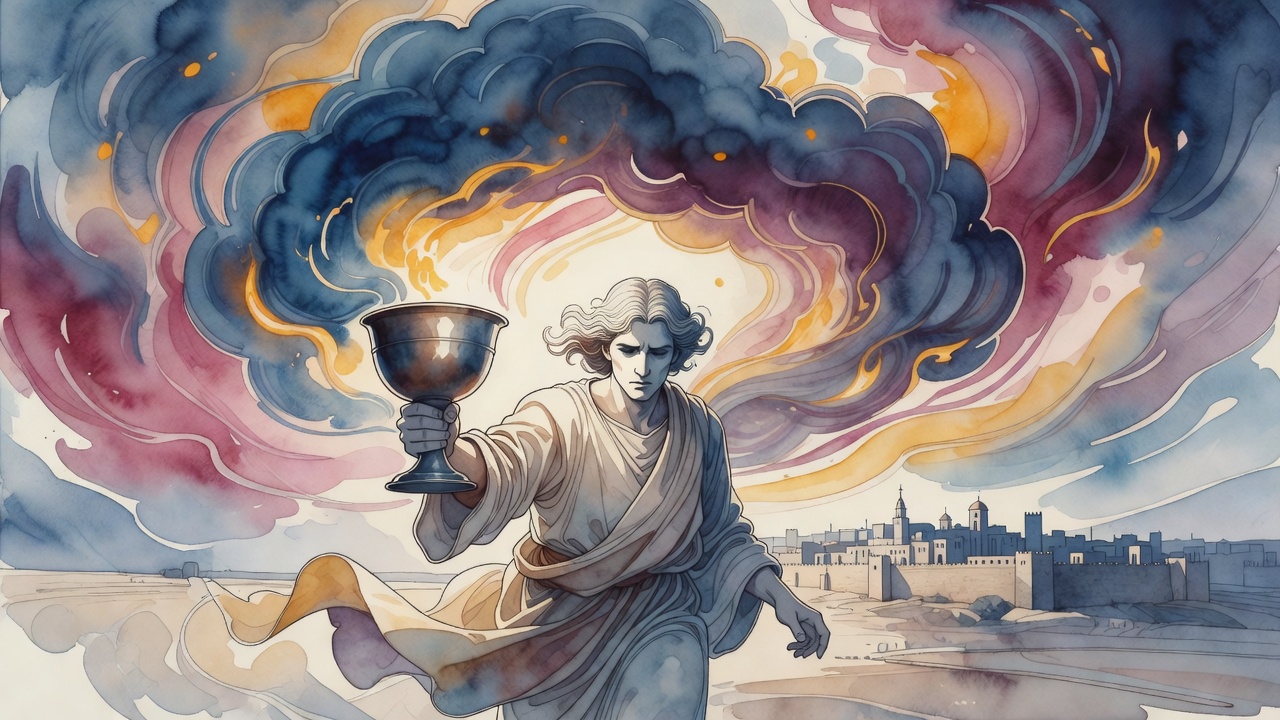
So the prophet who had spent his life telling that city it would burn was the man left standing in it afterward, and the presence that had lived in the house went east in the dust behind a column of prisoners.
He Kept Putting His Hand Into the Chains
Nebuchadnezzar had given his captain three separate orders about the prophet. "Take him. Keep your eyes on him. Let nothing bad happen to him."
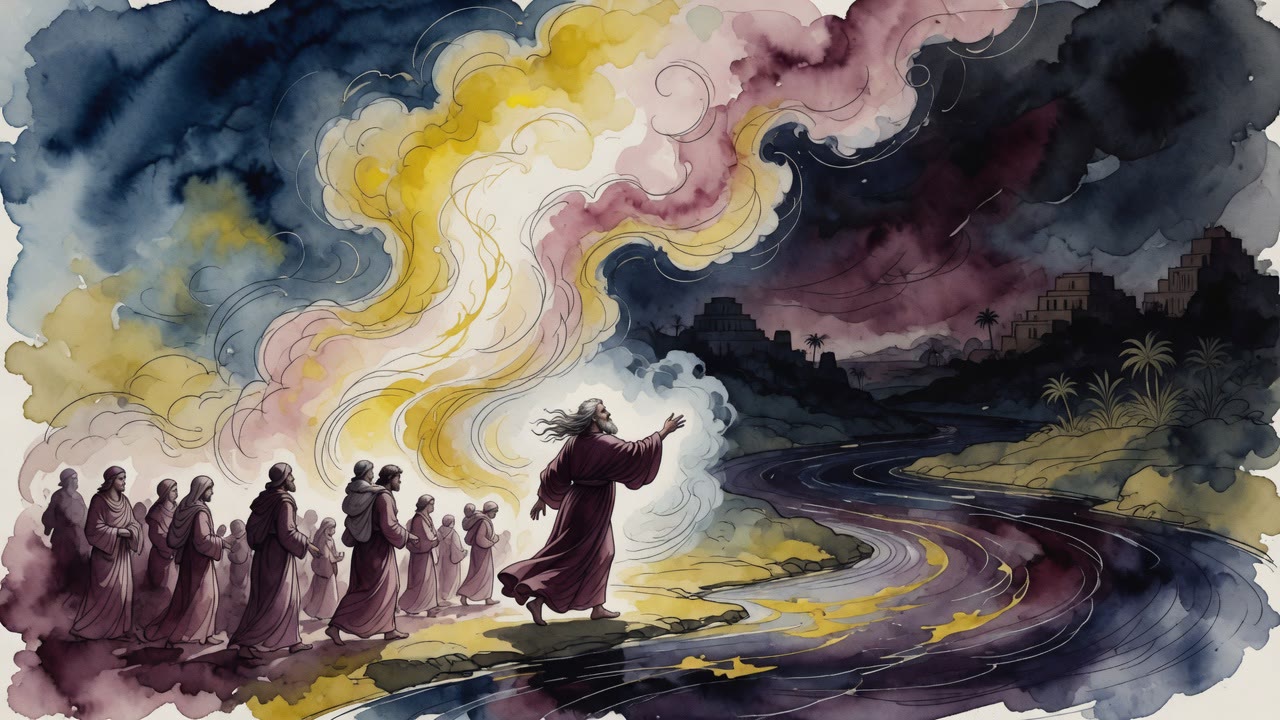
Nebuzaradan could not carry out any of the three, because Jeremiah would not stay where he was put. A line of young men would come down the road with their necks in iron collars, and Jeremiah would walk into the line and push his own hand in among them. They would pull him out. Then a line of old men would come down the same road in the same collars, and he would do it again.
The Captain Counted Three Crimes
Nebuzaradan finally stopped him in the road and laid it out.
"One of three things is true about you. Either you are a false prophet, or you are a man who kicks at his own suffering, or you are a murderer.
"A false prophet, because for years you stood in this corner of the world and said it would be destroyed, and now that I am destroying it, it upsets you.
"A man who kicks at his own suffering, because I do not want a mark left on you, and pain seems to cost you nothing.
"A murderer, because if the king hears what you keep doing to yourself, and hears that I stood in the road and allowed it, he will send for my head. If it seems good to you, come with me to Babylon."
Jeremiah went back to the ruins.
Two Were Bound in That Chain
A word did not reach him until later, and when it came he was in irons himself, marched out with the captives as far as Ramah and let go there with the chain still on him.
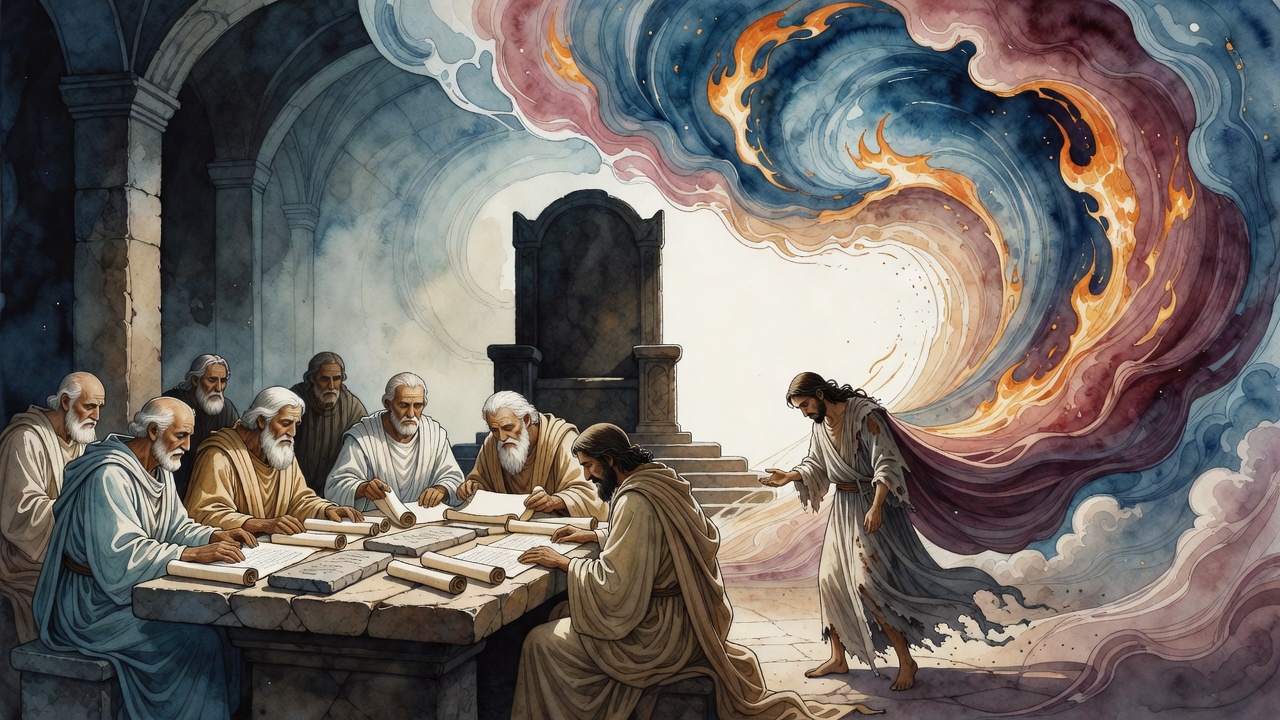
Rabbi Aha looked at the way that was written down and said the thing nobody else would say out loud. Two were bound in that chain. The prophet, and the One who had gone down with the exiles.
What the word said was comfort, which is stranger than anything else in the account. Rabbi Elazar heard it as the promise that the one who scattered Israel will gather him and guard him the way a shepherd guards a flock. Rabbi Yochanan heard a different line in it, that Jacob has been ransomed and bought back out of a hand stronger than his own. Either way it arrived while the prophet was chained, in a burnt city, with the last of the population walking away over the horizon.
Every Line of the Blessing Ran Backwards
Jeremiah came from a priestly family, and Rabbi Berekhiah put the complaint in his mouth. "My name is worn out among the priests." Then he set the blessing his fathers had spoken over Israel line by line against the sentences he had been handed to deliver.
"In the days of Moses the priests said, may the LORD bless you. In my days the word was, from them a curse shall be taken.
"They said, and keep you. In my days, those marked for death, to death.
"They said, may the LORD make His face shine on you. In my days, He has set me in dark places like the long dead.
"They said, and be gracious to you. In my days, I will show no favor.
"They said, may the LORD lift up His face to you. In my days, a hard-faced nation that will not lift its face even to an old man.
"They said, and give you peace. In my days, I have gathered in My peace from this people, and the kindness, and the mercy."
What He Picked Up Off the Road
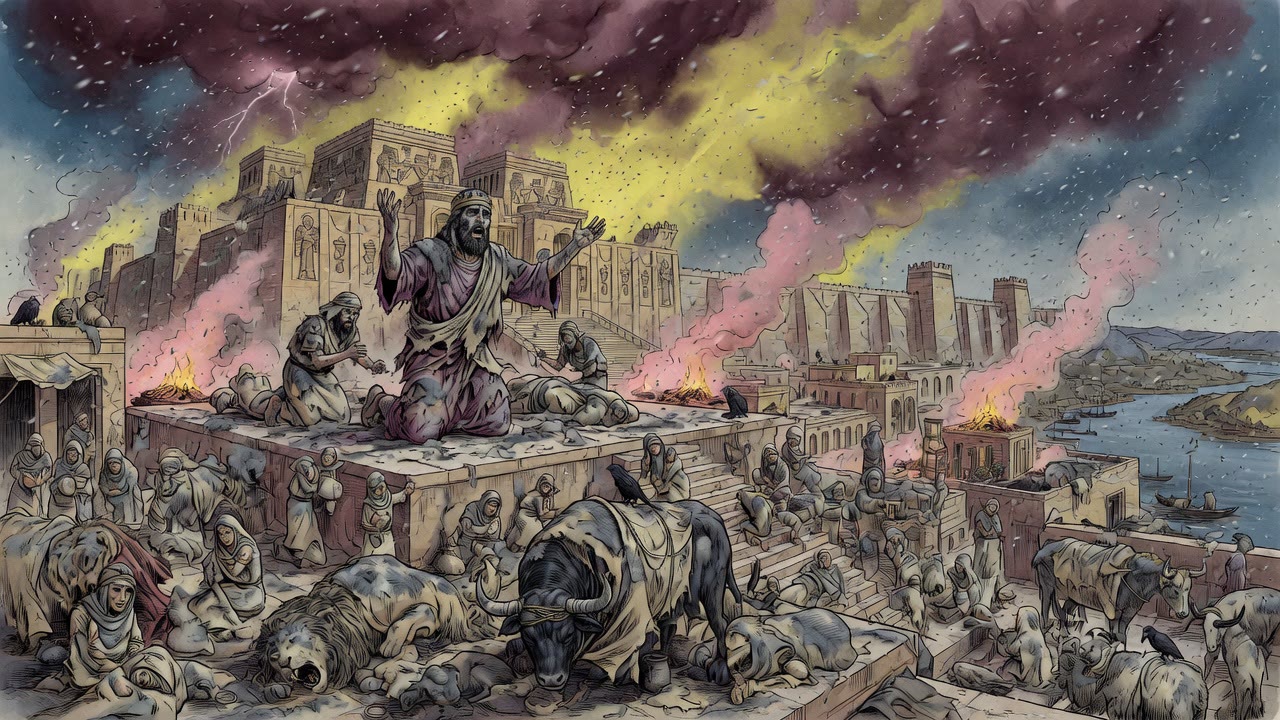
On the way back he found fingers in the dust. Fingers and toes, cut off and thrown down along the roads the columns had taken.
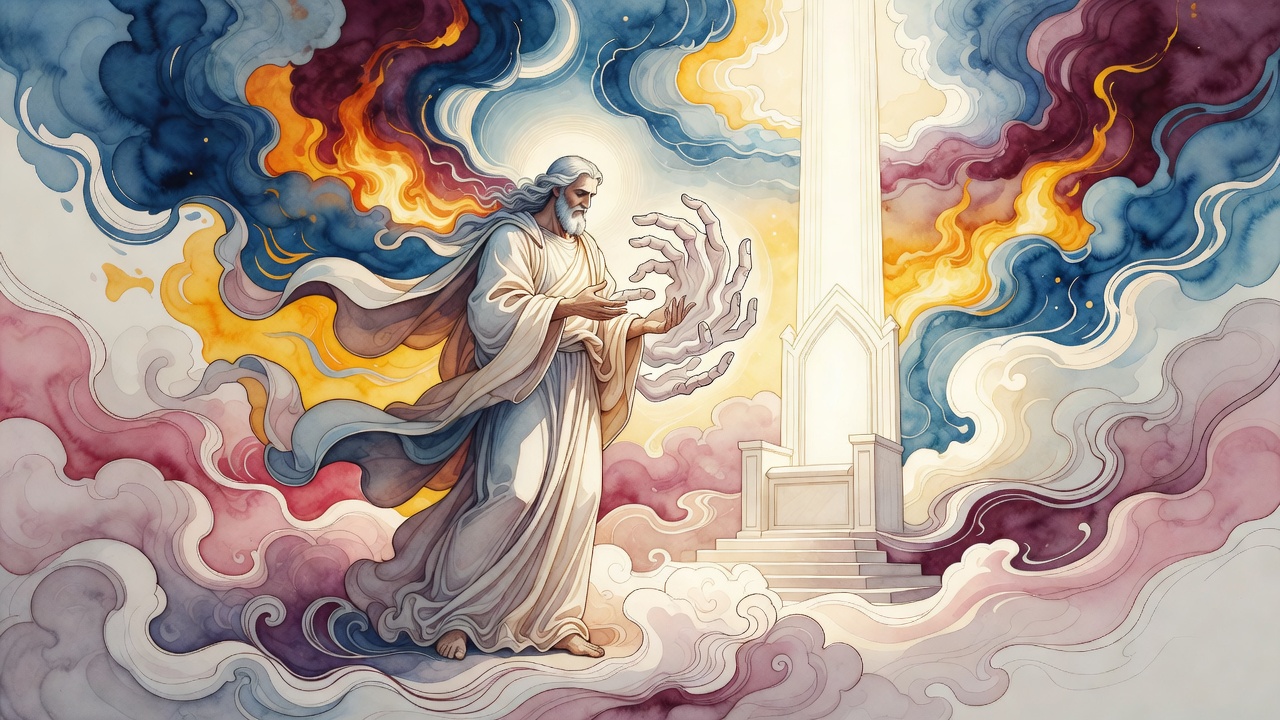
He got down and gathered them. He held them against himself and kissed them and folded them into his cloak, and he talked to them while he worked.
"My children. Did I not say it to you. Give glory to the LORD your God before the dark comes down, before your feet stumble."
Before the dark came down over the words of Torah. Before it came down over the words of prophecy.
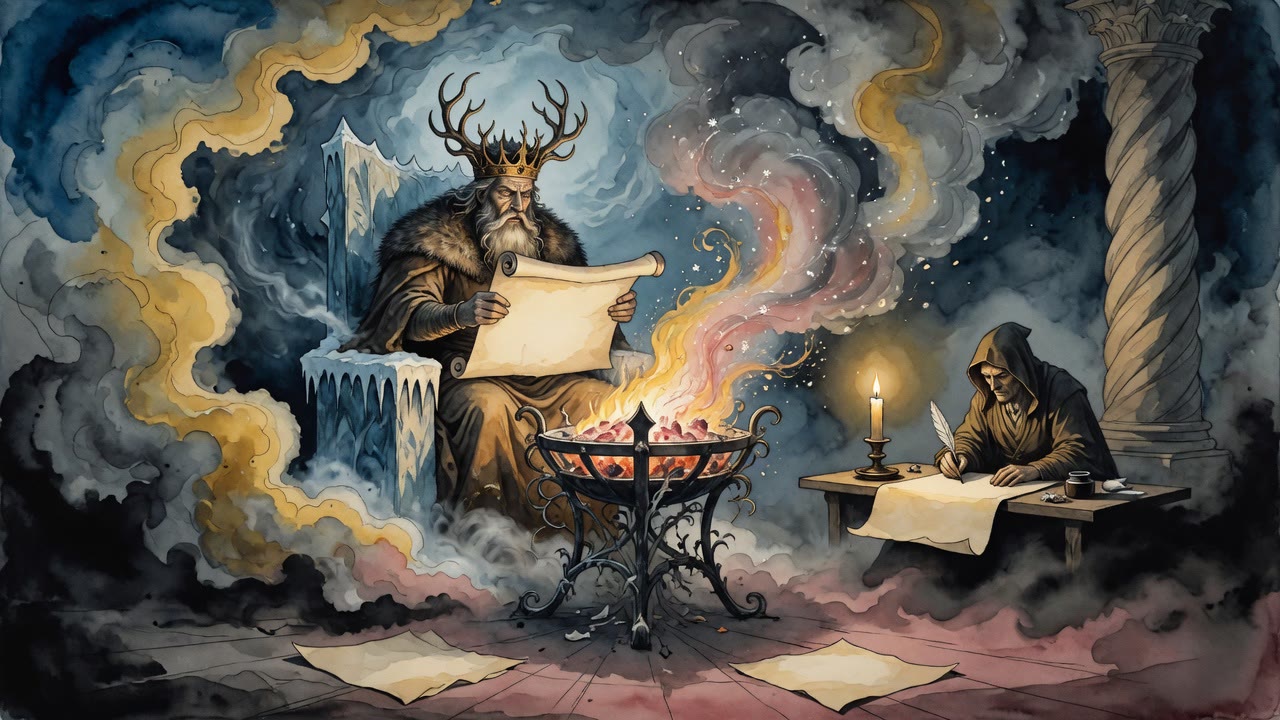
Moses had left a warning at the end of the Torah about a day when the anger would burn and the face would be hidden and troubles would eat the people alive, and Rabbi Aha measured that anger and put it at one day. One turning back would have cooled it. Inside those few words the sages counted four kingdoms standing in a line: the burning anger was Babylon, the abandoning was Media, the hidden face was Greece, and being devoured was Edom, the iron one out of Daniel's dream that chewed and crushed and stamped down whatever it could not swallow.
Jeremiah was picking the leavings of the first of them out of the dirt, one joint at a time. And Zion, who had watched all of it happen, said what she said, and the sages let it stand without an answer. The LORD has left me. My Lord has forgotten me.
← All myths