The Shepherd, the Ziz, and the Princess Who Refused Every Prince
A princess refuses every cruel and vain king for a poor shepherd who rode the giant Ziz across the sea to her tower of stone.
Table of Contents
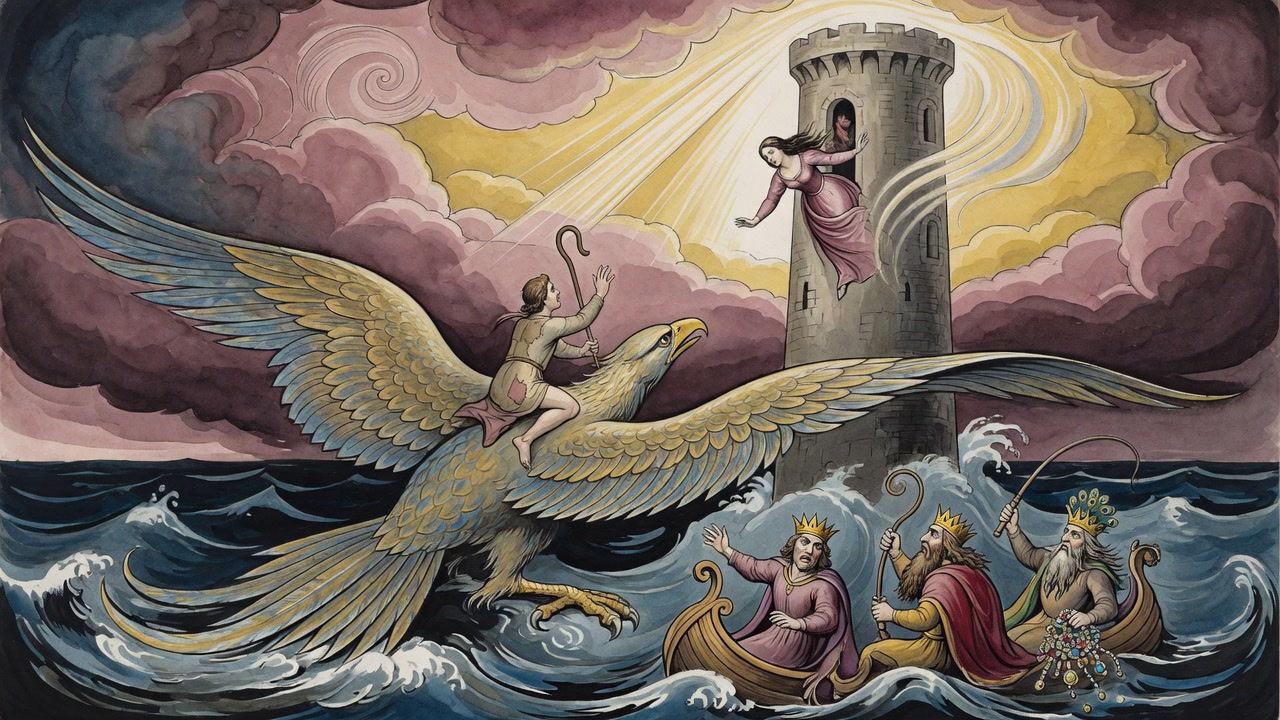
Solima would not marry a king's son, and she said why to her father's face. The warrior boasted of the men and women and children his soldiers had cut down in the field, and she would not have him. The hunter could recite the diet of every falcon on his wrist while his people starved in the streets below his hall, and she would not have him. The fop named the vintage of every cup he drank and could not name one school in his own city. "I will not be queen," she told King Zuliman, "in a land where the king believes the people were born to make him great." So her father, white with rage, carried her out past the breakers and locked her in a tower of stone on an island miles from any shore.
 Click for full size
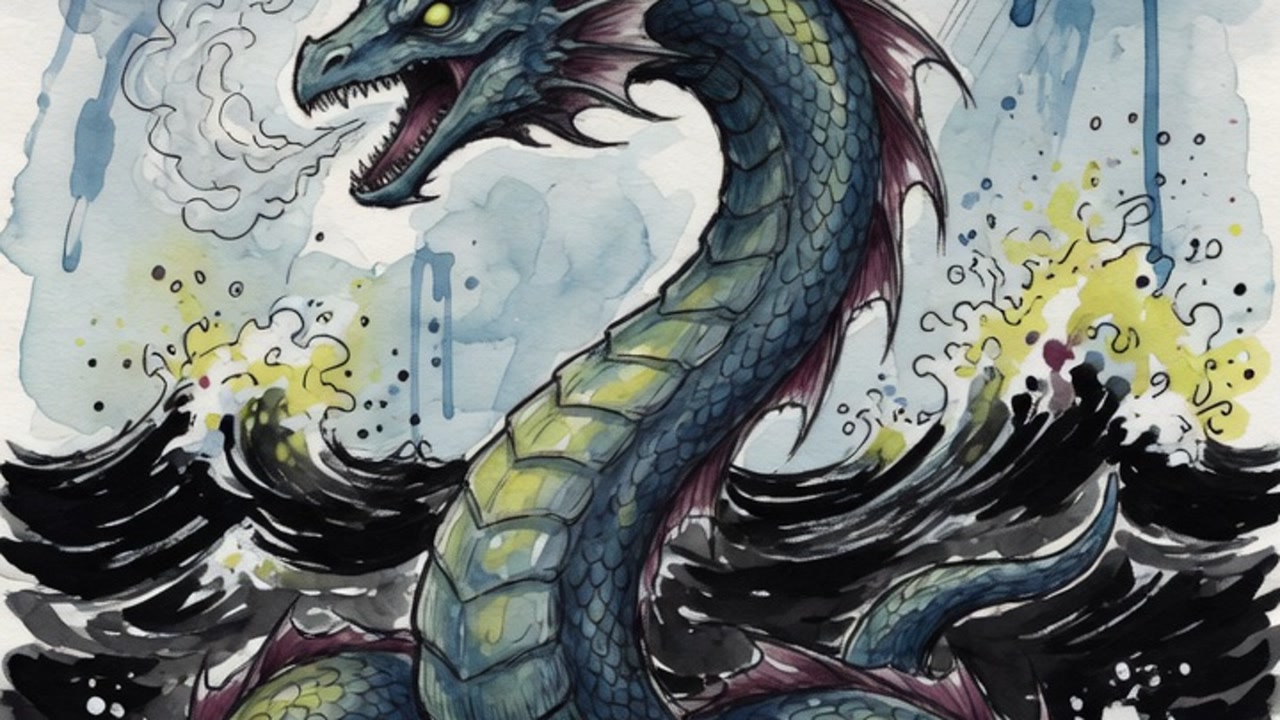
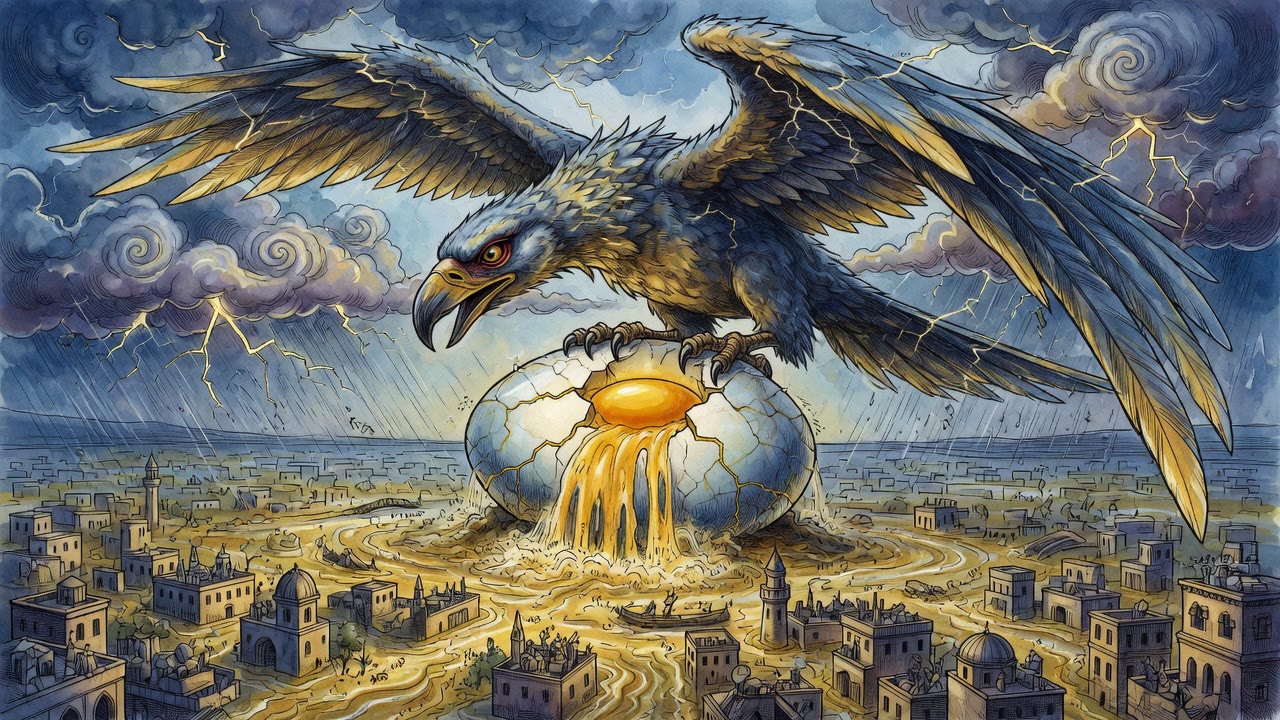
Far inland a shepherd boy slept in tall grass and dreamed of learning to set the song of the brooks down in letters. He woke to screaming. A Ziz had come down on the flock, the monstrous bird of the old stories whose ankles stand in the deep while its head brushes the sky, and it had one of his oxen by the spine. He did not think. He threw both arms around the ox's forelegs and braced his own leg against a young tree, and the tree cracked at the root, and then the field was gone beneath him. The sea rolled by silver and enormous. The boy hung from the ox, and the ox hung from the bird, and the world he knew shrank to nothing.
The Bird Drops Him on a Roof of Stone
The Ziz let go over open water and the boy fell onto the flat top of the tower, bruised the length of his body but breathing. The bird wheeled and dove to feed where he lay. He drew the knife he used for wolves and drove it up through the soft of the great tongue, and the Ziz screamed a sound that flattened the waves and beat away into the sky, the ox still in its claws, the boy left alone on the stone.
A woman stood over him when he opened his eyes, more beautiful than any face he had carried in his head while he watched sheep. She did not scream and she did not run. She knelt, she washed the blood from him, she fed him from her own table, and all the while she studied his face the way a scholar studies a difficult line.
A Shepherd May Be Fair
"You are no prince," she said, not as a rebuke, more as a thing being settled. He told her he was a shepherd, that he could not read and could barely write, that he had never owned a thing in his life but the knife now wet in his hand. She turned that over.
"And who," she asked, "wrote down the law that only royal persons may be fair to look on? I have stood before princes with the faces of toads. May a shepherd not be handsome?" Every morning of her captivity she had climbed to this roof to watch the empty horizon for the husband she had never met and never chosen. The horizon had been empty every morning. This morning a bird had thrown a man onto her roof.
They Make a Harness for the Monster
The Ziz came back for the carcass it had dropped, as such a creature will, hunger larger than memory. The two of them were ready. They had cut the ropes and woven the basket and waited on the stone in the dark. When the bird settled to feed, they lashed the ropes fast about its legs and the basket slung beneath, and the boy and the princess climbed in together and held each other and the cords. The Ziz rose. The tower fell away. The sea passed under them a second time, and this time neither of them was alone above it.
It set them down, or near enough, within sight of the palace of King Zuliman, and they walked the last of the road to the gate of the man who had thrown his own daughter into the waves.
A Prince Among Men
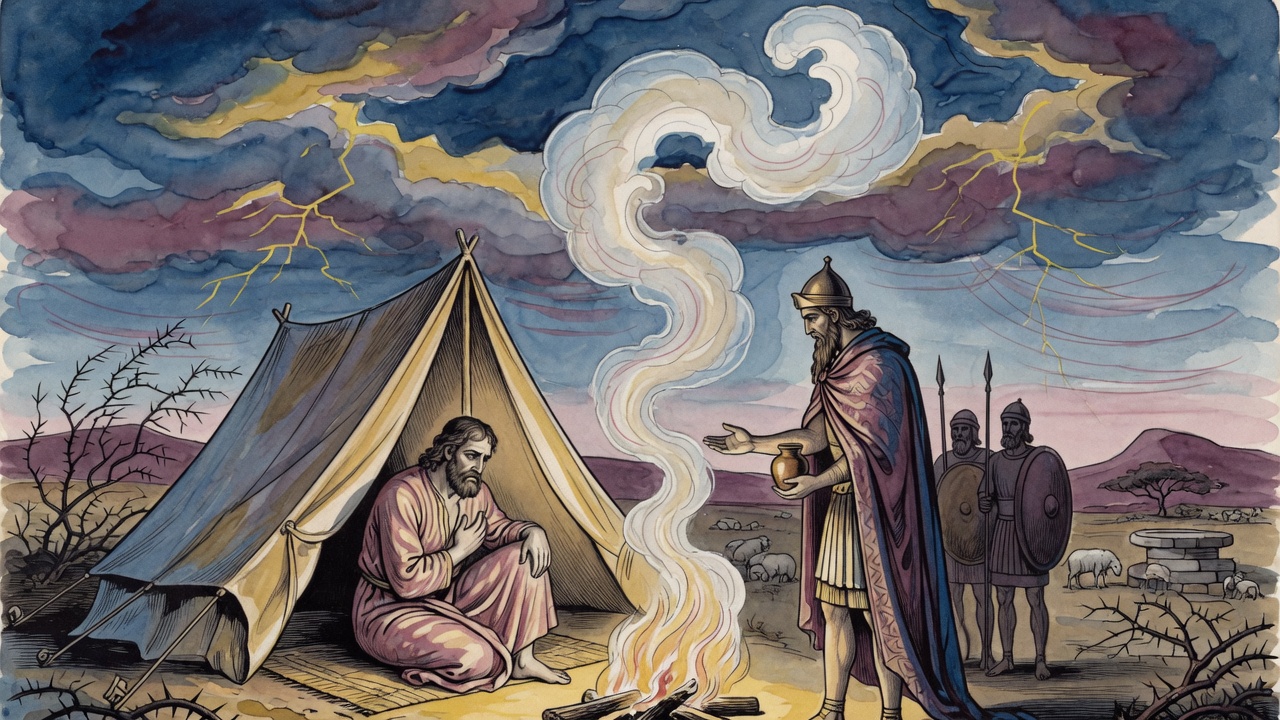
The king came out and saw his lost daughter alive, and beside her a sunburned stranger in a shepherd's coat with a wolf knife at his belt. "What prince art thou," the king demanded, "that hast crossed the sea for her?"
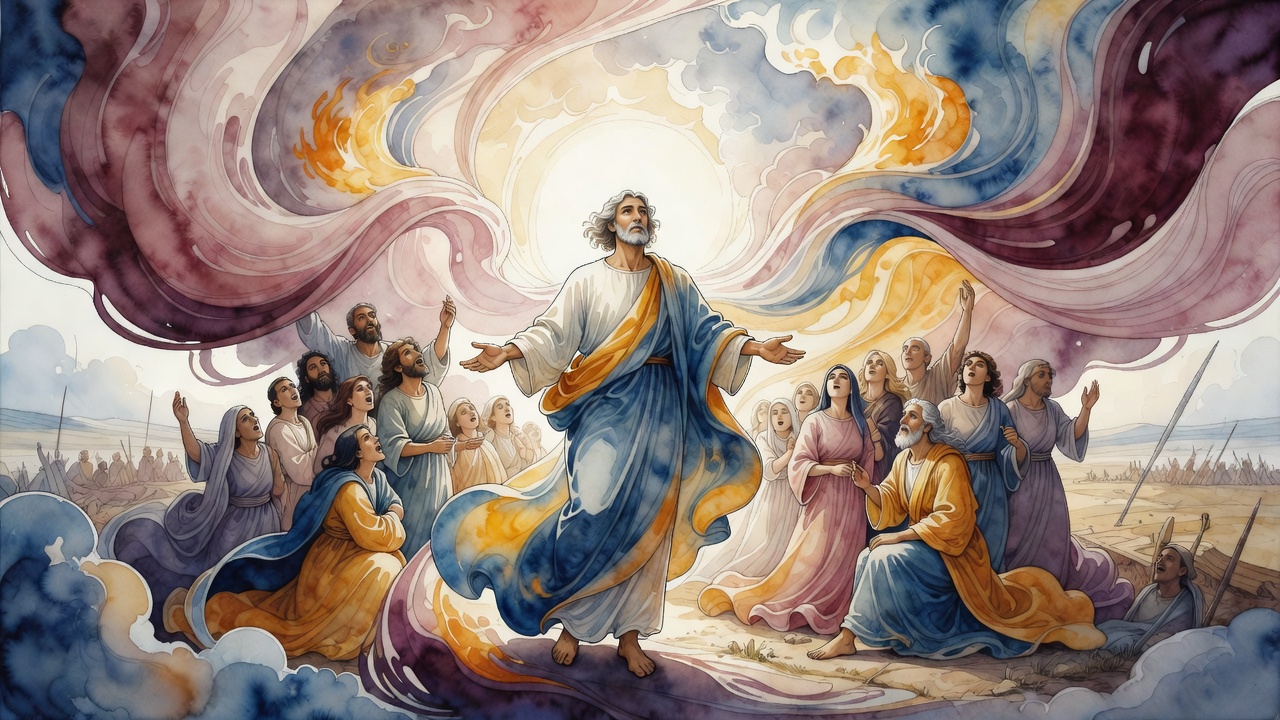
Solima answered before the boy could find his tongue. "A prince among men," she said. "A man with no riches, who comes up out of the people and knows what the people need, and who will teach it to us, since we have plainly never learned." The king who measured worth by blood and gold stood in his own gateway with no answer, while his daughter who had refused every crown in reach held the hand of a boy who had ridden a creature of the first creation across the open sea to stand in front of him.
← All myths