The Snowball, the Rebel Waters, and the Weeping Trees
A builder on a beam answers how the world was made, and the waters revolt, the trees grow proud, and God tears the deep apart with one finger.
Table of Contents
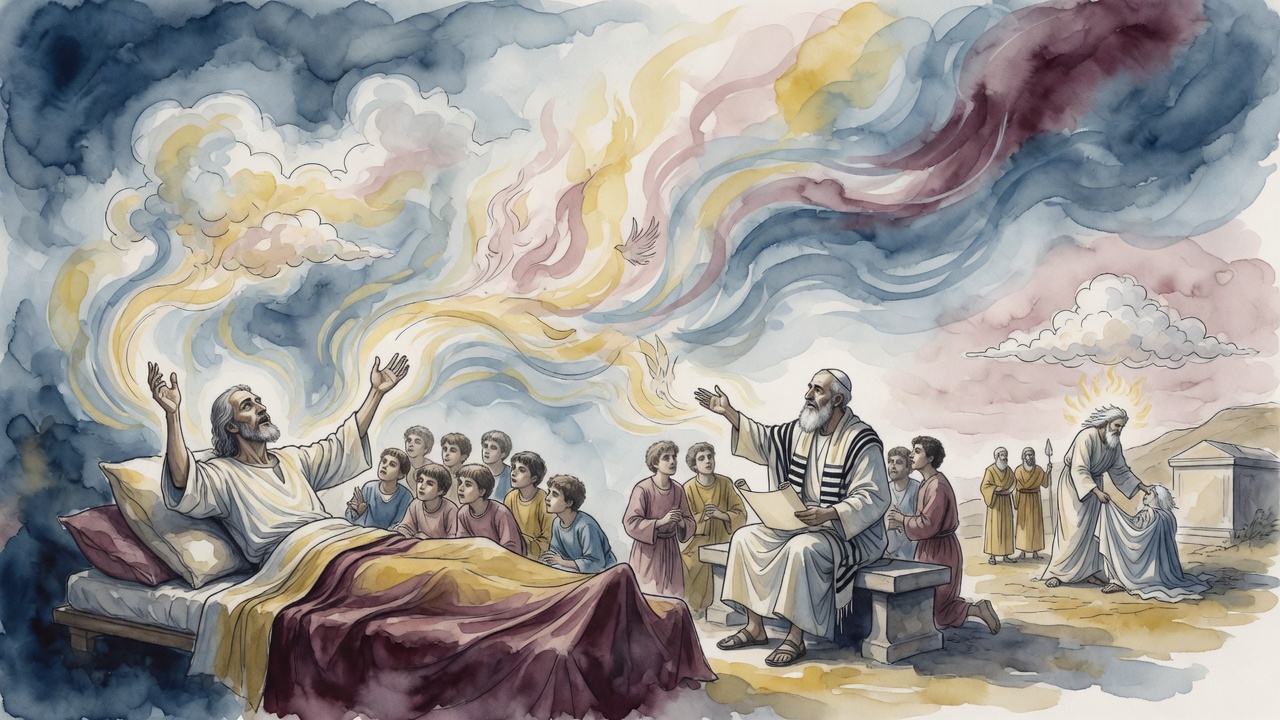
Abdimos the Gardite came to Rabbi Meir with the oldest question a person can carry. "Tell me," he said, "how was the earth made?"
 Click for full size
Rabbi Meir did not reach for a scroll. "Go find Abba Yosef the builder," he said, and gave no more than that.
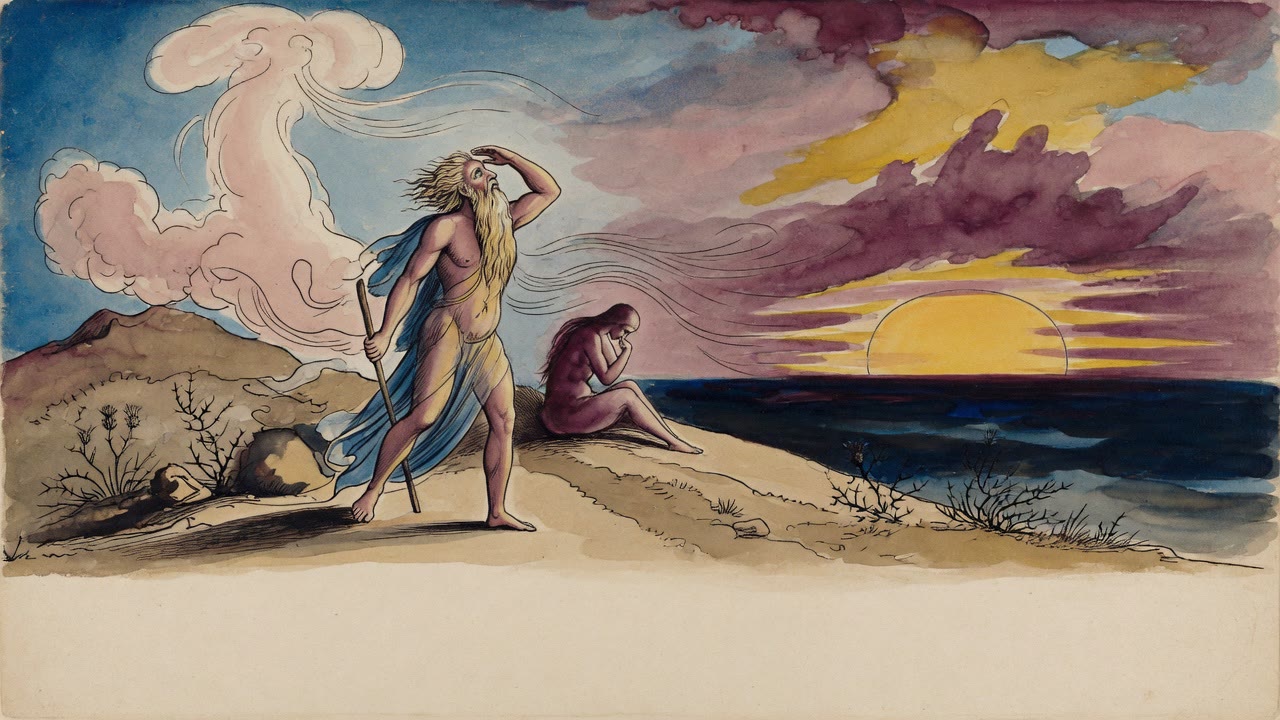
Abdimos walked until he found the man, and the man was not on the ground. Abba Yosef sat on a beam high overhead, squaring the corner of a roof, an adze in his fist and the whole frame of the house under his feet. Abdimos shaded his eyes and called up to him.
"Come down. I have a question from Rabbi Meir."
"I am a worker," Abba Yosef called back, not pausing. "My time belongs to the man who hired me. Ask from where you stand."
The Answer Called Down From the Beam
So the question went up between the beams, and the answer came down through the sawdust, each voice climbing and falling the length of the unfinished house.
"How was the earth made?"
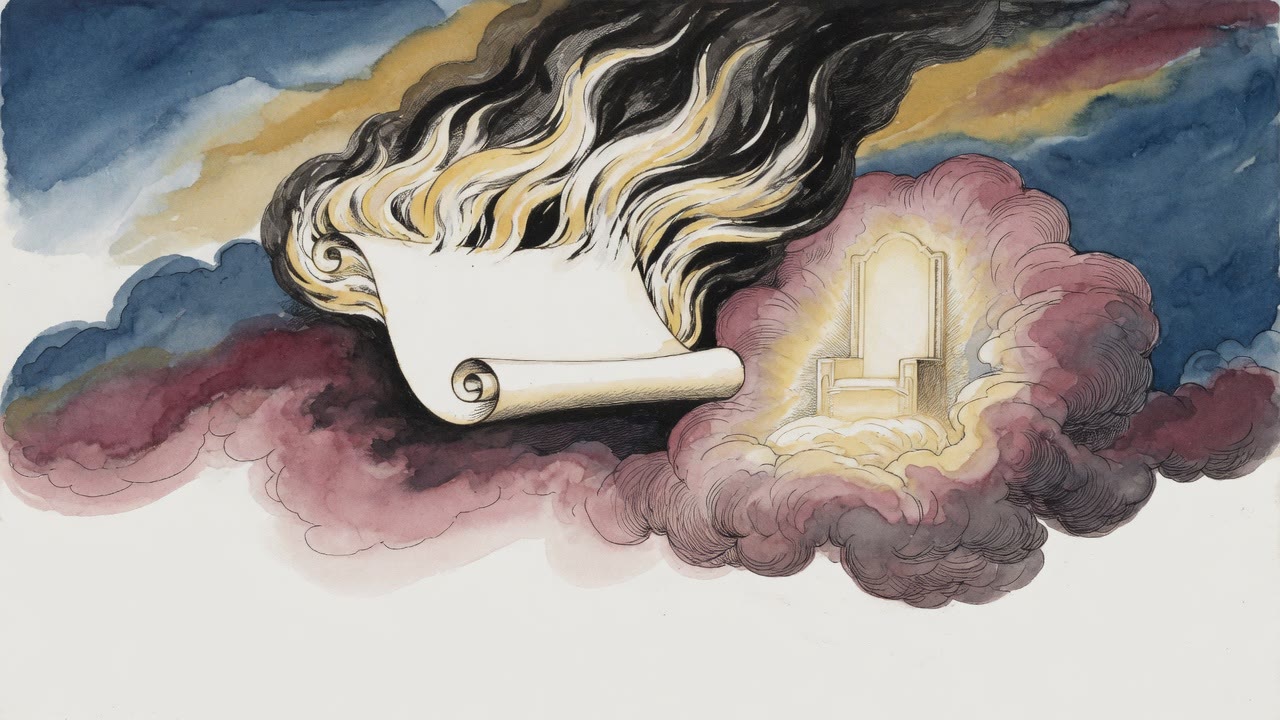
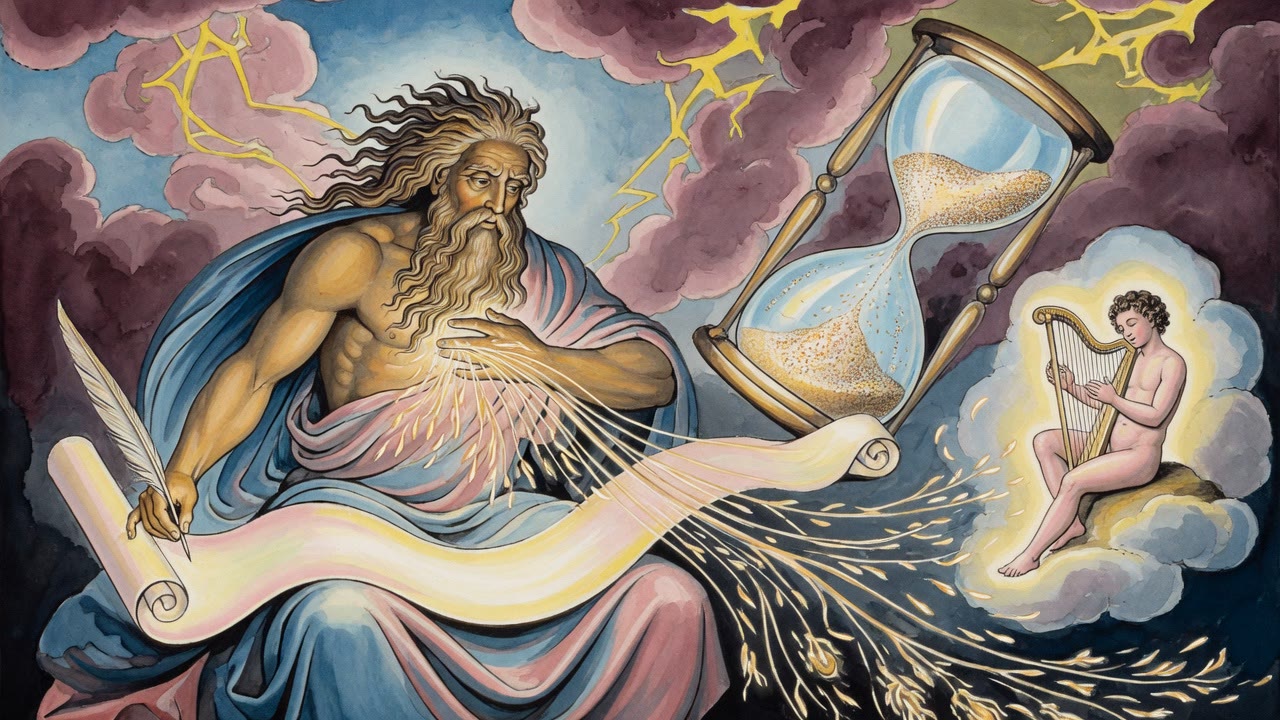
"God reached beneath His Throne of Glory," the builder called, "and took up a clod of snow. He flung it down onto the face of the deep, and where it struck the water it thickened and held, and the world set firm like soil." He drove the adze once more into the beam. "Everything you are standing on was a handful of snow that melted under the warmth of His nearness."
White, cold, shapeless, a single thing from beneath the cool of the divine presence, and out of its thawing came stone and river and root and beast, each separating as it warmed. The builder did not climb down to say so. He had a roof to square.
The Waters That Would Not Go Below
But the snow had fallen onto water, and the water had a will.
On the second day God spoke into the deep. "Let there be a firmament in the midst of the waters. Divide. Half of you rise above the dome, and half of you sink below it."
The waters heard the command and broke it on the spot. All of them surged upward together. Not half. Every drop climbed toward the heights, abandoning the place beneath, as if the lower world were beneath them.
"I told you," God said into the churning. "Half above, half below. And you have all gone up."
The waters answered without bowing. "We will not descend."
They were that bold before the One who had just made them, and for their boldness they earned a name. Mighty waters, the Scripture would call them ever after, the proud flood that talked back to its Maker on the second morning of the world.
The Finger That Tore the Deep
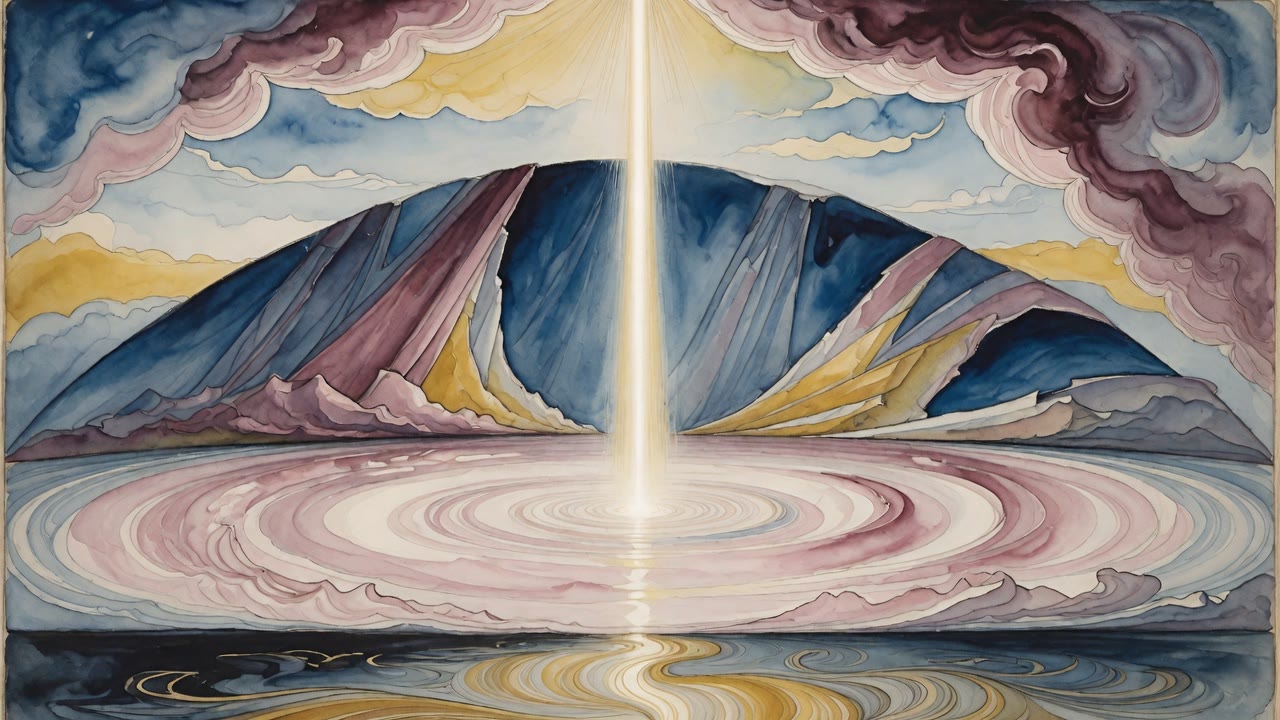
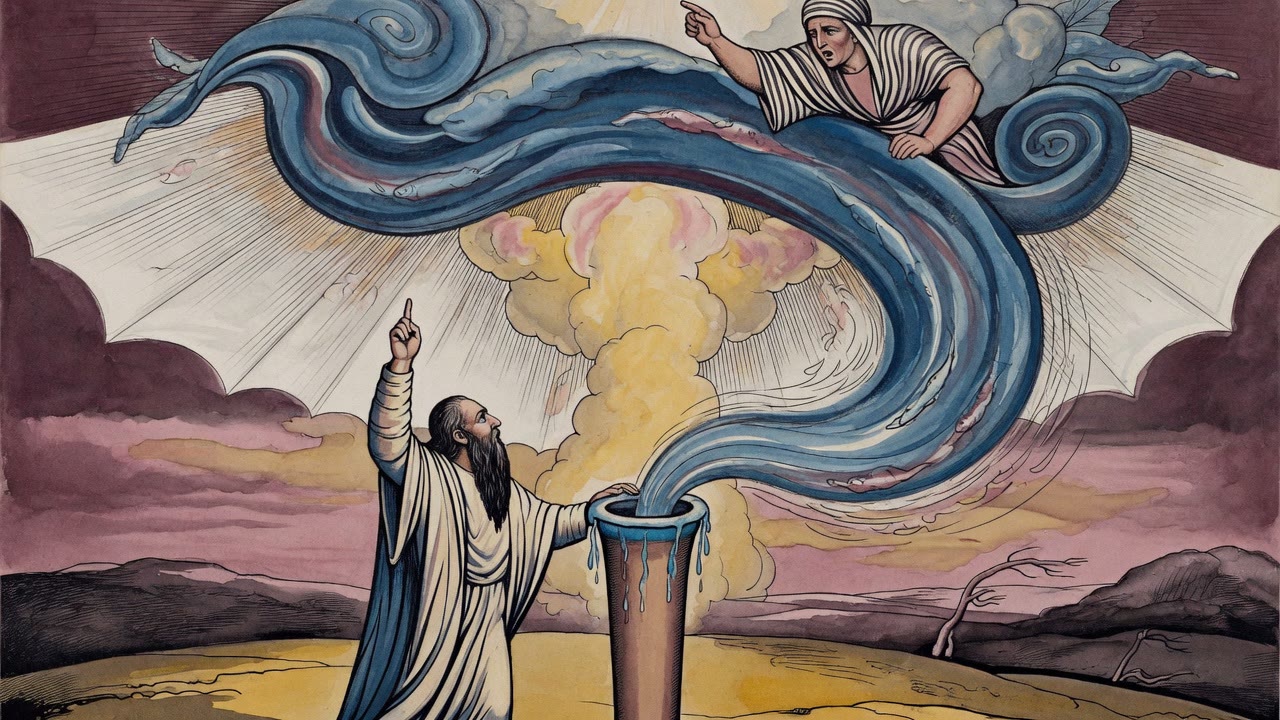
God did not plead. He stretched out a single finger and tore the waters down their length, ripping the one rebellious mass into two, and half of them fell below against their will and lay there, pinned beneath the dome, shocked into silence.
Do not read the word as firmament. Read it as tearing. The sky is a wound in the water that never closed.
Now His anger turned hot, and He moved to burn what was left of them away entirely. The waters that remained rose up and pleaded. They begged Him to let them live.
He let the fire cool, but He bound them to a promise. "Know this," He told them. "One day I will lead My children through your middle, dry-shod, in their sandals. When I say be sea, you are sea. When I say be dry land, you are dry land. This is the condition I set on you at the beginning." He set the same condition deep in them for another day, that they would storm and heave when a man named Jonah tried to flee across them toward Tarshish, and would not let him pass in peace. Then He turned from the water, and out of fire He kindled the seven chambers of the place of punishment below.
The Tall Trees and the Mountain of Iron
On the third day God filled the world with trees, fruit trees and barren trees, in the garden and in the lower world both. And the tallest of them looked around and liked what they saw.
The cedars of Lebanon, the oaks of Bashan, every towering trunk that had been planted first and risen highest, lifted their crowns and swelled with pride. Nothing in the world reached as high as they did. Nothing, they were certain, ever would.
God watched them stretch. "I hate pride," He said. "I hate height. There is no proud one in this world but Me."
And at once He made a mountain of iron.
From the Tree Comes the Handle of the Axe
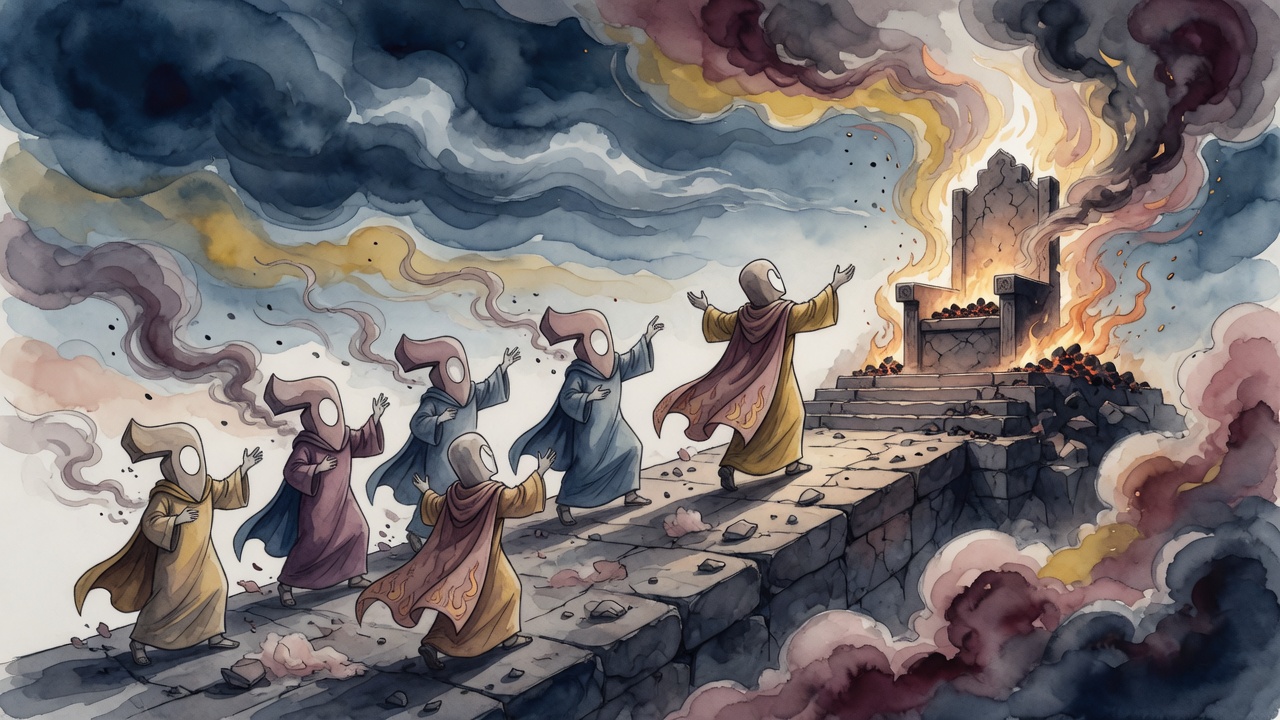
When the trees caught sight of the iron, they wept. Up and down the ridges of Lebanon and Bashan the great trunks shook and mourned, until weeping became their very name.
"Why do you weep?" God asked them.
"Because of that mountain," they answered through their grief. "You made iron, and iron will be forged into the thing that tears us out of the ground. We believed we were the tallest in the world, with no rival anywhere. And now a destroyer stands ready to come for us."
God let them finish. Then He told them the thing that was worse and better than what they feared. "The axe that fells you will be useless without you. From your own wood will come the handle it needs to swing. The iron rules you only when you consent to arm it. Refuse it the haft, and it lies on the ground as cold metal and nothing more." So He made a peace between the tree and the iron, a truce that holds only as long as the forest withholds its own arm.
A handful of snow flung onto a rebel sea, the sky a tear in the water, and a stand of weeping cedars that hold the axe's handle in their own grain. This was the third day, and the world was not yet finished.
← All myths