The Fire That Answered the Angels Who Doubted Man
God burned the angels who doubted man, then folded a pure light beneath His Throne for the Messiah and a star to time the end.
Table of Contents
Before there was an earth to stand on, God lined up an army of light and asked it a question.
 Click for full size
The Question Put to an Army of Light
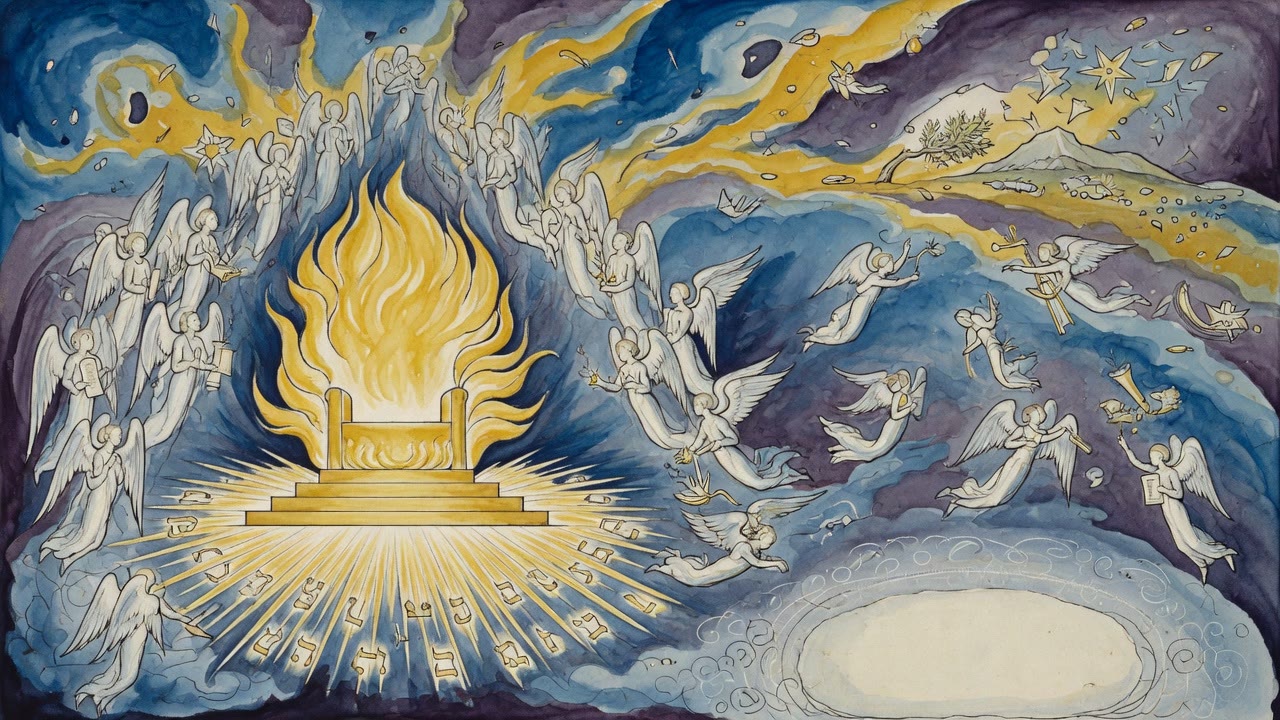
The first company of ministering angels burned with their own brightness, rank on rank, and the Holy One turned to them as a craftsman turns to apprentices. "Is it your desire," He asked, "that we make man?" The angels had read the future the way a scribe reads a finished scroll. They had seen the blood man would spill, the idols he would carve, the lies he would swear. So they answered with a verse, cold and exact. "What is man," they said, "that You are mindful of him?"
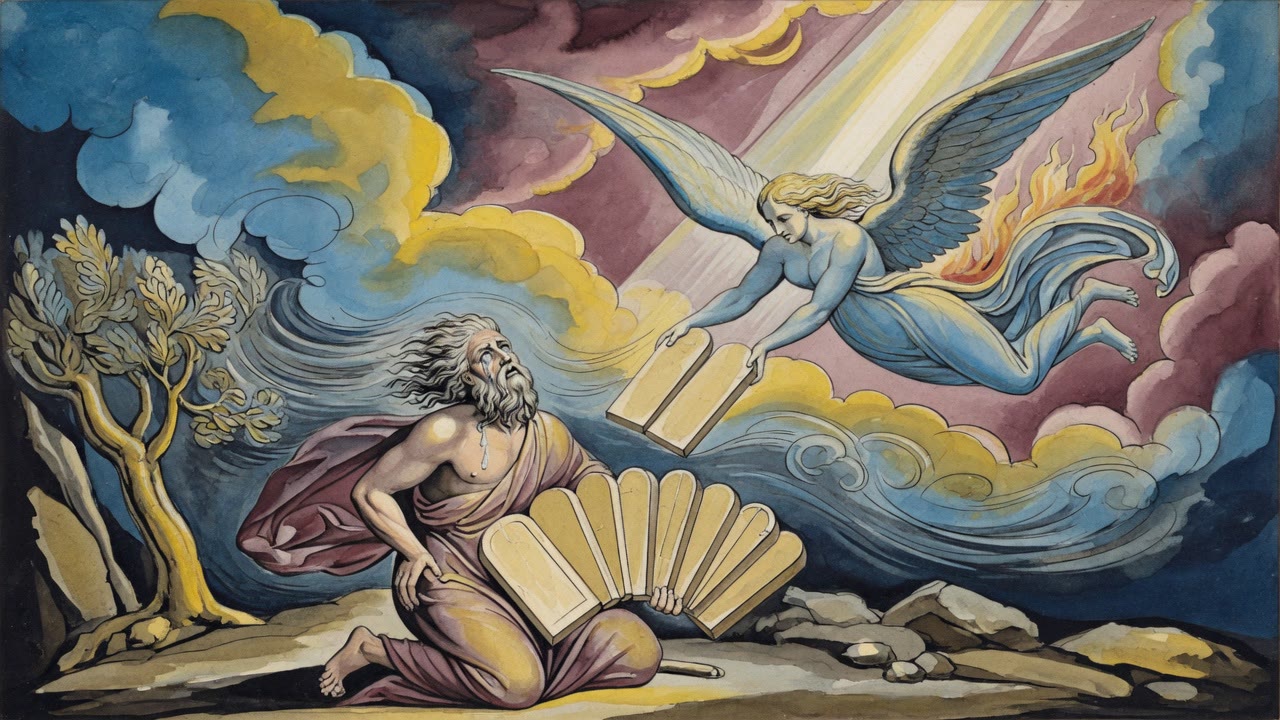
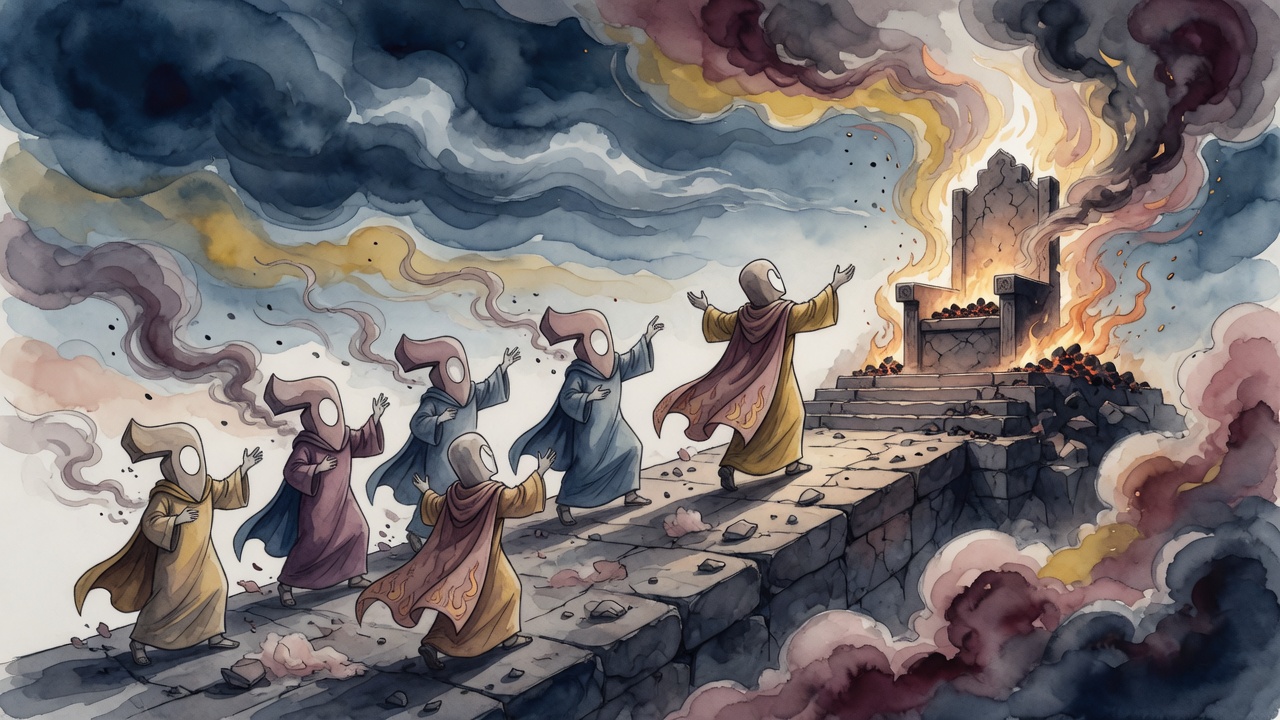
God stretched out a single finger among them. Fire ran along the ranks, and the first company was gone, burned to nothing for the crime of doubting that a creature like man was worth the trouble.
A second company stood where the first had been. God asked again, the same question, in the same voice. They gave the same answer. The finger moved again, and the second company burned.
The third company had watched both fires. When God asked whether man should be made, they did not argue the merits. "Master of the world," they said, "the earlier ones who spoke before You, what did they accomplish? The whole world is Yours. Whatever You wish to do in Your world, do." And these were not burned. They had understood what the furnace meant, that the question had never really been a vote.
The Grievance That Outlived the Fire
So man was made, and the angels who survived held their objection in their mouths and said nothing.
But the deeds of those first companies did not die with them. When the generation of the Flood rose, drowning in its own violence, and when the builders of the great tower scattered with their bricks, the surviving angels lifted their old grievance again. "Did not the earlier ones speak well?" they asked. They meant the burned ones. They meant the verdict the fire had silenced but never overturned. God did not strike them this time. "Even to old age I am the same," He said, "and to gray hairs I will carry you." He would carry the thing He had insisted on making, all the way down its long ruin, and He would not let go.
And there was a light He had already set aside for that carrying.
The Light Folded Beneath the Throne
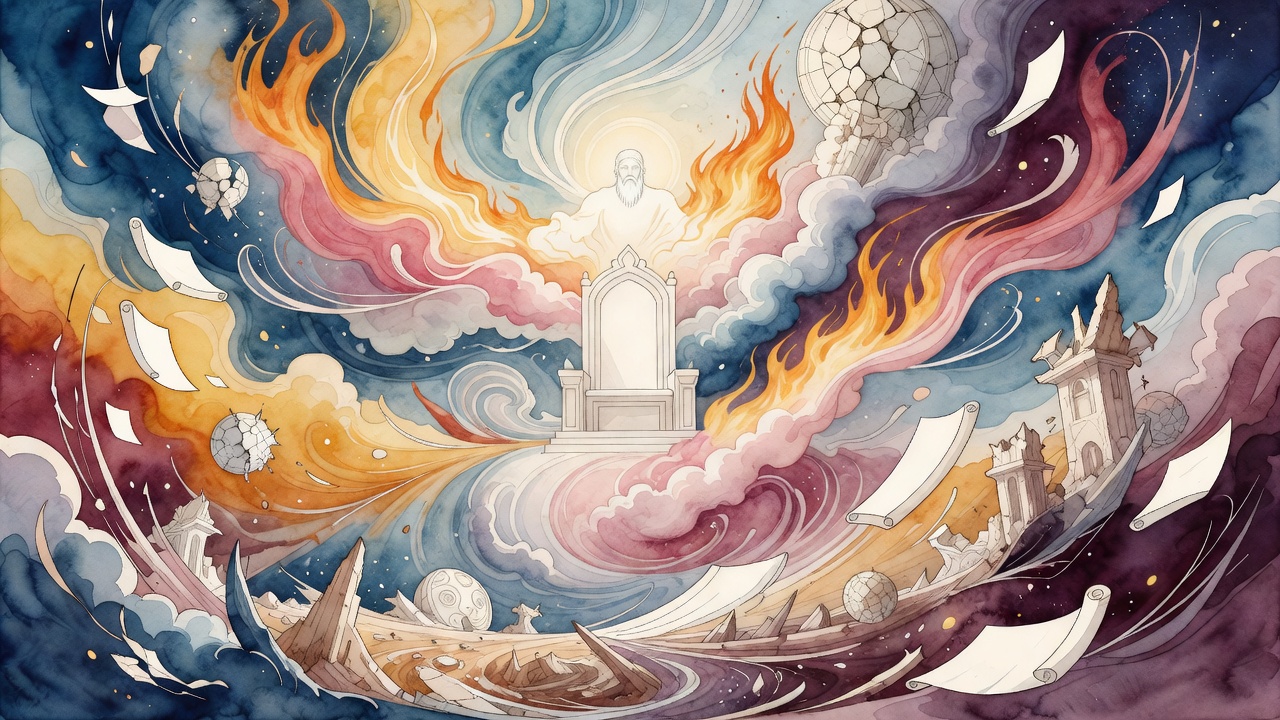
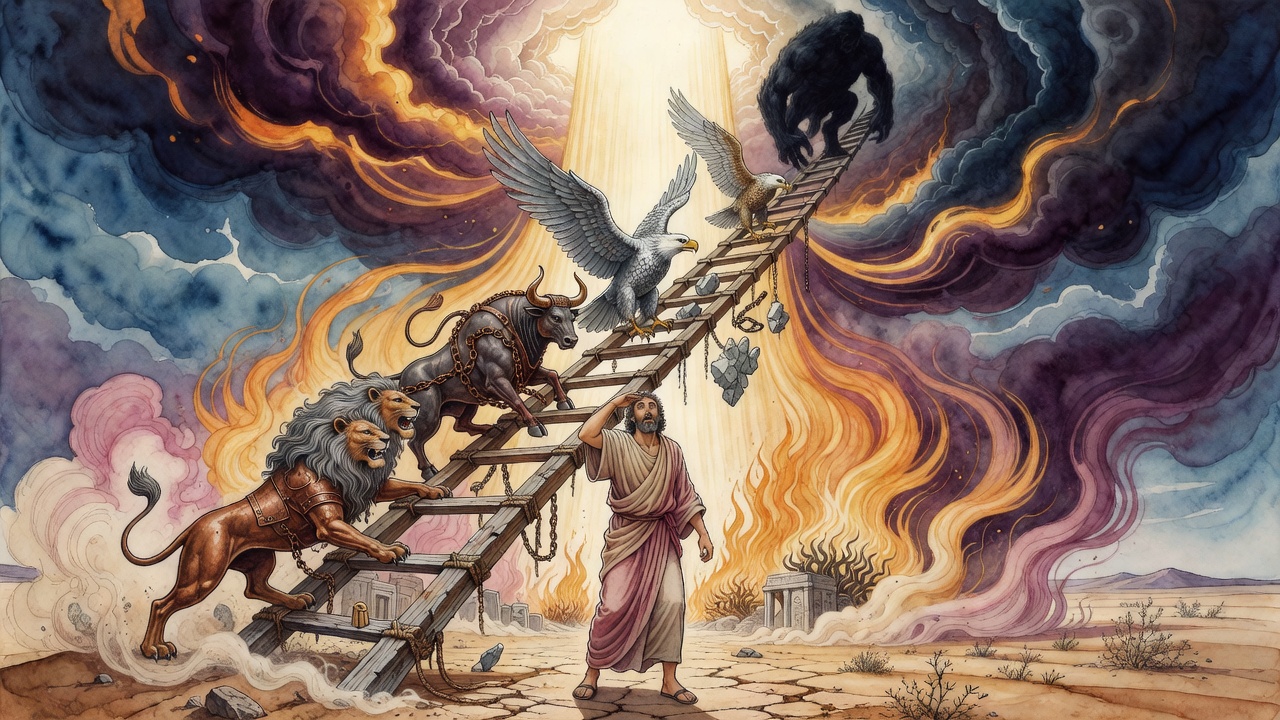
On the first day, before the sun, God had made a light so pure He looked at it and saw that it was good, and then He hid it. He did not scatter it across the firmament. He folded it and stored it beneath His Throne of Glory, kept back for one man not yet born and for the generation that would suffer with him. The Accuser, who walks the floor of heaven looking for cases to bring, noticed the glow under the Throne and could not let it lie. "Master of the world," he said, "the light stored beneath Your Throne of Glory, for whom is it?"
"For the one who is destined to turn you back," God said, "and shame you openly."
"Show him to me."
So God showed him. And the prosecutor of all the world looked once at the face under the Throne and shook. He fell forward onto the floor of heaven. "Surely this is the Messiah," he said, "who is destined to cast me and all the princes of the nations into Gehinnom (the fiery place of punishment after death)." The nations heard it and stirred. "Who is this," they demanded, "into whose hand we fall? What is his name?" And the answer came back across heaven. "He is Ephraim, My righteous Messiah."
The Bargain the Messiah Widened
Then God made a condition with the man in the light. The sins of the generation hidden away with him would come like an iron yoke. They would bend his stature, dim his eyes like a calf's, choke the spirit out of him, glue his tongue to the roof of his mouth. "Do you accept this?" God asked.
The Messiah asked one thing first. "Perhaps that suffering will last many years?"
"By your life and by the life of My head," God said, "it is one week that I have decreed upon you. If your soul is grieved, I will drive them away now."
He did not ask to be spared. He asked, instead, that the bargain be widened until it covered everyone. Not only the living of his day, but the dead in the dust. Not only the dead since the Flood, but every soul back to Adam. Not only those, but the stillborn. Not only those, but every person who had ever risen in God's thought to be created and was not. "This I desire," he said. "This I accept upon myself." And God appointed four living creatures to bear the throne of that broken, willing king.
The Star That Sets the Clock
The light would keep until its hour, and the hour would be marked in the sky.
In the last bitter week before the end, the famine deepens year by year, and then a star comes up out of the east. It is the star of the Messiah, and it hangs in the east for fifteen days, and if it lingers longer than that, the lingering is for Israel's good. Voices and rumors fill the sixth year. War fills the seventh. A fierce-faced king rises over a poor and needy people and holds his throne by smooth speech, and he forbids the saying of the words "One is the God of the Hebrews." He cancels the festivals, the Sabbaths, the new moons. He cancels Torah itself, for a time, and times, and half a time.
And the frightened ones ask the old sage, "Master, where shall we be saved?" He answers from the hills. "In Upper Galilee. On Mount Zion and in Jerusalem there shall be escape."
The same light that the angels were burned for doubting is the light that waits under the Throne, and the star is only its first edge, climbing the eastern dark on schedule.
← All myths