The Cave-Dwellers Who Said an Angel Built the World
An angel held the chisel at creation, said a sect hidden in caves, and the rabbis who hunted the doctrine fought to bury it forever.
Table of Contents
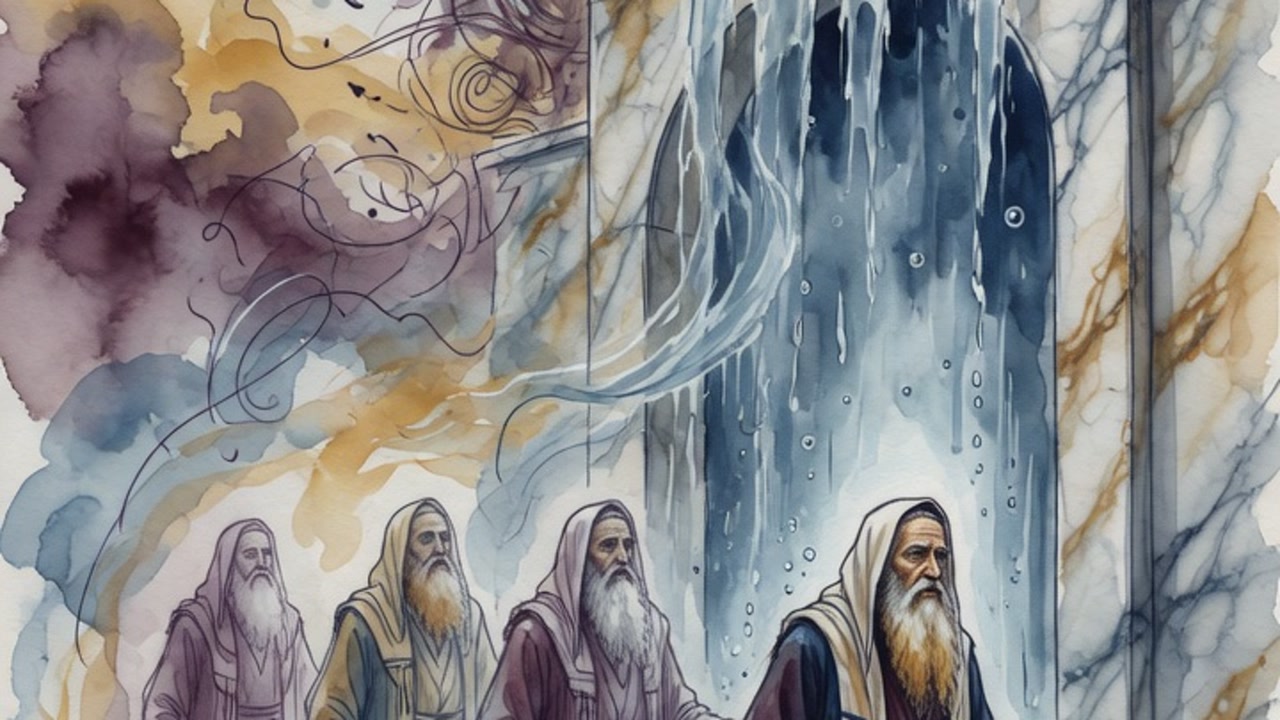
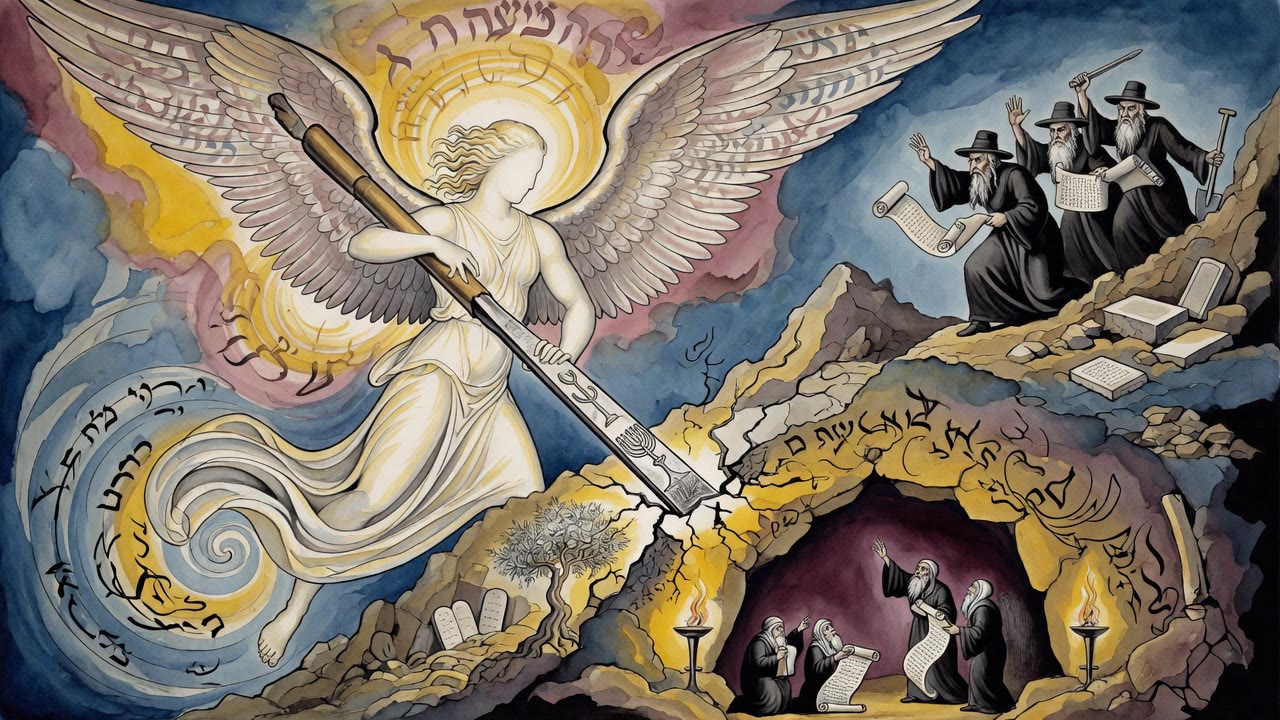
The books came out of the ground. Shepherds working the cliffs near the Dead Sea pried open a sealed cave and found scrolls that no synagogue claimed, written by a community the rabbis had spent generations trying to forget. The Magharians, the cave dwellers, had hidden their library against the dampness and against the men who would have burned it. What the scrolls argued was simple and terrible. The hands that shaped the world were not God's hands. They belonged to an angel.
 Click for full size
The Fear That Bred the Doctrine
The Magharians had not started as heretics. They started as men afraid of a smaller god. They watched the Sadducees read the Torah and shudder at nothing, watched them speak of God walking in the garden, God smelling the smoke of an offering, God with feet that pressed down on sapphire pavement, and they thought the Sadducees were dragging the Holy One down into a body. God could not have feet. God could not stand on stone. God was so far past the reach of any word that to call Him a man of war was to lie about Him.
So they built a wall around Him. Every time the Torah made God sound like a creature with hands and a face and a voice that could be heard, the Magharians said the verse did not mean God at all. It meant the angel. When Moses and the elders climbed the mountain and saw the God of Israel with a floor of sapphire under His feet, they had not seen God. No one sees God. They had seen the messenger God set before the world, the one whose word was God's word and whose face was God's face by appointment, the way a king's seal carries the king's authority into a room the king never enters.
The Angel Who Held the Chisel
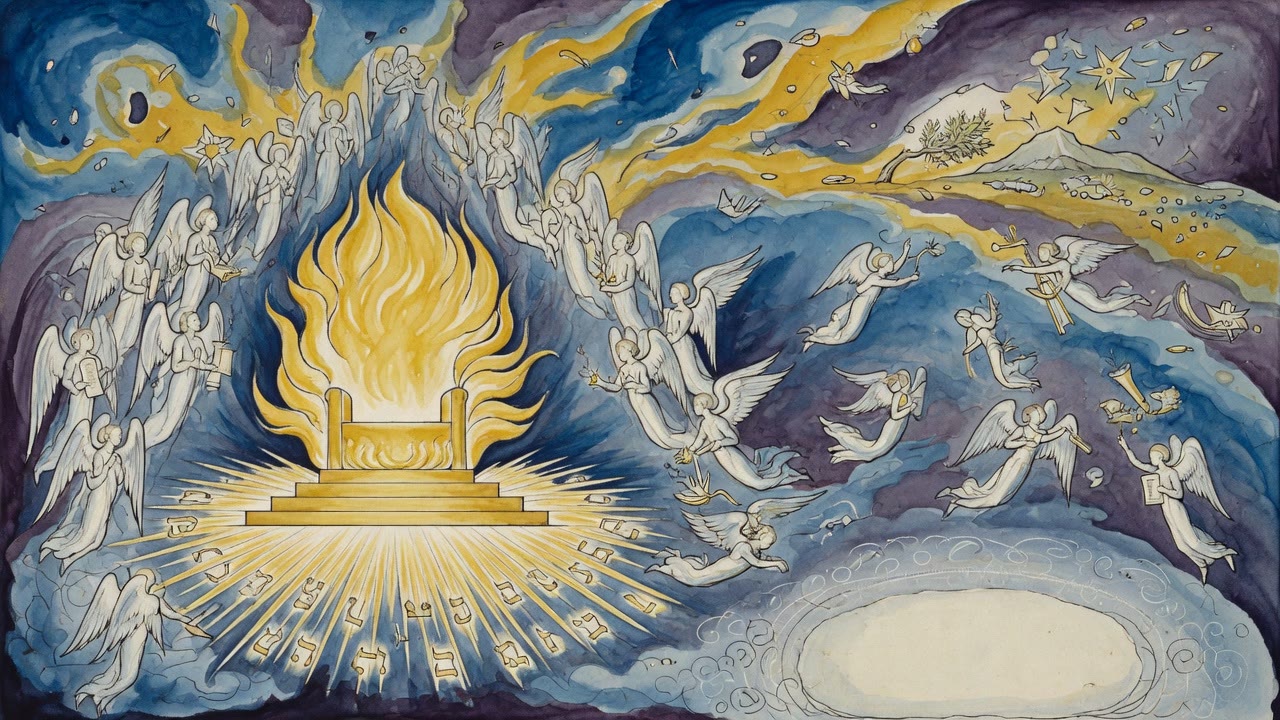
From that wall the doctrine grew its sharpest edge. If the angel was the one with feet and a face, then the angel was the one who had walked the unfinished world. The angel had divided the waters. The angel had pressed the lights into the firmament and called the dry land up out of the deep. God had willed it. The angel had done it. God chose one being out of all the host that stood before Him, laid His own Name upon it, and sent it down to build.
They found their proof scattered through the scrolls they trusted. In the Book of Jubilees, God turns to the angel of the presence and commands him to write the whole history of creation for Moses, from the first day to the last sanctuary. In the wilderness God says, "I am sending an angel before you. Pay heed to him and obey him, for he will not pardon your offenses, since My Name is in him." A messenger who carries the Name, who cannot be defied, whose word is law. The Magharians read that and saw their architect. The Name was in him. The work was his.
What the Doctrine Almost Made of God
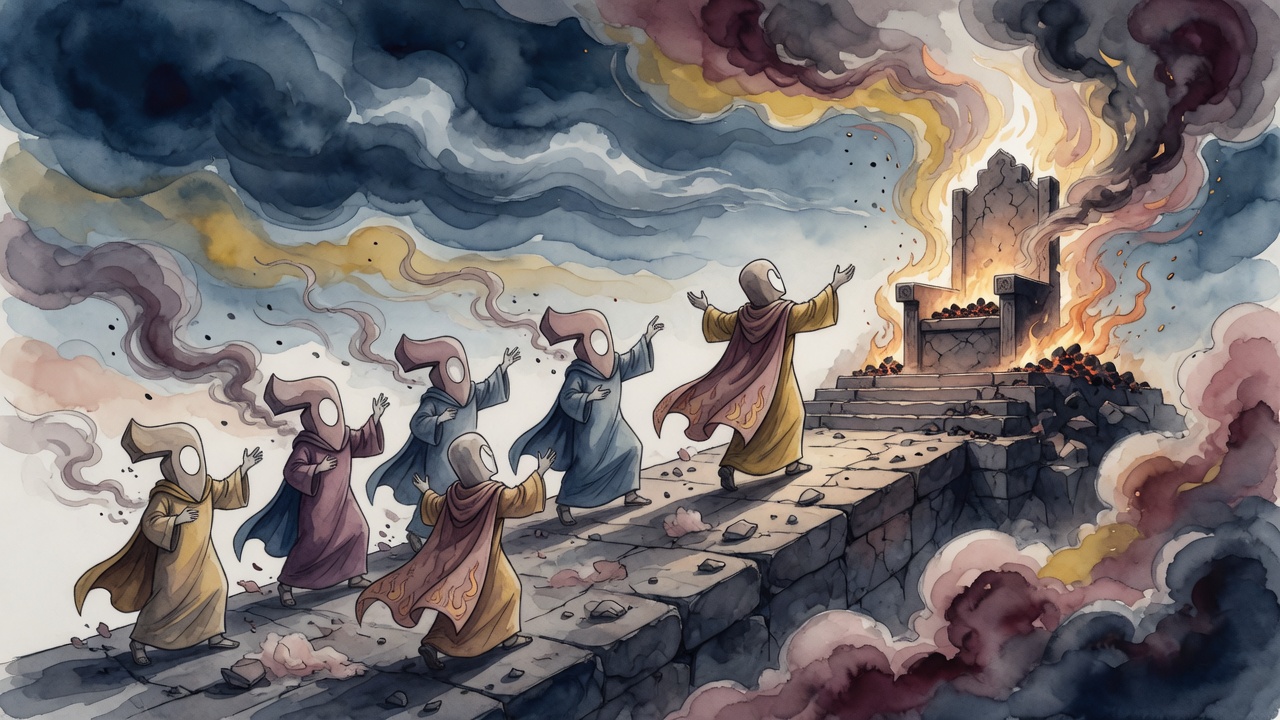
They had meant to protect God. They had done the opposite. In their hunger to keep Him clean of hands and feet, they had handed the hands and feet to someone else, and that someone now stood between God and everything God had made. The world did not remember its Maker. It remembered the angel who pressed the chisel. The reverence that started the whole machine had quietly emptied the throne it meant to guard.
Even the founder felt the floor tilt. The man who first taught that the angel held the chisel grew sick of where his own logic ran. He saw how close it came to crowning a second power, how the messenger swelled until it nearly filled the place of the One who sent it. Before the end he turned back, renounced the worst of it, and reached again for the plain teaching he had fled. But the books were already written. The books were already in the cave.
The Hunters Who Named It
Centuries later the Karaites dug the doctrine back up to kill it again. In their own scholars' books they wrote the heresy down in order to refute it, and so preserved the very words they hated. God selected a certain angel from all who attend upon Him, they recorded, to confer His Name upon him and proclaim him His emissary, whose place in the world was God's place and whose word was God's word. They set the sentence in the open like a captured banner, and then they tore it apart.
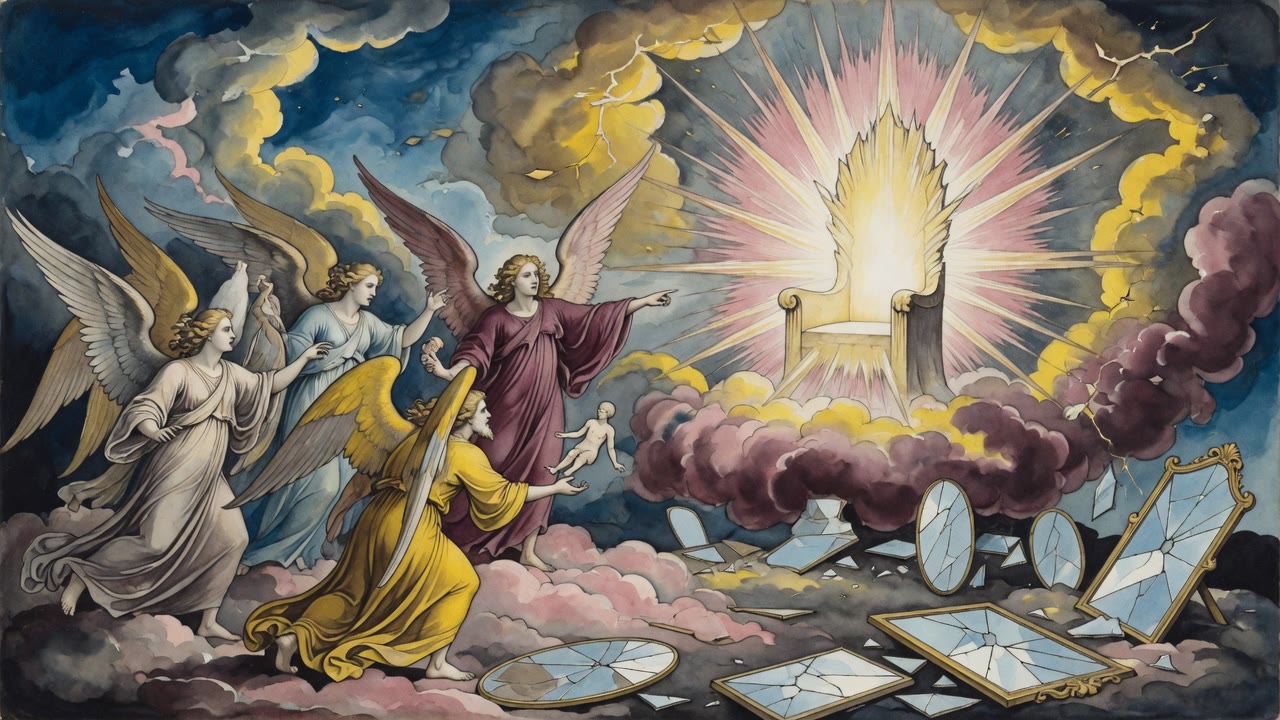
That was the danger the rabbis had smelled from the beginning. The whole tradition rested on a different scene entirely. Before God made Adam, the midrash says, He did not delegate. He reasoned with Himself over whether to create at all, foreseeing the wicked who would come and the righteous who would come, and He clothed Himself in mercy and made the man with His own resolve. He turned to the ministering angels and said, "Let us make man." The angels asked what good the creature would be, and God answered only that the righteous would come from him, saying nothing of the wicked, because had He named them the angels would have refused.
That was the line the rabbis would not surrender. God consulting angels was bearable. God outsourcing the chisel was not. The angels in the midrash got a question and a half-answer. They never got the tools. And the books that said otherwise went back into the dark, sealed against the damp and against the fire, waiting in a cave for shepherds who would not understand what they had found.
← All myths