The Voice in the Trunk and the Hoard Beneath the Roots
A voice screams from the old tree as the axe rises, and the demon inside buys its life for a gold coin each dawn until the bargain starts to rot the man.
Table of Contents
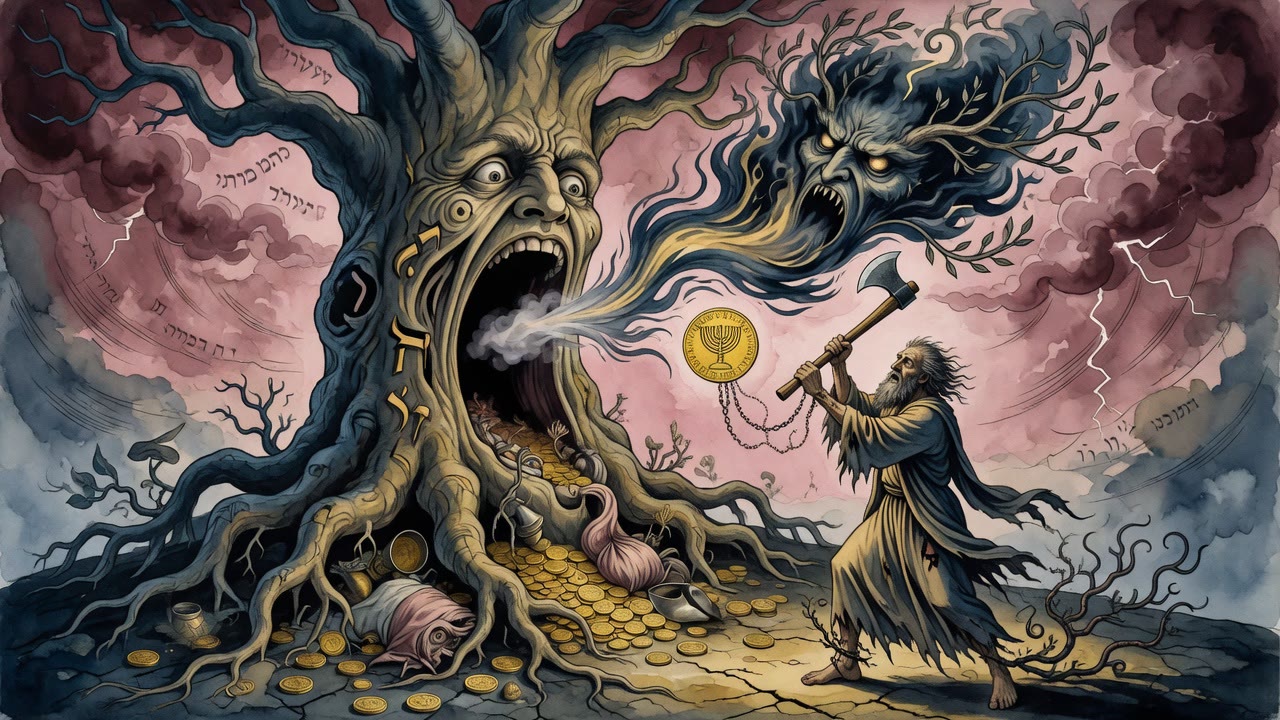
The axe was already high over his shoulder when the tree screamed.
 Click for full size
The poor man froze with the blade hanging in the air. He had come out at first light to cut firewood, the way he did every cold morning, and he had chosen the old tree at the edge of his land because it was dead-looking and close and easy. Now a voice was pouring out of the wood itself, out of the grain and the knots and the hollow at its heart, and it was begging.
The Voice That Came Out of the Wood
"Stop," the voice said. "Stop. I live here. Do not cut me down."
The man did not lower the axe and he did not swing it. He stood with his arms aching and his breath white in the air, and he looked at a tree that was talking to him. It was a sheyd (שד), a demon, lodged inside the trunk the way a man lives inside a house, and the house was about to come down on its head.
"Do not cut me down," the demon said again, quieter now, bargaining. "I will pay you. Every day, a dinar of gold. One coin, every morning, for as long as you let my tree stand. Only leave the axe alone."
The man was poor and the man was practical. A gold coin a day was more than his whole woodlot would ever earn him. He let the axe down slow, until the head rested in the frost at his feet, and he said nothing, which the demon took for yes.
A Coin in the Hollow Every Dawn
The next morning there was a coin in the hollow of the tree.
It sat there in the wet bark, catching the gray light, a single gold dinar, exactly as promised. The man took it. He went about his day. The tree stood. And the morning after that there was another coin, and the morning after that another, and the man stopped counting the days and started counting only the gold.
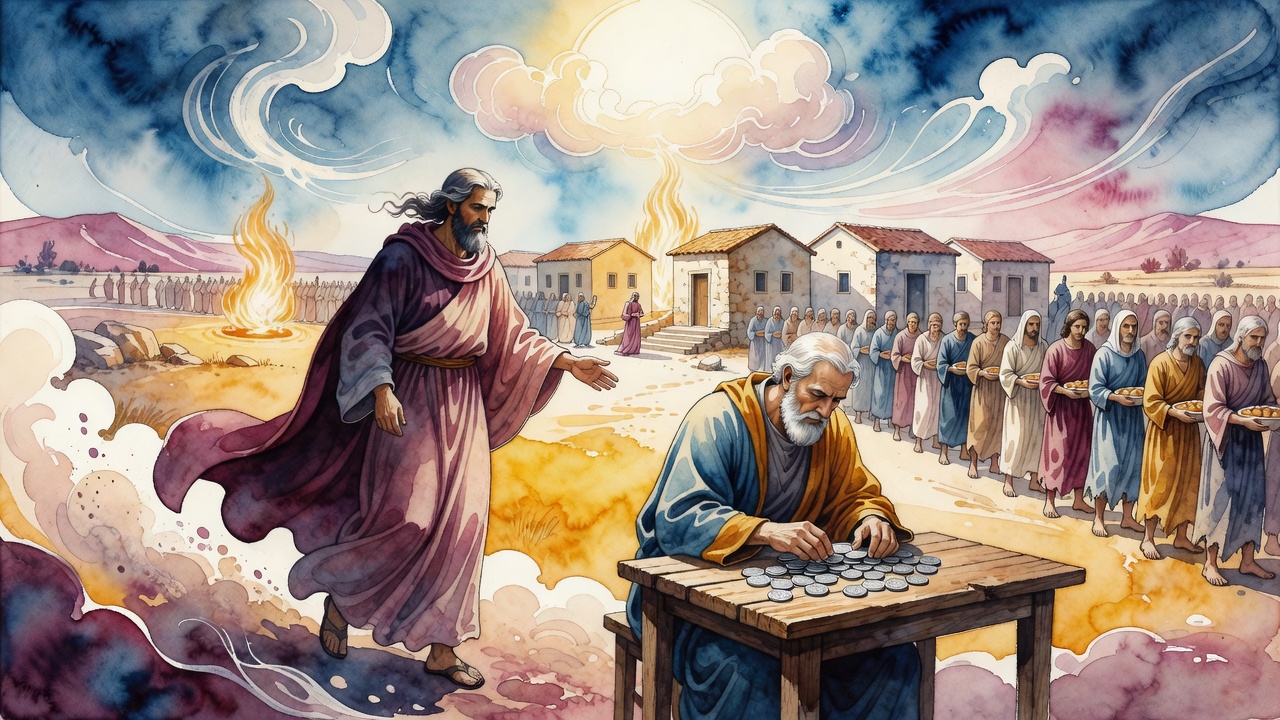
A year went by like this. The cold mornings turned warm and turned cold again, and every single dawn the man walked out to the old tree and reached into the hollow and closed his fist around a coin that had not been there the night before. He bought better bread. He patched his roof. He no longer chopped wood at all. His neighbors, who used to see him bent under a load of branches, now saw him walking easy with his hands free, and they wondered.
The Worry That Grew Like a Root
But somewhere in that prosperous year a small thought worked its way into the man and would not come out.
He turned it over at night when the house was quiet. Every coin he spent had passed through a demon's hand first. The bread on his table, the new thatch over his head, all of it had been bought with the gold of a sheyd. He started to feel the shape of the thing he was inside. A demon paid him every day, and a man who takes a wage every day belongs, in some quiet way, to the one who pays it.
"Am I not serving it?" he said to the dark. "Every morning I go to its tree like a servant going to his master's gate. Am I not being bought, one coin at a time, until there is nothing left of me to buy?"
The worry grew the way a root grows, slow and underground and splitting the stone. The gold stopped feeling like luck and started feeling like a leash. The man would reach into the hollow and his fingers would close around the coin and he would think of the soft voice that had begged him a year ago, and he would wonder what exactly he had agreed to when he stayed silent and let the axe down.
The Day He Picked Up the Axe Again
One morning he did not reach into the hollow.
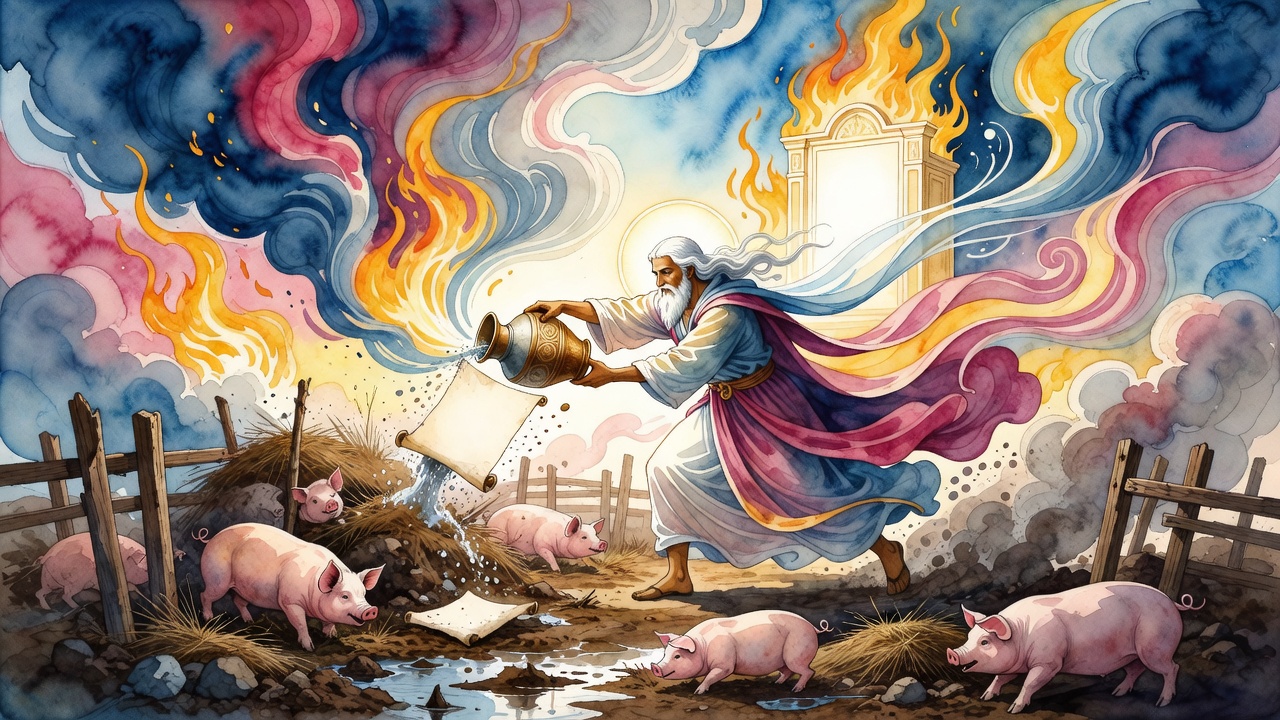
He went to the shed instead and took down the axe he had not lifted in a year. The handle felt strange in his hands, heavier than he remembered. He carried it to the old tree, and this time when he raised it over his shoulder there was no voice. The demon did not cry out. No coin glinted in the hollow. The wood stayed silent, as if the thing inside it already knew it had lost.
He swung. He swung again. The blade bit deep into the old grain, and he did not stop, did not bargain, did not wait for a softer offer. He cut until the trunk groaned and tilted and came down across his land with a sound like the year breaking open.
What the Roots Had Been Holding
No demon rose out of the stump. No curse cracked the sky over him. The man stood there panting with the axe loose in his hand and looked at the wreck of the tree, and then he looked at the hole the roots had torn out of the ground when they let go.
The roots had been wrapped around gold.
Not a coin. Not a day's wage. A buried hoard, packed into the earth and held there in the grip of the old tree's roots for who knows how long, far more gold than the demon had ever counted into his hand across the whole year of mornings. It had been under his feet the entire time. He had walked out to that tree three hundred times and reached past a fortune to take a single coin from a hollow, and only when he picked up the axe and refused the wage did the ground give up what it had been holding all along.
The man knelt in the broken soil and dug the treasure out with his hands. He had traveled a year of dawns to a demon's tree to learn that the honest gold had been waiting under the roots the whole time, and that all he had ever had to do to reach it was stop taking the coin and lift the blade.
← All myths