The Women of Asher Who Interceded in Royal Courts
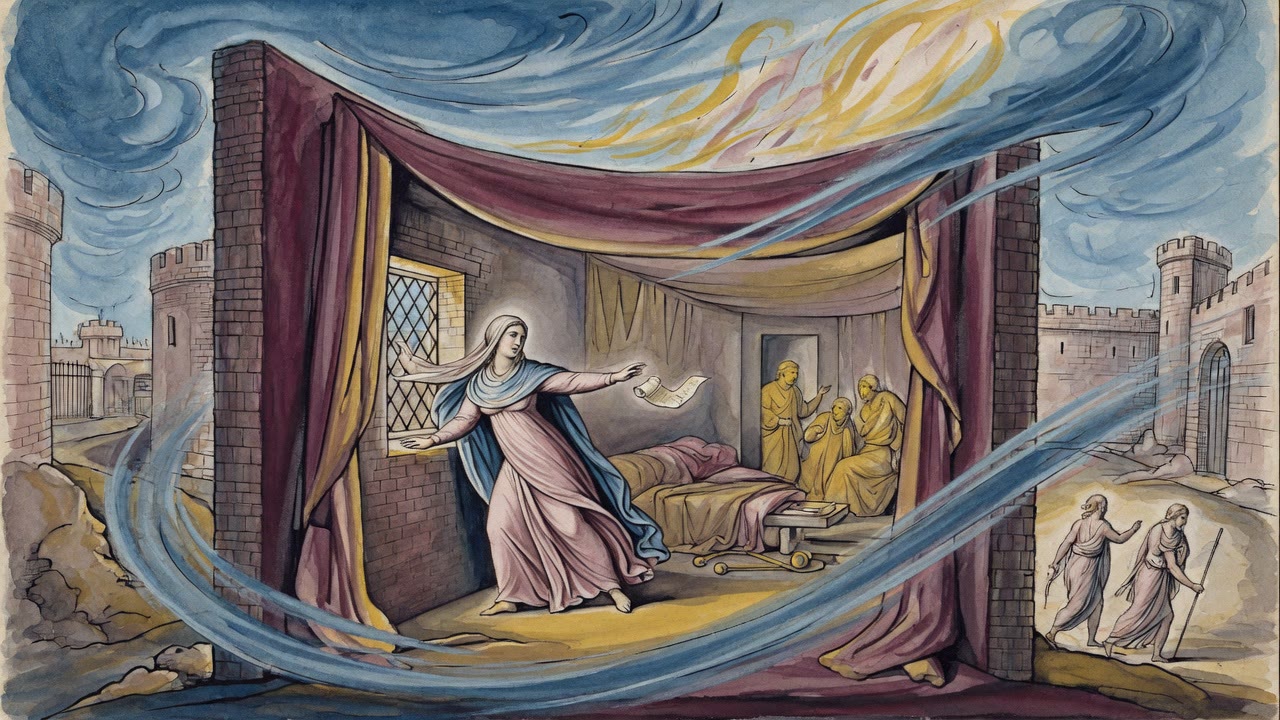
The court had already closed. A woman of Asher was still inside the palace, and she spoke for a man already condemned to die.
Table of Contents
The sentence was already spoken. The advisers had gone. A man waited in a cell for morning, and the king was alone with his household.
 Click for full size
A woman of Asher was still in the room.
She had not been present for the trial as a lawyer. She lived in the palace. Kings sought women of her tribe as wives, and once they were inside, they used the rooms advisers did not enter after a verdict. She opened her mouth for the condemned.
Fat Bread and Royal Tables
When Jacob lay dying in Egypt and gathered his sons, he promised Asher fat bread and royal dainties. Abundance. A table that would not go empty. Land that would give.
The way that access held, generation after generation, was through the women. They were beautiful in a way that did not stop at youth. The older women of Asher outlasted the young women of other tribes in fairness and in strength. Courts made room for them. Kings wanted them near.
Royal dainties meant royal tables. The blessing that sounded like food became a door into rooms where a life could still be argued after the public doors had shut.
After the Sentence
Ordinary petitioners could not reach the ruler now. The trial was finished. The men who had counseled severity had dispersed. What was left was a king, a household, and a sentence waiting to be carried out.
That was where she stood. She had been placed inside the palace long before this verdict. She could speak when the king was no longer surrounded by the voices that had pushed him toward death. She pleaded for the afflicted. She pressed for mercy. She did not decorate a throne room. She was the last appeal available to people the public system had already finished with.
The condemned man was still breathing. She did not stop talking until the king had to look at her. Beauty had bought the hour. She spent the hour on a life.
Pagiel Brought the Offering
The same work sat in a name at the Tabernacle. Pagiel son of Ochran, prince of Asher, came forward with his tribe's gift. Pagiel: the one who intercedes for the afflicted. Ochran: the afflicted. The name had been given long before women of Asher sat in foreign courts, and it described the same job.
Asher's offering followed Dan's. Dan is judgment. Asher's name leans toward confirmation, the second act a judge must perform after the ruling, the check that the oppressed have not been left under a sentence that should have been lifted. Seek justice, confirm it for the oppressed (Isaiah 1:17). Pagiel's dish on the altar was that confirmation in metal and flour.
Fat bread and royal dainties were the means. The pleading after the sentence, when no one else could speak, was the work the means were for.
A Name Can Turn a Life
Rachel, dying, had named a son Ben-Oni, son of my sorrow. Jacob renamed him Benjamin, son of might and of many years. A father refused to let a grief-name be the last word on a child. Names in this house did work. They could pull a life out of the shape it seemed fixed in.
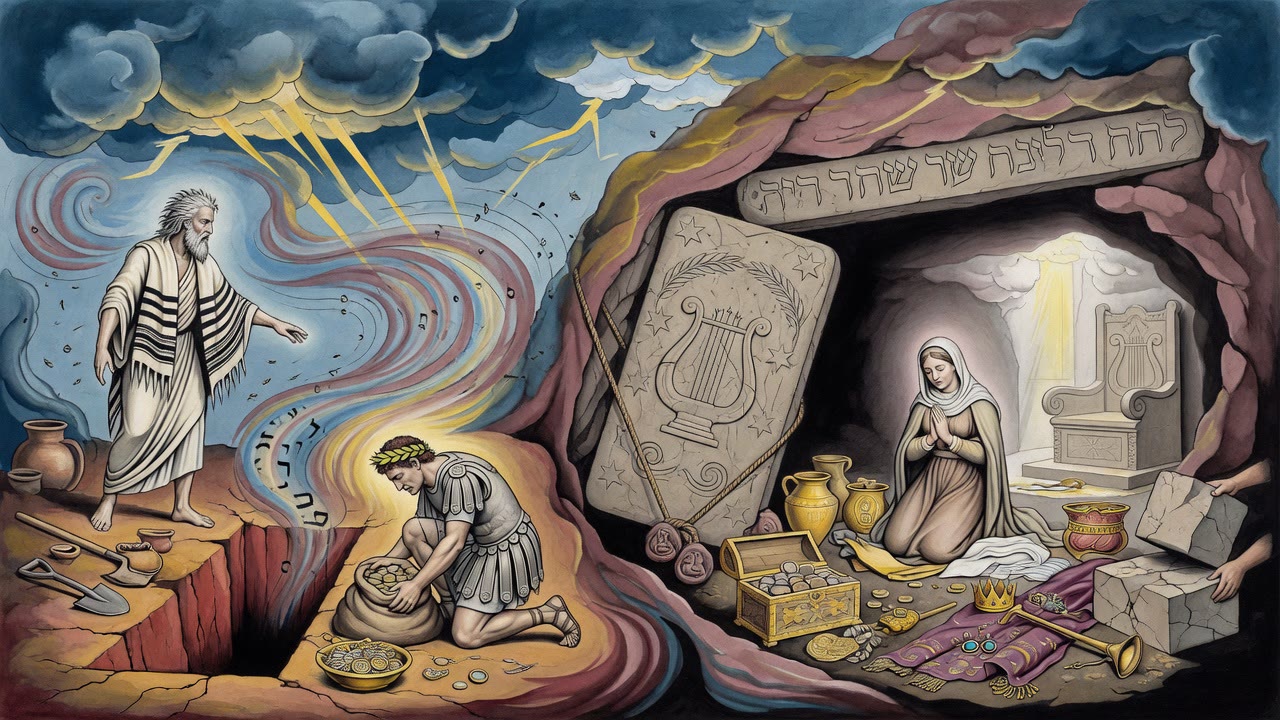
Aaron, preaching in Egypt, called tribes back from the idols they had picked up there. Gad listened. One of Gad's sons carried two names after that turning, Ozni and Ezbon, a double mark on a man who had become someone else. Asher's women did that turning in throne rooms. A sentence had pointed one way. A mouth in the household pointed the other.
The older women kept their strength. Kings kept seeking them. Somewhere a cell door stayed shut until morning, or it opened because a woman from a tribe of fat bread had not left the room when the advisers left.
She asked for the man's life. The king had already spoken once. He had to decide whether to speak again.
← All myths