Judah Stood Before a Viceroy and Faced the Same Pit Again
A viceroy in Egypt reached for Benjamin. Judah had sold a brother at a pit in Dothan. This time he stepped between them and stayed.
Table of Contents
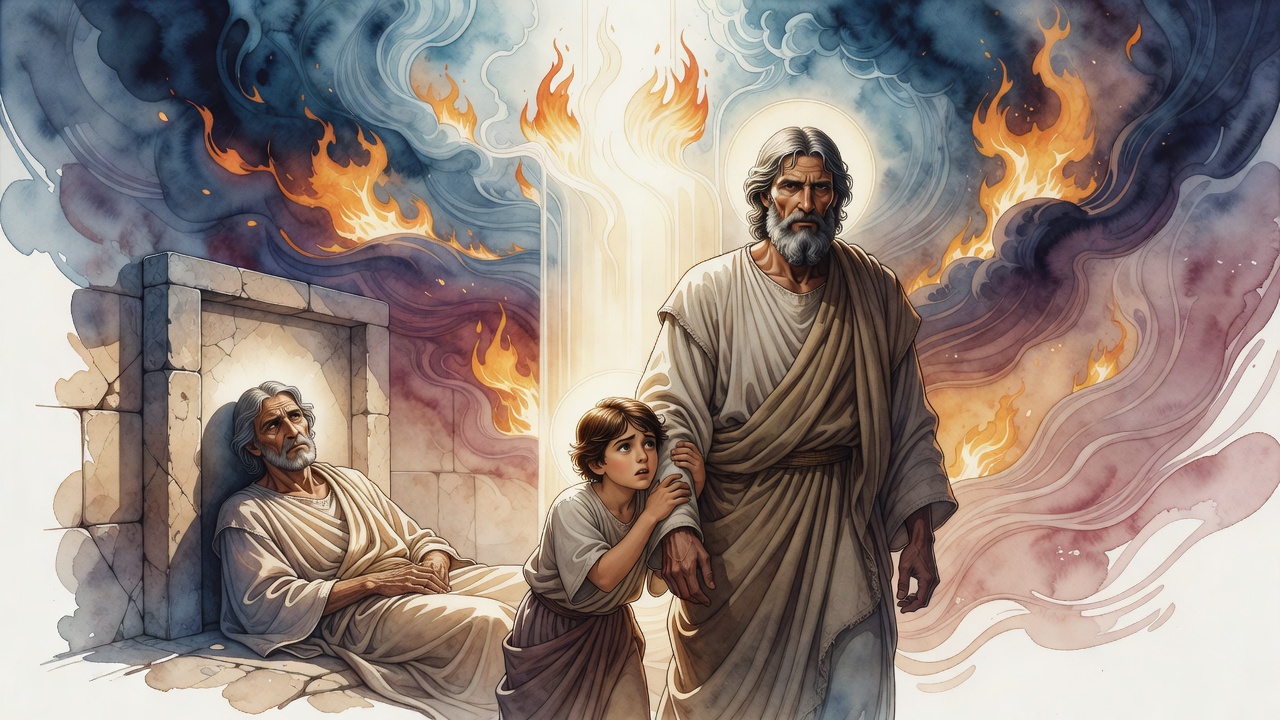
Judah looked down the pit while bread was still in his hand. Joseph had stopped shouting. The coat lay in the grass at Dothan, empty of the boy they had stripped. Ten brothers ate. Rachel's son was under their feet, and the hatred sat on their mouths. They had never learned to hide it.
 Click for full size
Three Doors Beside the Pit
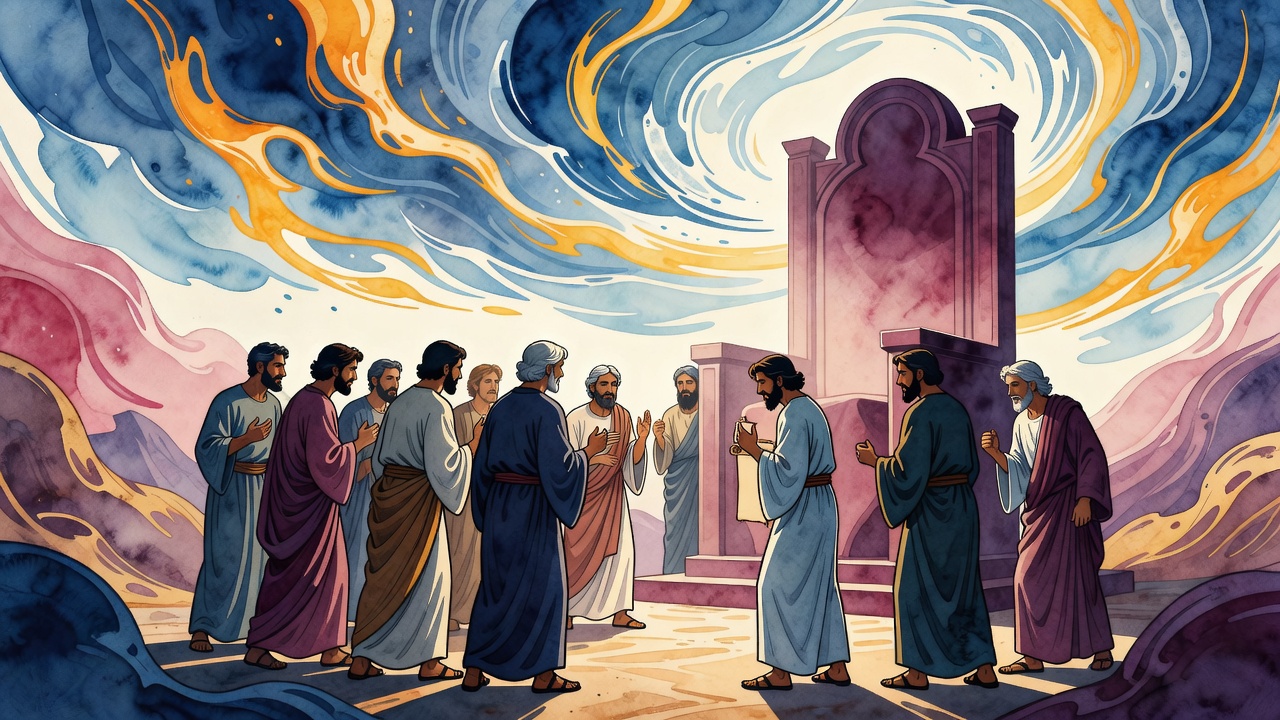
Reuben spoke first. Do not shed blood, he said. Throw him in. Do not put a hand on him. He meant to come back later and pull Joseph out when the others had moved on. That was one door: leave him, and hope the pit would not finish the work.
Simeon and Levi wanted blood. They had already shown at Shechem what their hands could do. Judah stood between those two doors and named a third. "What profit is there in killing our brother? Let us sell him to the Ishmaelites." The caravan was already a line on the road, camels and spice, a price waiting.
They sold him. They also left him. Both doors at once. The Ishmaelites sold him again, and merchants after them, and Midianites after that, until a bill of sale put him in Egypt in the house of Potiphar. The brothers went home with a coat soaked in goat's blood and a story about a wild beast. Jacob tore his clothes. Judah went down from his brothers not long after, as if the house itself had become too small for what they had done.
The Same Three Doors in Gold
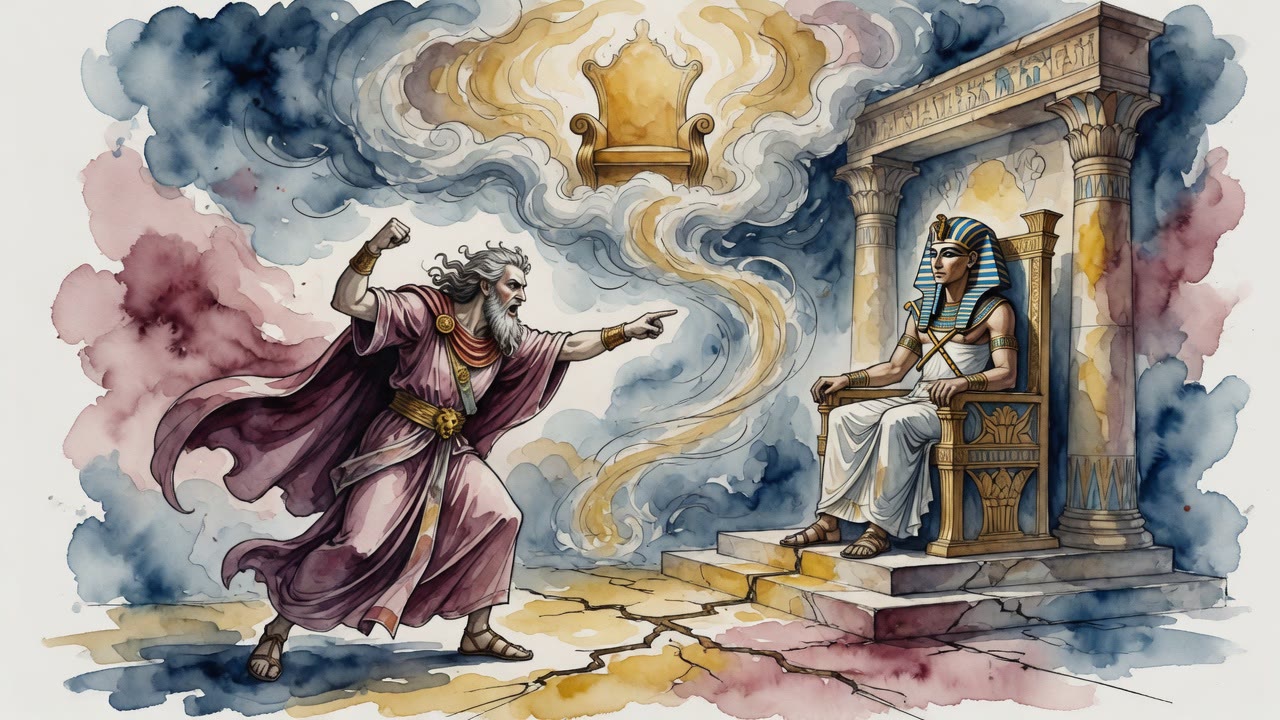
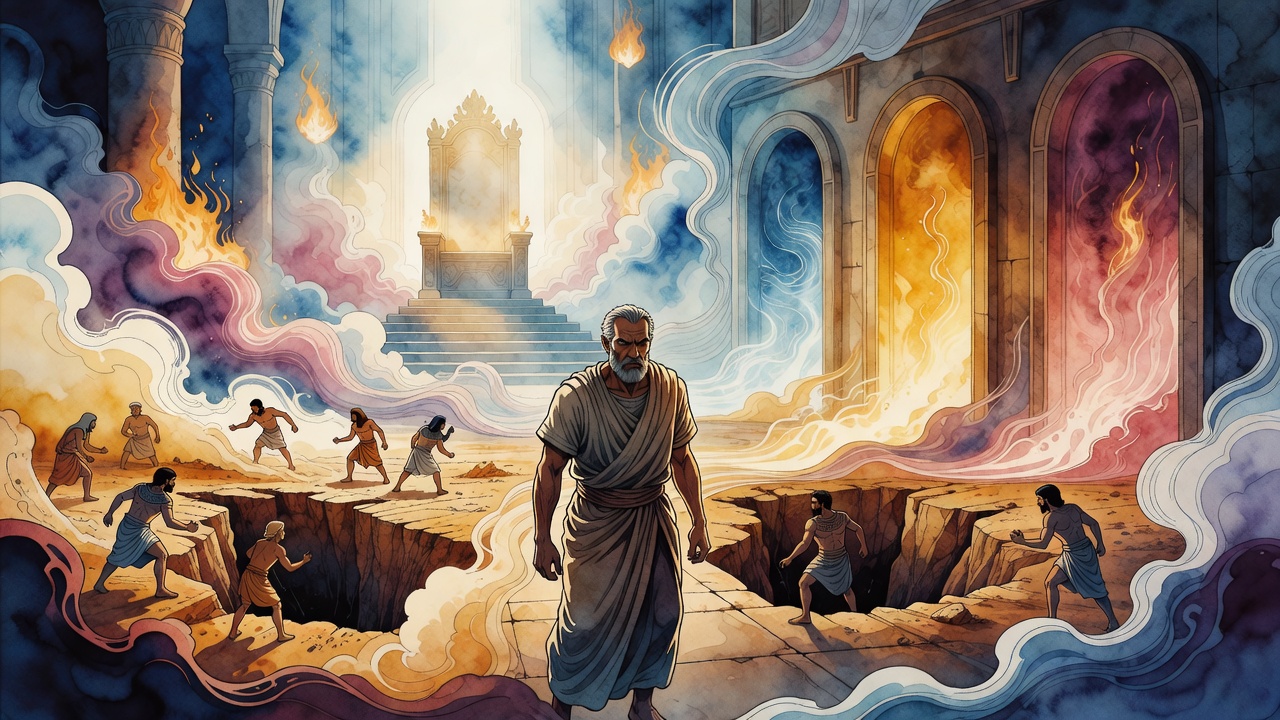
Twenty years later the same brothers stood in an Egyptian hall. The man on the dais wore linen and a ring. He was threatening to keep Benjamin as a slave. Behind Benjamin was their father, who had already lost one son to this country, who would not survive the loss of Rachel's last boy. Judah looked at the guards. He looked at the floor. He looked at Benjamin's mouth, which had not yet learned how to lie the way the older ones had.
Three doors again. War. Prayer. Speech. Judah could throw the brothers against the Egyptians and see whether the blood from Shechem still knew its work. He could fall down and ask God to split this hall the way God had split other rooms. He could open his mouth.
He counted the guard and asked himself whether they could fight their way out. He held prayer in his chest like a stone he might still throw. Then he stepped forward. "Please, my lord," he said. The word he used for approach could mean a charge into battle, or a plea to a judge, or a prophet coming near the altar. He came ready for all three. If it must be war, I am coming. If it must be peace, I am coming. If it must be prayer, I am coming.
Judah Put His Own Body in the Door
He told the whole history, slow, without ornament. The first trip down to Egypt for grain. The father who could not send Benjamin without dying of fear. The guarantee Judah himself had given: if the boy does not return, I will carry the guilt before my father forever. He did not ask the viceroy to be kind. He named a trade.
"Take me instead. Let the boy go back to his father. Keep me."
At the pit he had found a middle option that cost him nothing he could not bear. Sell him. Do not kill him. Go home. In this hall the middle option was gone. The only door left was his own body standing between the threat and the child. Take me. Not him. Whether to fill water, I. For service, I. To split logs, I.
The pit had mirrored itself in gold and linen. Same three options. Same youngest brother in someone else's hands. Judah did not walk away this time.
Joseph Cleared the Room
The viceroy could not hold his face. He shouted for every Egyptian to go out. The hall emptied. Then he wept so loudly that the men in the corridor heard it, and the house of Pharaoh heard it after them. He was Joseph. He had been waiting twenty years to see whether the next threatened brother would be sold as cheaply as the first.
Judah's offer answered the pit. The answer was no. Joseph had carried that question through the dreams, through the prison, through the years of grain and famine. Now it broke. He wept the way a man weeps when a door he had kept locked finally opens, and the people he had stopped expecting walk through it changed.
The brothers stood in the wreck of the scene. Benjamin was still free. Judah was still standing. The coat of blood was twenty years behind them, and it had not gotten the last word.
← All myths