The Water Carrier Who Held Up the World and Never Knew It
A water carrier lifts one more bucket as the world rests on his bent back. He is one of thirty-six hidden righteous, and he must never find out.
Table of Contents
 Click for full size
One More Bucket Before the Dark
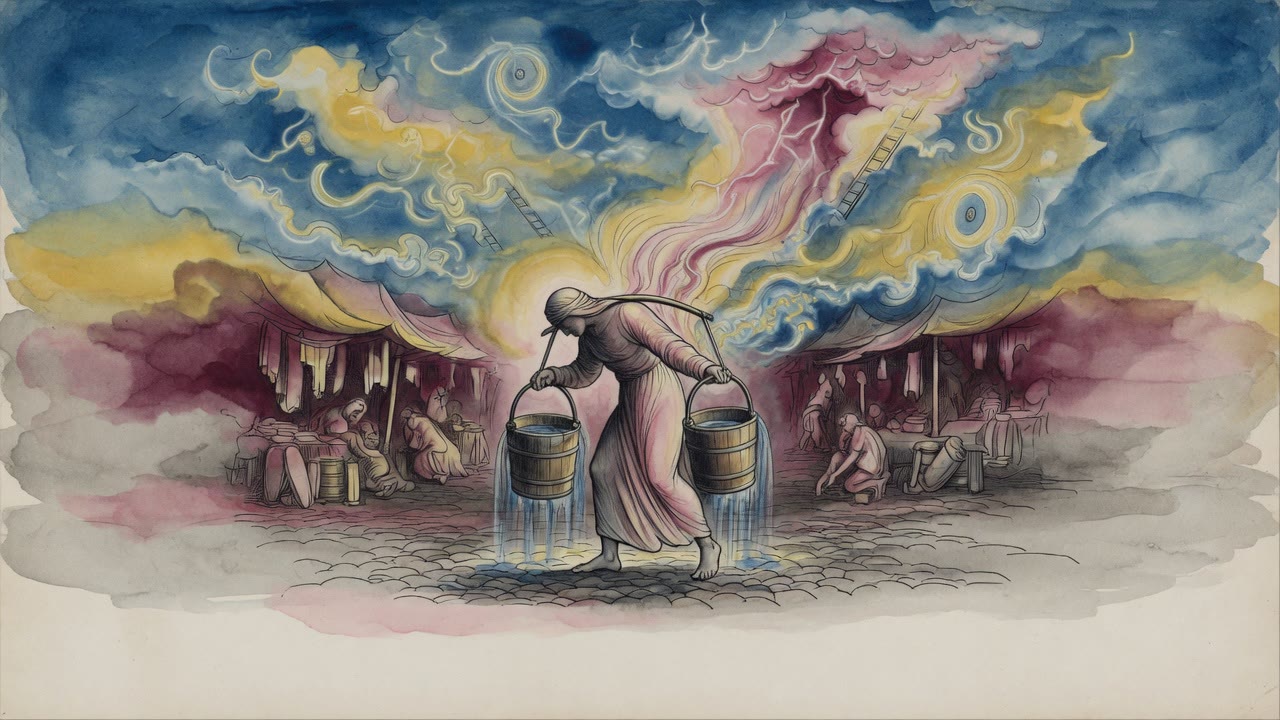
The well stood at the bottom of the town where the streets ran to mud. A man came down to it at the end of the day, when the good lamps were already lit higher up the hill, where nobody waited for him. His name does not matter. That is the first thing to understand about him. He bent at the rope, hauled, and the bucket came up streaming and cold, and his back, which had begun to shake an hour ago, shook again.
He carried water for the houses too poor to send their own. He gave it cheap. Sometimes, to the ones who could not pay, he gave it for nothing and said the price out loud anyway so they would not feel the gift. He set down the last delivery at a door where a sick woman lay, and he turned and went home in the dark, and the street did not look up.
He did not know that the world rested on him. He could not be allowed to know. That was the whole arrangement, and he never once felt its weight.
The Number Hidden in a Word
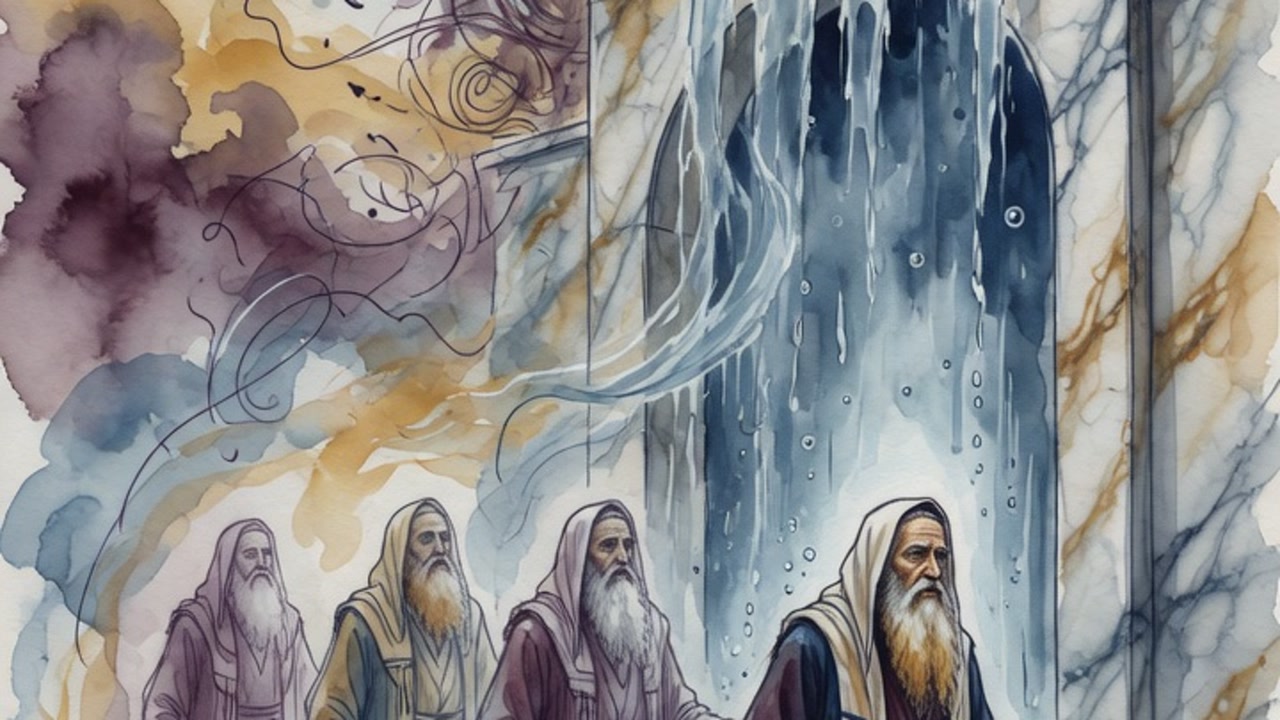
There were others like him, scattered across the earth in every generation. Not kings. Not prophets. Not the wealthy who endow halls, not the scholars whose names are spoken in the study house. Water carriers. Wood choppers. Beggars who walk the road with nothing in their hands. Thirty-six of them, no fewer, in any age that turns.
The count was sealed in a single small word. There is a verse that says light waits for such a man, and the word that means "for Him", written lo, is built from two Hebrew letters. The first, lamed, stands for thirty. The second, vav, stands for six. Read the letters and you read the number. Thirty and six. The hidden ones came to be called the Lamed Vav, after nothing more than the spelling of a promise.
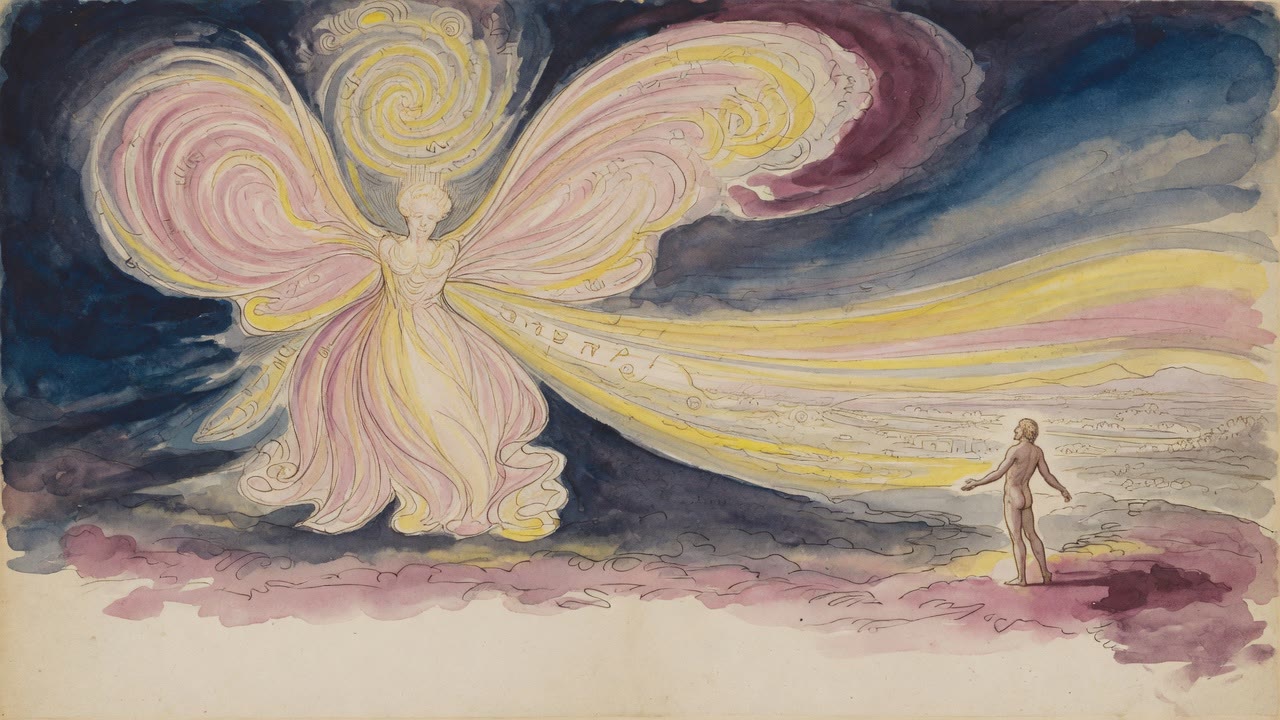
Each of them, it was said, received the face of the Shekhinah, the nearness of God that fills a room without anyone seeing it enter. The water carrier received it at the well, in the cold, with the rope burning his palms. He felt only that the night was long.
Why the Pillar Must Not See Itself
Here is the cruelty folded inside the gift. The moment such a man knew what he was, he would stop being it. Holiness of this kind cannot survive being looked at, not even by the one who carries it. Pride would announce what the whole thing depends on keeping covered. The vessel would crack the instant it admired itself.
So the world arranged that its own foundations would never recognize their faces. The water carrier woke believing he was a water carrier. He was right, and he was also the beam under the floor of everything, and both of those were true at once, and only one of them was allowed into his head.
He grumbled at the rope. He envied, a little, the lamps on the hill. He was not a smooth and shining thing. He was an ordinary man doing an ordinary kindness past the heart of it where his body wanted to quit, and that was exactly the measure the world was counting, down at the bottom of the street where no one counts.
The Day the Measure Almost Failed
There is a measure of plain goodness the structure needs to stand. Drop below it and the floor has nothing left to rest on. The thirty-six are that minimum, kept full by hands that do not know they are filling it.
One winter the sick woman at the last door grew worse, and the water carrier was tired in a way that had no bottom. His back had gone past shaking into a dull refusal. He stood at the well in the freezing dark and thought, for the length of one breath, of going home with the bucket empty. Let someone else. Let the hill send a boy.
But the woman had no one, and the price he would have charged her was nothing, and a man who gives water for nothing cannot leave the well empty on the coldest night. Therefore he hauled the rope one more time. The bucket came up streaming. He carried it up the mud to the door he could not abandon. He never knew that the whole weight of the age had tipped over a single bucket, and held, because he was too tired to be proud and too kind to go home.
Light Sown in Tears
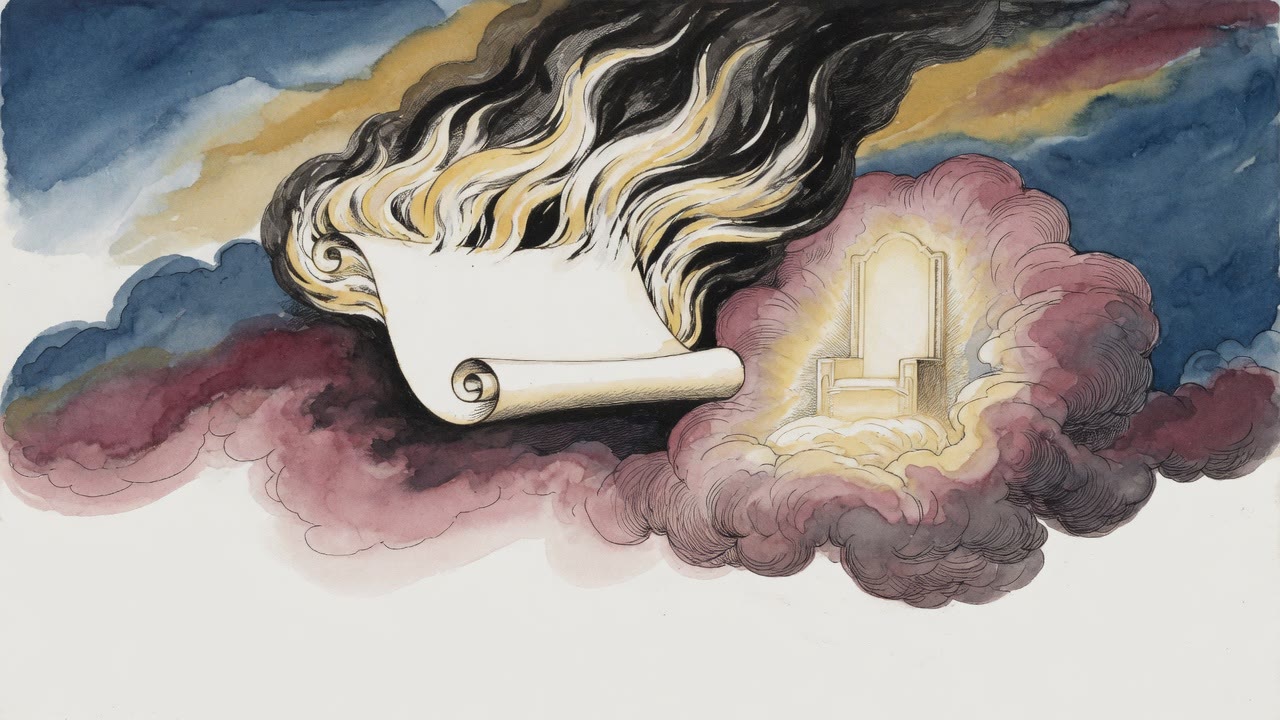
Once a year, on the night the year hangs in the balance, a light is said to pour down through all the worlds before the first prayer is even spoken. It floods the rooms of the high and the low alike. Where does it come from, a radiance that has not been lit by any lamp?
It is sown, like seed pressed into a field by a farmer's careful hand. "Light is sown for the righteous" (Psalm 97:11). And the seed is tears. The tears that fall when a person stands before the Name with nothing to offer but how sorry he is and how small. That is the planting. The light is the harvest, and it comes up later, in the dark, for people who were weeping and did not feel themselves shine.
The water carrier wept sometimes, at the well, from cold and exhaustion and the long ache of a life nobody marked. He would have been ashamed to be seen. He did not know that the wet on his face was a kind of farming, or that somewhere above the lamps on the hill, a field was being sown with what fell from him, to be reaped on a night he would never connect to himself.
He set down the bucket. He went home. The street did not look up. The world, resting on thirty-six bent backs and not one of them aware, stood one more day.
← All myths