6 min read

The Weasel and the Well Witnessed His Broken Vow

A girl climbs out of a desert well into a vow sealed by a weasel and water. Years later both witnesses collect on the man who forgot her.

Curated by Arthur · Told by Maggid ·
Table of Contents
  1. The Weasel That Crossed the Road
  2. The Girl Who Went Mad on Purpose
  3. Two Small Graves
  4. Two Words in the Doorway

The voice came up out of the ground, and the man on the desert road stopped walking.
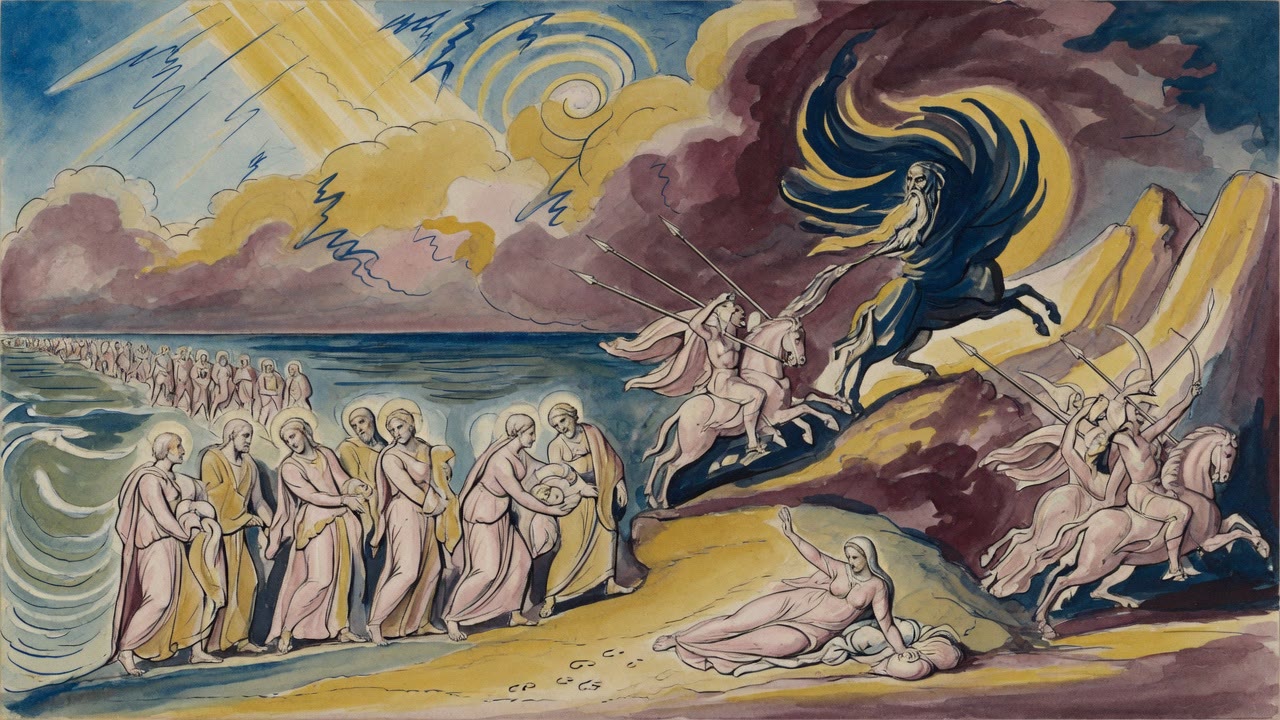
The Weasel and the Well Witnessed His Broken Vow Click for full size

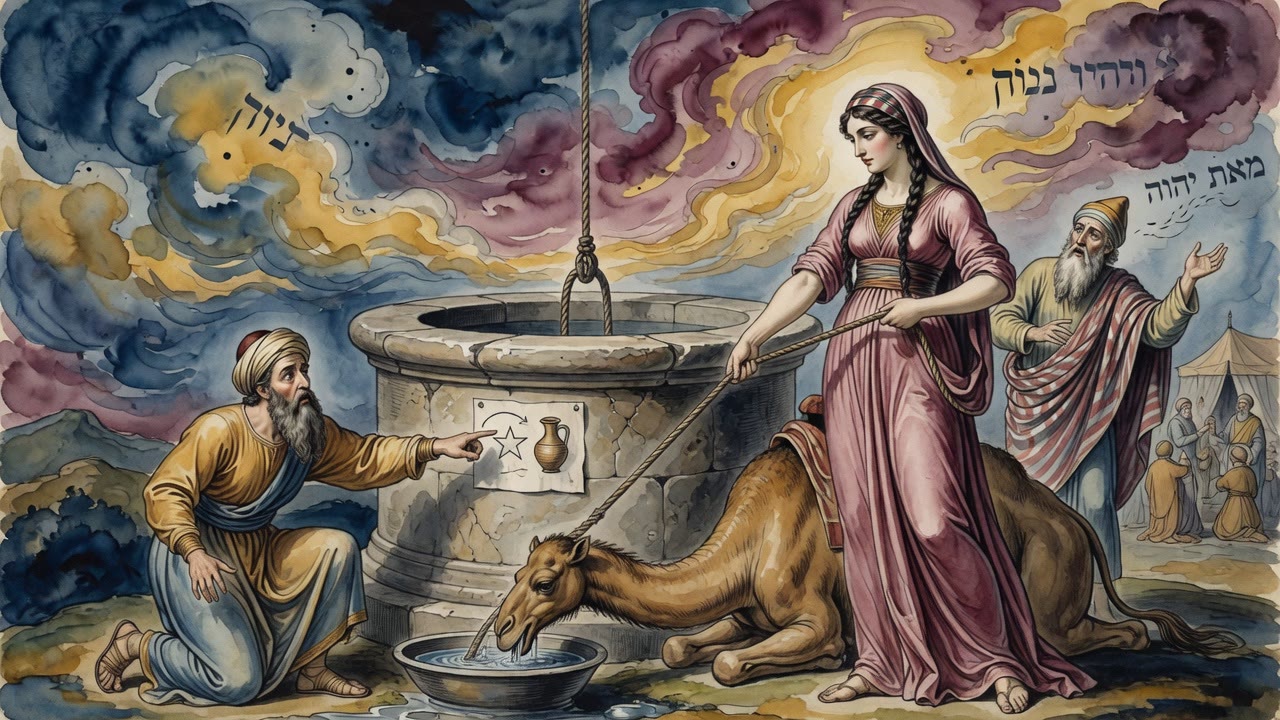
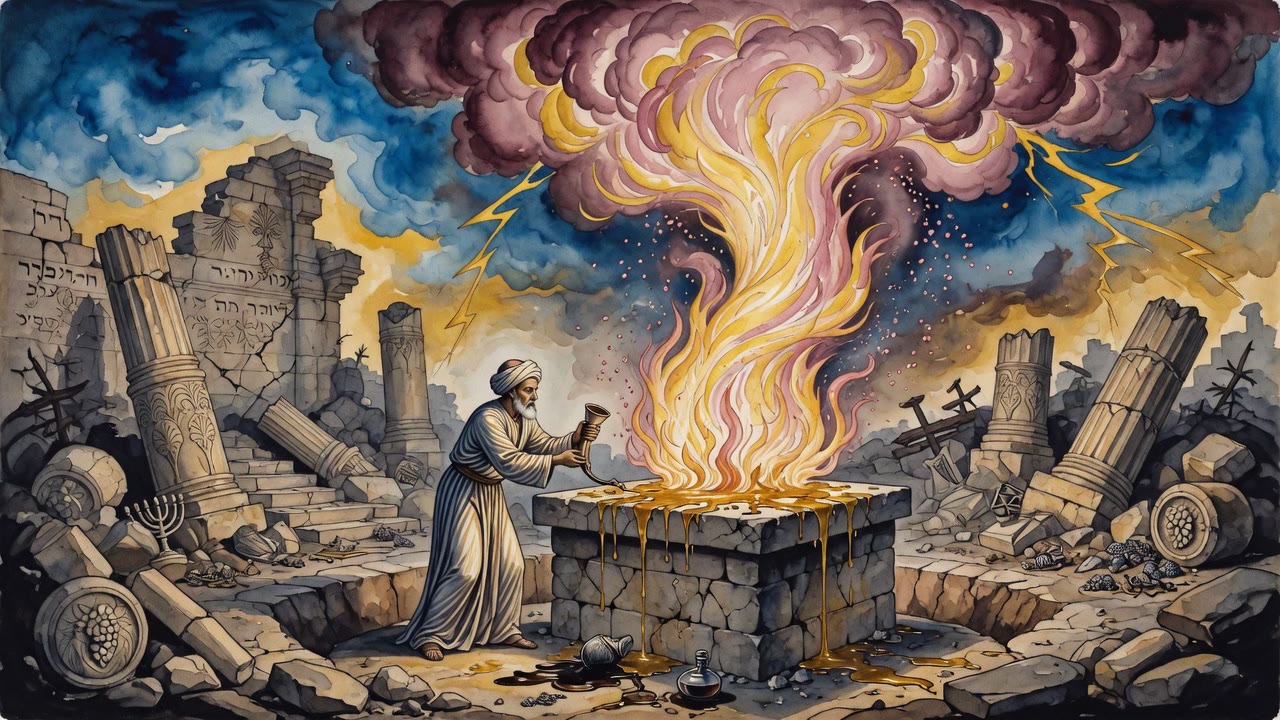
He did not go straight for the rope. He stood at the lip of the well and asked questions down into the dark, because an open well in empty country is exactly where a demon waits with a girl's voice, and a man who hauls up the wrong thing does not get a second try. She gave him her name and her father's house. She had come down because she was lost and the thirst had stopped being bearable, and once she had drunk she could not climb back up. Only then did he set his feet and pull.

She came out in torn clothes with grit in her hair. He looked at her the way a man looks at something he has just taken out of the ground alive, so before she had finished catching her breath he asked her to marry him.

The Weasel That Crossed the Road

She wanted to know what he was first. A priest, he said. She told him her family was noble, so if he wanted her he would have to come to her father's house and ask for her properly. But she was not walking away from an empty road on a promise made in the air. They would pledge themselves to each other here, before either of them moved.

"Who will be the witnesses?"

There was nobody there, only sand, the open mouth of the well, and the rope still swinging against the stone.

Then a weasel ran across the ground in front of them and went into the scrub.

"Heaven," she said. "The weasel and the well shall be our witnesses."

They swore it and they parted, and each of them carried the same promise off in a different direction.

The Girl Who Went Mad on Purpose

She kept it. Her parents brought a suitor, so she met him screaming. She threw herself around the room until he backed out of the doorway, and when the next one came she did it again, and by the third the town had settled on the explanation that a demon had her. Matchmakers stopped calling, and her mother stopped hoping out loud. Nobody will marry a girl with a spirit in her, which was the entire reason she had built the spirit.

He forgot her.

Not in one decision he could have pointed to afterward. He went home, he married a woman his people approved of, and the road and the rope and the weasel went wherever things go when a man stops taking them out to look at them.

Two Small Graves

Their first son was three months old when the weasel came into the house. It closed on his throat while he lay in his cradle, and by the time anyone reached him the linen was ruined and the animal was gone.

They buried him. Time did what time does, so another son came, and that one was walking before the year turned. Since the household was busy that morning, he got out of the house alone. He leaned over the well to look at the water, or at his own face in the water, and he went in, and the well kept him.

His wife stood over the second grave and would not let it be called bad luck. "Children do not die like this for no reason," she said. "Two of them, and in these ways. Tell me what you did."

He started to say that he had done nothing. Then the two words were in his mouth before he had decided to speak them, weasel and well, and the whole road came back on him at once. He stood in a graveyard doing arithmetic he did not want to finish, because if the witnesses had been collecting all this time then the girl in that town was still waiting, and she was still waiting because he had told her to.

He told his wife the rest of it: the road, the rope, the girl, and a promise broken on open ground that nothing but an animal and a hole in the earth had witnessed. She heard him out, and then she said, "Go, and take the part God has already given you," and she agreed to the divorce.

Two Words in the Doorway

He went back to the town and asked after the girl. "A demon has her," they told him. "She has been that way for years, and nobody goes near the house." But he said he would take her anyway.

When they brought him in she did what she had done to every man before him: the noise, the thrashing, the eyes that would not settle on anything. He stood in the doorway and waited it out, because there was nothing to say to her until she stopped. Then he said two words, the weasel and the well.

She stopped mid-motion. The spirit that nobody in that town had been able to drive out walked out of the house on its own, because there had never been one, only a girl holding a door shut for a decade with the only thing she had.

They married. He had come to her out of two funerals and she had come to him out of years of being pointed at in the street, and they lived quietly after that. The well on the desert road stayed open. Nobody filled it in, and the weasels went on crossing that ground the way they always had.


← All myths
From the tradition

Sources

3 sources

The texts behind this telling. Some cards carry a translation of the source; others are our own retelling of it, and each card says which. Every card links out to the original.

Exempla of the Rabbis, No. 89Exempla of the Rabbis (Gaster, 1924)

Retold in our words. Read the original at the link below.The Exempla of the Rabbis, Moses Gaster (1924) · Public Domain

The story of the weasel and the well. Once a young girl, beautifully dressed, lost herself in the desert on her way home. Getting very thirsty and seeing a well with a rope and a bucket attached, she descended. When she had slaked her thirst she could not ascend, so she cried aloud. A man passing by, heard her cry and after assuring himself that she was not a demon he drew her out. Then he fell in love with her and wanted to marry her. She asked him who he was and he answered that he was a priest. Then she told him that she was of a noble family and that if he wished to marry her they must pledge their troth to each other and go and ask her hand of her parents. They pledged their troth and she said “Who will be witnesses’?” At this moment a weasel passed and she said, “The heavens, the weasel and the well shall be our witnesses”. Then they parted. She kept her troth and when her parents wanted to marry her to another man she behaved like one possessed of a demon, till the suitors ceased to ask for her hand. She kept her covenant with the man, but he forgot her and married another woman, by whom he had a boy. When the child was three months old the weasel came and strangled him and when another child was born it fell into a well and was drowned. So his wife said to him: “The peculiar deaths of these children point to some extraordinary reason, what is it?” Then he told her the whole story and she said to him: “Go and take the part which has been given to thee by God!” So he went into the town and asked after the girl, and they told him that she was possessed of a demon, and he said “I will take her none the less.” When he saw her she behaved as usual. Then he mentioned to her the weasel and the well and she recognised him at once, married him and they lived happily ever after.

Full source
Midrashic folktale (cf. Taanit 8a)Hebraic Literature (1901)

Retold in our words. Read the original at the link below.Project Gutenberg eBook #14368, Hebraic Literature · PD-US-pre-1929

A young man traveling through the country met a young woman, and they fell in love. When he had to leave her town, they swore to wait for each other until they could marry.

"Who will witness our betrothal?" the young man asked.

Just then a weasel darted past them into the woods, and beside them stood a well of water. "See," the young man said, "this weasel and this well shall be the witnesses of our betrothal." And with that, they parted.

Years passed. The young woman waited. The young man did not. He married another woman, and they had a son, and the son was the delight of their lives. But one day the child lay down to nap in a field, and a weasel bit him in the throat, and he bled to death.

The parents were inconsolable. In time a second son was born, and gradually their grief lightened. But when that child could walk, he wandered out of the house alone, leaned over the edge of a well, lost his balance, and drowned.

Then the father remembered. He remembered the young woman, and the weasel, and the well. He told his wife what he had sworn and what he had broken. She agreed to a divorce. He traveled back to the town where he had left his first love. And found her, still there, still waiting. They married, and they lived in peace.

Heaven, the midrash teaches, keeps stranger records than we do. The witnesses you swear by when no one seems to be watching are the witnesses God assigns to remember.

Full source
Exempla of the Rabbis, No. 89Exempla of the Rabbis (Gaster, 1924)

Retold in our words. Read the original at the link below.The Exempla of the Rabbis, Moses Gaster (1924) · Public Domain

A young man rescued a maiden who had fallen into a well, and as they stood there alone he pledged to marry her. Since no human being had witnessed the vow, the two called on the only bystanders present, the weasel and the well, to stand as witnesses to their betrothal. The Talmud preserves this tale in tractate Taanit (Taanit 8a), where Rashi and Tosafot comment on the strange choice of witnesses, and it spread widely through later collections such as Midrash HaGadol on Genesis and the Maaseh Book.

The maiden kept faith and refused every other suitor, but the man forgot his promise and married another woman. The children born to that second marriage met cruel ends: one was bitten by a weasel, and one fell into a well and drowned. The grieving wife pressed her husband until he confessed the broken vow he had made beside the well. Recognizing that the very witnesses he had named were exacting an accounting, he sought out the maiden, reminded her of the weasel and the well, and at last married the one he had pledged himself to.

The rabbis read the story as proof that Heaven guards a promise made in good faith even when no person stands watch. They attach it to the verse praising the one whose eyes seek out the faithful of the land (Psalms 101:6), teaching that constancy in a private vow is seen and rewarded, while a careless oath leaves a man answerable to witnesses he thought beneath his notice.

Full source