Parshat Chayei Sarah6 min read

Eliezer Offered His Own Daughter to Isaac and Abraham Said No

The servant ran the whole household and had a daughter of marrying age. He asked once. Then he swore an oath to go and find someone else.

Curated by Arthur · Told by Maggid ·
Table of Contents
  1. The Question He Only Asked Once
  2. A Road With No Light in It
  3. He Prayed for the Man Who Had Refused Him
  4. Straw for the Camels, Water for the Feet
  5. He Handed Her Over in a Field at Evening
Eliezer Offered His Own Daughter to Isaac and Abraham Said No Click for full size

The Question He Only Asked Once

Sarah was in the ground at Hebron and Abraham was old, and the thing that would not wait any longer was a wife for Isaac.

Not from the daughters of Canaan. Abraham had watched what the local marriages did to a house, and whoever came would have to come over entirely, all the way over, so he reasoned that he might as well take her from his own stock, which had the first claim on him regardless. There was a proverb for it that he liked. Even if the wheat of your own place is darnel, use it for seed.

He called in Eliezer, who ran everything he owned.

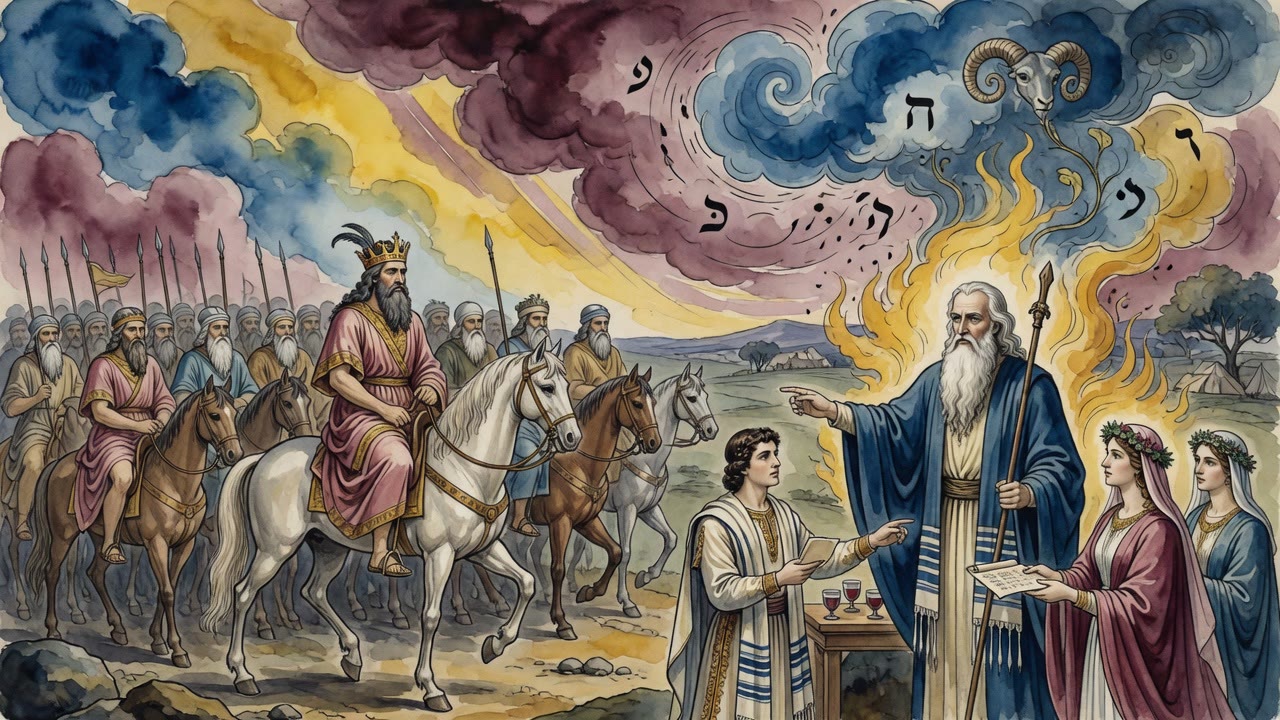
Eliezer heard the whole plan out and did the arithmetic that any man in his position would do. Damascus was far. The family up north might refuse. And he had a daughter of his own, in this house, already inside the household, already raised in it.

"Peradventure no woman will be willing to follow me unto this land," he said. And then, having built the ramp, he walked up it. "May I then marry my own daughter to Isaac?"

"No."

Abraham did not soften it afterward. "Thou art of the accursed race, and my son is of the blessed race, and curse and blessing cannot be united." Eliezer's line ran back to Canaan, and the curse spoken over Canaan was still sitting on it, and that was the end of the matter in one sentence.

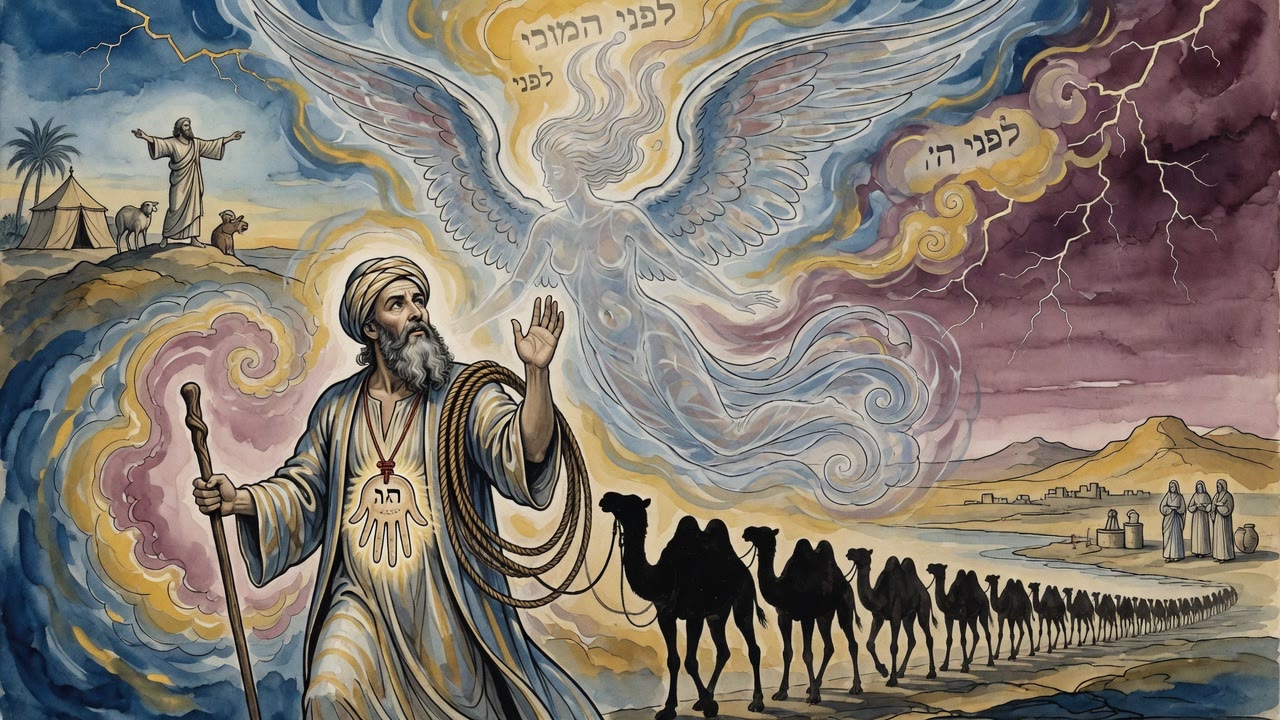
Then came the conditions. Under no circumstances was Isaac himself to be taken north. "For if thou broughtest him thither again, it were as though thou tookest him to hell." As for the difficulty Eliezer had raised, the God who sets the heavens moving would set this right too, and would send His angel out ahead on the road.

Abraham had him put his hand under his thigh, on the sign of the covenant, and swear.

A Road With No Light in It

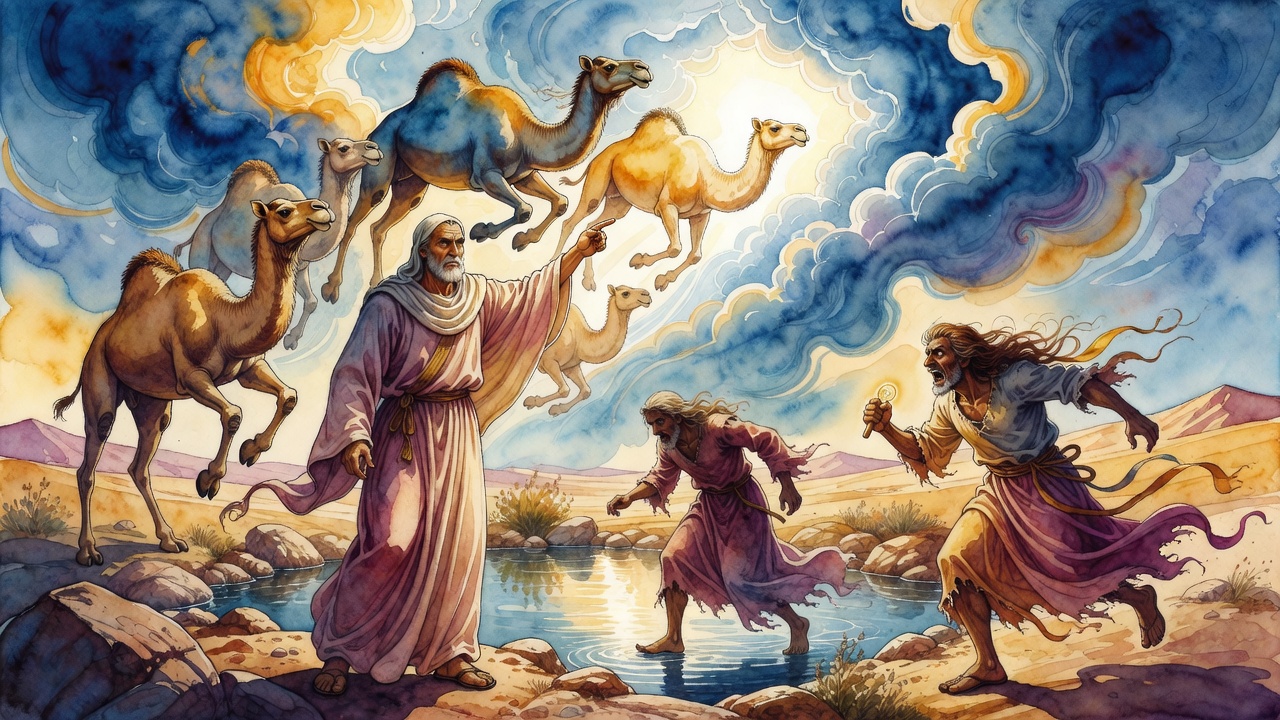
He left with ten camels and everything good his master owned loaded on them, and he went out of the country he knew and into country he did not.

He had no map worth the name. A man in that position is a man walking in the dark, and this one was walking in the dark on behalf of a household that had just told him his own blood was not good enough for it.

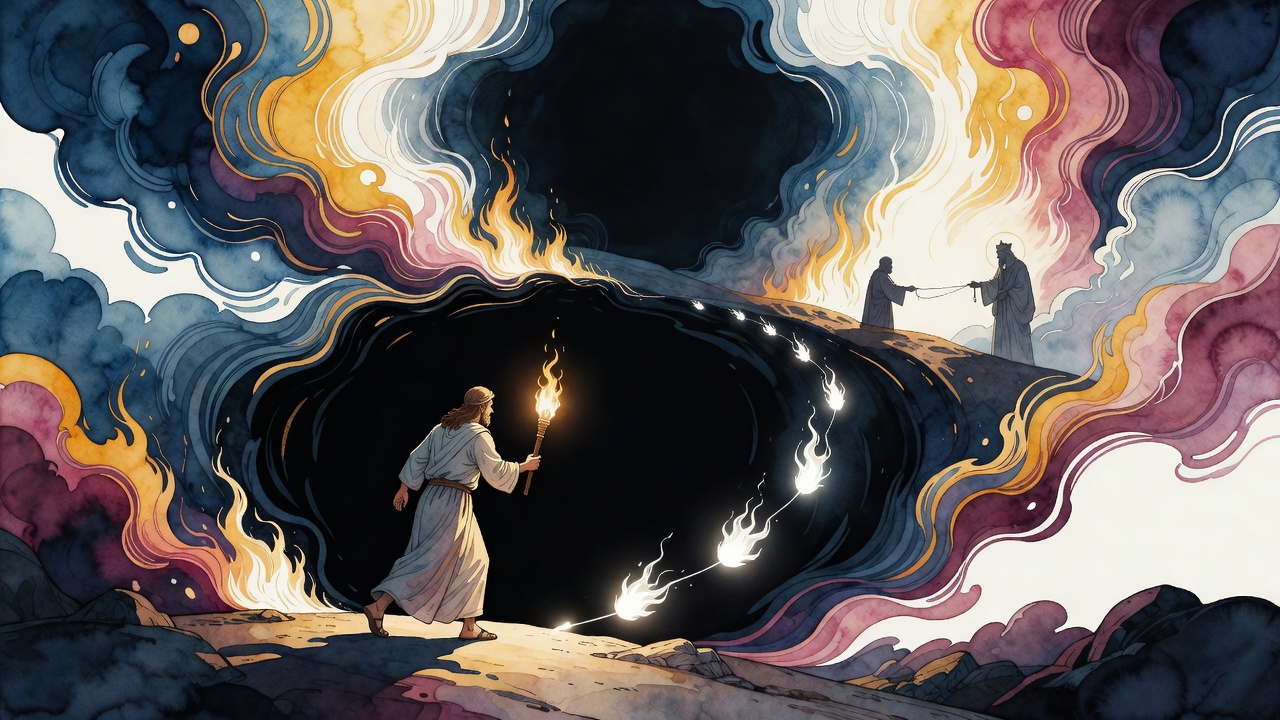
The road was lit anyway. Shooting stars went over him. Lightning stood up on the horizon and stayed there long enough to show him the ground. Whatever else he could complain of on that ride, he could not say he had been sent out unwatched.

He Prayed for the Man Who Had Refused Him

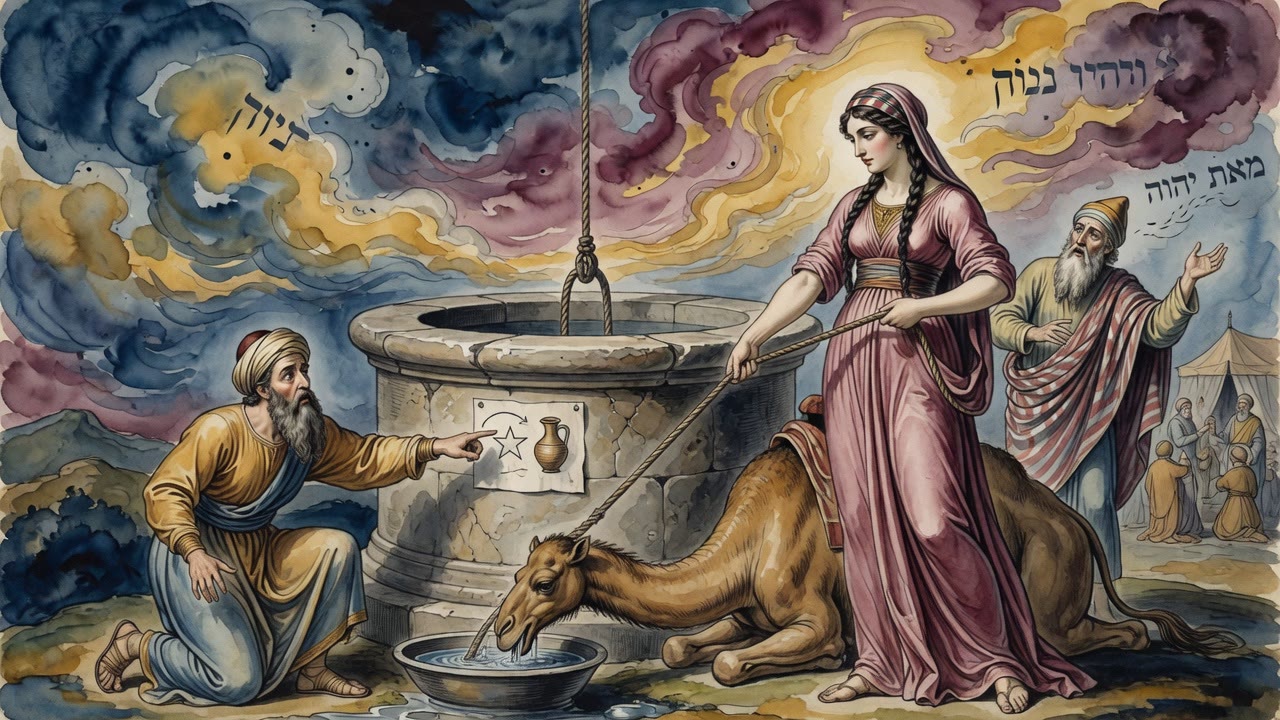
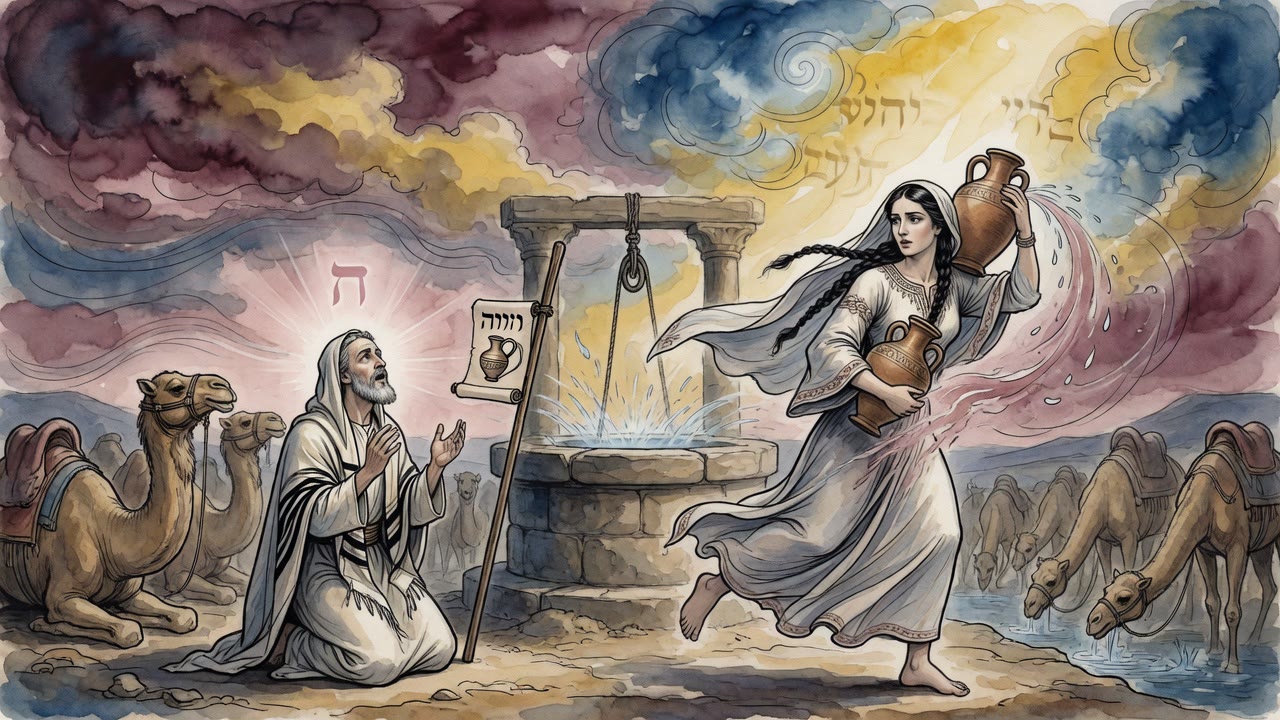
He made the well outside the city at evening, the hour the women come out with jars, and he knelt the camels down and started to pray.

"Lord, God of my master Abraham, please arrange it for me today, and perform kindness with my master Abraham."

Nothing in it for himself. Not his own name, not his own house, not the daughter sitting back in Hebron. The whole prayer points at the man who had said no to him, and heaven took it, because the one who fears the Lord was Abraham and the one heaven was listening to was Abraham's servant.

Rebecca came down the steps with the jar on her shoulder before he had finished speaking. She filled it, and gave him a drink, and then said the sentence that ended the errand.

She would draw for the camels too, until they had done.

Ten camels off a desert road is not a kindness, it is labor. She went down and up the well steps until the trough was full and then until it was full again, and the man stood there and watched her and said nothing at all, holding still, waiting to see whether it would hold.

Straw for the Camels, Water for the Feet

Laban came out fast once he saw the gold on his sister's hands.

In the courtyard Eliezer went along the line and unfastened the animals. There were no muzzles to take off. Nothing belonging to Abraham had put its head into another man's field the whole way north, so there had been nothing to muzzle in the first place, and what came off was only the saddles. Straw and feed went down in front of them. Water came out for his feet and for the feet of the men who had ridden with him.

Then they set food in front of him, in a house that kept gods of its own in it, the same small figures Rachel would carry out years later hidden under a camel saddle.

He would not eat.

"I will not eat until I have told mine errand."

And he told it. The whole thing, from the oath to the well, at a length that would have embarrassed a shorter man, the herds and the silver and the son born late and the prayer and the girl on the steps, and then he told the whole thing a second time to Bethuel and the household, and the food sat there going cold in front of him the entire while.

He Handed Her Over in a Field at Evening

They gave her up. She got on the camel and rode south with a man she had met at a well.

Isaac was out in the field toward evening when the camels came in. Rebecca got down and covered her face, and Eliezer walked over and told Isaac everything he had done, and that was the last important sentence of his life.

He went back to running the household. Somewhere in that household was his daughter, who had not married Isaac and never would, and who had been the reason he asked once and the reason he never asked again.


← All myths
From the tradition

Sources

3 sources

The texts behind this telling. Some cards carry a translation of the source; others are our own retelling of it, and each card says which. Every card links out to the original.

Bereshit Rabbah 60:1Bereshit Rabbah

Retold in our words. Read the original at the link below.The Sefaria Midrash Rabbah, 2022 · CC-BY

The story of Eliezer, Abraham’s servant, gives us a powerful glimpse.

In (Genesis 24:12), we find Eliezer on a crucial mission: to find a wife for Isaac. He prays, "Lord, God of my master Abraham, please arrange it for me today, and perform kindness with my master Abraham." Simple. But packed with layers.

The Rabbis in Bereshit Rabbah (60) see so much more in this moment. They connect Eliezer's plea to a verse in (Isaiah 50:10): “Who among you fears the Lord, who heeds the voice of His servant…” Now, who is Isaiah talking about?

One interpretation says the "one who fears the Lord" is actually Abraham himself. After all, (Genesis 22:12) tells us of God saying, "Now I know that you fear God." And "who heeds the voice of His servant..." – well, that's the Holy One, blessed be He, heeding Abraham's voice.

Think about Abraham's journey. "Who walked in darkness," Isaiah continues, "as he came forth from Mesopotamia and its environs, but he did not know where he was to go, like a person who is situated in the dark." That's Abraham, leaving everything he knew, stepping into the unknown. "And there was no light for him" – yet God illuminated his path. As (Nehemiah 9:7-8) says, "[You called his name Abraham,] and You found his heart faithful before You.”

But here's where it gets even more interesting. Bereshit Rabbah offers another interpretation. "Who among you fears the Lord" – this time, it's Eliezer! And "who heeds the voice of His servant..." – that's Eliezer heeding the voice of Abraham, who himself is a servant of God. (Genesis 26:24) reminds us, "For the sake of My servant, Abraham."

Eliezer, too, walked in darkness "when he went to bring Rebecca." He didn't know exactly where to go or who to look for. "And there was no light for him" – but the Holy One, blessed be He, illuminated his path with shooting stars and lightning! A bit dramatic, maybe, but it emphasizes the point: God was with him.

And so, we come full circle back to Eliezer's prayer: "Lord, God of my master Abraham, please arrange it for me today.” He's not just asking for help; he's tapping into a legacy of faith, a history of divine guidance.

What does this all mean? It suggests that our prayers aren't just isolated requests. They're part of a larger narrative, a continuing conversation with the Divine. We stand on the shoulders of those who came before us, their faith illuminating our own paths, even when we feel like we're walking in darkness.

Remember Abraham. Remember that even in the darkest of times, there's always the potential for light. And maybe, just maybe, a shooting star or two.

Full source
Bereshit Rabbah 60:8Bereshit Rabbah

Retold in our words. Read the original at the link below.The Sefaria Midrash Rabbah, 2022 · CC-BY

Bereshit Rabbah turns to Eliezer's Camels and the Test of Idol Worship.

Rabbi Huna and Rabbi Yirmeya pose a fascinating question to Rabbi Ḥiyya bar Rabba: Were Abraham's camels, paragons of virtue, perhaps akin to the legendary donkey of Rabbi Pinḥas ben Yair? Now, this donkey wasn't just any beast of burden. This donkey was practically a Talmudic scholar in disguise!

The Midrash (rabbinic interpretive commentary) tells us that Rabbi Pinḥas's donkey refused to eat anything that wasn't properly tithed or was suspected of being stolen. It was so scrupulous, it once spent three days with robbers, refusing to touch their ill-gotten gains! When finally returned, the donkey wouldn't even eat barley until it was confirmed that the demai – the potentially untithed portion – had been removed.

"Did you process it?" Rabbi Pinḥas asked. "Did you separate the tithes of demai from it?" The robbers, bewildered, pointed out that one is generally exempt from tithing animal feed. But Rabbi Pinḥas simply replied, "What can we do for it if it is stringent with itself?" This donkey held itself to a higher standard!

So, back to Abraham's camels. The implication of the initial question is clear: if Abraham's camels were so righteous, surely they wouldn't need muzzles to prevent them from nibbling on forbidden vegetation. The "unfastening" mentioned in Genesis must refer to something else entirely, perhaps their saddles.

We even get a glimpse into the potential for religious one-upmanship. Rabbi Yirmeya once sent a basket of figs to Rabbi Ze'eira, not tithing them himself. He reasoned, "Is it possible that Rabbi Ze'eira would eat them without tithing them?” But Rabbi Ze'eira had the same thought about Rabbi Yirmeya, and so neither tithed them! The result? Untithed figs were consumed. The rabbis certainly had a sense of humor.

Later, Rabbi Abba bar Yemina laments to Rabbi Ze’eira that, compared to earlier generations, they are but donkeys. But not even the righteous donkey of Rabbi Pinḥas ben Yair, but to ordinary donkeys who unwittingly consumed untithed figs.

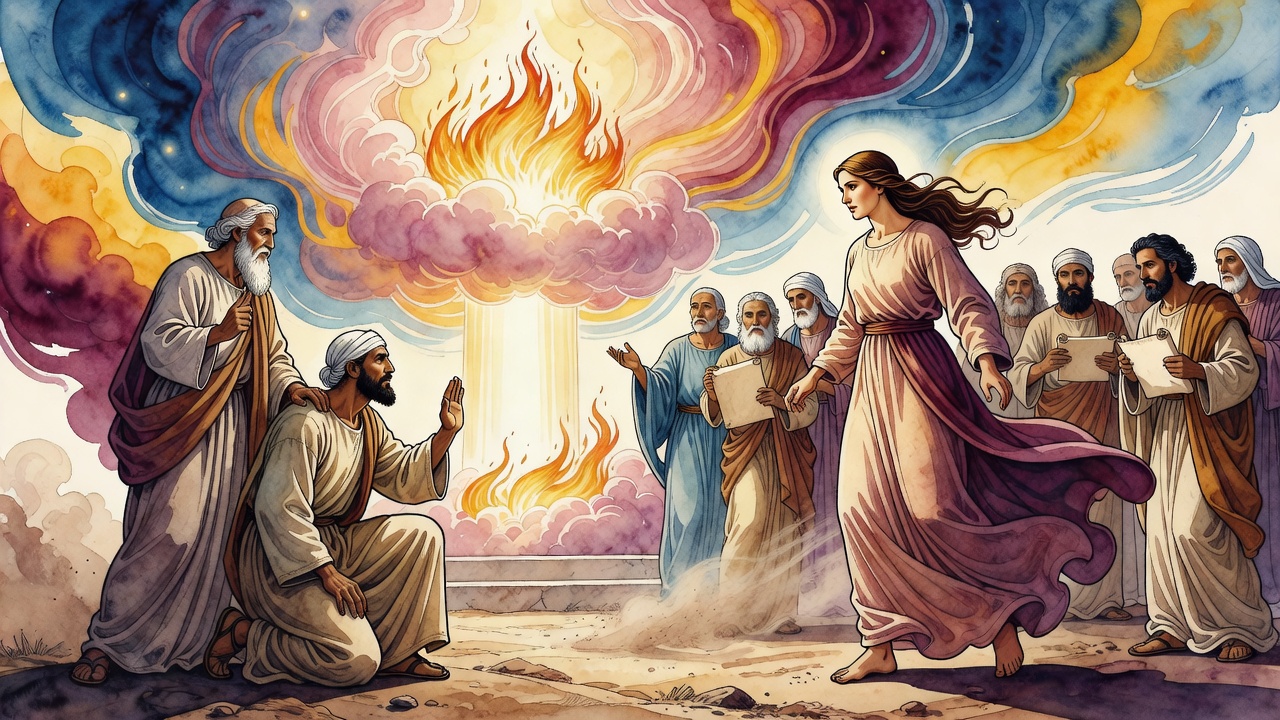
But the story doesn't end there. The Midrash takes an unexpected turn, focusing not on animal righteousness, but on the importance of seemingly trivial details. "He gave straw and feed for the camels." The rabbis argue that the detailed conversation surrounding Eliezer, Abraham’s servant, is more significant than even fundamental laws of the Torah! The passage about Eliezer’s mission to find a wife for Isaac is long and detailed, while the law of impurity from creeping animals, a foundation of ritual purity, is derived from a mere extra letter in a verse.

Consider this: the Torah states "tameh, hatameh" (impure, the impure) and "zeh, vezeh" (this, and this) when referring to creeping animals (Leviticus 11:29). Rabbi Shimon ben Yoḥai and Rabbi Eliezer ben Yosei point out that the extra "heh" and "vav" teach us that the blood of these creatures, like their flesh, also transmits ritual impurity. Such a crucial law, derived from such a small detail!

Similarly, Rabbi Aḥa argues that even the act of washing the feet of Abraham's servants is worthy of mention, highlighting its significance. "And water to wash his feet and the feet of the men who were with him."

So, what's the takeaway? Perhaps it's that righteousness can be found in the most unexpected places – even in camels and donkeys! Or maybe it's a reminder that no detail is too small, no action too insignificant, to be worthy of our attention. The rabbis, in their wisdom, invite us to see the profound in the mundane, the sacred in the everyday. And maybe, just maybe, to strive to be a little more like the donkey of Rabbi Pinḥas ben Yair… figs permitting, of course.

Full source
Legends of the Jews 5:283Legends of the Jews

Retold in our words. Read the original at the link below.The Legends of the Jews by Louis Ginzberg (1909) · Public Domain

Abraham certainly did, especially when it came to finding a wife for his son, Isaac. He was very particular. Abraham knew the importance of lineage and shared values. There's this old proverb, "Even if the wheat of thine own place be darnel, use it for seed," meaning even if what you have isn't perfect, sometimes it's best to start with what's familiar.

So, Abraham decided to find a wife for Isaac within his own family. Why? Because, as Ginzberg retells it in Legends of the Jews, any woman would essentially be converting to Abraham's way of life. So, naturally, his own kin had the strongest claim. They already understood, to some extent, his beliefs and values.

Enter Eliezer, Abraham's trusted servant. He raises a valid point: "What if no woman wants to leave her home and follow me back to this land?" He even suggests a solution, asking, "May I then marry my own daughter to Isaac?"

Abraham is firm in his response. "No," he replies, explaining, "thou art of the accursed race, and my son is of the blessed race, and curse and blessing cannot be united." Strong words. He emphasizes the importance of maintaining a certain spiritual lineage.

But it doesn't stop there. Abraham adds another crucial instruction: "Beware thou that thou bring not my son again unto the land from whence I came, for if thou broughtest him thither again, it were as though thou tookest him to hell." Wow! He absolutely forbids Eliezer from taking Isaac back to his homeland. It was a place of spiritual danger, a place they'd left behind for a reason.

Instead, Abraham places his faith in something bigger. "God who sets the heavens in motion, He will set this matter right, too, and He that took me from my father's house, and that spake unto me, and that swore unto me in Haran, and at the covenant of the pieces, that He would give this land unto my seed, He shall send His excellent angel before thee, and thou shalt take a wife for my son from thence."

Abraham believes that God, the same God who guided him on his own journey, will guide Eliezer as well. He's confident that a divine messenger will pave the way and lead Eliezer to the right woman.

Finally, to seal the deal, Eliezer swears an oath to Abraham. And Abraham, in a deeply symbolic gesture, makes him take the oath "by the sign of the covenant", referring to the ritual of circumcision, a powerful symbol of their commitment to God and their lineage.

It highlights the importance of roots, values, and faith. Abraham, faced with a critical decision, trusts in both his own understanding of his family and in God's guidance. And how do we know when to rely on our own judgment versus trusting in something larger than ourselves?

Full source