Rebecca Arrived Before Eliezer Finished Praying
At the well Eliezer set a risky sign of water and camels. Before the prayer closed, Rebecca ran with her jug, and heaven corrected a dangerous vow.
Table of Contents
 Click for full size
A Servant Gambling on a Sign
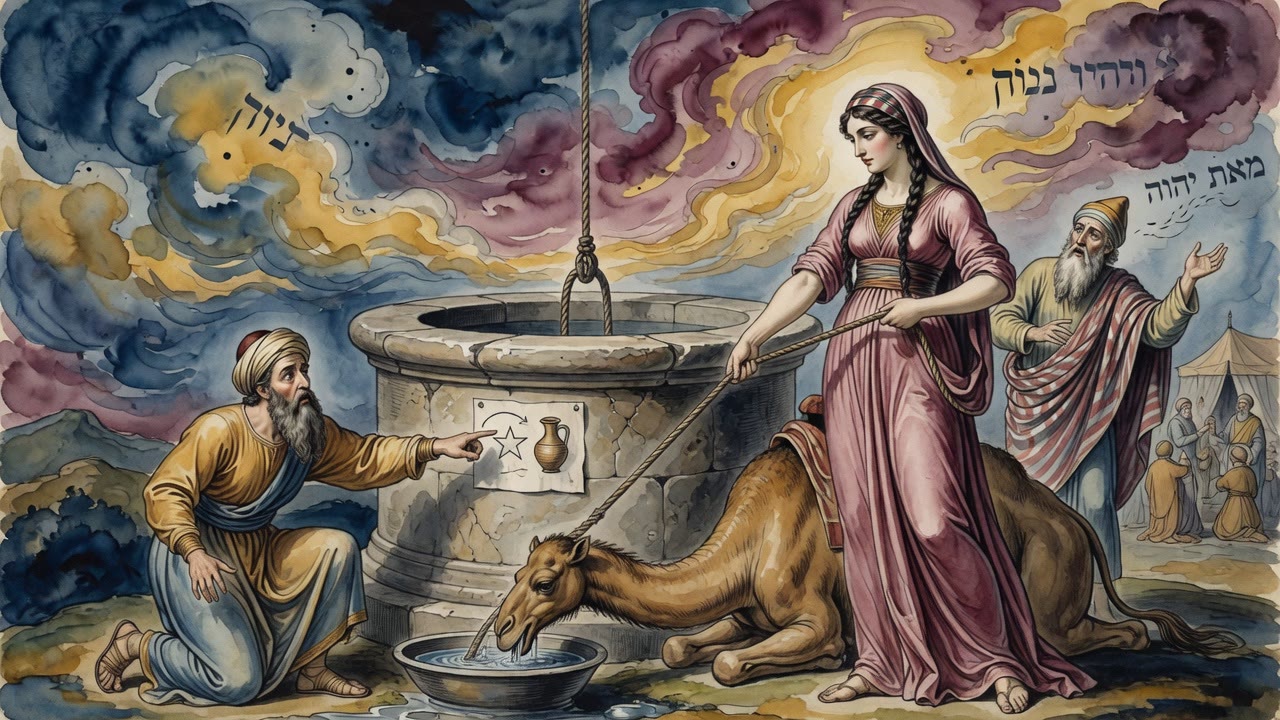
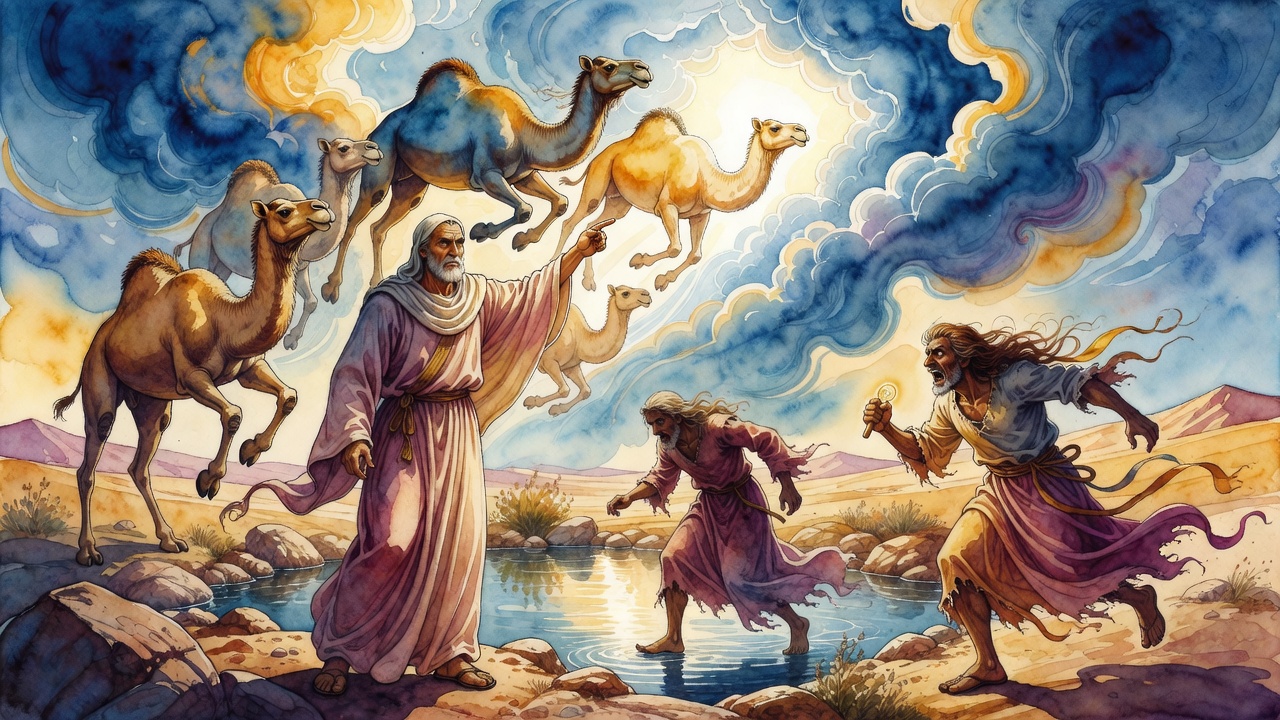
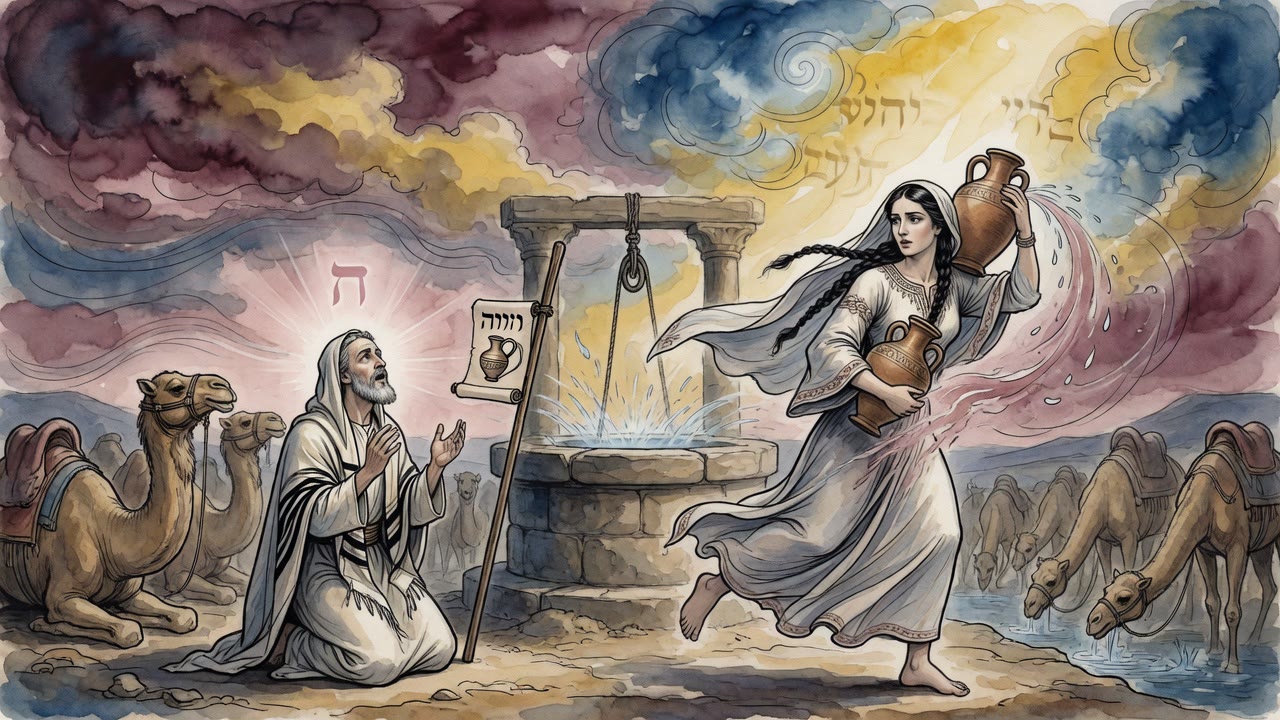
Eliezer stood by the well outside the city with camels dusty from Abraham's road and a charge that could break a house if it failed. Find a wife for Isaac. Bring her home. Do not take the boy back to the old land. He prayed a test into the evening air and made it specific enough to be dangerous. "The girl to whom I say, Tilt your jug, please, that I may drink, and who answers, Drink, and I will water your camels also, she is the one You have confirmed for Your servant."
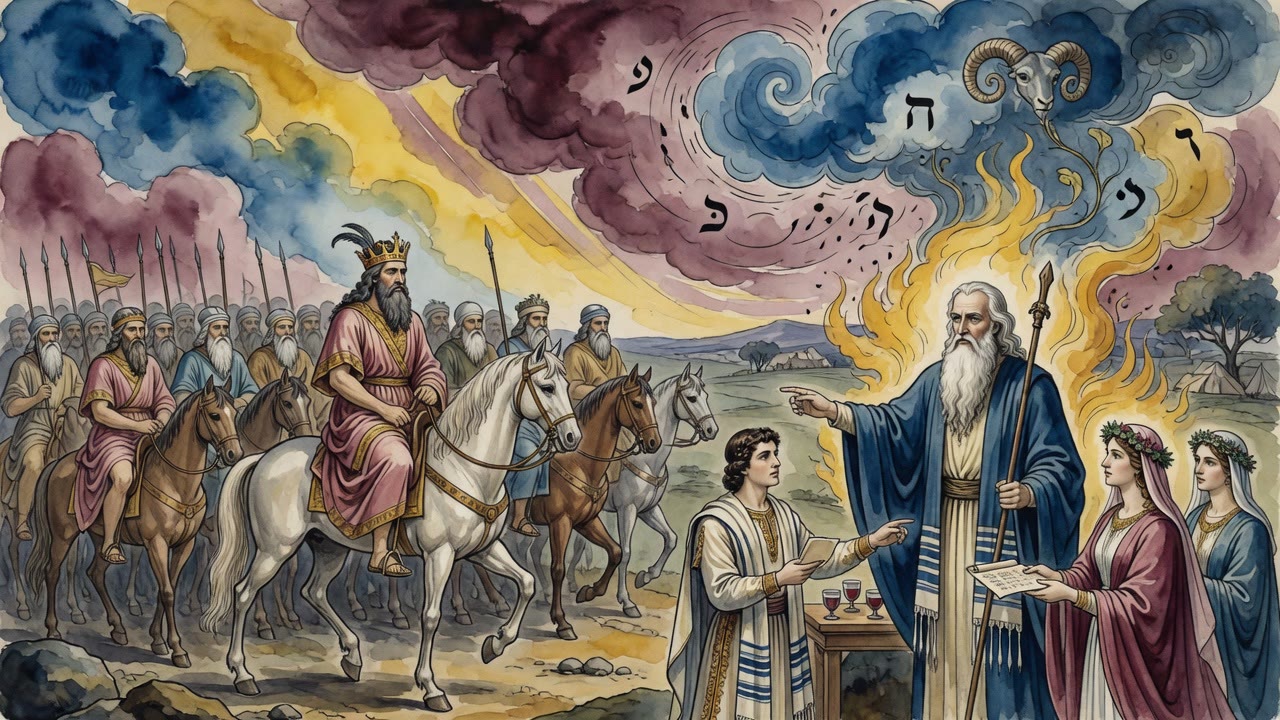
The midrash winces at the risk even while it loves the outcome. What if a servant girl unfit for the covenant had answered first? What if kindness came from the wrong house? Four men in Israel's memory made rash demands of heaven: Eliezer, Caleb, Saul, and Yiftach. Three were rescued by providence stepping into the gap. One was not. Eliezer stood in that company without knowing it, camels breathing heat beside him, waiting for a jug.
Before the Prayer Closed
"It was before he concluded to speak, and behold, Rebecca was coming out." The jug was on her shoulder. Beauty walked with the stride of someone who did not know she was already an answer to a sentence still unfinished in a stranger's mouth. Eliezer ran the script as if he had invented courage. She lowered the jug. She gave him drink. She ran for the camels until the troughs were full and the animals' thirst was a finished problem, water flashing from the well in trip after trip.
Heaven had not waited for the amen. The Holy One corrected the gamble mid-sentence by sending the right woman into the frame before the wrong one could appear. Kindness, not only pedigree, was the sign, and Rebecca's feet made the theology visible in dust and splashed mud. Eliezer watched her work and felt the oath in his chest change from gamble to gratitude.
Gifts and a Brother's Mouth
Gold hit her wrists. A ring found her nose. The question of family led to Bethuel's house and to Laban, who saw the jewelry before he fully saw the man, hospitality arriving with calculation already seated at the table. Straw and feed for camels. Water for feet. Food that Eliezer refused until the errand was spoken clean from first oath to last camel drink.
He told the story of Abraham's charge, the journey, the prayer, the well, the girl who ran. Rebecca's consent was asked in the open. She said she would go. The departure was quick enough to smell of destiny and of a household that could turn warm or sharp depending on the light. Blessings followed her out of the door. So did Laban's eyes, storing patterns for later years when another traveler would come seeking daughters.
The Line That Would Need Two Sisters
Years on, Laban would give handmaids with his daughters when Jacob came seeking Rachel and received Leah under a veil in the dark. The family drama that began with a servant's prayer at a well would swell into twelve sons, rival tents, and a house full of love that did not always know how to share itself. Pirkei DeRabbi Eliezer remembers those handmaids not as ornaments but as part of the mercy and the tangle that built the tribes, gifts that complicated and completed the household of Israel.
Tanchuma on Toldot hears in Isaac's generations the proverb that children's children are a crown to the aged, and that the righteous are saved through their offspring. Rebecca's jug of water was the first drop of that crown, poured for a tired man and a line of camels who could not speak their need.
Yiftach's Shadow
The midrash keeps Yiftach beside Eliezer as a warning drawn in the same ink. Yiftach vowed whatever first came from his house as a burnt offering and met his daughter with music and disaster. Eliezer's vow was also reckless in form, a blank filled by whoever arrived, but Rebecca's arrival sealed it toward life and marriage and a long future. Same pattern of speech. Opposite ending. Providence is not a license for careless oaths. It is the thin rescue that sometimes meets them when the speaker is serving a larger promise than his own glory.
Isaac lifted his eyes in the field at evening and saw camels on the horizon. Rebecca lifted her eyes and saw a man walking to meet the train. The well's kindness entered a marriage that would carry the covenant forward through twins, a sale of birthright, a stolen blessing, and a night of ladders still far ahead. For one hour at the water, though, the story was only a jug, a prayer interrupted by mercy, and a girl who ran.
← All myths