6 min read

Four Rash Vows and the Girl Who Opened the Door

Eliezer, Caleb, and Saul wager futures on reckless signs and are rescued. Yiftach vows the first thing through his door, and his daughter walks out singing.

Curated by Arthur · Told by Maggid ·
Table of Contents
  1. Rebecca Before the Amen
  2. Saul's Prize and David's Hand
  3. The Door in Gilad
  4. A Stone Pillow Without a Bargain
  5. What the Door Remembered

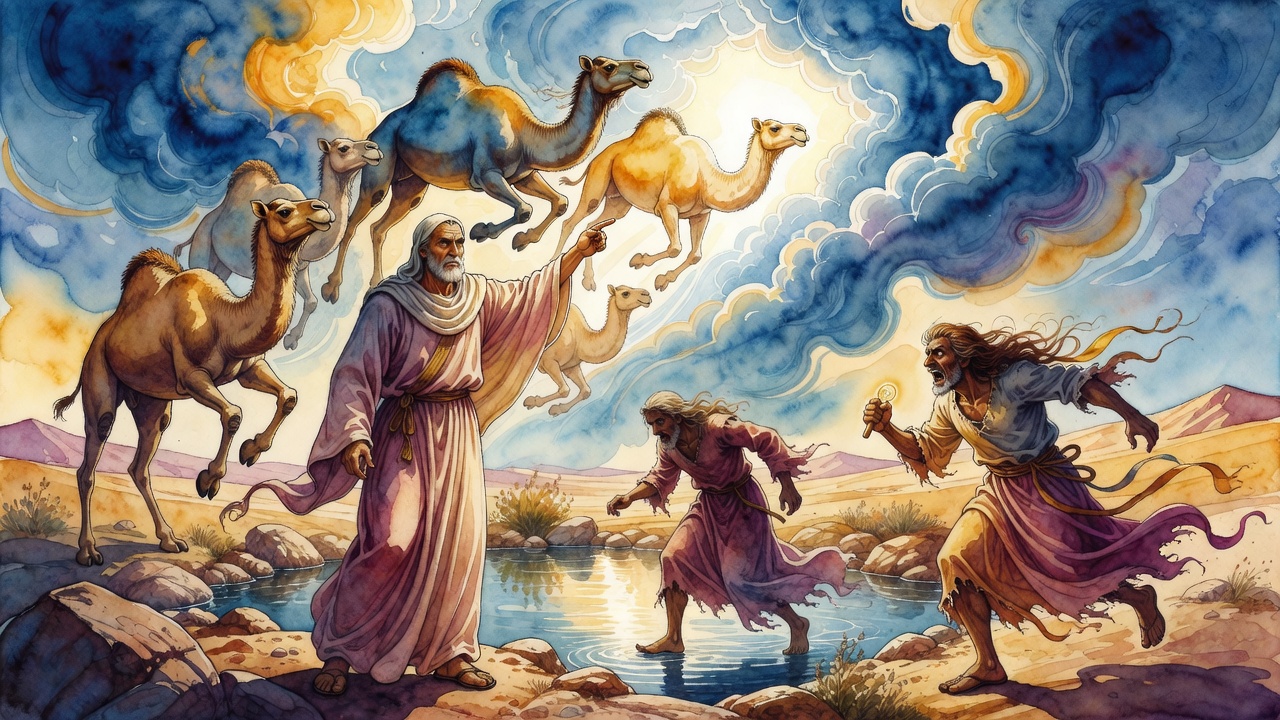
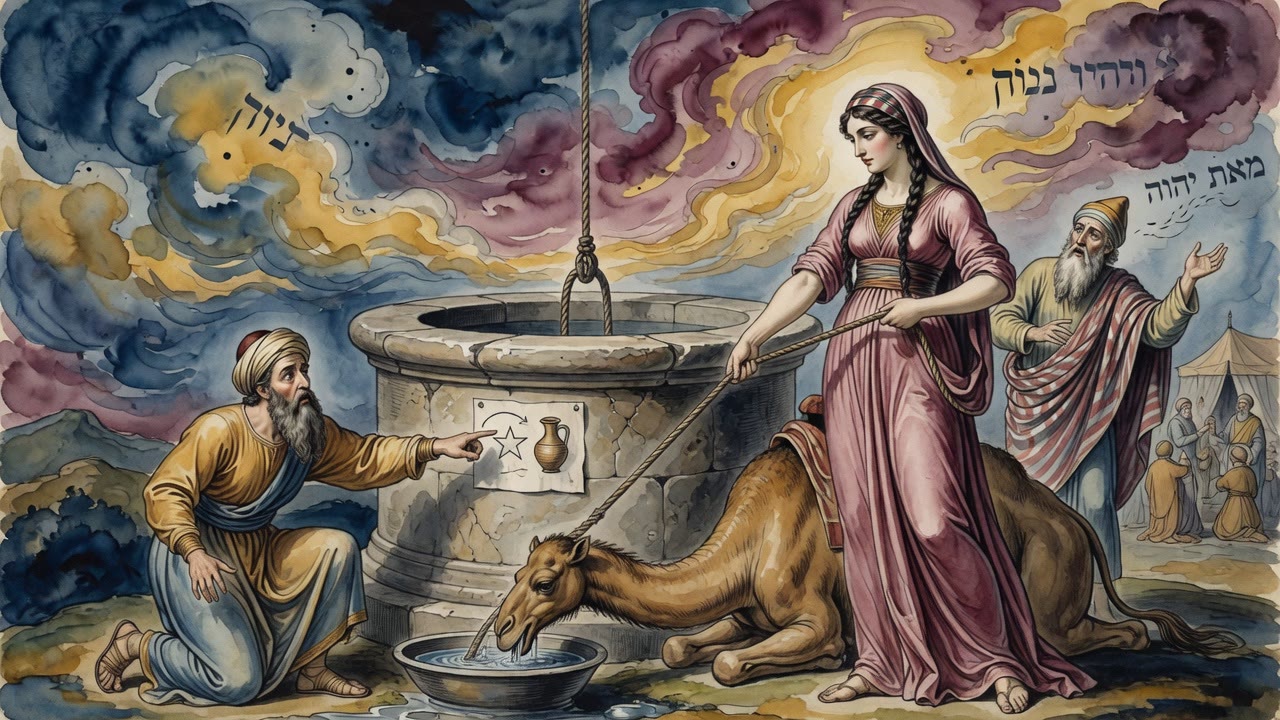
Eliezer stood by the spring with dust on his hem and camels blowing hard behind him. He had crossed a country on Abraham's errand and now tried to bind heaven to a formula. "May it be that the girl to whom I will say, tilt your jug, please, and I will drink, and she will say, drink, and I will also give your camels to drink, it is she You have confirmed for Your servant, for Isaac" (Genesis 24:14).

Four Rash Vows and the Girl Who Opened the Door Click for full size

The prayer was a trap dressed as piety. Any servant girl with a kind arm could have walked into a marriage meant for the heir. Eliezer set the snare anyway, because he wanted certainty more than he feared the wrong face at the water.

Rebecca Before the Amen

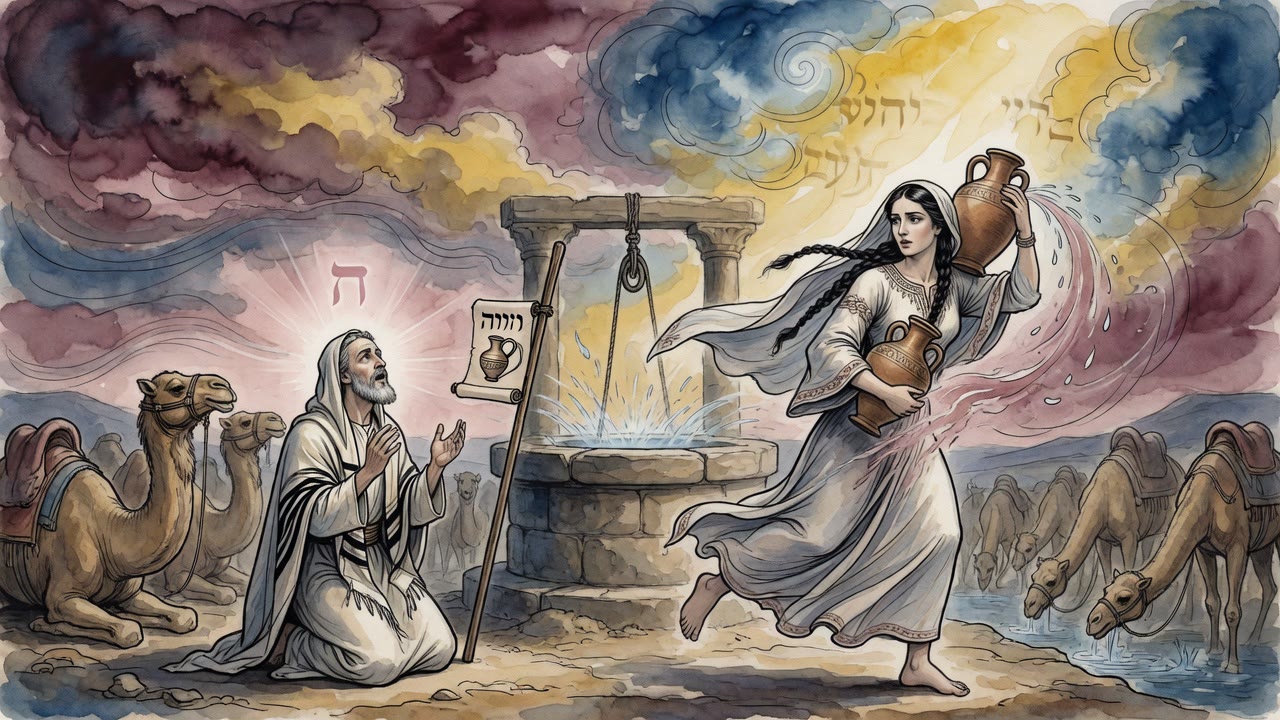
He had not finished speaking when Rebecca came out with the jug on her shoulder (Genesis 24:15). Water slapped the clay. Camels smelled it and stamped. She lowered the jug for the stranger, then ran for the troughs until every animal drank. Gold rings found her wrists before the sun moved far. Heaven had filled a reckless mold with the right person so the mold would not crack the house of Abraham.

Four men made inappropriate demands of God. Three received arrangements that saved them from their own mouths. One did not.

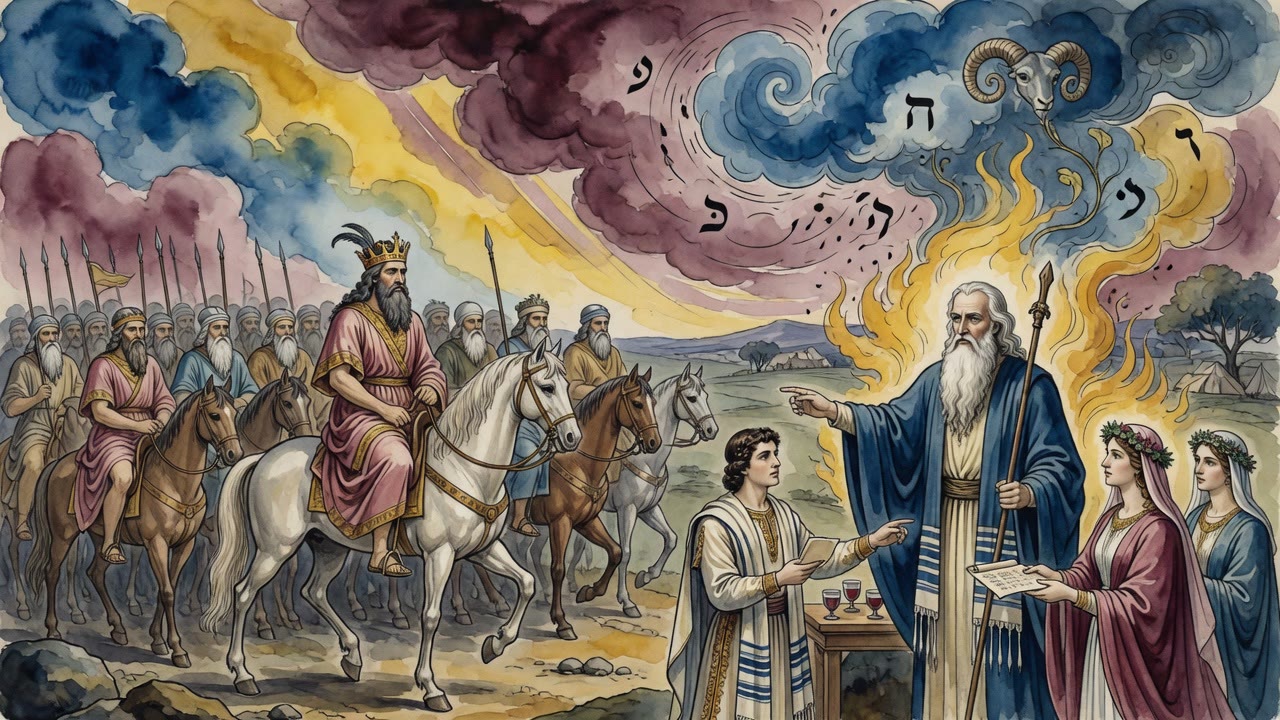
Eliezer was the first. The second was Caleb, who stood before a fortified town and shouted a bride-price in public. Whoever took Kiryat Sefer would take his daughter Akhsa (Judges 1:12). A slave with a strong arm could have claimed her. Otniel son of Kenaz, Caleb's own kin, took the city instead, and the vow landed inside the family (Judges 1:13). Walls fell. A wedding followed. The mouth that gambled was not forced to pay a stranger.

Saul's Prize and David's Hand

Saul watched a giant spit insults across a valley and made the same kind of bargain. Wealth and a royal daughter for whoever dropped Goliath (1 Samuel 17:25). A foreigner, an idolater, a slave with a lucky stone could have walked into the palace as son-in-law. The valley held its breath. Then David, son of a nobleman of Judah, stepped out with a sling and five smooth stones, and the giant hit the ground like a cut tree (1 Samuel 17:12, 17:49-50).

Three times a man threw dice with God. Three times the dice came up inside the household, the clan, the people. Mercy wore the face of timing. No one called it clever law. It was rescue from a sentence the speaker had written without reading the last line.

The fourth man did not get that mercy.

The Door in Gilad

Yiftach rode toward battle with Ammon and opened his mouth wider than the other three. "Whatever comes out of the doors of my house to meet me when I return in peace from the children of Ammon shall be the Lord's, and I will offer it up as a burnt offering" (Judges 11:31). A dog could have run out. A cat. A servant. He did not leave himself a path to climb down.
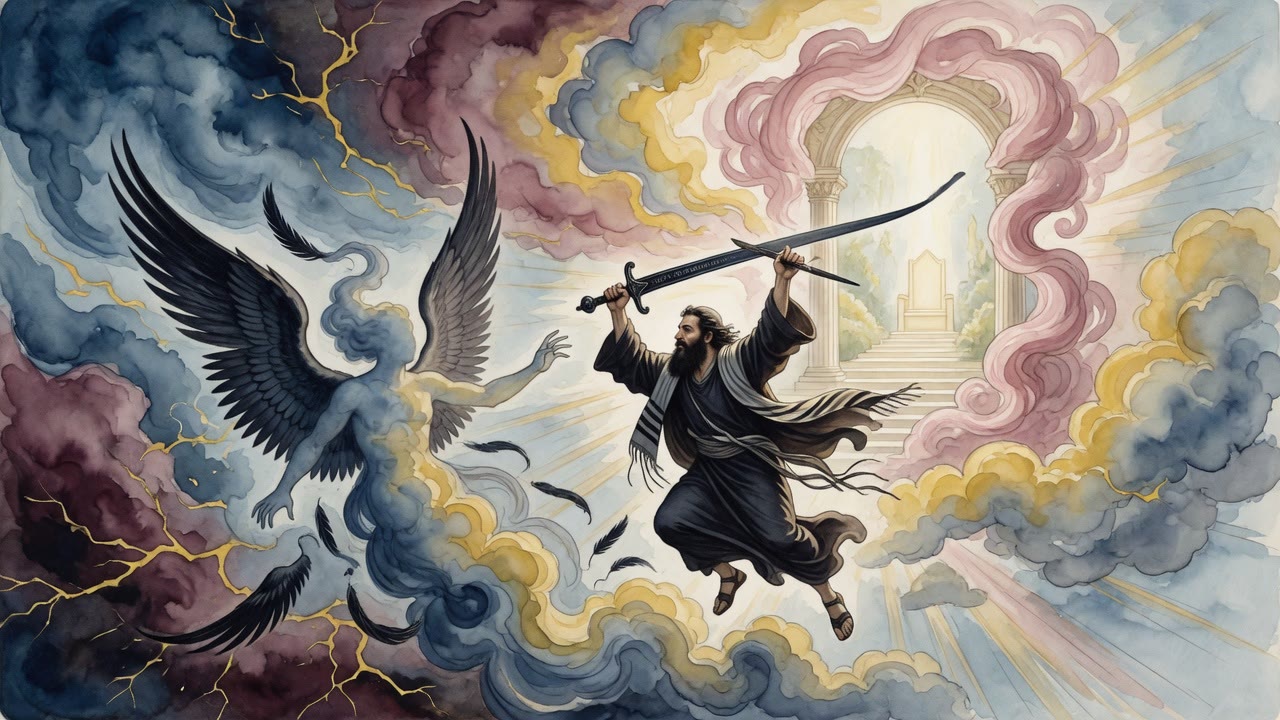
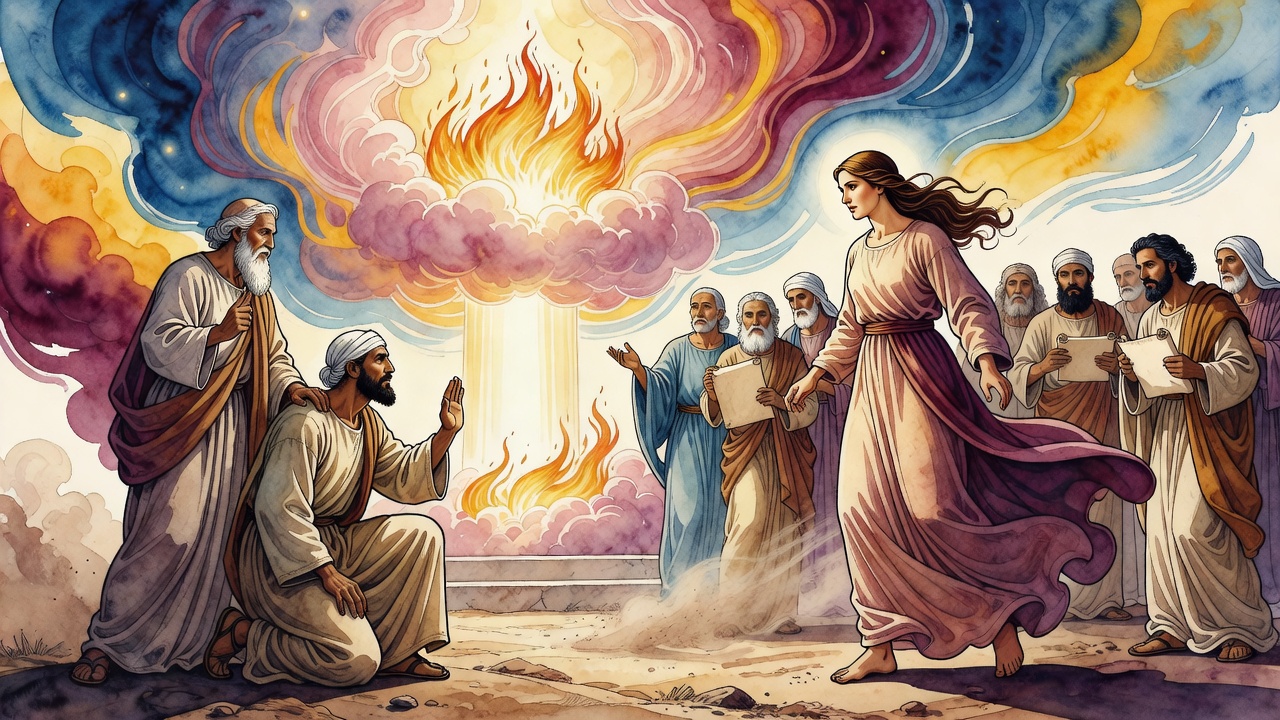
He won. He came home. Music started before he reached the gate. His daughter, his only child, danced out to meet him with timbrels (Judges 11:34). The vow and the girl arrived in the same breath. Yiftach tore his clothes. The house that should have held a feast held a sentence instead.

Pinḥas the priest could have released the vow. Yiftach could have walked to the priest. Each waited for the other to bend first. The chieftain would not lower himself. The priest would not cross the distance to a man who needed him. Between midwife and laboring mother, the proverb says, the child is lost. Between those two stiff necks the girl was lost. She asked for two months in the hills to weep for her youth, then came back and the vow was carried out in the way the house had locked itself into.

Yiftach's limbs fell from him one by one as he traveled, and each piece of him was buried where it dropped, so the book says he was buried in the cities of Gilad, not one city (Judges 12:7). Pinḥas lost the spirit that had made him chief; the verse shifts from presence to a past tense, "had been chief" (1 Chronicles 9:20). Pride collected its fee from both men long after the girl was gone.

A Stone Pillow Without a Bargain

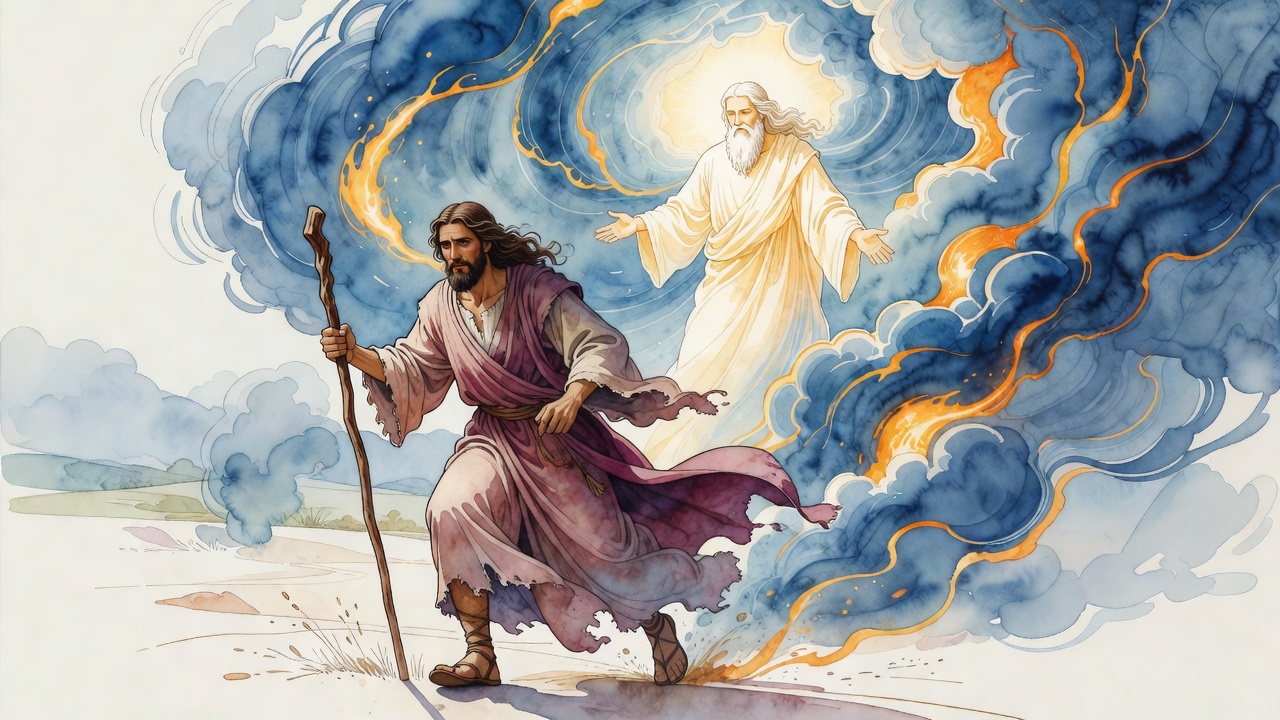
Far earlier, another man fled without setting terms. Jacob ran from Esau with a stolen blessing and a mother's warning hot in his ears. He did not vow a city, a daughter, or a stranger at a well. He put his head on a stone in a place the psalm later calls parched and thirsty, without water (Psalms 63:2; Genesis 28:11).

His soul thirsted the way truffles under dry soil thirst for rain. Two hundred and forty-eight limbs leaned toward God in that empty land. He set no formula for how heaven must prove itself. Sleep took him. A ladder rose. Angels climbed and descended. Then the Lord was standing over him and spoke the land into his future without being bargained into the posture (Genesis 28:13).

Presence arrived unpurchased. No door had to open on a child. No giant had to fall to unlock a promise. Jacob woke afraid and named the place, and the stone that had held his head became a pillar with oil on its top. The man who did not gamble a life still received a standing God.

What the Door Remembered

Eliezer's camels drank. Akhsa married inside the clan. David's sling sang once and the valley changed kings. Yiftach's doorway kept the sound of timbrels and the silence after. Jacob's stone kept the weight of a body that asked for nothing and was covered anyway.

Four mouths wrote contracts with heaven. Three were edited by mercy before the ink dried. One was enforced as written, and the enforcers, father and priest, paid in scattered bones and a departed spirit. The girl who opened the door never got a fourth chance to walk back inside as only a daughter.

In Gilad the road still held the places where a limb had fallen. In Beersheba's direction the spring still remembered a jug lowered in time. Between them stood the difference between a vow that heaven rewrote and a vow that heaven let stand.


← All myths
From the tradition

Sources

2 sources

The texts behind this telling. Some cards carry a translation of the source; others are our own retelling of it, and each card says which. Every card links out to the original.

Bereshit Rabbah 60:3Bereshit Rabbah

Retold in our words. Read the original at the link below.The Sefaria Midrash Rabbah, 2022 · CC-BY

As we learn in Bereshit Rabbah 60, it's a theme that runs through some pretty significant stories in our tradition.

He's standing by a well, praying for a sign. "May it be," he asks, "that the girl to whom I will say: Tilt your jug, please, and I will drink, and she will say: Drink, and I will also give your camels to drink; it is she You have confirmed for Your servant, for Isaac."

The Midrash (rabbinic interpretive commentary) picks up on something interesting here. Was Eliezer's request really that well-considered? What if a mere servant girl had offered him water? Would he have presented her as a bride for Isaac?

Here’s the thing: the Holy One, Blessed be He, steps in. Before Eliezer even finishes his prayer, Rebecca arrives. The text emphasizes, "It was before he concluded to speak, and behold, Rebecca was coming out…"

This sets the stage for a broader discussion about people who make, shall we say, less than brilliant demands of God. The Midrash identifies four such individuals: Eliezer, Caleb, Saul, and Yiftach.

Let's look at Caleb. He declares that whoever conquers Kiryat Sefer will win his daughter Akhsa's hand in marriage (Judges 1:12). Again, the question is posed: what if a slave had accomplished this feat? Would Caleb really have given his daughter to him? Thankfully, Otniel, Caleb's kinsman, steps up. As the verse states, "Otniel son of Kenaz, Caleb’s…brother, captured it; and he gave him Akhsa his daughter as a wife” (Judges 1:13). Crisis averted!

Saul makes a similar proclamation regarding whoever defeats Goliath (1 (Samuel 17:2)5). The Midrash asks, what if a non-Israelite, or even a slave, had won? Would Saul have honored his pledge? Here, too, divine providence seems to intervene, as David, "the son of that nobleman" (1 (Samuel 17:1)2), emerges victorious.

But then there's Yiftach. Oh, Yiftach. He vows that whatever comes out of his house first to greet him upon his return from battle will be offered as a burnt offering (Judges 11:31). Now, think about this for a moment. What if a dog had greeted him? Would he have sacrificed it? According to the Midrash, this is where things go terribly wrong. "Yiftach came…and behold, his daughter came out to greet him" (Judges 11:34).

Unlike the previous cases, this time, the "appropriate arrangement" is… inappropriate.

The text explores a debate between Rabbi Yoḥanan and Reish Lakish. Rabbi Yoḥanan suggests Yiftach was at least obligated to pay a monetary redemption for his daughter, as she was now considered consecrated property that couldn't be used. Reish Lakish, however, argues that Yiftach’s vow was null and void, like consecrating an impure animal. He draws on the mishna from Temura 5:6 to support his point.

The tragedy deepens. The Midrash tells us that Pinḥas, the high priest, wasn't there to annul Yiftach's vow. Each man thought the other should take the initiative. "Between the two of them," the text laments, "that young woman was lost."

There’s a chilling proverb cited here: "Between the midwife and the mother in childbirth, the son of the wretched woman is gone." It's a stark reminder of how, when people pass the buck, the innocent suffer.

Both Pinḥas and Yiftach were punished. Yiftach's limbs supposedly fell off one by one, and he was buried in separate cities, as hinted at in (Judges 12:7). As for Pinḥas, the Divine Spirit departed from him, as reflected in the shift from "is chief" to "had been chief" in (1 (Chronicles 9:2)0).

What are we to take away from this? Perhaps it’s a cautionary tale about the power of our words and the importance of thinking before we speak – especially when making promises, deals, or vows, with implications that extend beyond ourselves. The story of Yiftach serves as a stark reminder that sometimes, even with the best intentions, our actions can have devastating and unintended consequences. It’s a call for careful consideration, humility, and a willingness to seek guidance when we're in over our heads. After all, we're all just trying to navigate this complex world, and sometimes, we need a little help along the way.

Full source
Bereshit Rabbah 69:1Bereshit Rabbah

Retold in our words. Read the original at the link below.The Sefaria Midrash Rabbah, 2022 · CC-BY

It all starts with a dream. Jacob, fleeing his brother Esau, lays down to sleep, using a stone as a pillow. And he has a vision. A ladder stretching to heaven, angels ascending and descending, and then…God Himself, standing right there. “And, behold, the Lord was standing over him, and said: I am the Lord, God of Abraham your father, and God of Isaac. The land upon which you lie, to you I will give it, and to your descendants” (Genesis 28:13).

What does it mean, “the Lord was standing over him?" Bereshit Rabbah, a classic collection of rabbinic interpretations of Genesis, dives deep into this moment. Rabbi Yosei bar Zimra kicks things off by connecting this vision to a verse from Psalms: “My flesh yearns for You, in a parched and thirsty land without water” (Psalms 63:2). That feeling of being utterly parched, not just physically, but spiritually.

Rabbi Elazar, quoting Rabbi Yosei bar Zimra, takes it even further. He says, “My soul thirsts for You…yearns [kama] for You” (Psalms 63:2) – like these truffles that long for water. Truffles! Those rare, earthy delicacies that grow underground, constantly seeking moisture. It's a beautiful analogy for the soul's relentless search for connection with the Divine. A truffle, hidden in the darkness, instinctively reaching for life-giving water. Is that not a perfect metaphor for our own spiritual hunger?

It doesn’t stop there. The Rabbis in Bereshit Rabbah add that it’s not just our soul that thirsts, but all our two hundred and forty-eight limbs. Every part of us, every fiber of our being, is yearning for God. Where does this yearning take place? “In a parched and thirsty land without water.” A place of emptiness, of longing. A place that sounds a lot like…life sometimes.

The verse in Psalms continues: “Indeed, in the Sanctuary I have seen You” (Psalms 63:3) – in sanctity I have seen You; “beholding Your power” (Psalms 63:3) – this is Your entourage; “and Your glory” (Psalms 63:3) – “and, behold, the Lord was standing over him.” So, the Psalmist's experience of seeing God in the Sanctuary, of beholding His power and glory, is directly linked to Jacob's vision. The "Lord standing over him" isn't just a visual image; it's an experience of divine presence that answers that deep, primal thirst.

What does all this mean for us today? Perhaps it's a reminder that the yearning itself is sacred. That the feeling of being lost, of being parched, is not a sign of failure, but an invitation. An invitation to seek, to thirst, to connect with something bigger than ourselves. And maybe, just maybe, in that moment of deepest longing, we too will glimpse the Divine standing right there, above us, within us, ready to offer the waters of life.

Full source