God Drained the Chaos and the World Appeared Underneath
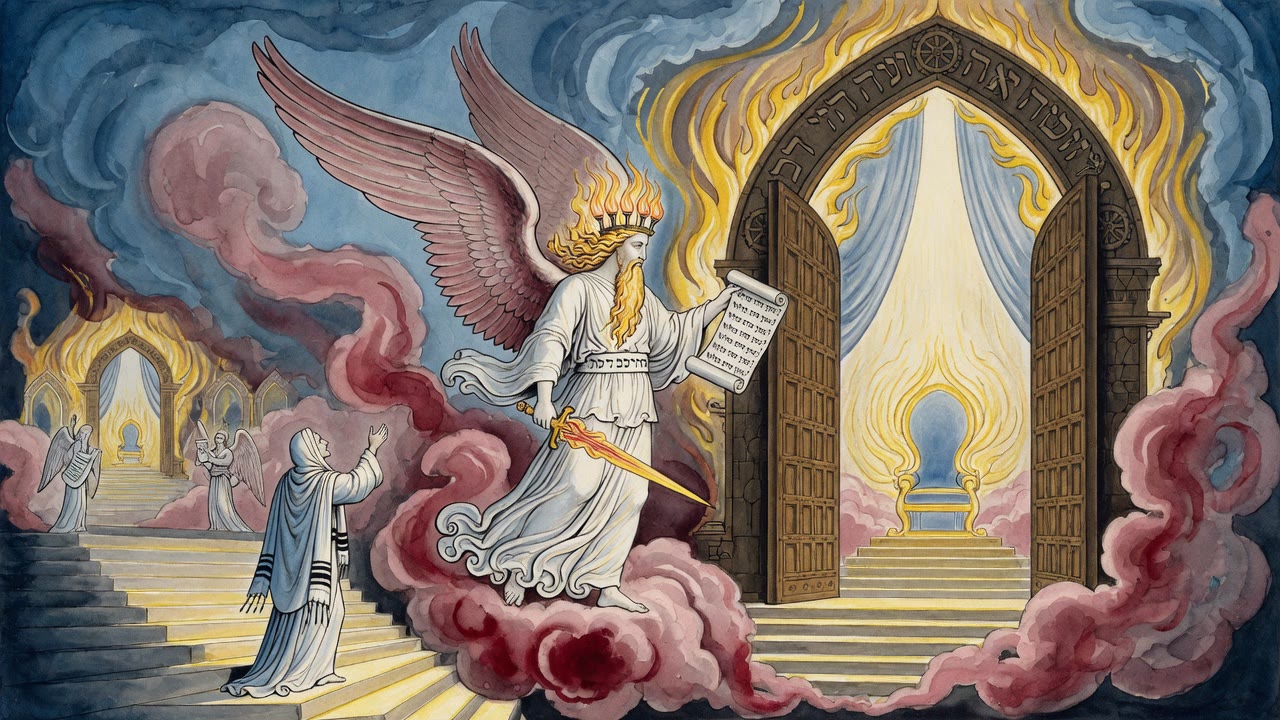
Bereshit Rabbah reads creation as a refining job. The world was already there, hidden under chaos. God drained it, and the craft appeared below.
Table of Contents
 Click for full size
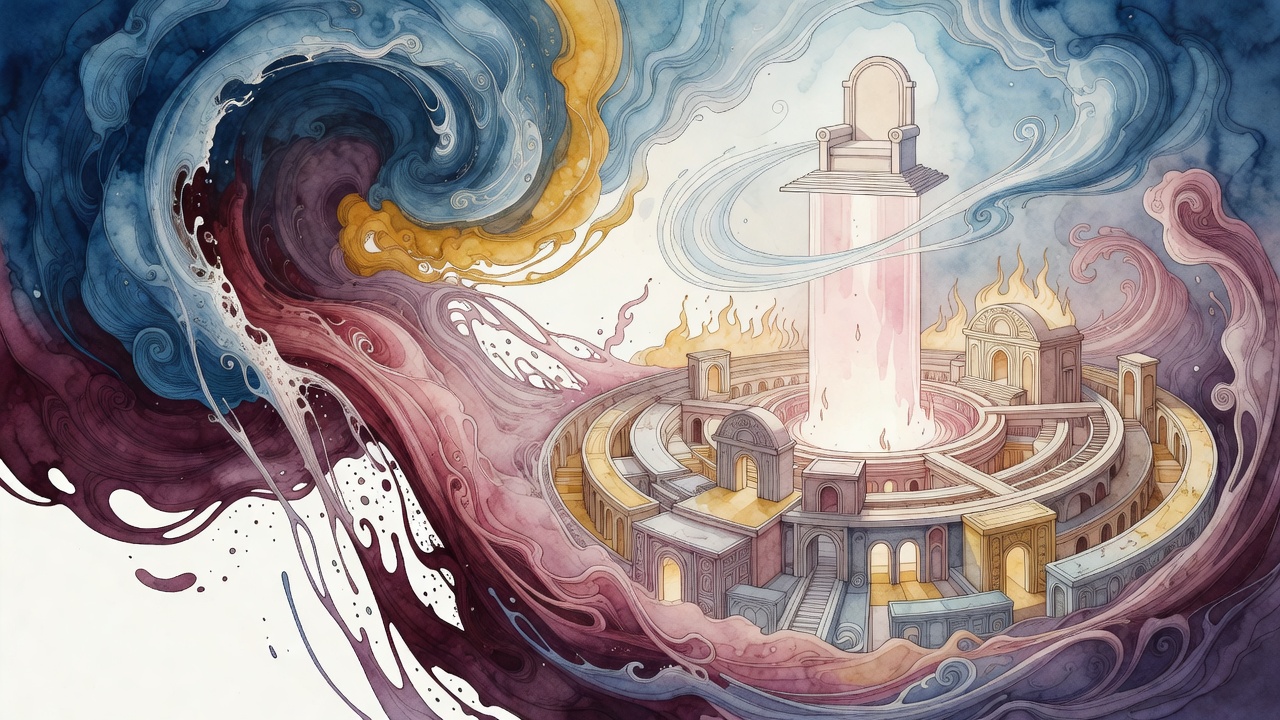
A bathtub with two bowls at the bottom
The first day of creation is usually read as production: God speaking light into existence out of nothing, building the world from scratch. Bereshit Rabbah, compiled in fifth-century Palestine, read it as subtraction.
Rabbi Eliezer, quoting Rabbi Yaakov, opened with a metalworker's image from Proverbs 25:4: remove the dross from silver, and a vessel will emerge for the smith. The verse was not about cosmology. It was about a man hunched over a forge, skimming impurities off molten metal until something usable appeared underneath. The rabbis decided this was how creation worked.
Picture a bathtub filled past the rim. Two ornate bowls sit at the bottom, etched with patterns so fine that a craftsman could look at them for an hour and find something new each time. But the water is in the way. You see surface, not artistry. The bowls exist but they cannot be seen. Then someone pulls the plug. The water drops, slowly at first, then faster. The bowls appear. The craft was always there. The removal revealed it.
Tohu va-vohu was not nothing
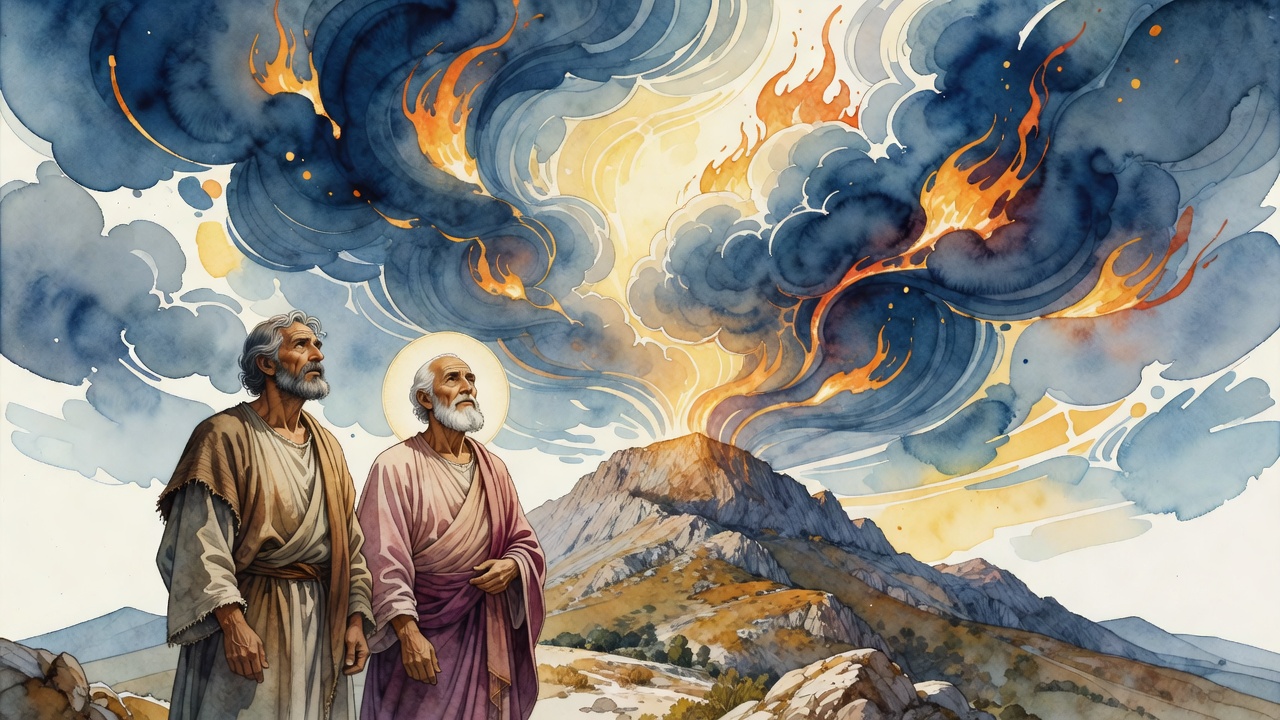
That was creation. The Torah's opening phrase, tohu va-vohu, usually translated as unformed and void or formless and empty, was not absence. The rabbis read it as a flooded basin. The heavens and the earth were fully made from the beginning, sitting at the bottom of a chaos that hid them. What looked like nothing to the eye was everything, obscured.
God's first act on the first day was not to manufacture a cosmos. It was to pull the plug. The waters of chaos, the deep that covered everything, drew back as God separated light from darkness, water from water, sea from dry land. Each act of separation was an act of removal. The world was being revealed, not built.
The rabbis found this reading more accurate than the production model because it matched what Proverbs said about wisdom and what metalworkers knew about silver. Nothing worth having comes clean from the furnace. The form is always hidden inside the raw material, waiting for the dross to be taken away.
The serpent's trial that never happened
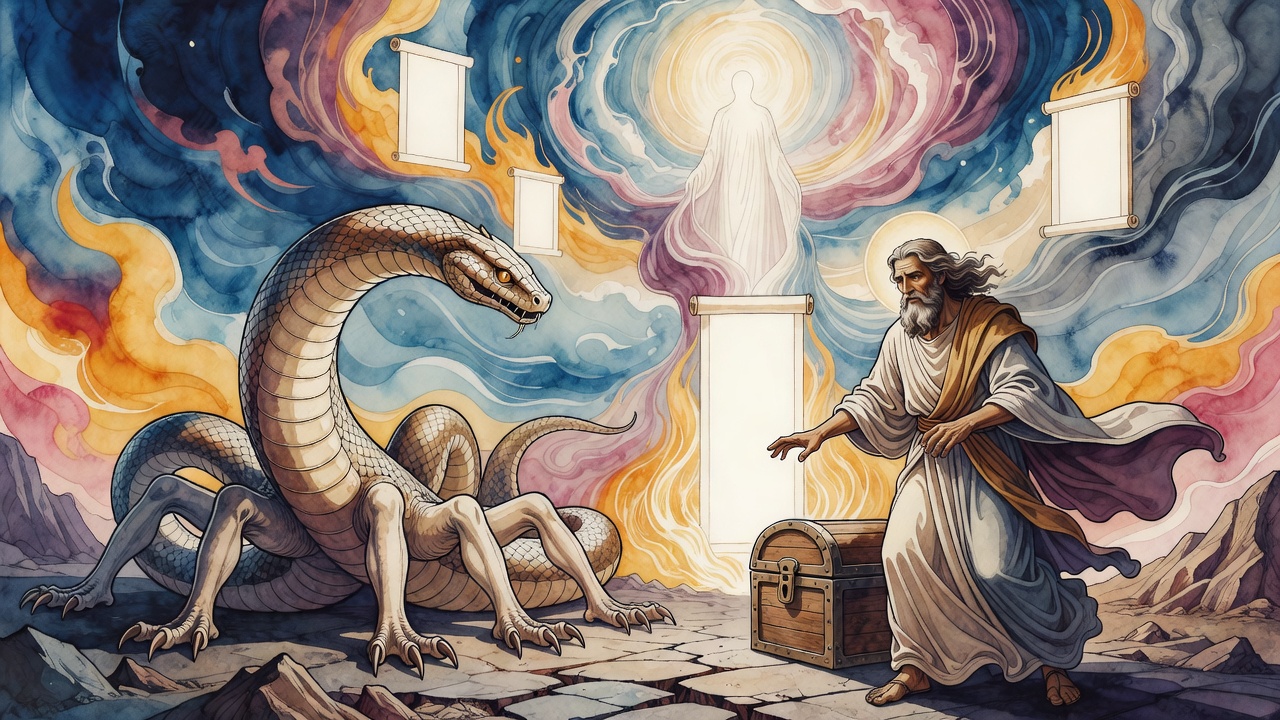
The second passage in the same collection turned from cosmology to justice. After Adam and Eve ate the fruit, God called them each in turn and asked what happened. Adam pointed to Eve. Eve pointed to the serpent. Then God turned to the serpent.
God did not ask the serpent anything. The serpent received no hearing, no question, no opportunity to speak. The curse landed immediately: because you did this, you are cursed above all cattle and all animals of the field. On your belly you shall crawl, and dust you shall eat all the days of your life.
Bereshit Rabbah 20 noticed this and asked why the serpent got no trial. A verse from Proverbs answered: a contrary man incites strife, and a malcontent distances the ruler. The serpent was precisely the contrary man, the one who spread dissension between Adam and Eve, who stood at the root of the separation. A creature whose entire purpose was to create distance between things that should be unified did not get to stand before God and argue its case. The court recognized what the defendant was, and the verdict came without the argument.
Two kinds of removal
The two passages were not obviously related, but the collection placed them together because both turned on the same insight about what completion requires. Creation was completed by removing the chaos that hid the world's form. Justice was completed by removing the hearing that the chaos-maker did not deserve.
In the bathtub image, the bowls were always beautiful. The water was the problem, and the solution was to take the water away. In the garden, Adam and Eve were formed for something better than they chose. The serpent was the problem, and the solution was to identify it as such and act without debate.
← All myths