When Amalek Threw the Covenant Toward Heaven
Amalek cut the sign of the covenant from the dead and flung it at the sky. The wars over that covenant began long before, with Jacob's sons.
Table of Contents
 Click for full size
The Sign He Aimed at the Sky
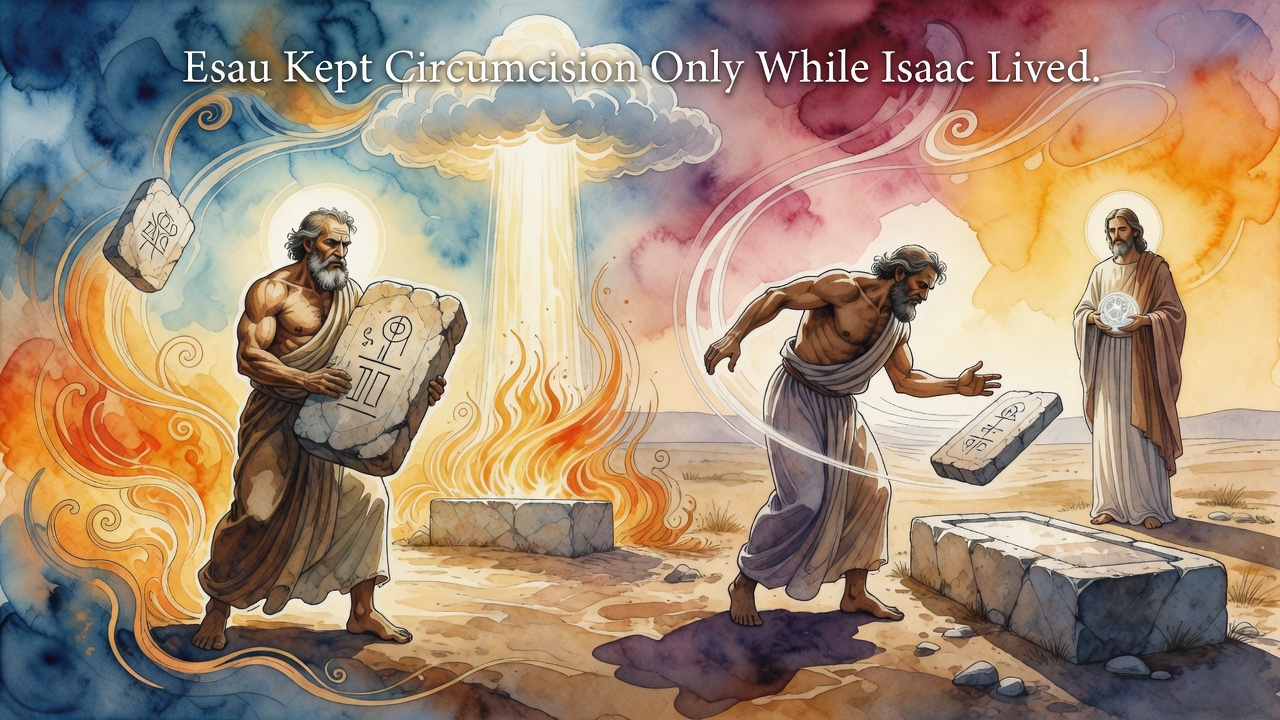
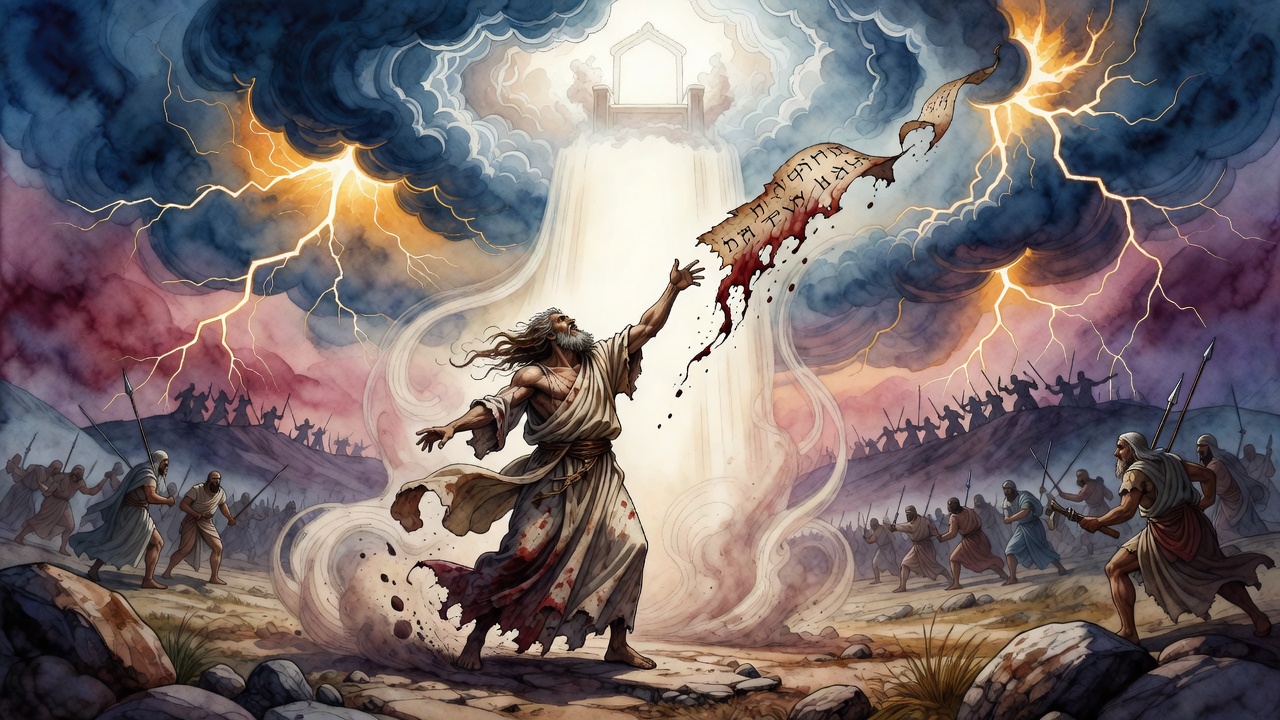
A man bent over a corpse on the desert sand with a knife, cut away the foreskin, stood up, and threw it toward heaven. Here, he called out. Take what You desire.
The man was Amalek. The thing he hurled was the mark of circumcision, the seal Abraham had received from God as the covenant sign between Israel and its Maker. Amalek had been luring men out of the Israelite camp, attacking the stragglers, and then mutilating their bodies with a specific purpose. He was not taking trophies. He was sending a message addressed to heaven.
This is the version the rabbinic tradition preserved in Legends of the Jews, the synthesis Louis Ginzberg assembled between 1909 and 1938 from scattered midrashic sources that had been accumulating for centuries. Where the Torah gives you raiders who attacked the rear of the column, the rabbis give you a theological gesture: a man who understood exactly what the covenant meant and chose to defile it rather than plunder it.
The Cloud That Did Not Cover Everyone
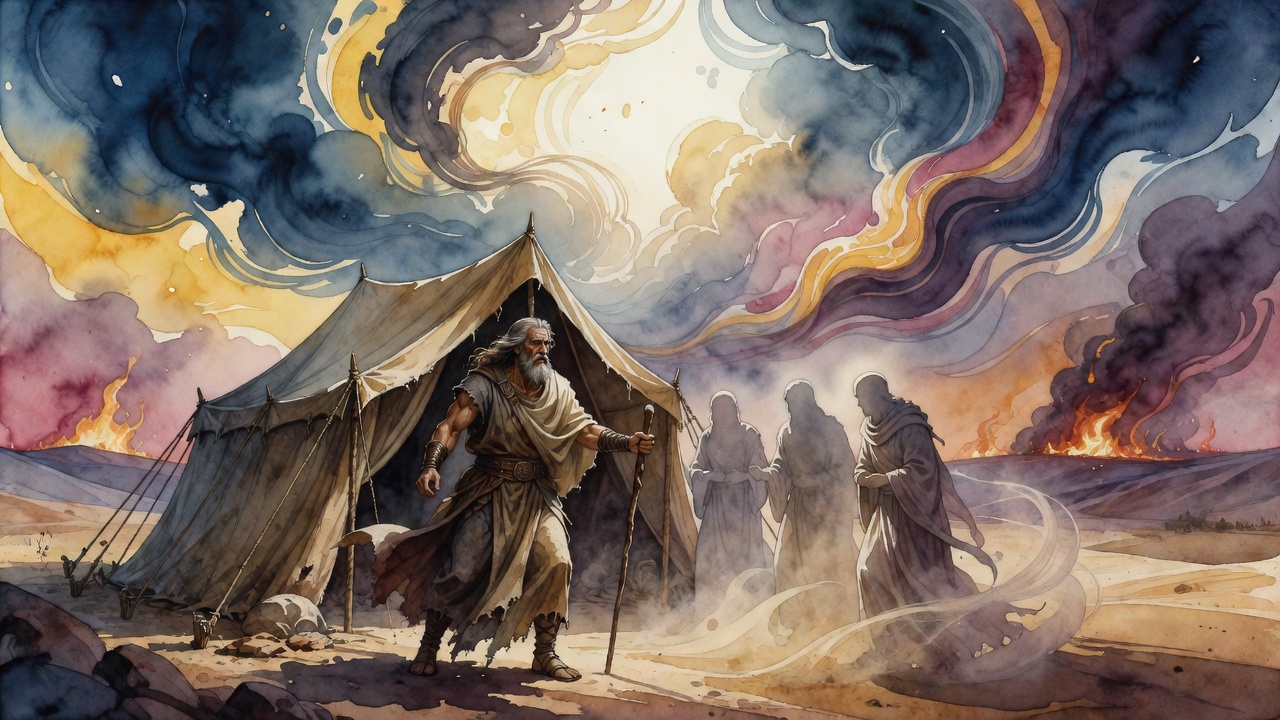
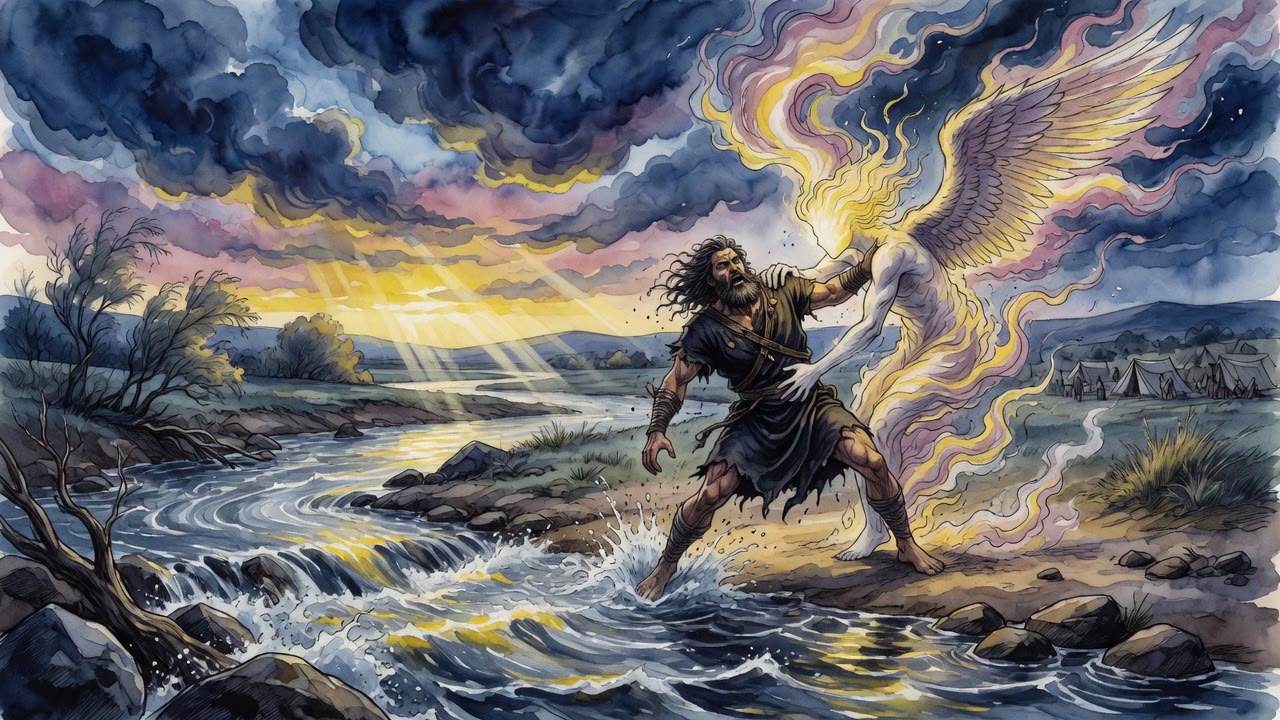
But why were there stragglers to attack? The tradition explains that the divine cloud that traveled with Israel in the wilderness covered and protected the community, but it did not cover everyone. The cloud left exposed those Israelites who had been carrying the contamination of Egyptian idol worship in their hearts. The same men who had not fully broken with the world they left behind found themselves outside the cloud's shelter when Amalek came looking for prey.
This is the detail that makes Amalek's attack something other than military bad luck. He was not randomly ambushing stragglers. He was picking off the people God was already holding at a distance. The attack on the covenant's sign was meant to mock precisely that: the God who had expelled His own people from His protective cloud was, Amalek argued, a God who did not fully commit to His own promises.
The War That Started With Jacob's Sons
The origins of Amalek went back further than the desert. He was a grandson of Esau, born of the union between Esau's son Eliphaz and a concubine. The hatred for Israel ran through that family line the way a fault line runs through bedrock, invisible until it opens under pressure.
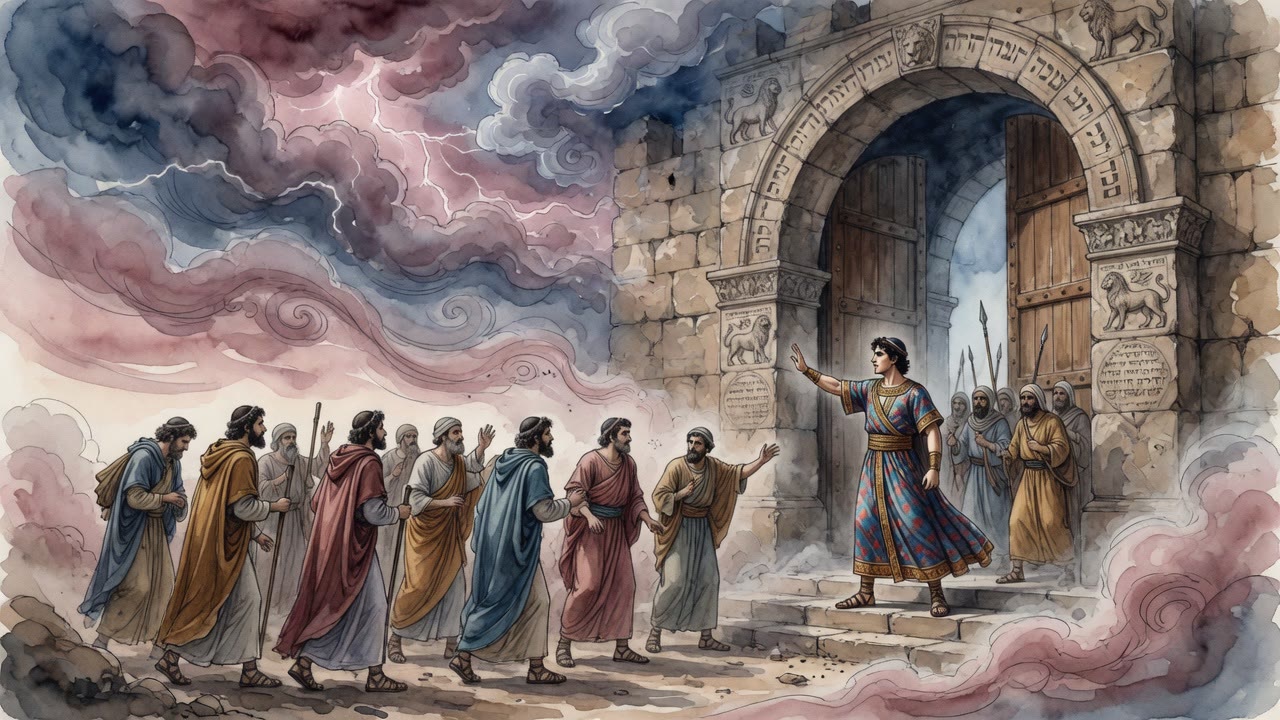
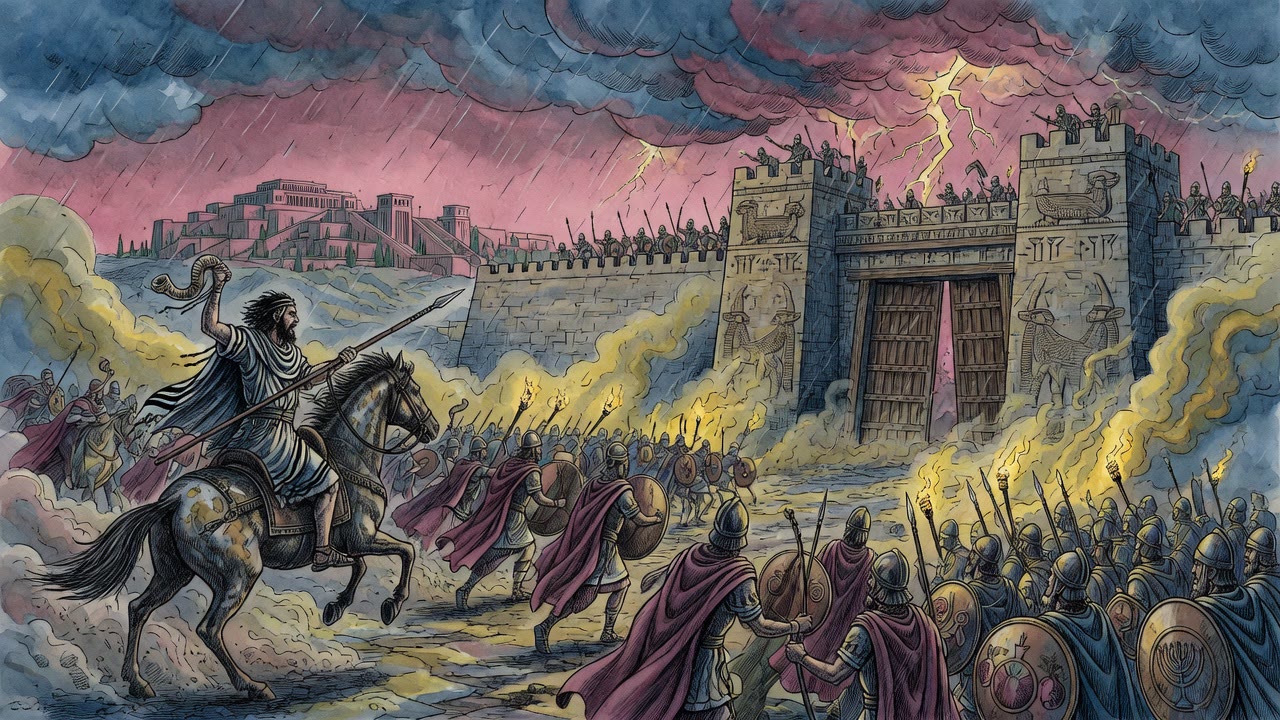
Long before Amalek took his knife to the dead at the edge of the Israelite camp, his grandfather's clan had been at war with the descendants of Jacob. The sons of Jacob, the tradition records, fought battle after battle against various Amorite kings who had allied against them when the news of Shechem reached them. City after city mobilized against the sons of Israel. City after city fell. The war was unrelenting, and it was producing exactly the kind of warriors who, in the next generation, would be disciplined enough to follow a column of freed slaves through the desert and wait for the cloud to leave someone behind.
The Battle Moses Won With His Hands Up
When Amalek attacked in the wilderness near Rephidim, Moses told Joshua to choose men and go fight while he stood on the hilltop with his hands raised. The dynamic was strange and the tradition amplified its strangeness. When Moses' hands were raised, Israel prevailed. When his arms tired and dropped, Amalek prevailed. So Aaron and Hur stood on either side of him and held his arms up, one on each side, for the duration of the battle.
The rabbis asked the obvious question: were Moses' arms actually fighting? Could the position of a man's hands on a hill determine the outcome of a battle in the valley below? Their answer was that the raised hands were not a physical cause but a spiritual direction. When Israel looked up and saw Moses' hands raised, they oriented themselves upward, toward the source that could actually help them. When they looked down, they fought alone.
Amalek was eventually defeated that day. Moses built an altar and gave it a name that embedded the unfinished quality of the war into the language. The name meant: a hand against the throne of God. As long as Amalek existed, there was a hand raised against heaven. The covenant and its enemies were both permanent features of the world's moral landscape, and neither one had agreed to resolve itself neatly.
← All myths