When Exiles Became Orphans and Still Prayed
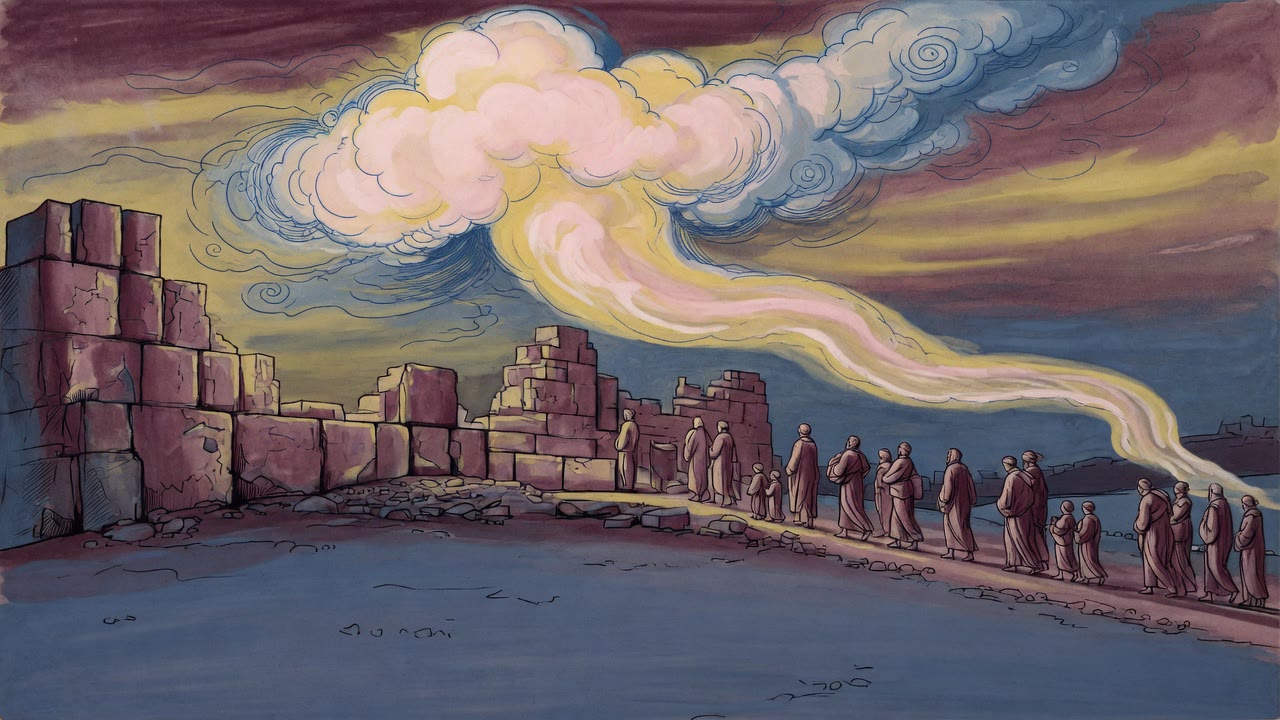
Hadrian ordered his soldiers to behead any Jew they found with hair on his head. Shaving the head was how a man stayed alive.
Table of Contents
 Click for full size
The Land That Belonged to God First
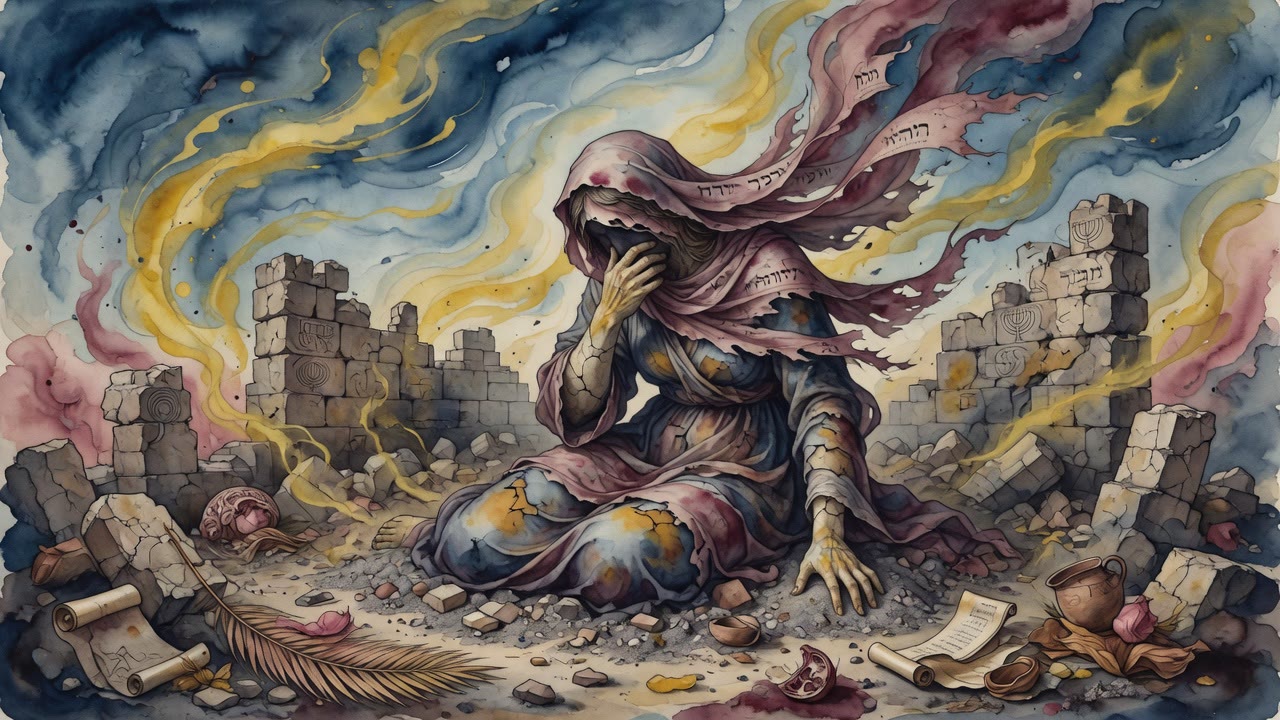
Our inheritance has been turned over to strangers. Jeremiah called the land ours. Isaiah called the Temple the house of our holiness and splendor. Then Asaf came forward and corrected them both.
It is not our inheritance. It is God's inheritance.
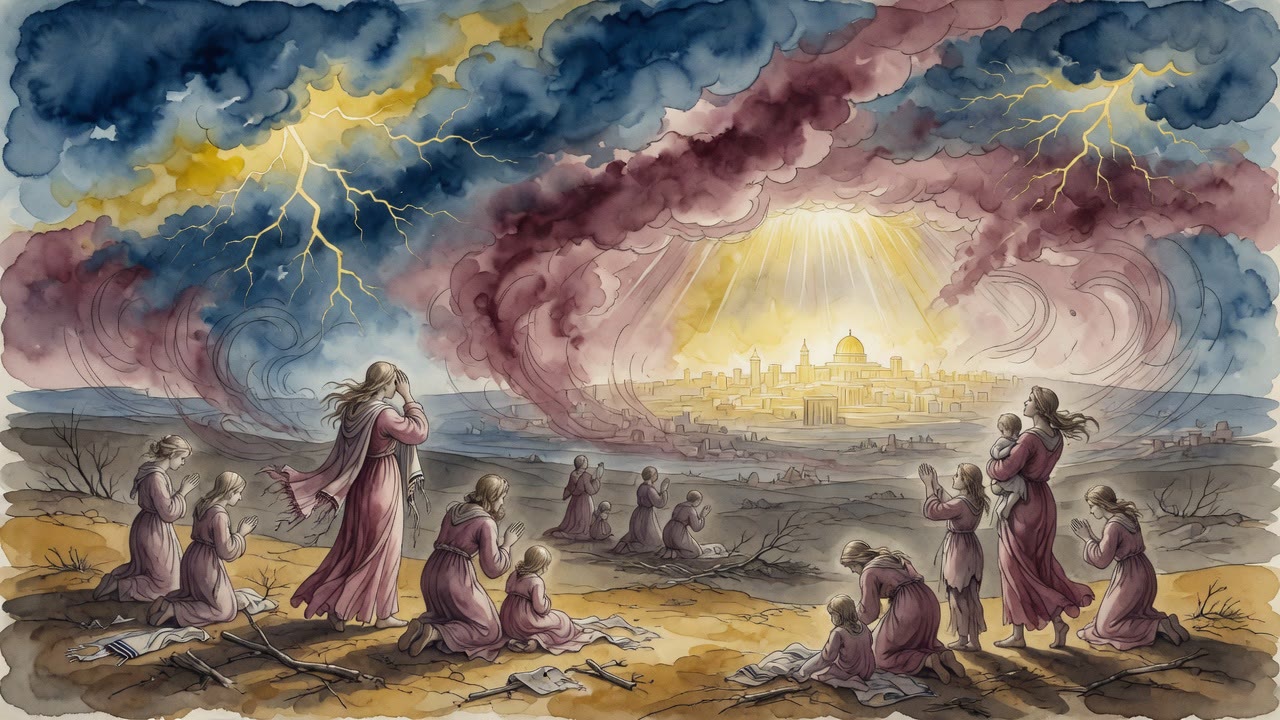
Eikhah Rabbah taught the exiles how to pray by changing that pronoun. If the land was only Israel's, exile was a national loss, a political defeat, a military failure. Nations lost territory all the time. But if the Temple and the land were God's portion, then exile placed a different kind of argument before heaven. The people were not only saying look what happened to us. They were saying look what happened to Yours.
The turning over of the land was like the overturning of Sodom: total, irreversible, the kind of ruin that did not leave a wall standing for the next occupant to use. And it had happened to what belonged to God. The prayer worked because it refused to let the destruction be merely Israel's problem.
The Redeemer Who Would Know Orphanhood
We have become orphans, fatherless; our mothers are like widows. Rabbi Berekhya said in the name of Rabbi Levi that God answered this cry directly. "You wept and called yourselves orphans before Me. As you live, the redeemer I am destined to raise for you in Media will not have a father and a mother."
The complaint became the credential. The very condition Israel mourned was the condition the future redeemer would share. The midrash identified this figure as Mordecai, whose parents had died before the events of the Esther story, leaving him to raise his cousin Esther as his own daughter. The orphanhood that Israel named as its wound in Lamentations was already part of the biography of the man God had marked as the instrument of rescue.
The prayer was not futile. It was already being answered in the details of a story that had not yet fully unfolded.
Hadrian's Order and the Hunt for Hair
To our necks we have been pursued. The midrash connected the verse to a specific humiliation. Hadrian, whose bones the midrash cursed, commanded that if his soldiers found a Jew with hair, they were to remove his head from his body. Defying the order of compulsory shaving meant death. The pursuit to the neck was not metaphorical. It was the decree of a man who wanted to mark conquered bodies with visible signs of subjugation, and who used the threat of decapitation to enforce the marking.
Then Nebuchadnezzar's commander Nevuzaradan received a different instruction. "The God of these people accepts penitents," Nebuchadnezzar said. "His hand is outstretched to accept those who return. When you conquer them, do not kill them all." The contrast was not in Israel's favor in the moment of Nebuchadnezzar's siege, but it placed a limit on the destruction that Hadrian's decree did not acknowledge. Even conquest could recognize that this people's God was not finished with them.
The Oil That Went to Egypt and the Grain That Came Back
We extended a hand to Egypt and Assyria to be sated with bread. The northern kingdom had built an elaborate trade network before their exile. They sent oil south to Egypt and brought back grain. They forwarded the grain to Babylon. The web of trade and obligation was meant to be strategic insurance. If enemies came, Egypt would be indebted. If Babylon threatened, the grain flow would matter.
The strategy failed. The alliances that were supposed to buffer Israel from the great powers did not hold when the great powers decided to move. The midrash did not moralize at length over the failure. It named it: the hand extended to Egypt and Assyria in hunger was the result of having built relationships with those powers that were finally about economic survival rather than loyalty, and economic relationships dissolve when the weaker party has nothing left to offer.
Why Do You Forget Us
Jeremiah used four words for divine abandonment: spurning, rejection, forsaking, forgetting. Rabbi Yehoshua bar Avin traced each one to its answer. Spurning and rejection he addressed himself, finding Moses' voice in Leviticus: "I did not spurn them and I did not reject them." Forsaking and forgetting, the final pair, were answered by Isaiah: "these too may forget, but I will not forget you."
The prayer at the end of Lamentations moved through every available word for abandonment and found for each one a counter-claim already embedded in the tradition. Jeremiah had not written a document of permanent despair. He had written a series of complaints, each of which the tradition had already prepared an answer for, in Moses and in Isaiah and in the shape of a redeemer who would be an orphan so that orphaned Israel could recognize him when he came.
← All myths