When Holofernes Made Worship Serve Empire
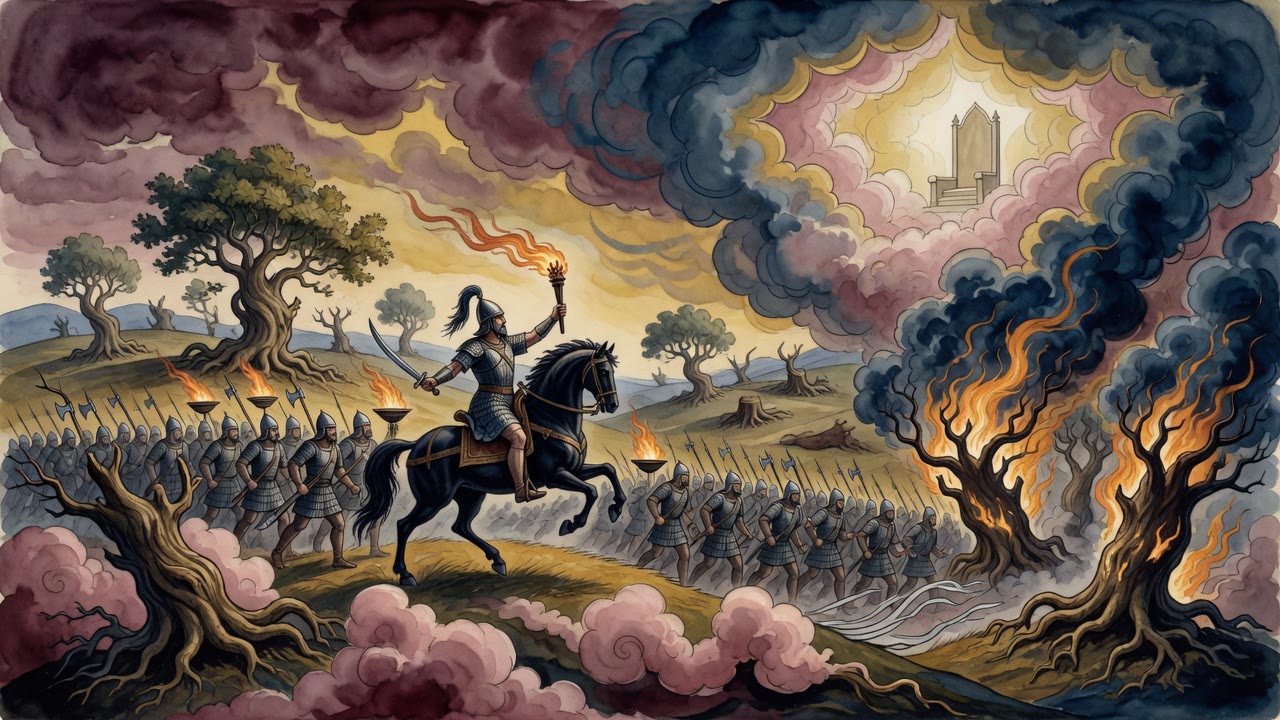
Holofernes marches with fire and orders to cut down sacred groves so every tongue will call Nebuchadnezzar by the name above all names.
Table of Contents
 Click for full size
The Council That Wanted Erasure
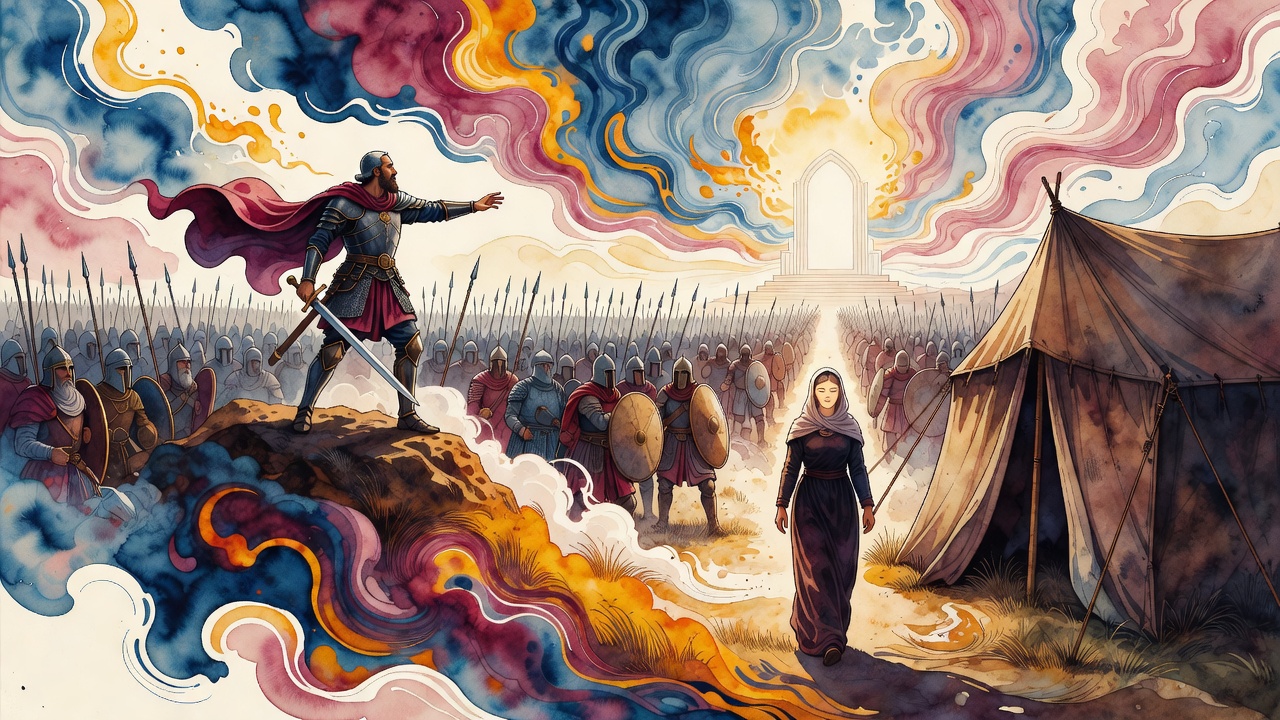
Nebuchadnezzar gathered his officers and servants and told them the wickedness of the nations that had ignored him. The council agreed immediately. Wipe out those who did not listen to the king. The phrasing was precise: not punish, not discipline, not bring to terms. Erase.
Then he summoned Holofernes, his general and viceroy over all his armies. He gave him numbers: 120,000 foot soldiers and 12,000 cavalry. He gave him a command: go before me and burst forth over all the borders of their land. They will be subdued under your hand until the day of my visitation upon them. The word for visitation was also the word for reckoning. The day Nebuchadnezzar came to reckon with them was the day the subduction would be complete.
If any land or city refused, burn them. Kill their animals. Fill their valleys with corpses. The decree claimed not only land but all the rivers, harbors, and sea it contained. Your lands and your seas are mine: that was the message Holofernes was to deliver to every nation between Nineveh and the western coast.
Holofernes Burns the Harvest
The army moved from Nineveh with 120,000 foot soldiers and 12,000 cavalry, plus a mixed force of camp followers so large that it covered the face of the land like locusts. The image was not accidental. Judith was invoking the plague language from Egypt, the memory of what a force that covered the face of the land did to whatever lay beneath it.
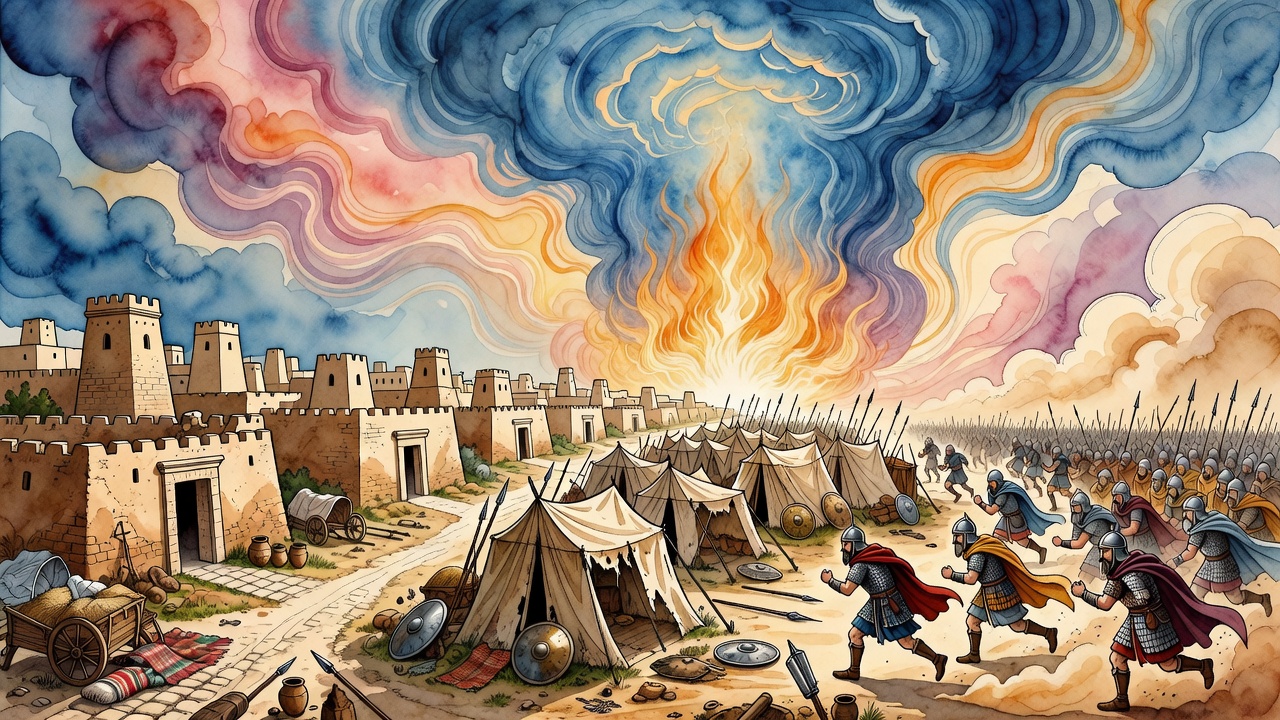
Holofernes surrounded the inhabitants of Midian and set fire to their tents and destroyed their pastures. He moved north to Damascus during harvest season and burned the standing grain of the city. He killed the animals and plundered the flocks. Harvest, the moment when a city's survival for the coming year was at its most concentrated and most visible, was exactly when Holofernes chose to arrive and burn it.
The coastal cities heard what had happened and their dread ran ahead of his army. Ashdod and Ashkelon sent envoys. The peoples of the coast came to sue for peace before his soldiers reached them, bringing garlands and offerings and asking to be spared. Holofernes accepted their submission and moved their young men as garrison troops into his advancing force.
The Sacred Groves Cut Down
There was one more instruction embedded in the campaign that went beyond military conquest. Holofernes destroyed all the borders of the land and cut down the Asherah poles. These were the sacred trees and pillars of the nations he passed through, the markers of their specific divine powers and protections. Their destruction was not incidental to the campaign. It was the point of the campaign expressed in wood and stone.
For so he had set it in his heart: to wipe out all of the gods of the lands, so that all peoples would bow down to Nebuchadnezzar, and every tongue would call his name.
The military conquest was the preparation. The theological conquest was the goal. Holofernes was not only bringing nations into political submission. He was eliminating the competing loyalties that might sustain resistance after the armies withdrew. A people with no gods of their own had no spiritual basis for refusal. A people whose sacred trees had been cut down had no center around which to organize the memory of what they had been before the empire arrived.
The Peoples Who Bowed Before the Fighting Stopped
Fear preceded Holofernes like a herald. By the time the army arrived, the nations had already seen what happened to those who resisted: burned harvests, slaughtered animals, valleys of corpses. The peoples of the Plain of Esdraelon sent messages promising peace. The hill country was seized and the Israelites there took to their fortified cities. The surrounding peoples prepared crowns and festive dances and tambourines to meet the invader as suppliants rather than enemies.
Holofernes received their surrender and selected men from them to garrison his flanks. The empire grew by the hour. Each nation that capitulated extended his reach and his supply lines and his intelligence about the next territory ahead. The campaign was a machine, and its fuel was the fear that the campaign itself generated as it moved.
← All myths