5 min read

The Wife Whose Tongue Closed All the Doors

Ben Sira warns of a tongue like mad dogs and gold kept secret. Kohelet Rabbah tells of a wife who pushes her husband into robbery and a noose.

Curated by Arthur · Told by Maggid ·
Table of Contents
  1. Shake Yourself Free
  2. Gold Coins and a Closed Map
  3. More Bitter Than Death
  4. Last of the Robbers, First of the Hanged
  5. Three Warnings, One House
  6. Envy at the Neighboring Table
The Wife Whose Tongue Closed All the Doors Click for full size

Shake Yourself Free

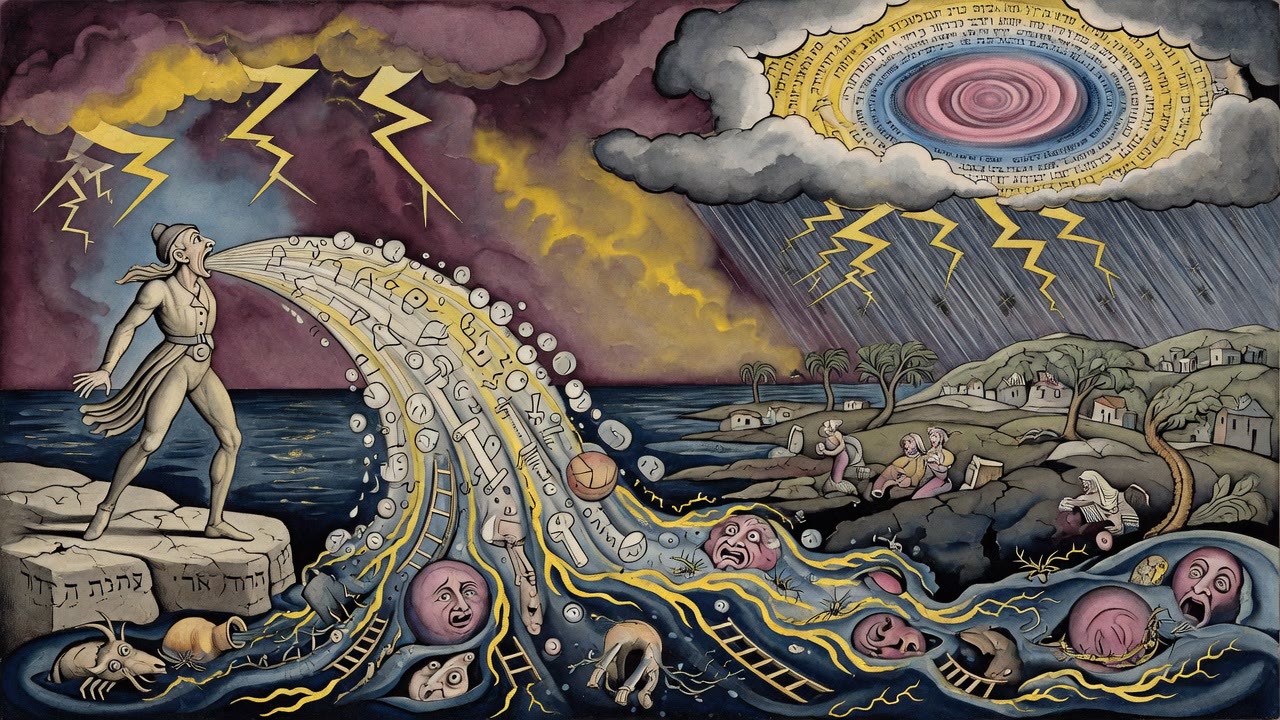
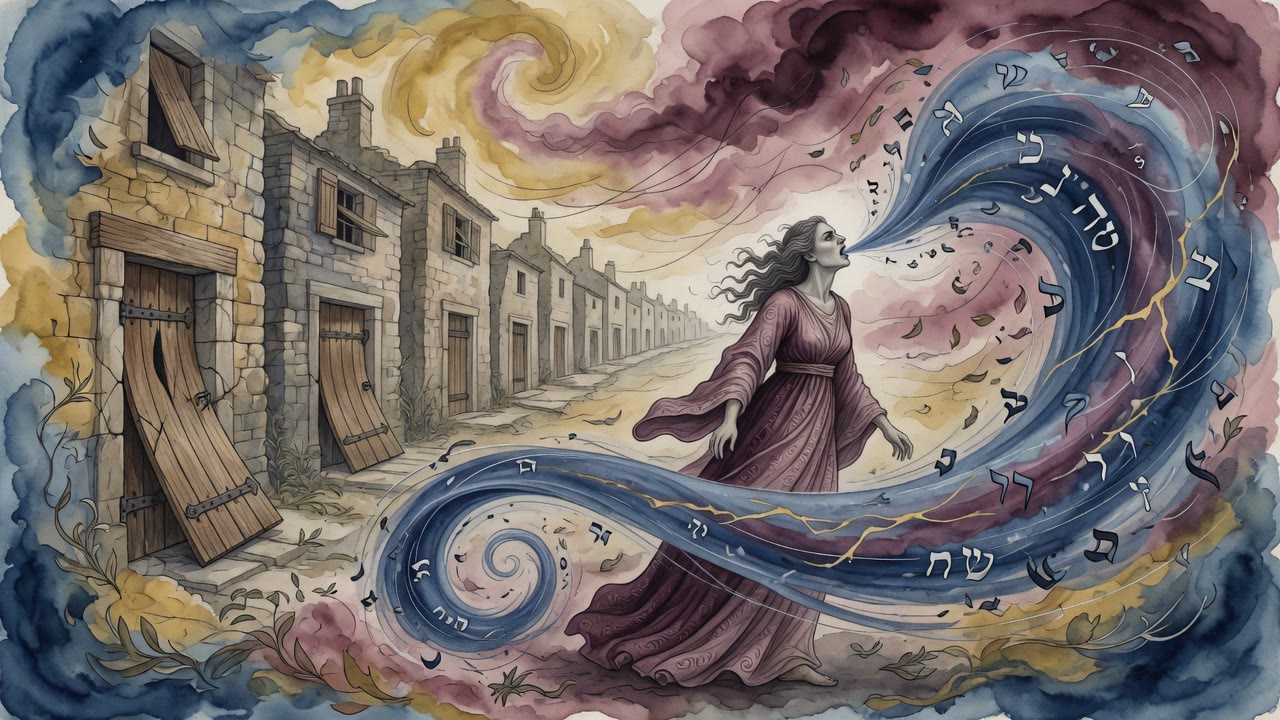
The Alphabet of Ben Sira reaches the letter Nun and does not soften its mouth. "Shake yourself off from a wife who is bad and rules over you with her tongue, because a bad wife is like crazy dogs, and doors close to her while she has much in her mouth to answer."

Not poverty. Not a wandering eye. The nightmare is speech that never empties. Neighbors hear her coming and shut their doors. The street becomes a corridor of wood and silence. She still has more to say. Closed doors do not teach her quiet. They only prove how far the voice has driven the world back.

Proverbs already knew the roof-corner preference: better a corner of a roof than a house shared with a quarrelsome wife (Proverbs 21:9). Ben Sira turns the volume until the comparison barks.

Gold Coins and a Closed Map

At the letter Tav the alphabet ends with a harder proverb still. "Acquire for yourself gold coins, and all money, but do not tell your wife where the money is, even if she is good."

Even if she is good. The line removes the easy excuse. This is not a thief-wife or a wastrel. It is a blanket rule from a prodigy-text that loves to push until the room either laughs or flinches. Money becomes a secret geography. The house has rooms. The coins have a room the tongue is not invited to map.

Power in a marriage can sit in speech or in the knowledge of where the silver sleeps. Ben Sira, for one night of teaching, crowns the second.

More Bitter Than Death

Kohelet says he finds more bitter than death the woman whose heart is snares and nets, her hands shackles. One who is good before God escapes her. A sinner is captured (Ecclesiastes 7:26).

Kohelet Rabbah hears a partner whose demands cannot be met, who drives a man toward a bitter end, not always of the body, often of the soul. Then the midrash tells a story that refuses to stay abstract.

A man had a neighbor who robbed by night and fed his family by day. The first mans wife watched the neighbors table and said, "How unfortunate is that woman who has adhered to you," meaning herself, meaning envy dressed as pity. She pointed to how well the other children ate.

"Do you want me to do what he does?" the husband asked. "What is wrong with that?" she answered.

Last of the Robbers, First of the Hanged

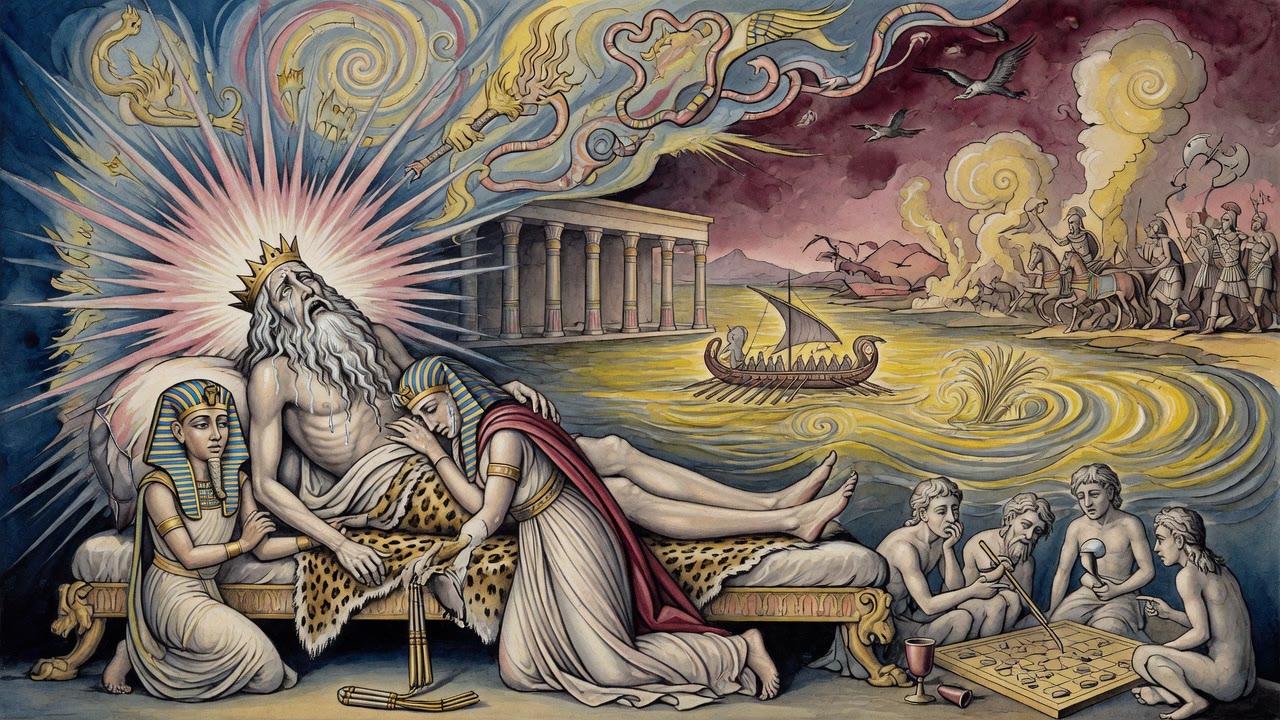
They went together to recruit the neighbor. That night the novice walked roads he did not know. Another robber had set an ambush. The experienced thief escaped. The beginner did not. He was captured and hanged.

The townspeople gave him an epitaph with a knife in it: last of the robbers, first of the hanged. He had entered crime late and left it early, led by a comparison at a kitchen table and a yes that should have been a no.

Snares and nets, the verse said. Here the net was a sentence about the neighbors wine and bread. Shackles were a wives envy braided into a husbands pride. The noose finished the grammar.

Three Warnings, One House

Ben Siras barking tongue closes doors on the street. His hidden gold tries to close a door inside the marriage. Kohelets bitter woman closes the door on a life when envy turns a quiet man into a failed thief.

None of these scenes is a soft proverb for a wedding. They are pressure tests from a tradition that knows speech can rule a house more tightly than law, and that appetite spoken as complaint can hire a man for the night shift of crime.

Somewhere a door still shuts when footsteps approach. Somewhere coins still wait under a stone. Somewhere a wife still measures her table against the next wall. The midrash and the alphabet do not look away. They name the bitterness before the noose does.

Envy at the Neighboring Table

Night after night the robbers family ate well. Bread had weight. Wine had color. Children slept without the thin sound of hunger. The first wife measured her pot against that noise of satisfaction and found her own life wanting. Complaint became counsel. Counsel became a plan. The plan wore her husbands feet toward roads he did not know.
Ben Siras closed doors and hidden coins try to prevent smaller versions of this collapse: speech that empties a street, knowledge of money that becomes leverage for every demand. Kohelet Rabbah shows the end state when prevention fails. A noose does not care that the crime was recent. The town only cares that the body swings, and it invents a cruel proverb to mark the speed of his fall.

One who is good before God escapes the snare, Kohelet said. The midrashs sinner does not. He wanted to quiet a voice at home and bought a silence that lasts forever under dirt. The alphabet and the midrash are not gentle teachers. They are alarms hung over kitchen tables and coin jars.


← All myths

From the tradition

Sources

3 sources

The texts behind this telling. Some cards carry a translation of the source; others are our own retelling of it, and each card says which. Every card links out to the original.

Alphabet of Ben Sira, Letter NunAlphabet of Ben Sira

Retold in our words. Read the original at the link below.Sefaria Community Translation · CC0

The letter Nun delivers a proverb about the domestic nightmare the Alphabet of Ben Sira seems to fear most, not infidelity, not poverty, but a wife who won't stop talking:

"Shake yourself off from a wife who is bad and rules over you with her tongue, because a bad wife is like crazy dogs, and doors close to her while she has much in her mouth to answer."

The imagery is deliberately extreme. Like crazy dogs. It's the kind of comparison that signals The Alphabet, composed between 700 and 1000 CE, is famous for pushing boundaries, and proverbs like this are part of why scholars have long debated whether the text is genuine wisdom literature or an elaborate parody of it.

The phrase "doors close to her" paints a vivid social picture: neighbors shutting their doors when they hear her coming, the community withdrawing from someone whose speech has become unbearable. And yet she still has "much in her mouth to answer", she's never at a loss for words, never deterred by the closed doors. The proverb is describing someone whose verbal dominance has become a kind of isolation, cutting her off from community while she remains oblivious to the damage.

The Talmud (Yevamot 63b) contains its own pointed sayings about difficult spouses, and the book of Proverbs returns to the theme repeatedly, (Proverbs 21:9): "Better to live on the corner of a roof than in a house shared with a quarrelsome wife." Ben Sira isn't inventing the theme. He's turning the volume all the way up.

Full source
Alphabet of Ben Sira, Letter TavAlphabet of Ben Sira

Retold in our words. Read the original at the link below.Sefaria Community Translation · CC0

"Acquire for yourself gold coins, and all money, but do not tell your wife where the money is, even if she is good."

With that, the alphabetical proverbs of the Alphabet of Ben Sira reach their final letter, Tav (ת), and they go out with a bang. The last piece of wisdom this prodigy child offers his teacher is financial secrecy, specifically, from your spouse.

It's an audacious ending. The qualifier "even if she is good" makes it even more provocative, because it removes the only reasonable justification. This isn't about a dishonest wife or a spendthrift. It's a blanket rule. No wife should know where the money is.

The Alphabet of Ben Sira, composed between 700 and 1000 CE, has a complicated relationship with women throughout. Some scholars read its more outrageous claims as genuine folk wisdom from the period. Others see satire, a deliberate exaggeration of patriarchal anxieties meant to make the audience laugh or squirm. This proverb, placed as the grand finale of the entire alphabet section, might be the strongest evidence for the satirical reading. It's too blunt, too extreme, placed too prominently. It almost dares you to take it seriously.

Either way, the proverb captures a real anxiety about money, trust, and power within marriage that resonated across the medieval world, and, honestly, still does today.

Full source
Kohelet Rabbah 7:26Kohelet Rabbah

Retold in our words. Read the original at the link below.The Sefaria Midrash Rabbah, 2022 · CC-BY

The book of Ecclesiastes, or Kohelet in Hebrew, certainly thought so, at least in one rather pointed verse. "I find more bitter than death," it says, "the woman whose heart is snares and nets, her hands, shackles. One who is good before God will escape from her, but a sinner will be captured by her" (Ecclesiastes 7:26). Ouch.

What does it mean? We find some insight in Kohelet Rabbah, a rabbinic commentary on Ecclesiastes. The Rabbis suggest that this "bitter than death" woman is one who demands so much that her partner can’t possibly live up to her expectations. She ultimately causes him to die a "bitter death," not necessarily physically, but perhaps emotionally or spiritually.

To illustrate this, Kohelet Rabbah shares a rather grim tale.

There once was a man with a neighbor who was a robber. This robber would venture out at night, commit his crimes, and then provide for his family during the day. The first man's wife, seeing the relative comfort of the robber's family, lamented her own situation. She said to her husband, "How unfortunate is that woman who has adhered to you!", a thinly veiled complaint about her own life. She pointed out how well the neighbor's children ate and drank, how much better off they seemed.

Now, her husband, perhaps a little too eager to please, asked, "Do you want me to do what he does?" And to his surprise, she responded, "What is wrong with that?"

So, he proposed a plan: they would go together to convince the robber to let him join in the nightly escapades. They went, they convinced him, and the neighbor agreed to take him along.

That very night, they went out. But another robber had already set an ambush. The experienced robber, familiar with the roads and the dangers, managed to escape. But the first-timer, the neighbor who was new to this life of crime, didn't know the paths. He was captured and, tragically, hanged.

And what did the townspeople say? They proclaimed, "Last of the robbers, first of the hanged." A harsh epitaph, to be sure.

Is it simply "crime doesn't pay?" Or is it something deeper about the dangers of unmet expectations and the pressures we put on each other? The story serves as a cautionary tale about the potential consequences of chasing after perceived greener pastures, especially when driven by the nagging desires of another. It highlights the importance of contentment and the dangers of being swayed by superficial appearances.

The Rabbis, through this story, seem to be suggesting that the "bitter than death" woman isn't necessarily malicious, but perhaps shortsighted, focusing on material gains without considering the moral or practical consequences. Her desires, her "snares and nets," ultimately lead to the downfall of her partner.

So, next time you find yourself envying someone else's life, or feeling pressured to provide more, remember the story of the robber's neighbor. Sometimes, the most valuable treasure is contentment, and the most dangerous trap is the relentless pursuit of something more.

Full source