Ahasuerus Ranked Guests on Gold and Silver Couches
A satrap paused at the gold couches and did not ask where wisdom sat. He asked which metal would keep him from shame.
Table of Contents
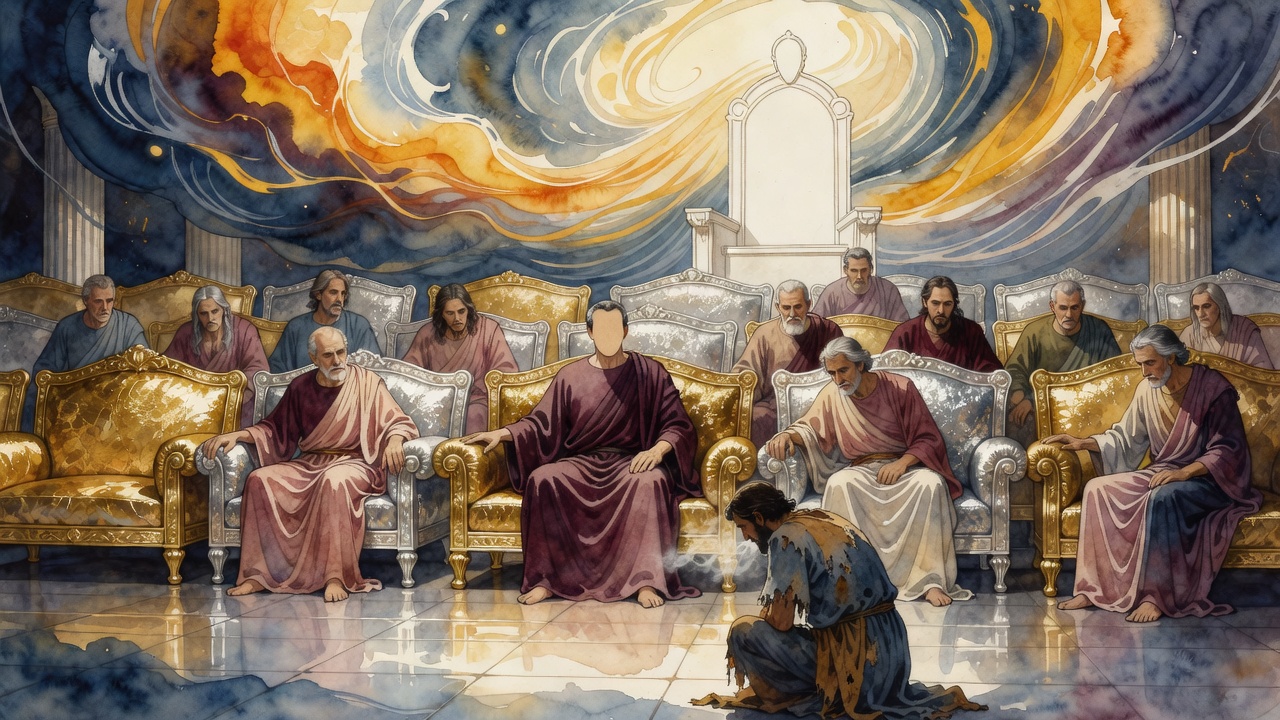
A satrap from the east stopped in the doorway of Shushan and counted metal. Gold couches along one wall. Silver along the other. He had not yet been offered wine. He already knew which shine would keep him from shame.
 Click for full size
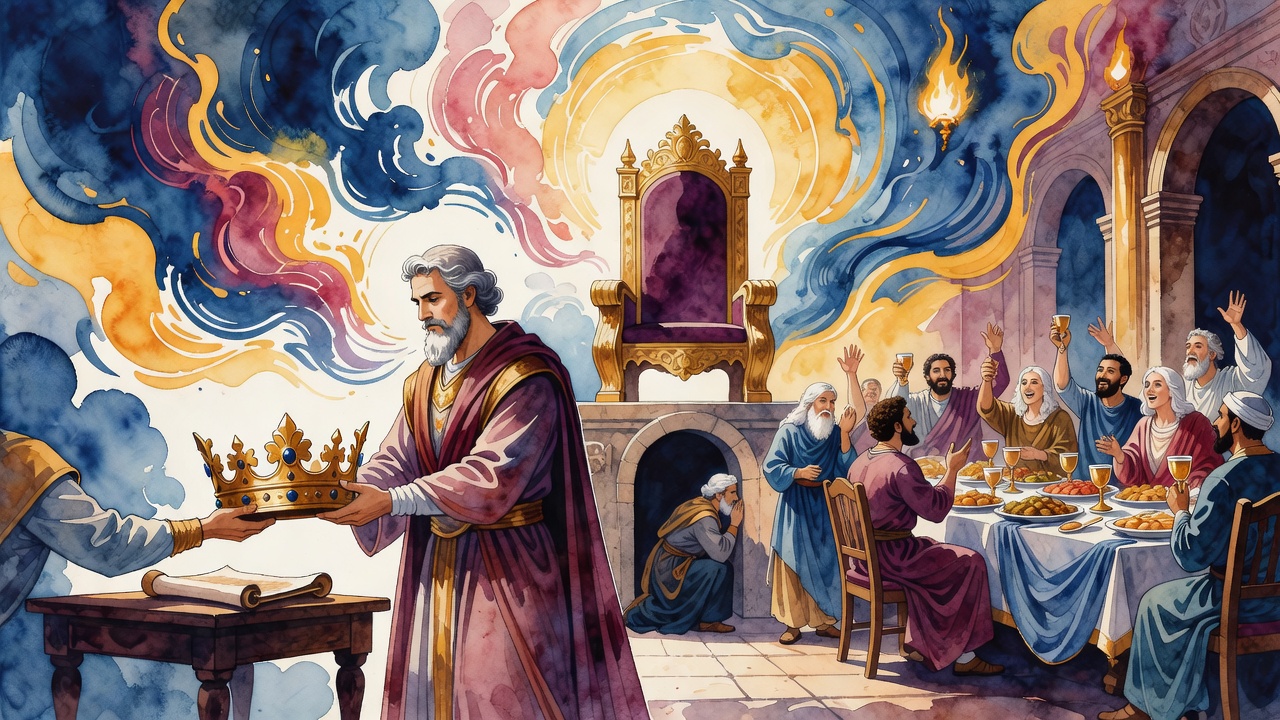
Ahasuerus had opened the banquet as if the empire itself were furniture (Esther 1:6). Marble took the light. Goblets passed hand to hand. Every seat waited as a quiet verdict on the man who would lower himself onto it.
Gold or Silver First
The satrap did not ask where wisdom sat. He asked where the gold couches stood. A lesser clerk from the palace stores felt the same pull and stepped toward silver, already calculating how not to be seen as a man who reached too high.
The feast had not yet begun. Ranking had.
In a later study house Rabbi Yehuda said that was the point. The couches were sorted by station. Silver for the man silver fit. Gold for the man gold fit. Each body placed where the king had already decided it belonged. Ahasuerus did not need a herald for that work. The metal spoke first.
Servants learned the ranking faster than guests. A gold couch meant a different wine, a quicker refill, a deeper bow. A silver couch meant patience. The king called it order.
Jealousy in the Cups
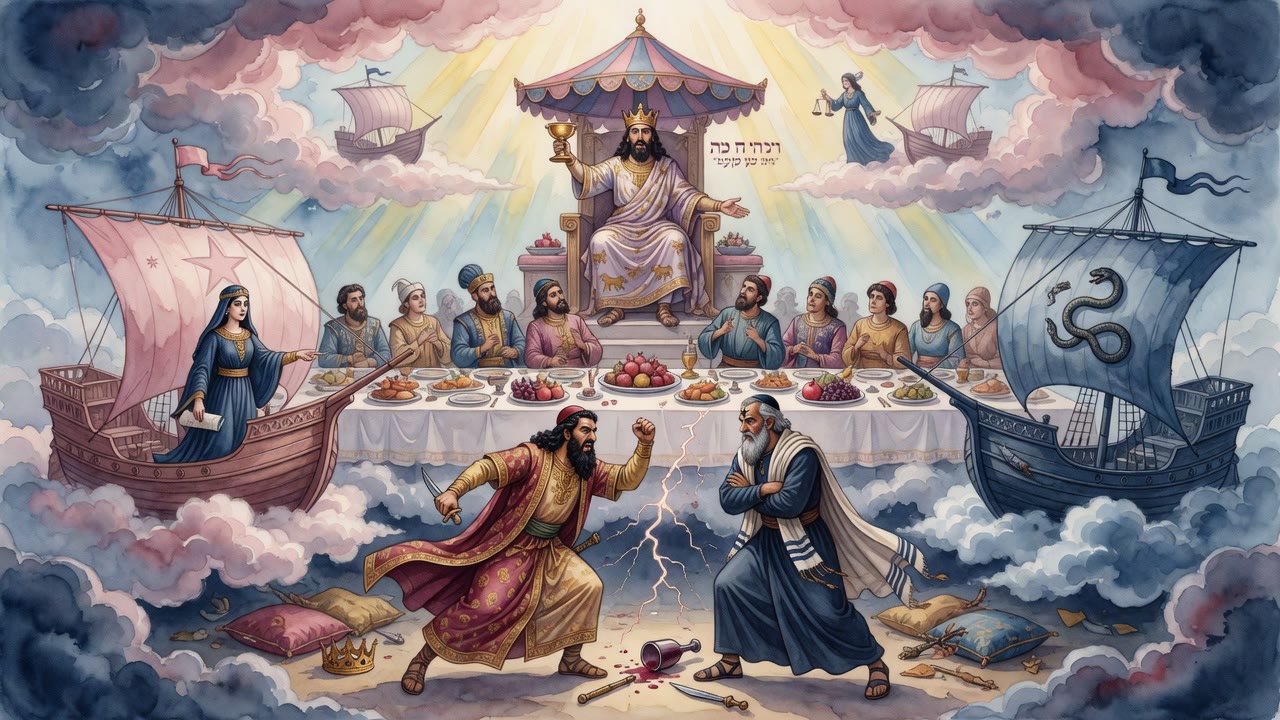
Rabbi Nehemya refused the picture. Open gold beside open silver, he said, and you do not host a banquet. You plant jealousy in the cups. Guests of a wicked king would measure one another by the shine under their elbows, and the whole display of harmony would sour.
Better that every couch be gold, with only clasps and fittings of silver, so no eye could read a demotion in the furniture. A man could recline without checking his neighbor's frame.
Shmuel offered a third image. Each couch had two faces. Gold toward the hall, silver toward the wall. The guest beheld glory. The frame kept a cheaper truth against the stone.
Three arrangements. One fear. Wealth that is shown is wealth that teaches people how to look down.
In Shushan a guest ran a thumb along a clasp and felt the cheaper metal under the gold leaf. He smiled for the hall. His thumb knew the wall-side truth.
A Blessing Aimed at a Throne
In another palace, another king sat under a different blessing. The translators of the seventy had finished their work for the Ptolemy who ruled Egypt, and a spokesman rose with a cup and a prayer. "May Almighty God enrich you, O king, with all the good things which He has made, and may He grant you and your wife and your children and your comrades the continual possession of them as long as you live."
The hall roared. Applause climbed the columns and hung there for a long breath. Then the banquet opened under the hand of Dorotheus, steward of the tables. Royal pages moved like trained shadows. Places of honor filled with men already known at court.
No one asked, in that roar, whether the blessing would ever be spoken over a laborer who carried water past the gate. The words of prosperity landed where prosperity already sat.
The Mouth That Did Not Desert Him
Ben Sira blessed a different kind of guest. Blessed is the person whose mouth has not deserted him, and whose heart's judgment has not struck him down. Not the loudest man. Not the man gold fit. The man who could keep a sentence in his mouth until it was true.
In Shushan the faces brightened for gold couches. In Alexandria they brightened for royal favor. The metal and the applause did the same work. They told the body which voice deserved air.
A poor clerk at the silver end opened his mouth to thank the king and closed it again. The sentence had already gone thin. He would not let it desert him in a room that rewarded shine. He drank. He kept his judgment from striking him down in public.
The Guest Who Stayed Standing
One man at Ahasuerus's threshold refused the sorting. He did not reach for gold. He did not settle for silver as if silver were mercy. He remained on his feet while others reclined, and the servants did not know where to put him because the furniture had no rank for refusal.
The king did not notice. Kings at full tables rarely do. The lesser guests noticed. They felt the irritation of a man who would not take the place the metal assigned. That irritation is the seed Rabbi Nehemya feared. A feast built to impress becomes a machine that ranks souls by shine.
Outside the hall, a porter heard a fragment of a rich toast and shrugged. Inside, the empire pretended the couches made harmony. The night ended. Couches cooled. Clasps dulled. The standing guest walked out with his mouth still his own.
← All myths