A Fool's Many Words Bred Nightmares and Flood
Dreams came thick after too much talk. Anger sat in the chest like a kettle. Two sages argued heaven's seats while the living spilled careless speech.
Table of Contents
 Click for full size
Too Many Words Before Sleep
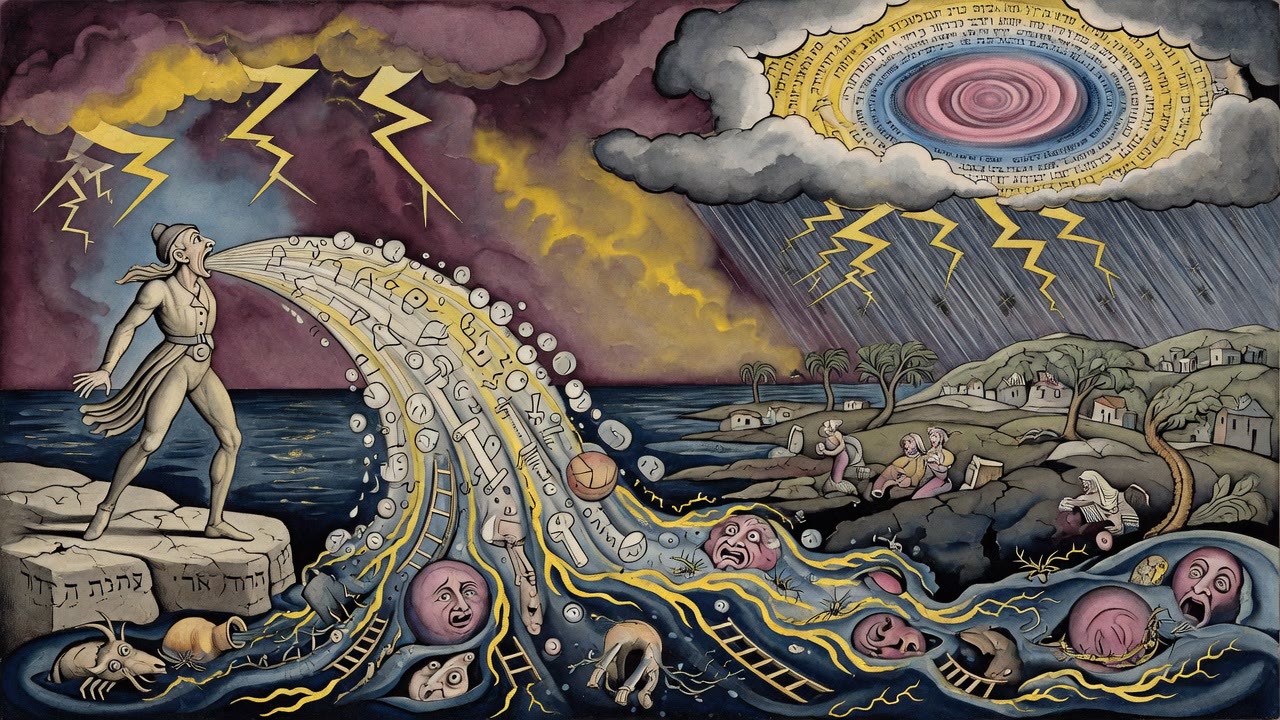
The man talked until the lamp smoked. Bargains, boasts, complaints about heaven, jokes that treated names as toys. When he finally lay down, the dreams arrived like creditors. Ecclesiastes had already written the invoice: a dream comes with much concern, and a fool's voice with many words (Ecclesiastes 5:2). Kohelet Rabbah refuses to leave that line as private insomnia advice. It walks the phrase through history's worst rooms.
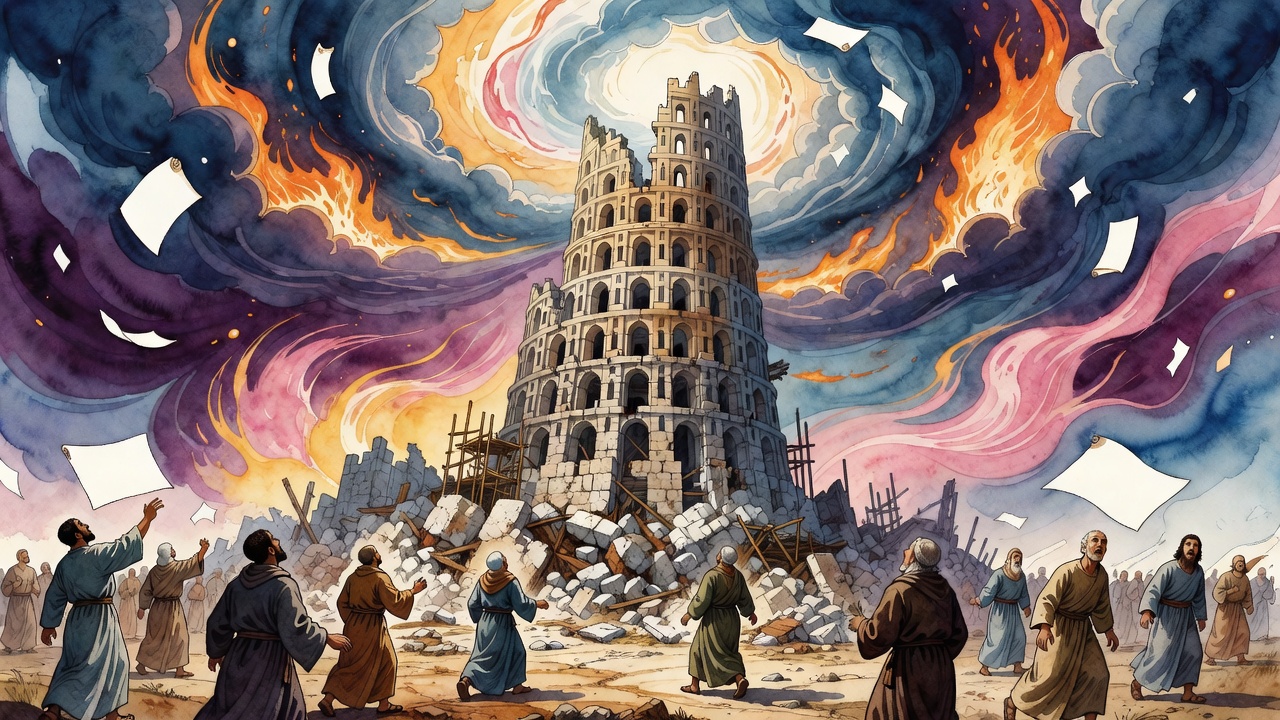
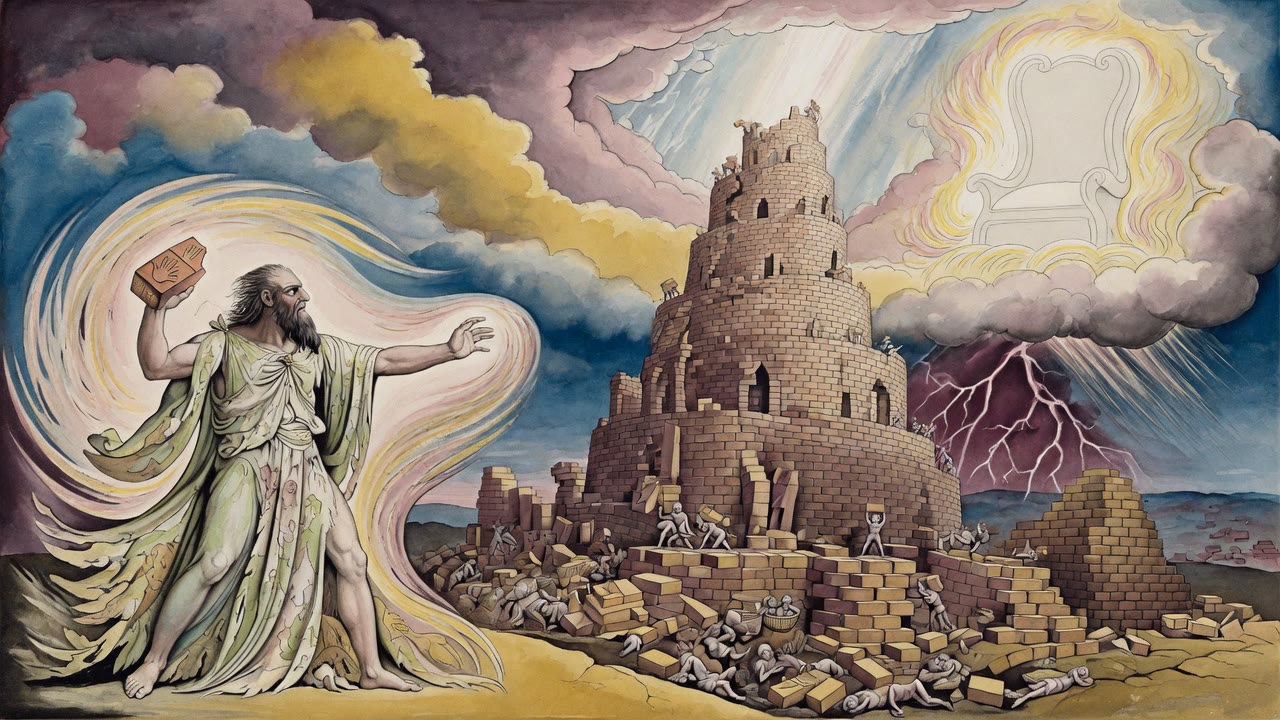
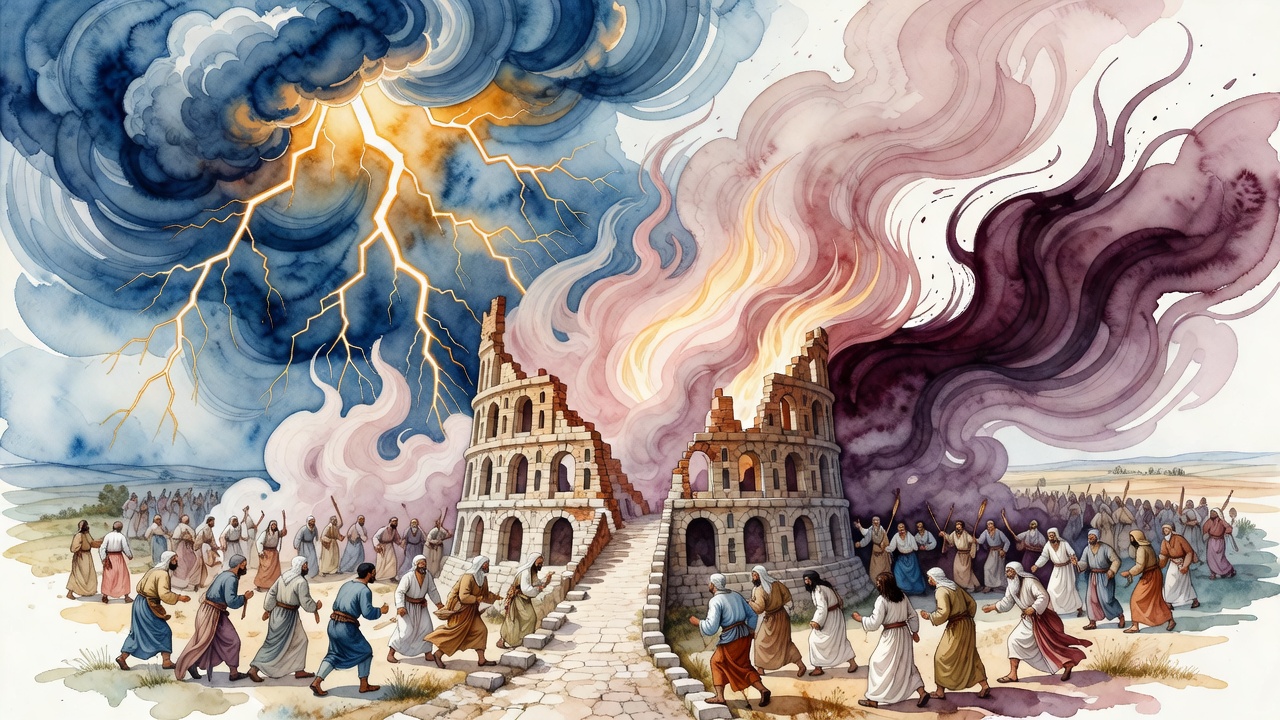
The Flood generation drowned in evil concerns and arrogant speech that asked what the Almighty is that we should serve Him (Job 21:15). Babel's builders did not only stack bricks; they said, let us make a name for ourselves (Genesis 11:4). Sodom wrote inhospitality into policy and speech until the passerby was to be forgotten. Words were not steam that vanished. Words were tools that shaped the disaster that answered them.
The man woke tasting salt and could not remember which century his nightmare had borrowed.
Anger Seated in the Chest
Do not be hasty in your spirit to become angry, for anger rests in the bosom of fools (Ecclesiastes 7:9). Rabbi Yudan likens the inner life to a spinner at a spindle. Rush the draw and the thread weakens. Care and patience make a cord that holds. Haste makes a line that snaps when weight arrives.
Other images land harder. A kettle boils over onto the one who set it. A person spits upward and meets his own spit on the way down. Anger is not a free weapon aimed only outward. It is a heat that learns the thrower's address. The fool keeps a seat for it in the bosom, a permanent guest who pays rent in ruined days.
The man who had talked too much felt that guest shift during breakfast and nearly shattered a cup for no reason worth a court.
A Dream of Heaven's Seating Chart
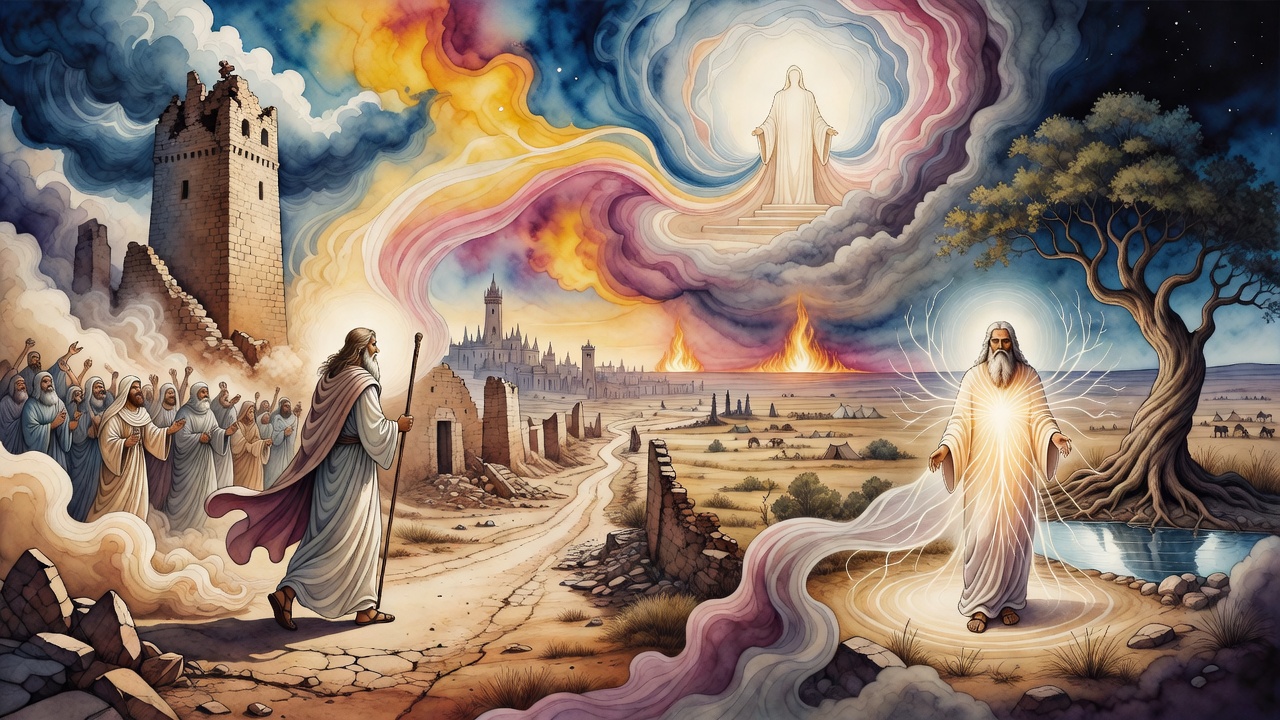
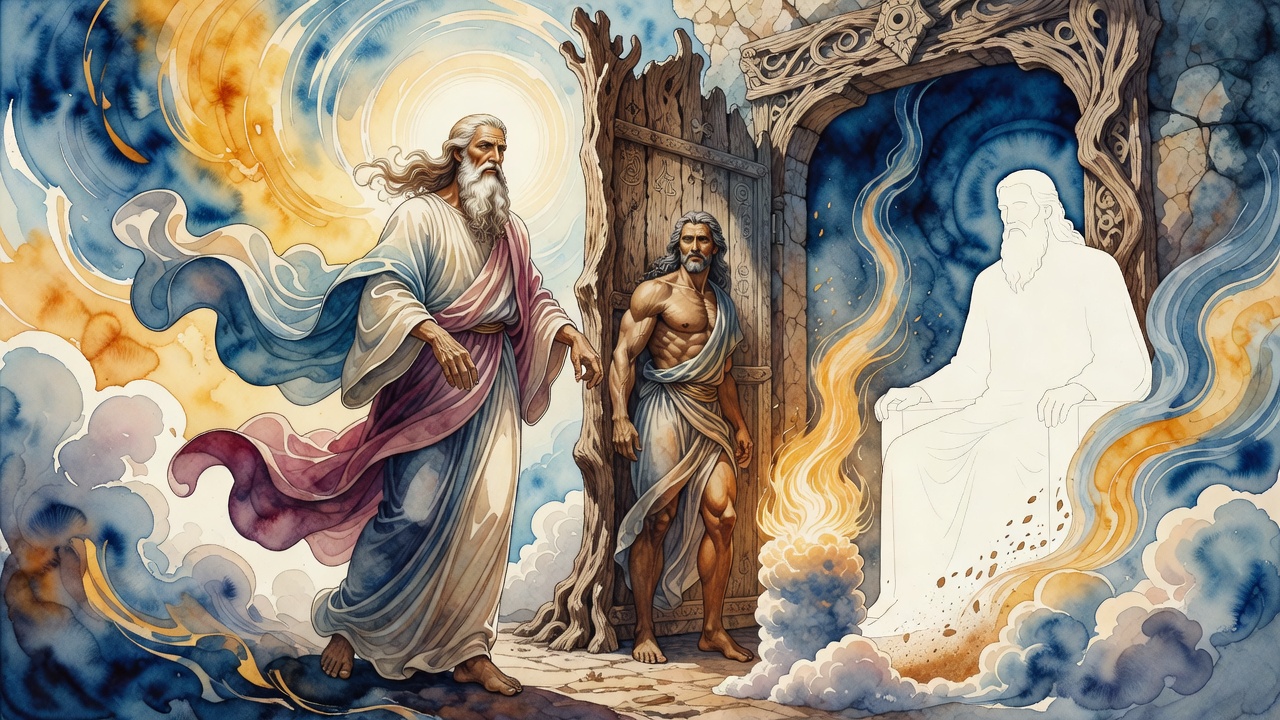
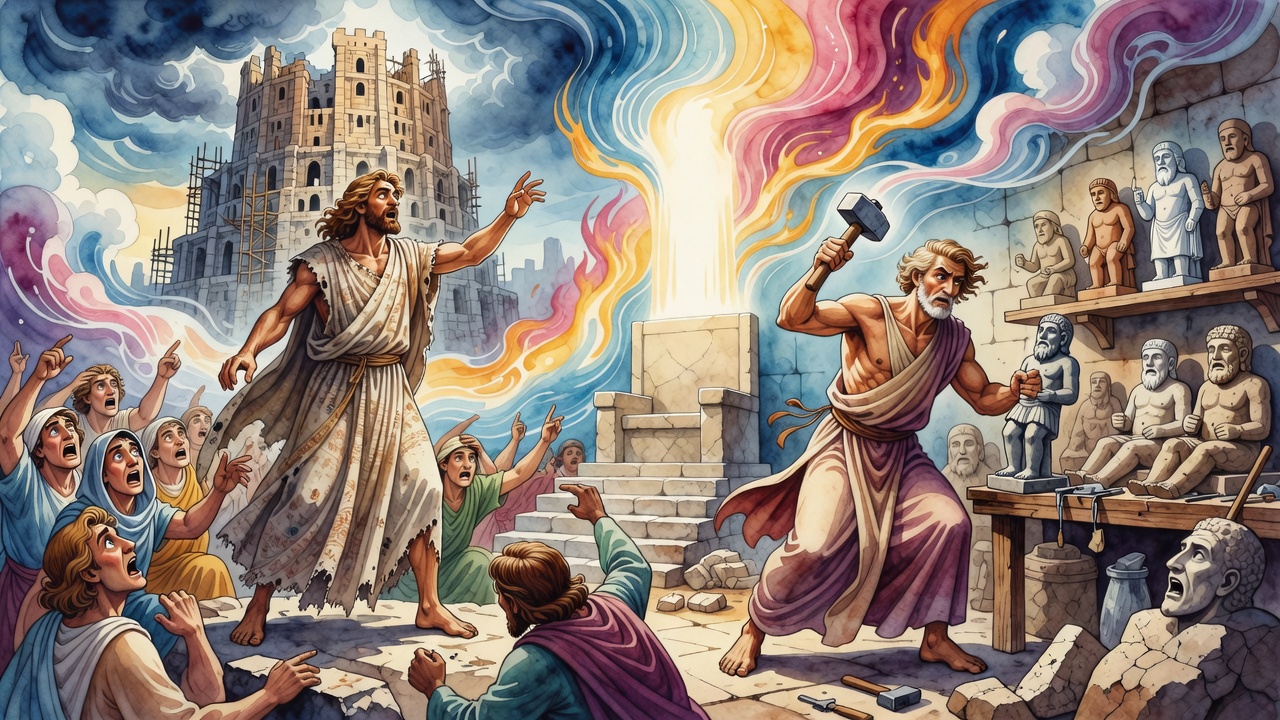
Elsewhere, in a cleaner dream, Rabbi Ze'eira sought Rabbi Yosei ben Rabbi Hanina and asked the question the living rarely phrase aloud. Alongside whom do you sit in heaven? Beside Rabbi Yochanan, came the answer, and the chain of names continued, Yonatan ben Amram, Hiyya the Great, until a snag. Should Yochanan not sit with Hiyya? The reply turned on rank, nickname, path: Nappaha, son of a blacksmith, a different road to glory than Hiyya's. Heaven's seating is not a town gossiper's ladder. It is a map of labors.
The same midrash remembers Rabbi Nahum, holy of holies, who would not look at statues in life. When he died, people covered the faces of images along the route so that even in death his eyes would meet no idol's shape. Rabbi Ashyan said the difference between the righteous after death and the living is thin as a hair. Sight, honor, and careful distance continue past the last breath.
The talkative man heard that tale and felt his own mouth as a liability in any world where words still weigh. If the righteous still care what their eyes meet after death, the living have no excuse for treating speech as free trash. Heaven's seating chart and a covered statue along a funeral route are two forms of the same seriousness. Honor continues. Carelessness also continues, unless someone interrupts it while blood still moves.
History as a Mirror for a Mouth
Flood, Babel, Sodom: three disasters with three dialects of foolish speech. One questions service. One brands a name into the sky. One legislates cruelty against the stranger. Nightmares, in the midrash's economy, are early-collection notices on the same debt. Anger is the fool's house guest accelerating the bill. Heaven's seating chart is the long audit after the mouth goes quiet.
None of this requires a demon under the bed. It requires a throat. The man practiced silence for one full day and found the dreams thinner by evening, not gone, thinner, like a market after the loudest sellers leave. On the second day he spoke only what a court could record without shame. On the third he caught anger rising toward a servant and sent it outside without a chair. The spindle in his chest drew a cleaner thread. Nightmares still visited, but they arrived as short errands rather than occupations.
Spindle, Kettle, and the Next Word
He returned to work with Rabbi Yudan's spinner in mind. Draw the thread slow. Let anger stand outside without a cushion in the chest. Let speech earn its place the way a name earns a seat beside Hiyya or Yochanan, by labor rather than volume. The Flood is not only ancient water. It is what happens when many words and many concerns convince a generation that heaven can be mocked without invoice.
That night he slept. A single short dream came: a covered statue, a quiet hall, a seat he could not yet read. He woke without a boast ready on the tongue. For one morning, that was tikkun (a repair) enough.
← All myths