Parshat Noach5 min read

God Scattered Tower Builders Instead of Killing Them

One language, one rebellion, one tower. Heaven refused another flood of corpses and chose dispersion so the world would never forget the generation of water.

Curated by Arthur · Told by Maggid ·
Table of Contents
  1. One Mouth Across the Earth
  2. Do Not Slay Them
  3. Languages Like Shattered Glass
  4. After the Ark, Another Kind of Exit
  5. Why the Flood Must Be Remembered Separately
God Scattered Tower Builders Instead of Killing Them Click for full size

One Mouth Across the Earth

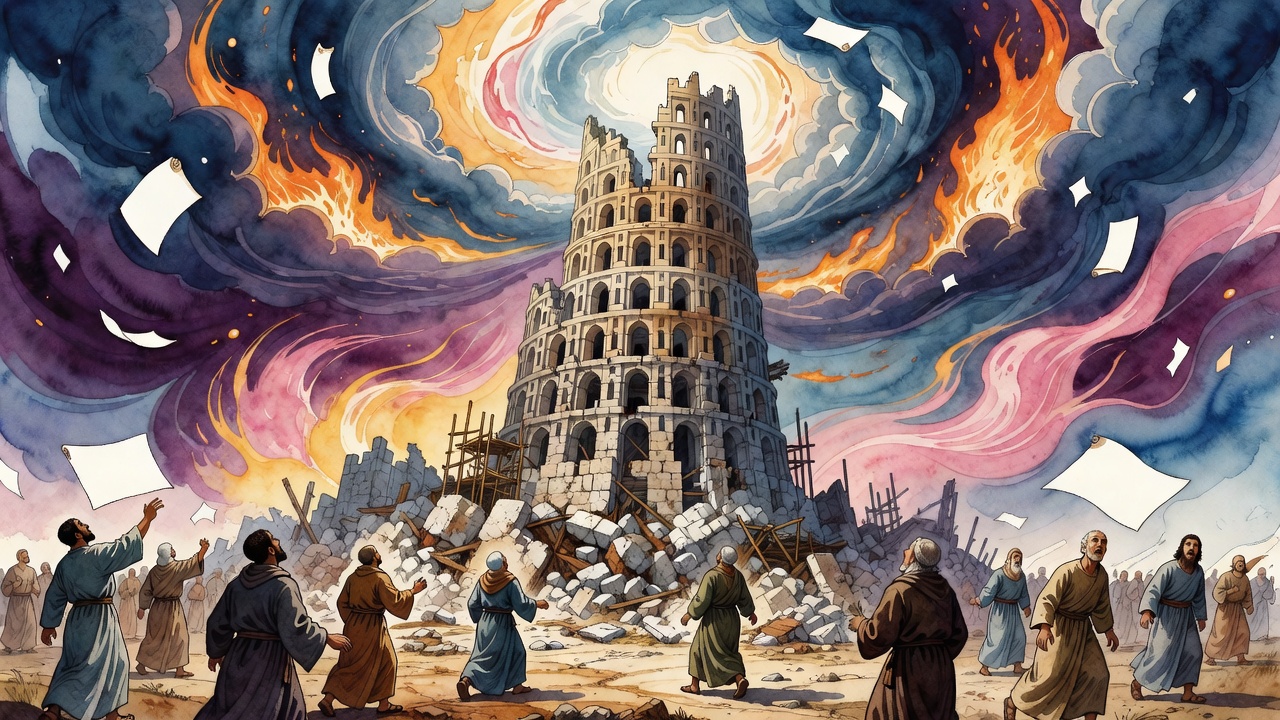
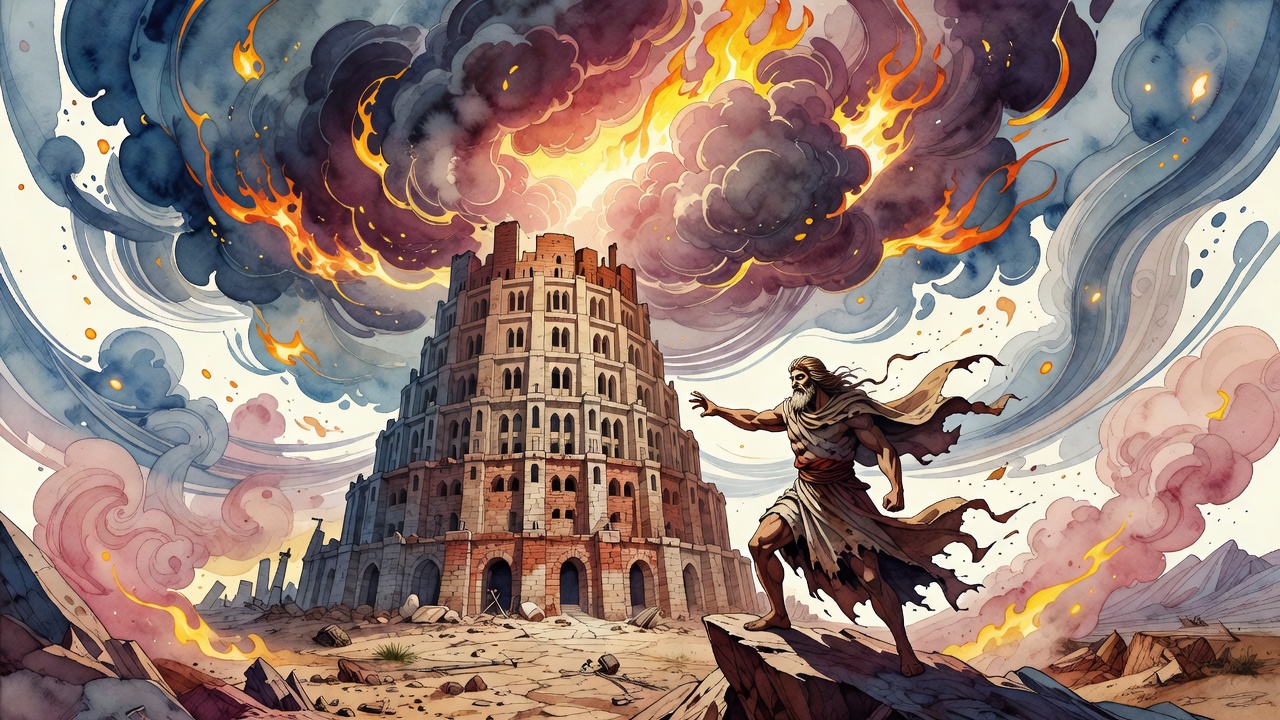
The whole earth was of one language and of one set of purposes that looked, from a distance, like peace. Closer in, the words turned upward as weapons. "Come, we will build a city and a tower with its top in the heavens," they said, and the project was not architecture for shelter. It was a siege against the throne, a plan to make a name that would not need the Name. Bricks rose in even courses. Tar held them. Labor was organized the way the generation of the flood had once organized violence, efficiently, without pity for dissent.

God looked down on a single speech used for a single revolt. Unity without humility is only a larger fist. The tower's shadow lengthened across plains that still remembered water lines from an older judgment.

Do Not Slay Them

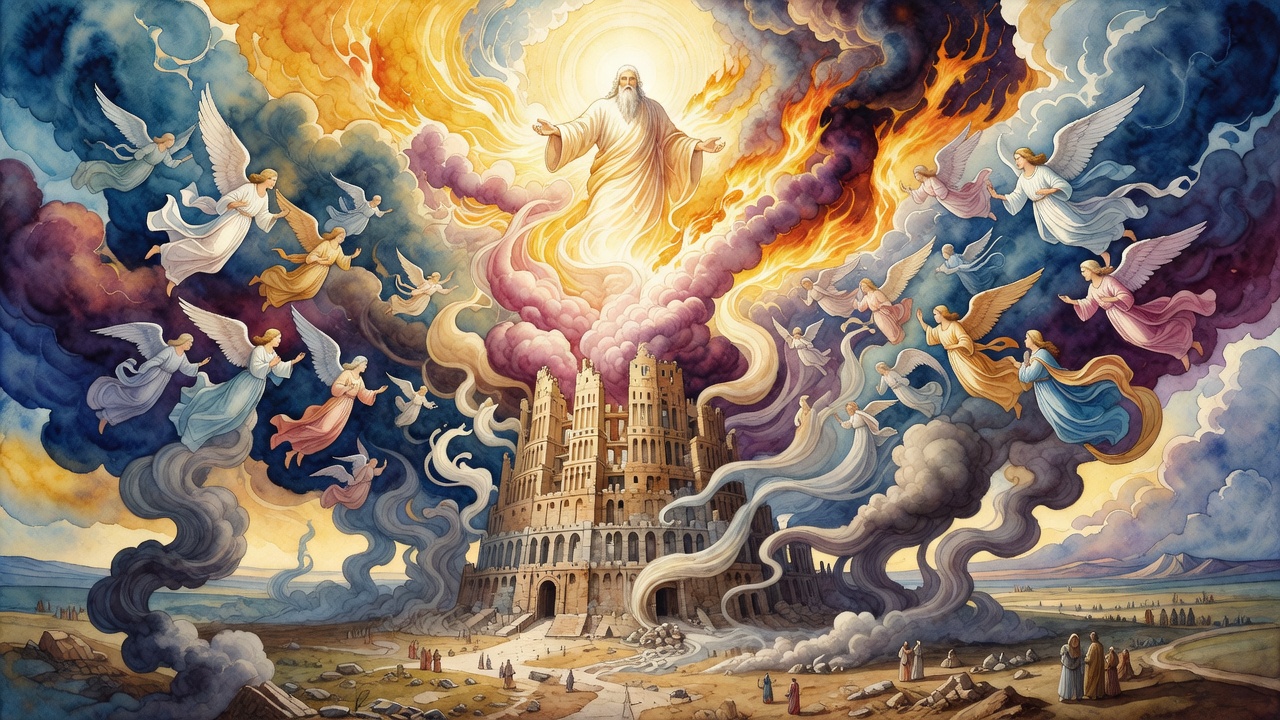
The midrash hears David's plea about other rebels and turns it toward this generation with a historian's fear of blurred catastrophe. "Slay them not, lest my people forget." If the tower builders died as the flood generation died, the world would collapse two destructions into one blur of corpses and divine anger. Memory needs contrast. Kill them, and later Israel might forget that heaven already once washed the earth clean. Scatter them, and the teaching walks on two legs in every land, speaking different tongues about the same sky.

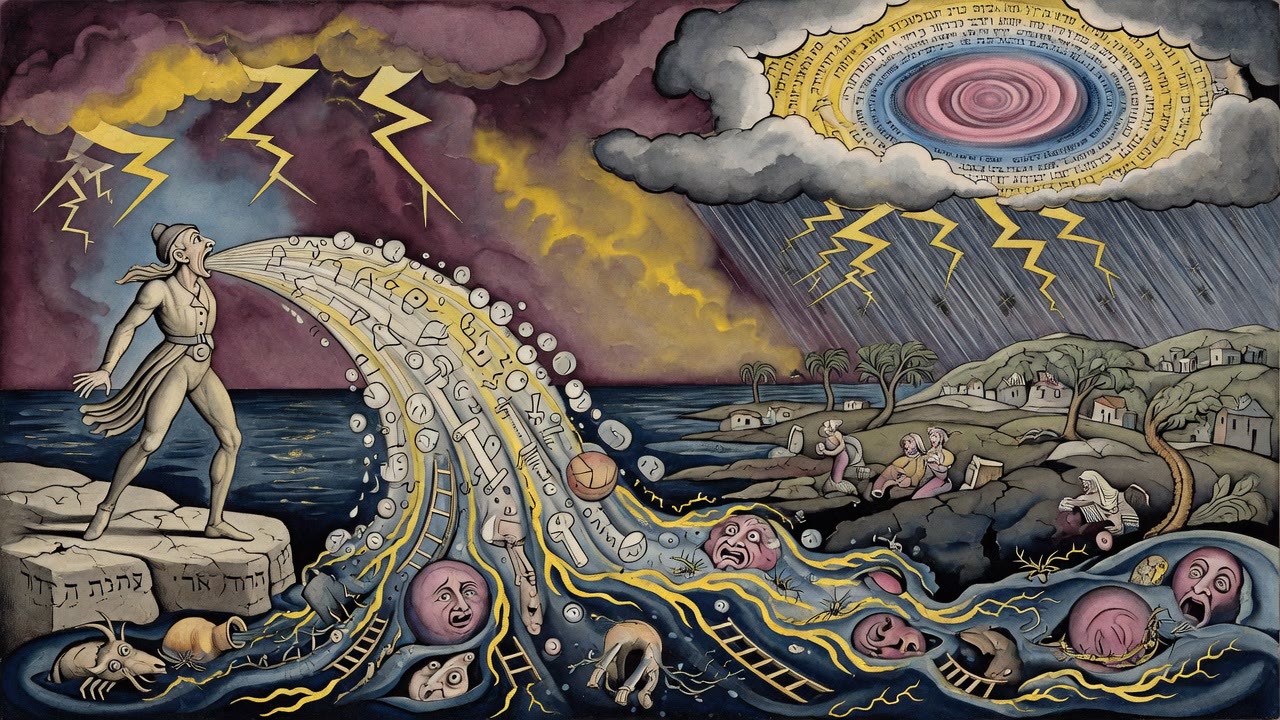
"Make them wander to and fro by Thy power. Bring them down from their height." The sin was of the mouth and the lips. They rebelled with speech; they would be punished in speech. Doeg and Ahithophel, in David's mouth, sinned with words that ruined priests and thrones. The tower generation sinned with words that tried to storm heaven. Same organ. Different scale. Same need for a punishment that does not erase the evidence.

Languages Like Shattered Glass

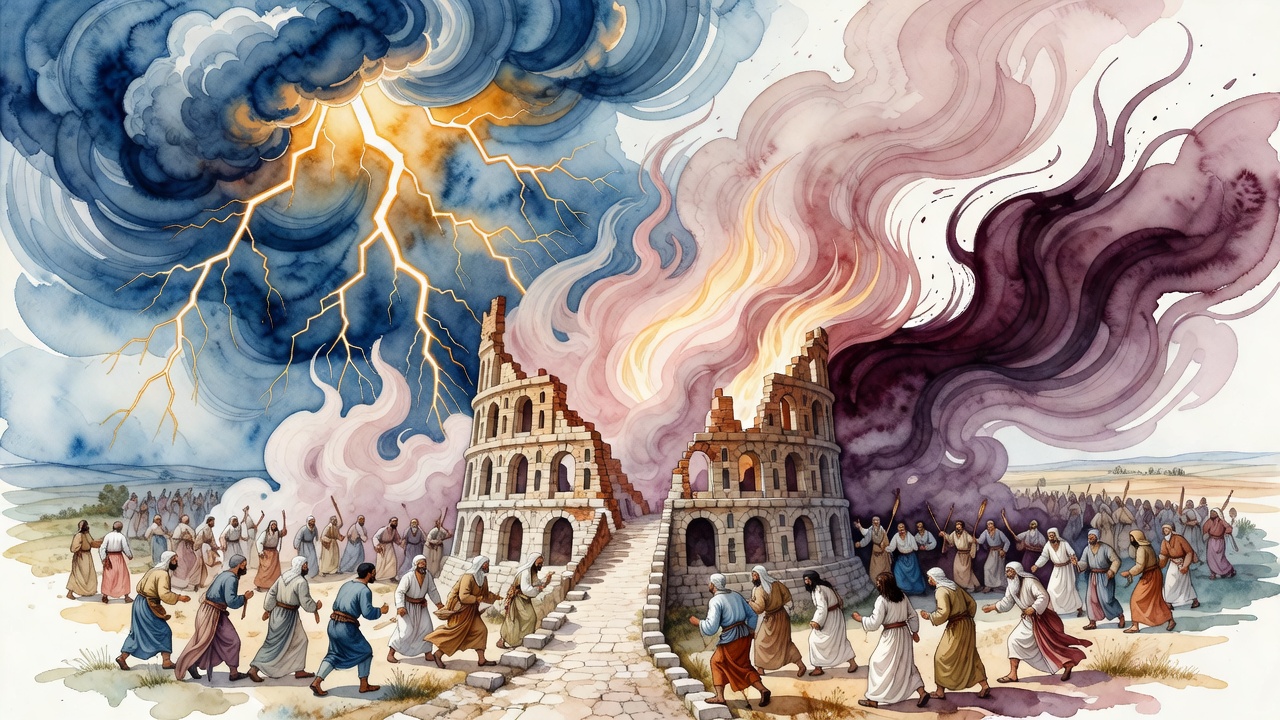
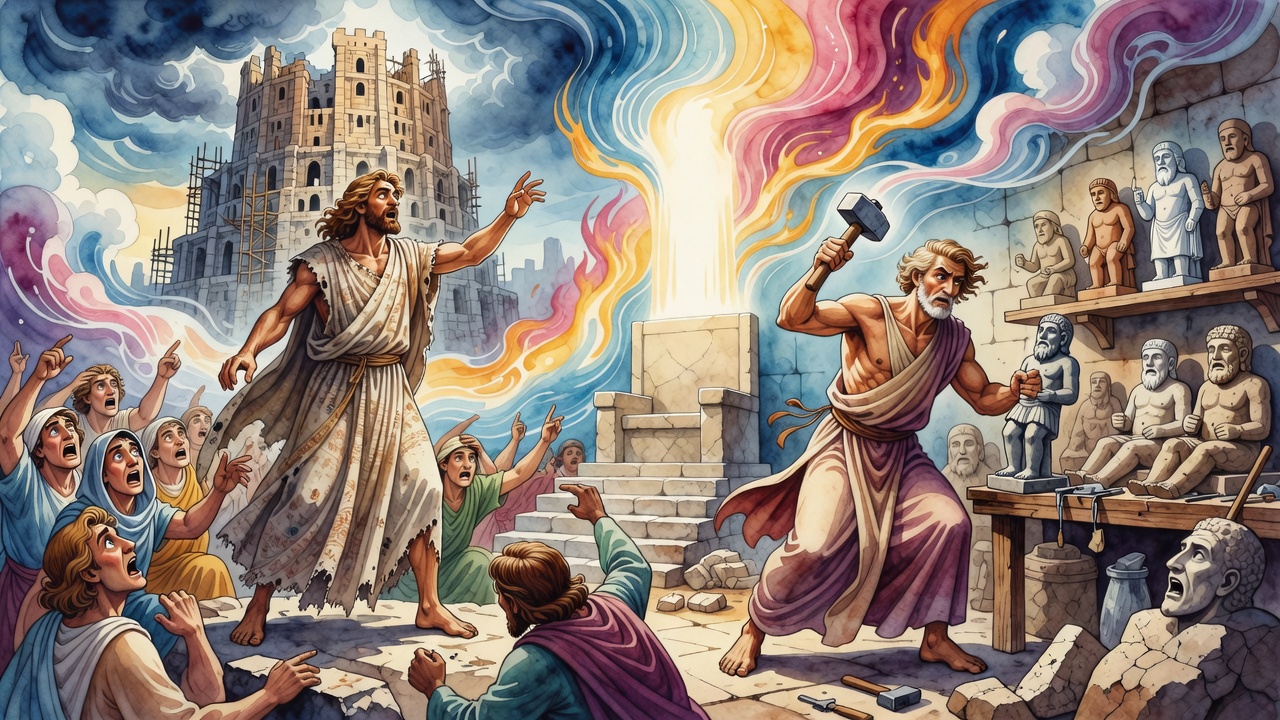
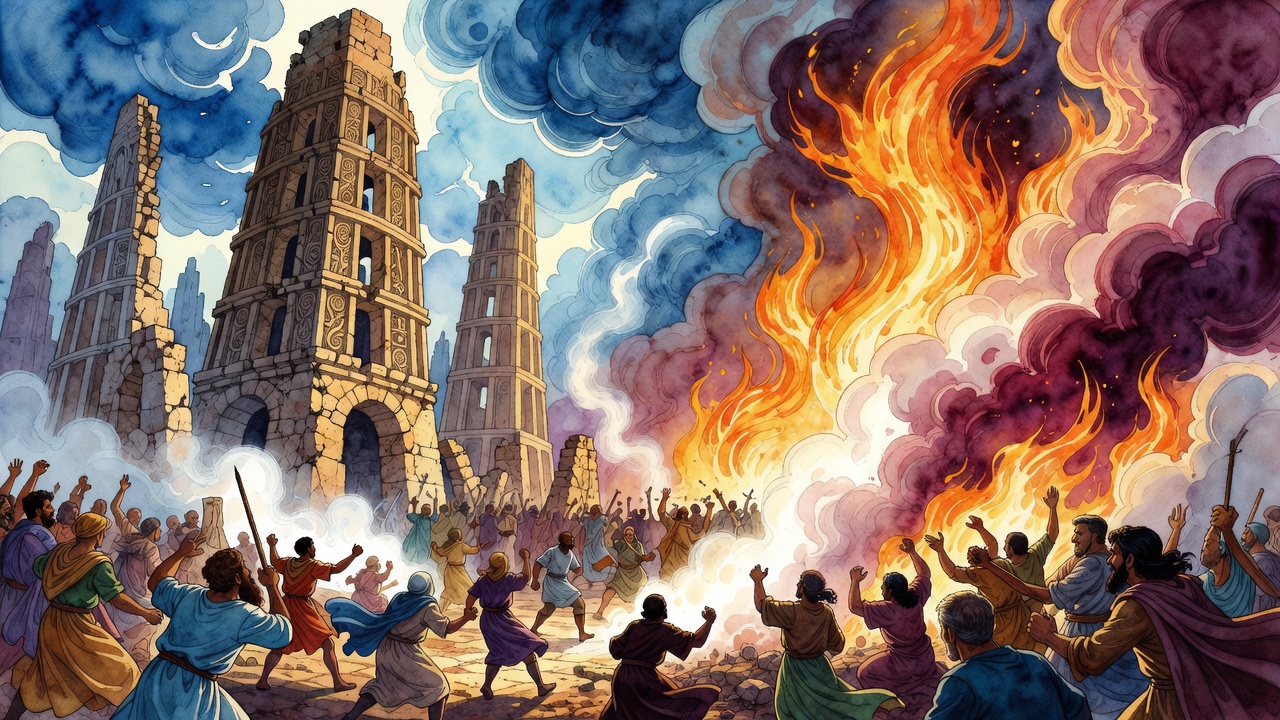
The Lord dispersed them from there. Tongues split mid-sentence. A man asked for a brick and received a stone. Another called for tar and was handed a tool he did not recognize. Anger replaced coordination. Scaffolding stood half-used. The tower remained unfinished, a stump of ambition against the sky, useful afterward only as a warning and a ruin for winds to practice on.

Cities filled with accents that could not plot as one. The Holy One did not need water this time. He needed distance, misunderstanding, and the hard work of translation. Bring them down, the psalm-midrash says, because they said, "Come, we will build a city." Height was their theology. Dispersion was the answer written across maps that did not yet exist, borders drawn in the throat before they were drawn in the dust.

After the Ark, Another Kind of Exit

Noah had once heard, "Go forth from the ark," and the world began again under a rainbow's terms, animals in pairs, sacrifice on new ground, a covenant that bound heaven not to erase flesh by flood. The tower generation tried to begin again under their own terms, without gratitude for dry ground, without fear of the water mark still etched in ancestral story. They treated survival as a platform for assault. Heaven's refusal to drown them again was not approval. It was a different sentence for a different crime, measured to fit mouths rather than lungs.

Elsewhere the midrash still binds life to duty. Women die in childbirth for neglected commandments; law still grips flesh. Mercy on a cosmic scale does not cancel commandment on a human scale. It only chooses exile over extinction for a generation whose unity had become a weapon aimed at the One who had already spared the world once.

Why the Flood Must Be Remembered Separately

Two destructions, two methods. Water erases. Scattering preserves witnesses who can still argue, trade, marry, and fail in smaller ways. Every language on earth became a living footnote to the tower. Children would ask why speech differs from valley to valley, and the answer would carry both stories: once the world drowned for corruption, and once the world was broken into words so that drowning would not be required again for arrogance.

The builders wanted a name. They received many names, none of them the one they planned, each of them a shard of the single speech they abused. The flood generation left bones under mud. The tower generation left dictionaries and ruins. Both left a warning. Only one left survivors able to mispronounce it forever.

Workers who had shared one tongue scattered into clans that could no longer finish a single wall together. Children born after the split never heard the old unified speech except as a story grandparents told badly. The unfinished tower became a landmark of pride interrupted, a vertical scar on the plain, and a reason every traveler afterward struggled to ask for bread in a foreign market.


← All myths

From the tradition

Sources

3 sources

The texts behind this telling. Some cards carry a translation of the source; others are our own retelling of it, and each card says which. Every card links out to the original.

Midrash Tanchuma, Noach 17Midrash Tanchuma

Retold in our words. Read the original at the link below.Townsend 1989 translation of Midrash Tanhuma, S. Buber Recension · CC-BY

And the whole earth was of one language (Gen. 11:1). Scripture states elsewhere in allusion to this verse: Slay them not, lest my people forget, make them wander to and fro by Thy power, and bring them down, O Lord our shield. For the sin of their mouth, and the words of their lips (Ps. 59:12). David uttered this verse in reference to Doeg and Ahithophel. He cried out to the Holy One, blessed be He: Master of the Universe, slay them not as you do other men, lest my people forget the miracles you performed (in my behalf). Make them instead to wander to and fro under Your control so that they may roam about in this world. And bring them down, that is, from their exalted position. Why? For they have rebelled against You.

For the sin of their mouth (ibid.). They sinned with their mouths and through the words of their lips. Doeg said: I saw the son of Jesse coming to Nob, to Ahimelech the son of Ahitub, (I Sam. 22:9), and Ahithophel said unto Absalom: Go into thy father’s concubines, that he hath left (II Sam. 16:21).

Another explanation of this verse. David said this in reference to the generation of the separation. Slay them not, lest my people forget that You have destroyed the generation of the flood. Rather, make them wander to and fro by Thy power, that is, scatter them throughout the world, as it is written: The Lord dispersed them from there (Gen. 11:8). Bring them down, because they said: Let us build a city (ibid., v. 4). What does this suggest? They were rebelling against You.

Full source
Midrash Tanchuma, Noach 10Midrash Tanchuma

Retold in our words. Read the original at the link below.Townsend 1989 translation of Midrash Tanhuma, S. Buber Recension · CC-BY

Go forth from the ark (Gen. 8:16). Scripture says elsewhere in reference to this verse: I counsel thee: keep the king’s command, and that in regard of the oath of God. Be not hasty to go out of His presence (Eccles. 8:2–3). The Holy One, blessed be He, said to Israel: If a government imposes harsh decrees upon you, I adjure you not to rebel against that government but rather to keep the king’s command. However, if the government should decree that you must violate the Torah and its commandments, do not hearken unto it. Say to that government: “I will keep the king’s command in whatever you desire, but with regard to an oath to God, Scripture states: Be not hasty to go out of His presence.” They want you to violate the commandments so that you will ultimately repudiate the Holy One, blessed be He. Hence, it says: In regard of the oath of God, be not hasty to go forth from His presence (ibid.).

Hananiah, Mishael, and Azariah behaved in that fashion at the time Nebuchadnezzar erected his statue. They said to him: Do you believe that even if you should cast us into the midst of a fiery furnace, the Holy One, blessed be He, will not save us? We know that the Holy One, blessed be He, is able to save us, but whether we are saved or not, we shall not prostrate ourselves before your image, for it is written: If our God whom we serve is able to deliver us, He will deliver us from the burning fiery furnace, and out of thy hand, O king. But if not, be it known unto thee, O king, that we will not serve thy gods, nor worship the golden image which thou hast set up (Dan. 3:17–18). Then Nebuchadnezzar replied: Is it true, O Shadrach, Meshach, and Abed-nego, that you serve not my gods, nor worship the golden image which I have set up? (ibid. v. 14). What is the meaning of Is it true? It means that he said to them: “Is it true what you say?” Then Shadrach, Meshach, and Abed-nego answered and said to the king: “O Nebuchadnezzar, we have no need to answer thee in this manner” (ibid. v. 16). They did not address him as king but simply as Nebuchadnezzar. “We have no need to obey you in this demand. If you had issued a decree concerning taxes or levies upon our crops or upon anything else, we would say, ‘I keep the king’s command,’ and you would be obeyed as a king, but when you command us to deny our God, then you are merely Nebuchadnezzar. We have no need to respond to you in any demand, for we have been commanded in regard to the oath of God: Be not hasty to go out of his presence, stand not in an evil thing (Eccles. 8:3).” Upon hearing this, Nebuchadnezzar was filled with fury, and the form of his visage was changed, against Shadrach, Meshach, and Abed-nego; he spoke, and commanded that they should heat the furnace seven times more than it was wont to be heated…. Then these men were bound in their cloaks, their tunics, and their robes … and were cast into the midst of the burning fiery furnace (Dan. 3:19–21).

You learn from this verse that a man must not lose his sense of dignity even though he is in mortal danger. All three adorned themselves in their best garments even though they might be consumed in the furnace.

And these three men, Shadrach, Meshach, and Abed-nego, fell down bound into the midst of a fiery burning furnace (ibid. 3:23). After they were cast into the furnace, they looked upward and exclaimed: “O Master, Lord of the universe, it is revealed to Thee, and Thou dost certainly know, that we rely not upon our own deeds (to be saved) but upon Thine exalted name, which must not be desecrated in the sight of the nations. Not unto us, 0, Lord, not unto us, but unto Thy name give glory…. Wherefore should the nations exclaim: “Where is now their God?” (Ps. 115:1–2).” The wicked man, Nebuchadnezzar, had brought together people from all over the Empire, as it is said: And the satraps, the prefects, the governors, judges, treasurers, counsellors, sheriffs, and all the rulers of the provinces, to come to the dedication of the image (Dan. 3:3).

Six miracles were performed on that day in behalf of these righteous men. The furnace rose to the surface, it fell asunder, its foundation crumbled, the golden image fell headlong, the leaders of four governments were burned to death, and Ezekiel revived the dead. All but one of these miracles are mentioned in the Mishnah (the earliest code of rabbinic law). The miracle of the fiery death of four officers is mentioned in the scriptural verse The flame of the fire slew those men that took up Shadrach, Meshach, and Abed-nego (ibid. v. 22). How do we know that four officers were consumed? It says further on: And the satraps, the prefects, and the governors, and the king’s ministers, being gathered together (ibid. v. 27). What happened to the sheriff, the treasurer, the counsellor, and the judge referred to in the previous verse? These were the four who were consumed by the flames of the furnace.

The ministering angels were about to descend from heaven to rescue Shadrach, Meshach, and Abed-nego when the Holy One, blessed be He, said to them: “They descended for the sake of My Name, therefore I shall descend to rescue them and release them,” as it is said: Who executeth justice for the oppressed, the Lord looseth the prisoners (Ps. 146:7). Forthwith, He released them by raising the furnace, which was extremely deep, until it was level with the ground. When the angel beheld what had transpired, he said to them: “Depart from this place, for the Holy One, blessed be He, has already released you. He performed miracles in your behalf and has raised the furnace level with the ground.” They replied: “We shall not depart from this place without the king’s permission lest he say we escaped from the furnace. I keep the king’s command; that is, by his command we were cast into the furnace, and only at his command shall we depart.” When Nebuchadnezzar approached and saw what had taken place he was astounded, and he spoke, saying: Shadrach, Meshach, and Abed-nego, ye servants of God Most High, come forth, and come hither (Dan. 3:26). The verse does not say “Come up” but merely Come forth, and come hither, thereby indicating that the furnace had been raised level with the ground. Inasmuch as they had been cast into the furnace at his command, they would come forth only at his command. Where did they learn this? They learned it from Noah, who entered the ark at the command of the Holy Omnipotent One, blessed be He, as it is said: Come, thou and all thy house (Gen. 7:1), and finally he left it at His command when He said to him: Go forth from the ark (ibid. 8:16).

The transgression of the lips is a snare to the evil man (Prov. 12:13). The evil men referred to in this verse are the men of the generation of the flood, who said: What is the Almighty, that we should serve Him? And what profit shall we have if we pray unto Him? (Job 21:15)? They said unto God: Depart from us (ibid. v. 14). Who ever heard of a guest, seated at his host’s table, telling his host: “Pack your things and depart”?

The righteous cometh out of trouble (Prov. 12:13). This verse alludes to Noah, to whom the Holy One, blessed be He, said: Go forth from the ark.

Full source
Midrash Tanchuma, Noach 1Midrash Tanchuma

Retold in our words. Read the original at the link below.Townsend 1989 translation of Midrash Tanhuma, S. Buber Recension · CC-BY

[These are the generations of Noah (Gen. 6:9).] May it please our master to instruct us concerning the number of transgressions for which women die during childbirth. Thus have our masters taught us: Women die during childbirth for failure to observe three duties decreed in the Torah.

These are: The duty with regard to menstruation, for it is written: And if a woman have an issue of her blood, she shall be in her impurity seven days (Lev. 15:25); the duty of the levy of dough, for it is written: Of the first of your dough ye shall set apart a cake for a gift (Num. 15:20); and the duty of lighting the Sabbath lights, for it is written: And call the Sabbath a delight (Isa. 58:13). If one chooses to sit in darkness, the Sabbath would not then be a delight, since darkness is imposed upon those condemned to Gehenna, as it says: A land of thick darkness, as darkness itself (Job 10:22).

Why were women enjoined to perform these three duties? The Holy One, blessed be He, said: Adam, the first of My creatures, was commanded not to eat the fruit of the tree of knowledge, yet concerning Eve, it is written: And when the woman saw that the tree was good for food … she gave also unto her husband with her and did eat (Gen. 3:6). In that way she brought about his death and, as it were, shed his blood, and the law prescribes: Whoso sheddeth man’s blood, by man shall his blood be shed (Gen. 9:6). That is why woman’s blood is made to flow. She is required to abstain from sexual relations during menstruation to atone for the blood of Adam that she was responsible for shedding.

Why were women assigned the commandment to remove the levy of dough? It was because she (Eve) defiled the sanctified dough of His world, namely, Adam. R. Yosé the son of R. Kazrata declared: Just as a housewife slaps her dough with water and then takes off its levy, so the Holy One, blessed be He, did with Adam, as it is written: And there went up a mist from the earth and watered the whole face of the earth (Gen. 2:6), and Then the Lord God formed man of the dust (ibid., v. 7).

Why is a woman charged with the duty of lighting the Sabbath lights? It was she (Eve) who extinguished the light of Adam by causing his death, as it is written: The spirit of man is the light of the Lord (Prov. 20:27). Therefore she is obliged to observe the commandment to light the Sabbath lights.

Full source