Babel Split into Three and Heaven Answered Three
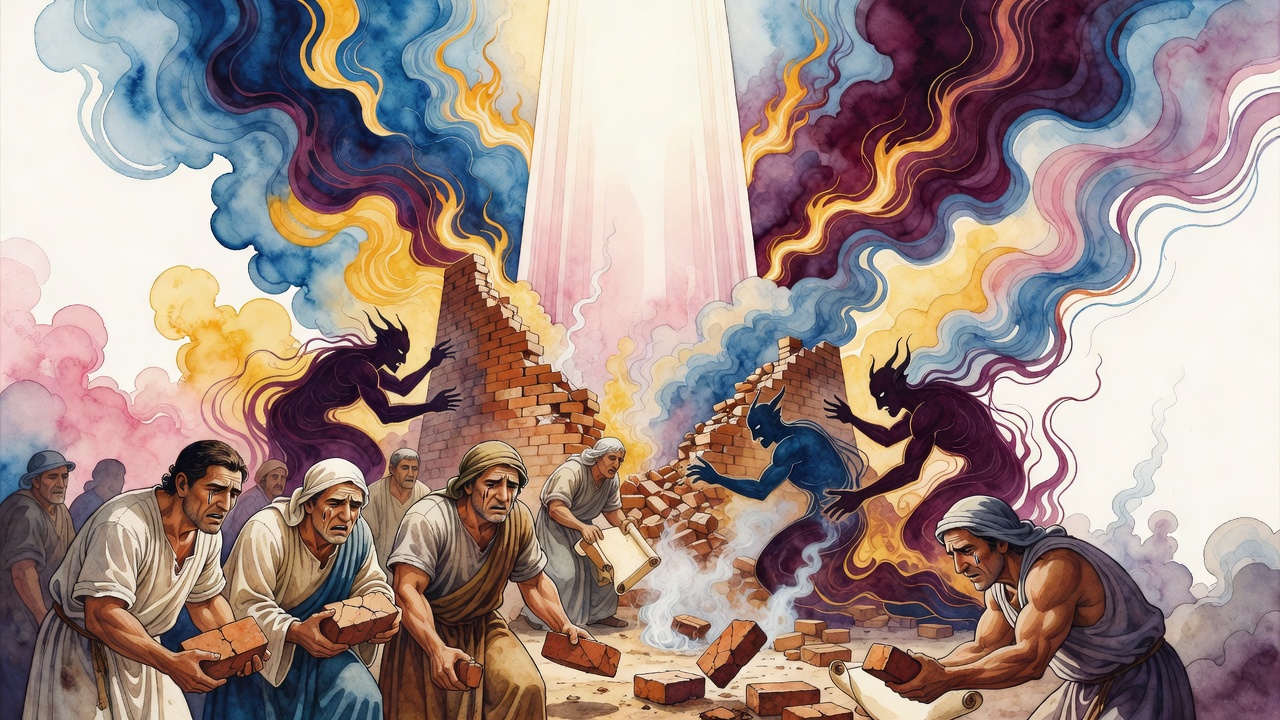
After the flood they still spoke with one mouth. On the plain of Shinar the crews split, and one of them brought axes for the sky.
Table of Contents
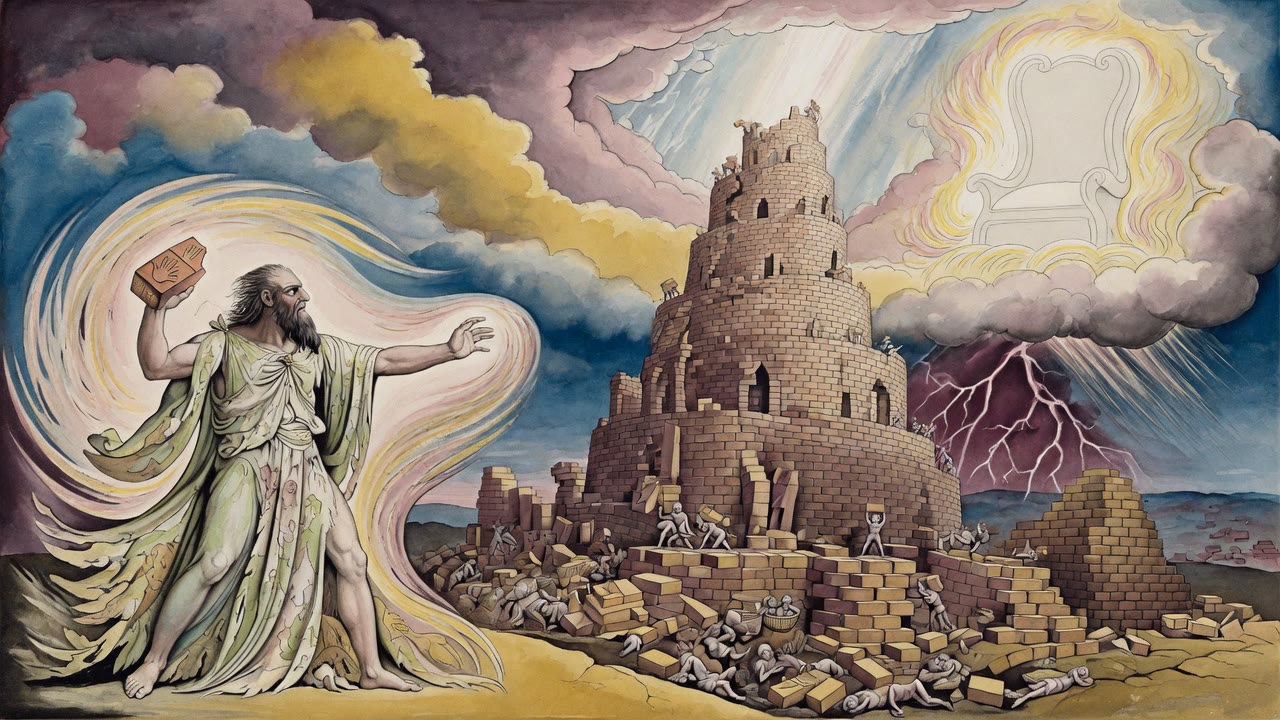
They stood on the plain of Shinar with one language still in their mouths. After the water, Noah's descendants multiplied like a great reptile, six children at each birth, one people, one heart, one speech. Harmony looked like a second chance. They despised the pleasant land anyway and went east (Genesis 11:2). They found a large stone, a wide plain, room enough for a quarrel with heaven, and they dwelt there.
 Click for full size
One language made the plan fast. One heart made the plan hard to stop.
Fools Who Climbed the Bottle
A fool can be pounded in a mortar, and the foolishness does not leave him. Locusts climb the side of a bottle and fall. The second learns nothing from the first. The third learns nothing from the second.
The generation of Enoch called idols by the Name. God summoned the sea, and a third of the world drowned. The flood generation said, "Depart from us" (Job 21:14). They had learned nothing from Enoch. The generation of the tower learned nothing from the flood. Blasphemy kept its old grammar. Only the architecture grew taller.
Violence had already doomed the world of water. They sinned in every way, and still the decree did not seal until theft filled the earth. "For the earth is filled with violence through them" (Genesis 6:13). Robbery stood up like a rod before God and testified. The brickmakers inherited that refusal. They had mud in the world's memory and still decided the sky was available ground.
Three Crews on One Scaffold
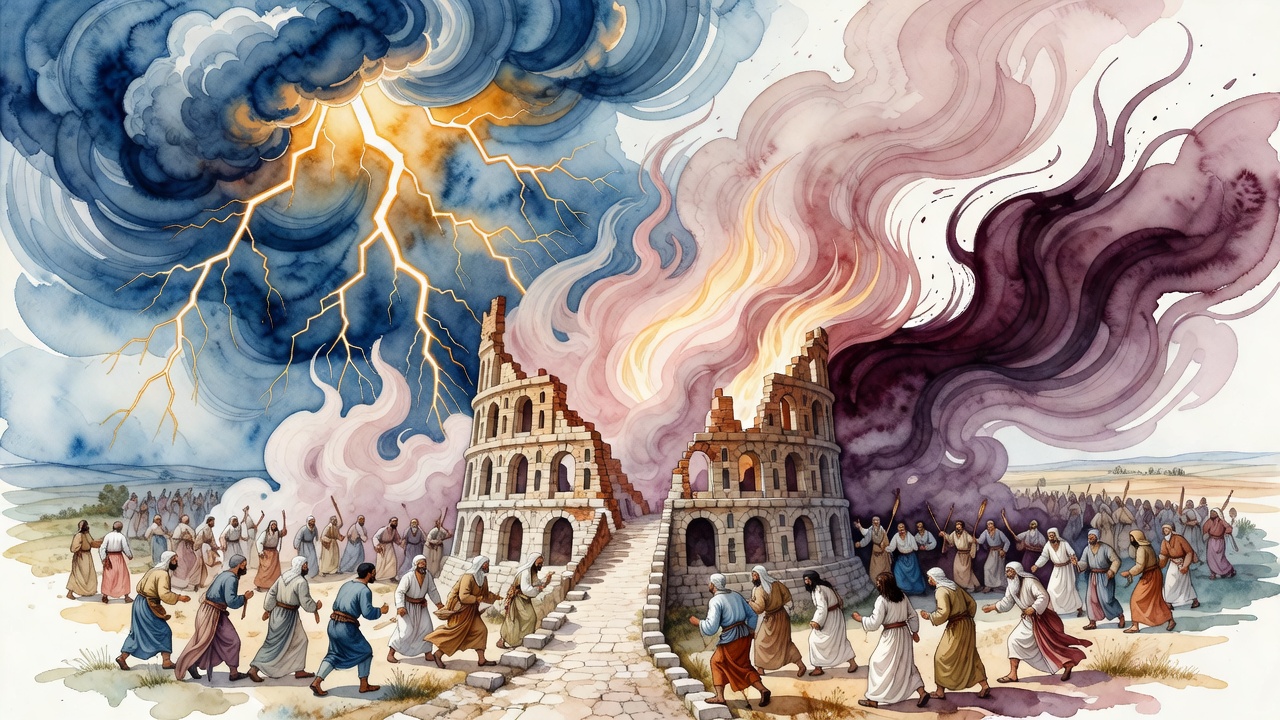
They divided into three groups on the same scaffold.
One said, "Let us go and dwell there." They wanted rooms in the firmament, a better address than earth.
One said, "Let us go up and wage war against Him." They asked what right He had to keep the celestial sphere while assigning the ground to humans. They brought axes for the firmament. The tower was a siege engine.
One said, "Let us go and serve idols there." A name for themselves, large enough to outshout the Name.
Night shifts heard more than brick. They heard plans for a palace among stars, for blades against the floor of heaven, for gods with higher housing. Supervisors divided labor by faction without admitting the project had already split. Children born into the build never saw the flood. They only heard it as old fear used to justify height.
Heaven Answered Three
Heaven did not send one punishment. Heaven answered in three registers.
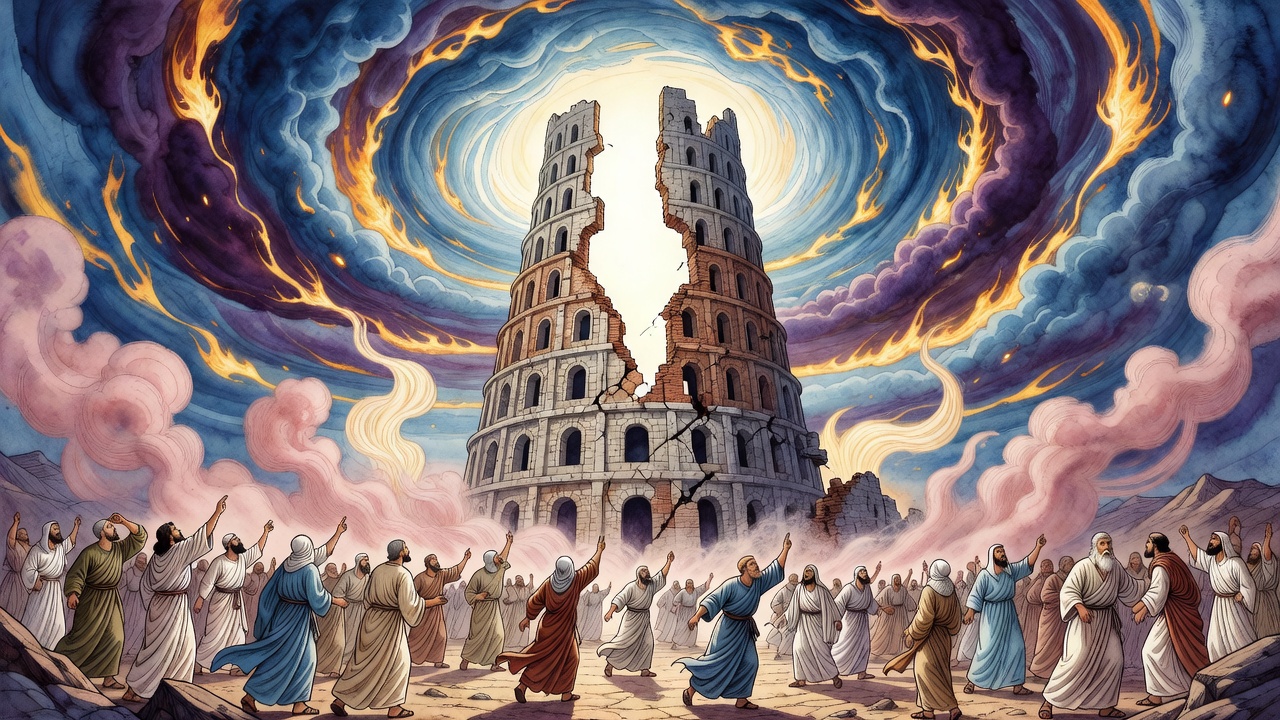
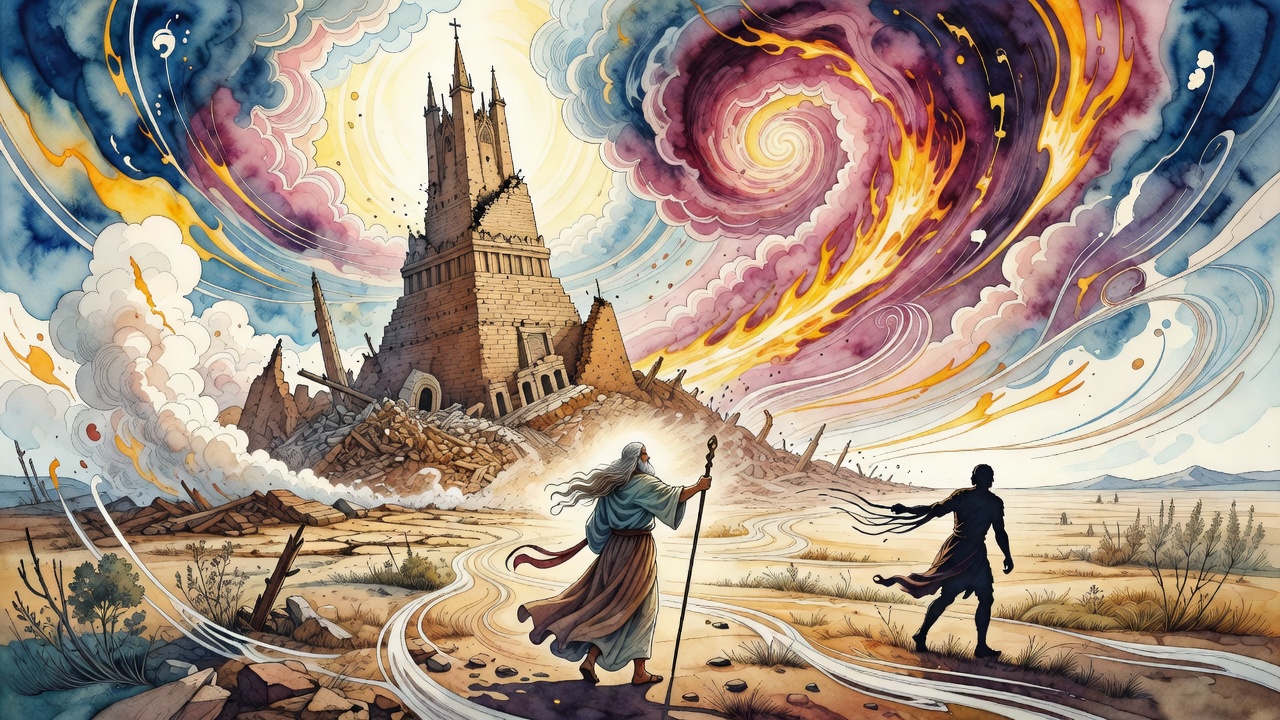
Those who sought only to dwell above were scattered. Those who sought war were transformed into apes, spirits, and sheydim (שדים). Those who sought idols received divided tongues. "Destroy, O Lord, and divide their tongue" (Psalm 55:10). "And the Lord dispersed them from there" (Genesis 11:8).
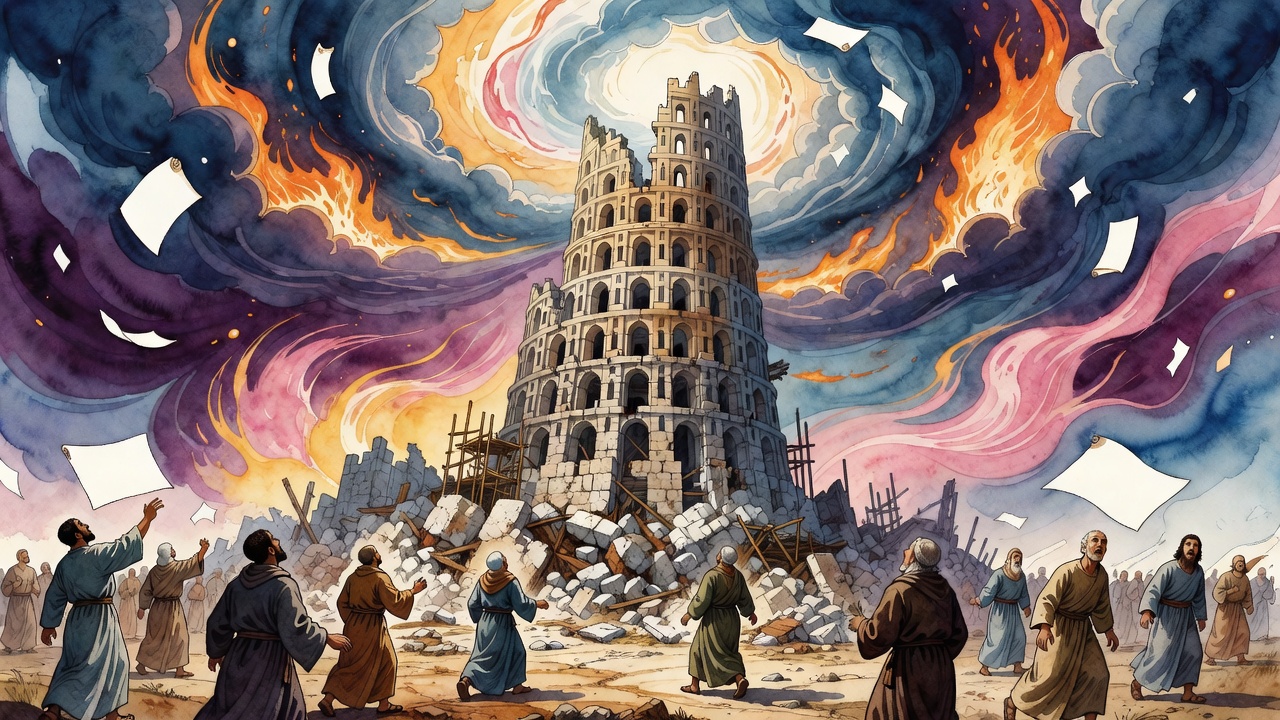
A man reaching for a brick received a tool he could not name. The partner who had understood him a moment before stared as at a stranger. Scatter began in the mouth before it reached the feet.
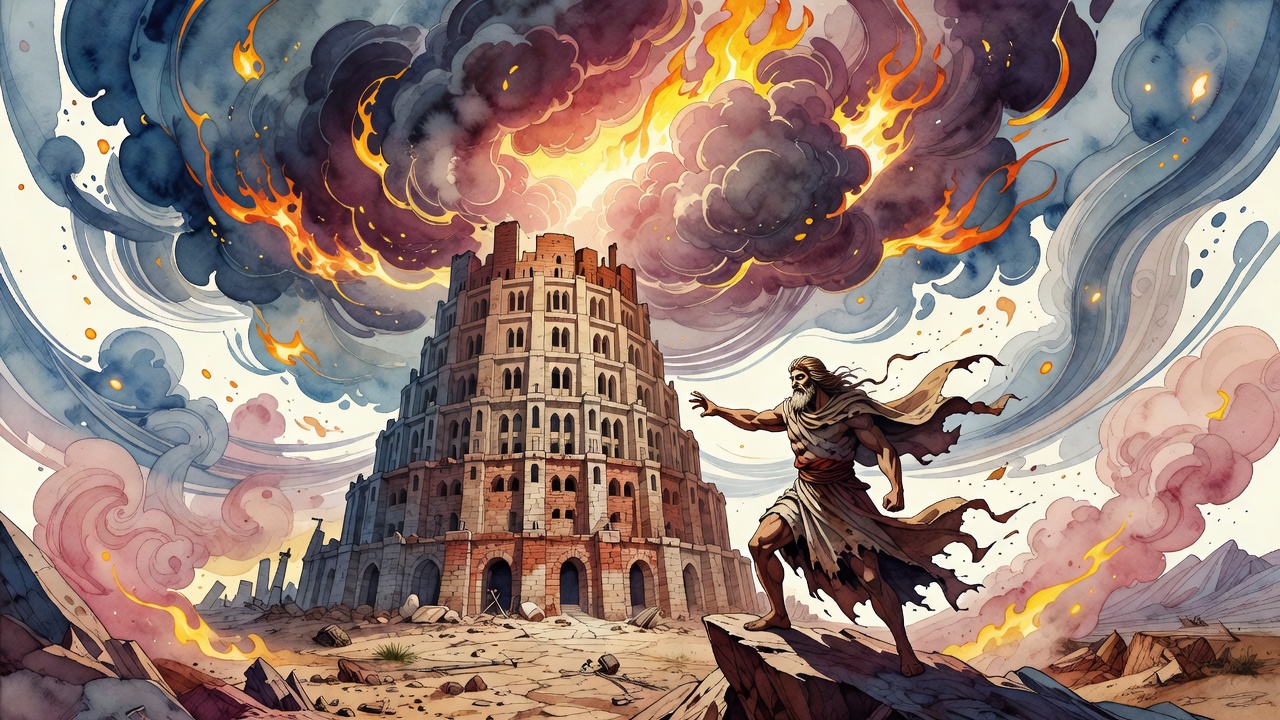
One of the war-crew felt his hands change. The face that had shouted for axes was no longer fully human. The scaffold still stood. The mouths on it could no longer plot in one grammar.
The Pleasant Land They Left
Shinar's plain kept its fertility. The people lost their single mouth. Six-at-a-birth fertility had promised a world refilled. The tower turned refilling into scattering.
They had said they would make a name, lest they be scattered. The fear arrived as sentence. Builders who feared scatter earned scatter. Builders who wanted war earned forms that were no longer fully human. Builders who wanted idols earned mouths that could no longer finish a plan.
The large stone of Shinar remained. It did not become a floor for an empire on God's private story. Flood mud was still in the world's memory. Theft had once stood like a rod and demanded obliteration. Now speech itself was the ground of the quarrel. Children born six at a time grew into factions on a scaffold. Their parents had survived water. They chose height.
Heaven, which had once opened the windows of the sky, now opened the seams of the tongue. The pleasant land they despised did not chase them. They left it for a plain where unity without obedience became three different ways to lose. A man held out a brick. No one took it who could still say the word for brick.
← All myths