The Tower Builders Got the Scattering They Feared
Babel's crews built high to avoid being scattered, and God scattered them with broken speech. Hebrew, the first tongue, shattered into seventy.
Table of Contents
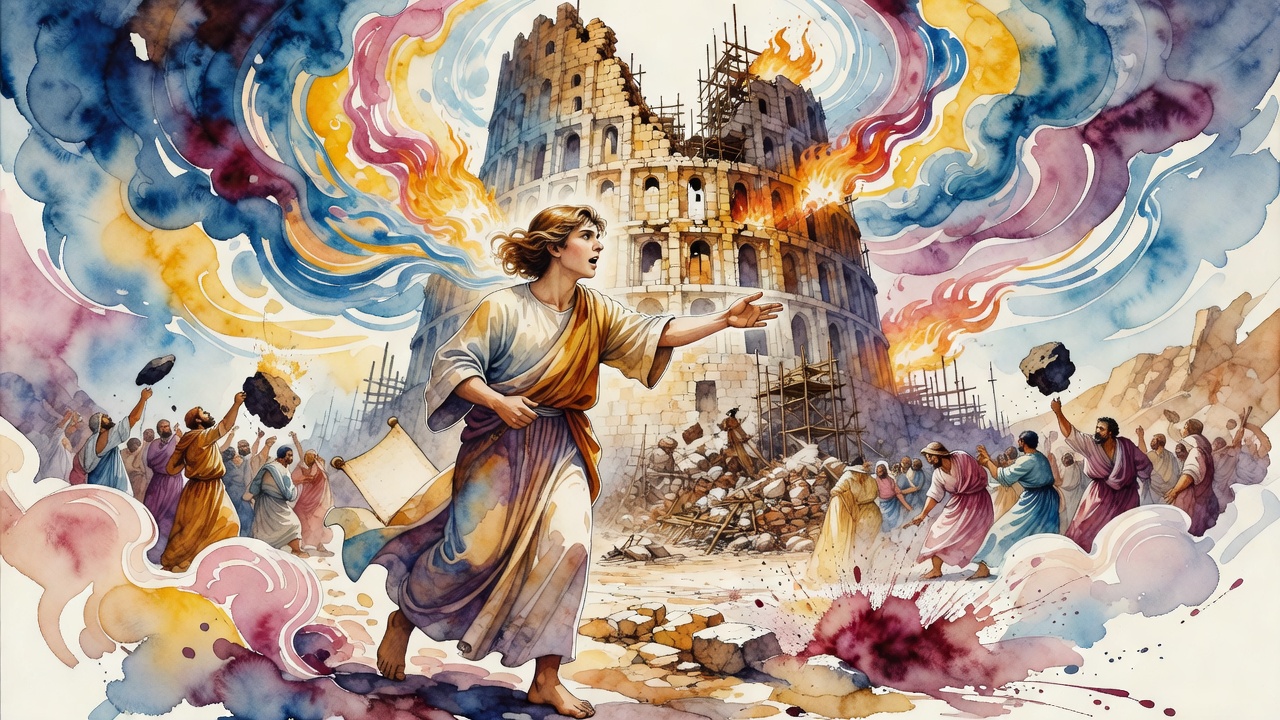
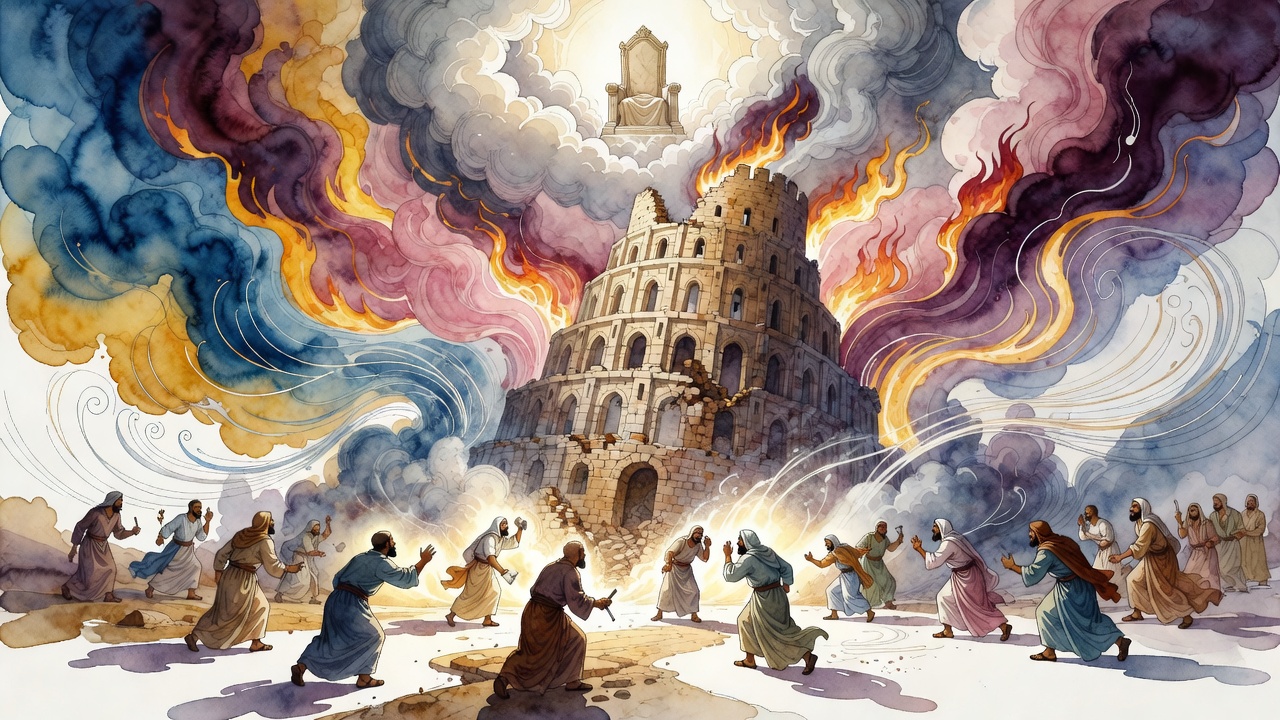
The builders said it out loud. "Let us build for ourselves a city and a tower with its top in the heavens, and let us make a name for ourselves, lest we be scattered" (Genesis 11:4). Fear of scattering was the mortar. The tower was a nail meant to pin humanity to one square of earth forever. They wanted height as anchor, fame as rope, brick as insurance against the wind of dispersal.
 Click for full size
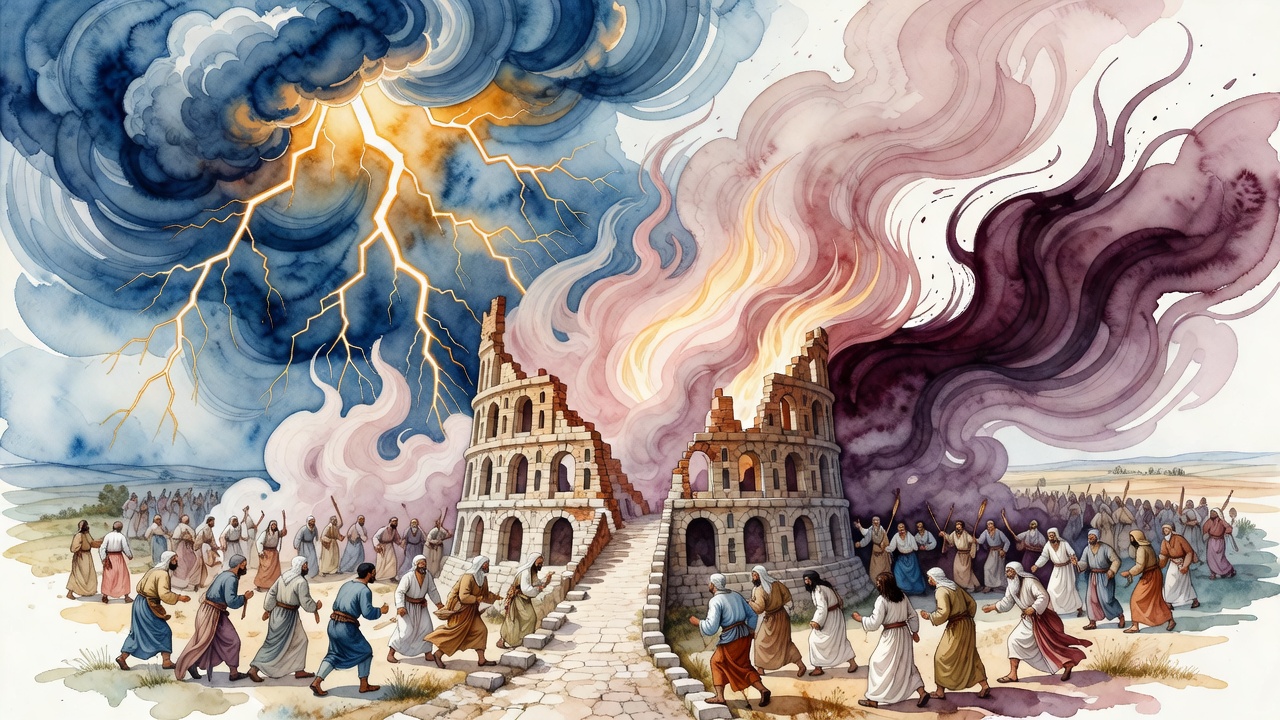
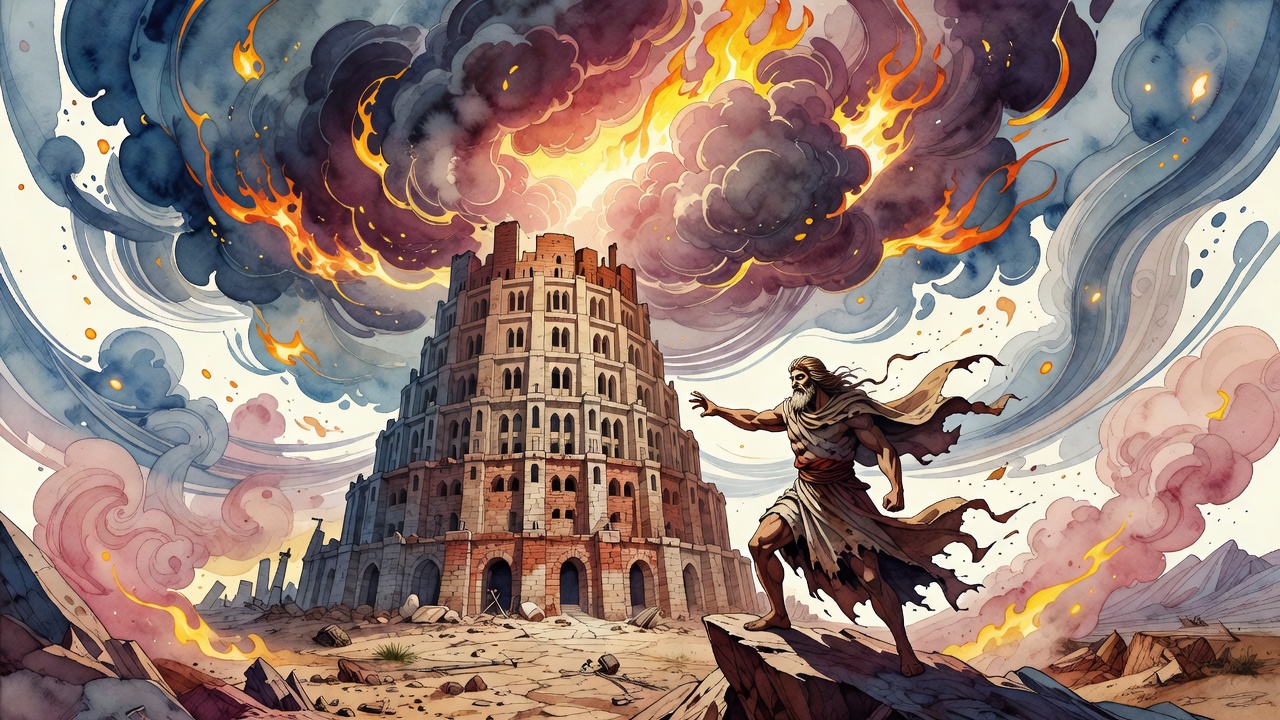
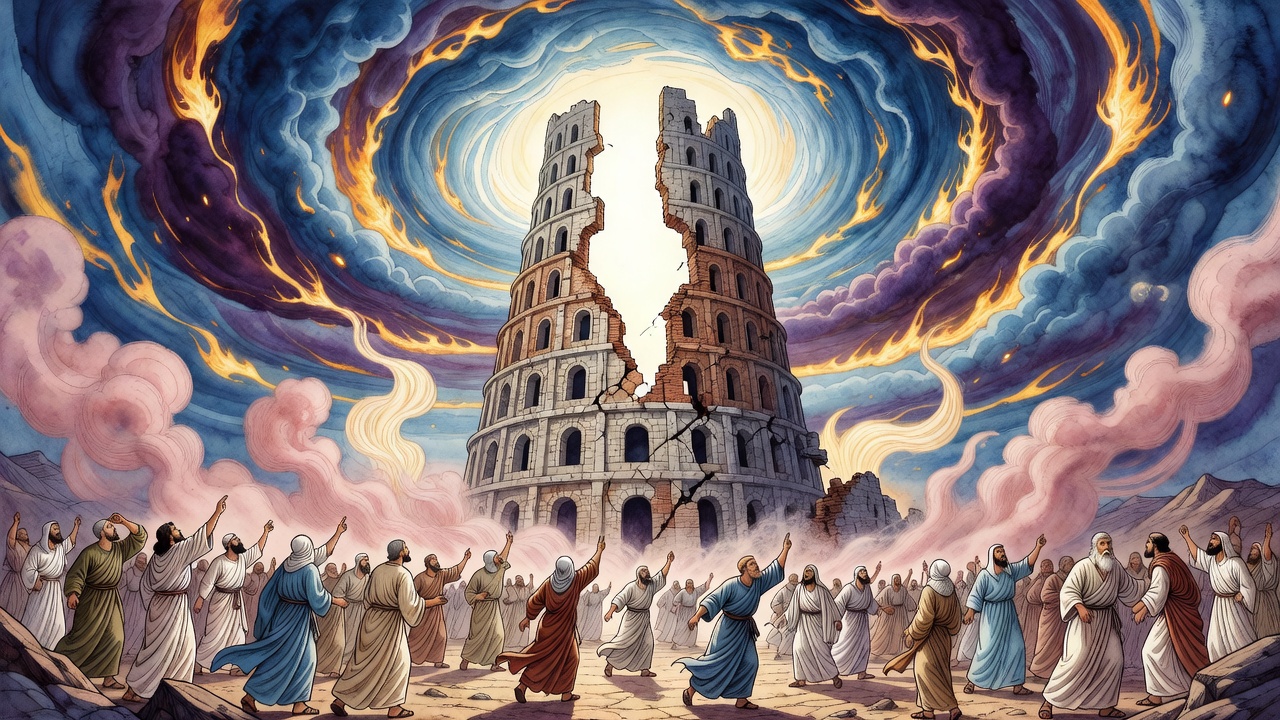
God looked at the project and said, "Let us go down" (Genesis 11:7). Then, "The Lord scattered them from there over the face of all the earth" (Genesis 11:8). The outcome they built to prevent became the sentence they received. Measure for measure closed over them like a lid.
Pride Handed Heaven Its Tools
The Mekhilta reads Babel as a pattern that runs through Scripture. God punishes the wicked with the very thing they used to vaunt themselves. They boasted of reaching heaven, so God came down to them. They feared scattering, so God scattered them. They wanted a name, so God gave them names in the form of tongues no neighbor could parse. Every strut of their pride became a lever of their fall.
A monument meant to stop motion became the reason motion exploded. The sky they tried to puncture answered by refusing their single speech. Bricks still lay in piles. Meaning did not.
Hebrew Broke in Their Mouths
Originally they had spoken to one another in Hebrew, the language with which the world was created. The Holy One confounded their speech until no one understood his companion. In this world, the midrash says, creatures opposed Him and were divided into seventy languages because of the evil inclination. In the world-to-come they will be of one accord, calling upon His name and serving Him, as it is said, "For then will I turn to the peoples one pure language" (Zephaniah 3:9).
The break at Babel is not the last word on speech. It is a wound with a promised suture. Seventy tongues are a sentence, not a forever. Still, in the hour of the tower, the first language shattered under the weight of a project that tried to make human fame the center of the sky.
Gladness and Trembling After the Split
When languages multiplied, service to Heaven also split in mood. Israel would be taught to serve the Lord with gladness, like a son who knows a father's love will not turn murderous over a small error. The nations, in one reading of the psalms, serve with trepidation, like a stranger before a master who may anger over a trivial fault. "Serve the Lord with fear, and rejoice with trembling" (Psalms 2:11) speaks one posture. "Serve the Lord with gladness" (Psalms 100:2) speaks another.
Babel's scattering is the backdrop for that double music. One pure language is postponed. Until then, peoples approach the same King with different temperatures of trust. The tower's failure did not erase worship. It complicated the accents in which worship is spoken.
The Name They Made Was Fracture
They wanted a name. They received confusion as a name. They wanted one city. They received the face of all the earth. They wanted a top in the heavens. They received a God who came down, which is a terrible answer to upward arrogance. The story does not need demons in the brickwork. Human fear of exile, married to hunger for fame, was enough to call down the sentence of exile in seventy voices.
Later ages that dream of a single pure speech are dreaming past Babel toward Zephaniah's promise, not back toward a tower that tried to freeze the map. The builders taught, against their will, that Heaven will not be used as a roof-beam for human panic. Scatter was what they feared. Scatter was what they earned. Hebrew, the first tongue, went quiet between neighbors until a future accord restores what pride broke.
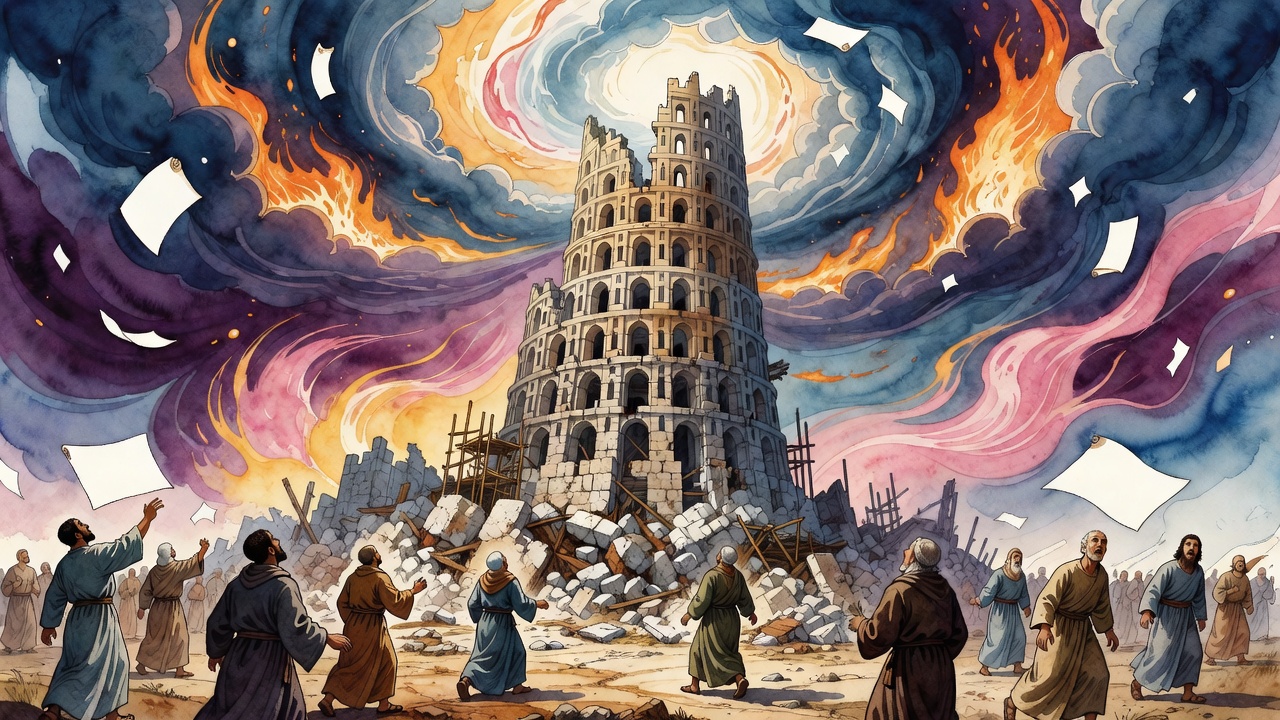
Bricklayers reached for tools and found only noise where orders used to be. A man asked for mortar and received a stare. The tower's upper courses froze mid-ambition while the lower streets filled with arguments no one could finish. Scattering began in the mouth before it finished on the roads that led away from the plain.
Hebrew as the language of creation makes the fracture theological, not only social. To lose the first tongue is to lose easy access to the words with which the world was spoken into place. Seventy languages are a mercy against a second united project of defiance as much as they are a punishment. Division can protect the earth from another tower raised in perfect mutual understanding of evil.
The promise of one pure language in the end of days does not bless the tower retroactively. It promises accord under God's name, not under human fame. Glad service and trembling service will sort themselves when the King is known without confusion. Until then, Babel's lesson stands in every failed empire that tries to nail heaven to a human brand and calls the nail unity.
← All myths