Parshat Noach6 min read

Abraham Curses the Builders of Babel Tower

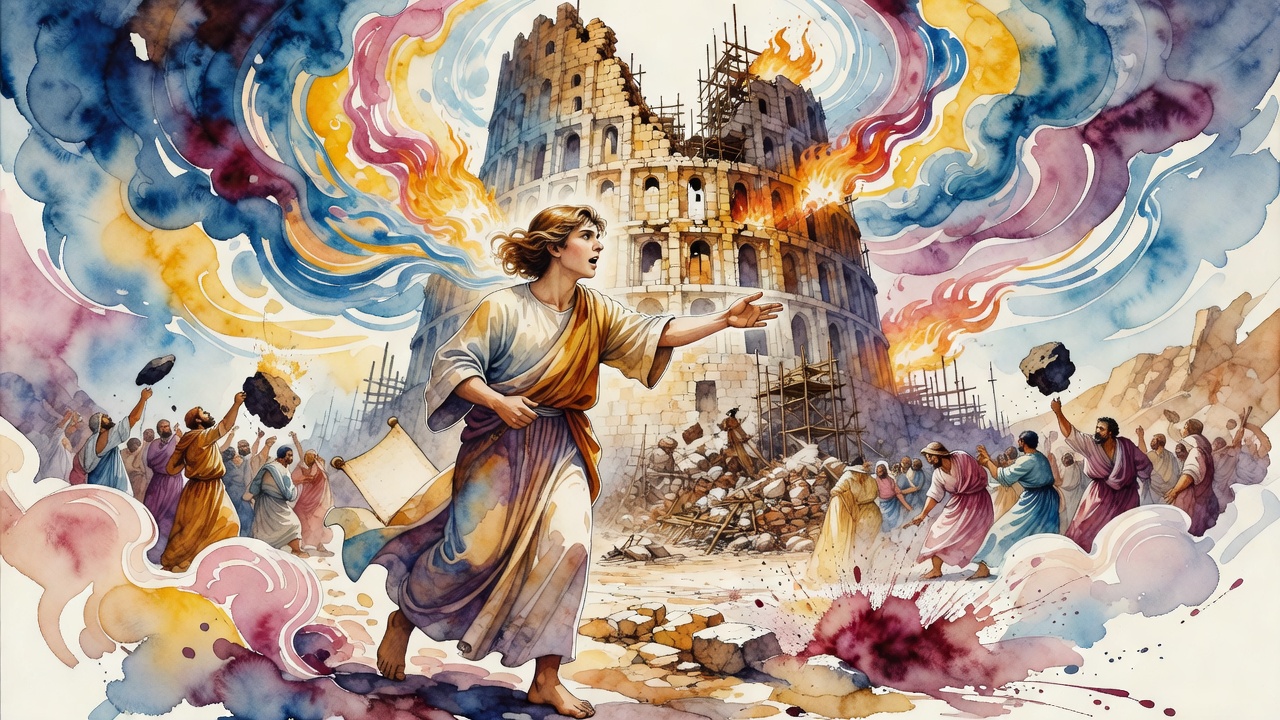
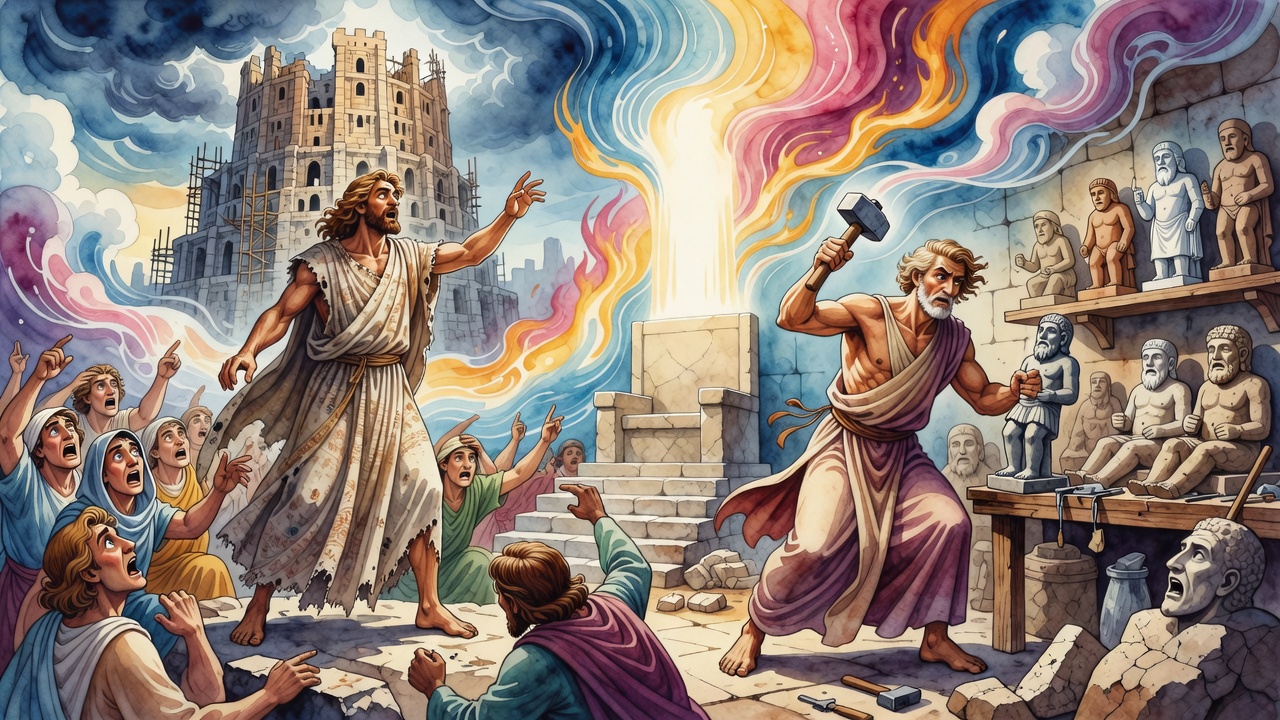
Abraham came on the tower works by accident, brick dust thick in the air. He shouted, and his words landed like a stone the workers stepped over.

Curated by Arthur · Told by Maggid ·
Table of Contents
  1. The Walk Past the Scaffold
  2. The Curse That Fell Like a Stone
  3. The Stone That Should Have Been Chosen
  4. When the Earth Divided in Peleg's Days
  5. What Remained After the Speech Broke
Abraham Curses the Builders of Babel Tower Click for full size

The Walk Past the Scaffold

Abraham, son of Terah, came on the works without meaning to. Brick dust hung in the Shinar air like a second sky. Men shouted across the rising wall in one speech, one rhythm, one will. Ropes creaked. Mud dried on shoulders. Somewhere higher than a bird's safe height, a foreman laughed as if height itself were a joke on heaven.

Abraham stopped. He did not stop for curiosity. He stopped the way a man stops when he hears a knife being sharpened for the wrong throat.

They were building a city and a tower whose crown would scrape the firmament. They said so openly, in the marketplace and on the ramps, as if boasting were mortar. The labor mixed ambition with contempt. Every course of brick said the same thing: we will not be scattered, we will not be small, we will not answer to anyone who lives above the clouds.

Children carried water. Women packed clay. Strong backs bent and rose in a single wave. Unity can be holy. This unity smelled of challenge.

The Curse That Fell Like a Stone

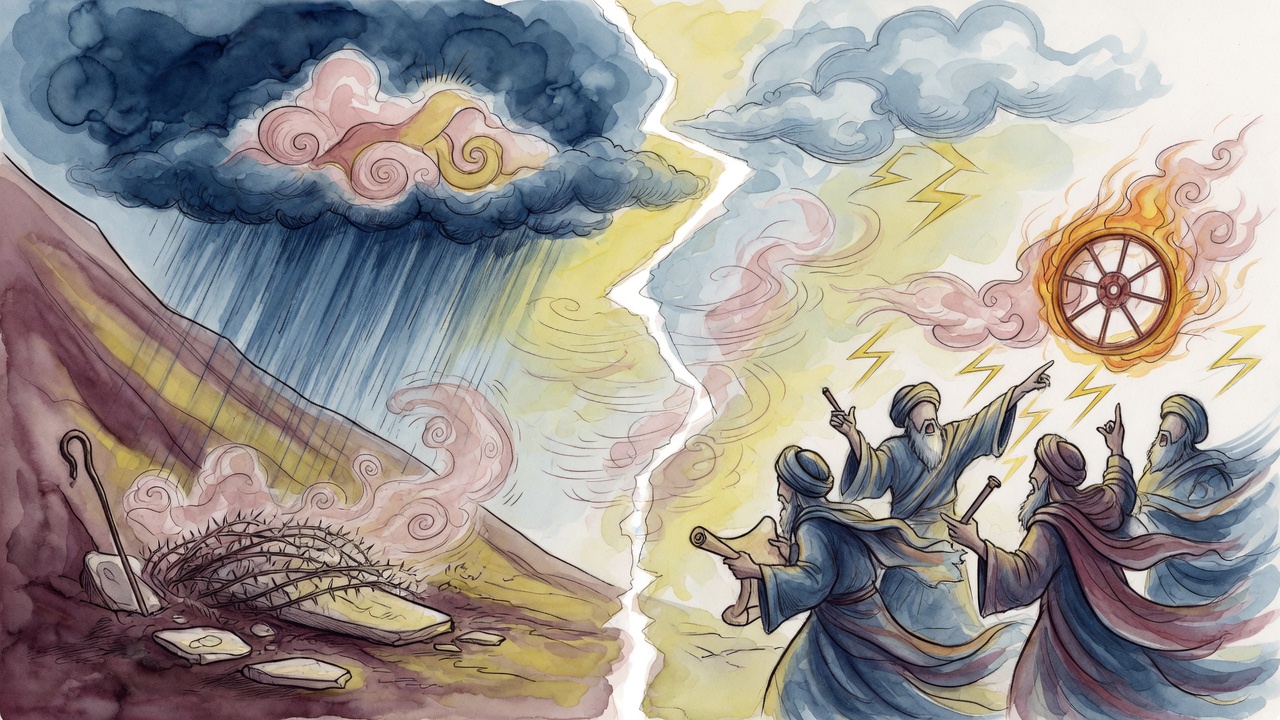
Abraham lifted his voice in the name of his God. He did not whisper piety into his sleeve. He cursed the project where the workers could hear. He asked that their speech be swallowed and split, that the single tongue which made the labor smooth be broken into many so no man could finish his neighbor's sentence. The words that later stand in the psalm already burned in his mouth: swallow up, divide their language (Psalm 55:10).

The builders heard him. A few turned. One spat into the dust. The rest kept laying brick. His curse landed among them like a stone cast upon the ground, and they stepped over it without wiping their feet.

Rejection has a sound. It is not silence. It is the continued scrape of tools, the same joke told again, the same song rising from the scaffold as if prayer had never interrupted the workday. Abraham felt the heat of the kiln on his face and the colder heat of being dismissed by a crowd that shared one language and no patience.

He thought of how easy it is to confuse shared speech with shared wisdom. They had the first. They had thrown away the second.

The Stone That Should Have Been Chosen

Abraham stood longer than pride would have allowed. He thought of choice stones, the kind a builder sets at a corner because the whole wall will lean on them. He thought of words that should have been taken up the same way: tested, heavy, placed where the structure needs truth. The builders treated his speech as rubble. That decision mattered more than the height of their tower. A city that rejects a true word has already begun to fall, even while the upper stories still look clean in the sun.

He left the site with dust on his sandals and a hollow place behind the ribs. Prophets do not always get audiences. Sometimes they get a shrug and a tossed stone. The road away from Shinar felt longer than the road in, because every step carried the knowledge that the scaffold still rose behind him, indifferent and loud.

When the Earth Divided in Peleg's Days

Far from the scaffold, another clock was running. Shem, son of Noah, still walked the earth with flood-memory in his bones. Two years after the waters sank, Arpachshad had been born into a washed world. Shem would live six hundred years, long enough to watch names stack into a genealogy and long enough to watch that genealogy fracture under pride's weight.

From Arpachshad to Shelah to Eber, the line held. Then Peleg was born, and the name itself became a scar: in his days the earth was divided. Not only maps. Languages. Kinships. Work crews. Ambitions that once shared a single tongue now snarled past one another in the street like animals that had forgotten they were yoked.

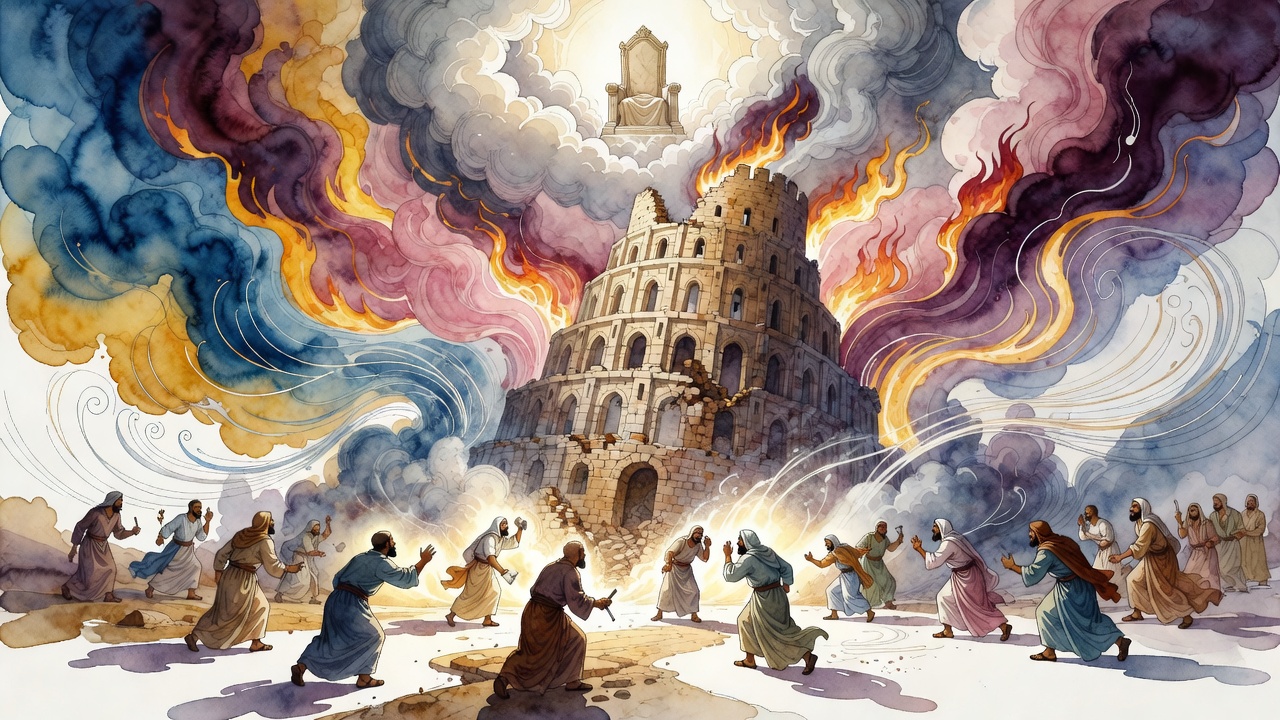
The division did not arrive as a gentle classroom lesson. It arrived as confusion that stopped the hands mid-brick. One man called for water and received timber. Another shouted for rope and heard only noise. A third cursed his partner and discovered the partner could not understand the curse. The tower did not need an army to undo it. It needed a broken sentence.

Shem, who had heard the world end once in water, watched it splinter again in speech. The flood had been loud. This undoing was a thousand small misunderstandings that added up to ruin.

What Remained After the Speech Broke

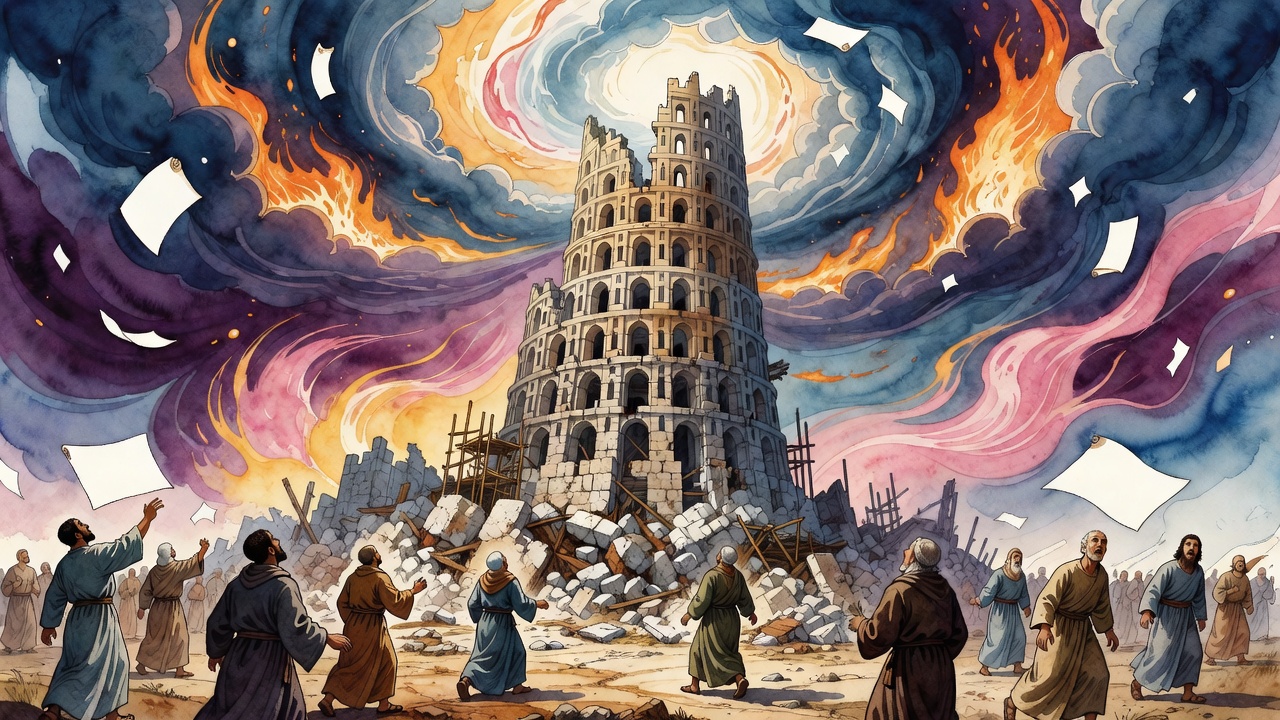
Abraham's curse and Peleg's generation met in the same consequence. The city that would not listen learned to mishear. The men who would not be scattered were scattered by the very tool they had trusted: shared speech. God did not need to topple every course by hand. He unstitched the conversation, and the project collapsed into arguments no mortar could hold.

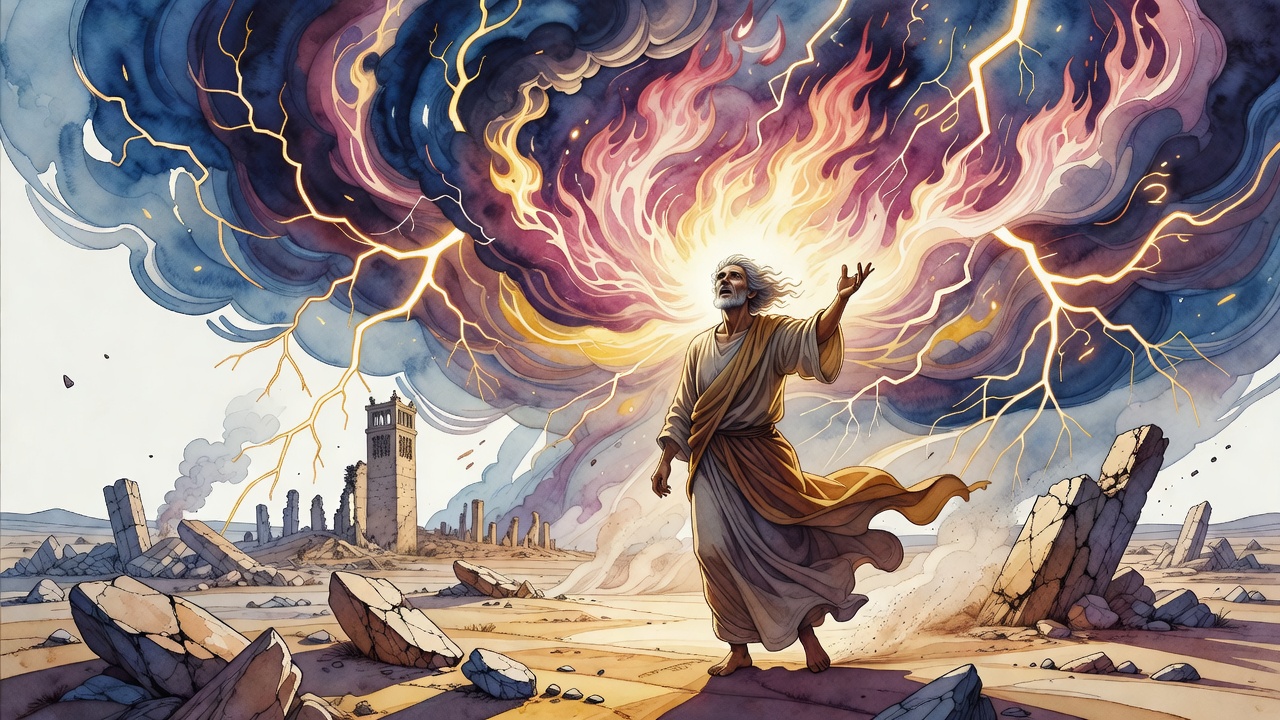
Families packed what they could carry. Crews dissolved. The unfinished crown of the tower stood like a tooth broken off in a fight. Birds nested in empty putlog holes. Wind practiced new languages through the gaps.

Shem's long life kept the older story alive while the new confusion spread. Flood survivors still knew what happens when human will hardens against heaven. The tower was only a newer shape of the same refusal, baked in brick instead of drowned in rain.

Abraham walked on toward a future that would one day name him father of many nations. Behind him the scaffold stood half-finished, a monument to a unity that preferred pride over truth. The stone of his curse still lay where they had kicked it, and the dust kept covering it, year after year, as if the ground itself were trying to bury a warning and failing, because some stones refuse to stay buried.


← All myths
From the tradition

Sources

2 sources

The texts behind this telling. Some cards carry a translation of the source; others are our own retelling of it, and each card says which. Every card links out to the original.

Pirkei DeRabbi Eliezer 24:8Pirkei DeRabbi Eliezer

Retold in our words. Read the original at the link below.Pirke de Rabbi Eliezer, trans. Rabbi Gerald Friedlander, London (1916) · CC-BY

Abraham knew that feeling.

It's a story about communication, about hubris, and about the power of… well, of divine intervention, to put it mildly.

Pirkei DeRabbi Eliezer, a fascinating early medieval Midrash (a collection of stories and interpretations of the Bible), gives us a vivid snapshot of Abraham's role in all of this. It says that Abraham, son of Terah, was walking by and saw everyone busy building the city and the tower. What did he do? He cursed them. In the name of his God. He wasn't happy about this project, not one bit. He even quoted what would later become (Psalm 55:10), asking God to "Swallow up, O Lord, divide their language."

Did they listen? Nope. Pirkei DeRabbi Eliezer tells us they rejected his words "like a stone cast upon the ground." Ouch. It just goes to show you, sometimes even a prophet can have a hard time getting through.

But there's a twist. The text then poses a rhetorical question: "Is it not a fact that every choice and good stone is only put at the corner of a building?" It's a beautiful analogy. The builders rejected Abraham's words, but those words, that rejection, actually made him stronger, more important. As the text goes on to quote, "The stone which the builders rejected is become the head of the corner" (Ps. 118:22). This verse speaks to the idea that what is discarded or underestimated can become the most essential element. In this case, Abraham's rejected message laid the foundation for his later importance. How often do we dismiss ideas, people, or warnings, only to realize later that they were crucial?

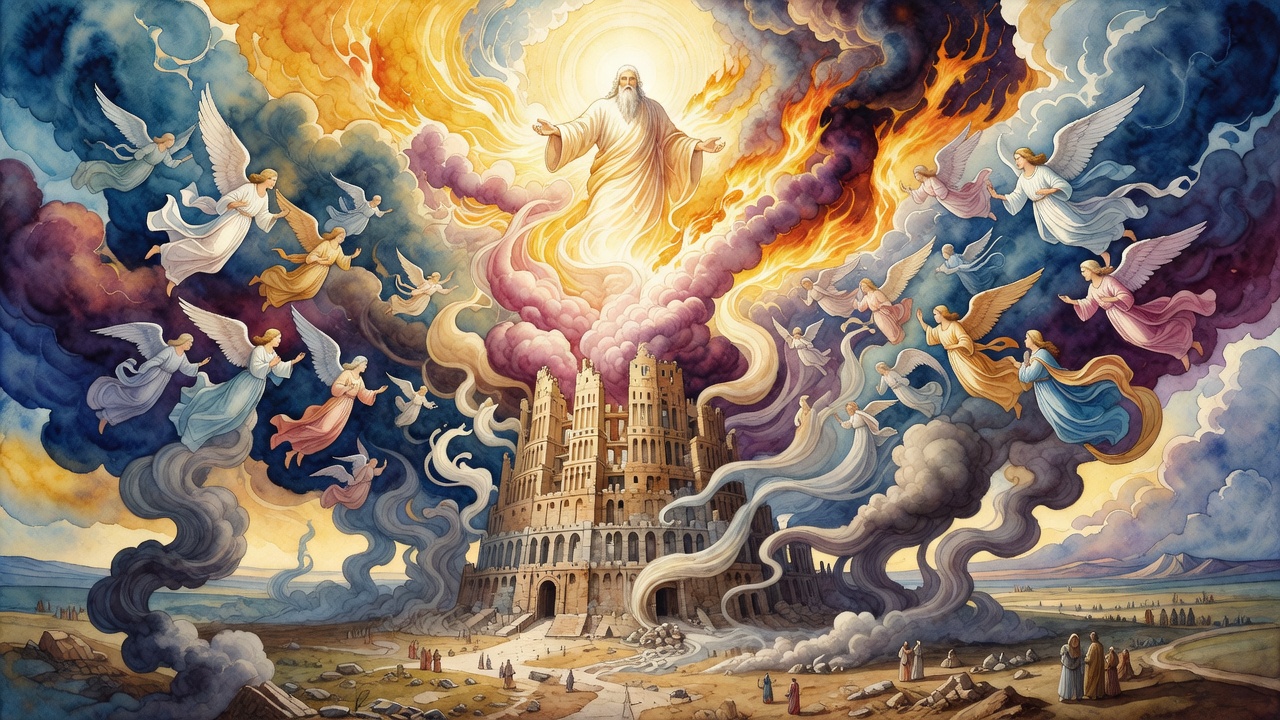
The narrative then shifts to the divine response. Rabbi Simeon says that God, blessed be He, called to the seventy angels who surround the throne of His glory. He said to them, "Come, let us descend and let us confuse the seventy nations and the seventy languages."

Now, why seventy? That number pops up a lot in Jewish tradition. It often represents the totality of nations, a complete set. So, God isn’t just messing with one language; He's creating a whole spectrum of them.

This moment is a powerful reminder of divine authority and intervention. It also sets the stage for a world of diversity, where communication becomes both a bridge and a barrier. The unity of purpose that fueled the Tower of Babel project is shattered, replaced by a cacophony of voices.

What are we to make of this? Perhaps it's a reminder that unchecked ambition, a refusal to listen to dissenting voices, can lead to fragmentation. And maybe, just maybe, the stones we reject might hold the key to building something truly meaningful. It's a story that resonates even today, in a world still confronting the challenges of communication and understanding.

Full source
Seder Olam Zutta 3:1Seder Olam Zutta

Translation of the source text.Seder Olam Zuta, Rabbi M. Grossberg. London, 1910 + JewishMythology.com faithful English Beta translation · Public Domain

Shem lived one hundred years until Arpachshad was born, two years after the Flood. That was the year 1,658 from Creation, and all the days of Shem were six hundred years. Arpachshad lived thirty-five years until Shelah was born. That was the year 1,693 from Creation, and all his days were four hundred and thirty-eight years. Shelah lived thirty years until Eber was born. That was the year 1,723 from Creation, and all his days were four hundred and thirty-three years. Eber lived thirty-four years until Peleg was born. That was the year 1,757 from Creation. He took hold of the study house and the academy, and he was the father of all the children of Eber; all his days were four hundred and sixty-four years. Peleg lived thirty years until Reu was born. That was the year 1,787 from Creation, and the years of his life were 239. Reu lived thirty-two years until Serug was born. That was the year 1,819 from Creation, and the years of his life were 239. Serug lived thirty years until Nahor was born. That was the year 1,849 from Creation, and the years of his life were 230. Nahor lived twenty-nine years until Terah was born. That was the year 1,878 from Creation, and the years of his life were 148. Terah lived seventy years until Abraham our father was born. That was the year 1,948 from Creation, and the years of Terah's life were 205. That was the year 2,083 from Creation. Behold, ten generations.

Full source