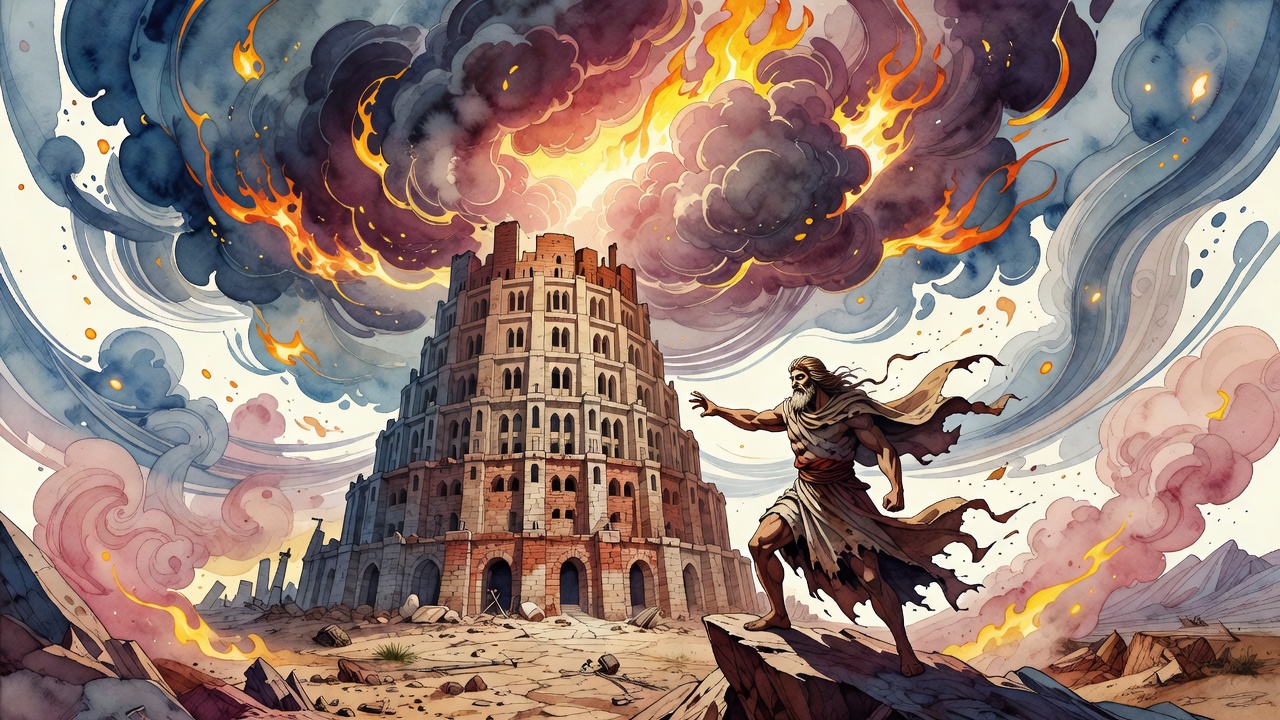
Babel Raised Pillars to Brace the Falling Sky
They had counted the years. The sky, they said, would fall again. They raised pillars instead of praying, and an east wind took their words.
Table of Contents
 Click for full size
They Counted the Years to Water
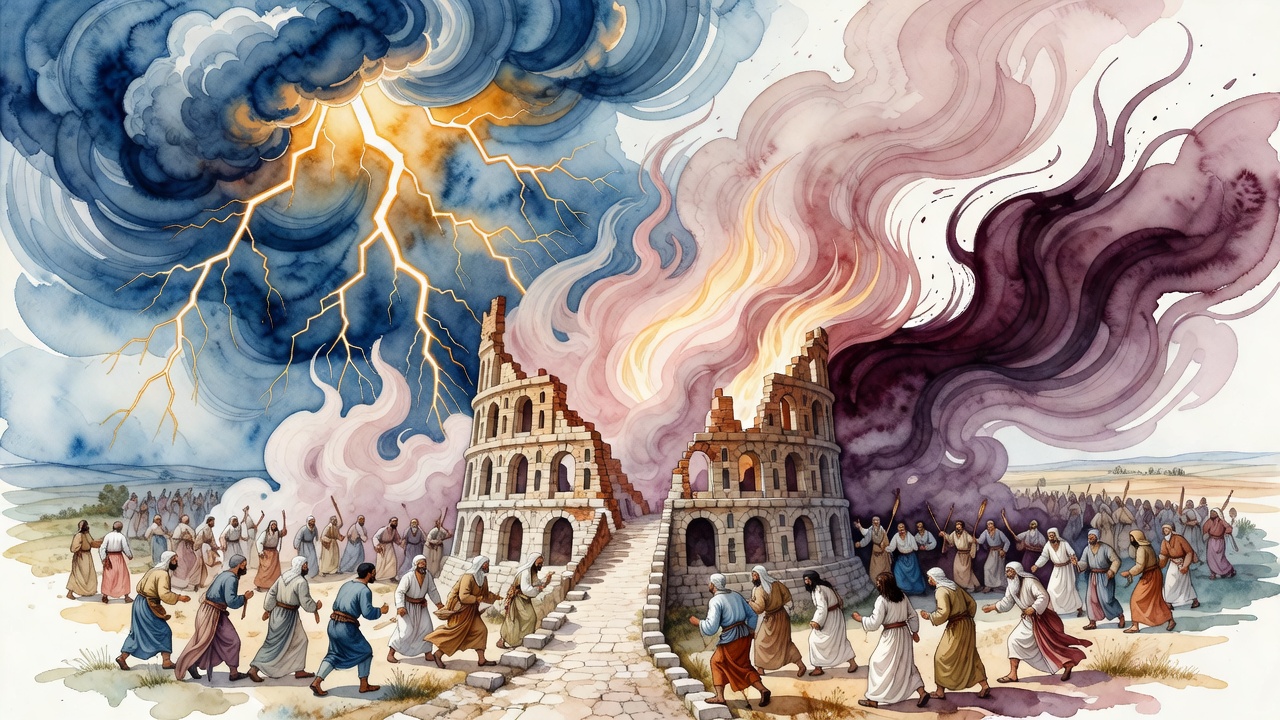
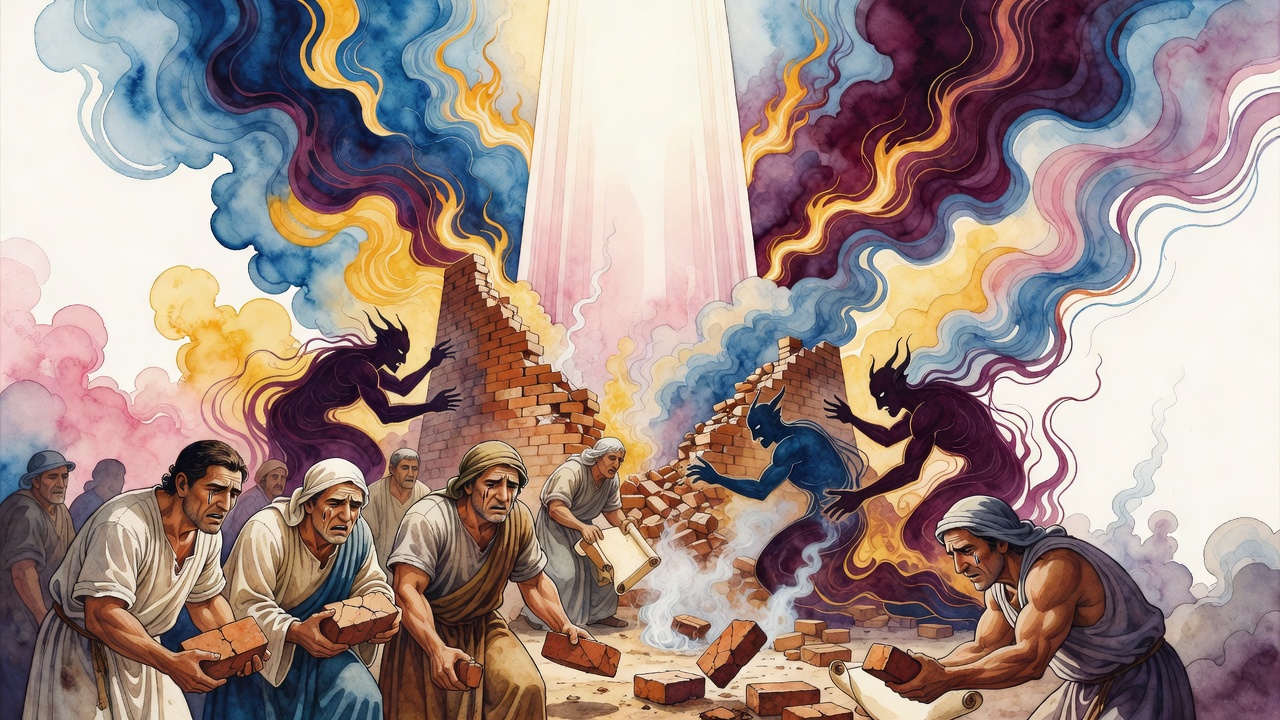
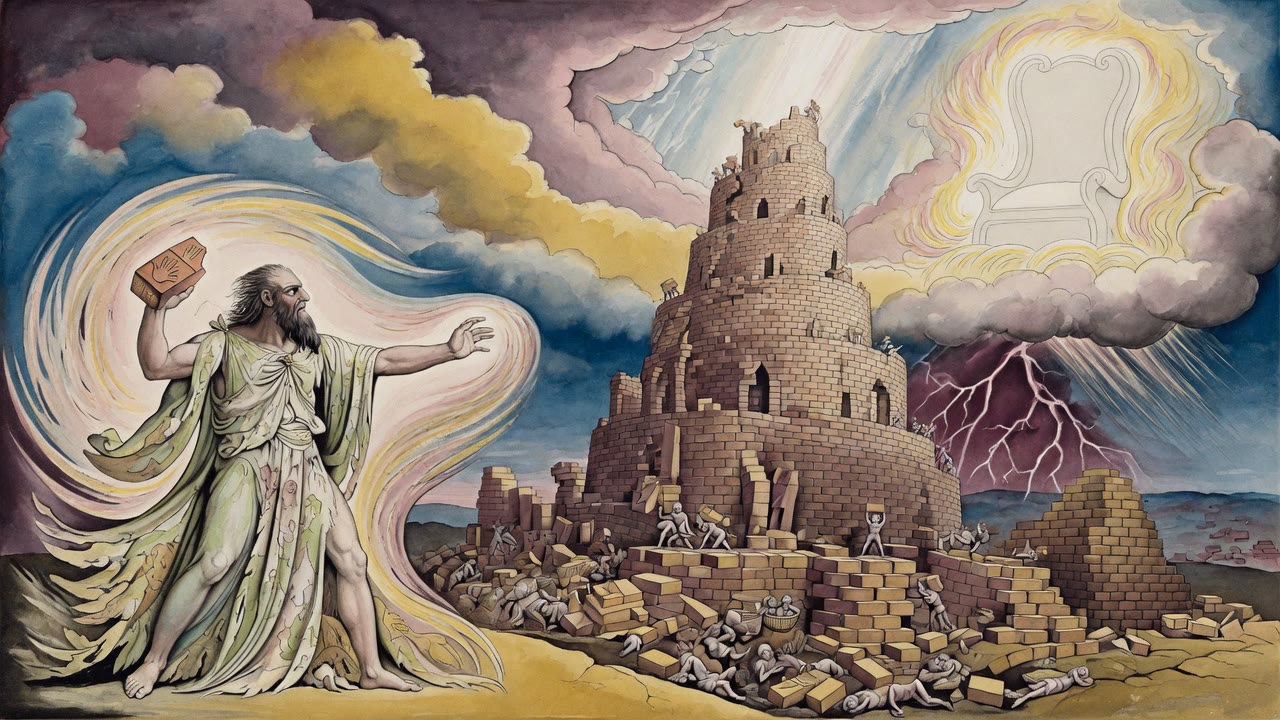
On the plain of Shinar the kilns glowed day and night. Brick replaced trust. Bitumen replaced prayer. Children learned to carry bricks before they learned to bless bread.
The builders had counted the years since creation. A flood once drowned the world after a thousand years and one day and six hundred and fifty-six years more. The heavens themselves are unsteady, they said. The upper waters could come crashing down upon us once again.
They did not pray. They did not repent. They conspired.
"Come, let us raise pillars to brace the sky, props to hold the heavens up should they fall."
Props for a Sky They Did Not Trust
That was their one speech, a single shared insolence. The whole earth was of one language and of one speech, and the speech was this: prop the firmament rather than trust the One who hung it in the first week of the world.
A tower rose not only as a stair toward heaven but as a set of stilts under a roof they feared would collapse. They wanted engineering where the first generation after the flood should have wanted obedience. The sky did not creak. Their hearts did. They answered the creak with scaffolding.
From a distance the tower looks like ambition. Up close it smells like fear wearing work gloves.
One Mouth Against Heaven
Three times the nations banded together not in friendship but in defiance. Once in the days of Joshua, when the kings massed "with one mouth" to make war, and their true quarrel was with the Holy One, not with Israel. Once in the latter days of Gog and Magog. And here, at Shinar.
Unity is not always a virtue. Here unity was a weapon. One language made one plan easy. One plan made one rebellion efficient. They stood shoulder to shoulder against a sky they treated as a ceiling about to drop, and against a God they treated as a landlord who might flood the basement again without notice.
The flood had been judgment on corruption. Babel answers judgment with architecture. If water fell once, they will hold the roof with human poles. They accept the danger and refuse the Judge. They remember the water and forget the reason the water came.
The East Wind Returns
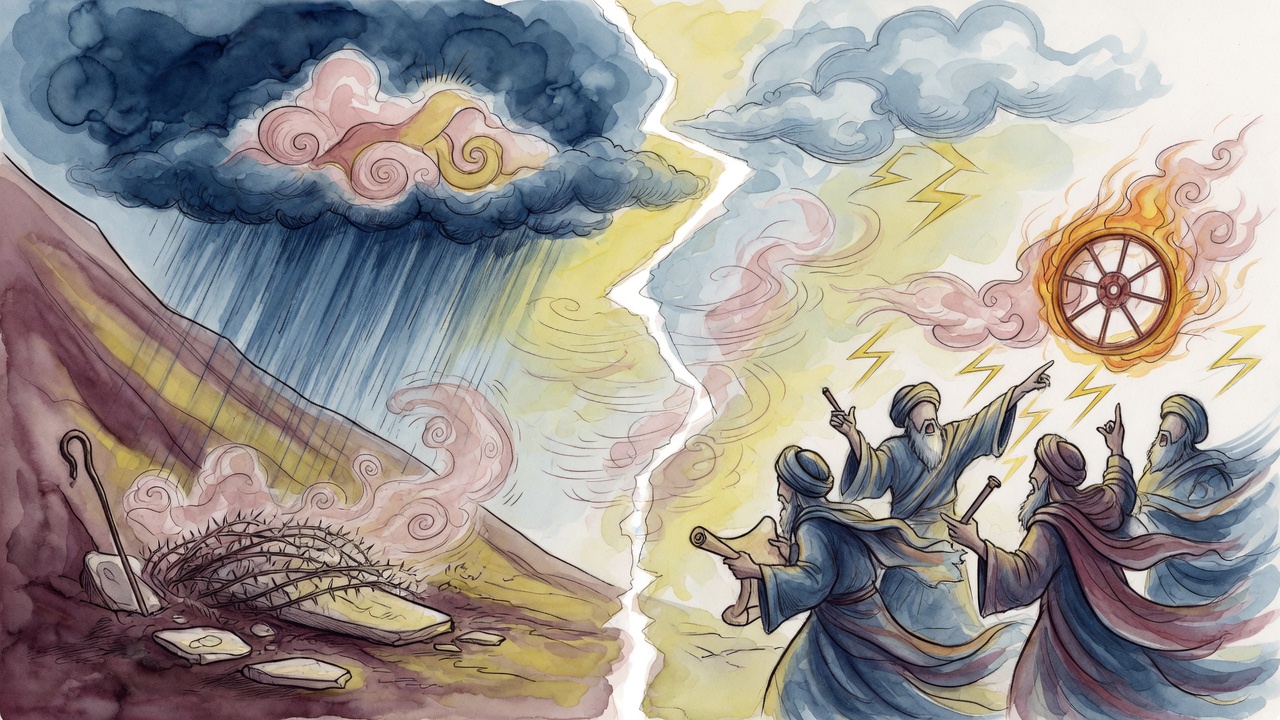
"From there the Lord scattered them on the face of all the earth" (Genesis 11:8). How? An east wind. The prophet later says, "With an east wind I will scatter them" (Jeremiah 18:17). Scatter meets scatter. The same wind family that struck the flood, Sodom, Babel, and later the sea at the end of Israel's chain.
For three generations of sinners, that wind brought destruction and dispersal. For Israel at the sea, that same wind would bring a path through water. Same wind, opposite outcomes, decided by the posture of those who stood before it. Babel tried to storm heaven with poles. Israel would stand still and trust.
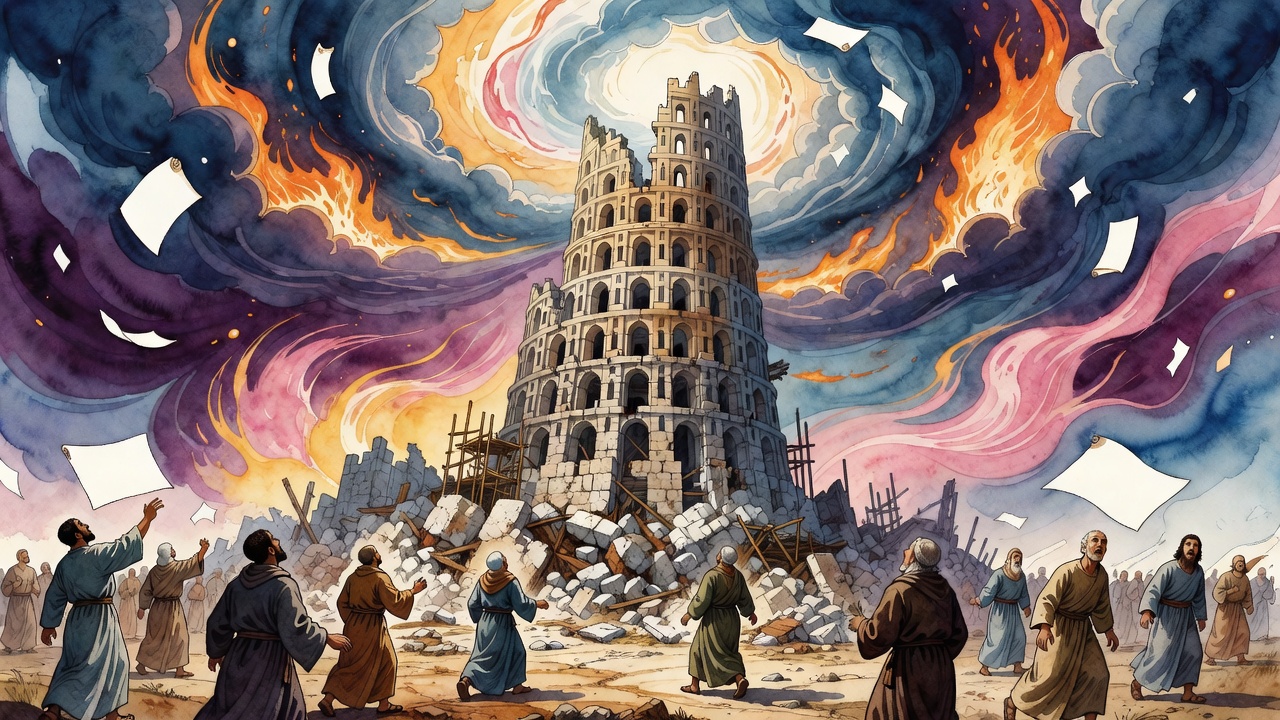
Dust lifts. Scaffolding shudders. The plain that wanted one city becomes the seedbed of many nations that can no longer finish a sentence together.
A Man Asks for Mortar
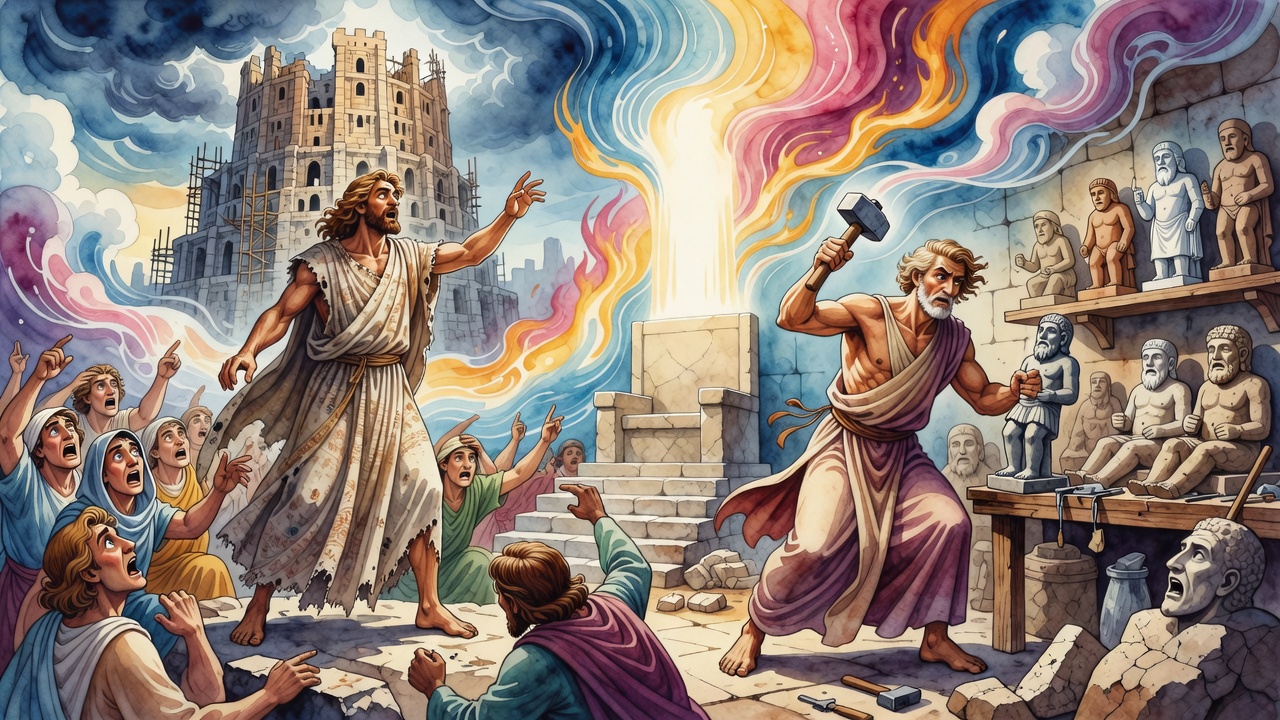
Before the bricks fall, the words fall. Tongues splinter. A man asks for mortar and receives a stone in the face, not from malice but from misunderstanding. Hands that once moved in rhythm now argue in noises no neighbor understands. The tower still stands for a while, a mute monument to a plan that no longer has a shared sentence to drive the next course of brick.
They wanted pillars under the sky. They receive distance under their feet. The plain of Shinar empties into the four corners. Families pack what they can carry and walk toward horizons that no longer share a grammar. Somewhere a half-finished pillar leans. No one left can agree what it was for.
The abandoned worksite held half-laid courses of brick. Bitumen pots sat cold and cracked. A sky still held by nothing but the word that said, "Let there be a firmament," long before any scaffold. The builders are gone into foreign speech. The east wind has done its work without needing their permission or their blueprints. Babel's pillars never touched the roof they feared. The sky holds itself, as it always did.
← All myths