The Builders of Babel Turned Shared Speech to War
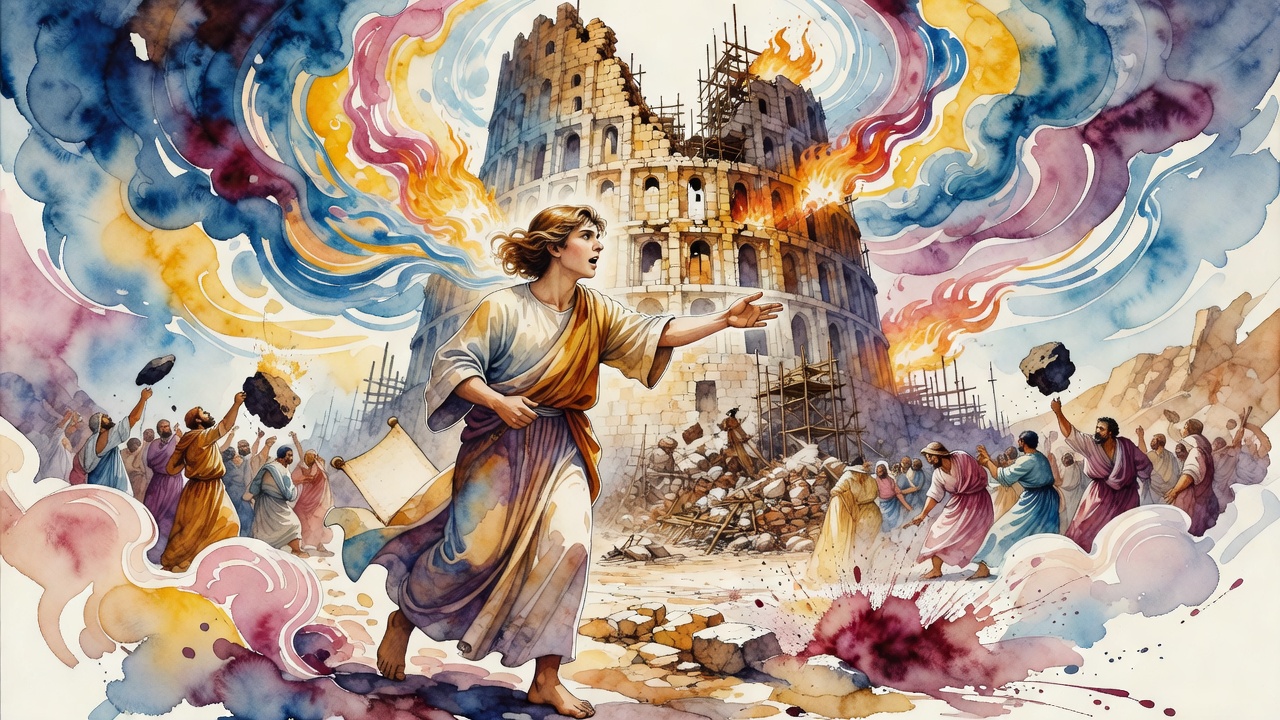
On the plain of Shinar the bricks rose fast because no one had to stop and translate a doubt. They aimed the one tongue upward like a spear.
Table of Contents
 Click for full size
One Language, One Purpose
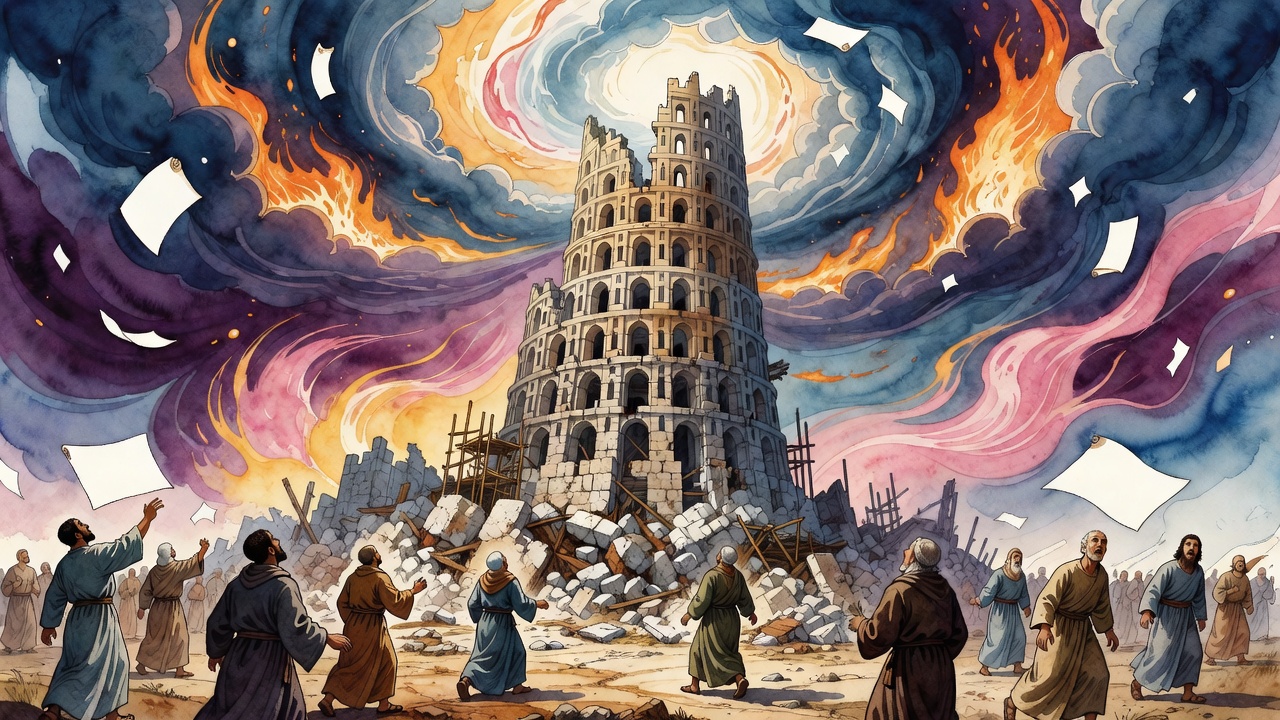
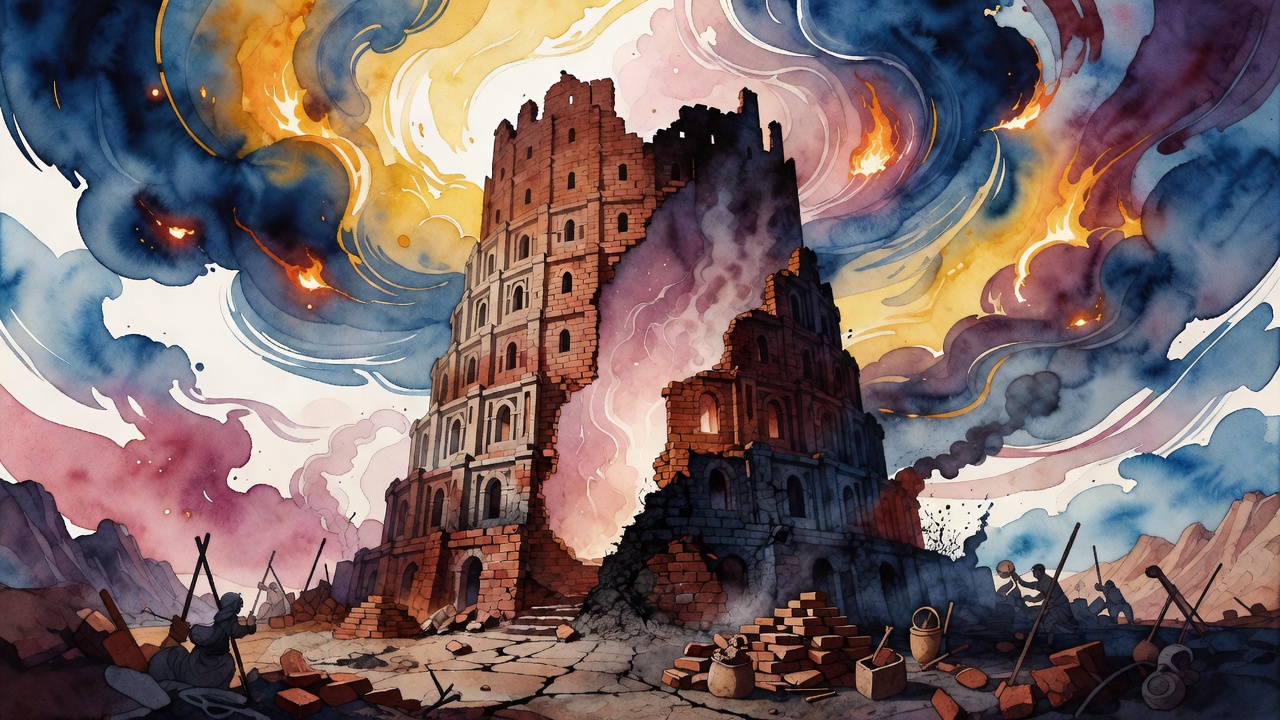
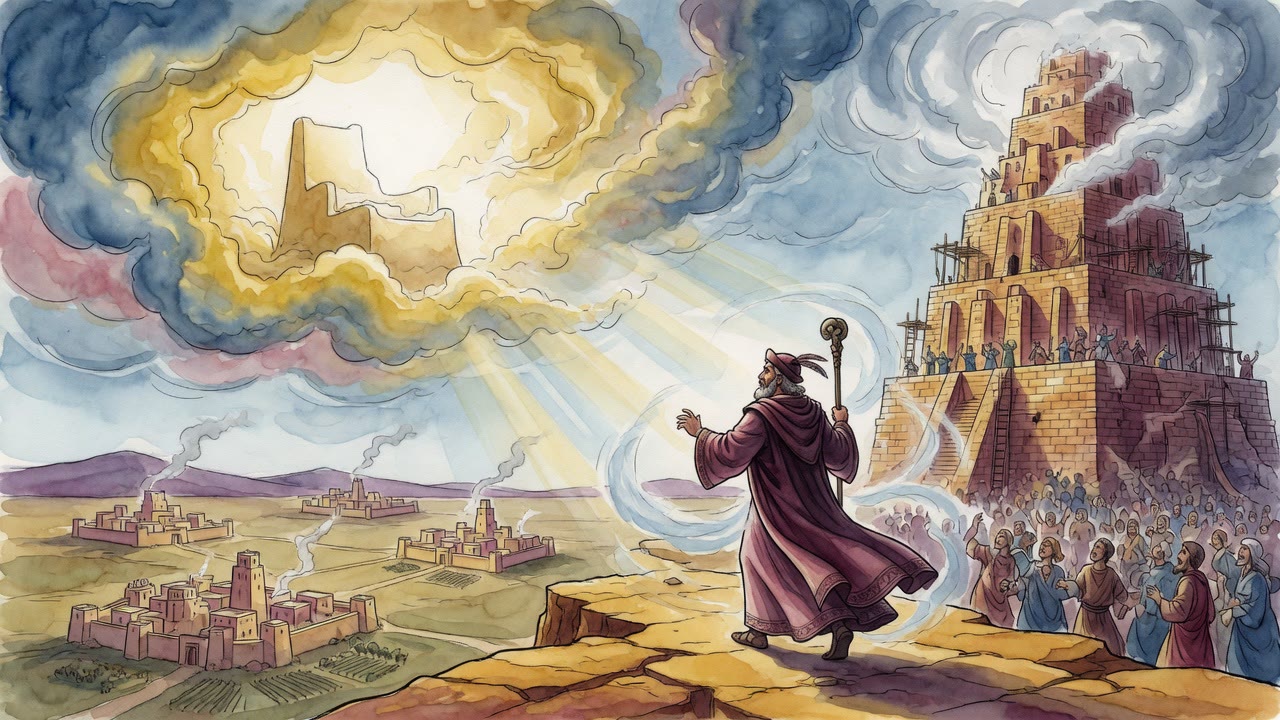
They stacked brick on brick and the language on their tongues was still one. No translator stood between plan and plan. "Now the whole earth had one language and one set of words" (Genesis 11:1). The generation of dispersion rose with that gift and turned it into a single voice against its Maker. They sought to climb into the firmament, saying it was not for God alone to claim the upper realms. With one tongue and one purpose they began to hurl words of blasphemy. Shared speech, meant for peace, became a weapon toward Heaven.
The Holy One declared: I set peace into My world, yet these wicked ones rose to manufacture strife. The contrast is deliberate. Peace was planted. They organized against it. Unity without awe is only a taller fall waiting for its height.
On the plain of Shinar the plan sounded efficient. One tongue, one project, one sky to conquer. Efficiency is not holiness. The bricks rose because no one had to stop and translate a doubt.
The Eruv That Knits Enemies
The sages first weigh a question of the courtyard eruv: a house where the eruv is deposited, does it still need an eruv of its own? Rabbi Jacob bar Aha asked Rabbi Abbahu. The House of Shammai required it. The House of Hillel did not. The law follows Hillel. Why does the eruv matter at all? Rabbi Joshua ben Levi taught that the courtyard eruv was instituted only for the ways of peace. Picture a woman who sends her child to a neighbor for the shared eruv. The neighbor kisses and embraces the boy, and the mother thinks, "See how she loves me," and her heart softens. So the eruv quietly knits enemies into friends.
That is the gift the tower builders refused. They had one language already. They did not need a loaf to make peace. They used unity to make war on the sky. Later Israel would learn to bind courtyards with bread so neighbors might become less sharp. Babel bound the whole earth with speech and aimed it upward like a spear.
Whoever Raises Himself Ends in Fire
The Maggid reads the burnt-offering, ha-olah, as "the one who raises himself," and unfolds a law of the cosmos: whoever exalts himself ends in fire. The generation of the Flood sneered, "What is the Almighty, that we should serve Him?" and were judged. The men of Sodom drowned in brimstone and fire. Pharaoh boasted, "My river is my own, and I made myself," and met the coals of heaven. Sennacherib bragged of climbing the heights of Lebanon, and an angel burned his camp from within, yet left the soldiers' garments untouched because they descended from Shem, who once covered his father's nakedness.
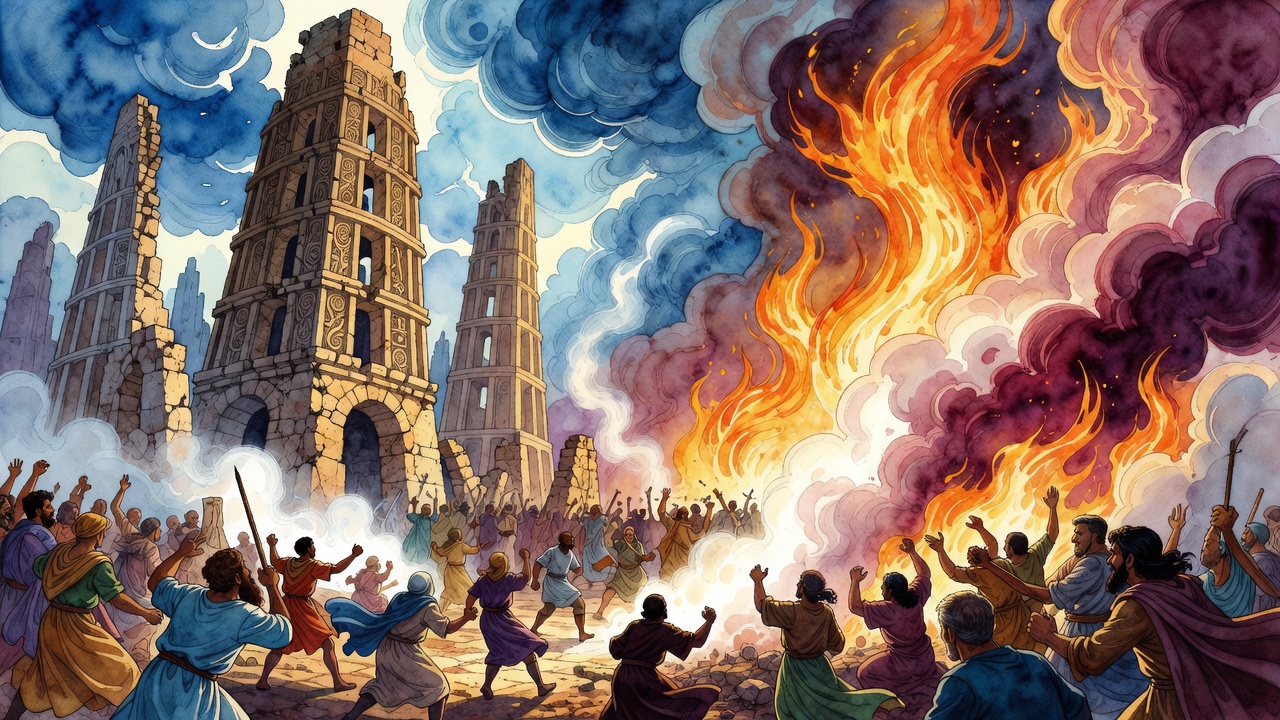
Nebuchadnezzar vowed, "I will ascend above the clouds; I will be like the Most High," and flung Hananiah and his companions into the furnace. God turned the furnace into an open road for the righteous and a fire that leapt out against the watchers. Nebuchadnezzar himself was scorched, half-burned, driven out to graze among the beasts. The one who climbs becomes the offering on the pyre. Babel's builders belong on that list even when their fire is scattering and not brimstone: the rise is the same crime wearing different tools.
When Justice Laughs Over Sodom
"Of laughter I said: it is mad" (Ecclesiastes 2:2). The sages asked what laughter could be so crazed, and they answered: the laughter of justice itself, when the attribute of Divine Justice laughed bitterly over the people of Sodom. Consider their land, says Job. From the earth comes bread, yet beneath it lies overturned fire. The city that twisted welcome into predation earned a mirth that is not joy. It is the sound of a verdict that has finally found its fuel.
Babel's builders and Sodom's judges stand in different generations and the same posture: human arrangement against Heaven's order. One stacks bricks. One stacks courts that punish kindness. Both meet fire. Both teach that skill without fear of God is only a more efficient way to earn the laugh of justice.
What the Scattering Meant
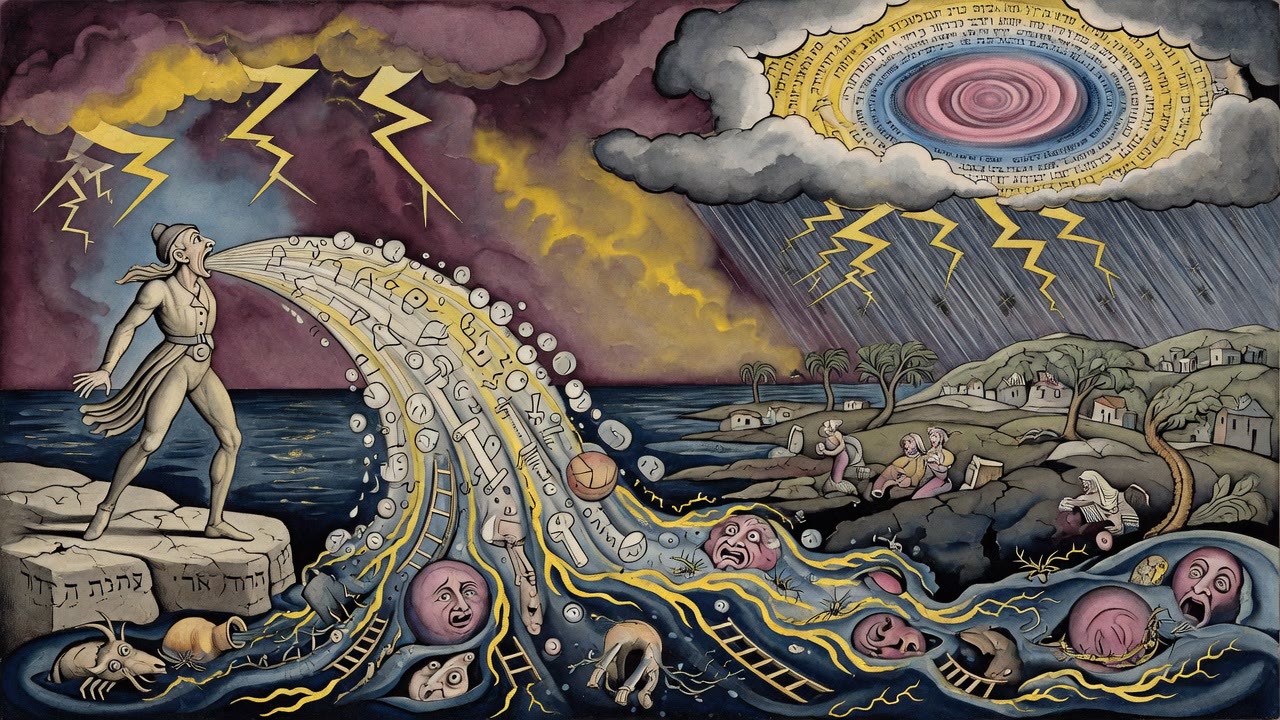
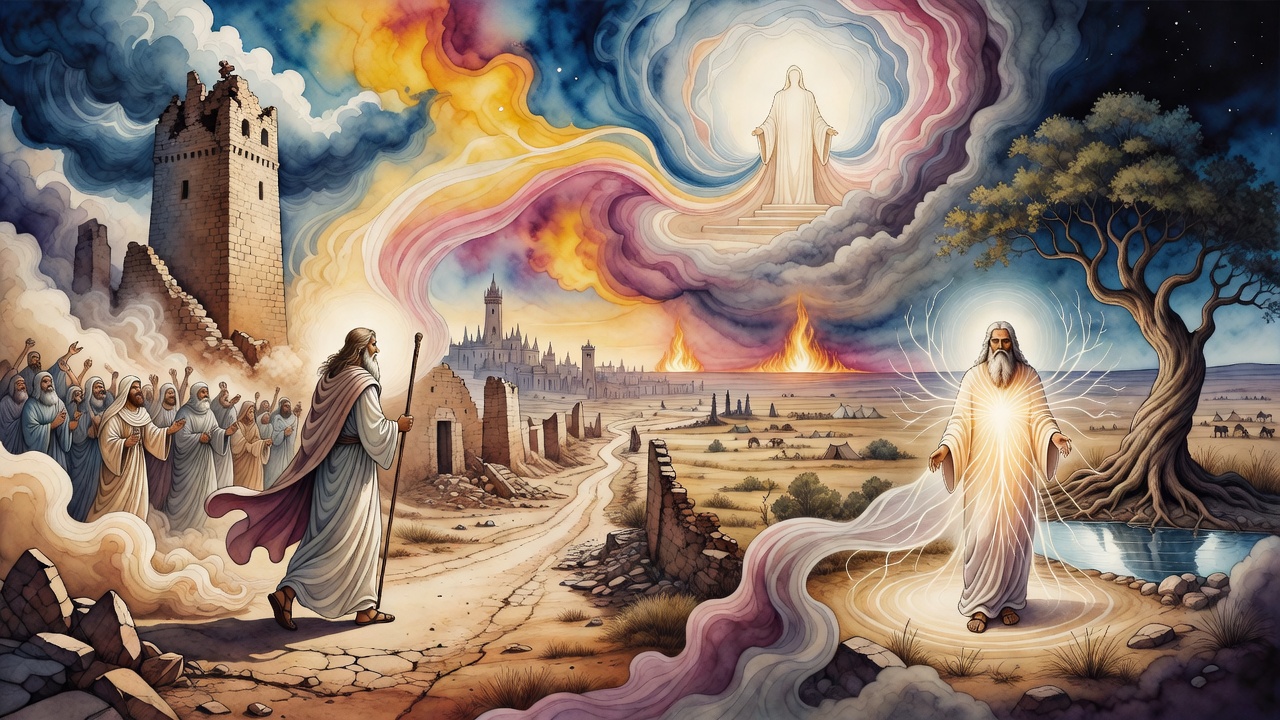
Languages multiplied. The tower stopped. The generation that would not use speech for peace lost the ease of speech itself. Neighbors who once shared every word now needed patience just to trade grain. Later, a simple eruv would try to teach what Babel refused: that shared things exist to soften hearts, not to storm the firmament. Pride still climbs. Fire still answers. The courtyard loaf remains a quieter technology of peace than any tower, and the missing single tongue of the earth remains the scar of a generation that would not leave the upper realms to God.
← All myths