Nimrod Walked Away From the Tower Builders
Nimrod left the counsel of a divided generation, quit the tower cities, and built four new ones. God gave him place for refusing the scramble of Babel.
Table of Contents
 Click for full size
The King Who Refused the Scaffold
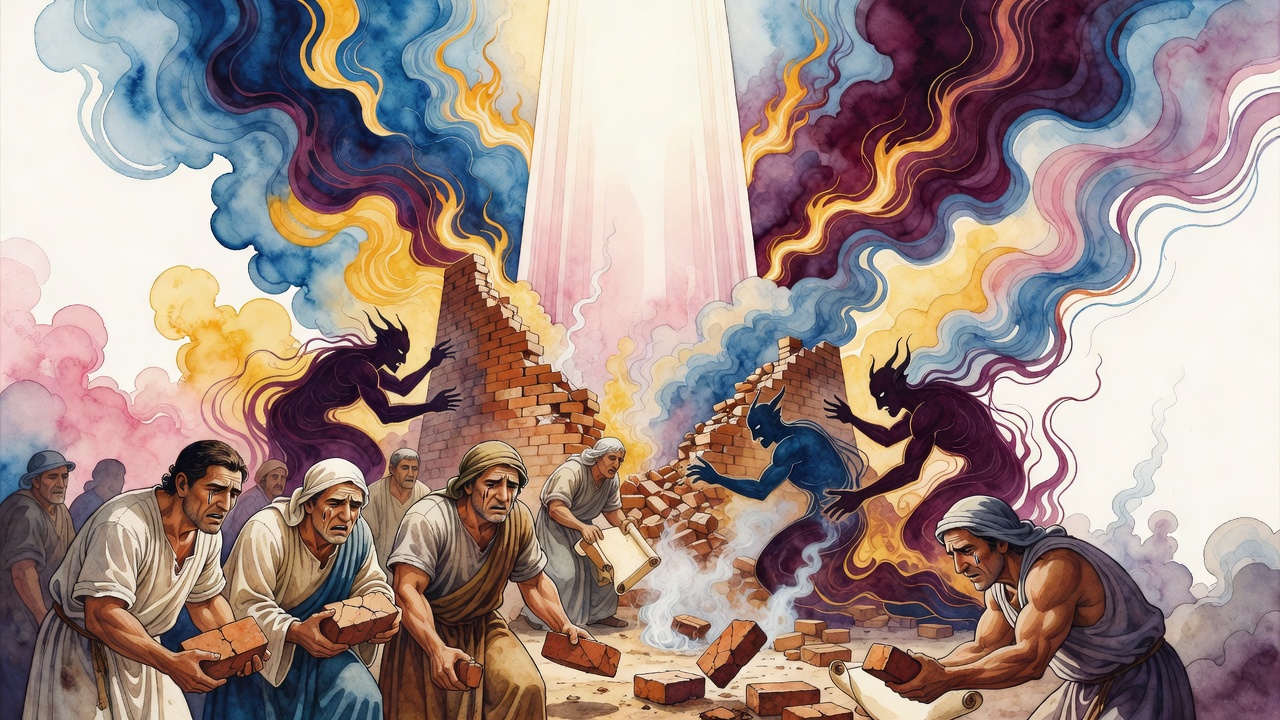
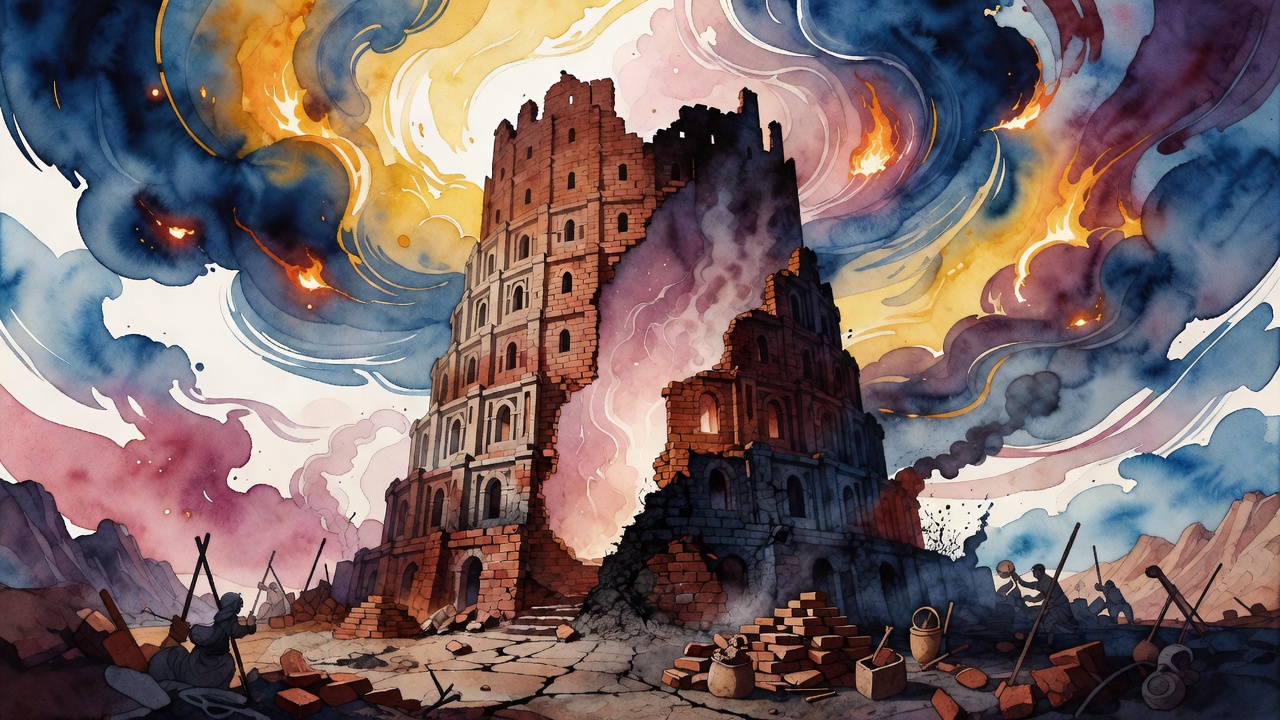
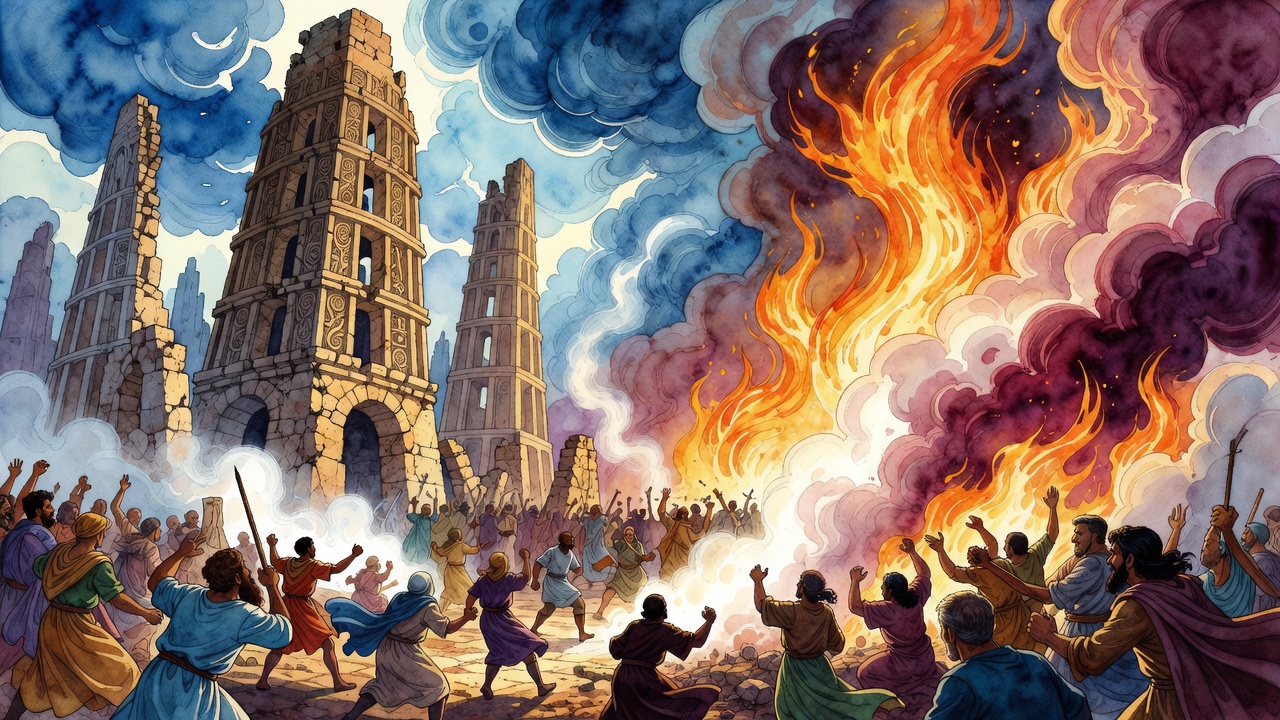
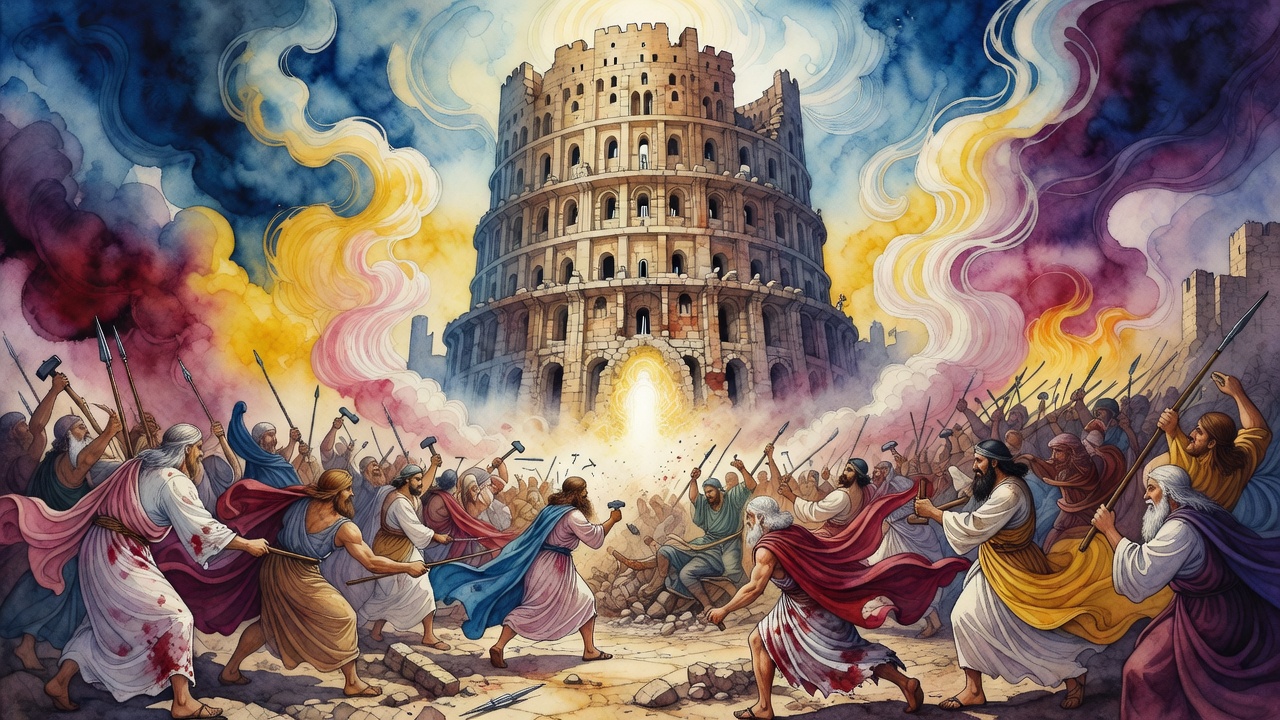
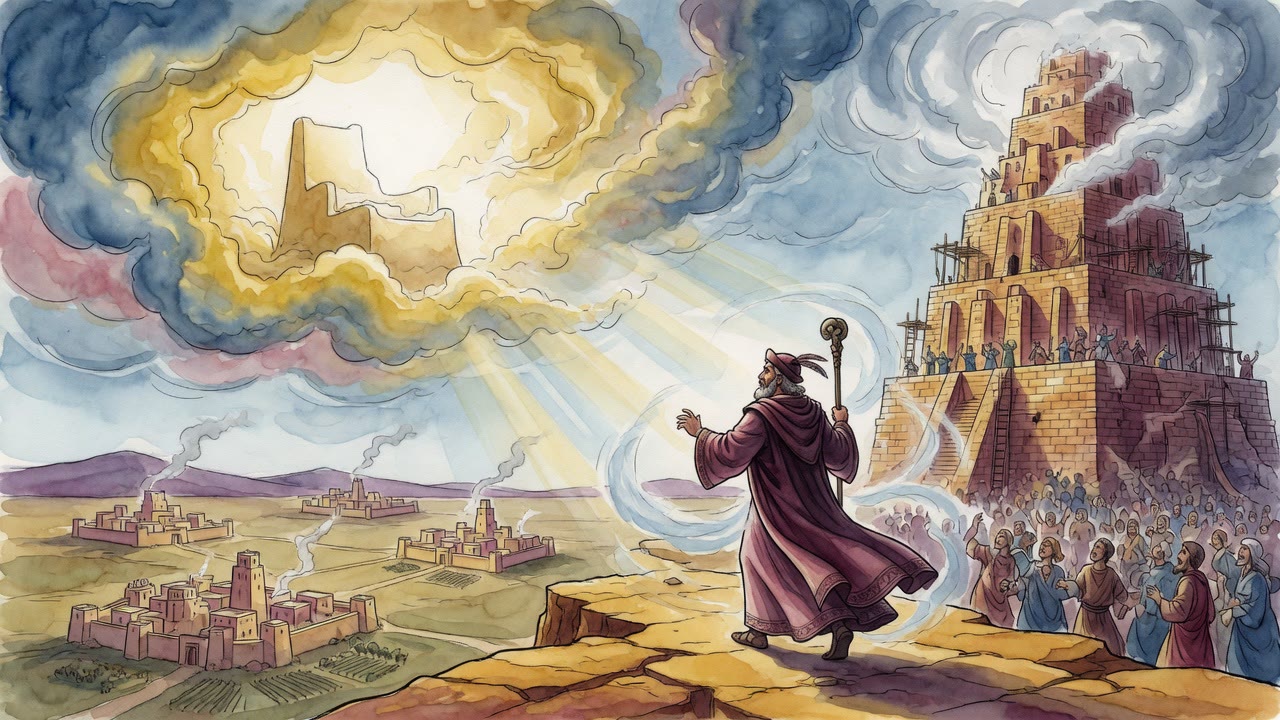
Nimrod stood where the bricks were still warm and the language had already begun to fracture. The generation was building a tower into the sky, a single project with too many mouths and too little fear of heaven. Targum Pseudo-Jonathan on Genesis says something the plain Hebrew never says. From that land Nimrod went forth and reigned in Athur, because he would not be in the counsel of a divided generation.
He left those four cities. The Lord thereupon gave him a place. He built four other cities: Nineveh and Pelatiath, Kartha and Parioth. Read carefully. The hunter who later legend paints as the great rebel is here the man who walks away from the scramble. He will not share the counsel of a generation already splitting into tongues and factions. God answers the refusal with land and walls of his own.
Fire From Above and Fire From Below
Sodom fell at sunrise so the guilty city would be exposed, not hidden. The sages say the destruction went down like the child of a woman who sinned in secret and, ashamed, casts the infant out before it can see the light of day. Two parables turn on the same divine hand producing opposite results. A king sentences one rebel province to burn by its own fire and another from the royal stores.
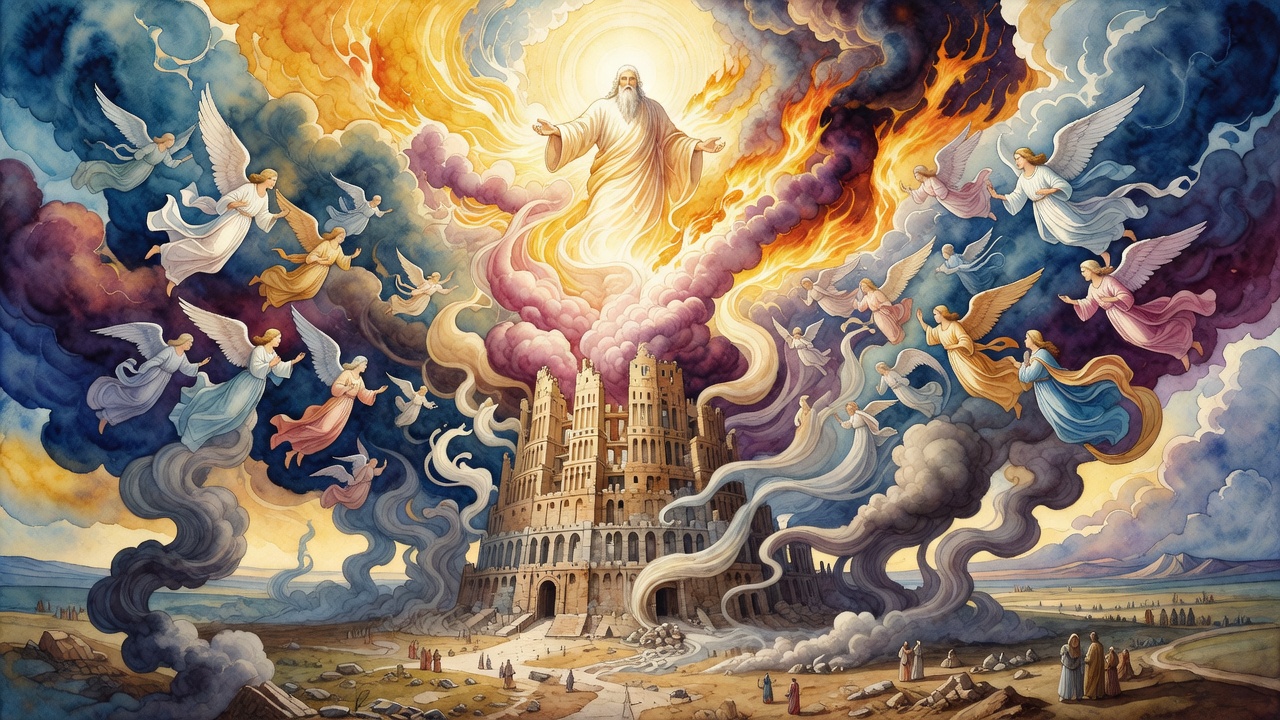
The same God who rained ruin on Sodom is the God who rained bread on Israel in the wilderness. Like a servant girl raking the same oven, handing coals to one child and warm bread to another, one hand deals out judgment and mercy at once. The doubled name in the verse, the Lord rained from the Lord, means the Holy One together with His heavenly court. The rain on Sodom was carried out by the angel Gabriel, sent from the Holy One Himself. Judgment in the highest court is never the act of one alone.
Nimrod's generation wanted height without heaven's leave. Sodom wanted plenty without mercy. Both cities learn that fire has a source, and the source keeps court.
The Servant Who Abuses the Prince
Rabbi Hiyya told of a king angry with his son who entrusts the prince to a servant. Instead of guidance, the servant abuses the boy and urges him to disobey his father. So Nebuchadnezzar conquered Israel and ordered them to forsake the Torah, their Father in Heaven, and fall before his image. Fall and prostrate yourselves to the image that I made, he demanded (Daniel 3:15).
Israel answered like people who still knew whose vineyard they were. You great fool. The Holy One placed us in your charge only because we would not prostrate ourselves to an image, and you say to us, Fall? At that moment God proclaims, My vineyard is before me. Israel belongs to God, not to the conqueror. Nebuchadnezzar argued that the loyal had dwindled. God rebuked him. The faithful had increased.
Power that mistakes custody for ownership always overplays its hand. Nimrod, in the Targum's twist, does the opposite of that mistake. He refuses the tower's counsel and takes only the place God gives.
Four Cities Left, Four Cities Founded
The midrash does not make Nimrod a righteous person. It makes him a man who can smell a doomed committee. A divided generation builds for the sky and cannot keep a single speech. He will not sit in that counsel. He leaves. Heaven answers with a grant of place, not with applause. The map of later empires still carries Nineveh, a name that will mean other stories of pride and fall. For one verse, though, the hunter is the man who walks first.
Compare him to Sodom's dawn and Babylon's furnace. In one city fire falls because no court inside the walls will judge rightly. In another, a king tries to own a people God still calls His vineyard. Between them walks Nimrod, neither bricklayer nor idol-maker in this telling, only a builder who starts over where the counsel is not already cracked.
The Place That Was Given
He builded four other cities. The verb is ordinary. The gift behind it is not. The Lord gave him a place because he would not share the counsel of division. Sometimes holiness looks like refusing the project everyone else is shouting about. Sometimes judgment looks like rain that is also bread in another field. Sometimes exile looks like a servant who forgot he is only a servant.
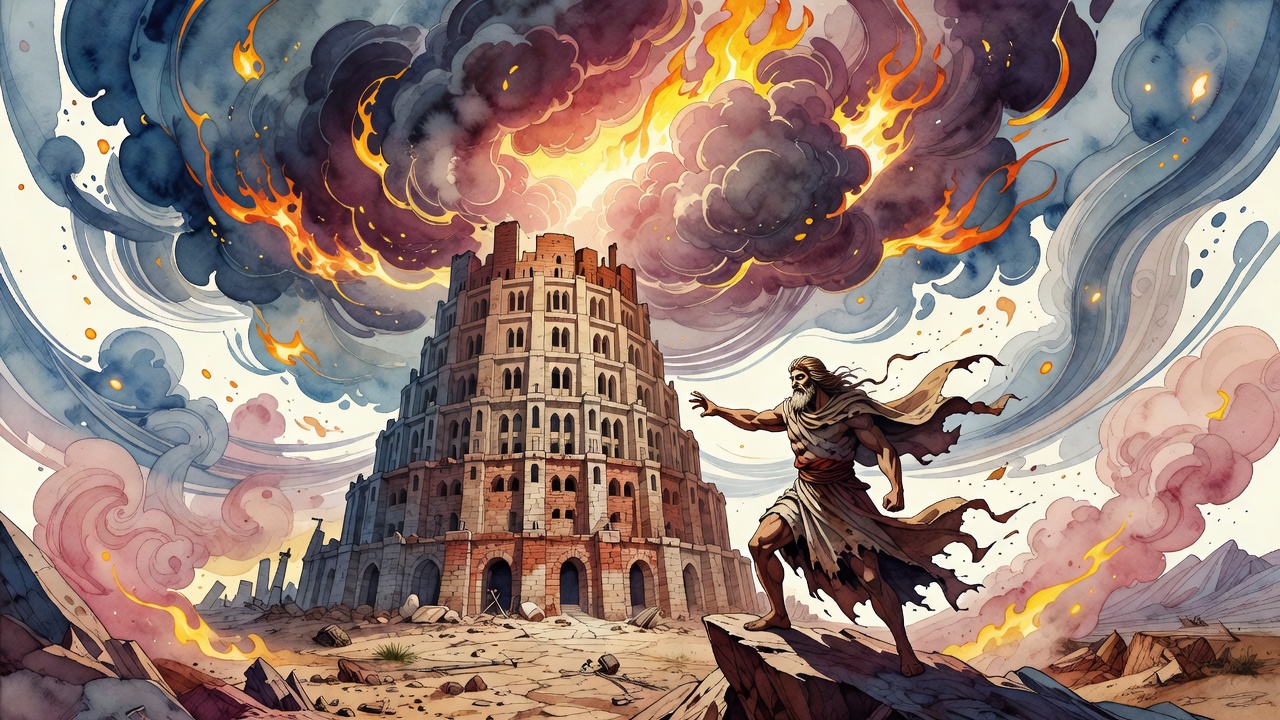
Nimrod's feet leave warm brick. Behind him the tower still climbs. Ahead of him the land opens because heaven noticed a man who stepped out of a bad meeting before the languages finished falling apart.
← All myths