5 min read

Abraham Walked Past Babel's Counsel and Sodom's Road

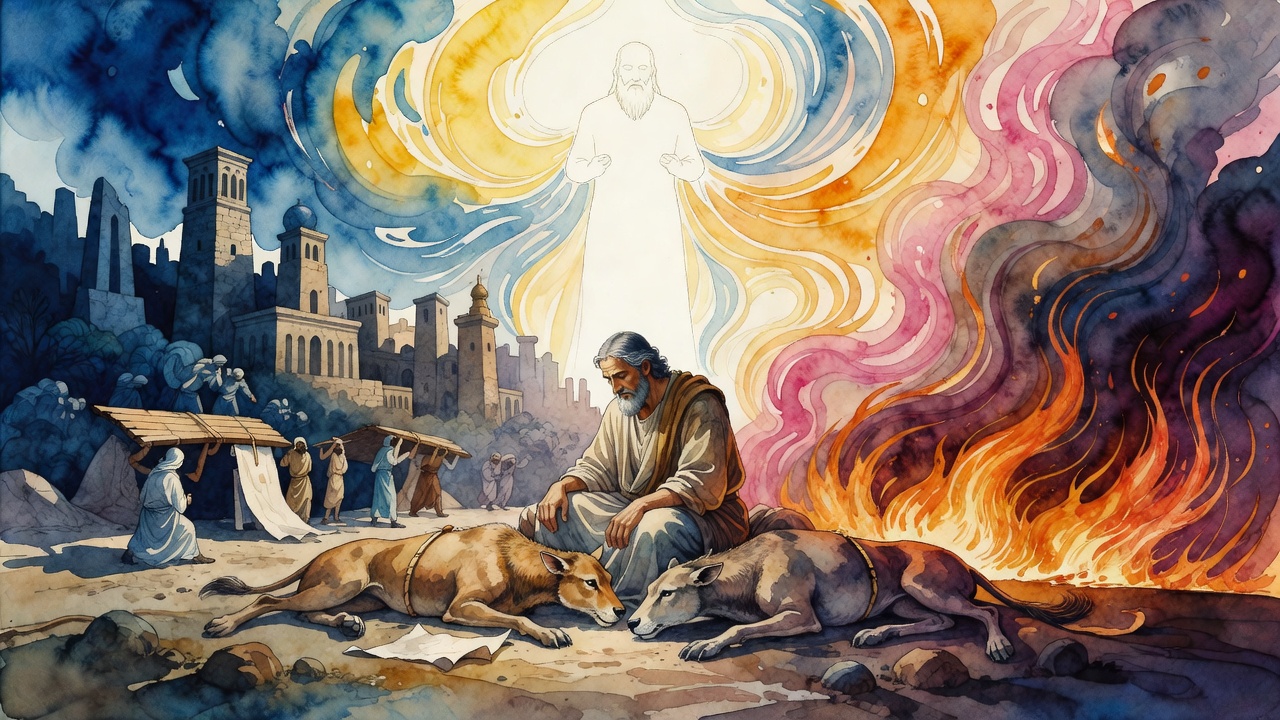
At Gerar the king told Abraham to settle anywhere he liked. Abraham heard the mockery in the offer and did not stay. At night his own body taught him Torah.

Curated by Arthur · Told by Maggid ·
Table of Contents
  1. Three Roads He Would Not Take
  2. The Prophet Without a Human Teacher
  3. The Tree Planted by Living Water
  4. Many Teachers, One Stream

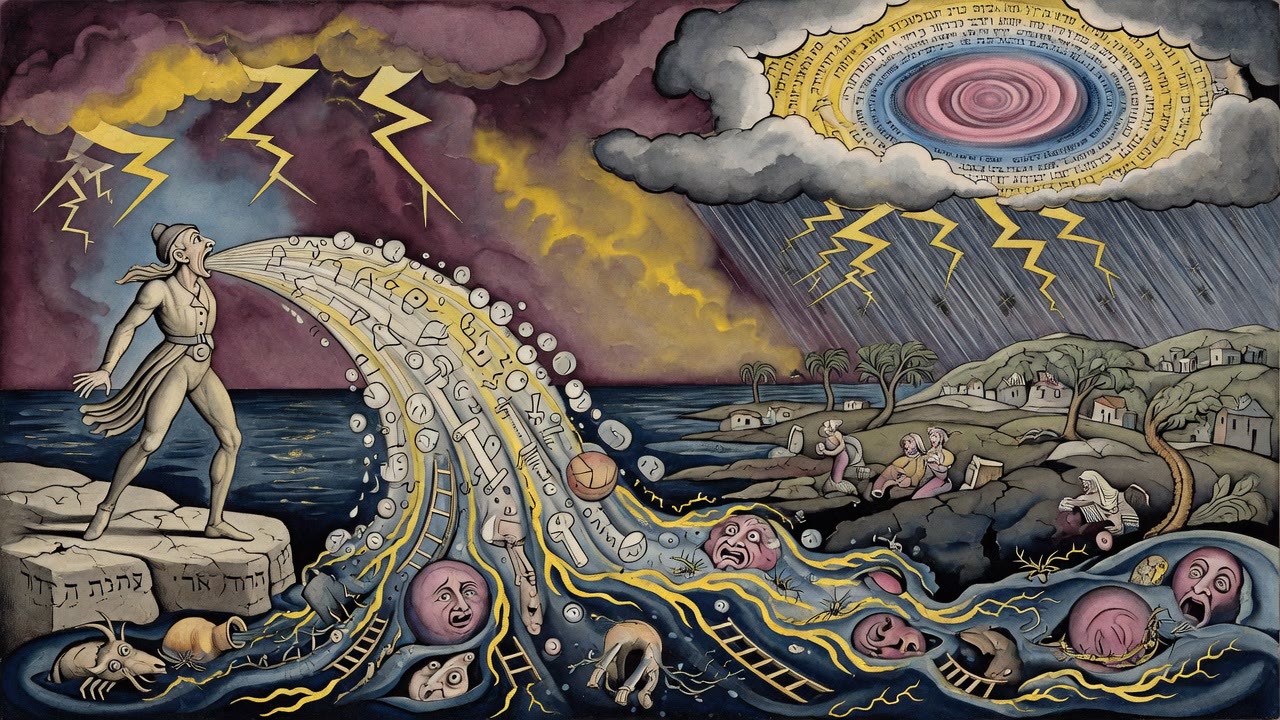
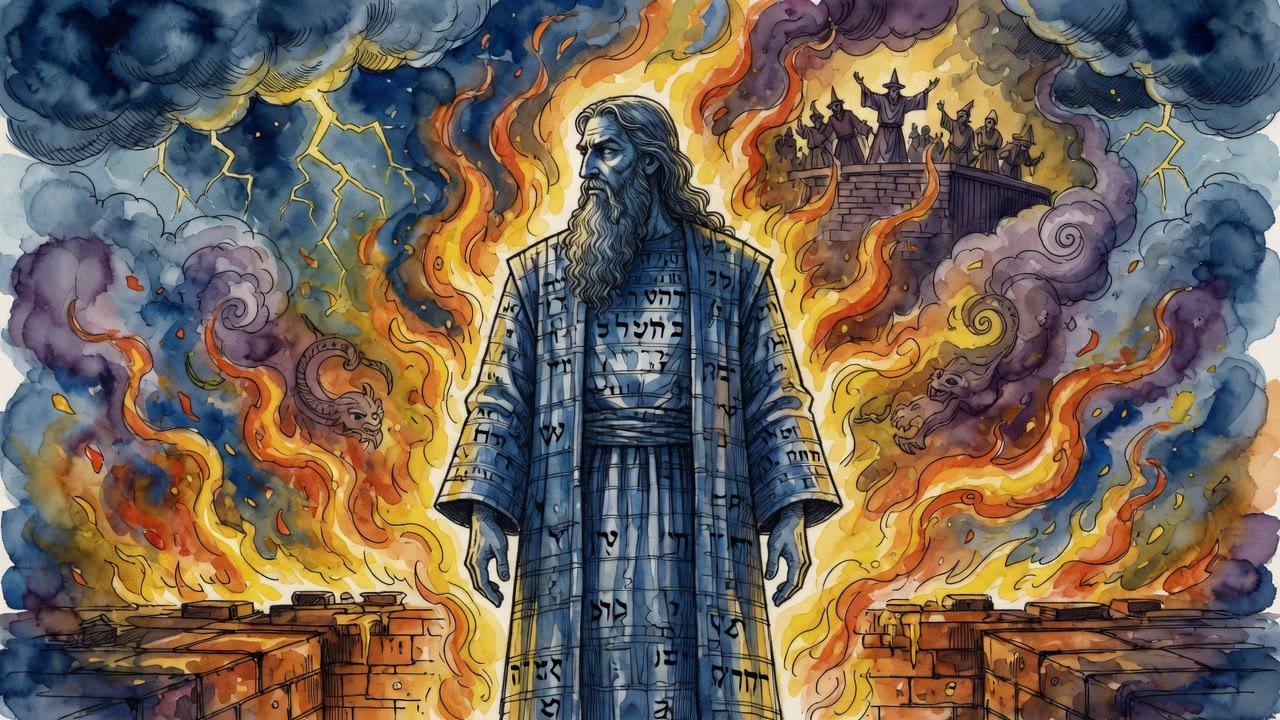
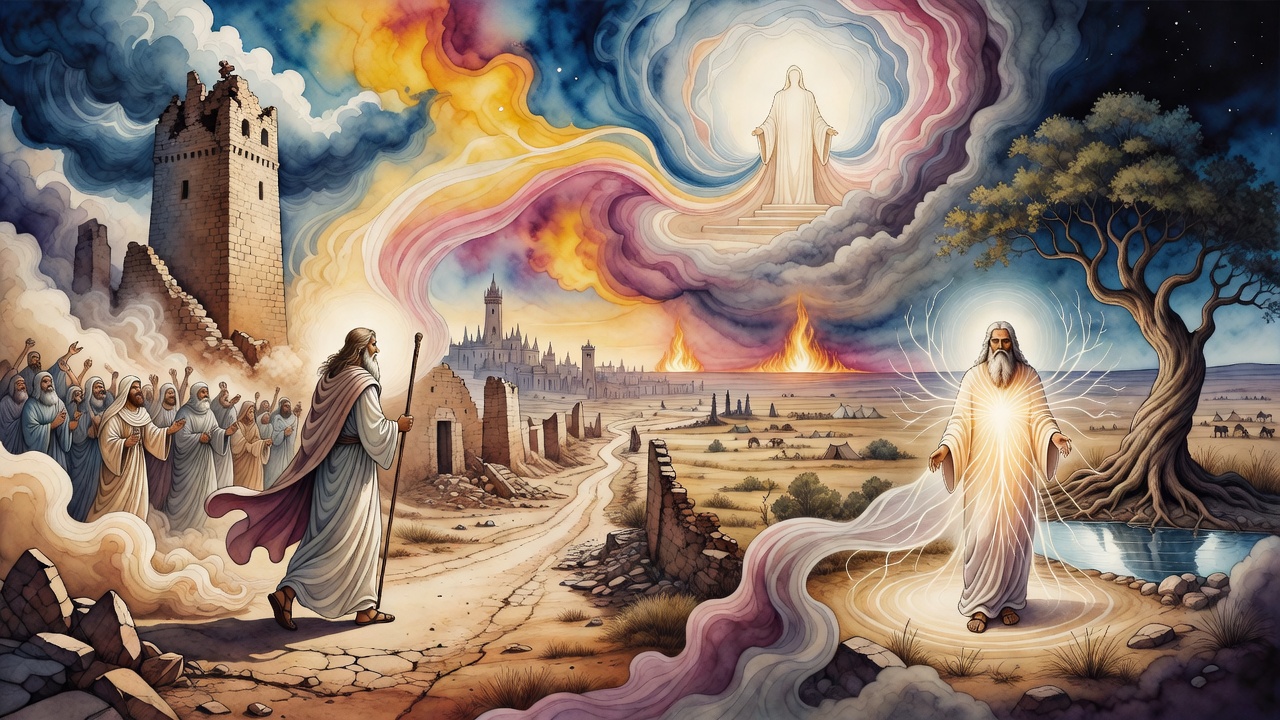
Abraham walks past the invitation before he fully sees the brick. Come, let us build. The counsel sounds practical. Stone, bitumen, a name that would not scatter. Men divide the labor of pride: some to climb into heaven, some to fight God, some to set idols on the height. Abraham turns his face away from that counsel the way a man turns from smoke.
Abraham Walked Past Babel's Counsel and Sodom's Road Click for full size

Blessed is the man who does not walk in it. The psalm has not yet been written. The feet already know the path past Babel's meeting and the scorner's chair.

Three Roads He Would Not Take

The generation of the dispersion called him into their planning. Abraham refused the meeting. Their city was not only walls. It was a tower of false worship dressed as unity. When judgment fell, the tradition said they became like apes, demons, and wandering spirits. Evil chased the ones who had chased a name against heaven. Abraham kept walking east and west under a different name, the one God had promised to make great.

Then the road bent toward Sodom. The plain was rich. The men of the place were wicked and sinners before the Lord exceedingly. Abraham would later argue for the city if ten righteous could be found, but he would not plant his household in the path of those sinners. He pitched tents where the air still carried the fear of God. Lot chose the green circle. Abraham chose the open ground that left room for angels to arrive without asking a city's leave.

At Gerar, Abimelech opened his hand. Here is my land before you. Dwell wherever it pleases you. Generosity sat on the offer like oil. Abraham heard the oil and the scorn under it: come sit among us, take our ground, become a resident of our laughter. The midrash named that invitation the seat of scorners. Abraham took Sarah back by the force of a prophetic dream sent to the king, and he did not settle as a scorner among scorners. He remained a guest of God, not a citizen of someone else's smirk.

The Prophet Without a Human Teacher

God had already called him a prophet when Abimelech was told to restore the man's wife. Restore her, for he is a prophet. Abraham commanded his children and his household after him to keep the way of the Lord, to do righteousness and justice. The question pressed hard in the night: who taught him the way, if no human master walked him through the scroll?

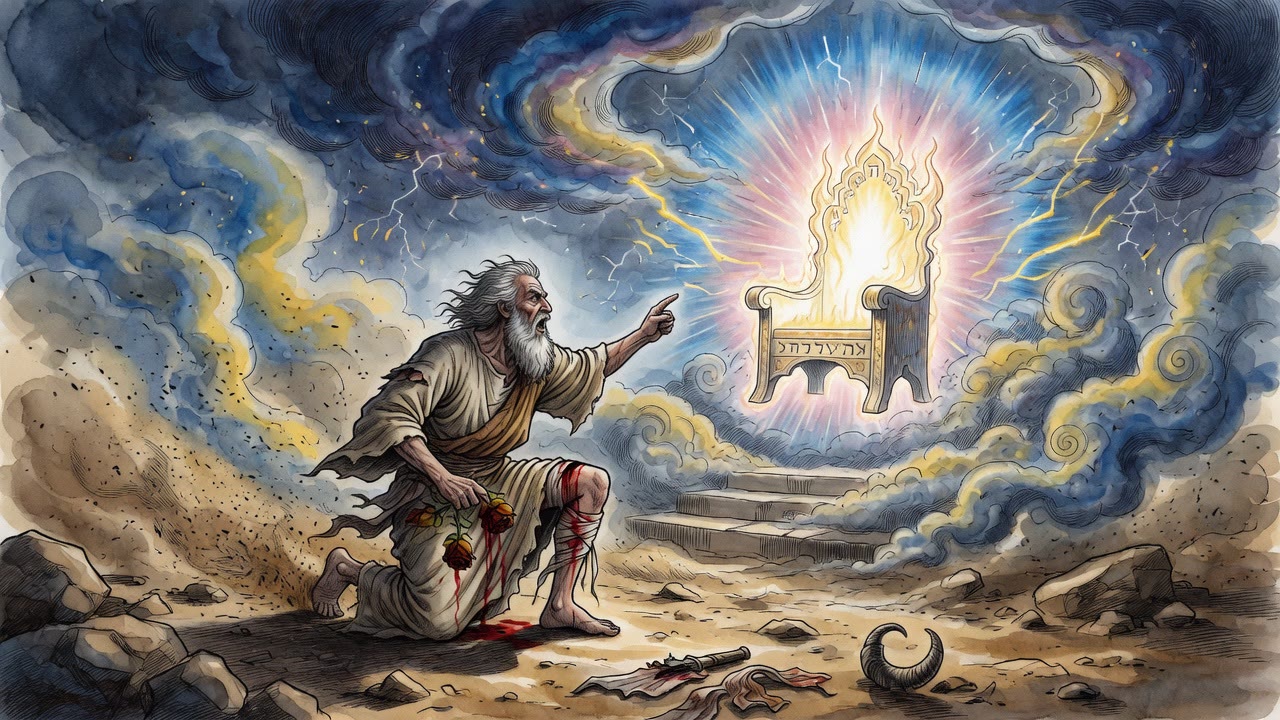
Rabbi Shimon ben Yochai said God summoned Abraham's kidneys. They rose like two rabbis inside his body and taught him wisdom while he lay awake. Counsel came from within the meat of him, night after night, until the verse could later say, even at night my kidneys instruct me. Abraham rolled onto his side, pressed a fist to his ribs, and listened to the stream of law moving under his own breath. No academy. No courtyard of students. Only the body God had made into a beit midrash.

He observed details no one had yet named in a public code: the joining of cooked dishes before a festival, the joining of courtyards for carrying on Shabbat. The later sages said he kept such things. The night teachers inside him did not wait for Sinai to finish writing.

The Tree Planted by Living Water

The psalm that begins with the blessed man ends with a tree planted by streams of water, fruit in its season, leaf that does not wither. The sages set the Torah in that trunk. She is a tree of life to those who take hold of her, beloved to all life. Rabbi Yudan said the original tree of life in Eden spread its branches for the world's inhabitants; so the Torah spreads for every living soul and draws them toward life that does not end.

They said the tree of life stands five hundred years tall, its measure binding the days of creation into one heartwood. Beside the waters of Tiberias the image grew concrete: fruit in season, students flourishing because a teacher toiled in reading, Mishnah, and Talmud, leaves that would not dry because the community needed their conversation.

Abraham did not see Lake Kinneret. He saw wells and wadis. He saw his household learning righteousness after him. The same pattern held. A man who refused wicked counsel became a root. A man taught from his kidneys became water for others.

Many Teachers, One Stream

Generations later, Rabbi Shmuel son of Rabbi Yitzchak moved from teacher to teacher, group to group, gathering understanding the way roots gather mineral from every direction. From all my teachers I have gained understanding. He was not hunting novelty. He was refusing the scorner's seat that pretends one courtyard owns the river. Counsel for the sake of Heaven, said Rabbi Elazar ben Arach when men called him a prophet for good advice, will stand. The counsel of the Lord will stand.

Abraham had already lived that law. He would not take Babel's counsel, Sodom's road, or Abimelech's land. He would take the night instruction and walk it into daylight until his children sat under a tree they had not planted with brick and bitumen.

The green of Babylon's later king would be a different tree, ruthless and temporary. Abraham's tree was planted by streams that did not depend on a tower's height.


← All myths
From the tradition

Sources

2 sources

The texts behind this telling. Some cards carry a translation of the source; others are our own retelling of it, and each card says which. Every card links out to the original.

Midrash Tehillim 1:11Midrash Tehillim

Retold in our words. Read the original at the link below.Rabbi Mike Feuer, Jerusalem Anthology · CC-BY

The opening of Psalm 1, "Blessed is the man," but according to Midrash Tehillim, a collection of rabbinic interpretations of the Book of Psalms, it's packed with layers of meaning. It's not just about receiving blessings, but about the choices we make and the paths we avoid.

The Midrash (rabbinic interpretive commentary) launches straight in, connecting that blessed man to none other than Abraham himself! How so? Well, it references (Genesis 20:7), where Abraham is called a prophet. "Restore the man's wife, for he is a prophet." The Midrash sees in Abraham a figure who embodies the righteous path.

The question is what the path to avoid means. The Midrash contrasts Abraham with several groups known for their misdeeds.

First, there's the "generation of the dispersion," those who sought to build the Tower of Babel. (Genesis 11:4) says, "Come, let us build for ourselves a city." The Midrash breaks this down. “Come, let us build,” refers to counsel, as it is said (Judges 9:29), “Give ear, and listen to my voice, and let this be the counsel." And the "city" they were building? It's interpreted as a symbol of idolatry, drawing on a powerful image from (Daniel 4:10-11), where a towering tree represents worldly power and false gods.

The people were divided: some wanted to ascend to heaven, others to wage war against God, and still others to serve idols there. And their punishment? A rather unsettling fate, to say the least. They "became like apes, demons, and wandering spirits." A stark warning against following the counsel of the wicked! (Proverbs 13:21), "Evil pursues sinners," echoes this sentiment.

Next up, the infamous people of Sodom. (Genesis 13:13) tells us they "were wicked and sinners before the Lord exceedingly." They represent those who "did not stand in the path of sinners."

And then there’s Abimelech, who, according to (Genesis 20:15), offered Abraham land to dwell on. "Here is my land before you; dwell wherever it pleases you." While seemingly generous, the Midrash sees in this an example of "the dwelling of the scorners."

So, what sets Abraham apart? He sought only the will of God. (Genesis 18:19) says, "For I have known him, because he commands his children and his household after him, that they may keep the way of the Lord, to do righteousness and justice." He’s presented as a model of devotion, committed to teaching his family to follow God’s path.

And here’s where things get really interesting. Rabbi Samuel bar Nachmani says Abraham had no human teacher for Torah. So how did he learn? Rabbi Shimon ben Yochai teaches that God summoned Abraham's "kidneys," which were like two rabbis, and they flowed and taught him wisdom all night long! It's a wild image. But it speaks to the idea that divine wisdom can come from unexpected sources, even from within ourselves. This is linked to (Psalms 16:7): "I will bless the Lord who gives me counsel; even at night my kidneys instruct me."

And incredibly, Rabbi Samuel bar Nachmani, in the name of Rabbi Jonathan, even goes so far as to say that Abraham observed rabbinic laws like eruv tavshilin (combining cooked dishes) and eruv chatzerot (combining courtyards) on Shabbat (the Sabbath) – laws that wouldn't be codified until centuries later! This is based on (Genesis 26:5): "Because Abraham listened to My voice and kept My charge, My commandments, My statutes, and My laws."

The Midrash concludes with a beautiful image: "And the Lord took them and planted them in the Garden of Eden." "Its fruit will be given in due time," referring to Isaac. "And its foliage will not wither," referring to Ishmael. "And whatever he will do…" The verse trails off, suggesting the ongoing impact of Abraham's legacy.

So, what can we take away from this exploration of Psalm 1 through the lens of Midrash Tehillim? It’s more than just a simple blessing. It's a call to action, a reminder that the path to righteousness requires conscious choices, a willingness to avoid the counsel of the wicked, and a commitment to seeking God's will in all things. And perhaps, just perhaps, a willingness to listen to the wisdom that might be found even within ourselves.

Full source
Midrash Tehillim 1:17Midrash Tehillim

Retold in our words. Read the original at the link below.Rabbi Mike Feuer, Jerusalem Anthology · CC-BY

The mystics certainly did. And what was their water, their sunlight, their very soil? The Torah.

Midrash Tehillim, a beautiful collection of interpretations on the Book of Psalms, opens a window into just that image. It starts with the verse, "And he shall be like a tree planted," connecting it to (Proverbs 3:18), which reads, "She is a tree of life to those who hold onto her." (Prov. 3:18). Why, Rabbi Yitzchak, son of Rabbi Chiya, asks, is the Torah called a tree of life? His answer? "Because it is beloved to all life."

Rabbi Yudan goes even deeper. Why is the Torah compared to a tree of life? His answer points to the cosmic scale of the idea. Just as the original tree of life in the Garden of Eden spread its branches to all the inhabitants of the world, so too, the Torah is spread out for all of life, bringing them to eternal life in the world to come.

The Midrash (rabbinic interpretive commentary) even tells us that this tree of life stands for five hundred years, with all the days of creation somehow connected to it.

Now, Rabbi Shmuel, son of Rabbi Yitzchak, took this idea to heart. He moved from teacher to teacher, from group to group, absorbing wisdom from every source. Why? To fulfill (Psalms 119:99): "From all my teachers, I have gained understanding." He knew that to truly flourish, he needed to draw from a wide range of perspectives, just like a tree drawing nutrients from the soil around it.

And then there's this vivid image: The tree of life stands by the waters of Tiberias, that ancient, holy lake in Israel, and its fruits are produced in their season. What does this mean? The Midrash explains: The students of a person who toils in Torah study, who sets aside time for reading, Mishnah (oral law), and Talmud (commentary on the Mishnah), will also flourish. Their leaves will not wither, because everyone needs their conversation and study. In other words, dedicated Torah study bears fruit, not just for the individual, but for the entire community.

And whatever he does will succeed, because everyone needs his counsel. Why? Because he speaks from a place of wisdom, grounded in the eternal truths of the Torah.

The Midrash then brings in the example of Rabbi Elazar ben Arach, whose advice was so successful that people called him a prophet! But he demurred. "I am not a prophet," he said, "nor am I a son of a prophet, but this is what I have received from my teachers: Any advice that is for the sake of Heaven will eventually be fulfilled."

Rabbi Menashe adds to this, citing (Proverbs 19:21): "And the counsel of the Lord shall stand." (Prov. 19:21). Any advice that contains the word of God will eventually be fulfilled. That’s the power of Torah, it’s not just a set of laws or stories, but a source of guidance that can shape our lives and the world around us for the better.

So, what does this all mean for us today? Are we rooted in something meaningful? Are we drawing sustenance from sources of wisdom and truth? Are we striving to be like that tree, bearing fruit for ourselves and for others? It’s a question worth pondering.

Full source