5 min read

David Prayed Against His Enemy, and Heaven Named Saul

There are ears on the road and ears in the wall, Rabbi Levi said. David wrote Psalm 7 afterward, pleading that his prayer be counted an unwitting sin.

Curated by Arthur · Told by Maggid ·
Table of Contents
  1. The Word He Chose Because It Had No Face
  2. Ears on the Road, Ears to the Wall
  3. The Question That Named Saul
  4. A Song of Straying
  5. Water on the Fire
David Prayed Against His Enemy, and Heaven Named Saul Click for full size

The Word He Chose Because It Had No Face

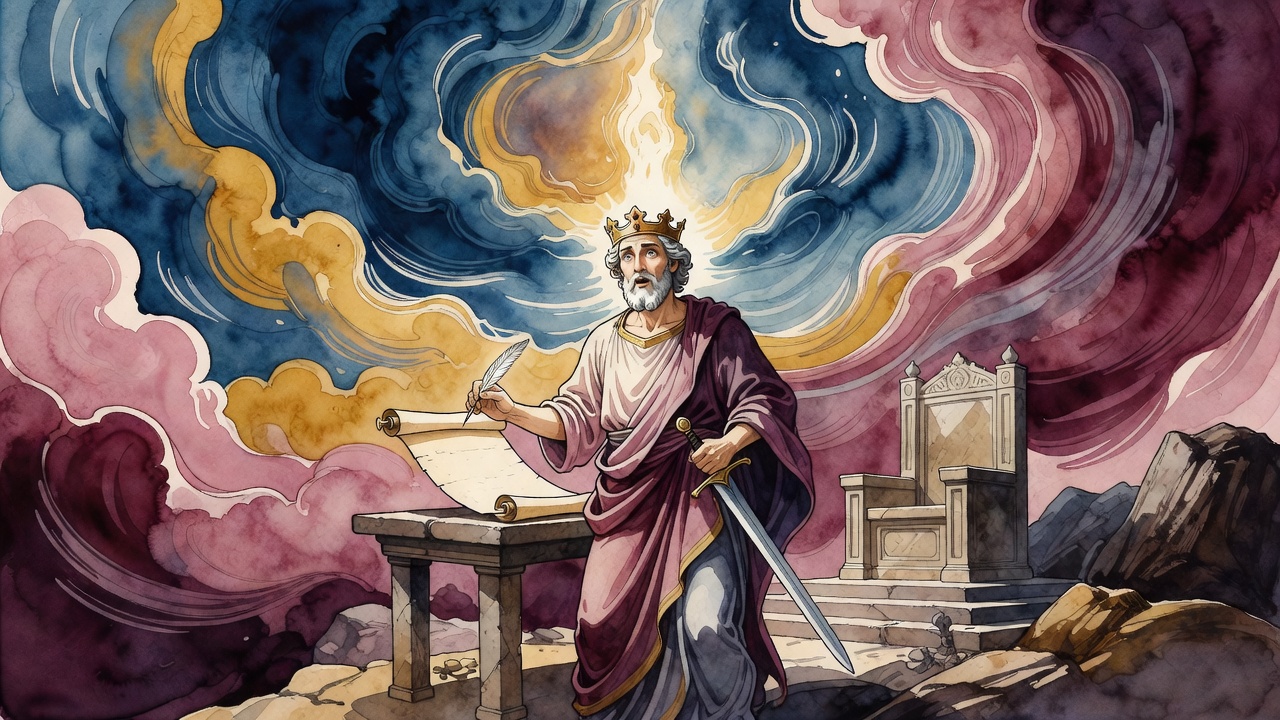
David wrote the line at night with the door shut. "My enemies will be exceedingly ashamed and frightened."

Enemies. Plural, and therefore nobody. A plural has no address, so it cannot be delivered to anyone, and a man can put every year of his life into it and still swear afterward that he meant no one in particular. He had the years to put in. There had been a spear in a palace, and caves, and a crown that kept not arriving.

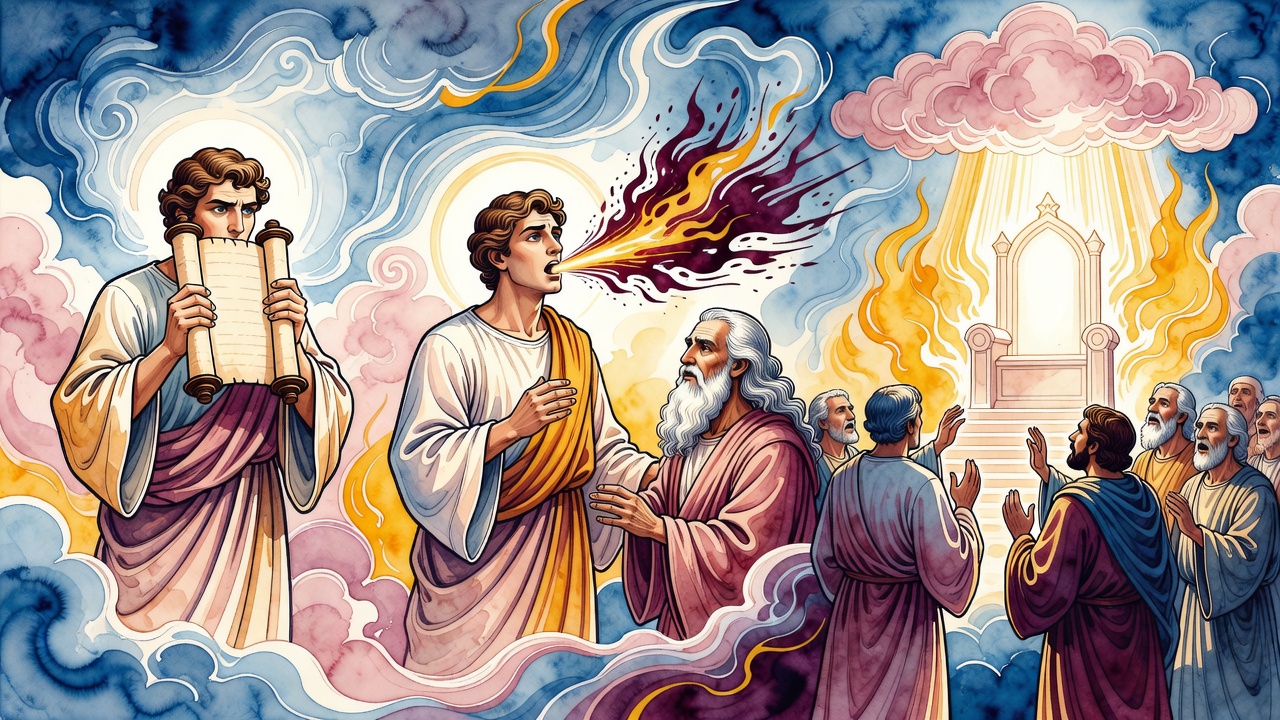
The mouth is the one instrument the animals were not given. God made them with eyes like a man's and ears like a man's and then silenced them, nidmu, and left the human mouth open on purpose. So the favors a person cannot even count begin with the ability to say anything at all, which is why a curse is not merely an ugly noise. It is the gift turned around and pointed at the giver.

Ears on the Road, Ears to the Wall

Do not curse a king even in your thought, and do not curse the wealthy man in your bedroom, because a bird of the heavens will carry the sound and a winged creature will tell the matter. Rabbi Levi put it without any decoration. There are ears on the road and ears to the wall.

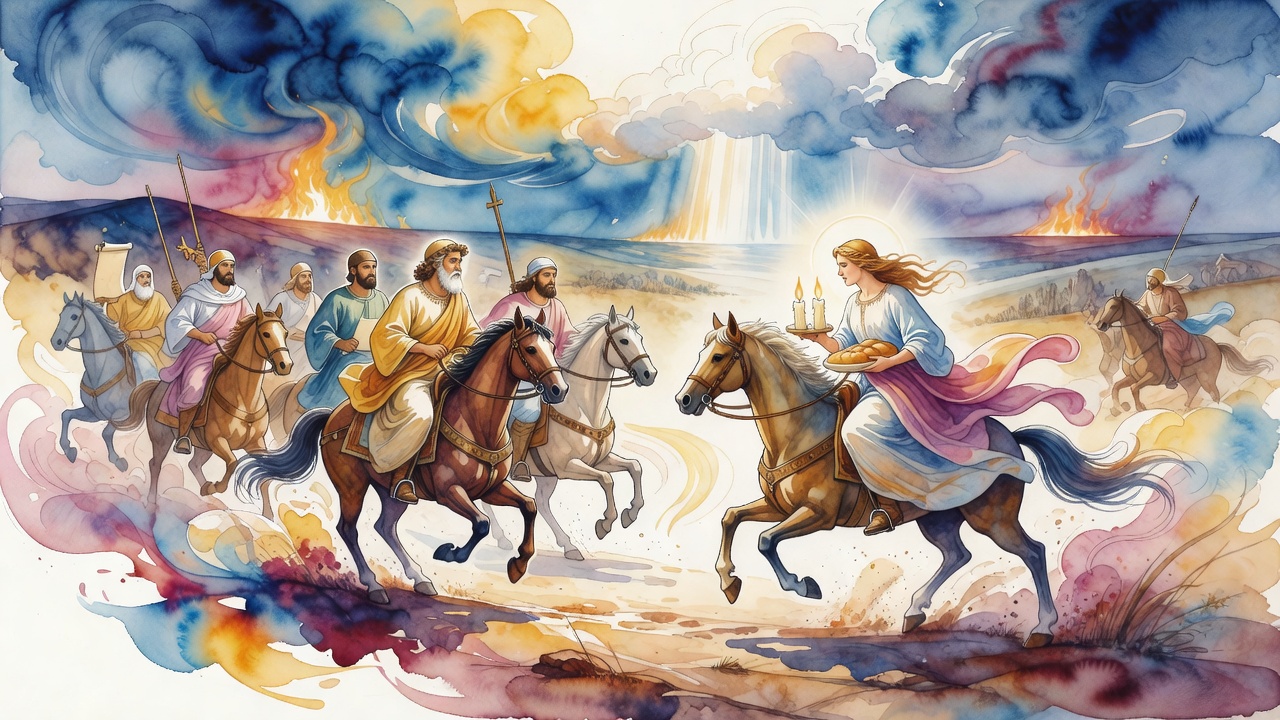
The carrying does not even wait for a bird. When a man is asleep his body tells his soul what it did that day, and the soul tells the spirit, and the spirit tells the angel, and the angel tells the cherub, and the cherub tells the winged creature, and the winged creature tells the One who spoke and the world came into being. Nothing has to be overheard for the report to arrive. The chain starts inside the man who thought he was alone.

David slept in a shut room and was reported by his own body before morning.

The Question That Named Saul

The rebuke came back as a question, which is worse than a verdict, since a verdict is finished and a question waits for an answer. Who was your enemy? Was it not Saul?

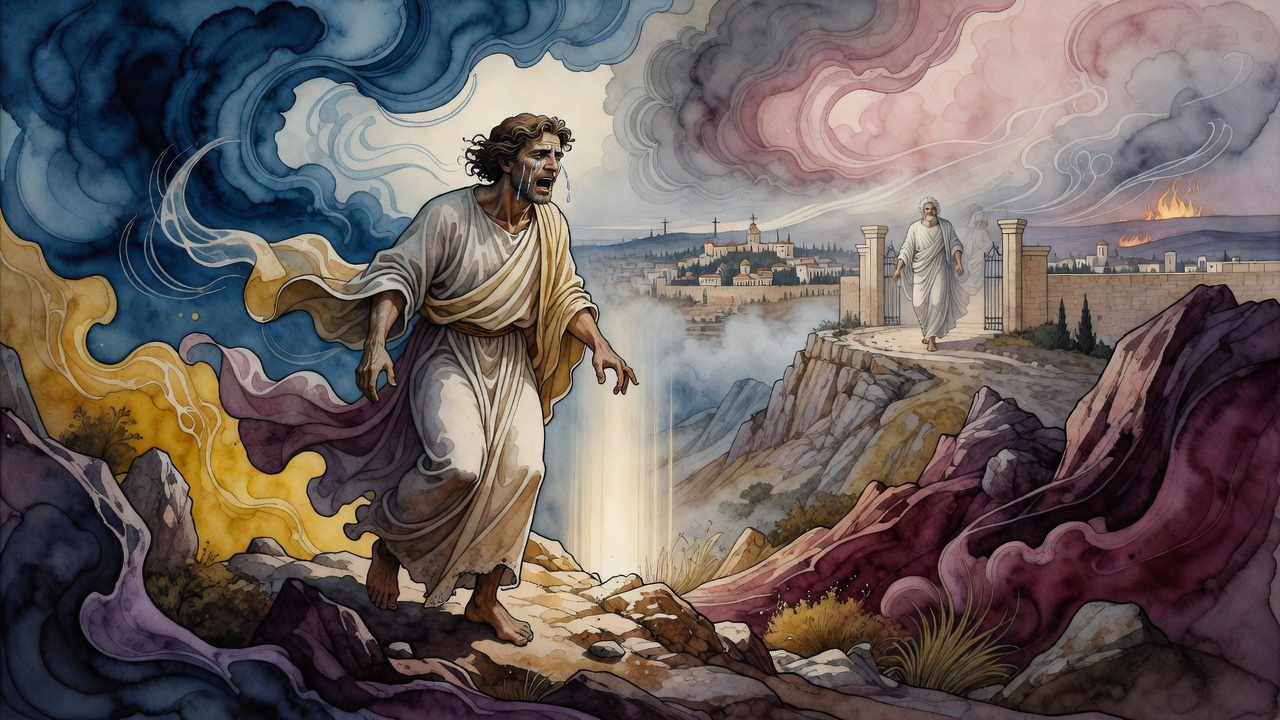
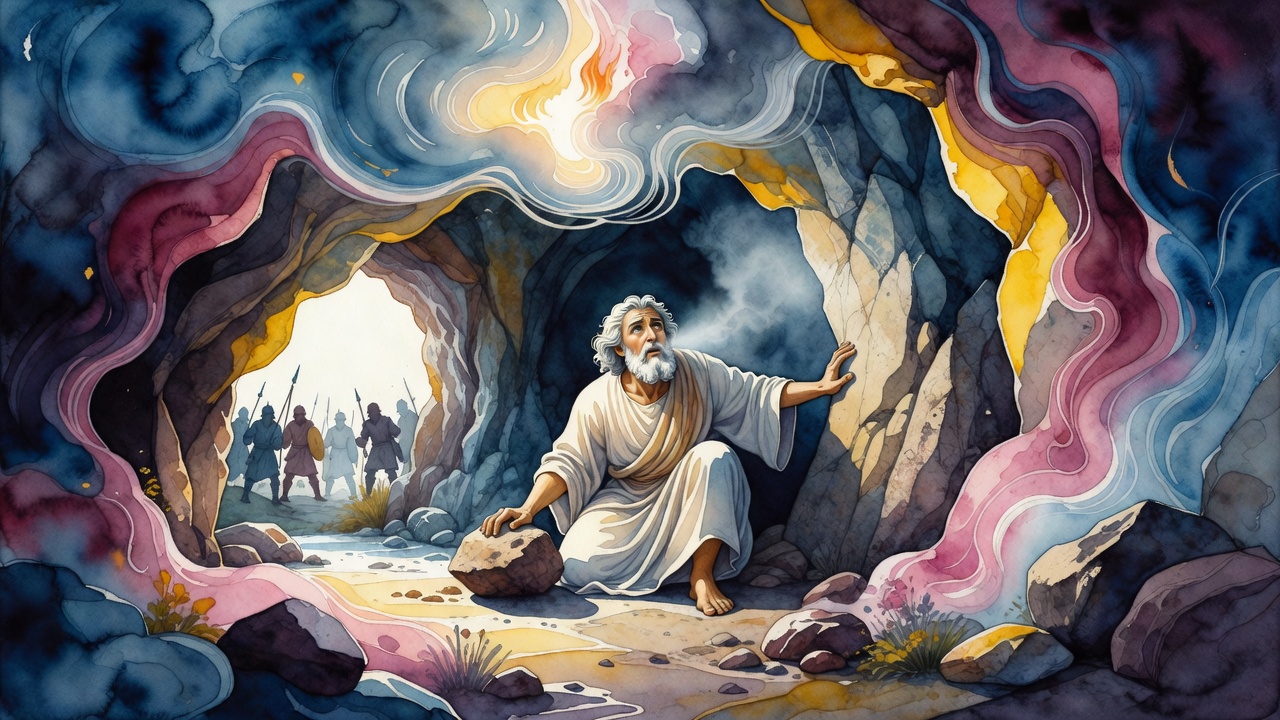
David did not answer. In the pause where an answer should have gone, the plural came apart in his hands and one man stood up inside his own prayer, wearing the crown, the same man he had refused to touch in the cave when refusing had cost him everything a kingdom is worth. He had prayed shame down onto that head. He had chosen a word specifically so that no head would be under it, and the word had been read back to him with a name in it.

Heaven did not argue with the history. The spear had been real and the caves had been real. What was taken from him was the plural.

A Song of Straying

He asked for the lightest available category. Count it among the shegagot, the unwitting sins, not among the deliberate ones. That is a plea, not a defense, because a man who pleads shegagah has already conceded that the thing happened.

Then he wrote Psalm 7 and headed it shigayon, a song of straying, which is a strange thing to call a psalm unless the writer wants the error kept in the title where nobody can lose it.

The poem was accurate. It was still only a poem. Words had started the fire, and more words, however honest, are not water.

Water on the Fire

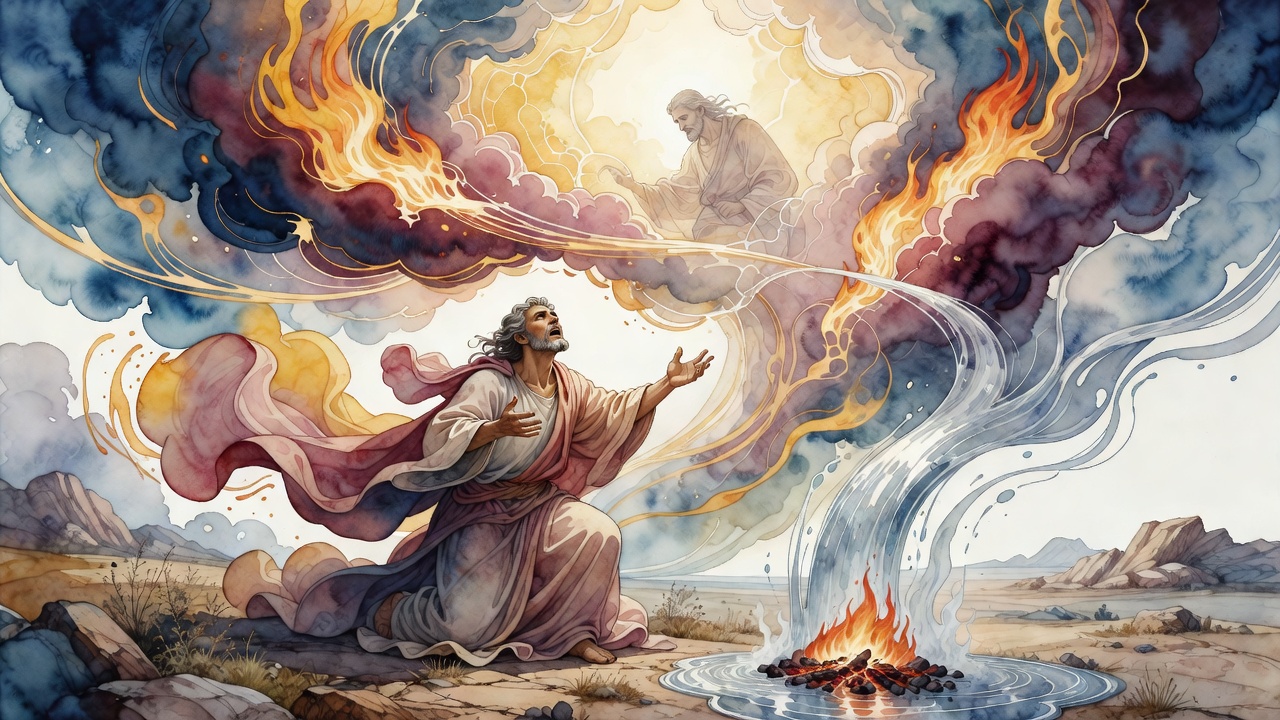
Ben Sira knew what the water was. Waters quench flaming fire, and righteousness makes atonement for sin, which is not a trick and not a purchase. Tzedakah is the giving of what a man has to a man who has less, and it works the way water works on a flame, by being the other thing.

Whoever does good, it shall meet him in his ways, and in the time that he totters he shall find a stay. The good done in the strong years turns into something under the hand in the weak ones. A man who spends those years cursing builds no rail at all, so when the knees go there is nothing on the wall to grab.

Ben Sira does not leave it there, because the easiest way to feel righteous is to give a coin and keep the tongue. Mock not at the life of the poor, he says, and make not the soul of him that is poor and bitter of soul to pine. A man already thin does not need salt put in him. The mouth that shames him is pouring oil on the fire with one hand while carrying water in the other.

Saul was still alive while David wrote all of this. Still crowned, still hunting him through the same hills. He went on running from a man he had already prayed against, and the word enemies would not stay plural in his mouth again.


← All myths
From the tradition

Sources

2 sources

The texts behind this telling. Some cards carry a translation of the source; others are our own retelling of it, and each card says which. Every card links out to the original.

Vayikra Rabbah 32:2Vayikra Rabbah

Retold in our words. Read the original at the link below.The Sefaria Midrash Rabbah, 2022 · CC-BY

This isn't just about political correctness; it's about the power of our words, our thoughts, and their ripple effects in the cosmos.

Rabbi Avin kicks things off with a powerful idea. He suggests that when we curse or blaspheme, we're actually betraying the very intelligence that God gave us – an intelligence that sets us apart from animals. God created us with eyes and ears, just like the beasts and birds, but then, as it says in (Psalms 49:21) "He is comparable to animals, which perish [nidmu]". Here's the kicker: the Midrash (rabbinic interpretive commentary) cleverly defines nidmu as "silence." God silenced the animals, in a sense, elevating us. So, to use that elevated intelligence to curse is a profound act of ingratitude. How many favors has God performed for us, that we don't even understand?

The passage doesn’t stop there. It gets even more intriguing.

The text offers another interpretation: "Even in your thought, do not curse a king" refers to the earthly rulers around you. "And in your bedrooms do not curse the wealthy." In other words, watch what you say, even in private! Why? Because, as Ecclesiastes continues, "As the birds of the heavens will carry the sound, and a winged creature will tell the matter."

Rabbi Yirmeya ben Elazar connects this to the raven and the art of bird divination. The idea that ravens could somehow discern and reveal our whispered criticisms. Rabbi Levi adds, "There are ears on the road and ears to the wall." It's a vivid reminder that our words, even our secret ones, can find their way out.

This leads to a powerful story about King David. Rabbi Yehuda bar Simon says that God rebuked David for saying, "My enemies will be exceedingly ashamed and frightened" (Psalms 6:11). God asks David, "Who was your enemy? Was it not Saul?" David, realizing his mistake, pleads with God not to count it as an intentional sin, but rather as an unwitting one – a shegagot. He then composed Psalm 7, which is called a shigayon, a meditation. So even the great King David had to be mindful of his words, especially towards those in authority.

But the passage takes another turn, elevating the "king" and "wealthy one" to refer to the King of the Universe and the Wealthy One of the Universe – God Himself. So, the warning becomes: "Even in your thought, do not curse the King of the universe. And in your bedrooms do not curse the Wealthy One of the universe."

Rabbi Levi then speaks of two kinds of sounds: a beneficial sound and a detrimental sound. A beneficial sound is like the Israelites' positive response to God's words in (Deuteronomy 5:25), where God says, "They did well [hetivu] in everything that they spoke." Rabbi Ḥiyya bar Ada and bar Kappara compare this to the preparation of the lamps and the incense in the Temple – acts of sacred service. In contrast, a detrimental sound is like the Israelites' rebellious words in (Deuteronomy 1:34), which provoked God's anger.

Rabbi Taḥlifa makes a profound point: God's "rage" isn't the same as human rage. God may punish, but He isn't consumed by anger. As (Psalms 95:11) says, "That I took an oath in My wrath," but God can change His mind. Rabbi Levi, in the name of bar Kappara, illustrates this with a parable of a king who, angry with his son, initially forbids him from the palace. But then, the king rebuilds the palace and welcomes his son back in, thus keeping his oath while still showing love.

Then comes this amazing image from Rabbi Avin: When we sleep, our body tells the soul what it has done, the soul tells the spirit, the spirit tells the angel, the angel tells the cherub, the cherub tells the winged creature – and the winged creature tells the One who spoke and the world came into being!

Finally, the passage connects "king" and "wealthy one" to Moses. "There was a king in Yeshurun" (Deuteronomy 33:5) refers to Moses, and he became wealthy when God created a sapphire mine for him in his tent. As it says in (Exodus 34:1), "Carve [pesol] for yourself [two tablets of stone]" – the waste [pesolet] shall be for you." Moses then declares, "The blessing of the Lord, it will make wealthy" (Proverbs 10:22). Moses ascends heavenward like a bird, and it was told to Moses at Sinai, "Take out the blasphemer" (Leviticus 24:14).

So, what does this all mean for us? It's a call to be mindful – not just of our actions, but of our thoughts, our words, and the intentions behind them. How will we use that gift? Will we use it to curse, or to bless? To tear down, or to build up? The choice, ultimately, is ours. And the consequences, as we've seen, can be far-reaching.

Full source
Ben Sira 4:1Ben Sira

Retold in our words. Read the original at the link below.The Wisdom of Ben Sira, Cambridge University Press (1899) · CC-BY

We all do sometimes. But what if I told you there's a simple, ancient piece of wisdom that could help lighten that load?

The Book of Ben Sira, a treasure trove of Jewish wisdom literature (also known as Sirach or Ecclesiasticus, depending on your tradition), offers just that. It's like a heartfelt conversation with a wise elder, full of practical advice and spiritual insights. And this particular snippet? It speaks directly to the power of doing good.

"Waters quench flaming fire; So righteousness maketh atonement for sin." image for a moment. A raging fire, consuming everything in its path. What can stop it? Water. Simple, elemental, life-giving water. In the same way, tzedakah, righteousness – acts of justice, kindness, and generosity – can extinguish the flames of sin. It's not about magic. It's about the natural consequence of positive action. The fire of wrongdoing is cooled by the waters of right-doing.

It's a concept deeply rooted in Jewish thought. We find echoes of it throughout our texts. The idea that repentance, teshuvah (repentance), isn't just about feeling sorry; it's about actively changing our behavior and making amends. This verse from Ben Sira encapsulates that beautifully.

And it gets even better. "Whoso doeth good, it shall meet him in his ways (?); And in the time that he tottereth he shall find a stay."

This is about the ripple effect of kindness. When you do good, it doesn't just vanish into thin air. It creates a positive force that comes back to you, especially when you need it most. "In the time that he tottereth he shall find a stay." When you are at your weakest, the good you've done acts as a support, a source of strength. It's like planting seeds of kindness that blossom into a safety net when you stumble.

But there's a challenge here too. Ben Sira doesn't let us off easy. He immediately follows this with a stark warning: "My son, mock not at the life of the poor (or of affliction); And make not the soul of him that is poor and bitter of soul (H) to pine."

Ouch. It's about how we treat the most vulnerable among us. It's about showing compassion and empathy, not scorn or indifference. To mock someone's poverty or suffering is to pour salt on an open wound. It's the antithesis of tzedakah.

The text uses a powerful image to describe causing pain to someone already suffering: "...make not the soul of him that is poor and bitter of soul (H) to pine." The Hebrew here evokes a sense of withering and despair. It's a vivid reminder of the impact our words and actions can have on others.

So, what does all this mean for us today?

It's a call to action, really. A call to recognize the power we each have to make a difference, however small. To quench the fires of injustice with acts of kindness. To remember that our actions have consequences, both for ourselves and for those around us. And perhaps most importantly, to treat everyone with dignity and respect, especially those who are struggling.

Because ultimately, that's what Ben Sira is reminding us: that true righteousness isn't just a religious obligation; it's a fundamental human one. And it starts with how we treat each other, every single day.

Full source