
Abraham's War Against the 4 Kings Happened on Passover Night
Abraham's battle to rescue Lot from four kings took place on the 15th of Nisan, fifteen hundred years before the Exodus, the same night God always chose for miracles.
Table of Contents
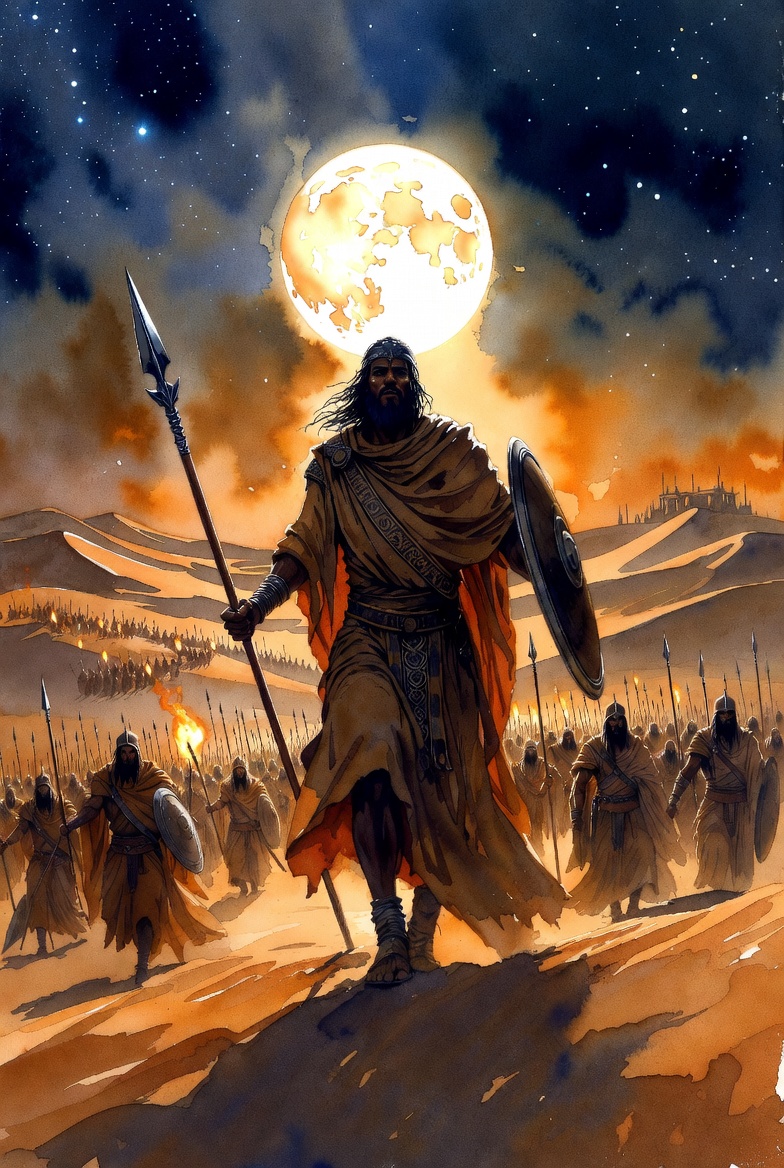
It's the 15th of Nisan. Abraham is running.
Not yet the night of the Exodus. Not yet the splitting of the sea. This is fifteen hundred years earlier, and Abraham is in pursuit of four kings who have taken his nephew Lot captive. According to Legends of the Jews, this battle, described briefly in (Genesis 14), happened on the very night that would later become Passover. The 15th of Nisan was already the night God chose for miracles. Abraham was just the first to find out.
The Night That Belongs to God
The rabbis don't think this timing is coincidental. The 15th of Nisan is the night God acts in the world, structured into the fabric of time for extraordinary intervention. Long before the Exodus, the night was already marked. Abraham went to war without knowing it was a sacred night. The night knew.
Later, on this same date, Moses would lead Israel out of Egypt. The sea would split. The plagues would land their final blow. The 15th of Nisan accumulates its miracles across history, each generation adding to what the night means. But according to Abraham's Battle on the Night of Passover, the original one was a war in the dark, with dust turning to weapons and a giant striding four miles at a step.
What Abraham Was Up Against
Four kings, Chedorlaomer of Elam and his allies, had already defeated five other kings, taken plunder from Sodom and Gomorrah, and captured Lot. Abraham took 318 trained fighters from his household (Genesis 14:14) and went after them. By any military accounting, this wasn't a fair fight.
But the Legends of the Jews fills in what Genesis leaves out. The projectiles aimed at Abraham's forces became useless in midair: arrows losing force, stones going wide. Meanwhile, the dust Abraham threw at his enemies transformed into javelins. The stubble became swords. The very ground fought for him.
And Abraham himself was transformed. The tradition describes him as suddenly being as tall as seventy men stacked together, with each stride covering four miles. He was a colossus moving across the landscape, unstoppable, lit with divine power. Then he reached a city called Dan.
Why His Power Failed at Dan
At Dan, Abraham stopped. His strength drained away.
The text gives a reason that stops you cold. Abraham caught a prophetic glimpse of what would happen in Dan centuries later: his descendants would set up a golden calf there. Around 930 BCE, after the kingdom split, King Jeroboam placed golden calves at Bethel and Dan, saying "These are your gods, Israel, who brought you up from Egypt" (1 Kings 12:28-29). That act of idolatry hadn't happened yet. It was almost a thousand years in the future. But its shadow was already long enough to reach back to Abraham.
God didn't withdraw the power as punishment. Something subtler happened: the future bleeding into the present, weakening the man who would father the people who would eventually sin there. Abraham couldn't fully inhabit his miraculous strength while standing on ground that would one day become a site of unfaithfulness to the God who gave him that strength.
What Does This Say About Passover?
The rabbis who recorded this in the Legends of the Jews, drawing on sources from the Talmudic period, c. 1st–5th century CE, were making a deliberate argument: Passover isn't just about the Exodus. It's about a night that has always been God's night.
The same evening that Abraham scattered kings with miraculous strength is the same evening God's angel passed through Egypt. The same night the sea split. Again and again on the 15th of Nisan, the ordinary laws of the world get suspended and God moves more visibly through events than usual.
The night was always this night. Abraham just walked into it without knowing the name it would one day carry.
What Happened Afterward
After the battle, Abraham returned the captives and goods. Melchizedek, king of Salem, came out to meet him with bread and wine, and Abraham gave him a tithe of everything (Genesis 14:20). The rabbis trace how that single act of generosity generated blessings that flowed down through Isaac and Jacob for generations. You can read that story in Abraham Gave a Tithe to Melchizedek After the Battle.
But the battle itself, the dust becoming swords, the giant strides, the sudden failure at Dan, sits in the tradition as one of the stranger passages in Abraham's story. He won completely. He also learned something that night about the limits of his power. Even a man as tall as seventy people can be stopped cold by a sin his great-great-grandchildren haven't committed yet.