A Dying King Wept Over Egypt's Next Pharaoh
Queen Alfar'anit wept while princes named fools and dwarfs as heirs. Outside Egypt, Zepho begged Africa to strike the sons of Jacob.
Table of Contents
 Click for full size
The Bed Where Egypt Chose Badly
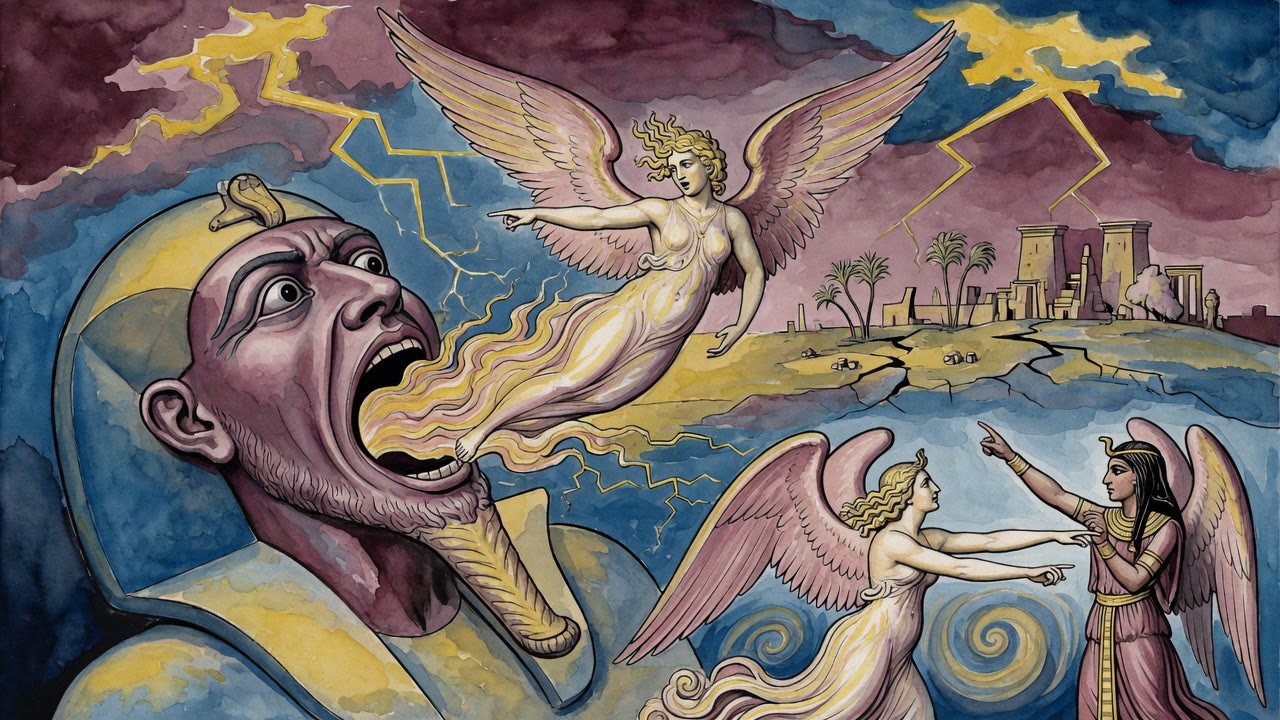
The king of Egypt was dying, and the room filled with wet eyes that did not know which face to crown. Queen Alfar'anit wept. Nobles wept. The question in the air was older than any of their titles. Who takes the chair when the breath stops.
Princes and counselors pressed him to name a son. He was not short of sons. Three with the queen, two daughters beside them, and other children from quieter rooms of the palace. The problem was not scarcity. The problem was quality.
Atro the Fool and Adikam the Small
Atro, the eldest, carried the first claim and none of the fitness. The legends call him an idiot, precipitate, heedless in all his actions. A throne under that kind of hand is a weapon aimed at its own city.
Adikam, the second, had the mind Egypt needed. Cunning. Clever. Steeped in every wisdom the river culture taught. Then the body betrayed the resume. He was ungainly, fleshy, short of stature, barely a cubit and a space tall, a beard flowing to his ankles like a curtain trying to hide a missing height. Brains without the shape the court wanted to parade.
Moryon, the third, passes through the telling almost unnamed in character. The daughters, Bithiah and Akuzit, watch from the side of a system that does not put the crown on their hair. The dying man must choose among a fool, a brilliant dwarf, and a blank. History leans forward and holds its breath for a name that will scar generations.
Husham on the Edge of Memory
While Egypt sorted its heirs, another clock ran in Edom. After the patriarchs' age, Husham ruled for twenty years. The Torah barely glances at him. Legend refuses to let the blank stay blank. His reign is the stage on which a more dangerous player steps from Egypt's shadow.
Zepho escaped Egypt with a grudge sharp enough to cut treaties. He fled to Agnias, king of Africa, and so impressed the court that Agnias made him commander-in-chief. Power found the exile. The exile tried to spend it on revenge.
The War Agnias Would Not Start
Zepho used every means of persuasion to push Agnias into war with Egypt. Speeches. Plans. The heat of an old prisoner who wanted the land of his chains burned. Agnias would not move. He knew the strength and heroism of the sons of Jacob. Fear of that house sat in the African king like a second spine.
Year after year the commander begged and the king refused. The court lived inside that tension, a general hungry for blood and a monarch who preferred other warlike enterprises to a fight with Jacob's line. The balance held because one man remembered what Egypt had learned the hard way about that family.
Yaniah of Kittim
Agnias turned his ambition sideways. From the land of Kittim came word of 'Uzi, a man so revered his people treated him as a god. When 'Uzi died in Pozimana, he left a daughter, Yaniah, fair and clever. Agnias asked for her hand. The people of Kittim granted it.
Marriage replaced the war Zepho wanted. Diplomacy swallowed revenge for a season. The legend leaves Zepho's hunger unresolved, which is how grudges actually live. Not every plot gets a battlefield. Some only get a wedding and a commander still tasting copper at the back of the throat.
Egypt's deathbed and Africa's war council share one weather. Thrones do not pass cleanly. Heirs arrive misshapen. Generals import their private hate into public strategy. The sons of Jacob sit offstage and still decide whether armies march, because even kings who never met them have heard what those sons can do.
Palace politics loves a clean heir. Egypt did not have one. The fool with primogeniture rights and the genius trapped in a body the court would mock created a succession crisis that legend refuses to prettify. Bithiah's name will later brush Israel's story in other tellings, but here she is only a daughter in a room of weeping men who will not hand her the crown. The crown is already deciding which kind of disaster it prefers, speed without mind or mind without stature.
Zepho's years of persuasion against Agnias form a second portrait of failed desire. He has the army title. He does not have the king's will. Every map he draws toward Egypt is folded away by a ruler who has measured Jacob's sons and found them heavier than Zepho's hate. The commander learns that some wars die in conference chambers, stabbed by memory rather than by spear.
When Agnias marries Yaniah of Kittim, the court smells perfume instead of siege engines. Zepho must watch alliance replace the campaign he wanted. Husham's twenty quiet years in Edom frame the whole sequence like a margin note. Kings rise and sit and die while grudges travel between continents. The sons of Jacob do not need to appear on stage to control the scene. Their reputation is already a character with veto power over African foreign policy.
These legends sit beside Torah's Egypt the way side corridors sit beside a main hall. They insist the empire had other rooms full of sweat and bad choices. A dying pharaoh sorting sons, an escaped captive begging for war, a clever bride from Kittim. None of that cancels Joseph's older story. It thickens the air around the river kingdom until every succession feels like a gamble against the house of Israel.
Adikam's ankle-length beard on a two-foot body is the kind of detail legend keeps because no editor would invent it for comfort. It makes the succession problem visceral. Wisdom wrapped in a form the nobles will not parade. Atro opposite him, empty and tall enough to look the part. Egypt must pick a mask or a mind. The weeping in the room is the sound of a system without a third option.
← All myths