5 min read

A Younger Face Climbs From an Older Head

After gestation in a higher skull, a lower partzuf is born, enclothes the body above, and finishes itself only by what it loses.

Curated by Arthur · Told by Maggid ·
Table of Contents
  1. Incubation in the Skull Above
  2. Enclothing the Body Above
  3. Completion Through What Falls Away
  4. The Chain Does Not Break
A Younger Face Climbs From an Older Head Click for full size

Incubation in the Skull Above

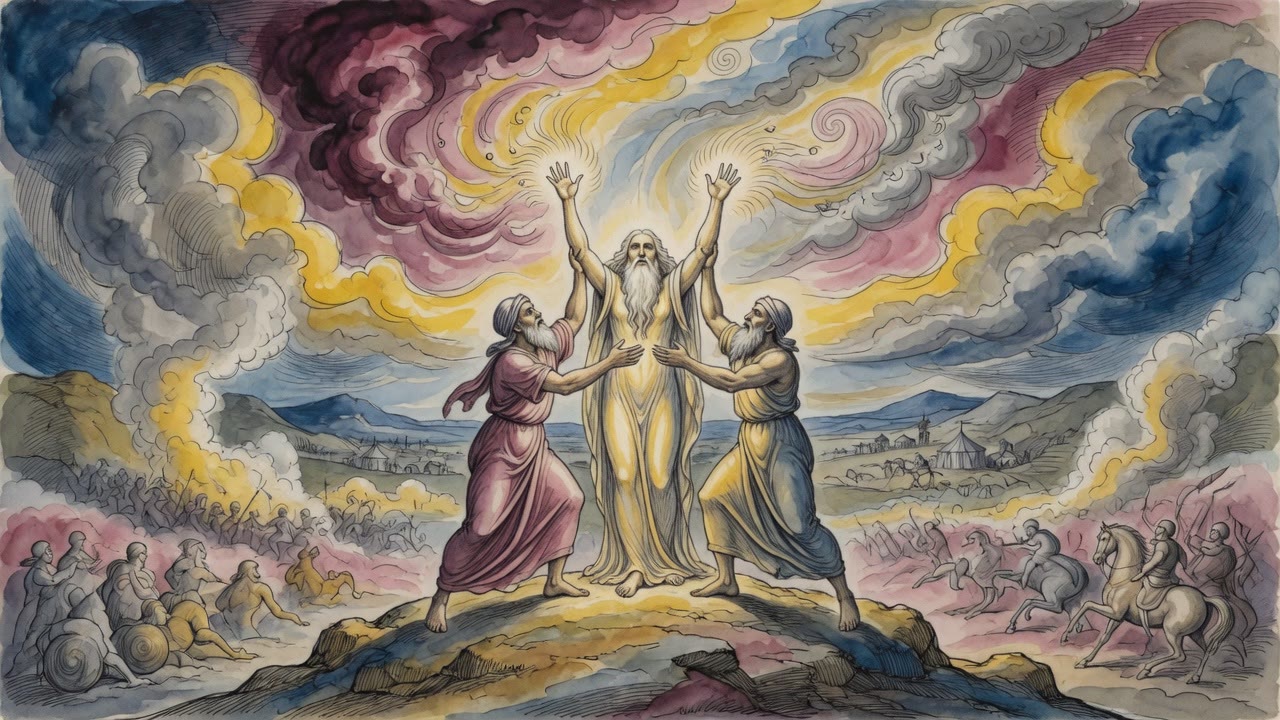
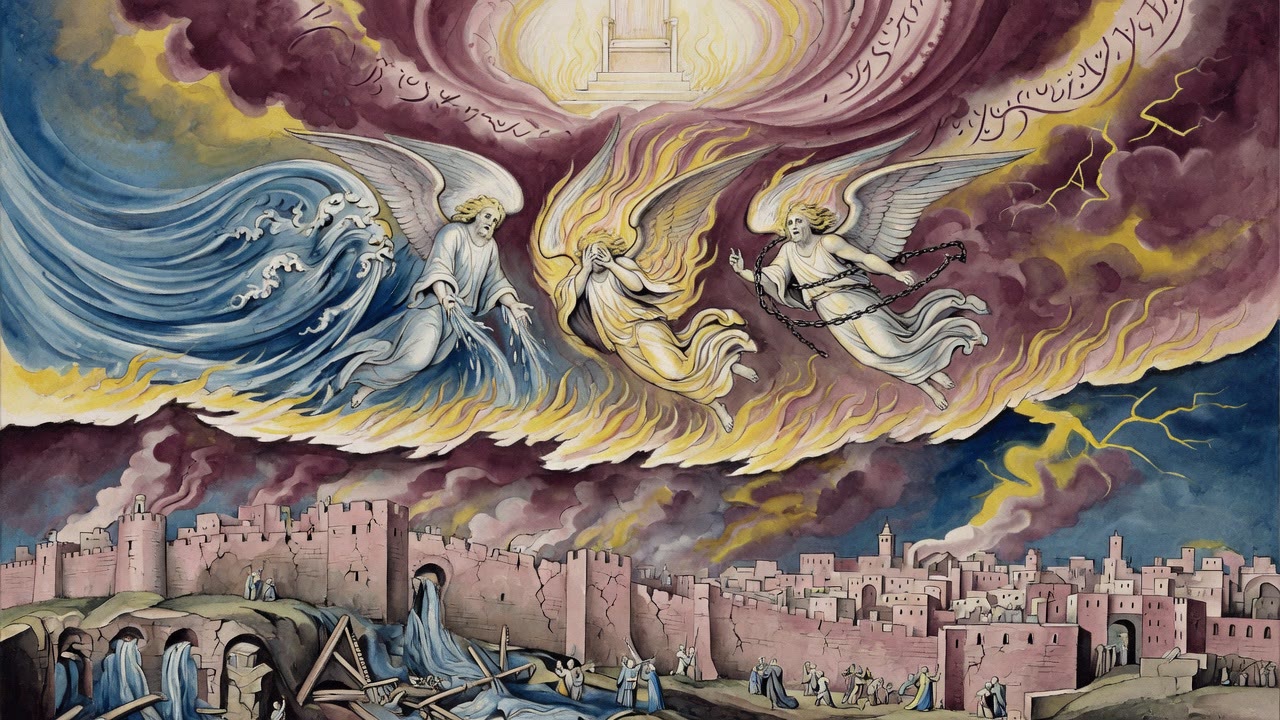
The lower face began as a pressure in the head of the higher face. Not a thought someone chose. A gestation. Light folded in light until difference could be felt, and difference is birth. When two heights can be told apart, a new partzuf has already started to live, even before it has a mouth of its own.

In the world of points and in the world of repair the same law holds. What is identical stays one. What becomes distinct steps out. The younger face opened its eyes inside an older skull and knew it could not stay. Birth is exit. Stay would be theft of the parent's form.

It climbed out through the mouth of the higher head, the threshold where theory becomes body.

Enclothing the Body Above

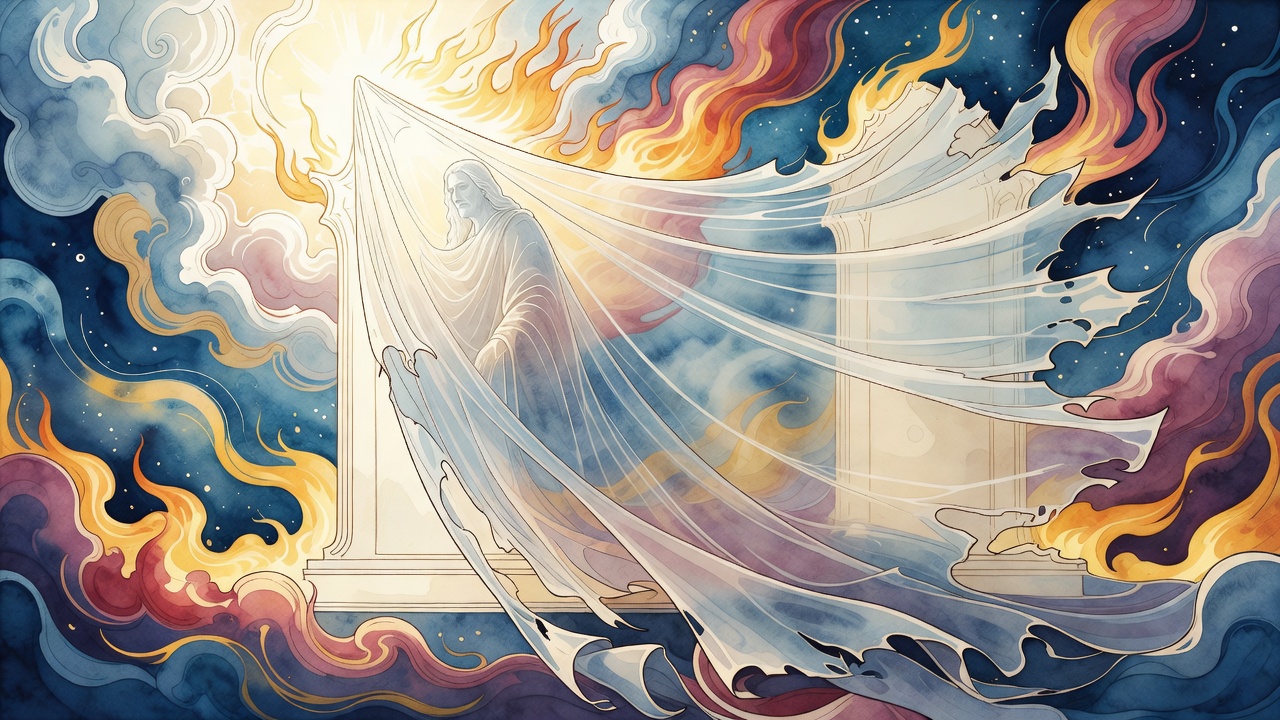
Outside, it did not flee. It turned and dressed the body of the face that had held it. Enclothing is the hard intimacy of this system. The lower wraps the higher's torso the way a garment wraps heat into usefulness. Through that wrap it draws light it could never seize by force.

Its own head and body took their seats below the upper mouth. If it was a face of the first three of the body, it covered those first three. If it was a face of the six extremities, it covered the six. Rank decides wardrobe. Need decides the pull of light.

Ḥokhma and Bina watched from their own dance of face and back. When wisdom turns its face to understanding, brains of the face ignite. When one turns a back, the flow cools into remnant and work must climb the long way.

Completion Through What Falls Away

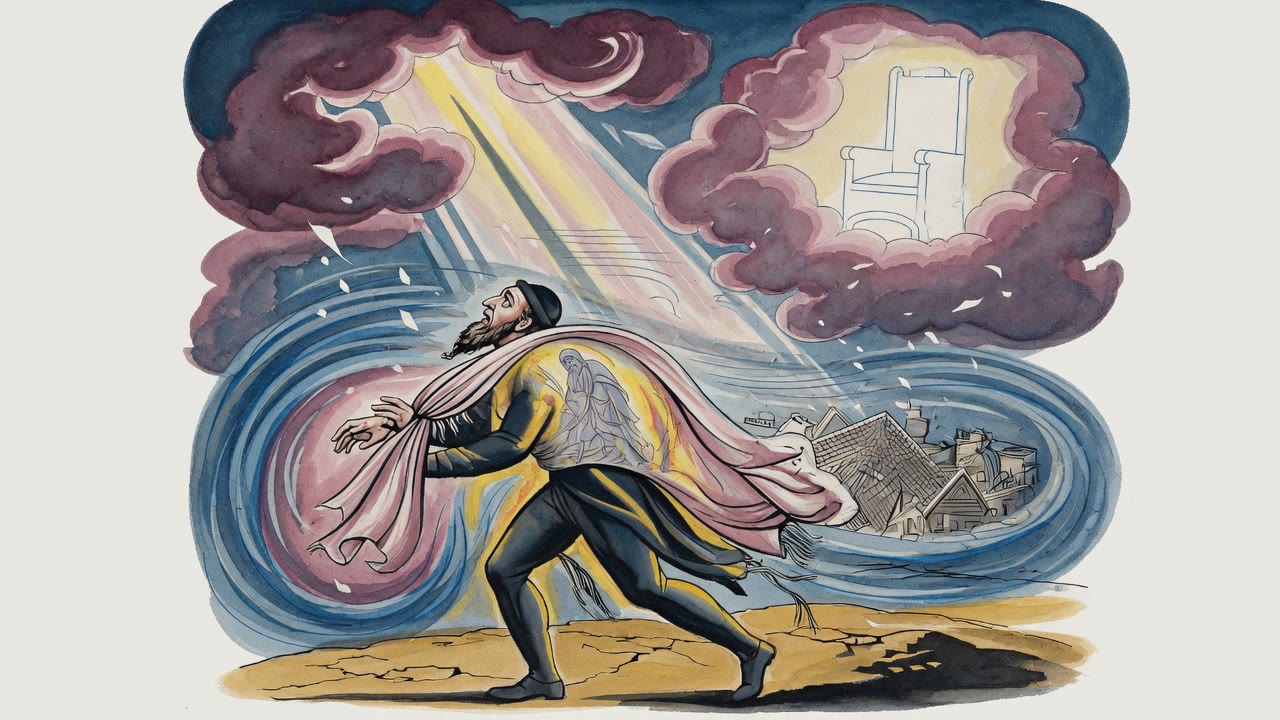
A partzuf does not finish by adding forever. It finishes by losing what it cannot keep. Levels of opacity purify and drop. Surrounding light eats excess density. The face that tries to hold every remnant of the prior world never becomes itself. The face that lets the spent shell fall can stand in a cleaner height.

Loss looks like failure from the outside. From inside the teaching it is the last labor of gestation. What falls is not the soul of the face. What falls is the scaffolding that would keep it infant forever. Completion is the courage to be less raw and more exact.

After the loss, the new face can run its own three phases without borrowing the parent's unfinished arguments.

The Chain Does Not Break

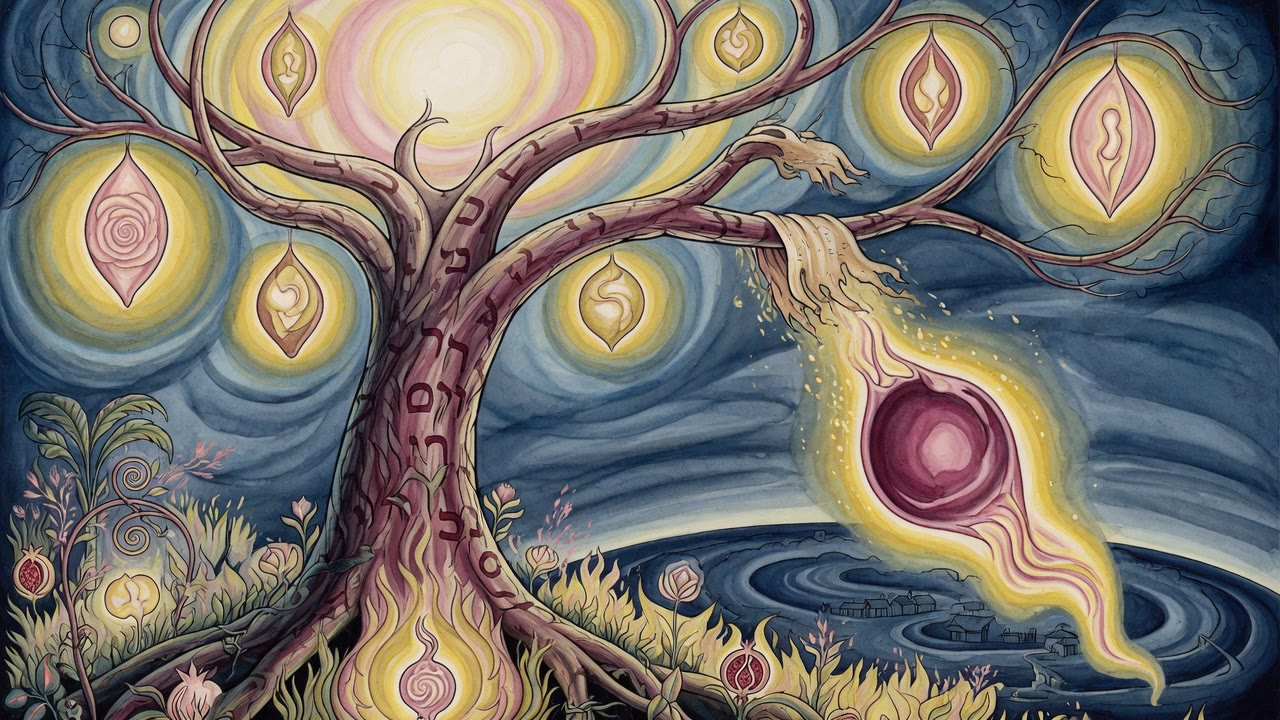
Each birth leaves a map for the next. The child that enclothes will one day be a skull for a grandchild of light. Face after face, the ladder lengthens downward without the upper world emptying. That is the mercy of enclothing: the higher remains, the lower receives, and neither must annihilate the other to prove rank.

When Ḥokhma faces Bina, the chain runs bright. When back turns to back, the chain still holds by traces, by feminine waters rising, by the stubborn memory of a first fusion. The younger face learns both weathers. It learns that emergence is not betrayal of the parent. It is the parent succeeding.

A head that never births is a head that never finished its own mouth.

For a time the younger face mistook enclothing for captivity. The garment felt tight. The pull of upper light felt like a debt. Then a lower hollow opened beneath its feet and asked for light, and the debt became a trade. What it drew from the parent it spent downward. What it spent downward made room for more draw without shame.

Loss of spent opacity followed that trade. Shells fell like old leaves after a wind that knows the calendar. The face stood cleaner and did not mourn the leaves longer than a season. Completion is seasonal courage repeated until the seasons themselves become a form.

Ḥokhma sometimes turned a back, and the younger face climbed the long way on remnant light. Bina sometimes turned a face, and the climb became a road. Roads and long ways both count as education. A face trained only on easy facing grows brittle when the first back appears.

In the saga of points, distinction kept ringing like a bell at each birth. The bell said: you are not your parent, and that is how your parent succeeds. The younger face learned to hear the bell as blessing rather than as exile.

One day it would feel a pressure in its own skull and know the story's next verse by heart. Release. Birth. Garment. Loss. Work. The chain loves those who do not hoard the role of only child.


← All myths

From the tradition

Sources

4 sources

The texts behind this telling. Some cards carry a translation of the source; others are our own retelling of it, and each card says which. Every card links out to the original.

Introduction to Sulam Commentary 80:1Introduction to Sulam Commentary

Retold in our words. Read the original at the link below.The Sefaria Sulam, 2023 · CC-BY

It involves faces, lights, and… gestation. Stay with me.

So, imagine a lower partzuf, which, after a period of incubation, emerges from the "head" of a higher partzuf. It then "enclothes" the body of the higher one. Sounds strange. But this "enclothing" is key. It's how the lower partzuf draws down light, or divine energy, from the higher one. It's like plugging into a cosmic power source.

This drawing down of light isn't a one-time thing. It’s a process, mirroring an earlier cycle of gestation, infancy, and the development of what Kabbalists call "brains." And according to the Sulam Commentary, this new influx of light has a specific effect: it reduces the "opacity" of the root.

What does that mean? Well, Kabbalah often speaks of different levels of "opacity," which relate to how clearly divine light can shine through. This drawing of light brings down the opacity of the root to the opacity of the first level.

Now, get this: As in the previous round of gestation, infancy, and brains, the drawing of the lights of the upper partzuf leads to the descent of the partition from the “forehead” of the head of the upper partzuf down to the “aperture of the eyes” of the head of the upper partzuf. According to the Sulam, this means the partition transitions from having a level of opacity of the root (associated with the forehead, the Keter (Crown, the highest of the ten sefirot)) to opacity of the first level (associated with the aperture of the eyes, the Ḥokhma).

Let's unpack some of these terms. Keter and Ḥokhma are two of the ten sefirot, the emanations of God, representing different aspects of the divine. Keter is often associated with will and crown, while Ḥokhma is connected to wisdom.

And Malkhut (Sovereignty)? Malkhut has a partition resting on it. Thus, a “descent of the partition“ means that the level of Malkhut and its partition have descended.

So what's happening here is a shift in consciousness, a lowering of the barrier that separates the divine from the created.

And there's more! Once the partition possesses opacity of the first level, it engages in a fusion through collision that generates a height of ruaḥ, just like in the first round of gestation and infancy. This height of ruaḥ is the vessels and light of the gestated level of Ḥesed, Gevura and Tiferet (Beauty) that have now emerged in the phase of infancy. Phew!

Ruaḥ, in this context, refers to a level of spirit or wind. Ḥesed, Gevura, and Tiferet are, again, sefirot: loving-kindness, strength/judgment, and beauty/harmony.

The lower partzuf thus attains a new aspect of infancy, which is the mystical meaning of the height of ruaḥ.

So, what does it all mean?

This whole process, as described in the Sulam Commentary, paints a picture of continual refinement. Each cycle builds upon the last, drawing us closer to a clearer understanding of the divine. It suggests that spiritual growth isn't linear but cyclical, a constant returning and renewing. We are continually gestated, born, and matured in the spiritual sense, with each cycle bringing us closer to enlightenment. It’s a beautiful and complex vision of how we, and all of creation, are constantly evolving in relationship with the divine.

Full source
Introduction to Sulam Commentary 82:1Introduction to Sulam Commentary

Retold in our words. Read the original at the link below.The Sefaria Sulam, 2023 · CC-BY

In Kabbalah, the idea of reaching completion is a central theme, and it's rarely a straightforward journey. It's a process of growth, loss, and renewal. We see this beautifully illustrated in the concept of the partzufim (a divine configuration) (the divine configurations), or divine countenances, in the realm of Atzilut, the world of emanation.

So, what does it take for a partzuf to become complete? According to the teachings of Kabbalah, and specifically as explained in the Sulam commentary, a partzuf isn't fully formed until it undergoes a fascinating process of "gestation, infancy, and brains" – not just once, but twice!

Why this double cycle? It all boils down to the nature of the partition, or screen (parsa), in Atzilut. Because of the intensified purification happening there, a partzuf can only receive its ten sefirot (the divine emanations) – those divine attributes or emanations – through these three successive phases.

Here's where things get interesting. As the Zohar tells us, during the initial emergence of these "brains," a kind of "beating" occurs between the right and left sides. Think of it like a cosmic balancing act. This process continues until the left side purifies all the opacity, or "thickness" of the partition. The problem is that as this happens, all the illuminations received during gestation, infancy, and the first set of "brains" actually depart.

Why? Because with the loss of opacity in the partition, the fusion that occurs through collision is negated. It's like losing the friction that creates a spark! And so, the lights fade, and the partzuf returns to the "head" of the upper partzuf for renewed gestation, receiving a new "three within three," as explained in earlier sections.

Imagine it: A return to the womb, a fresh start. This isn’t a failure, but a necessary step in the process.

Then, it's born again! It receives a renewed infancy, which, according to Kabbalistic understanding, brings down the Malkhut – the divine feminine, the realm of manifestation – from the forehead to the eyes. The sefirot Ḥesed (loving-kindness), Gevura (severity), and Tiferet (beauty) emerge from Netzaḥ (victory), Hod (splendor), and Yesod (foundation). The partzuf receives a renewed height of ruaḥ – spirit.

And it doesn’t end there! It ascends as feminine waters (mayin nukvin) and receives renewed lights of neshama (soul), ḥaya (life), and yeḥida (uniqueness). Within these renewed lights exists the crucial middle line, uniting the right and left – the "brains of the front." It's only then, when these "brains of the front" appear, that the illuminations can persist and endure.

So, as we find in Midrash Rabbah, until the partzufim attain these "brains" for the second time, they simply cannot fully exist in a stable, enduring state.

What does this all mean for us? Perhaps it's a reminder that growth is rarely linear. We often need to revisit foundational stages, to be "reborn" in a sense, before we can truly embody our potential. The path to completion, to wholeness, is paved with cycles of emergence, loss, and renewal. Just when we think we've arrived, there's another layer to uncover, another level of integration to achieve. And that, perhaps, is the beauty and the challenge of the journey.

Full source
Introduction to Sulam Commentary 83:1Introduction to Sulam Commentary

Retold in our words. Read the original at the link below.The Sefaria Sulam, 2023 · CC-BY

Kabbalah, the Jewish mystical tradition, explores this very dynamic, but on a cosmic scale. a concept called "face and back," and how it relates to the flow of divine light.

When we Instead, And in this case,

Ḥokhma, often associated with wisdom, receiving illuminating "brains of the face," as the Sulam Commentary puts it. That sounds pretty good. But what about Bina, which embodies understanding? The text points out that Bina is "always in the state of the mystical meaning of the verse 'for He delights in mercy.'" Bina yearns for the "light of giving" rather than just receiving the "light of Ḥokhma". Because of this, Bina is considered to have its "back" to Ḥokhma. It doesn't want to receive those "brains of the face" directly.

Why not? Because Bina’s primary desire is to channel and transmit, not just absorb. As the commentary explains, because Bina seeks the light of giving, it only receives the light of Ḥokhma as a conduit to transmit it to Ze'er Anpin, which we can think of as the "Lesser Countenance" or "Son." This dynamic, the text emphasizes, is fundamental to the rectification of the lines and the transmission of the light of Ḥokhma through Bina to the lower levels – something that's discussed extensively in earlier sections.

So, Ḥokhma and Bina are in this constant dance of "face" and "back," according to the Sulam Commentary. But what changes things? What makes them turn "face-to-face"?

That's where Ze'er Anpin comes in. When Ze'er Anpin ascends to them as Mayin Nukvin (feminine waters), essentially a yearning for the light of Ḥokhma, it triggers something in Bina. This yearning, the text explains, prompts Bina to “face” Ḥokhma and receive the flow of light, but only in order to pass it through to Ze'er Anpin. It's like Bina is saying, "Okay, I'll take this light, but only so I can give it to my child."

As the text, referring to “Petiḥa LeḤokhmat HaKabbala,” section 5, explains, because there's a connection between Bina of the direct light to give the illumination of Ḥokhma to Ze’er Anpin of the direct light, when Ze’er Anpin ascends as feminine waters to Bina, Bina immediately turns her face back to Ḥokhma to receive from it the brains of the face – which are the brains of the illumination of Ḥokhma – for Ze’er Anpin. It's then that Ḥokhma and Bina are recognized to be in a state of "face-to-face."

It’s important to remember, though, that as explained, Bina doesn't truly receive this light for herself. She only transmits it. This mirrors Bina’s role in the five levels of direct light, emphasizing its inherent quality of giving.

So, what does this all mean for us? Perhaps it's a reminder that true connection sometimes requires us to shift our perspective, to turn our "face" towards others' needs. It's about recognizing that giving and receiving are not always separate actions, but often intertwined, a dance of "face and back" that ultimately leads to a more complete and harmonious relationship.

Full source
Introduction to Sulam Commentary 76:1Introduction to Sulam Commentary

Retold in our words. Read the original at the link below.The Sefaria Sulam, 2023 · CC-BY

We've talked before about how things that are identical in form are considered spiritually unified. Well, the flip side of that is that when a distinction emerges, when we can discern a clear difference, that’s when separation happens. And in the world of partzufim (a divine configuration) (the divine configurations), that separation is akin to a birth. A new entity, a new partzuf, is recognized as having come into being, distinct from its predecessor. As the Sulam Commentary explains, this distinction is key to understanding the emergence of new spiritual forms.

So, imagine these two "heights," Ḥesed, Gevura, and Tiferet (loving-kindness, strength, and beauty – the emotional attributes), emerging from within Netzaḥ, Hod, and Yesod (endurance, splendor, and foundation – the building blocks of manifestation). This happens through the "incorporation of the partition," a complex idea involving the fusion and collision within the "head" of the upper partzuf. These emerging heights are distinguishable as new and different. It's this difference that signifies a birth.

What happens next? These new partzufim, plural because we're dealing with both the "female" vessel structure and the "male" structure contained within it, descend and enclothe the "body" of the upper partzuf. Think of it like layers, one fitting inside the other. The Sulam Commentary is clear: a partzuf born from a fusion in the head of its upper partzuf always descends and enclothes the body above. This new, enclothing partzuf has its own "head" and "body," both situated below the "mouth" of the preceding, higher partzuf. If these are the partzufim of the first three Sefirot (Ḥesed, Gevura, and Tiferet), they enclothe those first three of the body. If they're the partzufim of the six extremities (Tiferet, Netzaḥ, Hod, Yesod, and Malkhut (Sovereignty)), they enclothe those extremities from the chest down.

They also draw light from the upper partzuf. This flow of light causes Malkhut (kingship, the manifest realm) to descend from the forehead to the apertures of the eyes. And here's a crucial detail: at this point, Malkhut regains the opacity of the first level, much like what happened in the partzufim of Nekudim (the world of points), as noted in the Sulam Commentary. Remember, the world of Nekudim was built out of a fusion against a partition of the first level, the level of Ze'er Anpin (small face). So, when the partition returns to this level, it regains that initial opacity.

Then, Ḥesed, Gevura, and Tiferet also acquire the attribute of vessels. Why is that important? Well, because the partition now has that opacity, it can generate a fusion that creates vessels of the level of ruaḥ (spirit). This allows these Sefirot to emerge as their own height in their own vessels, rather than being confined within the vessels of Netzaḥ, Hod, and Yesod.

As a result of this "drawing of the light," what the Sulam Commentary, using the Hebrew term yenika (also meaning "suckling"), calls the phase of "infancy," Ḥesed, Gevura, and Tiferet spread out and emerge from within Netzaḥ, Hod, and Yesod. The partzuf then attains a complete structural height of ruaḥ.

So, what does all this mean? It gives us a glimpse into the dynamic and intricate processes at play within the Kabbalistic cosmos. It's a reminder that creation is not a static event but an ongoing process of differentiation, separation, and ultimately, renewed unity on a higher level. It speaks to the continuous birth and rebirth, the constant unfolding of the Divine within all things.

Full source