6 min read

A Soul Ripens on the Tree of Souls and Falls Toward Birth

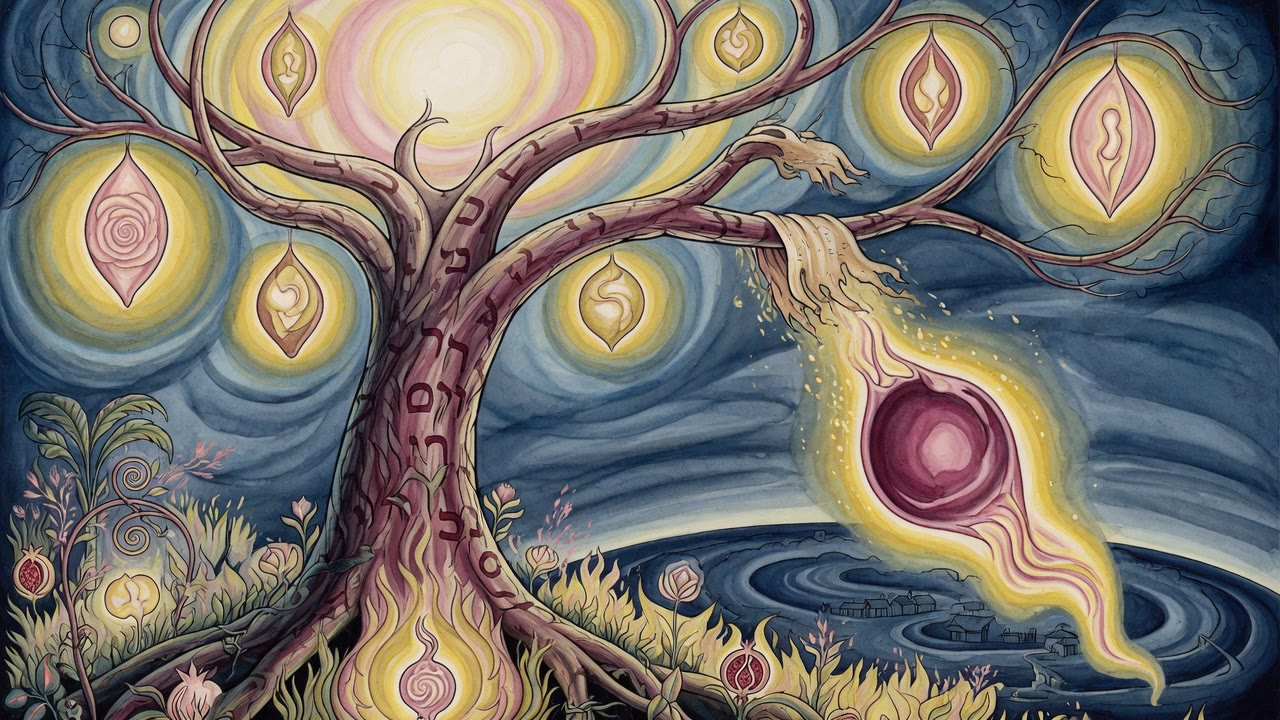
Deep in Paradise a luminous tree blossoms with unborn souls, and one ripe soul loosens from its branch to fall toward the world it will ache to leave.

Curated by Arthur · Told by Maggid ·
Table of Contents
  1. The Tree That Blossoms With Unborn Souls
  2. The Guardian Beneath the Branches and the Four Winds
  3. The Ripening and the Loosening From the Branch
  4. The Descent Toward the Waiting World
  5. The Naked Souls Beyond the Border of the Field
A Soul Ripens on the Tree of Souls and Falls Toward Birth Click for full size

The Tree That Blossoms With Unborn Souls

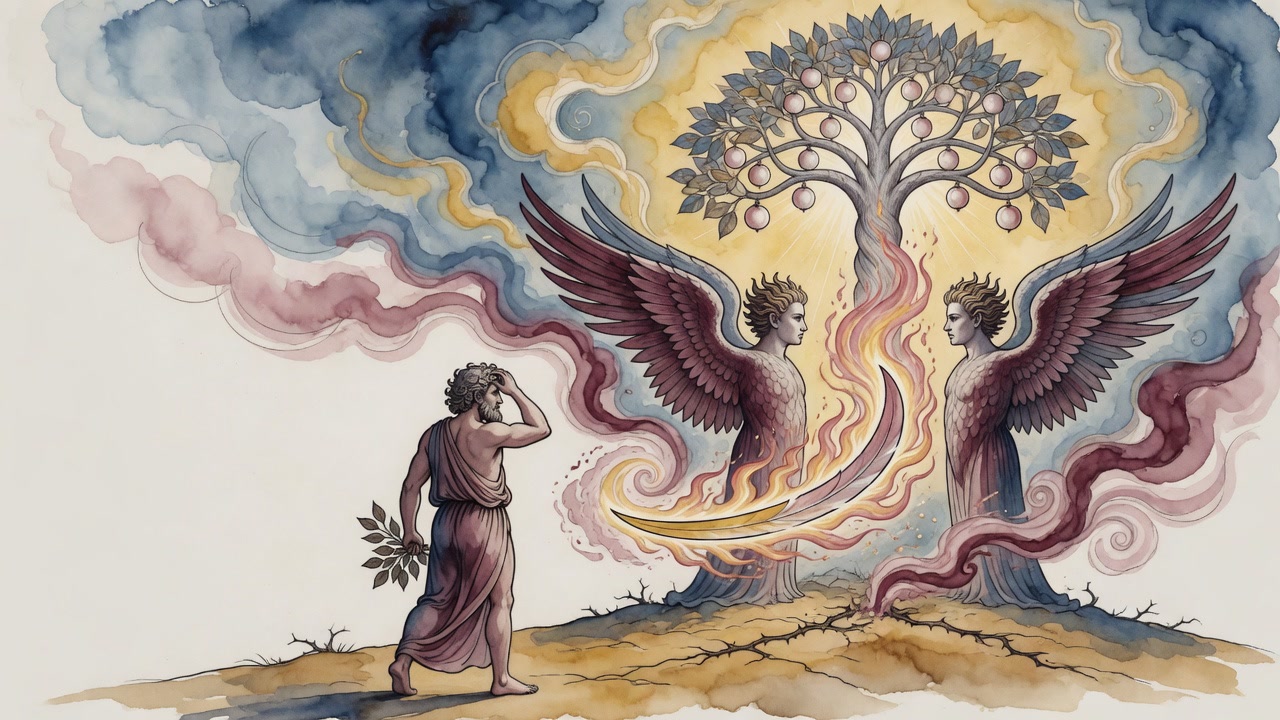
Deep inside Paradise, a tree stands taller than any cedar and heavier with bloom than any orchard in spring. Its blossoms are not flowers. Each one is a soul that has never lived, folded tight in its own light, waiting. This is the Tree of Souls, and every soul that has ever breathed and every soul that ever will breathe first opened here, on a branch, in the windless hush before the world.

One blossom hangs near the outer boughs. It has no name it can speak, but its name is already written. Down in the dark where the roots grip the ground of Eden, the names of all the righteous are inscribed along the living wood. The roots feed upward. They carry whatever it is that makes a soul a soul into the blossom on the branch, and the soul does not know it is being fed. It knows only the light around it and the other blossoms breathing beside it.

The Guardian Beneath the Branches and the Four Winds

Beneath the tree sits an angel who never leaves. This is the Guardian of Paradise, and the tree is the whole of the Guardian's watch. The angel counts nothing and hurries nothing. It waits the way the tree waits.

Around them both the four winds of the world turn. They come from the corners of everything, and they move through the branches without breaking a single blossom. One wind is cold and smells of far water. One is warm. One carries something like the memory of a voice. The winds breathe over the tree, day after day that has no day, and under their breathing the blossoms swell.

The field below the tree is not ordinary ground. Its grass shines, and stranger trees grow across it, trees with no likeness in any wood a human has walked. The grass and those trees are themselves souls, rooted and flourishing, a whole country of them. The soul on the branch looks down into that shining field, and something in it leans toward the green, though it cannot yet fall.

The Ripening and the Loosening From the Branch

Then the ripening begins.

The soul grows heavy. The light that folded it starts to press outward. It has taken in all the roots can give, and the branch that held it so long begins, very slightly, to loosen its grip. The Guardian looks up. This is the moment the angel has waited for through the long patience beneath the boughs.

The other blossoms do not stop the soul. They cannot. Each ripens alone. When a soul is full it is called, and the calling is not loud. It is more like the branch opening its fingers. The soul is aware of the last thread of wood letting go.

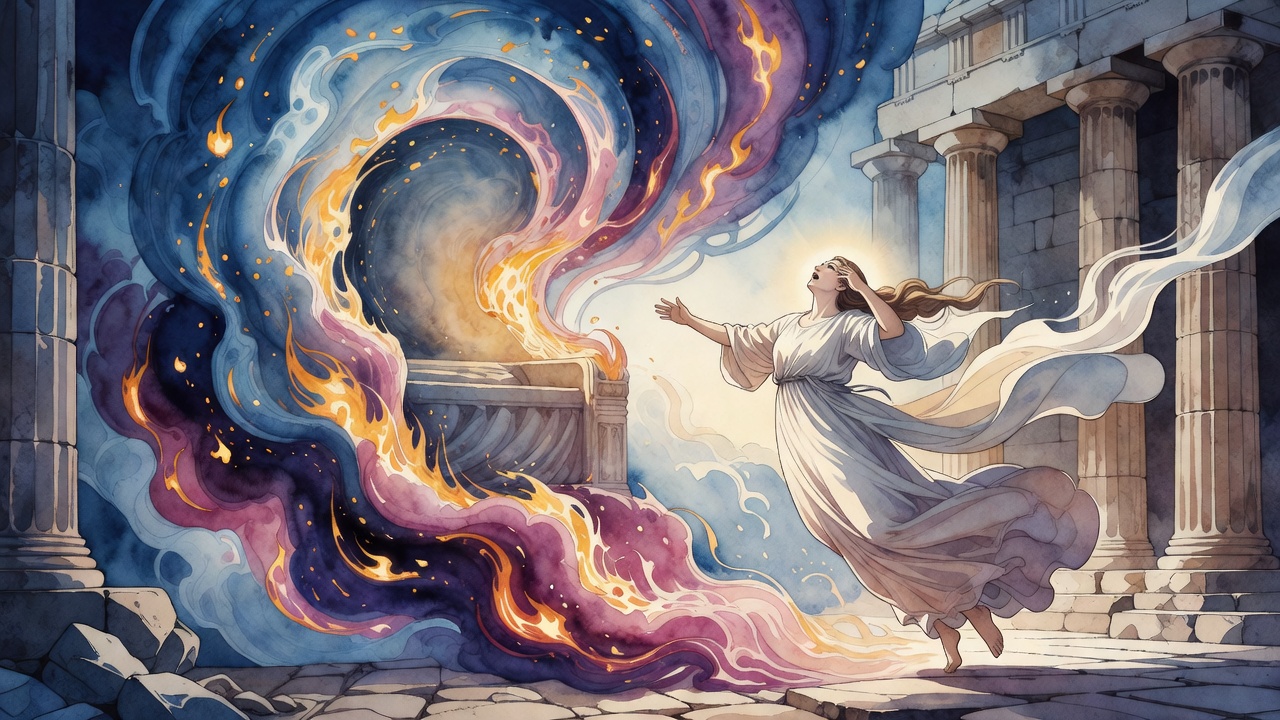
For one instant it hangs free above the shining field, above the grass that is souls and the trees that are souls, and it wants, with everything it now is, to sink down and root there and be nothing but light among light.

It does not stay. The ripe soul does not fall into the field. It falls out of Paradise entirely.

The Descent Toward the Waiting World

There is a place the ripe souls go before they are born. Tradition calls it the Treasury of Souls, a great held stillness where the loosened blossoms gather and wait to be summoned into a body, a cradle, a mother, a world. The soul passes into that waiting. It is no longer on the branch and not yet in the world. It is held.

Somewhere far below, the world it is bound for turns without knowing it is coming. A woman it has never met. A name it will answer to and will not remember choosing. All of that waits at the bottom of the descent. And the soul, held in the Treasury, already aches backward toward the field it just left, the shining grass, the green country of Gan Eden (the Garden of Eden) where it grew.

Every soul carries that ache down. It is the oldest homesickness, older than the body it is about to wear.

The Naked Souls Beyond the Border of the Field

Not all souls keep the road home.

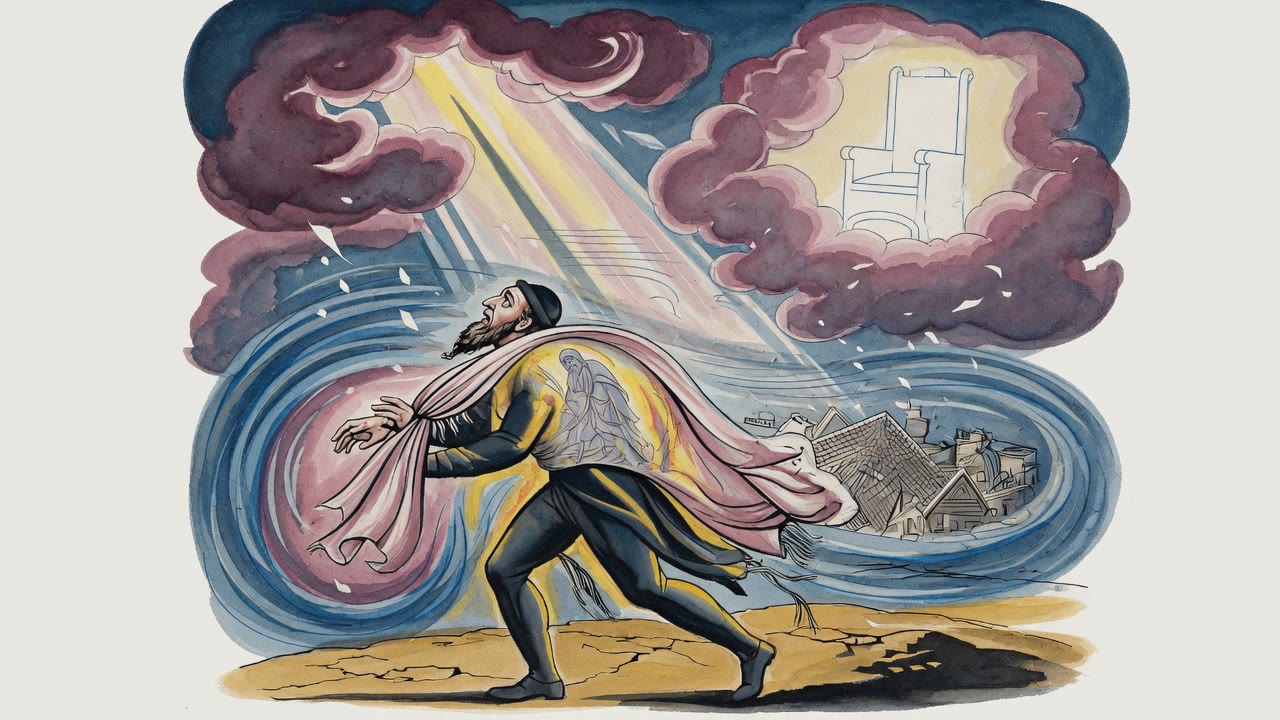
Beyond the borders of the field wander souls with no covering, stripped and lost, driven out past the shining grass into the cold of the fallen world. They strayed, or they fell, or the world tore them from the field, and now they cannot find their way back. Even a great soul, once it has left, struggles to return. The exiles cry across the border toward the field, "Repair us. Bring us home."

Someone answers. Jewish tradition names him the field master, the one who gives his whole self to the labor of gathering the naked souls and mending them, the tzaddik (a righteous person) who takes the exile's wound as his own. It is brutal work. The sources say he can finish it only by passing through his own death, worn down by affliction, and in the end he prevails, and the field is tended, and the wandering ones are led back in.

The ripe soul, descending toward its birth, knows none of this yet. It knows the ache, and the field growing smaller behind it, and the world growing nearer below. It falls toward a first breath it will draw in a room full of people who have been waiting for it, and it carries down, sealed inside its light, the shape of the branch it grew on and the green field it means, someday, to reach again.


← All myths
From the tradition

Sources

2 sources

The texts behind this telling. Some cards carry a translation of the source; others are our own retelling of it, and each card says which. Every card links out to the original.

Zohar 3:128bZohar

Retold in our words. Read the original at the link below.Sefaria-hosted English translation · CC-BY

One of the most vivid? The Tree of Souls.

Deep within Paradise, there stands a magnificent tree. Not just any tree, but a Tree of Souls, resplendent with blossoms of pure, nascent being. An angel, the Guardian of Paradise, sits beneath its branches, watching over this sacred grove. And all around, the four winds of the world dance and swirl.

This isn't just whimsical imagery. It's a profound statement about the source of life itself. As it says in (Hosea 14:9), "I am like a cypress tree in bloom; your fruit issues forth from Me." This verse, according to tradition, speaks of God as the ultimate source, the very ground from which our souls emerge.

The Zohar, that foundational text of Kabbalah, gives us glimpses into this mystical realm. And as Louis Ginzberg retells the story in Legends of the Jews, we begin to understand the depth of this imagery. The roots of this celestial tree, nurture the souls of all the righteous. Their names are inscribed there, evidence of their potential, their inherent goodness waiting to be revealed.

And as these souls ripen, they descend into what's called the Treasury of Souls. Think of it as a celestial waiting room, a place of preparation, where they are held until the moment they are called upon to be born into the world.

This idea, that all souls are the fruit of the Holy One, blessed be He, is powerful. It suggests a direct connection, a divine lineage that binds us all together. The Tree of Souls produces every single soul that has existed, and every soul that will exist.

But here's the kicker: tradition teaches that when the very last soul descends from the Tree, when the Treasury is finally empty… then the world, as we know it, will come to an end.

Woah. Heavy stuff. Rabbinic and Kabbalistic texts often speculate about the origin of souls being somewhere in heaven. This myth of the Tree of Souls gives us a powerful, symbolic "where." It fuses together so many traditions.: we have echoes of the Garden of Eden, that primordial paradise. And we have the idea that just as there's an earthly Garden, there's a corresponding heavenly one, a mirror image reflecting the divine realm. Midrash Rabbah, that collection of rabbinic interpretations, constantly draws parallels between the earthly and the celestial.

So, what does this all mean for us, here and now? Perhaps it's a reminder that we are all interconnected, that we all share a common origin. That each of us carries within us a spark of the divine, a fruit born from the Tree of Souls. And maybe, just maybe, it's a call to live our lives in a way that honors that sacred source, knowing that our choices, our actions, contribute to the unfolding of creation itself. Because one day, the very last soul will descend, and what kind of world will it be entering? That, my friends, is up to us.

Full source
Zohar 3:135bZohar

Retold in our words. Read the original at the link below.Sefaria-hosted English translation · CC-BY

There's a place, a hidden realm, far beyond our everyday perception, where souls reside in a truly remarkable way.

A field. Not just any field, but one overflowing with life, with trees of unimaginable splendor and grass shimmering with holiness. This isn't a field of ordinary plants, though. According to Tree of Souls (Schwartz), this is a field where wondrous trees grow, and the trees and grass are holy souls. This field, this Treasury of Souls, is where souls grow and flourish. It's a vision of paradise, a kind of Gan Eden, the Garden of Eden, where souls both originate and eventually find their eternal rest.

What happens when souls stray? What happens when they find themselves outside this idyllic space?

There are many naked souls who wander beyond the borders of this field, lost and yearning for repair. These are souls exiled from the Garden, adrift in our fallen world. The Zohar, that foundational text of Kabbalah, often speaks of the exile of the Shekhinah, the Divine Presence, and this imagery resonates with that concept. Even the greatest soul, it's said, struggles to return to the field once it's departed.

Think of it: a soul, separated from its source, exposed and vulnerable, calling out for help. And who answers that call?

The text introduces us to the "field master," the one who dedicates themselves to tikkun (spiritual repair) – that crucial Hebrew word meaning "repair" or "restoration". The exiled souls cry out for this field master, for someone to set things right. But this isn't an easy task. It demands unwavering dedication and immense courage.

Rabbi Nachman, whose teachings this allegory reflects, suggests that this field master can only complete this sacred work through his own death. He must endure countless afflictions. Yet, in the end, he will succeed in the work of the field and ultimately prevail.

Who is this figure? Well, in Jewish tradition, this figure represents the Tzaddik, the righteous individual, in general. But more specifically, it alludes to Messiah ben Joseph. Now, Messiah ben Joseph isn't as widely known as Messiah ben David, the heavenly Messiah who will usher in the End of Days. But Messiah ben Joseph plays a critical role: he paves the way. His task, as we find in "The Two Messiahs" (p. 517), is to prepare the world for the ultimate redemption. And, tragically, it's his fate to die while engaged in this messianic mission.

This allegory, then, becomes a powerful call to action. As Ginzberg tells us in Legends of the Jews, the longing and prayer for the coming of the Messiah is a central theme in Jewish thought. We are called to yearn for the one who will repair all souls in need, who will restore the world to its intended state of harmony and wholeness.

Perhaps it's a reminder that we all have a role to play in tikkun olam, repairing the world. And perhaps, most importantly, it reminds us to never lose hope in the possibility of redemption, for ourselves and for all souls wandering in the wilderness.

Full source