6 min read

A Living Man Carries a Dead Tzaddik and Never Knows It

A surge of strength not his own moves through a living man. The mystics name it ibur: a dead tzaddik, a righteous soul, riding his body to finish a repair.

Curated by Arthur · Told by Maggid ·
Table of Contents
  1. The Strength That Was Not His
  2. Why a Righteous Soul Bends Back Toward the World
  3. The Camel Driver on the Road
  4. The Souls That Touched While Both Still Lived
  5. Not the Cradle, Only the Passenger
  6. The Hour the Passenger Leaves
A Living Man Carries a Dead Tzaddik and Never Knows It Click for full size

The Strength That Was Not His

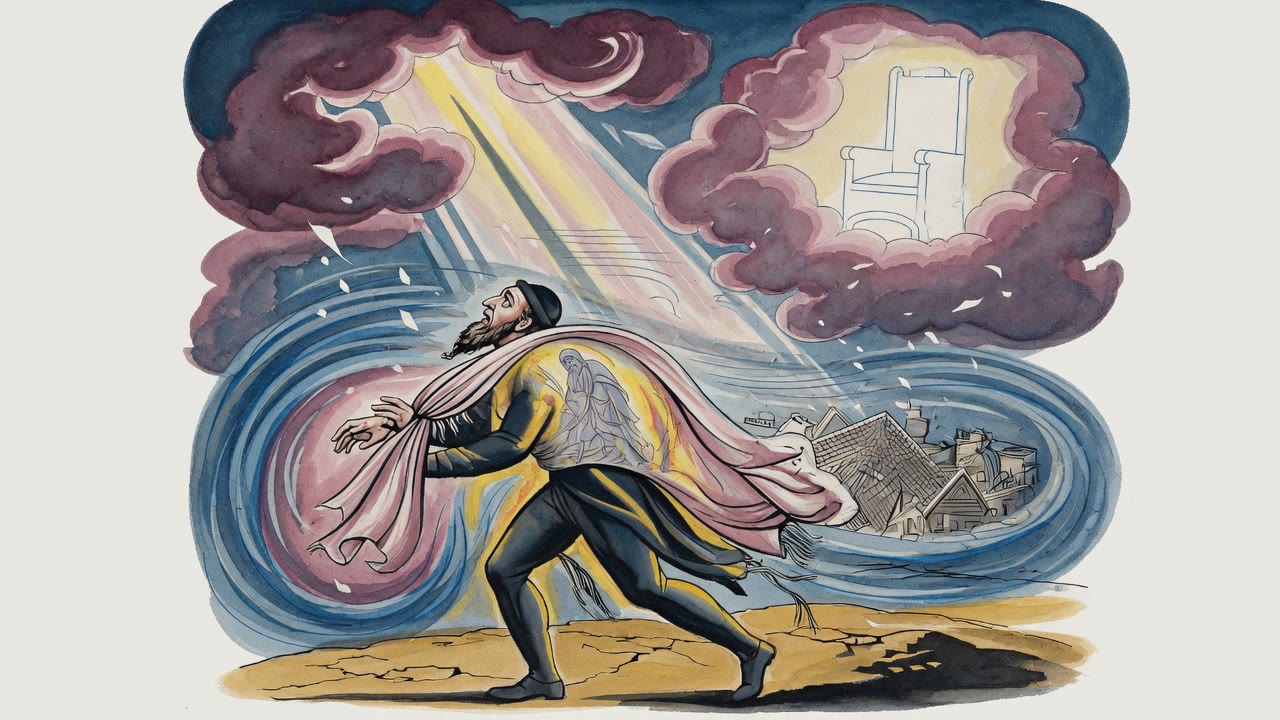
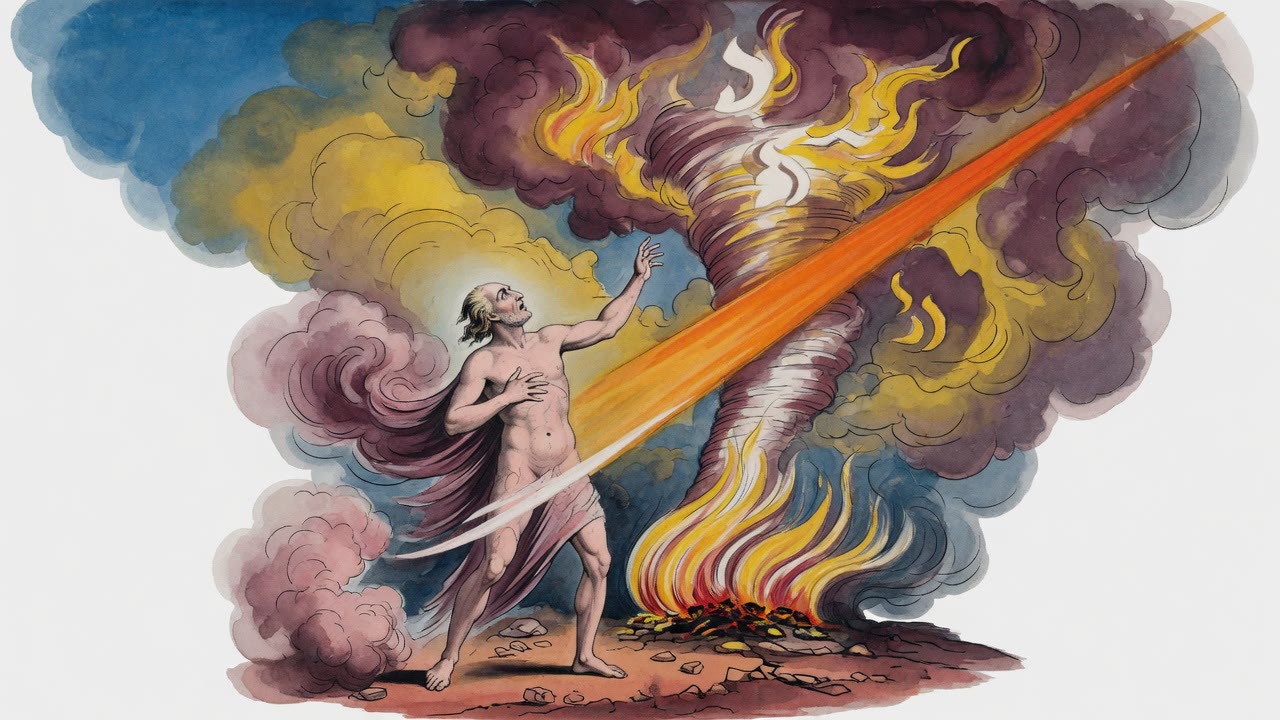
A man set his shoulder under a weight that should have broken him, and it rose. He stood there breathing hard and could not say where the strength had come from. It had not been in his arms that morning. It was in them now, borrowed and warm and sure, as if a second pair of hands had closed over his own.

He did not know that a dead man was helping him lift.

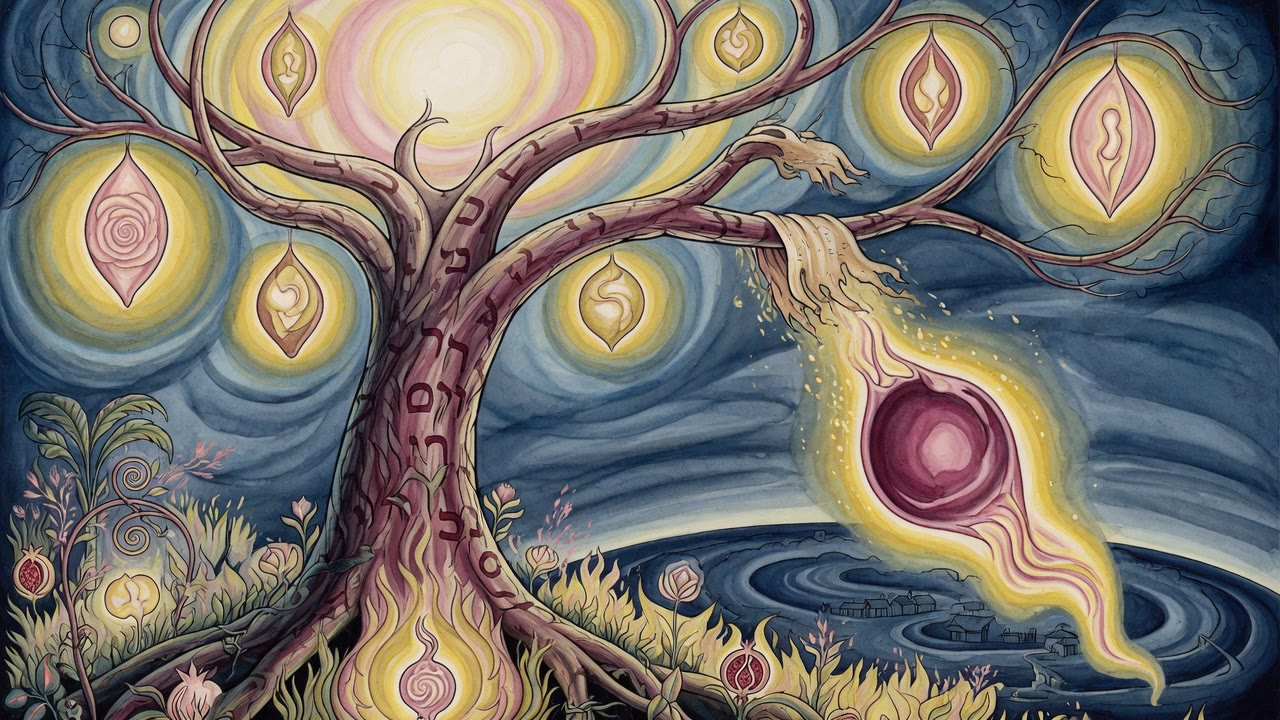
The masters of the hidden Torah gave the thing a name. They called it ibur (עיבור), which means pregnancy, because a living body can carry a soul that is not its own, the way a woman carries a child she has never met. This was no haunting and no seizure of the flesh. A righteous soul, loosed from its own grave, folds itself quietly into a person still walking the earth and lends that person the one thing he lacks. The host feels only that he has grown, that his hands hold steadier and his mind sees further than it did.

Why a Righteous Soul Bends Back Toward the World

Such a soul does not come down for nothing. It comes to lift a man who is sinking. The struggling one cannot climb on the strength he was born with, so the tzaddik (צדיק), the righteous one, enters him and raises him from inside, steadying his hand toward one good deed, and then another, until the man stands taller in the work than he could ever have stood alone. What he cannot do for himself, the passenger does through him.

And the dead gain from it too. When the host performs the deed, a share of its merit rises back to the soul that steadied him. The old teachers pressed a barnyard proverb into service to explain the hunger of the giver. "More than the calf wants to suck, the cow wants to give milk." The righteous dead crave the chance to pour into the living even more than the living crave the help.

The Camel Driver on the Road

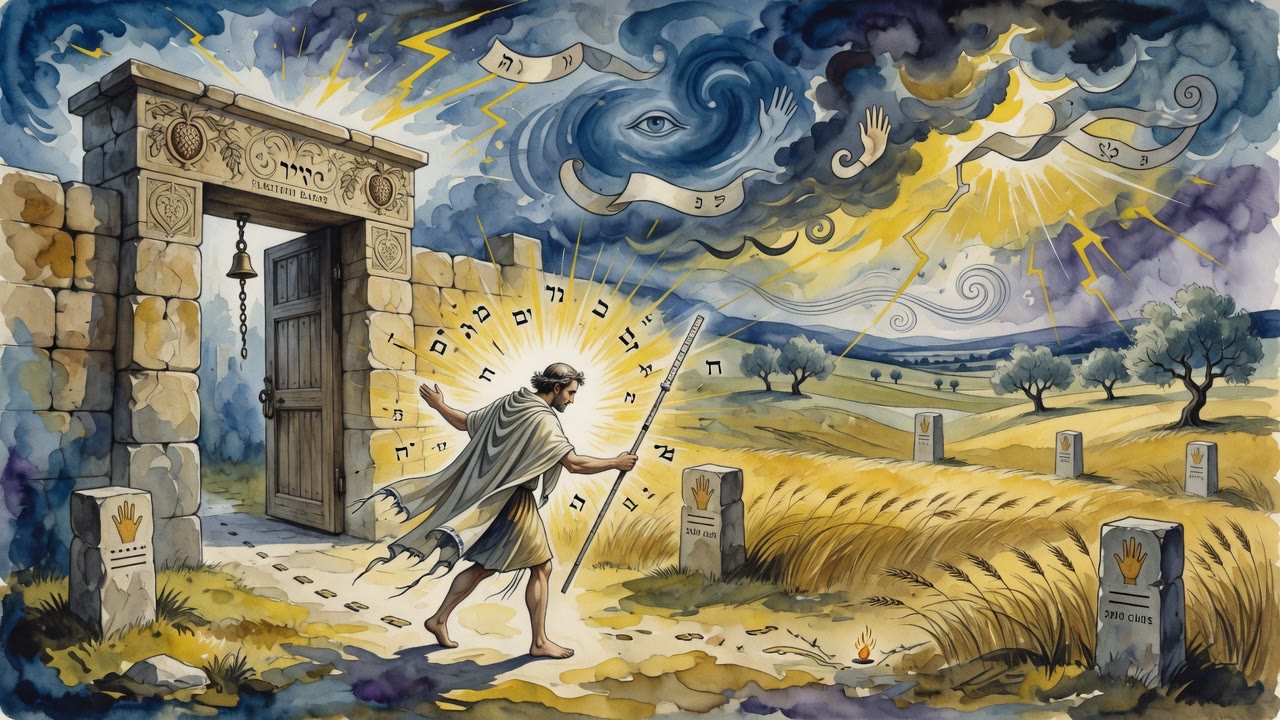
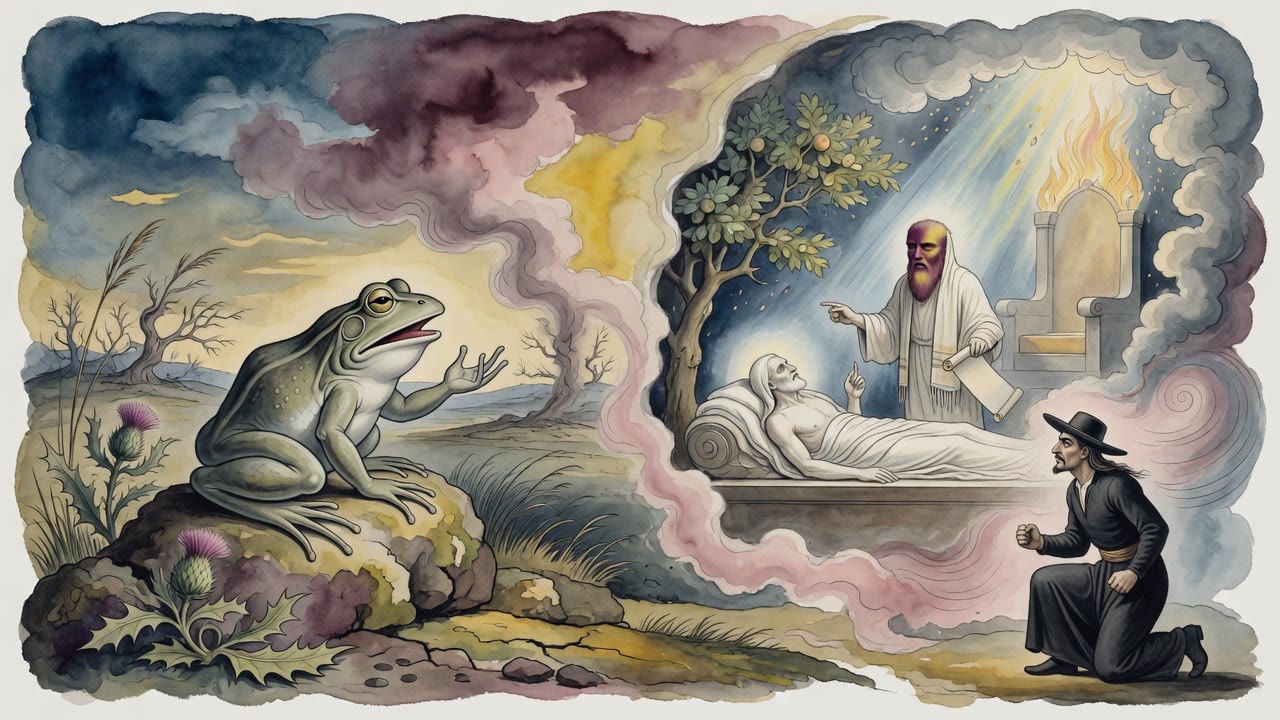
Two sages learned this on a road. Rabbi Elazar and Rabbi Abba were walking when an old man fell in beside them, stooped like a camel driver bent under his load, driving his beasts and talking of Torah in riddles too deep for any ordinary drover. They took him for a laborer and answered him lightly at first, then fell silent as the questions opened doors in the verses they thought they knew. Only later did they understand who had walked with them. The old man was Rav Hamnuna Saba, a sage long dead, come back in borrowed shape to carry his wisdom into their hearing. The load on his back was the weight of everything he still had to give, and the road had become his body for as long as the teaching took.

The Souls That Touched While Both Still Lived

It does not even wait for death. When David was still a hunted boy and Jonathan a prince who by every rule should have hated him, something in David reached across and took root in the other man. "Jonathan's soul was bound to the soul of David," and the binding cost Jonathan his crown and won him a love stronger than any throne. One living soul had entered another and made the prince spend himself to guard the shepherd. Neither of them had to die for it to happen. A soul strong enough can lean into a second body while its own heart is still beating.

Not the Cradle, Only the Passenger

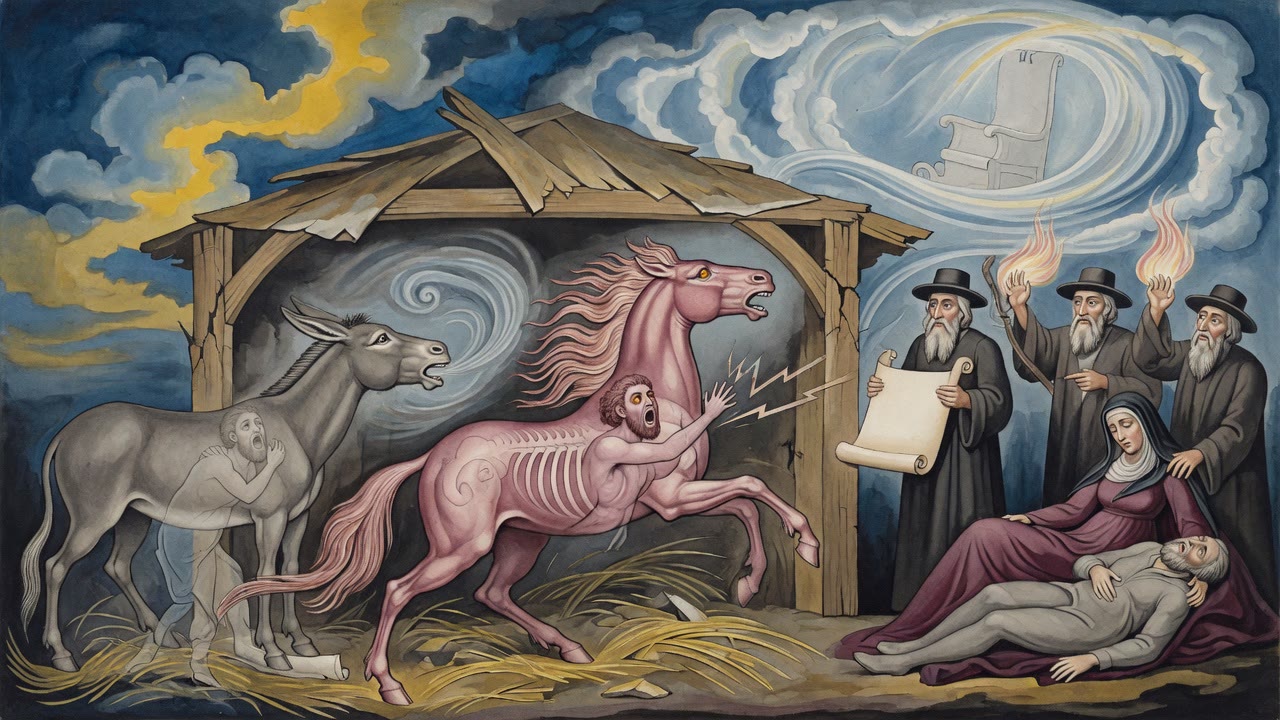
This is not the heavier fate the same masters feared. That other return drags a whole soul back down into a new infant's cradle, sentenced to a second life to repair a grave sin from the first, blind to what it did and why it has come. The passenger is gentler. It is not born again and not shut inside an unknowing child. It slips in beside a soul already living, works, and is free to go when the work is through.

Even the sparks that travel with such a soul come only to help. Rectified already in lives long finished, they ride along and lend their steadiness, and if the man they visit stumbles into sin, they take no punishment for it. They came for his good and stay untouched by his failures.

The Hour the Passenger Leaves

When the repair is finished, the borrowed strength recedes. The man feels his arms become ordinary again and never learns whose power moved through them. The soul that entered him rises back to its rest, richer than it came, having earned in a body not its own the merit it could no longer earn in the grave. The sages said it plainly and strangely. "The great righteous, even in their death, merit to have children." A dead man had fathered nothing of flesh, and still he left the world a father, because the living man he steadied had become, in the doing of good, something like his son.

The man walked on down the road, lighter, and thanked no one, because he had never seen the one who carried him.


← All myths
From the tradition

Sources

4 sources

The texts behind this telling. Some cards carry a translation of the source; others are our own retelling of it, and each card says which. Every card links out to the original.

Sha'ar HaGilgulim 3:5Sha'ar HaGilgulim

Retold in our words. Read the original at the link below.Sefaria Community Translation · CC-BY

Sha'ar HaGilgulim turns to Ibur, Reincarnation of Souls.

Here's the core idea: Imagine a soul, a Nefesh (the vital soul), needing to return to this world. This isn't just a clean slate. This Nefesh is coming back to rectify a specific wrong, a serious sin, committed in a previous life. This is according to the Kabbalistic text, Sha'ar HaGilgulim.

When this Nefesh reincarnates, it doesn't come alone. It's accompanied by "sparks," or nitzutzot, that have already been purified in other lifetimes. These sparks, however, don't fully integrate. They exist in a state of Ibur – think of it like a spiritual "pregnancy" – a supportive, almost gestating presence within the new body.

So, why are these sparks there? They're not the primary focus of this reincarnation. They're there to help. They lend their strength to the body and to the other parts of the Nefesh. This is because they were already rectified in other bodies this person already had, and they were rectified then. They've "been there, done that," and now they're offering a boost.

Think of it like this: you're trying to climb a mountain to make amends for something you did. You've got a support team (the sparks) who've climbed similar mountains before. They can't climb for you, but they can offer encouragement, share their knowledge, and lighten your load.

What happens when the part of the body that committed the sin in the past fulfills its mission, performing the necessary mitzvah (good deed) in this life? Well, according to Sha'ar HaGilgulim, everyone benefits! All those sparks in the state of Ibur also receive a boost from the good deed.

But it doesn't stop there! Even the nitzutzot that came along for the ride get a lift from the person's other good deeds. It’s like a ripple effect. The text is implying, in a way, that the gilgul, the reincarnation, can help a tzaddik, a righteous person, who enters into the body to help him in the form of an Ibur. It’s a complex web of interconnectedness.

Here's the really comforting part: if the person sins in this new life, those sparks that have already been rectified? They're not punished. They're there solely to help, and they remain unaffected by the new sins. This is because they are only there to help him for good, and they are not affected by the bad he does. This highlights a core principle: the drive toward goodness and rectification.

So, what does all this mean for us? It suggests that we are not simply individuals living a single, isolated life. We are part of a larger, ongoing story. We carry within us echoes of the past, and we have the potential to heal not only ourselves but also the sparks of souls that journey with us. It encourages us to strive for good, knowing that even our smallest acts can have far-reaching consequences, benefiting not only ourselves but also the hidden dimensions of our being.

Full source
Sha'ar HaGilgulim 3:1Sha'ar HaGilgulim

Retold in our words. Read the original at the link below.Sefaria Community Translation · CC-BY

Ibur, which literally means "pregnancy" in Hebrew. In this context, it refers to a spiritual phenomenon where the soul of a righteous person, a Tzaddik (a righteous person), can enter into another living person.

Sha'ar HaGilgulim, a key Kabbalistic text, explains that this Ibur often happens when someone performs a specific mitzvah, a good deed or commandment. Through this act, the person makes a rectification, a tikkun, and merits the connection to a Nefesh – a soul – of a Tzaddik who also performed that same mitzvah. It’s like a spiritual resonance, a soul-echo across time.

In Sha'ar HaGilgulim, this Ibur can occur even when the Tzaddik is still alive! This happens because when you perform a mitzvah relevant to that living Tzaddik, a spark of their Nefesh enters into you. They are both alive at the same time, yet a connection is formed on a spiritual level.

Is there a Biblical precedent? Well, Sha'ar HaGilgulim points to the verse describing the relationship between David and Jonathan: "Dovid's Nefesh connected to Yonoton." Even though David and Jonathan were contemporaries, David's Nefesh, his soul, implanted, performed Ibur, into Jonathan. (Samuel I 18:1)

What does this tell us? It suggests that we are all interconnected, not just through physical reality, but through a web of souls stretching across generations. Our actions, our mitzvot (commandments), can create these connections, drawing us closer to the righteous and potentially elevating our own spiritual being.

Now, as for Gilgul, reincarnation. well, Sha'ar HaGilgulim says we need to expand on that concept. The text suggests we begin with Adam HaRishon, the first man. But that, my friend, is a story for another time.

But for now, consider this: the next time you feel drawn to a particular action, a specific value, perhaps it's not just you. Maybe it's the echo of a righteous soul, a Tzaddik, nudging you along the path of tikkun, of rectification, connecting you to something far greater than yourself.

Full source
Sha'ar HaGilgulim 2:13Sha'ar HaGilgulim

Retold in our words. Read the original at the link below.Sefaria Community Translation · CC-BY

In Jewish mysticism, particularly in the teachings of the Kabbalah, we find a concept called Ibur (עיבור), often translated as "impregnation." It's a fascinating idea about how souls can interact and influence each other across lifetimes.

When we It's more like a temporary connection, where the Nefesh (נפש) – the soul – of a Tzaddik (צדיק), a righteous individual, can enter into another person. But why would this happen? What's the purpose?

The Sha'ar HaGilgulim (the reincarnation of souls) says the "Gate of Reincarnations," there are two primary reasons for Ibur. The first is to help someone rectify their own Nefesh. Imagine a Tzaddik, a soul brimming with goodness, temporarily joining with someone who is struggling. Through the Tzaddik's merits, their very presence, they can assist the other person in their spiritual growth. Think of it like a boost, a helping hand on the path to Olam Haba (עולם הבא), the World to Come. The Tzaddik helps them rise, enabling them to accumulate more mitzvot (מצוות), good deeds, and holiness. The Tzaddik enters the person to elevate them.

Here's where it gets really interesting. The second reason for Ibur isn't just altruistic; it benefits the Tzaddik as well! When the Tzaddik helps someone ascend spiritually, when they guide them to perform more mitzvot and make rectifications, the Tzaddik receives a portion of the benefit from those actions. It's a reciprocal relationship. It’s like the Talmud says, “More than the calf wants to suck, the cow wants to give milk.” (Pesachim 112a).

This idea illuminates a seemingly cryptic saying of the Rabbis: "Great Tzaddikim (the righteous), even in their death, they merit to have children." How can someone who has passed away have children? Well, the Sha'ar HaGilgulim explains that the person into whom the Tzaddik enters performs mitzvot, and in a way, becomes like a child to the Tzaddik. The Tzaddik helps them, guides them, just as a father would help a child. And in return, the Tzaddik receives merit.: it's a beautiful cycle of giving and receiving, of spiritual growth and interconnectedness. The Tzaddik helps someone on their journey, and in doing so, continues their own spiritual ascent. It challenges our notions of individual spiritual paths, suggesting that we are all intertwined, that our actions ripple outwards, affecting not only ourselves but also those who came before us.

So, the next time you feel inspired to do a good deed, remember the concept of Ibur. You might just be carrying a little bit of a Tzaddik with you, and in your actions, you might be helping them continue their journey as well. Perhaps, too, someone carries you.

Full source
Sha'ar HaGilgulim 1:13Sha'ar HaGilgulim

Retold in our words. Read the original at the link below.Sefaria Community Translation · CC-BY

Like you've got unseen help, a little nudge from... somewhere? Well, Jewish mystical tradition actually gives a name to that feeling: Ibur (עיבור). It's a fascinating concept, and it suggests we might be closer to those who came before us than we realize.

Ibur literally means "impregnation" or "gestation," but in this context, Instead, we're exploring the idea that the Ruach (רוּחַ), the spirit, or the Neshamah (נְשָׁמָה), the soul, of a Tzaddik (צַדִּיק), a righteous person, can come and, in a way, "inhabit" or "influence" a living person. Think of it like a spiritual mentorship, a cosmic co-working arrangement, all in the service of helping someone in their avodat Hashem (עֲבוֹדַת ה), their service to God.

Sounds a bit out there. But stick with me.

The Sha'ar HaGilgulim (the reincarnation of souls), the "Gate of Reincarnations," is a key text in understanding these complex ideas. Within it, we find this notion that righteous souls can assist us in our own spiritual journeys. It's not about possession, but about help. As we find in Midrash (rabbinic interpretive commentary) HaNe'elam MiKtivat Yad, these souls come to purify us, to lend a hand when we need it most. Rabbi Natan refers to this phenomenon when speaking about the Neshamot of Tzaddikim (the righteous).

Why would they do this? What's in it for them? Well, according to this line of thinking, everything is interconnected. Our struggles are their struggles. Our triumphs are their triumphs. By helping us, they continue their own work in the world, even beyond their physical lives.

The Zohar, that foundational text of Kabbalah, offers a glimpse into this too. At the beginning of Parshat Bereishit (the first portion of Genesis), we read about Rav Hamnuna Saba, an ancient sage, appearing to Rabbi Elazar and Rabbi Abba "like a camel driver carrying a load." This vivid image suggests the weight of wisdom and guidance being passed down, a tangible presence of the past influencing the present.

Are we all walking around with spiritual co-pilots? Maybe not in a literal sense. But perhaps it encourages us to remember that we are part of a larger story, a chain of souls stretching back through time. When we feel lost or overwhelmed, maybe we can tap into that connection, draw strength from the legacy of those who walked the path before us. The idea of Ibur reminds us that we are never truly alone on our journey. We are surrounded by a cloud of witnesses, ready to offer their wisdom and support, if only we are open to receiving it.

Full source