6 min read

The Tzaddik Who Enters a Living Man to Finish His Work

A righteous soul, loosed at death, does not rise. It slips in secret into a living man, lends him borrowed strength, and leaves when the work is done.

Curated by Arthur · Told by Maggid ·
Table of Contents
  1. The Soul That Would Not Rise
  2. The Deed That Called Him Down
  3. The Guest Who Pays His Own Rent
  4. The Test of a Wicked Hour
  5. Borrowed Nobility
  6. The Quiet Departure
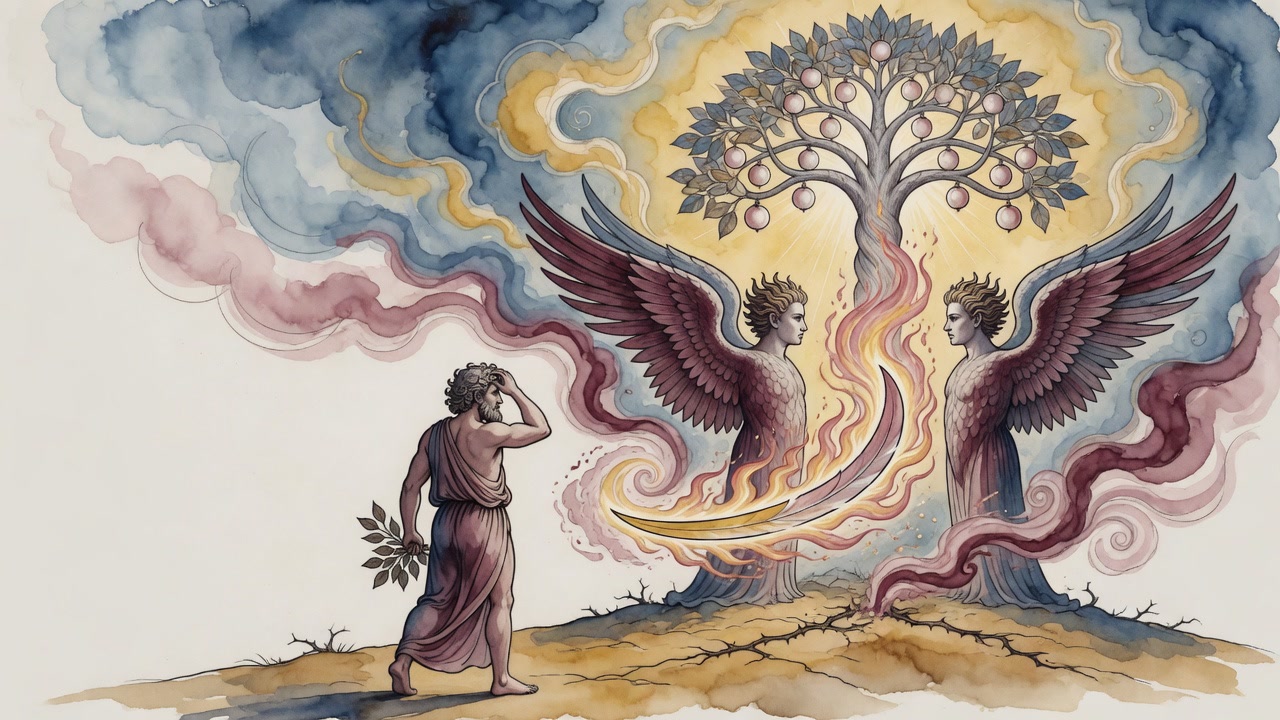
The Tzaddik Who Enters a Living Man to Finish His Work Click for full size

The Soul That Would Not Rise

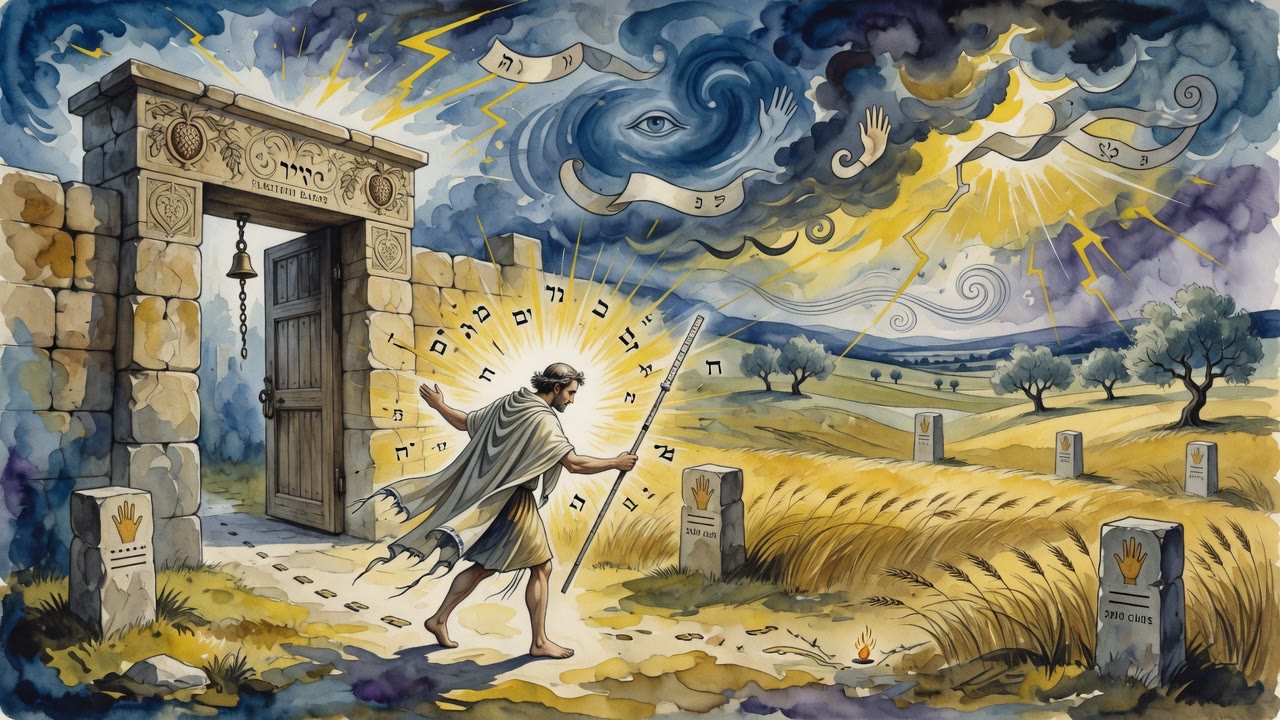
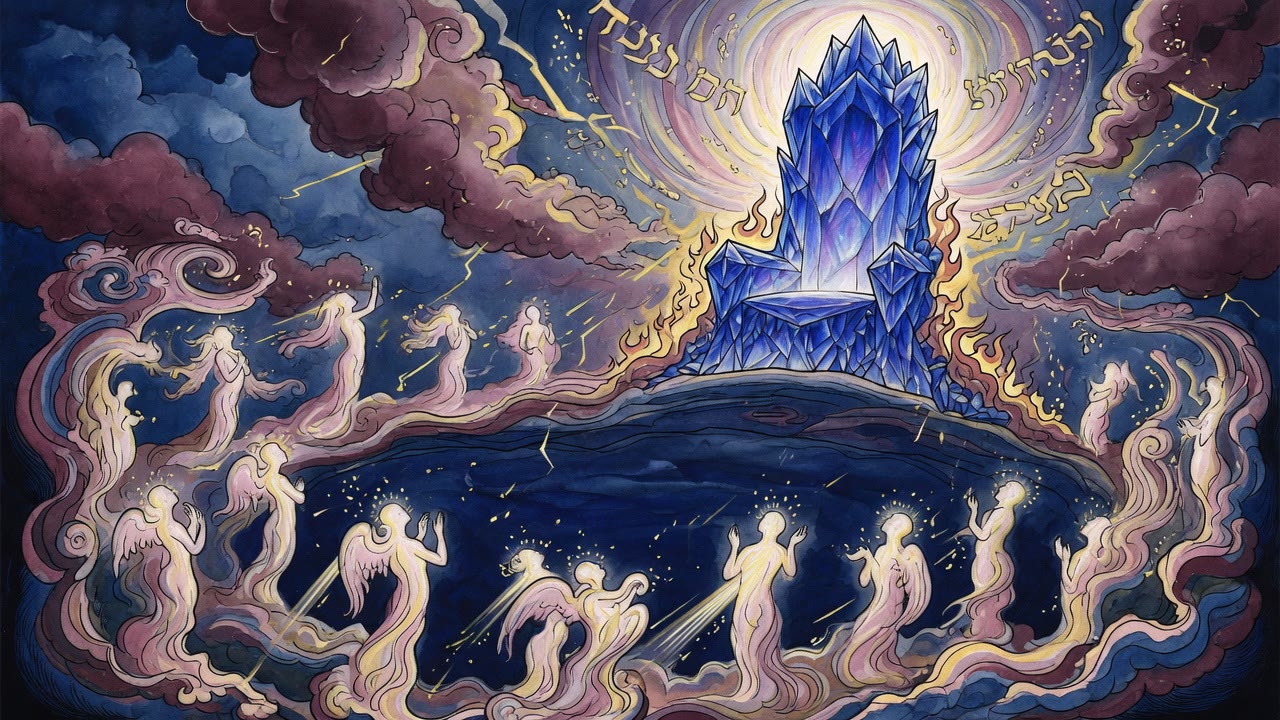
The righteous man died in the hour between afternoon and dark, and the gate that keeps ordinary souls waiting stood open for him without a word. He had spent a life earning that ease. No account was held against him, no debt sealed his name.

Still his spirit halted at the threshold and turned its face back toward the world. One thing in him was not finished. A Ruach, the spirit that carries a person's temper and conscience, had a repair left in it that could be worked nowhere in the light above, only down in the weight and friction of a living body. So he did not rise. He waited on the rim of the world for a door.

The Deed That Called Him Down

Far below, in a town he had never seen, a man knelt in the dirt beside a stranger's fallen ox and set his own shoulder under the yoke. The man's name was Avraham, though he had not been born to it. He had come to the covenant as an adult, a convert, and had taken the name every convert takes, son of Avraham our father, because he had no father in the faith to name him.

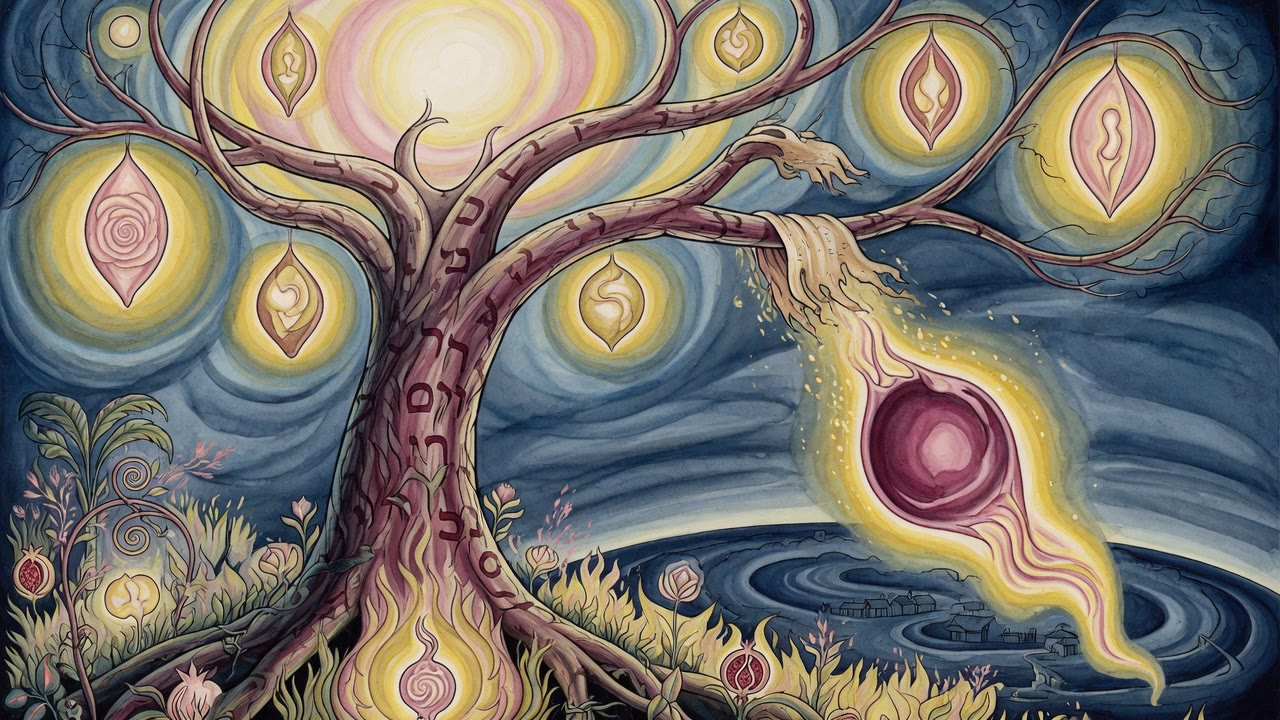
He did not know that certain deeds have a pull to them, a hidden weight the old teachers called a segula, that reaches up past the roof of the sky and closes a hand around a particular waiting soul. The kindness he did that afternoon had exactly that pull. On the rim of the world the righteous man felt himself drawn, and he let go, and he came down.

The Guest Who Pays His Own Rent

This was not birth. A soul that enters a child at birth is sewn into the flesh and cannot leave until death tears the seam. What came into Avraham came the way a lodger comes into a house whose owner is still at home. It entered willing. It could leave willing. The old teachers had a name for it. Ibur, gestation, one soul carried inside another the way a woman carries a child, except the child here was older than the man who bore him.

Avraham felt nothing he could name. Only that his hands were suddenly surer on the plow, that a verse he had stumbled over for a year opened like a shutter, that when he rose before dawn he was not tired. Strength arrived that he had not saved up. Clarity settled on him that he had not earned that morning. He thanked heaven for it and never guessed there was a guest at his table eating from the same plate.

For the guest ate too. Every good deed Avraham did now paid two ways. A portion of its reward went up to the righteous man, and the righteous man, out of his own great store in Gan Eden (the Garden of Eden), sent a portion back down. Two men grew rich on the same coin, and only one of them knew a bargain was being struck.

The Test of a Wicked Hour

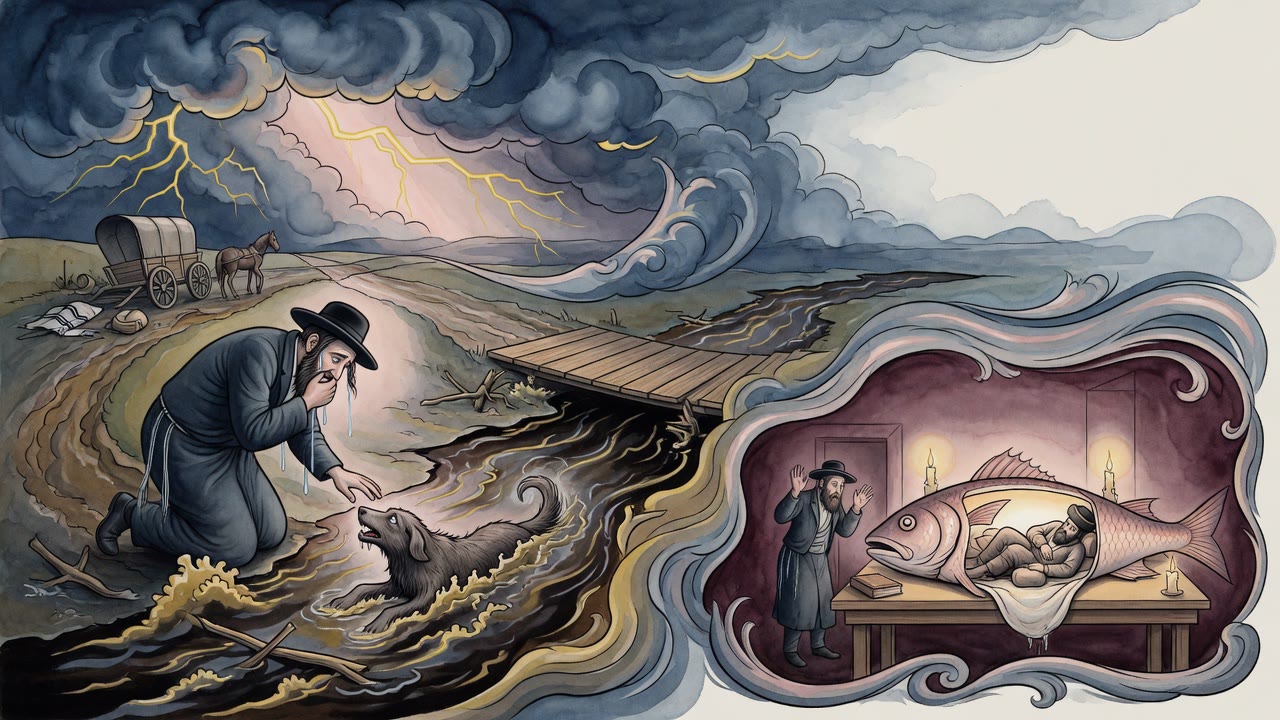
There came a night when the merchant who had cheated Avraham walked past his door, purse heavy, alone, and the road was dark. Something in Avraham measured the distance and the silence. His hand found a stone.

The guest stirred. Not in fear, for he could feel no wound of Avraham's and take no punishment for Avraham's sin. He was on loan here, a visitor in a house he did not own, and a visitor does not stay in a room that fills with smoke. "I am a guest here, not a prisoner," the righteous man said into the dark of the man's chest. "Turn back, or you turn me out." Avraham's fingers opened. The stone dropped. He never heard the words as words. He felt only that the cruelty had gone cold and strange in his hand, and he walked home shaking, and the guest stayed.

Borrowed Nobility

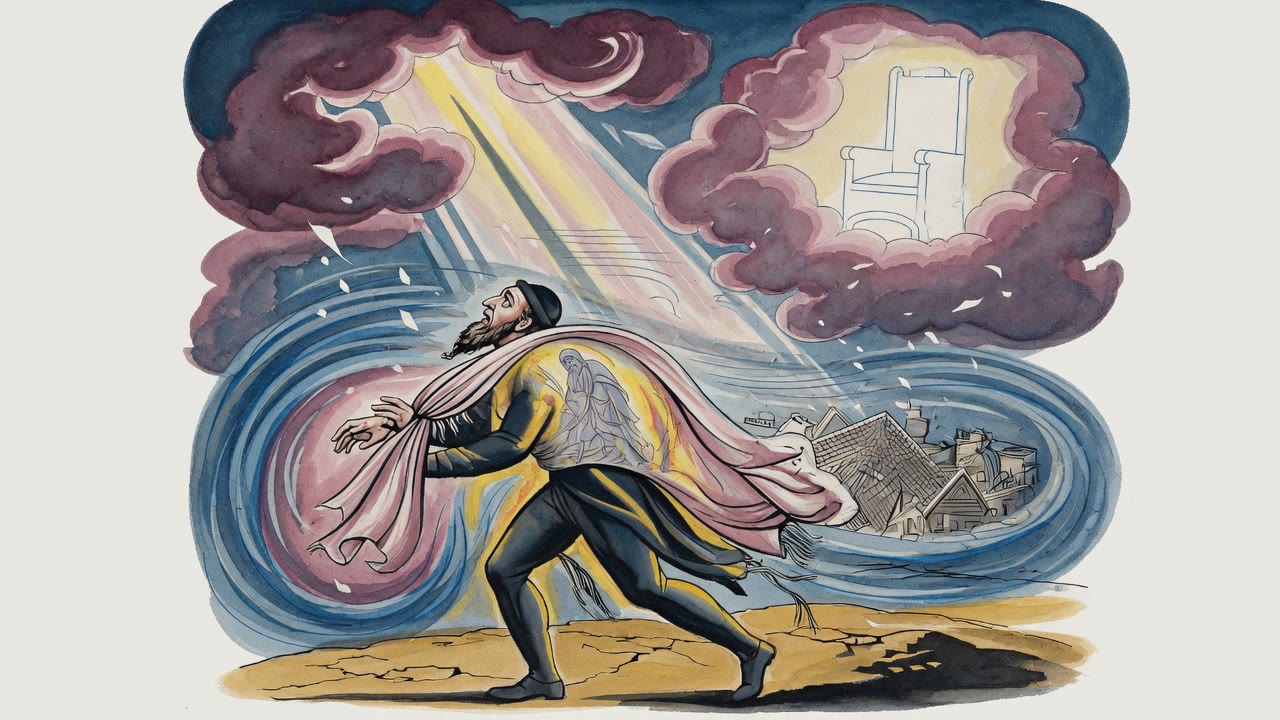
Here was the marvel of it, and it belonged to the convert most of all. Avraham had come from nothing, a soul with no inheritance in the faith, one who built a self out of raw ground. A born Jew carries the merit of a hundred generations at his back. Avraham carried none. So the righteous Ruach (the spirit-soul) wrapped itself around his bare Nefesh (the life-soul) like a borrowed cloak of state and became his chariot in the world, and it lent a beggar's soul the bearing of a prince.

The poverty ran both directions into wealth. The guest was completing his own repair through Avraham's struggles. He mended in the friction of a real life what could not be mended in paradise. The convert's raw soul rose in the guest's company, lifted above its station. What began as a night's lodging was becoming a marriage of neighbors who would never again live apart.

The Quiet Departure

The work finished the way it had begun, without announcement. One ordinary morning the repair was whole, the debt closed, the borrowed strength no longer needed. The righteous man loosed his hold as gently as he had taken it and went up at last through the gate he had refused years before.

He did not go alone. When Avraham's own hour came and his soul climbed the same road, it did not climb to the low place where a new convert's bare soul might have rested. It rose to the height of the master who had lodged in him, and the two settled there side by side, neighbors forever, a rich man and the beggar he had made rich, no longer able to tell whose nobility was whose.


← All myths
From the tradition

Sources

4 sources

The texts behind this telling. Some cards carry a translation of the source; others are our own retelling of it, and each card says which. Every card links out to the original.

Sha'ar HaGilgulim 2:8Sha'ar HaGilgulim

Retold in our words. Read the original at the link below.Sefaria Community Translation · CC-BY

The Ibur is something different entirely. According to the Chachamim, the Rabbis, the Ibur is a secret, a hidden process where the soul of a righteous person, a Tzaddik (a righteous person), can enter someone during their lifetime. This concept comes to us from texts like the Sha'ar HaGilgulim (the reincarnation of souls), the "Gate of Reincarnations," which delves deep into the mysteries of the soul's journey.

That: being "impregnated" with the soul of a Tzaddik while you’re still alive. It’s an intense idea. And sometimes, it's not just the Nefesh – the vital life force, the lowest level of the soul – that enters. Sometimes, the Ruach, the spirit – the emotional and moral center of the soul – can also come.

In fact, the Sha'ar HaGilgulim goes even further. It suggests that these Ruchot, these spirits, can even be those of the Tzaddikim (the righteous) haRishonim, the most ancient righteous ones, even the Avot – the Patriarchs themselves, whose souls now reside in Gan Eden (the Garden of Eden, paradise), Paradise! Could the very spirit of Abraham, Isaac, or Jacob somehow influence us today? The mystics believed it was possible.

How does this happen? Is it random? Not at all. According to this teaching, it all depends on the level of mitzvot, the good deeds and commandments, that a person performs. Certain mitzvot, it's believed, have the segula – the inherent spiritual power – to draw down the Nefesh of a particular Tzaddik as an Ibur. Other mitzvot might even bring down their Ruach, as the Sha'ar HaGilgulim explains. Our actions, our choices, have the potential to connect us to something far greater than ourselves. It's a powerful reminder that even seemingly small acts of kindness, compassion, or devotion can ripple outwards, opening us to the influence of those who came before us, the giants of the spirit. It suggests that we are never truly alone, that the potential for greatness resides within us, waiting to be awakened through our own efforts. So, what kind of mitzvot might you choose to perform today? What soul might you be inviting into your life?

Full source
Sha'ar HaGilgulim 2:14Sha'ar HaGilgulim

Retold in our words. Read the original at the link below.Sefaria Community Translation · CC-BY

Kabbalistic teachings explore these mysteries, the source turns to a fascinating concept from the Sha'ar HaGilgulim (the reincarnation of souls), the "Gate of Reincarnations," specifically regarding the phenomenon of ibur.

ibur (עיבור) literally means "gestation," but in Kabbalah, it refers to a special kind of spiritual connection. It describes when the soul of a tzaddik (צדיק) – a righteous individual – enters into a living person, not as a full reincarnation (gilgul), but as a helping presence during their lifetime. It's like a spiritual mentor, guiding them towards good.

The Sha'ar HaGilgulim explains that this connection is beneficial for both parties. When the person performs mitzvot (מצוות) – good deeds, commandments – they share a portion of the reward with the tzaddik. It’s a partnership in spiritual growth. As it says, "the Tzaddik shares part of his share with his friend in Gan Eden (the Garden of Eden, paradise)" (Paradise). A righteous soul lifting another, and both ascending higher.

What happens if the person goes astray? What if they act wickedly? Here's where it gets interesting. The text assures us that the tzaddik doesn't suffer any punishment or loss because of the person’s bad actions. The tzaddik isn't obligated to remain in ibur if the person turns to evil. They are there only for good.

Think of it this way: their connection is based on shared righteousness. If that righteousness disappears, the connection weakens.

However, if the person later repents and corrects their actions, seeking to rectify their soul, the tzaddik can actually separate entirely. Why? Because, as the text explains, the secret of ibur takes place within the life of a person, but unlike the person's own soul (Nefesh), the tzaddik is not permanently bound to the body.

It's completely entangled, unable to leave until death. But the Nefesh of a tzaddik that enters through ibur? They enter willingly and leave willingly.

If the person remains righteous, the tzaddik continues to dwell with them, participating in their good deeds. They remain together until the person leaves this world, and then, according to the Sha'ar HaGilgulim, they ascend together to the same high spiritual level as the tzaddik. A truly remarkable reward for a life well-lived, guided by righteousness!

But what if the person becomes evil? The text says the tzaddik becomes "fed up with his company" and leaves. The tzaddik isn't there permanently. They are "on loan, like a hospitalist staying in the owner's house until the time that he sees fit. And if he [the Tzaddik] does not find comfort there, he will go.”

Because of this temporary, voluntary nature, when suffering befalls the person, the tzaddik doesn't feel sorrow or suffer along with them. They aren't stuck. They merely loaned themselves to the person.

So what does this all mean? It suggests a dynamic, interactive relationship between the living and the righteous departed. It highlights the importance of our actions, not just for ourselves, but for the spiritual connections we forge.

The concept of ibur offers a comforting, yet challenging, perspective. Are we living in a way that invites the presence of righteous guidance? Are we actively cultivating the qualities that foster such a connection? It's a question worth pondering, as we navigate our own spiritual journeys.

Full source
Sha'ar HaGilgulim 5:5Sha'ar HaGilgulim

Retold in our words. Read the original at the link below.Sefaria Community Translation · CC-BY

The Sha'ar HaGilgulim (the reincarnation of souls), the "Gate of Reincarnations," a profound Kabbalistic text, explores this very idea. It explores the intricate dance of souls, not just across lifetimes, but within a single lifetime. And within this dance is a concept known as ibur (עיבור), often translated as "spiritual pregnancy" or "impregnation." What does this even mean?

A soul, striving for tikkun (spiritual repair) olam תיקון עולם, repairing the world, making it a better place. Let’s say that soul is connected to ten other souls, higher on the spiritual ladder. If that person truly dedicates themselves to self-improvement, to refining their character, they might merit something extraordinary.

The lowest of those ten higher souls, we'll call it the "10th Nefesh (the vital soul)", can enter into them as an ibur. Now, Nefesh (נפש) refers to the most basic level of the soul, connected to our physical life force. This 10th Nefesh, being spiritually superior, helps elevate and guide the individual.

If that person continues to grow? They can merit the 9th Nefesh entering as a second ibur. Then the 8th. So now, within this one individual, reside four souls: their own, plus these three assisting Nefashot. The Sha'ar HaGilgulim states that four is the limit, at least in this configuration.

But what happens if our striving soul continues to ascend? What if they merit an even higher soul, say, the 7th Nefesh, to enter?

Here's where it gets interesting. The text explains that the original 10th Nefesh becomes "nullified as an ibur." It doesn't disappear entirely. It's not disconnected. It still benefits from the individual's good deeds, their Torah study, their mitzvot (מצוות), commandments. But its active, guiding influence diminishes. It's like… the student has outgrown the first teacher.

This process continues as the individual ascends, shedding lower ibur connections as they merit higher ones. The influence comes from the three highest Neshamot (נשמות): the 1st, 2nd, and 3rd. Neshama refers to a higher level of the soul, connected to intellect and understanding. These three are the primary sources of guidance and inspiration. The lower seven, while still present, no longer actively "reveal light" through ibur.

The Sha'ar HaGilgulim emphasizes that only three Nefashot can actively participate in this process of ibur at any given time, making a total of four with the individual's own soul. Any more than that, the text says, is simply not possible, as Rabbi Chaim Vital explains in this text.

What does this all mean for us? It suggests that our spiritual journey isn't a solitary one. We are, in a sense, surrounded by a cloud of potential. By striving to be better, by engaging in acts of kindness and self-improvement, we open ourselves to the influence of higher souls, to guidance and support from beyond our own limited perspective.

It's a powerful reminder that we are all interconnected, part of a interplay of souls constantly influencing and being influenced by one another. And maybe, just maybe, the whispers of inspiration we hear, the sudden bursts of insight, are not just our own thoughts, but the echoes of these higher souls, urging us onward on our path of tikkun.

Full source
Sha'ar HaGilgulim 2:6Sha'ar HaGilgulim

Retold in our words. Read the original at the link below.Sefaria Community Translation · CC-BY

Sha’ar HaGilgulim (the reincarnation of souls), the "Gate of Reincarnations," explores that very idea. It suggests that sometimes, a righteous soul, a Ruach (spirit), can connect with the Nefesh (the vital soul) of a convert to Judaism, a Ger, here in this world.

What are Nefesh, Ruach, and Neshama? Think of them as different aspects of the soul. The Nefesh is often understood as the life force, the basic soul. The Ruach is the spirit, the emotional and moral center. And the Neshama is the higher soul, the intellect and connection to the Divine.

In Sha'ar HaGilgulim, when this connection happens, when the Ruach of a righteous soul becomes "enclothed" in the Nefesh of a Ger, it’s a beautiful partnership. Because the Ruach is still connected to its source, it helps the Ger, improving their actions and serving almost as a spiritual vehicle, a merkava, for them in this world. Through this connection, the Ruach can also undergo its own rectification, its own process of tikkun (spiritual repair). And here's the really amazing part: the Nefesh of the Ger elevates right along with the Ruach. After death, they remain united, like neighbors, forever linked in the Olam Haba, the World to Come.

What happens when a Nefesh needs to reincarnate alone to fix something, to complete a task? Let's say it does everything it needs to do, reaching a point where it should be able to receive its Ruach. According to the Sha'ar HaGilgulim, it’s not always that simple. Why? Because the Nefesh and the Ruach weren't together at the start of that particular lifetime. It's like trying to assemble something when you're missing a crucial piece from the beginning.

Now, don't worry! This isn't some kind of spiritual dead end. The text assures us that this isn't a cause for concern, and the reason will be explained later. However, the key is that each part of the soul, the Nefesh, the Ruach, even the Neshama, can reincarnate separately. First, the Nefesh needs to be rectified. Once it’s complete, it can't be joined by the Ruach in that same life. So, the person dies, and the Nefesh reincarnates again, but this time not for its own correction, because that’s already been accomplished.

Then, in the next reincarnation, the Ruach joins the already-rectified Nefesh. Both are then undergoing their own tikkun, the Ruach in this gilgul, the Nefesh in the previous one. Once they're both rectified, the individual still can’t receive their Neshama in that lifetime. It’s as if the soul is being built layer by layer, each reincarnation adding a new dimension of wholeness. Only in a third gilgul, a third reincarnation, can the Neshama finally unite with the Nefesh and the Ruach.

It paints a picture of reincarnation as a complex, multi-layered journey. It's not just about fixing past mistakes, but about a gradual, unfolding process of spiritual integration, where each aspect of the soul, Nefesh, Ruach, and Neshama, plays its own vital role in the ultimate quest for wholeness. What does this process say about the nature of time, identity, and our potential for growth?

Full source