Parshat Vayeshev6 min read

Two Souls Shared One Body and Only One of Them Knew

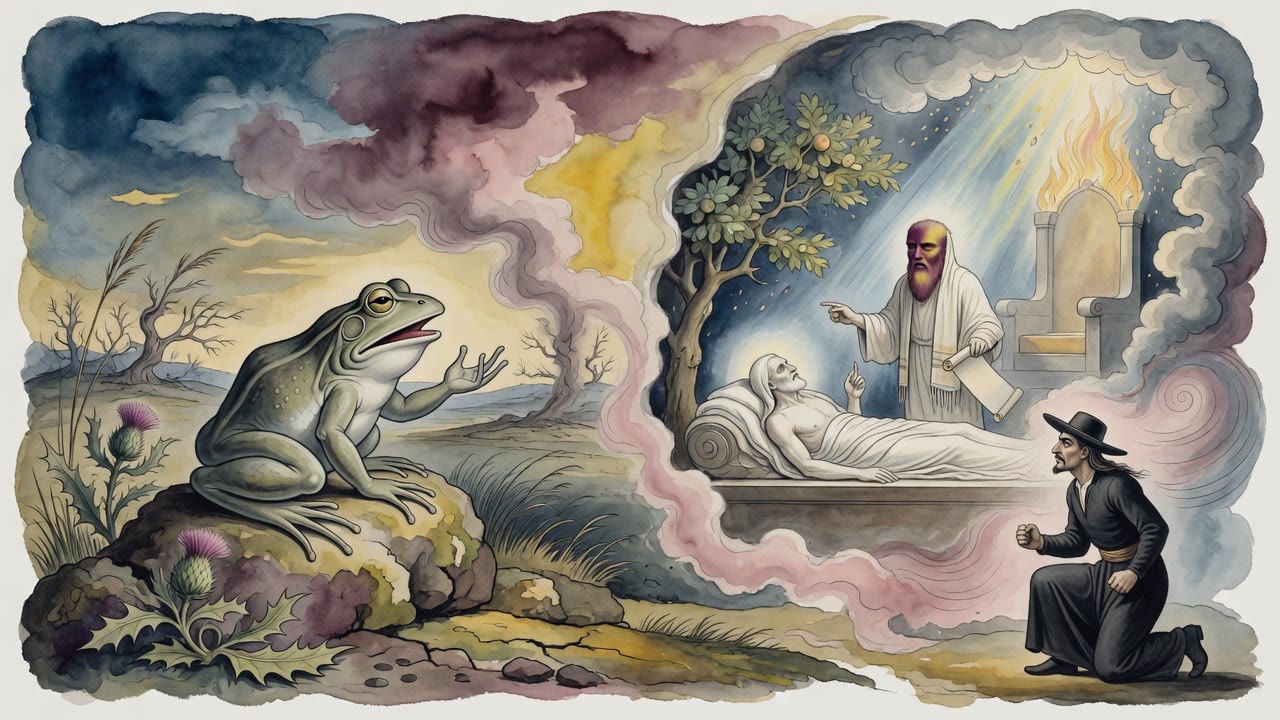
The Ari taught that a man who dies childless is sent back down, and that a second soul can ride inside a life that never learns its name.

Curated by Arthur · Told by Maggid ·
Table of Contents
  1. The Upper Room in Safed
  2. The Soul Counted as Though It Had Never Lived
  3. The Brother Who Took the Widow
  4. The Passenger Who Boarded at Thirteen
  5. The Night the Cradle Was Filled
Two Souls Shared One Body and Only One of Them Knew Click for full size

The Upper Room in Safed

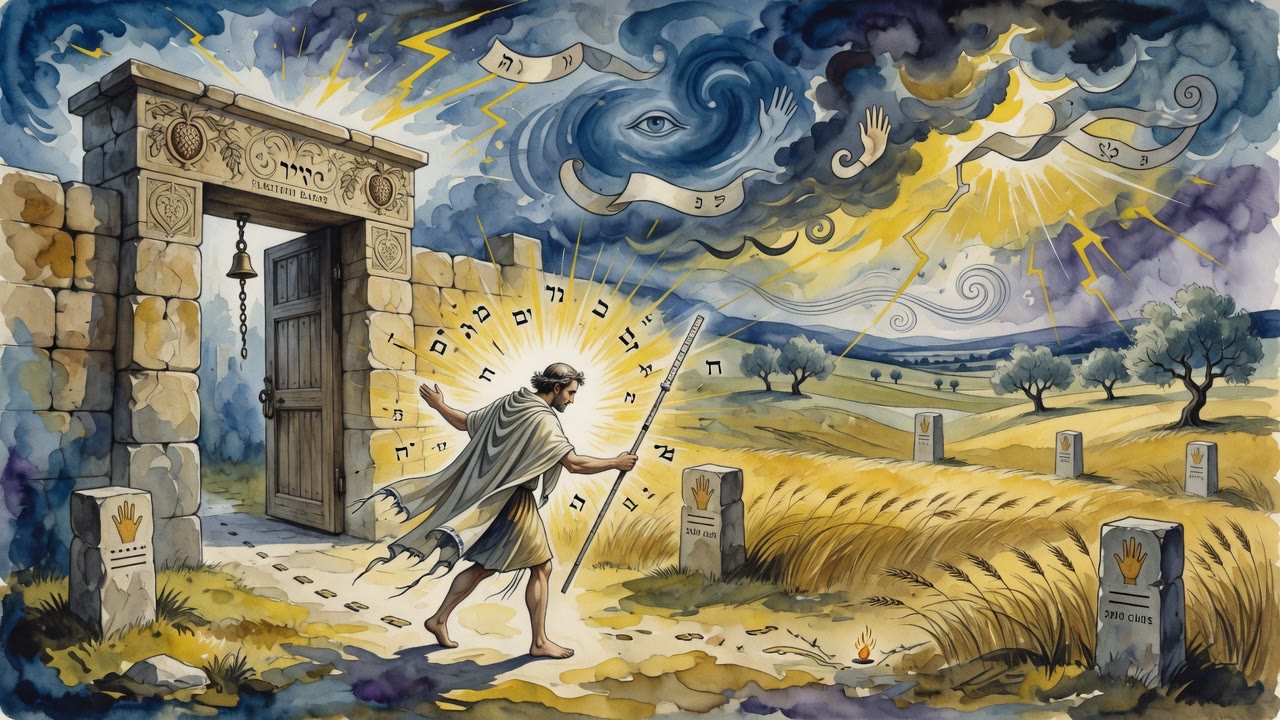
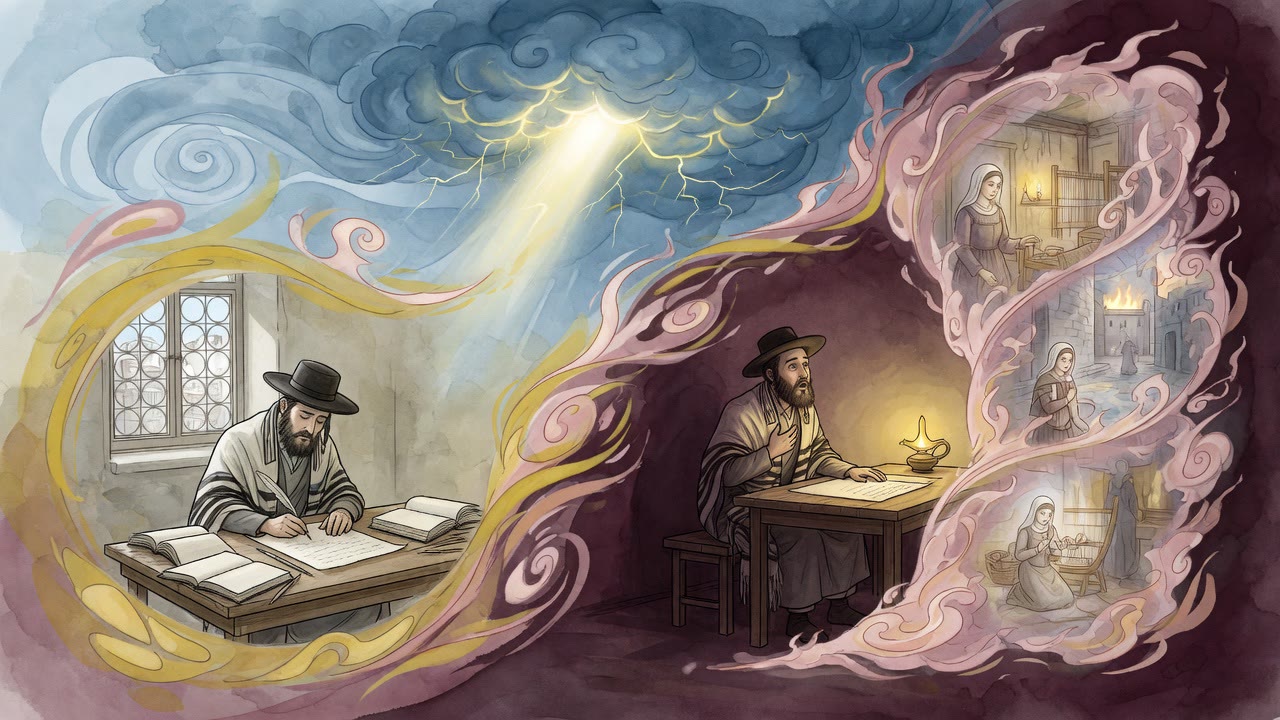
The lamp guttered and Hayim Vital did not stop to trim it. Across the table Isaac Luria was still speaking, and the words would not come back if the ink ran dry. He described the traffic over the hills of the Galilee the way a customs officer describes a border. Who comes down. Who is turned back. Who arrives carrying cargo entered under somebody else's name.

"A man who dies without a child," Luria said, "has left a commandment lying in the road."

Vital's pen stopped. He asked what became of such a man.

"He goes down again," Luria said. "Not mended. Emptied and sent."

The Soul Counted as Though It Had Never Lived

A man who sins has a road back. Hardship files the stain down, Gehinnom (the purging fire souls pass through after death) scours what hardship leaves, and whatever a nefesh (the life-soul) repaired before its body failed can attach afterward to a living person and stay clean inside him, a guest who eats nothing and pays for everything.

A man who dies childless has no such road.

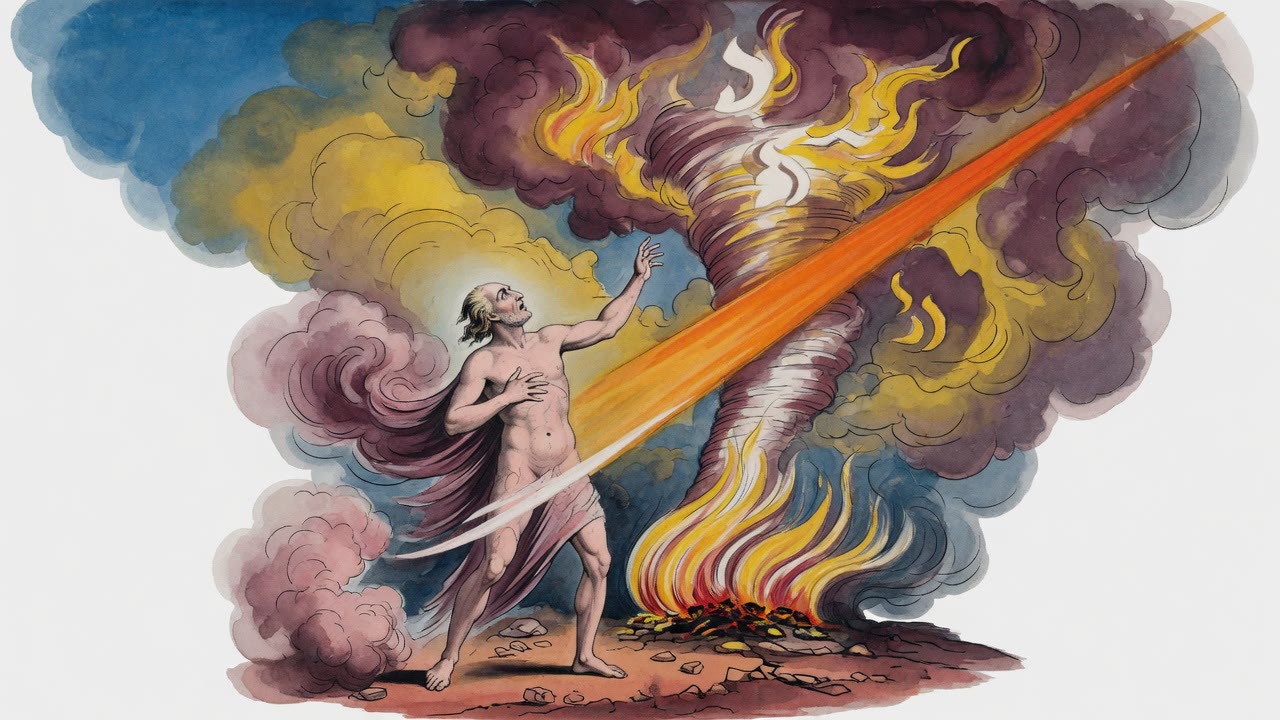
His nefesh came up and the years were counted onto the table like coins, and most were swept back. Fasts. Study. The nights he had chosen rightly with nobody watching. All of it thinned to sparks, nitzutzot, bright dust with no vessel to hold it. The sweetness of the world above is tasted through the ruach and the neshamah, and this soul had been given neither. Luria did not soften the old verdict on such bodies. They are as though they had never been.

So the nefesh went down whole and blank, a first-time arrival carrying a second-time debt.

The Brother Who Took the Widow

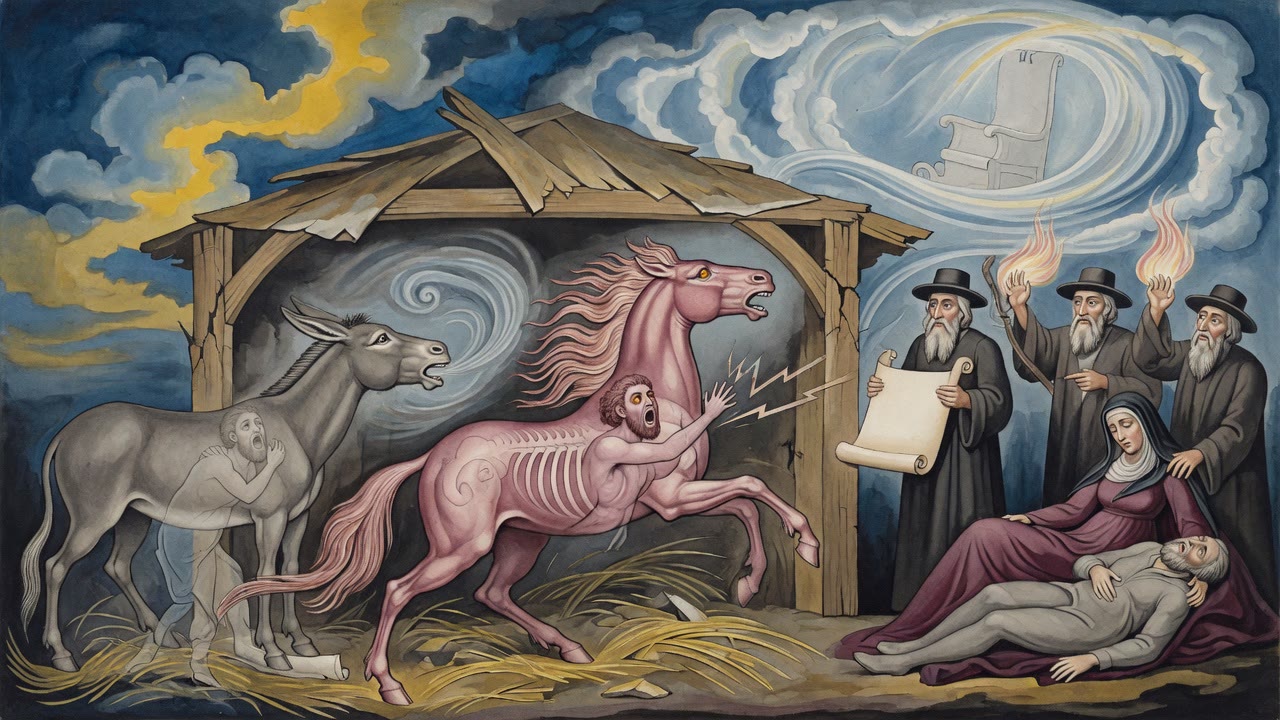
Below, in the world, the dead man's brother stood in a doorway with the widow behind him and half the village watching to see whether he would refuse. He did not. He married her, because that is what the law asks of a brother when the dead one leaves no son, and eleven months later a boy was born in that house and screamed like any other.

The nefesh went into him.

Not as a visitor. As the tenant of record. The first body had put up ninety parts of a hundred and stalled; this second one would lay the last ten, and then receive the ruach (the spirit-soul) and the neshamah (the higher soul) the first never stood tall enough to hold. When the dead are raised, a soul rises into whichever body finished the work. The first would rise holding sparks.

Nobody in the house knew this. The women counted the boy's fingers and were satisfied.

The Passenger Who Boarded at Thirteen

The boy grew. He learned his letters, broke a jar, was beaten for it, learned the blessing over bread.

Then he turned thirteen, and one day after that, a second soul came into him.

This one had finished its own lifetimes. It had belonged to a righteous man and stood under no decree; it came down because one commandment sat unperformed in its ledger and the account would not close without it. It settled into the boy like a traveler into a rented room, sharing his bread and his prayers, taking a portion of every good thing he did.

It took none of his failures. When the boy lied to his father, the passenger stood outside the lie. When the boy was cruel to a servant girl at the well and kept going, the passenger could have walked out on the words shouted at the edge of Korah's camp, "Depart, I pray you, from the tents of these wicked men."

It stayed.

Luria told Vital that some pairs come down together at birth and are never parted, two souls in one infant, counted afterward as a single nefesh, sharing one hunger and one death. This was not that. This was one soul on a private errand inside another man's life, and the boy never learned there was a name to learn.

The Night the Cradle Was Filled

He married at nineteen and worked wool. He won a street argument with a man who had cheated him on a weight of dye and felt no cleaner for winning.

Then he stood in the dark holding a newborn son against his shoulder, the child slick and furious and breathing, and something inside him closed like a hand closing.

He thought it was ordinary joy. A debt contracted by a man he had never heard of, in a body buried before he was born, had just been settled in full by an infant weighing seven pounds. The commandment left in the road was picked up. The nefesh laid its last ten parts in the same breath the baby drew his first.

The passenger left him that night.

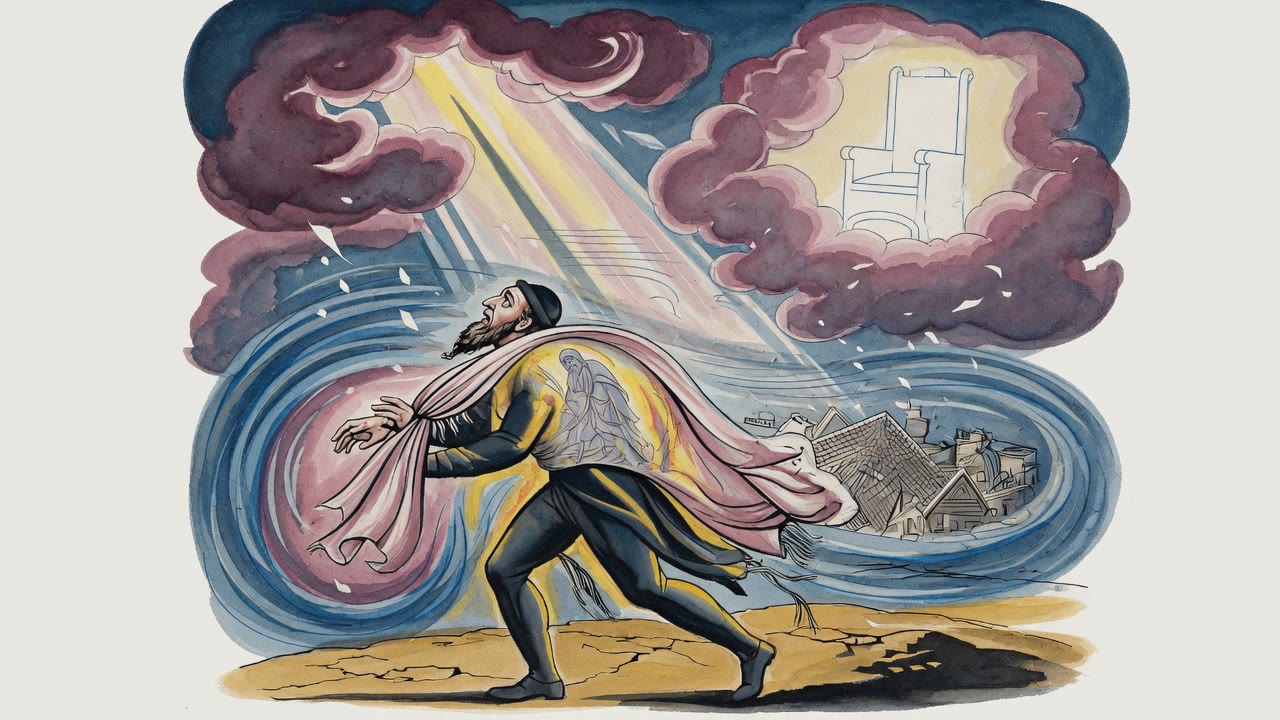
Its errand was finished, and such a soul does not wait for the body to die. It went back up to the garden while the man it had ridden stood in the dark with his son. He told his wife the house had gone quiet. She said the house was always quiet at that hour.

Two thirds of him were still elsewhere. The ruach would need a lifetime of its own, the neshamah a lifetime after that, and until then he would go on unable to account for certain silences in himself. He set his son down and stood over the cradle much longer than he meant to, waiting for something to explain itself. Nothing did.


← All myths
From the tradition

Sources

5 sources

The texts behind this telling. Some cards carry a translation of the source; others are our own retelling of it, and each card says which. Every card links out to the original.

Sha'ar HaGilgulim 3:7Sha'ar HaGilgulim

Retold in our words. Read the original at the link below.Sefaria Community Translation · CC-BY

A specific scenario: what happens when someone dies without children, failing to fulfill the mitzvah, the commandment, of Pru u'rvu, "be fruitful and multiply."

We've touched on reincarnation, or gilgul, before. But the text we're exploring today, from Sha'ar HaGilgulim (The Gate of Reincarnations), a key Kabbalistic text, presents a nuanced picture. It distinguishes between reincarnation as a consequence of sin, aveirot, and reincarnation due to dying childless.

See, if we mess up, commit aveirot, there's a path to rectification. Hardships, suffering in this world, or even a stint in Gehinom (Gehinnom, the place of spiritual purification in Jewish tradition) can cleanse those stains. And if we've managed to rectify some aspects of our Nefesh (our soul's most basic level) in a past life? Well, those rectified parts might return as an Ibbur, a sort of "pregnancy" or attachment to another soul, as we’ve discussed previously. They don’t necessarily need a full-blown reincarnation.

Dying without children? That's a different story altogether. According to Sha'ar HaGilgulim, it's as if all the efforts of that previous lifetime were for naught. The Zohar, in Parshat Vayeshev, even suggests it's as if that person never existed! Harsh. So, what happens to the Nefesh that resided in that childless body? It gets a complete reset! It reincarnates fully, as if it's a brand-new entity.Sha'ar HaGilgulim, which explains how a body is born with a Nefesh, Ruach, and Neshama – the three descending levels of the soul. If the Nefesh is damaged by sin, the untainted Ruach (the soul's emotional level) can't rest upon it. They need to be separated until the Nefesh is healed. Thus, a new body, born through Yibbum, levirate marriage (where a brother marries his deceased brother’s widow), becomes the primary vessel.

Now, let's talk about Yibbum. This ancient practice, where a brother is obligated to marry his deceased brother’s widow if the brother died childless, plays a crucial role here. The child born from this union has a unique connection to the deceased brother's soul. If the individual born through Yibbum rectifies the issue – meaning, fulfills the mitzvah of having children – then at the time of Techias HaMeisim, the resurrection of the dead in the Messianic era, their Nefesh will return to this new, second body, not the first one.

But what about the Ruach, the emotional soul, that resided in the first body? That's where it gets even more complicated, involving the original husband, his wife, the new husband, and his Ruach. Sha'ar HaGilgulim points us to בסבא דמשפטים, a section within Kabbalistic literature, for further explanation. We’ll have to save that deep dive for another time!

The crucial point is this: there's a fundamental difference between someone who reincarnates due to sin and someone who reincarnates through Yibbum because they died childless. And as always, we should remember all that we have learned about the sparks, nitzutzei, of the Nefesh, and how a Ruach and Neshama enter a body.

So, what does this all mean for us? It highlights the importance of fulfilling our potential, of leaving our mark on the world. It's a complex and fascinating glimpse into the Kabbalistic understanding of the soul's journey, a journey that continues even after death.

Full source
Sha'ar HaGilgulim 3:10Sha'ar HaGilgulim

Retold in our words. Read the original at the link below.Sefaria Community Translation · CC-BY

The Kabbalists certainly pondered these questions, and their explorations led them to the complex and fascinating concept of gilgulim (the reincarnation of souls) (the reincarnation of souls), or reincarnation.

When we There are different kinds, different purposes, and different ways a soul can move from one life to the next. In the teachings of Sha'ar HaGilgulim, "The Gate of Reincarnations," we find a detailed explanation of how these processes unfold.

One crucial distinction is between gilgul happening through yibbum – which is a special case often tied to specific transgressions that damage the Nefesh, the lowest aspect of the soul – and other forms of reincarnation. When a soul needs to return to rectify damage done to its Nefesh through sin, it may not be able to bring down all three parts of the soul – the Nefesh, the Ruach (spirit), and the Neshama (soul) – all at once. Instead, it’s a step-by-step process, a spiritual rehabilitation program, if you will.

It this way: In the first lifetime, only the Nefesh incarnates. The goal? To completely purify and perfect it. Once that's achieved, the person passes on. Then, in the next life, only the Ruach comes down, again with the singular focus of perfecting itself. Only after the Ruach is complete can the Nefesh and Ruach reincarnate together.

But here's where it gets even more interesting: the concept of ibur, or "gestation." When a soul has completed its work, it can enter a living person's body in a helper role, like a spiritual mentor. The beauty of ibur is that this completed soul isn't affected by the mistakes of the person it's assisting. It only participates in the good deeds, adding its strength and wisdom to the positive actions.

And with this understanding of ibur, we begin to see how the reincarnations of the Nefesh can eventually come to an end. Since the Nefesh, when in a state of ibur, is shielded from the negative actions of the person working on their Ruach, it can remain pure and perfected.

After the Ruach is perfected, the soul reincarnates with its Neshama, the highest aspect of the soul. The Nefesh and Ruach accompany it, but again, in this state of ibur, they are there to support and assist, not to be further refined. The ultimate goal, of course, is the perfection of the Neshama.

Once the Neshama reaches its full potential, the cycle of gilgulim for that soul comes to an end. No more need for earthly incarnations...at least, not for the purpose of self-perfection.

But, and this is a big but, the soul can still choose to return through ibur, entering another living person to offer help and guidance. It's like a spiritual gift, a piece of oneself given to assist another on their path. As we explored in an earlier discussion (Ch. 2), this act of selfless giving is a powerful expression of the interconnectedness of all souls.

So, what does all this mean for us? Perhaps it's a reminder that our actions have ripple effects, not just in this life, but possibly beyond. It suggests that the journey of the soul is a complex and ongoing process, filled with opportunities for growth, healing, and ultimately, perfection. And maybe, just maybe, we're all a little bit more connected than we realize, each playing a part in the other's journey.

Full source
Sha'ar HaGilgulim 5:1Sha'ar HaGilgulim

Retold in our words. Read the original at the link below.Sefaria Community Translation · CC-BY

In the Jewish mystical tradition, particularly within the teachings of the Kabbalah, the concept of reincarnation, or gilgul, offers a fascinating perspective. But it's not always a simple one-soul-per-body scenario. Sometimes, things get a little more… crowded.We're exploring the nuances between gilgul (reincarnation) and ibur (a soul "enclothing" another), and the different flavors they can take.

So, what's the difference? According to the Sha'ar HaGilgulim, there are two main types of gilgul. The first is what we might typically think of as reincarnation: a single nefesh (the vital soul), or soul, entering a body at birth. But then, things get interesting. The text speaks of a "gilgul kaful," a "double gilgul." Imagine two nefashot reincarnating together, entering the body of a person at birth and remaining intertwined throughout their entire life! These two souls, though distinct, are considered and connected as "one nefesh." They share the same earthly experiences, the same joys and sorrows, even the same pain of death.

The tradition turns to ibur. This isn't reincarnation in the traditional sense. Instead, it's when a nefesh enters a living person's body. Again, we find two types. The first is when a tzaddik, a righteous soul, enters someone to complete a task they missed in their previous life – perhaps a particular mitzvah, a good deed, that went undone. The Sha'ar HaGilgulim promises further explanation of this in Hakdama (Introduction) 11.

This type of ibur only occurs after the person reaches the age of 13 years and one day – the age of Bar Mitzvah, when a Jewish boy becomes obligated to observe Torah and mitzvot (commandments). Why then? Because at that point, the individual can rectify not only their own soul but also the neshama, the higher soul, of the ibur. Once the tzaddik has completed whatever task it was sent to do, it can leave the body, returning to its place in Gan Eden, the Garden of Eden, even while the person is still alive.

But what about the second type of ibur? This is where a tzaddik enters a person's body to help them grow in Torah and mitzvot, for the benefit of the person themselves. While the righteous soul also benefits, the primary focus is on assisting the individual. In this case, the tzaddik isn't compelled by a heavenly decree. Instead, it enters of its own volition. And here's a crucial difference: this ibur doesn't have to share in the person's suffering. If it becomes uncomfortable, it can leave at any time, as the verse states, "Depart, I pray you, from the tents of these wicked men" (Numbers 16:26).

So, what does all of this mean? It paints a picture of the soul's journey as incredibly complex and dynamic. It challenges our individualistic notions and invites us to consider the profound ways in which we might be interconnected with other souls, both in life and beyond. Are we ever truly alone on our spiritual path? The Kabbalah, with its intricate maps of the soul, suggests perhaps not.

Full source
Sha'ar HaGilgulim 4:2Sha'ar HaGilgulim

Retold in our words. Read the original at the link below.Sefaria Community Translation · CC-BY

In Jewish mysticism, particularly within the Kabbalah, this idea is explored in profound and intricate ways. a fascinating piece from the Sha'ar HaGilgulim (the reincarnation of souls), or "Gate of Reincarnations," by Rabbi Chaim Vital, a key student of the great Kabbalist, the Ari, Rabbi Isaac Luria.

Rabbi Vital explores the complexities of tikkun (spiritual repair), rectification, and how it relates to our Nefesh (the vital soul), Ruach, and Neshama – the three parts of the soul. Think of the Nefesh as the life force, the vital energy that animates the body. The Ruach is the spirit, the emotional and moral center. And the Neshama is the soul, the divine spark that connects us to the higher realms.

The text suggests that the tikkun, or rectification, of these aspects of the soul is intimately connected to how we observe the mitzvot, the commandments. Specifically, he connects them to the limbs of the Nefesh. Rabbi Vital explains that when we fulfill the positive commandments, the mitzvot aseh, we are building and completing our Nefesh. Conversely, when we transgress the negative commandments, the aveirot, the "thou shalt nots," we create blemishes, or pegamim, on the Nefesh.

Here's a crucial point: according to Rabbi Vital, these blemishes, these stains on the Nefesh, don't necessarily prevent the completion of the Nefesh itself. A few stains might mar its perfection, but the tapestry is still complete.

So, what happens when someone dies before fully rectifying their Nefesh? What happens if they didn't quite reach their potential in that first lifetime? Rabbi Vital explains that during Techias haMeisim, the resurrection of the dead, that first body won't be fully realized. Instead, only the parts of the Nefesh that were rectified in that lifetime will be present.

This is where reincarnation comes in. The soul, with its partially rectified Nefesh, then enters a second body. And if this second body does manage to complete the Nefesh, it's in this second body that the individual receives their full NaRaN – their Nefesh, Ruach, and Neshama. This second body is the one that will be resurrected during Techias haMeisim.

But what about that first body? What happens to the portion of the Nefesh that resided there? It's a fascinating question. Rabbi Vital explains that the Nefesh becomes divided between the first and second bodies. For example, the first body might have realized 90% of the Nefesh, but it was the second body that completed that last 10% and, crucially, received the Ruach and Neshama.

This concept echoes ideas found in the Saba d'Mishpatim, related to Yibbum, levirate marriage. In this case, if a man dies without children, his brother is obligated to marry his widow to continue the family line. The first body, which didn't perform the mitzvah of procreation, only receives sparks, or nitzutzot, of the Nefesh that were fulfilled during its lifetime. The full Nefesh, with its Ruach and Neshama, resides with the child born from the Yevama, the widow.

The Zohar, the foundational text of Kabbalah, also touches on this idea. In Parshat Chayei Sara, it states that "bodies" that aren't successful – meaning those that don't fulfill their purpose, perhaps by not having children – are "as if they never existed."

Now, this might sound harsh. After all, aren't we taught that every person in Israel is filled with mitzvot, like a pomegranate with seeds? The key, Rabbi Vital suggests, lies in understanding that the true pleasure of the afterlife is experienced through the Ruach and Neshama. A first body that didn't even complete its Nefesh doesn't experience this higher level of bliss, and so, in a sense, it's as if it never fully existed.

However, there's also the possibility that the first body did manage to complete the entire Nefesh, even if it was later blemished. In this case, when the Nefesh reincarnates to rectify those minor blemishes, the Ruach and Neshama can accompany it into the second body, allowing for further perfection.

And then there's the even more complex concept of Gilgul Kaful, "Double Reincarnation." This is when the sparks of one's Nefesh connect with the sparks of another Nefesh, perhaps that of a Tzaddik, a righteous individual, to assist in fulfilling the mitzvot. In this scenario, at the time of Techias haMeisim, the Nefesh, Ruach, and Neshama will return to the first body. The second body will only receive the sparks of the Tzaddik’s Nefesh.

It's a deeply complex and layered system.

This exploration of reincarnation, tikkun, and the destiny of the soul raises profound questions about our purpose in life and the interconnectedness of all beings. It suggests that our actions have lasting consequences, not just for ourselves but for generations to come. It also offers a message of hope, reminding us that even after death, the journey of the soul continues, striving towards ultimate rectification and reunion with the Divine. Are we doing everything we can in this lifetime to help with our soul's journey?

Full source
Sha'ar HaGilgulim 4:7Sha'ar HaGilgulim

Retold in our words. Read the original at the link below.Sefaria Community Translation · CC-BY

A particularly intriguing text, Sha’ar HaGilgulim (the reincarnation of souls) (the reincarnation of souls) – "The Gate of Reincarnations" – specifically section four, to explore the ideas of soul rectification, reincarnation (gilgulim), and the ultimate fate of the righteous (tzaddikim) and the wicked (rasha'im).

This text, attributed to R'Chaim Vital, a key disciple of the famed Kabbalist Rabbi Isaac Luria (the Ari z"l), explores the intricacies of the soul's journey. Vital shares what he learned from his teacher about the concept of karet haNefesh (the vital soul), often translated as "spiritual excision" or "being cut off." It's a pretty severe concept, suggesting a complete separation from holiness.

The text gets nuanced. It suggests that karet primarily applies to the Nefesh – the lowest level of the soul, associated with our physical life and actions in the world of Asiyah, the world of action. Think of the Nefesh as our most earthly, grounded aspect. Because Asiyah is considered closest to the klipot – the forces of negativity or "shells" – the Nefesh is most susceptible to being "cut off" from holiness. That's why, according to this teaching, the Torah only mentions karet in relation to the Nefesh.

What about the Ruach (spirit) and the Neshama, the higher levels of the soul, associated with emotion and intellect respectively, residing in the worlds of Yetzirah (formation) and Beriah (creation)? These aspects are less vulnerable to the klipot, and therefore, are not subject to karet in the same way. Even if the Nefesh falls into the clutches of the klipot, the Ruach and Neshama can still be rectified, perhaps by attaching to the Nefesh of a Ger, a convert to Judaism. The process might be lengthy, spanning multiple reincarnations, but ultimate rectification remains possible.

So, what differentiates the path of a tzaddik from that of a rasha when it comes to this process of rectification? The text uses the example of Elisha ben Abuyah, also known as the Acher ("Other One"), a prominent sage who famously strayed from Jewish observance. The text suggests that even someone like Elisha Acher, who seemingly made grave errors, wasn't necessarily subject to harsh judgment, because of his prior dedication to Torah study.

Here's where it gets really interesting. The text argues that a tzaddik, especially one from earlier generations (Rishonim), is not destined for Gehinom (often translated as "hell"). Instead, they undergo gilgulim – reincarnations – to cleanse their remaining sins and pave the way for Gan Eden (paradise). A tzaddik might reincarnate repeatedly until every single sin is rectified, working through any misdeeds that weren't already atoned for through hardships in their previous life. They don't receive punishment through Gehinom, but rather, are given the opportunity to refine their soul through repeated lives.

But what about the rasha? The text presents a contrasting view. A rasha, according to this perspective, is required to enter Gehinom to purify all their sins in one fell swoop. After this cleansing, they are not necessarily given the opportunity to return in multiple gilgulim. Why? The text implies that giving a wicked person multiple lifetimes might only lead to further sin. The "easy route," as the text calls it, is a singular, intense purification in Gehinom.

The underlying logic is fascinating. A tzaddik is granted the opportunity to meticulously rectify every aspect of their soul through numerous reincarnations. The rasha, on the other hand, receives a more immediate, albeit potentially harsher, cleansing. The assumption is that a righteous person, given more chances, will strive for greater perfection, while a wicked person might continue down a destructive path.

This passage from Sha’ar HaGilgulim presents a powerful and complex vision of the soul's journey after death. It suggests that our actions in this life have profound consequences for our future spiritual trajectory. It begs the question: how do we want to shape our souls, and what kind of afterlife are we striving to create for ourselves?

Full source