The Ari Read the Verse Burning on a Student's Forehead
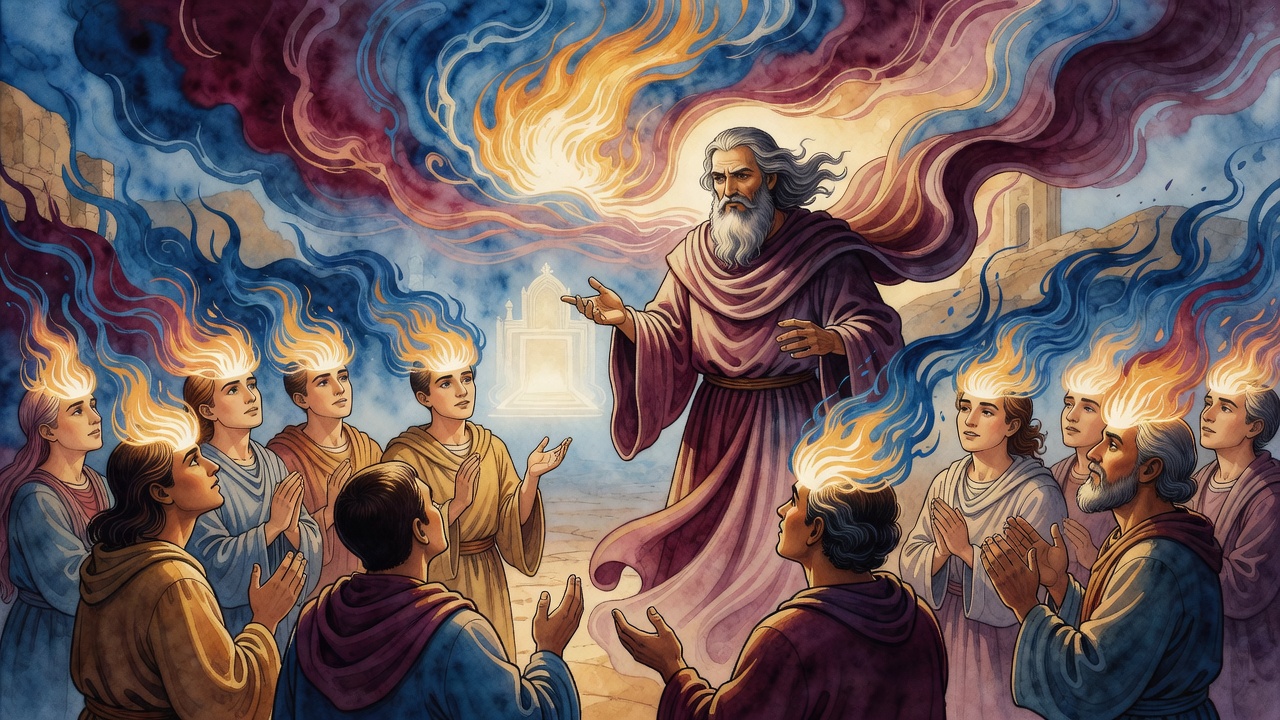
In Safed the Ari looked at his students and saw one verse of Torah burning on each forehead, then taught it so the sleeping soul learned more.
Table of Contents
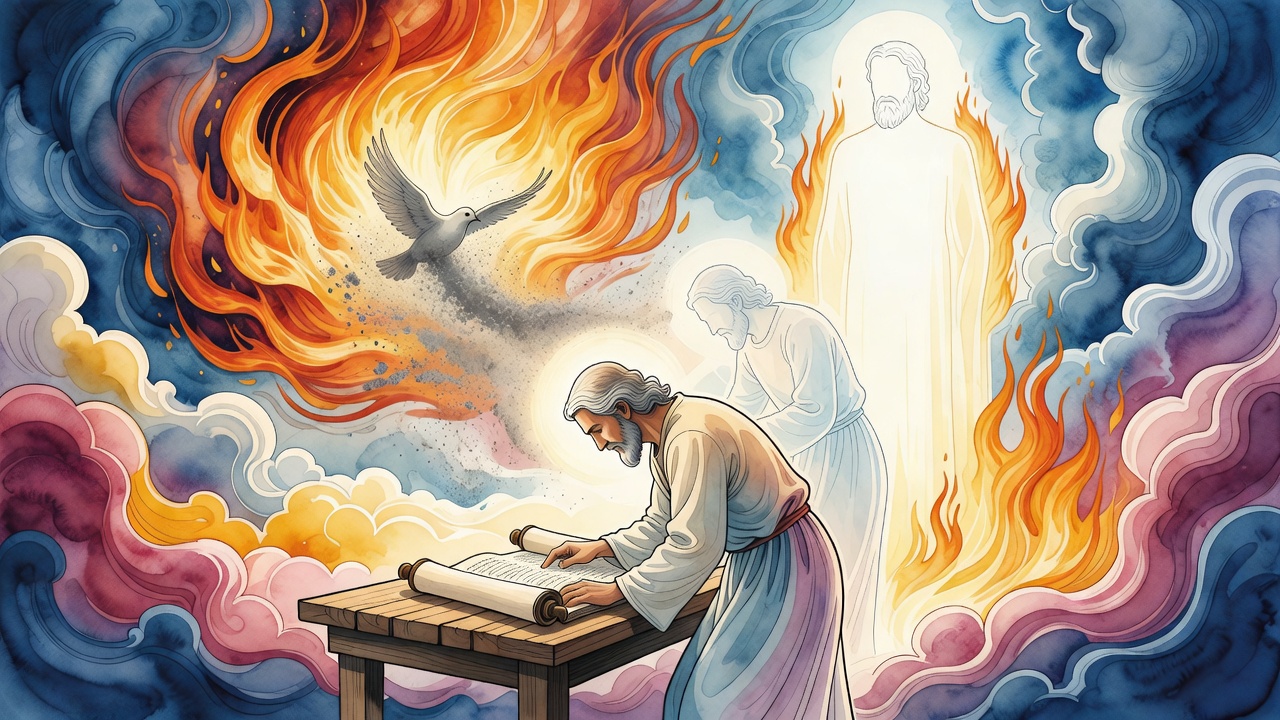
The candles had burned to stubs and Rabbi Isaac Luria still had not opened a book. He sat at the head of the table in Safed and went down the row of faces the way a buyer goes down a bolt of cloth, holding each one a beat longer than was comfortable.
 Click for full size
On every forehead a line of Torah stood in letters of light, and no two men in the room carried the same line.
The youngest had come up from Damascus that spring. He rubbed his brow with the heel of his hand, hunting for the writing, and found sweat. Nobody at that table could read his verse except the Ari.
Six Hundred Thousand Doors Cut Into One Book
"Six hundred thousand souls," the Ari said. "Not one more, not one fewer. And the Torah is the quarry they were cut out of. Hewn from it, and planted back into it."
He raised four fingers and named them. The plain sense. The hint sleeping under it. The searching out. The secret. PaRDeS, the orchard, four walls around one garden. Each of the four holds six hundred thousand explanations, one per soul, and no man alive is handed the whole orchard.
"You get your door," he said. "In the Garden, when the body is off you, they will open the Torah at your explanation and nobody else's. Better to learn now which one it is."
The Verse He Carried Into Sleep
The Ari waved the boy closer and read his forehead out loud. Half a verse, nine words, nothing anyone would have marked during the reading on Shabbat. Then he explained it, and the explanation fit the way a shoe fits, badly for a moment and then exactly.
"Hold it in your mouth while your eyes are closing," the Ari said. "Not your father. Not your debts. Not the road from Damascus. This."
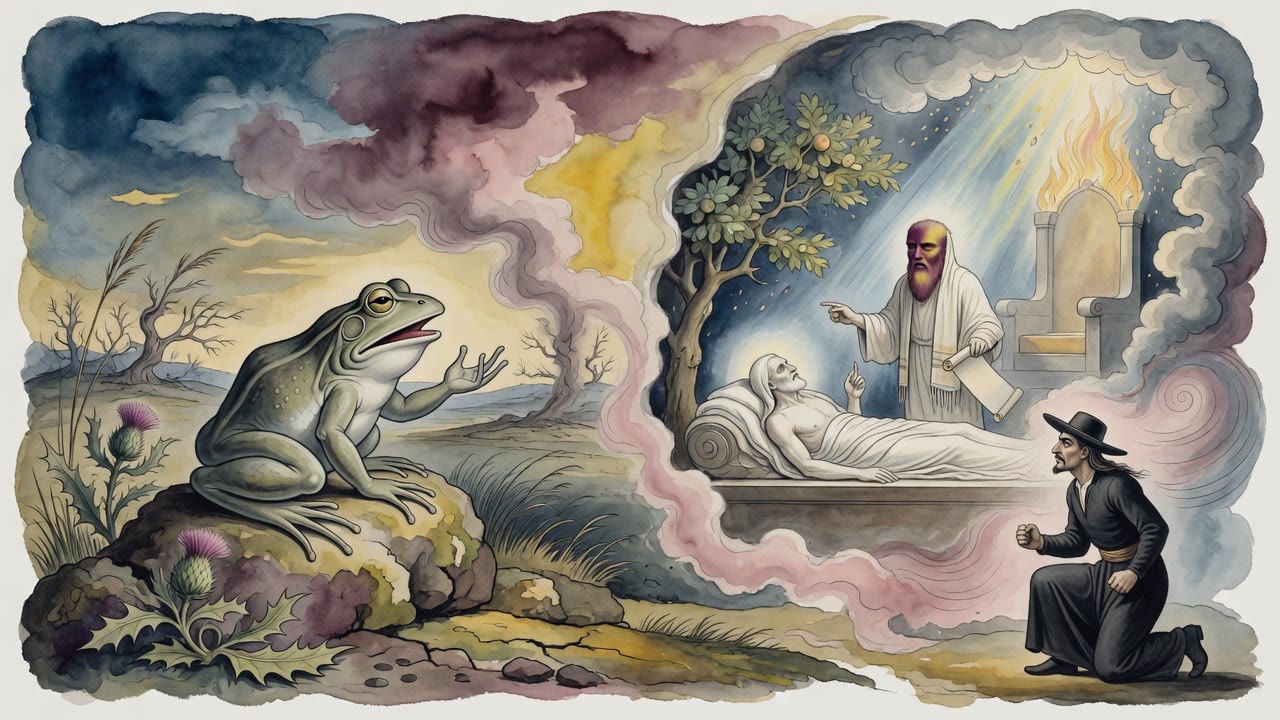
The boy lay on his mat with the nine words going around and around, and somewhere before dawn they kept going without him. He was above the roof. A voice he could not place was teaching him the rest of his verse, the half the Ari had not given him, and it went in whole, the way water goes into cloth.
He woke with it. He could not have written it down. He had it anyway, behind his teeth all through the morning prayers.
The Morning the Letters Came Back Smoked
Eleven days later he spent an afternoon in the wool market fighting over a bad fleece. He won. He said a thing about the seller's dead father loud enough that the next stall turned to watch, and walked home pleased with himself.
That night the voice was behind a wall. Words arrived blurred, the way speech comes through a shut door in another house. He reached for them and they slid away.
He was at the Ari's courtyard before sunrise.
The Ari studied his forehead a long moment. "Your letters are smoked," he said. "Like a lamp behind horn."
"They took it back from me."
"Nobody took anything, and nobody up there is angry with you." The Ari sat down on the step. "What they give at night is measured by what you did with the day. You paid for last night with yesterday afternoon."
The boy did not answer. He had traded an hour of contempt in a wool market for a line of Torah, and no one would hand him that line again at the brightness it would have had.
The Ruach He Had Not Bought Yet
"Then let me climb," the boy said. "I will fast. I will keep my mouth shut in the market."
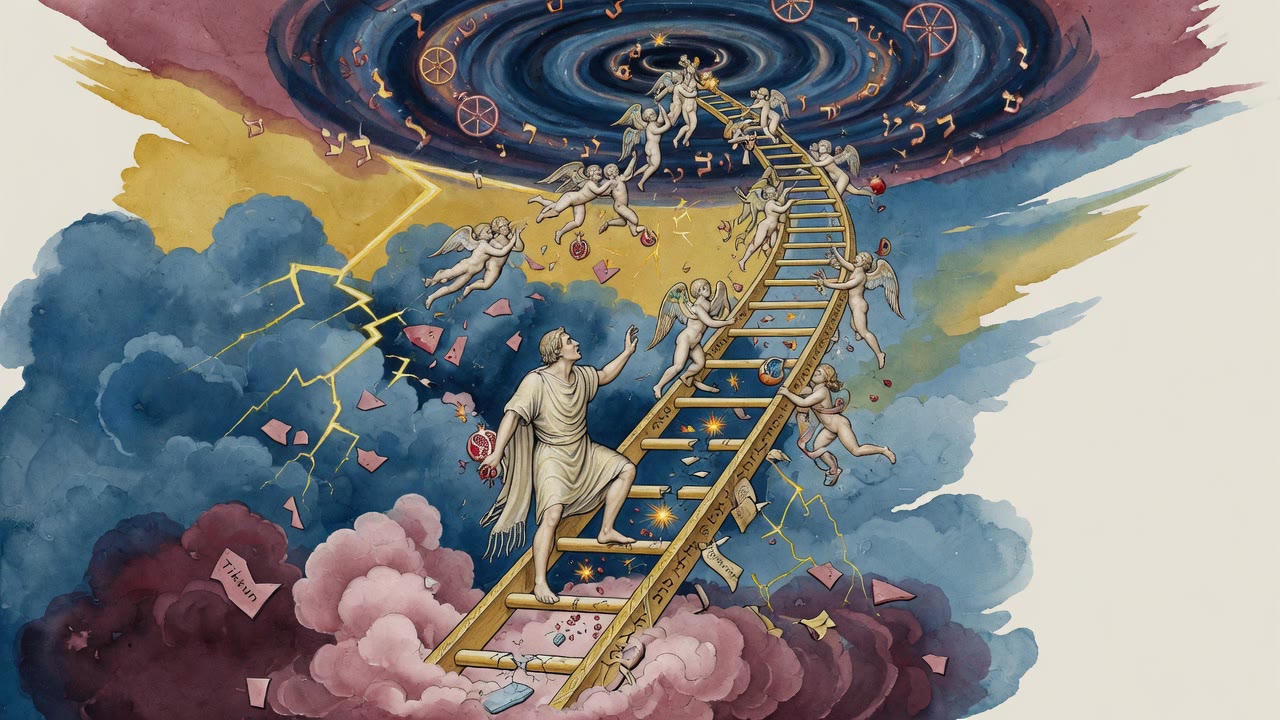
A man arrives holding one thing only, the Ari told him, the Nefesh, the animal life in the blood, handed out free to everyone born. Everything above it has a price, and the price changes with the world, because the worlds are not built alike.
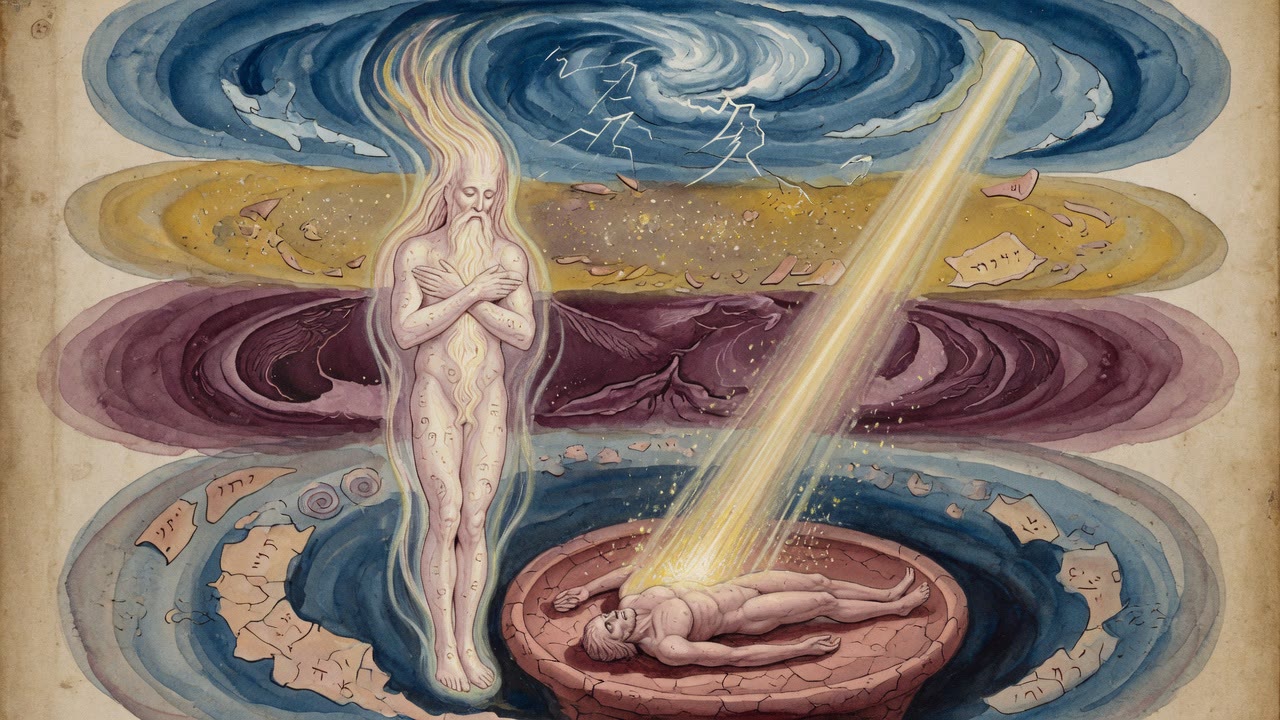
Asiyah, the world where hands do things, stands under a single crown, Malchut. A Nefesh (the life-soul) born at the floor of that house can climb to its very top, since the whole house has one ruler.
Yetzirah (the world of formation) is a different building. Six powers hold it, kindness and severity and beauty, endurance, splendor, foundation, each its own floor with its own door. A soul rooted at the bottom can polish that root until it burns and still not rise a finger's width inside that world. To stand higher it has to be given a part it never had, a Ruach, and a Ruach (the spirit-soul) is bought, one commandment and one page at a time.
"Your body is a coat," the Ari said. "The Zohar says the flesh does not cover the man. Whatever you are is inside the coat, and it is not finished."
Every Sage in Safed Was Reading One Line of Moses
The boy asked who ever held all of it.
Only Moses, the Ari said. Moses held all six hundred thousand explanations at once, on every level of the orchard, and knew the question a student not yet born would raise in a study house not yet built, because the six hundred thousand souls of Israel sat inside his one soul. Every sage since has held a piece of that man and called it his own mind.
The nine words the boy carried were a thread pulled out of Moses, left burning on a nineteen year old forehead in Safed, and if he wasted enough afternoons the thread would stay dull in his hand and the rest would stay where it was.
He walked down the hill in the dark saying his half verse under his breath so it would still be in his mouth when his eyes closed. Behind him the Ari pinched out the last candle. The room did not go dark for him. Ten foreheads burned on at the table, each with its own line, and not one of the men could read a word of it.
← All myths