5 min read

The Partition Thins When Returning Light Strikes

A living veil between lights refuses to vanish, peels under pressure, and still keeps one last opacity so creation can hold a shape.

Curated by Arthur · Told by Maggid ·
Table of Contents
  1. Light Meets a Soft Wall
  2. Alchemy in the Collision
  3. Male and Female Inside the Veil
  4. What the Last Trace Guards
The Partition Thins When Returning Light Strikes Click for full size

Light Meets a Soft Wall

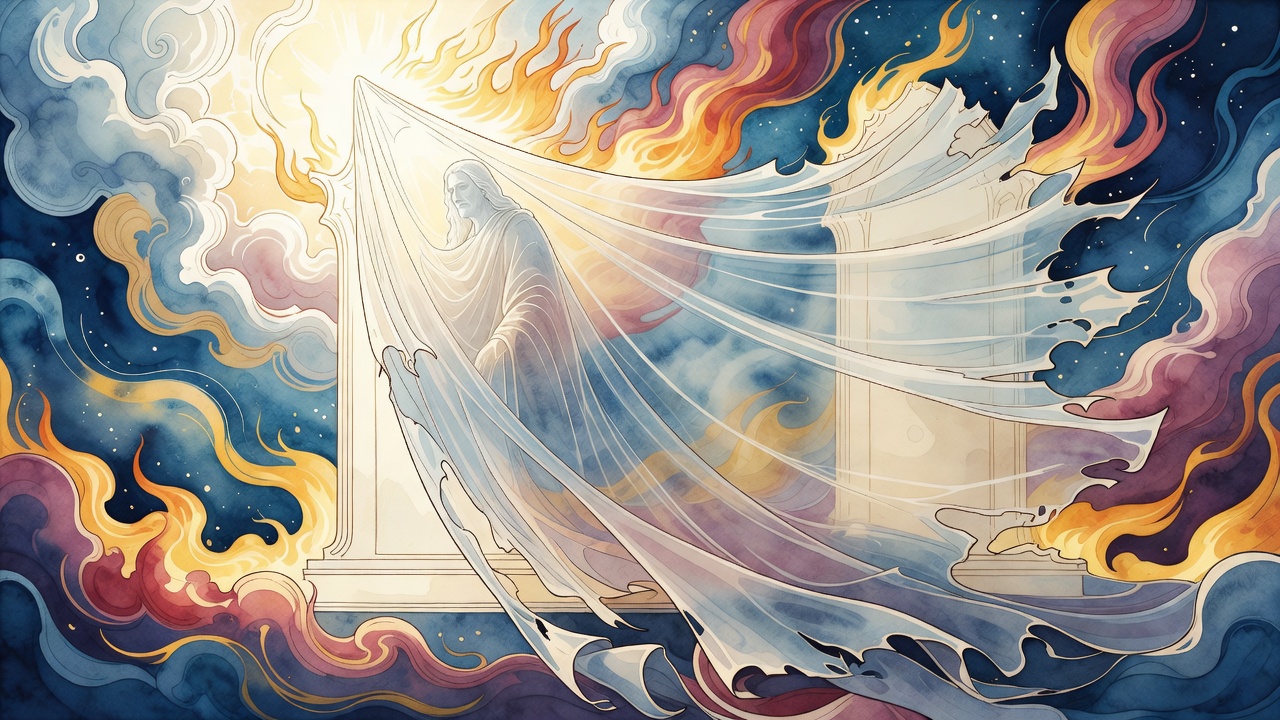
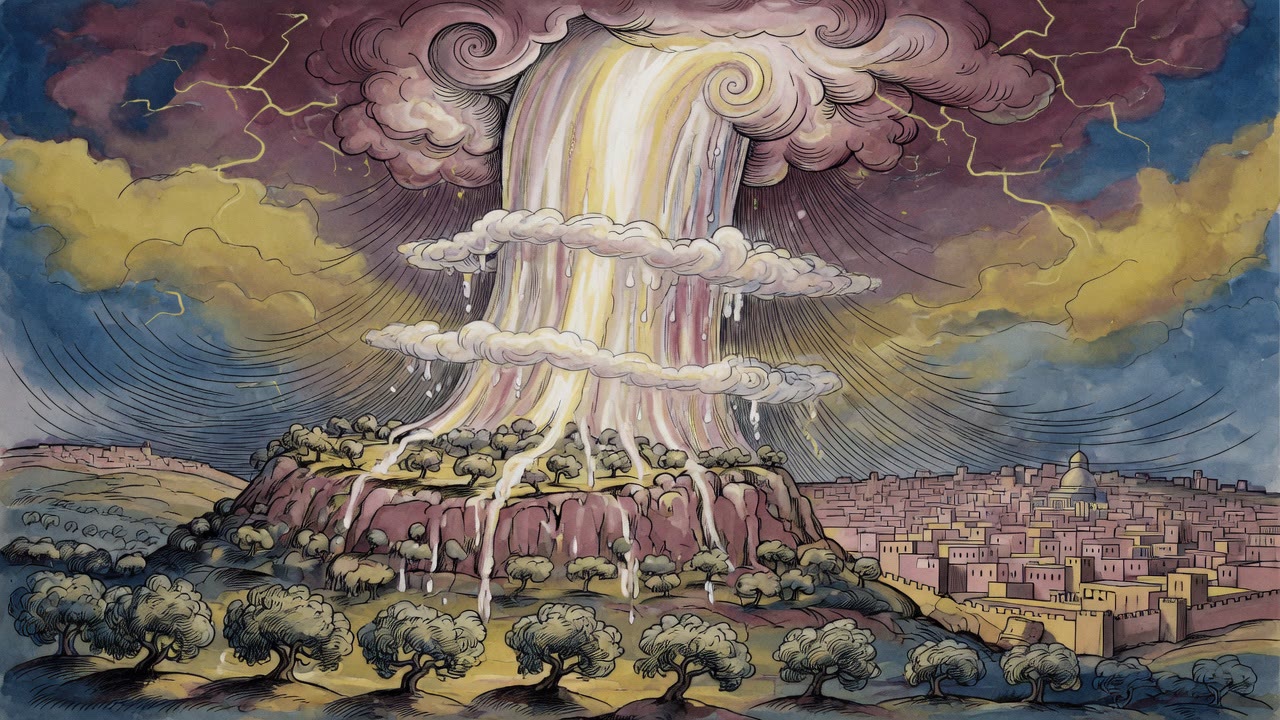
The masach (מסך), the partition, did not stand like stone. It stood like a living skin stretched across the path of the upper light. When the light came full, the veil flexed. When the light pressed harder, the veil did not break. It answered. The answer was returning light, a bright refusal that rose from the point of contact and became a vessel.

Without that refusal the infinite would flood every hollow and leave no room for a world. The partition was the first courtesy of creation: enough no to make a yes possible.

Opacity lived inside it in layers. The densest layer held longest. The thinner layers peeled when surrounding light beat against them the way wind scours a dune. Purification is that scouring. It is not shame. It is the work of a filter learning how much glory it can pass without dying.

Alchemy in the Collision

Inside the third level of opacity two upper aspects met and would not yield. Collision is the wrong word if you picture wreckage. Picture metal and fire making an alloy no smith planned. Fusion through collision is the name the ladder of teaching keeps. From that meeting a new height of light stood up where only pressure had been.

The third level kept the greatest opacity after the surrounding light had eaten what it could. That leftover density was not waste. It was the anvil. On it the upper light struck and the returning light rose equal to a crown. Vessels that had been only roots, only thoughts of vessels, began to take body.

Bina watched from her height of understanding. Nekudim waited in their world of points that remember shattering. Both needed a clean partition if anything born of them was to hold.

Male and Female Inside the Veil

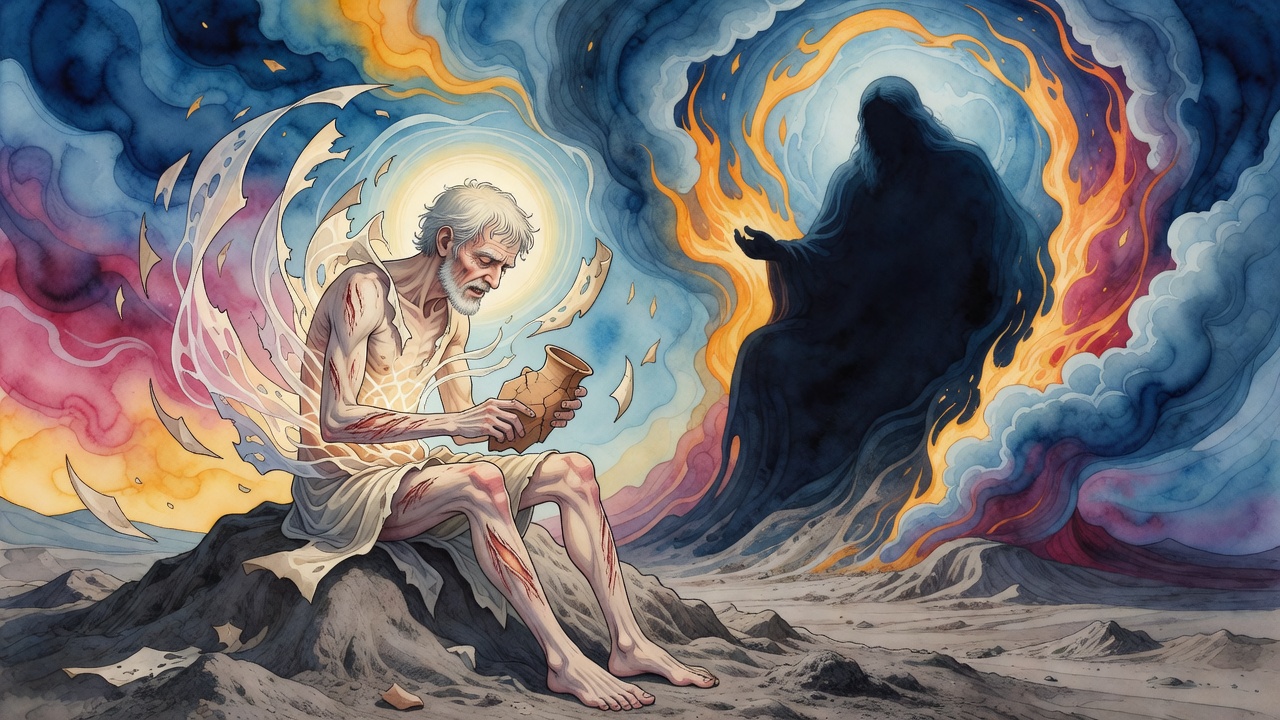
When the partition purified, it did not purify as one blank sheet. Male and female aspects moved through the same veil like two currents in one river. One current pushed to give. The other held to receive. When they balanced, the filter cleared. When they pulled apart, darkness thickened in the weave.

In Bina the purification leaned toward a face that could mother forms. In Nekudim the same work ran hotter and more dangerous, because the points had already learned collapse. A partition that clears too fast in a shattered world only invites another shatter. The teaching keeps a trace of enclothing even after levels fall away. The last whisper of opacity stays so the next fusion has something to strike.

A completely clear glass is not a vessel. It is a window the light forgets.

What the Last Trace Guards

Even when returning light peels a full level from the masach, the remnant of enclothing remains. Faint. Stubborn. Useful. That remnant is how a later face can reawaken old force without reopening the first flood. The partition remembers every collision the way a body remembers every scar that taught it how to bend.

Lower worlds live by that memory. They do not need the full opacity of the first meeting. They need the disciplined thinness that still knows how to say no. Surrounding light keeps polishing. Inner light keeps clothing. Between them the veil works, thins, and refuses to vanish.

Creation is not the death of the barrier. Creation is the barrier learning its craft.

Time in the upper worlds is not hours. It is sequences of strike and answer. Strike of elyon light. Answer of chozer light. Between them the masach learned a trade the lower worlds would later call patience. Patience is not delay. Patience is thickness that knows when to peel.

When a peel finished, the veil did not celebrate. Celebration would reopen pores too wide. It simply stood thinner and ready, a worker between shifts. Surrounding light circled like a craftsman checking edges with a thumb. Inner light settled like metal in a mold.

Bina sent understanding down the line as a cool hand on a fevered brow. Nekudim sent memory of break as a warning carved into the grain of the veil. The masach accepted both gifts. Understanding without memory is naive. Memory without understanding is paralysis. The living skin needed both to keep creating without reenacting the first disaster for sport.

Lower prayers that feel blocked are sometimes only meeting a necessary opacity. The block is not always enemy. Sometimes it is the last trace doing its job so the gift can arrive as food rather than as fire.

Fusion through collision left a taste in the veil like rain on hot stone. That taste is how later partitions recognize kin. Kinship of filters is the secret spine of the four worlds. Without it each world would invent resistance from scratch and invent it badly.


← All myths

From the tradition

Sources

3 sources

The texts behind this telling. Some cards carry a translation of the source; others are our own retelling of it, and each card says which. Every card links out to the original.

Introduction to Sulam Commentary 74:1Introduction to Sulam Commentary

Retold in our words. Read the original at the link below.The Sefaria Sulam, 2023 · CC-BY

Introduction to Sulam Commentary turns to The Masach - The Veil Between Spiritual Realities.

The core idea revolves around the partition, or masach (מסך) in Hebrew. It's not a solid wall, but more like a dynamic interface where light interacts with, well, let's call it "opacity."

This masach undergoes a process of purification. When it generates what’s called "returning light" ( אור חוזר, or chozer), it loses a level. Why? Because this returning light becomes a vessel for the supernal light ( אור עליון, or elyon), the divine radiance. But only so much light can be contained. The excess, the "surrounding light," beats against the vessel, actively eroding the opacity within the masach.

It's like polishing a mirror, removing imperfections to allow a clearer reflection.

Now, here's the crucial point: Even though this purification process causes the masach to lose a level, the "last level," it's never completely erased. The text emphasizes that a trace of “enclothing” remains.

Even after the main force has passed, something subtle persists. This remnant is important.

Why? Because it’s this trace that allows for the intricate structure of the partzufim (a divine configuration) (פרצופים), the divine countenances or configurations, to exist. These are the five "heights" mentioned in the text, arranged one beneath the other. If the levels were completely eliminated, this hierarchical structure wouldn’t be possible. We can find more about the structure in the Petiḥa LeḤokhmat HaKabbala, sections 40-41, where it explains the partzufim at length.

The text points us to section 42 of that work for further clarification on this enclothed remnant.

So, what does this all mean? It suggests that even in the process of spiritual refinement, nothing is ever truly lost. There's always a residue, a connection to what came before. This is really important, as it allows a more complete understanding of the divine structure.

They remain, subtly shaping who we are and how we perceive the world. And perhaps, just perhaps, connecting us to something far greater than ourselves.

Full source
Introduction to Sulam Commentary 74:3Introduction to Sulam Commentary

Retold in our words. Read the original at the link below.The Sefaria Sulam, 2023 · CC-BY

One such model involves a concept called the partition, a kind of filter that allows the divine light to be both revealed and concealed. And within this partition, some really fascinating things happen.

Specifically, It's a bit like cosmic alchemy, where collisions and fusions spark something entirely new.

The Sulam commentary, a key text for understanding the teachings of Rabbi Yehuda Ashlag (known as the Baal HaSulam), explores these dynamics with remarkable precision. So, what does it tell us?

Essentially, there are two key players in this cosmic dance, two "upper aspects" poised for fusion within the partition.

First, there's what the Sulam refers to as "the opacity of the third level." This is where things get interesting. Think of it as a veil, a level of density within the partition that blocks the unbridled, supernal light. According to the Sulam, this opacity is absolutely crucial, because it's here, at this point of resistance, that a "fusion through collision" occurs. The text specifies that, in this particular example, this third level has the "greatest opacity remaining in the partition after the erosion of the surrounding light." And what's the result of this collision? The emergence of the level of Ḥokhma (Wisdom). It's like striking flint against steel, where the resistance creates a spark – in this case, a new partzuf, a new spiritual configuration. The returning light from this opacity rises to the level of Ḥokhma.

But there's another player in this drama: "the aspect of enclothing of the fourth level." This refers to a remnant, a trace, of a previous level of opacity that wasn't entirely lost. It’s like a shadow clinging to the partition. Now, on its own, this "aspect of enclothing" isn't really suited for a direct "fusion through collision," because it lacks the necessary opacity to block the light. Think of it as being too thin, too transparent, to create a real impact.

However. And this is a big however, when this "aspect of enclothing" gets incorporated into, and participates in, the opacity of that third level we talked about earlier, then something amazing happens. A fusion through collision occurs upon it as well! And the result? Light is generated, a height of light close to that of Keter (Crown), the highest of the sefirot (the divine emanations). This is because the aspect of enclothing is from the fourth level of opacity in a partition, and opacity of the fourth level generates returning light of the height of Keter.

So, what are we left with? A picture of interconnectedness, of layers building upon layers. Even something seemingly insignificant, a mere remnant, can play a vital role in the grand scheme. It's a reminder that even our own seemingly small actions can contribute to something much larger, something infused with divine light. And it suggests that the creation itself is not a static event, but an ongoing process of collision, fusion, and the emergence of ever-greater light. Perhaps that's a model for our own lives, too?

Full source
Introduction to Sulam Commentary 74:7Introduction to Sulam Commentary

Retold in our words. Read the original at the link below.The Sefaria Sulam, 2023 · CC-BY

You're not alone. It's a complex system, full of symbolism and, well, let's be honest, jargon. But stick with me, because even a glimpse into its intricacies can be illuminating.

Those are big words, so

First, Partzufim (singular: Partzuf). Think of them as divine configurations or faces of God. They're complex structures that represent different aspects and stages in the emanation of creation. Bina, often translated as "Understanding," is a higher Partzuf, a key player in this cosmic drama. And Nekudim? Nekudim refers to a structure that emerges a little later on, yielding the world of Nekudim, a realm with its own unique characteristics and challenges.

What about this "purification of the partition"? This partition isn't static; it undergoes a process of refinement, a cleansing, to allow for greater connection and flow.

Here's where it gets interesting. Within this purification, we find male and female aspects. It's a recurring theme in Kabbalah – the interplay of masculine and feminine energies driving creation and transformation.

The text we're looking at explains that in the purification of the partition related to Bina, the male aspect is "nearly at the height of Bina" itself. The female aspect, however, is "at the height of Ze’er Anpin." Ze’er Anpin, often called "Small Face," is another Partzuf, representing the emotional attributes. This female aspect achieves fusion through collision for the Partzuf of Nekudim. It's all about how these energies interact and influence each other.

Then, the text dives into the purification of the partition within the Nekudim itself. Again, we see male and female aspects. The male aspect here is described as "the trace of enclothing of the first level that remained in the partition." It's like a lingering influence from a previous stage, joining with the "opacity of the root level." This male energy, the text says, is "nearly at the height of the first level," which is Ze’er Anpin. This is described as the height of ruaḥ, which means "spirit," corresponding to Ḥesed (Loving-Kindness), Gevura (Severity), and Tiferet (Beauty) – three of the Sefirot, the attributes or emanations of God.

And the female aspect? It’s "the opacity of the level of the root," receiving fusion through collision. It resides at the height of the light of nefesh, which translates to "soul." Structurally, this is the height of Malkhut (Kingship or Kingdom), the final Sefirah, which is called Netzaḥ (Victory), Hod (Splendor), and Yesod (Foundation) when viewed from the perspective of the three lines, concepts that themselves require deeper study.

Okay, I know that’s a lot. But what does it all mean?

Well, one way to look at it is as a map of consciousness. The Kabbalah isn't just about abstract concepts; it's about understanding ourselves and our relationship to the divine. This purification process, with its interplay of male and female energies, can be seen as a metaphor for our own inner work – the constant striving to refine our perceptions, break down barriers, and connect with something greater than ourselves.

It requires effort, a willingness to confront our own "opacity," and a constant striving for purification. And while the language of Kabbalah can be daunting, the underlying message is one of hope and transformation.

Full source