Abel Laid Firstlings and Cain Kept Back the Best
God did not weigh the two gifts. He weighed the men holding them, and Cain had kept the first and best of his harvest back for himself.
Table of Contents
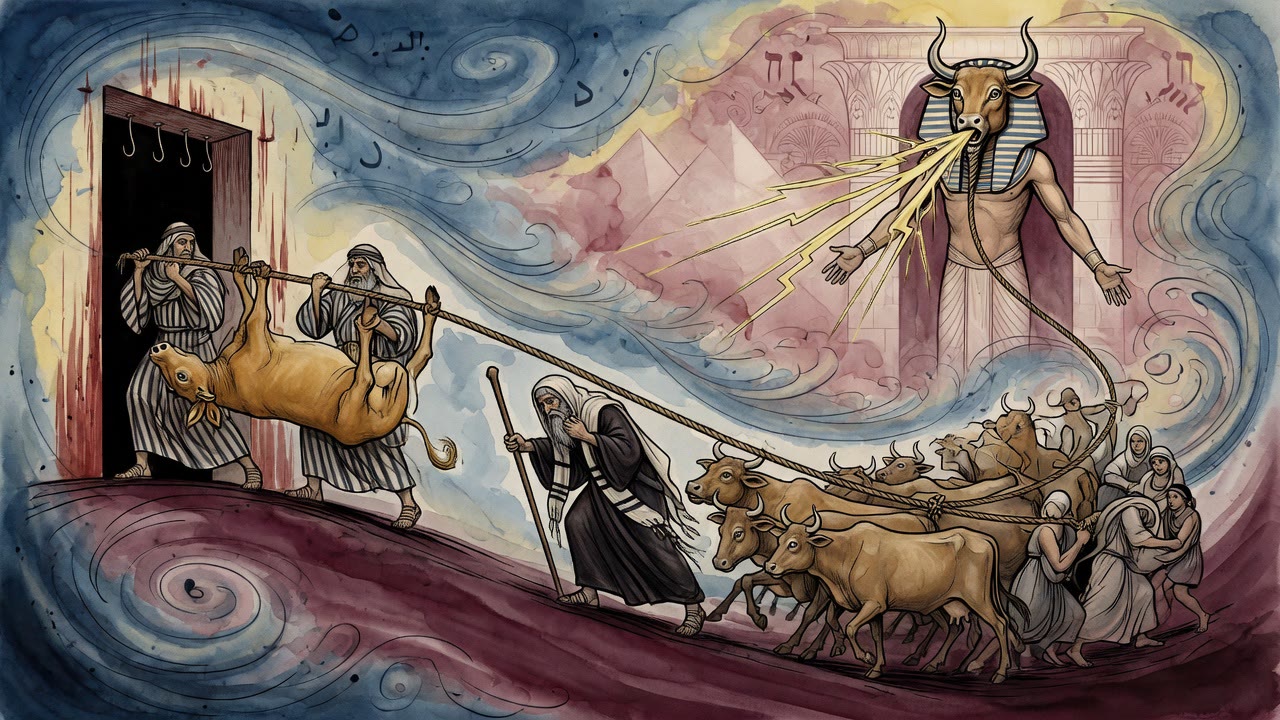
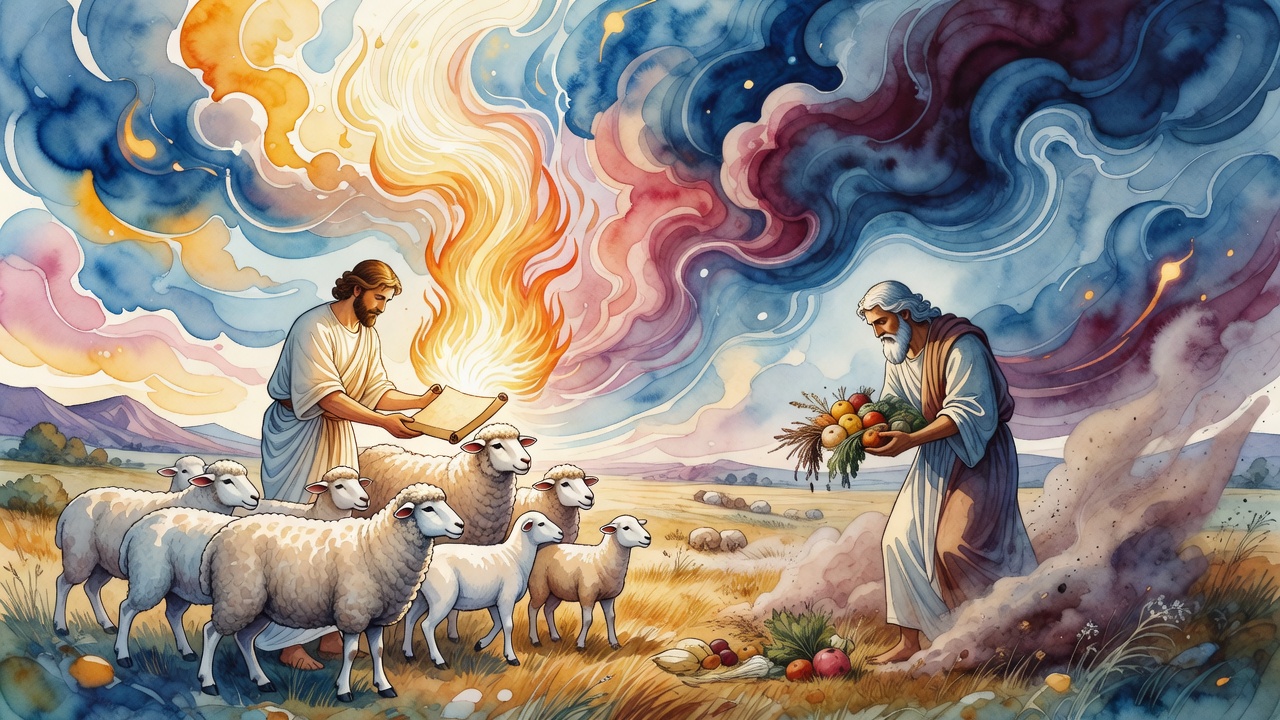
Abel went through the flock with his hands out, feeling along the ribs for fat. He took the firstborn ones and the heaviest ones, the animals a shepherd counts twice before he lets them go (Genesis 4:4).
 Click for full size
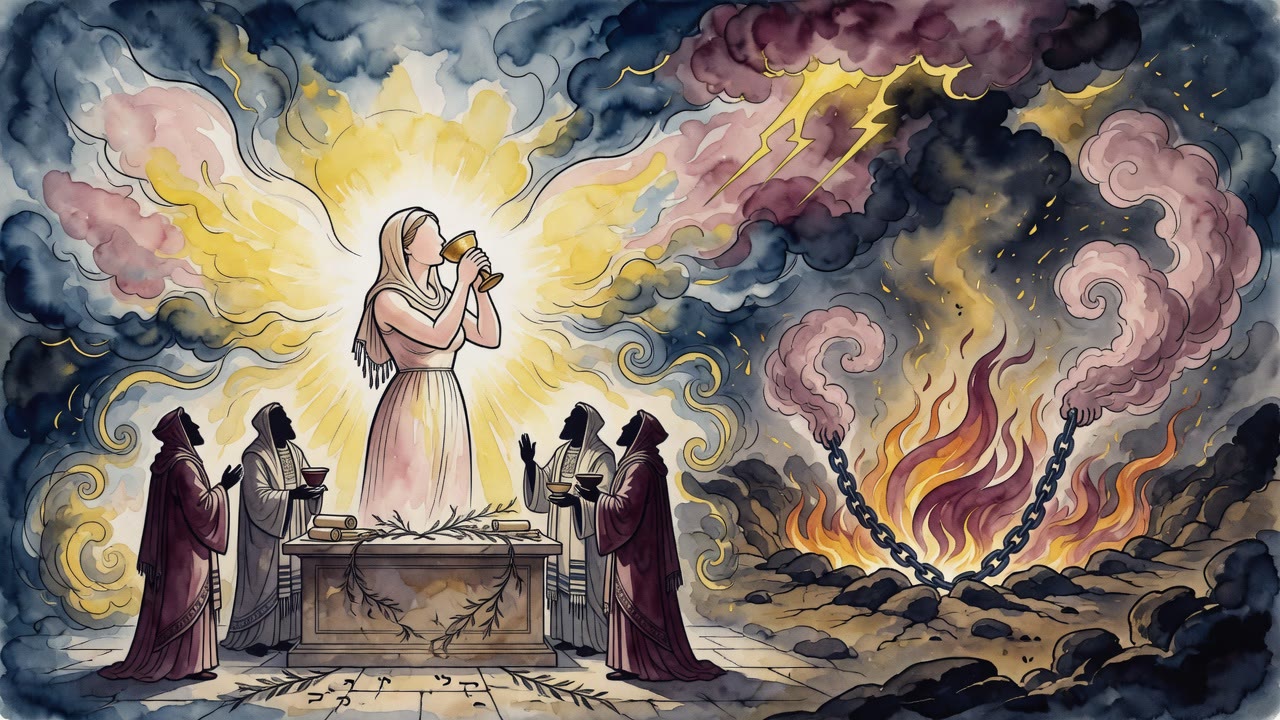
Cain loaded a basket out of the field. He had worked the ground longer than his brother had kept sheep, he had been born first, and he brought his offering first. He did not bring the first of what had come up. He brought some of it.
Named Second in His Own Chapter
Then the record turns strange. Cain opens the family. Cain opens the harvest. But when the regard of heaven gets written down, Abel is named ahead of him and Cain is pushed into second place: God had respect unto Abel and unto his offering, and unto Cain and unto his offering he had no respect (Genesis 4:4-5).
A good man does not come first to the eye. He arrives in his own turn, and the only people who spot him early are the ones already living the same way. Ordinary sight sorts by size, by loudness, by who was born when. Heaven sorts by something that does not show from outside.
And God had not been looking at the baskets at all. Men rank a gift by what it weighs and how rich it looks lying on the stone. God looked past both piles at the two men standing behind them, at one who loved what was good and studied it and at one who did not, and the offerings went wherever their owners went. Ambition on an altar counts for nothing. Display counts for nothing.
You Did Not Divide It Right
The rebuke, when it came, did not say what anyone would expect. It did not say Cain had offered wrongly. It said he had not divided rightly (Genesis 4:7).
Division is the whole trade of the Creator. Before anything stood in its place the raw untamed stuff of the world lay in one heap, and God took it apart. The heavy things that want to sink, earth and water, He set at the centre. Air and fire, light enough to climb, He raised high. Then He cut out the pure element, heaven itself, and carried it round the outside until it held everything else inside it. Every seed that ever split in wet ground or dry does the same work on a smaller scale. The world runs on cuts made in the right place.
Gratitude is meant to copy that. The first and best of a thing belongs on the altar, and it belongs there early, while it is still fresh, before a man has had time to weigh what he might hold back. Cain had made his cut. He had simply made it in the wrong place, first for himself and second for God, and a division like that is not stinginess. It is the order of the world laid down backwards.
His Own Face Told Him and He Did Not Listen
Cain's countenance fell (Genesis 4:5). Grief came up in him and sat on his face where anyone could read it.
That was his answer, handed to him in his own body before a word was spoken. A man who has given with a clean heart walks away light. Gladness is what fits the act. Sorrow is what arrives when some part of a man already knows the gift was not the one he should have carried up. Cain held the verdict in his own jaw and could have taken it as a verdict. He took it as an insult.
"Why has your face fallen?" God asked him. "Sin crouches at the door, and its desire is toward you, and you may rule over it." Cain answered nothing. He went and found his brother.
The Field
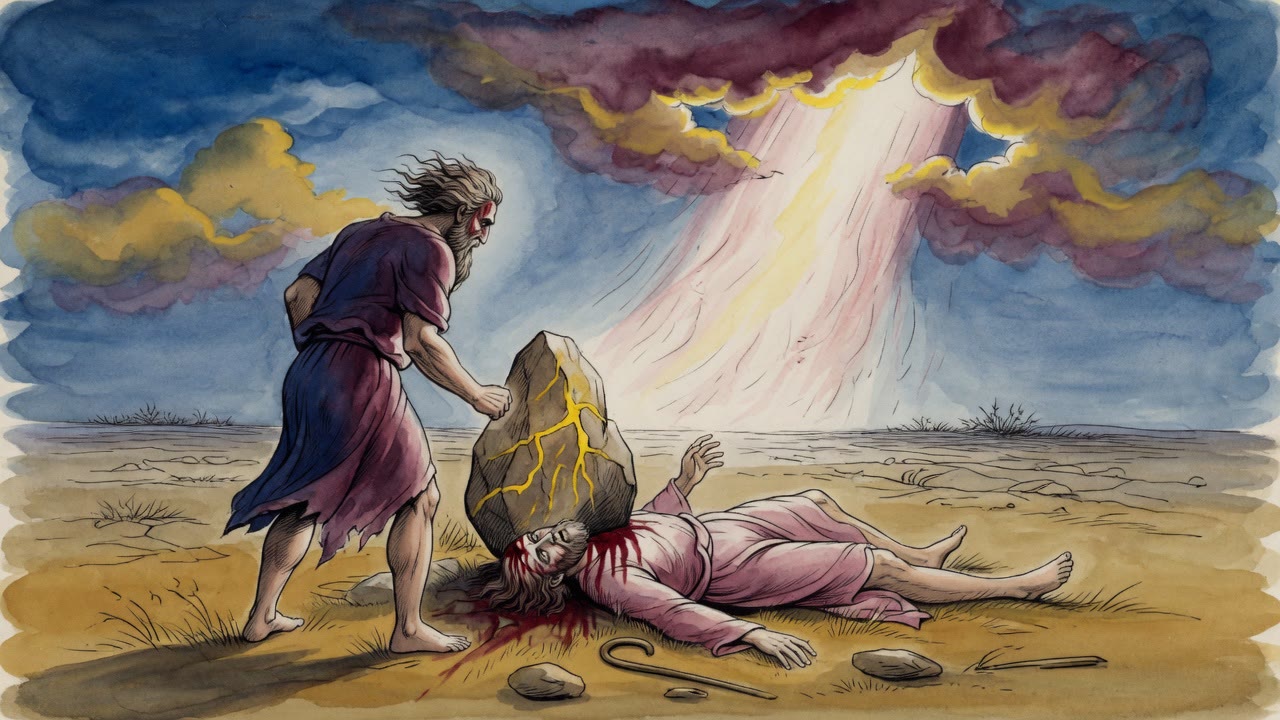
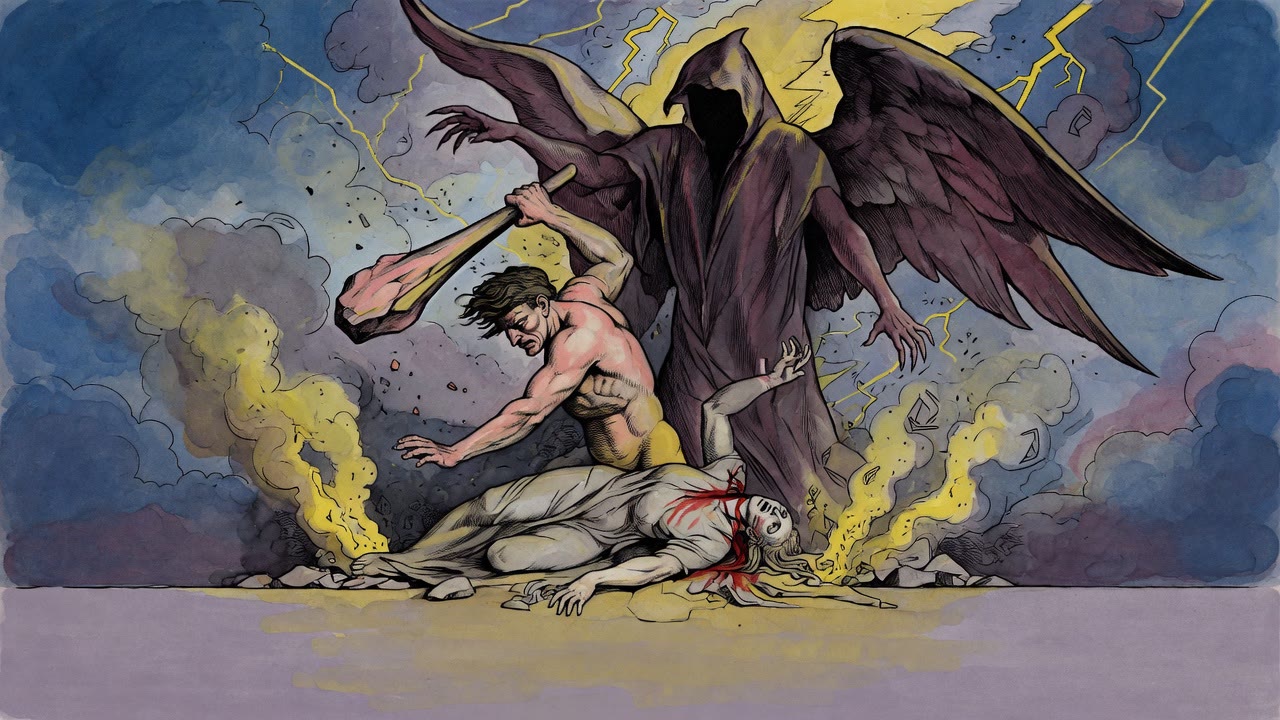
What happened in the field took less time than the harvest had. Afterward Cain stood with wet hands and told heaven he was not his brother's keeper, and the ground he had spent his life turning opened its mouth and testified against him (Genesis 4:9-10).
He was driven out. He begged, because whoever found him would kill him. So God set a mark on him and said that whoever killed Cain would be avenged sevenfold (Genesis 4:15).
Seven Went Down With the One
Sevenfold, and not a number chosen for weight.
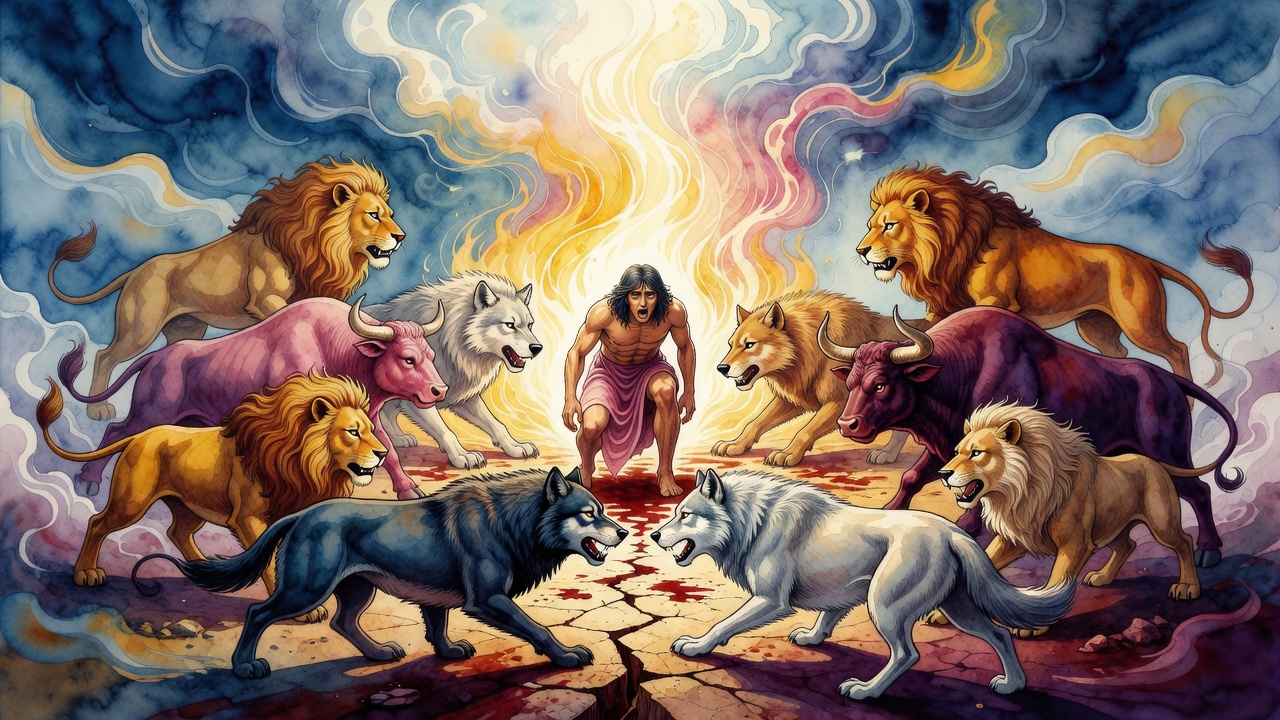
A soul stands on eight parts. One of them governs, the mind, the part that decides. The other seven hang under it and take orders: the five senses, the instrument of vice, and the power to bring forth young. Those seven are where wickedness gets its hands and its mouth, so those seven come under judgment when a man goes wrong.
But kill the governing part, pour folly into it where sense used to sit, and the seven do not outlive the loss. They dissolve after it. They were only ever built the way the head of them was built. So a man who murders another man does not take one life. He takes the one and the seven that were standing underneath it, and the whole count comes back to him.
Cain walked east with the mark on him and that arithmetic behind him, and the flock his brother had picked over that morning wandered untended into the dark.
← All myths