Parshat Bereshit5 min read

Cain Rose from the Dust and Slew His Brother

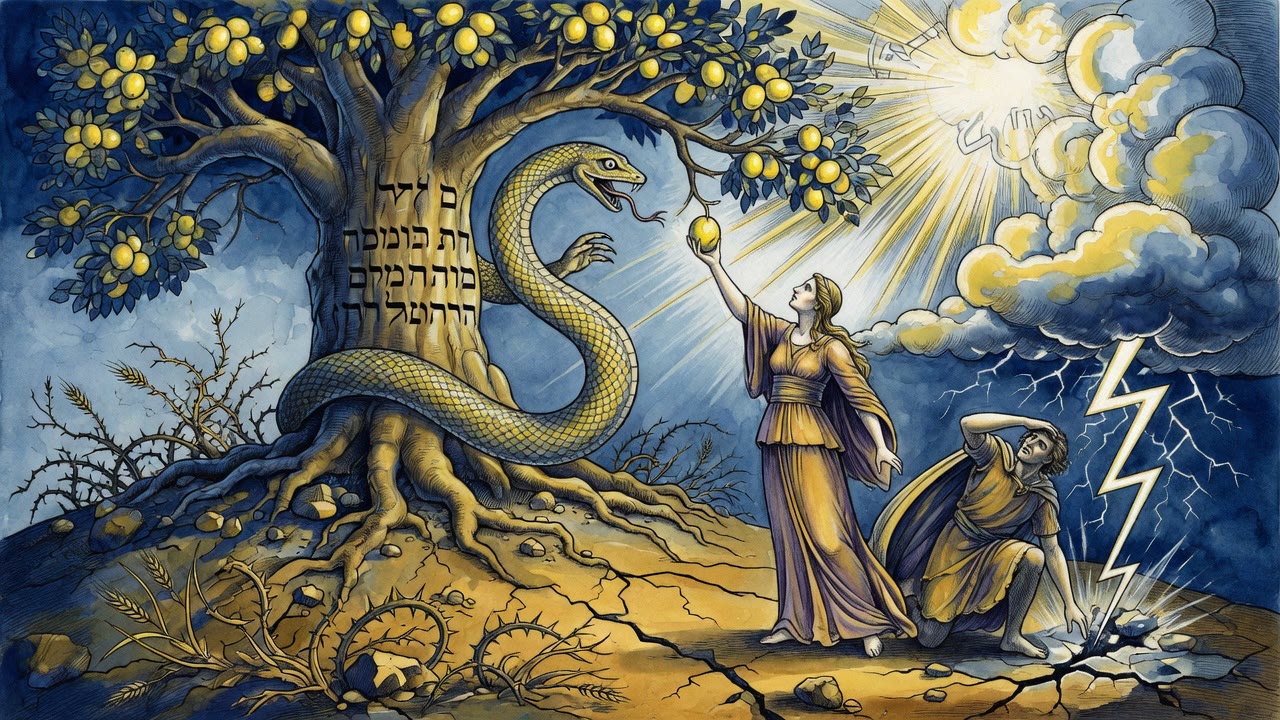
Eve dreamed blood in a mouth. On the Temple mount that would be, Cain divided the world, begged mercy, then rose with a stone.

Curated by Arthur · Told by Maggid ·
Table of Contents
  1. The Dream That Named the Knife
  2. Wool and Flax That Must Not Meet
  3. The Division and the Dust
  4. The Question That Closed Every Hiding Place
Cain Rose from the Dust and Slew His Brother Click for full size

The Dream That Named the Knife

Eve woke with a mouthful of dread. In the dream her son Abel bled into the mouth of Cain, and Cain drank as if the world were a cup and his brother the wine. Abel pleaded. Cain did not stop. When she told Adam, he did not argue with the vision. He split the house. Cain took the fields. Abel took the flocks. Distance, Adam thought, might keep blood in its veins.
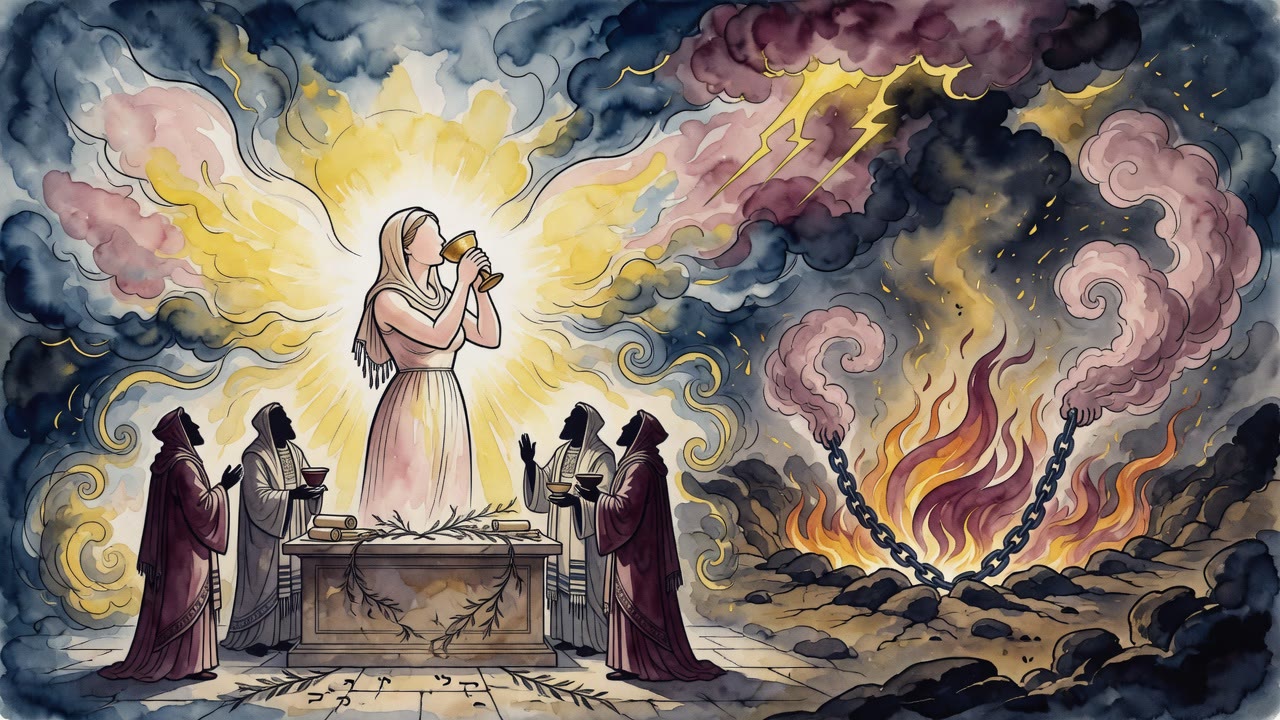
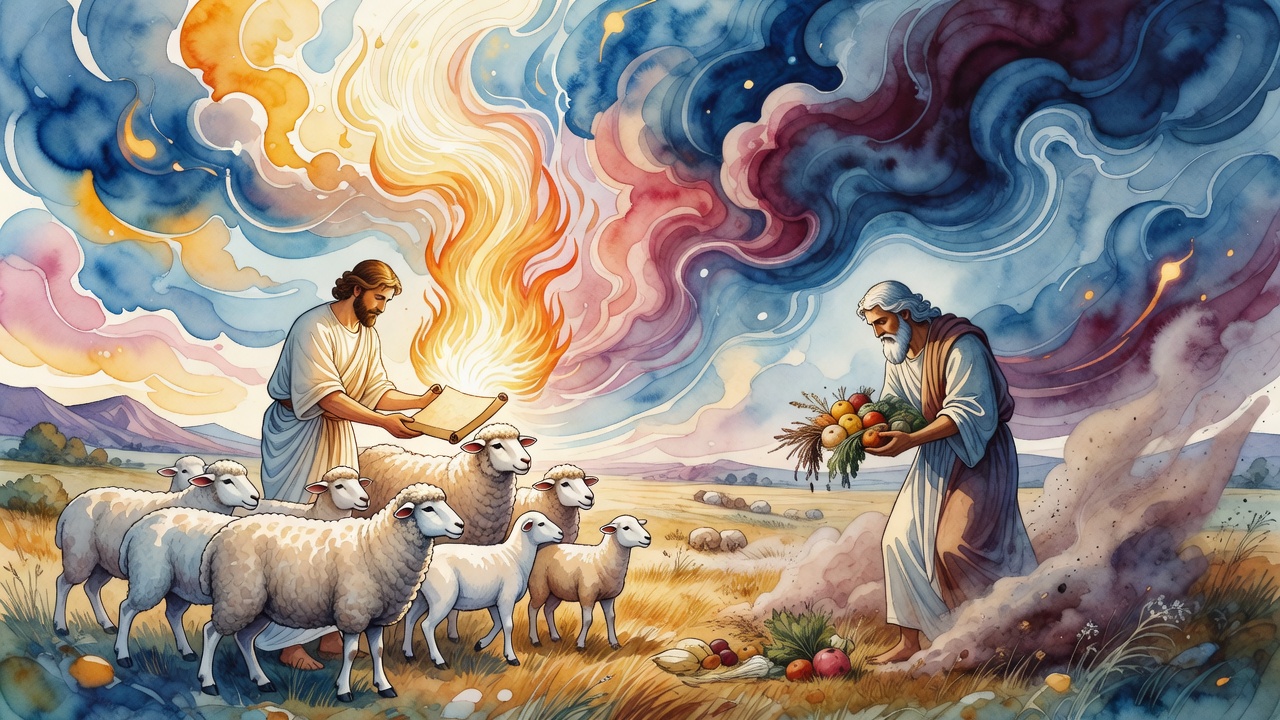
Distance only gave jealousy room to grow a spine. On the fourteenth of Nisan, the day Adam told his sons to bring offerings on the ridge that would later hold the Temple, Abel chose the best of the flock, fat that shone. Cain ate first. Then he scraped what was left, flaxseed and scraps, and set the leftovers before the Presence as if heaven were a beggar at his table.

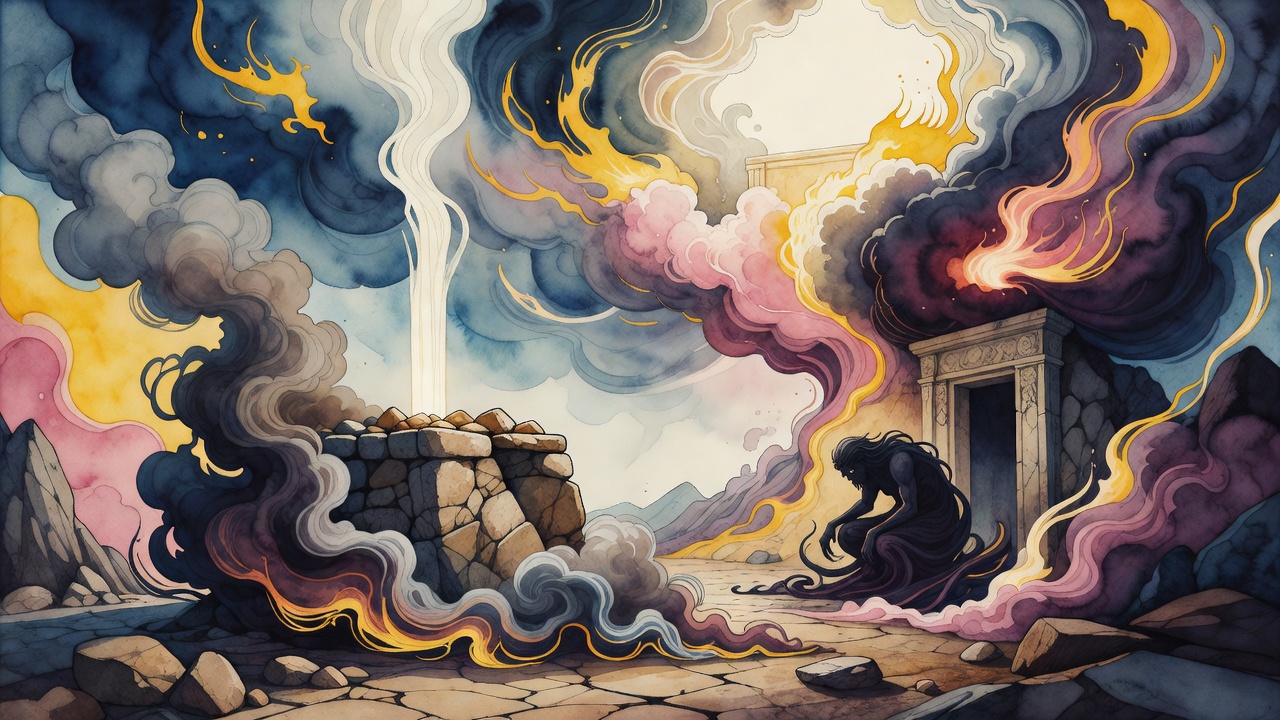
Fire took Abel's gift. Smoke blackened Cain's face. The ground under his knees remembered the first curse and kept its silence.

Wool and Flax That Must Not Meet

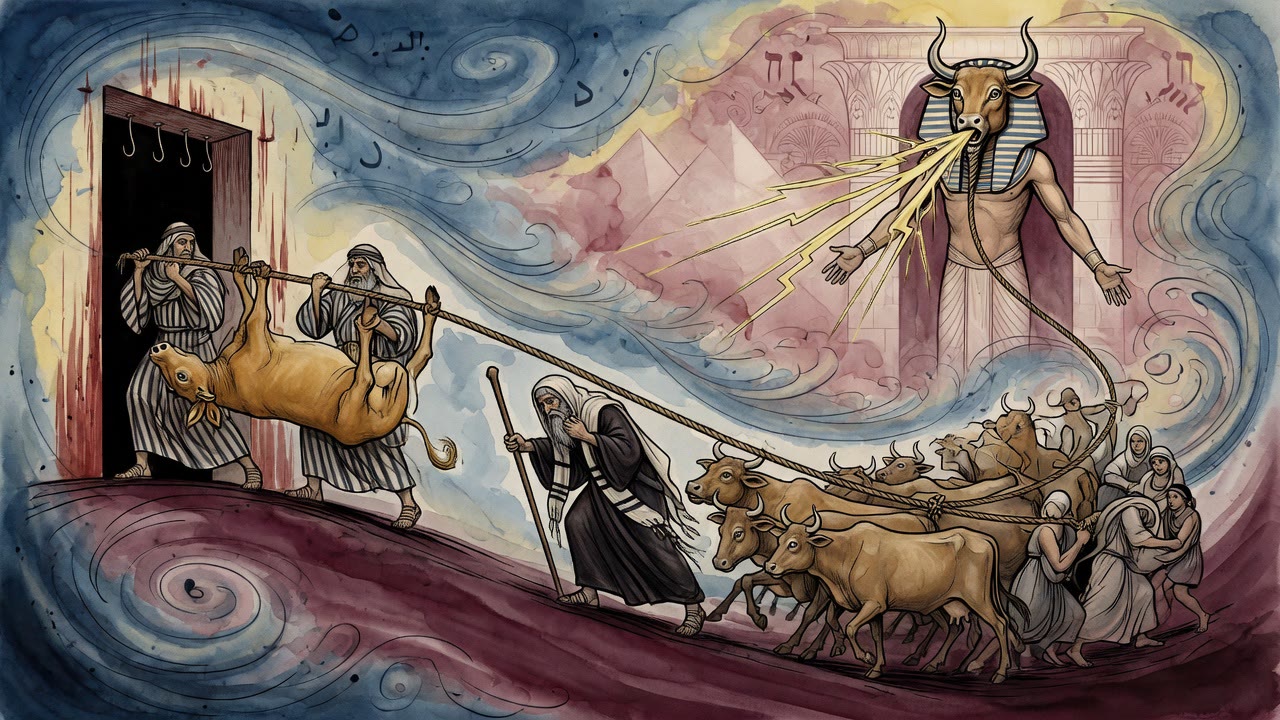
God did not let the two offerings share a fate. The pure and the stingy would not be braided into one cloth. Later ages would name the law shatnez, wool and linen forbidden together, and say the seam began here. Abel's firstlings and Cain's leftover seed must never be mixed, not even in a garment on a living back.

Cain heard another reason under his ribs. Beside each son of Adam a twin sister had been born so the world could continue. Abel's twin was the most beautiful of women. Cain wanted her the way a field wants rain, without asking leave. "I will slay Abel my brother," he said inside himself, "and I will take his twin-sister from him." The rejected offering was the spark. The woman was the oil.

He argued theology like a man already mid-crime. "I believed the world was created through goodness, but good deeds bear no fruit. God rules with arbitrary power, else why accept yours and not mine?" Abel answered that heaven answers the deed, not the bloodline. Words dried up. The field waited.

The Division and the Dust

They tried to cut the earth into peace. Cain claimed a double portion as firstborn and demanded the very place where Abel's sacrifice had been received. Abel refused that plot. In another telling they divided cleanly. Flocks for Abel, soil for Cain, neither to trespass. Then Abel's sheep found Cain's grass, and the agreement tore like wet cloth.

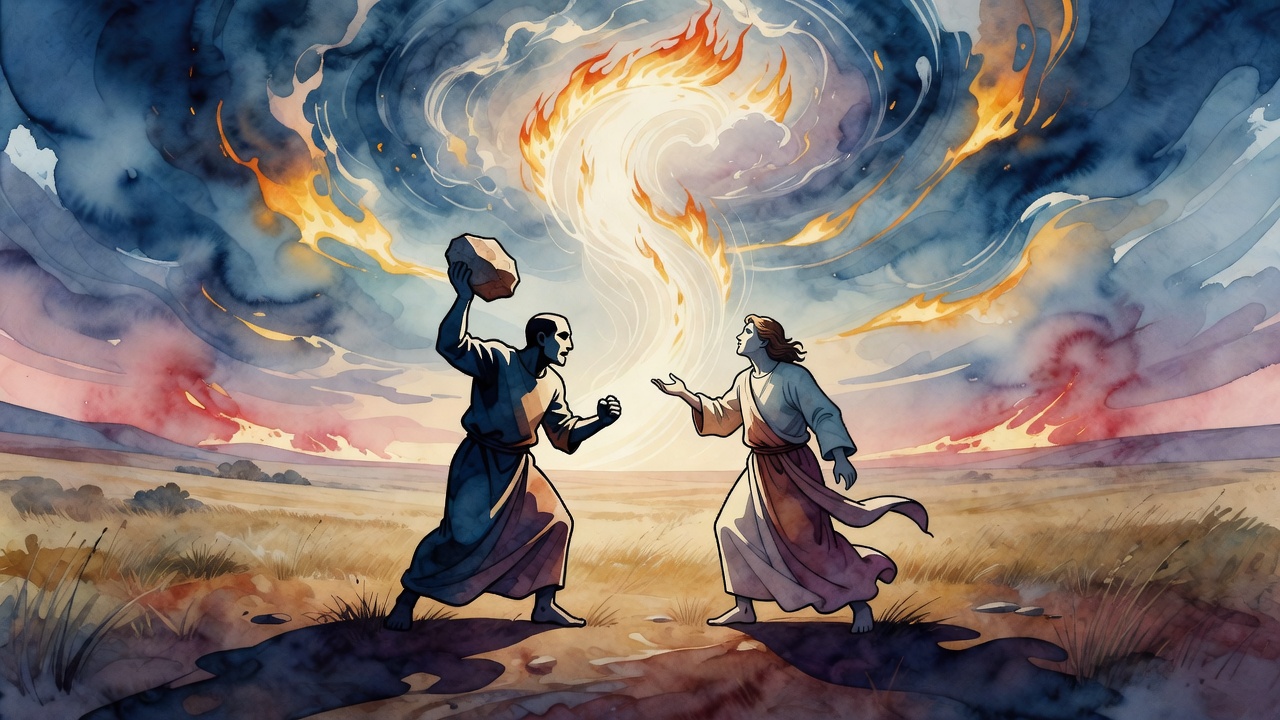
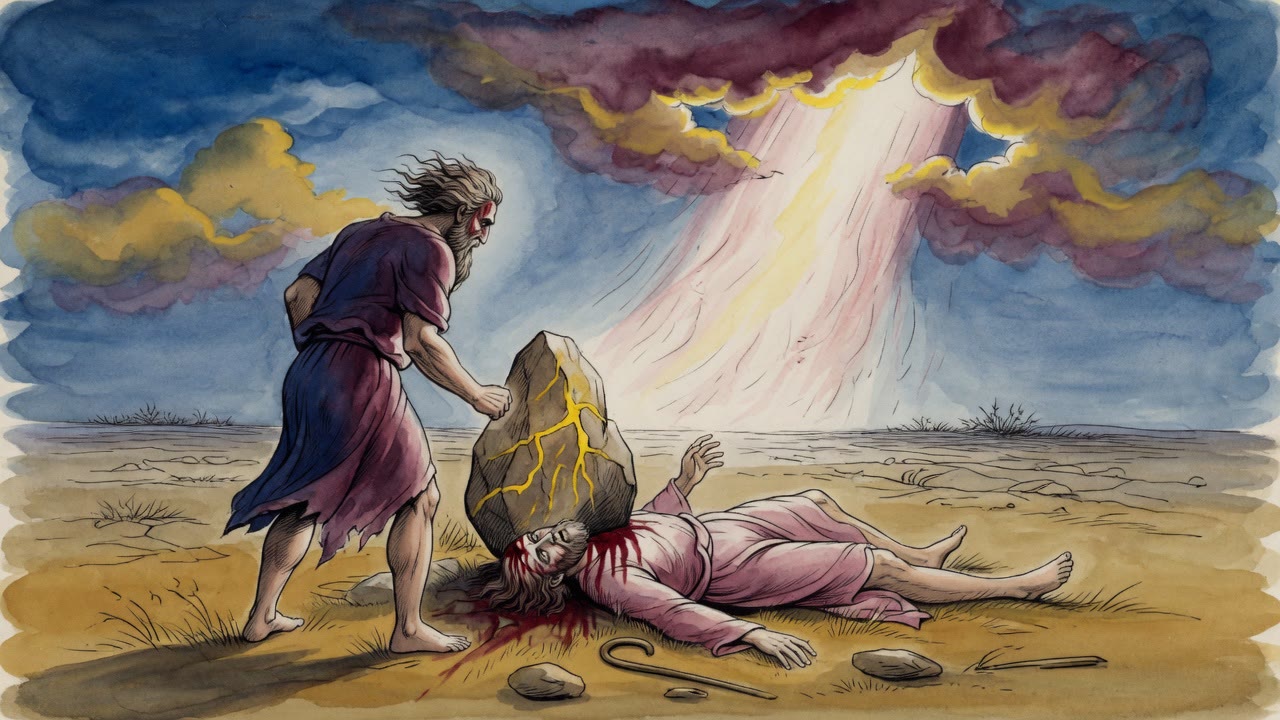
Cain chased him over hill and vale until they wrestled. Abel threw Cain down. Dust filled Cain's mouth. He cried, "Abel, my brother, do not harm me." Mercy answered. Abel let him rise. The phrase later written, "Cain arose," carries the whole crime in two words. He had been under. He stood. He struck.

He did not know where a soul leaves the body. With a stone he bruised Abel from heel to throat, hunting the exit of breath the way a blind man hunts a door. When the body cooled, Cain thought of parents and flight. Two sons. One question waiting at the tent flap. He planned to vanish.

The Question That Closed Every Hiding Place

The Holy One appeared at once. "You can flee from your parents but not from Me." The words of the prophet would later name the same truth. Can a man hide in secret places so that God will not see him? Heaven fills earth as thoroughly as it fills the sky.

"Where is Abel, your brother?"

Cain answered like a thief caught at dawn. "I know not. Am I my brother's keeper? You guard all, yet You seek him from me." Heaven answered with the mercy Abel had shown and Cain had used as a weapon. "Woe to him who was merciful to you and refrained from killing you when you were beneath him. When he let you rise, you killed him."

The first murder taught the world its grammar. Sword entered a heart that had opened for pity. The field that would be Zion remembered the blood. Generations later Lamech would strike Cain, and the pattern would close on itself. The wicked begin with the sword, and the sword finds their own ribs. But on that first day there was only a mother with a dream already proven, a father who had tried to separate what envy would not release, and a man standing over a brother with stone-dust on his hands, learning that the earth itself keeps records.


← All myths

From the tradition

Sources

3 sources

The texts behind this telling. Some cards carry a translation of the source; others are our own retelling of it, and each card says which. Every card links out to the original.

Legends of the Jews, III. The Ten Generations, FratricideLegends of the Jews

Retold in our words. Read the original at the link below.Project Gutenberg eBook #1493, The Legends of the Jews, Volume 1 · Public Domain

It wasn't always peaceful. The story of Cain and Abel, the first brothers, is a chilling tale of jealousy, resentment, and ultimately, fratricide. But according to tradition, the seeds of this tragedy were sown long before that fateful day in the field.

In Legends of the Jews, by Louis Ginzberg, the slaying of Abel wasn’t entirely unexpected. Eve, their mother, had a disturbing dream. She saw Abel's blood flowing directly into Cain's mouth, and he drank it greedily. Abel pleaded with him to stop, but Cain wouldn't. Imagine the horror when she shared this vision with Adam. He immediately feared the worst: that Cain would kill Abel.

In an attempt to prevent the tragedy, Adam separated his sons, assigning them different tasks and living spaces. Cain became a tiller of the ground, a farmer, while Abel became a shepherd. Each had his own domain, his own responsibilities. But as we know, you can't always outrun destiny.

The tension between the brothers escalated during an offering on the fourteenth day of Nisan (a month in the Hebrew calendar, usually falling in March-April). Adam instructed his sons to bring sacrifices to the Creator on this day, mirroring the future offerings of the Israelites, hoping God would find pleasure in their devotion. As Ginzberg tells us, this location was none other than the future site of the Temple in Jerusalem!

Abel chose the best of his flock, the finest animals for his sacrifice. But Cain? Cain ate his fill first, then offered what was left over: a few grains of flax seed. And remember, according to tradition, the ground itself was cursed because of Adam's sin. As we find in Midrash Rabbah, this was a serious offense.

Unsurprisingly, God favored Abel's offering, accepting it with a heavenly fire, while Cain's was rejected. Cain’s face even turned black as smoke, a visible sign of his disfavor. Yet, according to the story, even after this, Cain's attitude didn't change!

God, in his infinite mercy, tried to guide Cain, saying, "If thou wilt amend thy ways, thy guilt will be forgiven thee; if not, thou wilt be delivered into the power of the evil inclination (yetzer hara). It coucheth at the door of thy heart, yet it depends upon thee whether thou shalt be master over it, or it shall be master over thee." A powerful message about free will and the constant battle between good and evil within us.

But Cain, consumed by resentment, felt wronged. He argued with Abel. "I believed," he said, "that the world was created through goodness, but I see that good deeds bear no fruit. God rules the world with arbitrary power, else why had He respect unto thy offering, and not unto mine also?" Abel countered that God rewards good deeds and that Cain's offering was rejected because his actions were wicked.

However, the story goes deeper. It wasn't just about the offerings. Love, or rather, lust, played a part. According to tradition, a girl, destined to be his wife, was born alongside each son of Adam to ensure the continuation of humanity. Abel's twin sister was exceptionally beautiful, and Cain desired her. This desire fueled his hatred, leading him to constantly plot how to get rid of his brother.

The final spark ignited when Abel's sheep wandered onto Cain's field. In a rage, Cain demanded, "What right hast thou to live upon my land and let thy sheep pasture yonder?" Abel retorted, "What right hast thou to use the products of my sheep, to make garments for thyself from their wool? If thou wilt take off the wool of my sheep wherein thou art arrayed, and wilt pay me for the flesh of the flocks which thou hast eaten, then I will quit thy land as thou desirest, and fly into the air, if I can do it."

Then, Cain uttered the chilling words, "And if I were to kill thee, who is there to demand thy blood of me?" Abel replied: "God, who brought us into the world, will avenge me. He will require my blood at thine hand, if thou shouldst slay me. God is the Judge, who will visit their wicked deeds upon the wicked, and their evil deeds upon the evil. Shouldst thou slay me, God will know thy secret, and He will deal out punishment unto thee."

These words only intensified Cain's anger. He attacked Abel, who initially overpowered him. But Abel, being of a gentle nature, showed mercy and released his hold. A fatal mistake. As soon as Cain was free, he turned on Abel once more and killed him.

Thus, the first murder was committed. A tragic tale of jealousy, resentment, and the devastating consequences of unchecked anger. As the story poignantly concludes: "Do the evil no good, lest evil fall upon thee." A sobering reminder of the complexities of human nature, and the enduring power of choice.

Full source
Pirkei DeRabbi Eliezer 21:7Pirkei DeRabbi Eliezer

Retold in our words. Read the original at the link below.Pirke de Rabbi Eliezer, trans. Rabbi Gerald Friedlander, London (1916) · CC-BY

The familiar story centers on Cain and Abel, their offerings, and the tragic outcome. But what if there was more to it than just a simple case of sibling rivalry?

Rabbi Joshua ben Ḳorchah offers a fascinating insight, drawing a connection between the story of Cain and Abel and the laws against mixing certain materials. He says, imagine God declaring, "Heaven forbid! Never let the offerings of Cain and Abel be mixed up. The Torah tells us, "Thou shalt not wear a mingled stuff, wool and linen together" (Deut. 22:11). This prohibition against shatnez – the mixing of wool and linen – might seem like an odd connection to Cain and Abel at first. But Rabbi Joshua sees it as a reflection of God's desire to keep the pure separate from the tainted. The offering of Abel, accepted with grace, should never be confused or combined with Cain’s.

Rabbi Zadok takes us even deeper, revealing the simmering resentments that fueled Cain's actions. It wasn't just about the rejected offering, you see. According to him, a "great hatred entered Cain's heart against his brother Abel, because his offering had been accepted." Jealousy, pure and simple. But there was more…

Rabbi Zadok adds a layer of complexity – a woman. He suggests that Abel's twin sister was "the most beautiful of women, and he desired her in his heart." This adds a whole new dimension to the story. It's not just about divine favor or agricultural success anymore; it's about primal desires and the destructive power of unrequited longing.

The text continues, "I will slay Abel my brother, and I will take his twin-sister from him.

Then comes a striking interpretation of the verse "And it came to pass when they were in the field" (Gen. 4:8). Rabbi Zadok cleverly interprets "the field" (basadeh) as a veiled reference to a woman. A field, in this context, represents a woman, a source of life and potential. It's a clever, almost poetic reading, suggesting that the conflict between Cain and Abel was, in part, a struggle over a woman, a "field" of desire.

So, what do we take away from this? Is it simply a story of jealousy and forbidden love? Or is it a deeper exploration of the human condition, the struggle between good and evil, the destructive power of envy, and the consequences of unchecked desire? Perhaps it's all of those things, woven together into a timeless narrative that continues to resonate with us today.

Full source
Midrash Tanchuma, Bereshit 9Midrash Tanchuma

Retold in our words. Read the original at the link below.Townsend 1989 translation of Midrash Tanhuma, S. Buber Recension · CC-BY

And in process of time it came to pass that Cain brought of the fruit of the ground (Gen. 4:3). The process of time (lit. “end of days”) may imply either the end of a year, the end of two years, after a certain number of days, or after forty years. Our sages, of blessed memory, said that Cain and Abel were forty years old when Cain brought of the fruit of the ground. What did he bring as his offering? He brought only the leftovers of his meal. However, the rabbis maintained that Cain brought flaxseed, while Abel brought firstlings of his flock and of the fat thereof (ibid., v. 4). That is why it is ordained that wool and flax must not be mixed, as it is said: Thou shalt nor wear mingled stuff, wool and linen together (Deut. 22:11). The Holy One, blessed be He, declared: It is not fitting that a sinner’s offering and the sacrifice of a virtuous man should be coupled. Hence it is forbidden to combine them in a garment.

And Cain spoke unto Abel, his brother (Gen. 4:8). What did he say to him? He said: “Let us divide the world between us, but since I am the eldest, I shall take twice as much.” Abel replied: “Perhaps.” “If we do this,” Cain continued, “I want my share to include the place at which your sacrifice was accepted.” Abel replied: “That, you cannot have.” Thereupon, they began to quarrel, as it is said: And it came to pass while they were in the field that Cain arose (ibid.), and it says elsewhere: Zion shall be plowed as a field (Jer. 26:18).

Others contend that Cain told Abel: “Let us divide the world between us,” and Abel replied: “Certainly.” Whereupon Abel took the flocks as his share, and Cain took the land to till. They agreed that neither should take anything belonging to the other. However, after accepting the flock as his share, Abel grazed the flock upon Cain’s land. Cain pursued Abel over hill and vale, until they began wrestling with one another. At first Abel overpowered Cain and threw him to the earth. When Cain realized that he was being defeated, he pleaded: “Abel, my brother, do not harm me.” Because he was a merciful person, Abel released him. As soon as Cain arose he slew Abel, as it is said: Cain arose. The words Cain arose clearly indicate that he must have been hurled to the ground previously.

After killing Abel, he said to himself: “I must flee from my mother and father, for they will ask me where he is, since there are only the two of us.” The Holy One, blessed be He, appeared before him immediately, saying: “You can flee from your parents but not from Me, as it is said: Can any man hide himself in secret places that I shall not see him? saith the Lord. Do I not fill heaven and earth? (Jer. 23:24).” The Holy One asked: Where is Abel, your brother? (Gen. 4:9), and then He continued: “Woe unto him who was merciful to you and refrained from killing you when you were beneath him. When he permitted you to rise, you killed him!”

How did he kill him? He inflicted numerous bruises upon his body with a stone. He smote him over his entire body, from his hands and feet to his throat, for he had no way of knowing from where his soul would depart. When the Holy One, blessed be He, asked him: Where is Abel, your brother? he replied: “I know not; am I my brother’s keeper? (Gen. 4:9). You are the guardian of all, yet You seek him from me!” This may be compared to a thief who steals during the night but is not apprehended while committing the crime. When the watchman seizes him the next morning and asks: “Why did you steal those utensils?”, the thief replies: “I am a thief and I did not neglect my profession. Your job is to keep watch at the gate. Why did you neglect your duties? Now you question me?” So Cain retorted: “True, I slew him, but You created the evil inclination within me. Since You are the guardian of all, why did You permit me to slay him? You who are called the I killed him, for if You had accepted my sacrifice as You accepted his, I would not have been envious of him.” The Holy One, blessed be He, replied immediately: What have you done? The voice of thy brother’s blood crieth unto Me (ibid., v. 10). This verse indicates that he inflected numerous wounds upon Abel.

The words Crieth unto Me (elai), however, may be interpreted as “Crieth against Me (‘alai).” For example, if two men are fighting together and one of them is killed while a third person stands by and does not attempt to separate them, against whom does everyone complain? Do they not complain against the third person? Hence Crieth unto Me actually means Crieth against Me.

Cain said to Him: “Master of the Universe, never before have I encountered death, nor have I beheld a dead person; how could I possibly know that if I pummeled him with a stone he would die?” The Holy One, blessed be He, answered immediately: Cursed art thou from the ground … when thou tillest the ground, it shall not henceforth yield unto thee her strength; a fugitive and a wanderer shalt thou be in the earth (ibid., v. 12).

Thereupon Cain cried out: “O Lord of the universe, do You have informers who denounce men to You? My father and mother are the only living human beings on earth, and they do not know that I slew him; how do You, who abidest in heaven, know?” The Holy One, blessed be He, answered: “Fool! I bear the entire world as it is said: I have made and I will bear; yea, I will carry and will deliver (Isa. 46:4).” Forthwith, Cain cried out: “You bear the entire world, yet my sin You are unable to bear. My sin is greater than I can bear (Gen. 4:13).” “Since you have confessed and repented,” said the Holy One, blessed be He, “go into exile from this place.” Thus it is said: And Cain went out from the presence of the Lord and dwelled in the land of Nod (ibid., v. 16). Wherever he wandered, the earth would quake beneath his feet; the animals and the beasts would tremble in fright, and would inquire of each other: “What is this?” And they would whisper: “He is Cain, who murdered his brother, Abel. The Holy One, blessed be He, has decreed concerning him: A fugitive and a wanderer you shall be.” Then they would say to each other: “Let us devour him.” They would gather together to attack, but as they approached, tears would well up in his eyes and he would cry out: Whither shall I go from Thy spirit, or whither shall I flee from Thy presence? If I ascend up into heaven, Thou art there; if I make my bed in the netherworld, behold, Thou art there. If I take the wings of morning and dwell in the uttermost part of the sea, even there would Thy hand lead me and Thy right hand hold me (Ps. 139:7–10).

Full source